معرفی
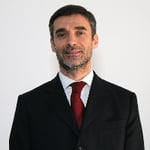
Ricardo F. Ramos is an Adjunct Professor at the Oliveira do Hospital School of Technology and Management, Polytechnic Institute of Coimbra (ESTGOH-IPC), and at the Information Management School, NOVA University Lisbon (NOVA-IMS). He serves as an Associate Researcher at ISTAR-Iscte - Research Center in Information Sciences, Technologies and Architecture, focusing on Information Systems.
His educational background includes:
- PhD in Management with specialization in Marketing from ISCTE (2015-2018)
- Master's degree in Sports Management from University of Lisbon Faculty of Human Kinetics (2012-2015)
- Bachelor's degree in Sport from Polytechnic Institute of Setúbal Higher School of Education (2009-2012)
Ricardo's research spans diverse areas within marketing, with particular focus on consumer behavior in tourism and hospitality, sports marketing, and text mining applications. His methodology often involves analyzing textual data to uncover consumer insights, as demonstrated in publications examining social media, mobile applications, and online reviews. His work frequently explores the intersection of technology and consumer behavior, investigating how digital platforms influence purchasing decisions and service experiences.
His recent research trends show a growing interest in sustainability within business contexts, virtual and augmented reality applications in tourism, artificial intelligence in marketing, and the evolving dynamics of digital consumer behavior across various industries including hospitality, aviation, and retail.
Ricardo has received significant recognition for his scholarly work, with publications in high-impact journals such as the International Journal of Hospitality Management, Journal of Air Transport Management, and Journal of Hospitality and Tourism Technology. His research on topics like social media's impact on retail websites, airline sustainability, and customer satisfaction in tourism contexts has accumulated hundreds of citations across multiple databases.
His academic contributions extend to collaborating with researchers across various institutions, with a methodological approach that frequently employs text mining and data analytics to extract meaningful consumer insights from large datasets.