Gizem Kayişoğlu is an Assistant Professor in the Department of Maritime Transportation and Management Engineering at Istanbul Technical University. Her research focuses on cybersecurity challenges in maritime systems, human error probability, and risk assessment methodologies. She actively explores vulnerabilities in shipboard systems such as ECDIS, VDR, and radar while emphasizing regulatory compliance and maritime safety standards. Her work integrates frameworks like CORAS, Fuzzy FUCOM, and SLIM to address cybersecurity dynamics and human factors in maritime operations. Key collaborations involve analyzing ransomware threats, AIS system vulnerabilities, and port infrastructure protection through interdisciplinary approaches. Her articles highlight trends in maritime cybersecurity, including ransomware mitigation, cyber hygiene practices, and critical infrastructure protection. She has contributed to developing risk assessment tools and checklists tailored for maritime environments, emphasizing both technological and human aspects of safety. No scientific awards have been explicitly mentioned. She has not listed formal advisees, and her professional activities focus on advancing maritime cybersecurity through academic and applied research.
Veysel Murat İstemihan Genç is a Professor in the Department of Electrical Engineering at Istanbul Technical University (ITU), College of Engineering. His research is centered on modern power systems, with a focus on transient stability, cybersecurity, and integration of renewable energy sources. He actively leads multiple research projects and supervises graduate students in advanced power system technologies. Research Interests: His work spans key areas including transient stability assessment, machine learning applications in power systems, cyber-attack detection in AGC systems, and dynamic security evaluation under high renewable penetration. He employs cutting-edge techniques such as ensemble learning, deep neural networks, and hybrid optimization algorithms. Publication Trends: Recent publications (2023–2025) highlight a strong trend toward integrating AI and machine learning for real-time transient stability prediction, cybersecurity in distributed energy systems, and performance optimization of solar and wind-integrated grids. His work frequently addresses challenges in low-inertia systems and false data injection attacks. Scientific Projects: Strengthened Machine Learning-Based Dynamic Security Evaluation for Transient Stability under False Data Injection Attacks (BAP, 2025) Analysis and Control Methods for Stability of Large-Scale Low-Inertia Power Systems (BAP, 2023–2024) Dynamics Security Evaluation of Renewable-Rich and Cyber-Attacked Power Systems (BAP, 2022–2024) Risk-Based Stability Assessment and Corrective Control Methods in Power Systems (BAP, 2019–2022) Wide-Area Monitoring Protection and Control System Design Using Advanced Signal Processing and Machine Learning (TÜBİTAK, 2018–2020) Advising and Grants: He is the principal investigator (PI) on multiple funded research projects from BAP and TÜBİTAK, indicating strong grant acquisition and leadership. His supervision of 27 ongoing theses reflects an active role in mentoring graduate students in electrical engineering and power systems. Labs and Teams: While specific lab names are not mentioned, his projects suggest leadership in a research group focused on smart grid technologies, AI-enabled power system security, and renewable integration at Istanbul Technical University.
Mustafa Aksu is a Professor at Istanbul University's Faculty of Law, Department of Civil Law. His research spans Civil Law , Intellectual Property Law , Information Law , and EU Legal Harmonization . He has advised 26 theses and published extensively on digital rights, family law, and obligations law. Research Interests: Focus on AI and law, copyright exhaustion in digital markets, EU-Turkey legal alignment, domain name regulation, and protection of computer programs. Publications: Recent works include AI's legal frameworks (2023), medical informatics law (2021), and digital exhaustion doctrine (2016). His research emphasizes cross-border IP enforcement and EU court precedents. Contact: Email aksum@istanbul.edu.tr | Office: Hukuk Fakültesi Binası, İkinci Kat, Oda No: 38, Beyazıt, Istanbul, Turkey.
Prof. Dr. Ahmet ÖZMEN is a Professor at Sakarya University's Faculty of Computer and Information Sciences, Department of Software Engineering. He has held various administrative positions including Head of the Software Engineering Department (2019-2028) and Director of the Computer Research and Application Center (2019-2022). With extensive experience in academia since 1991, he has made significant contributions to computer vision, traffic monitoring systems, and sensor technologies. Sakarya University: Professor (2019-present), Associate Professor (2011-2019) Dumlupınar University: Assistant Professor (2001-2011), Research Assistant (2000-2001, 1993-1998) Istanbul Technical University: Research Assistant (1991-1993) Prof. ÖZMEN's research spans computer vision applications for traffic monitoring, indoor air quality systems, parallel computing, and sensor technologies. His work bridges theoretical computer science with practical engineering applications, particularly in developing vision-based systems for nighttime vehicle detection, traffic flow monitoring, and environmental sensing. His interdisciplinary approach combines machine learning, image processing, and embedded systems to solve real-world problems in transportation and environmental monitoring. His publication record shows a clear evolution from parallel and distributed systems in his early career to computer vision and sensor applications in recent years. The majority of his recent work focuses on traffic monitoring systems using computer vision techniques, particularly for nighttime conditions, and indoor air quality monitoring systems using sensor networks. His research demonstrates strong industry and societal relevance, with applications in smart transportation, environmental protection, and educational technology. TÜBİTAK Publication Awards (2006, 2008, 2009, 2010) Physical implementation award from TÜBİDER (2008) Microsoft Certified Professional Certificate (2005) YÖK overseas study scholarships (1993, 1998) Elginkan graduate scholarships (1990, 1991) Prof. ÖZMEN has supervised numerous graduate students across multiple institutions, with a focus on practical engineering problems. His research has been supported by various projects including TÜBİTAK projects, institutional research grants, and industry collaborations. He has led significant research initiatives in traffic monitoring systems, indoor air quality monitoring, and educational technology platforms. His administrative leadership has included directing research centers and shaping curriculum development in software engineering. His work has involved establishing research teams focused on computer vision applications, sensor network development, and educational technology. These teams have produced numerous publications, developed practical systems, and trained the next generation of computer engineers. Current research directions include advanced traffic monitoring systems using deep learning and multi-camera setups for urban planning applications.
İBRAHİM HALİL EFENDİOĞLU is an Associate Professor at Gaziantep University's Faculty of Economics and Administration, Department of Business Administration. Previously, he served as a Lecturer at Gaziantep University's Presidency, Department of Informatics from 2016 to 2023. His academic journey includes a Doctorate in Business Administration from Hasan Kalyoncu University (2015-2019), a Master's in Computer Education from Gazi University (2006-2008), and a Bachelor's in Computer Engineering from Mersin University (2000-2004). His primary research interests focus on the intersection of marketing and emerging digital technologies. EFENDİOĞLU's work spans digital marketing, artificial intelligence applications in marketing, Metaverse marketing, blockchain technology, and NFT marketing. His research demonstrates how these emerging technologies are reshaping consumer behavior and marketing strategies in both Turkish and global contexts. His recent publications (2023-2024) reveal a strong trend toward examining cutting-edge digital marketing phenomena. His work covers diverse areas including AI-powered marketing, Metaverse consumer behavior, cryptocurrency adoption, and NFT market dynamics. These publications appear in both Turkish and international journals, demonstrating his ability to contribute to scholarly discourse across linguistic boundaries. 2024 Kamu UBYT Programı Araştırmacı Teşvik Ödülü (TÜBİTAK) Yayın Teşvik Ödülü 3rd. Best Paper Award (International Islamic Marketing Association, 2023) EFENDİOĞLU has supervised graduate students, including NİHAL BÜLBÜL's thesis on social media marketing activities and their impact on purchase intention. His teaching responsibilities span undergraduate, graduate, and associate degree levels, covering courses in electronic commerce, marketing principles, digital marketing, and information technologies. He has also participated in numerous research projects related to digital marketing, Metaverse applications, and e-commerce education. His interdisciplinary background in computer engineering and business administration uniquely positions him to analyze the technological and behavioral aspects of digital marketing phenomena. This dual expertise is evident in his research that bridges technical understanding of emerging platforms with consumer behavior insights.
R. Murat Önok is an Associate Professor at Koç University's Faculty of Law, specializing in Criminal and Criminal Procedure Law. He holds a PhD from Dokuz Eylül University (2005), with prior roles including Research Assistant and Lecturer at Dokuz Eylül University. His research focuses on Substantive Criminal Law, International Criminal Law, Human Rights Law, and Media Ethics. He has authored/co-authored over 30 books and numerous articles, including works on the International Criminal Court, human rights, and Turkish penal law. Notable publications include Uluslararası Ceza Hukuku (2023) and İtalyan Ceza Hukukunda Hırsızlık Suçu (2023). His recent work addresses issues like stalking laws, contagious disease regulations, and gender perspectives in penal codes. Prof. Önok has presented at international conferences on topics like terrorism, cybercrime, and judicial reform. He has also contributed to reports on anti-corruption and legal harmonization with international standards. His teaching spans courses on international criminal law, human rights, and penal law theory.
Assoc. Prof. Dr. Emine ŞENER is a faculty member at the Department of Management and Organization, Faculty of Economics and Administrative Sciences, Kırşehir Ahi Evran University since 2015. She earned her PhD in Management and Organization from Süleyman Demirel University (2013), MA in Educational Program Development (Ankara University, 2004) and Health Institutions Management (Ankara University, 2002), and BA degrees in Sociology (Atatürk University, 2019) and Philosophy (Anadolu University, 2020). Her academic career spans roles at Muğla Sıtkı Koçman University's Faculty of Health Sciences (2005-2015) and Ankara Gevher Nesibe Health Education Institute (2002-2005). PhD: Süleyman Demirel University (2009-2013) MA: Ankara University (2000-2002, 2001-2004) BA: Atatürk University (2014-2019), Anadolu University (2020) Her research focuses on Organizational Behavior , Strategic Management , and Technology and Innovation Management . She explores intersections between sociology, history, and philosophy in organizational contexts, with recent works examining: Historical analysis of Republican-era industrial policies Emotion regulation in toxic leadership scenarios Impact of holacracy adoption on innovation Critical perspectives on social Darwinism in management Role of voluntary simplicity in sustainable consumption Her 15 most recent publications span 2022-2025, emphasizing digital transformation, gender dynamics, and cultural management studies. She has served as principal advisor for 6 doctoral and master's theses, including research on dual-career couples and organizational revenge. Scientific contributions include: Editorial work on Industry 4.0 and information management Leadership in institutional quality and accreditation Development of course materials on organizational theory Critical analysis of managerialism ideology Key administrative roles since 2015: Head of Management Department (2023-2026) Deputy Dean (2025-) Director of Research and Application Center (2024-2027) Chair of Academic Incentive Committee (2018-)
Prof. Erdem Günay is a full Professor in the Department of Energy Systems Engineering at Istanbul Bilgi University, where he has been serving since 2013, rising through the academic ranks. He holds a Ph.D. in Chemical Engineering from Bogazici University, where he also completed his B.S. and M.S. degrees, and conducted postdoctoral research. His academic journey reflects a deep commitment to energy systems and sustainable technologies. B.S. in Chemical Engineering, Bogazici University, 2002 M.S. in Chemical Engineering, Bogazici University, 2005 Ph.D. in Chemical Engineering, Bogazici University, 2012 Postdoctoral Research Associate, Catalyst Design and Reaction Engineering Laboratory, Bogazici University, 2013 Prof. Günay’s research centers on the integration of machine learning and artificial intelligence with energy systems engineering. His work spans renewable energy (solar, wind, bioenergy), hydrogen production, CO₂ utilization, fuel cells, and energy demand forecasting. He employs advanced data mining, neural networks, and explainable AI to model, simulate, and optimize complex energy processes, contributing significantly to sustainable energy solutions. His interdisciplinary approach bridges chemical engineering, environmental science, and computational modeling. His recent publications demonstrate a strong trend in applying machine learning to sustainable bioenergy, catalysis, and environmental management. From optimizing biochar production to forecasting global temperature anomalies and enhancing microbial fuel cells, his research leverages AI to address pressing energy and environmental challenges. The articles reflect a consistent focus on sustainability, efficiency, and innovation in energy technologies, with a growing emphasis on explainability and real-world applicability of AI models. Prof. Günay has not been mentioned to have received any specific scientific awards, but his extensive publication record in high-impact journals indicates strong recognition in his field. He has advised several Master’s students, including Muaaz Jnani, Duru Akalın, and co-advised Ahmet Coşgun and Meltem Baysal. He actively supervises senior design projects in areas such as biogas production, biodiesel from shea butter, pyrolysis, and solar desalination, fostering hands-on learning and innovation among students. While no external grants are explicitly mentioned, his research output suggests active involvement in funded projects. His teaching portfolio includes core courses such as Thermodynamics, Fluid Mechanics, Fuels and Combustion, and Energy Systems Modeling and Simulation. Although specific lab or research team names are not provided, his frequent collaborations with researchers like Ramazan Yıldırım, N. Alper Tapan, and Ahmet Coşgun suggest active participation in a research group focused on AI-driven energy and catalysis research at Istanbul Bilgi University.
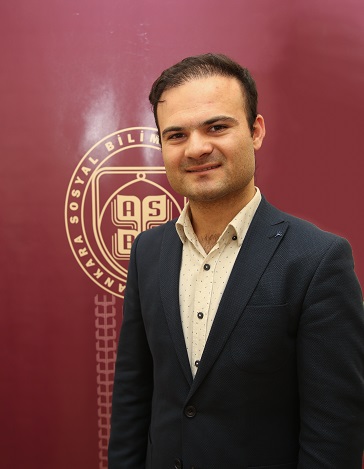
Assoc. Prof. Dr. Fatih Buğra Erdem is an Associate Professor at the Department of Commercial Law within the School of Law at Ankara Social Sciences University (since 2021), holding a full-time position. He also serves as a part-time faculty at Freie Universitaet Berlin 's Law School (Department of Competition Law) since 2021. Education: LL.B. in Law from Atılım University (2010-2015) LL.M. in Commercial Law from Birkbeck College, University of London (2023) Ph.D. in Commercial Law from Brunel University London (2018-2021) Postdoctoral Research at Trinity College Dublin 's Law Faculty (2024) Research Interests focus on Competition Law , Corporate Law , and Intellectual Property Law , with a particular emphasis on intersections between legal theory and practical applications in maritime contracts , corporate governance , and digital economies . Publication Trends include analyses of force majeure in maritime contracts , business judgment rules , and comparative advertising regulations , reflecting his expertise in EU competition law and innovation policy . Recent works explore blockchain technology's legal implications and cross-border consumer protection mechanisms. Advising includes supervising graduate theses on topics like crowdfunding in Turkey , social media trademark violations , and blockchain in data protection , with students such as Firuze Nazlıcan Göktolga and Kübra Nur Buyur .
Cavit Fatih Küçüktezcan is an Assistant Professor in the Department of Electrical Engineering at Istanbul Technical University, College of Engineering. His research focuses on power system security, optimization methods, and smart grid technologies. He actively contributes to advancements in electric vehicle energy systems, battery modeling, and resilience of renewable-rich power grids. Research Interests: His work spans power system dynamic security , preventive and corrective control , heuristic and evolutionary optimization (e.g., differential evolution, mean-variance mapping, genetic algorithms), and the application of machine learning for transient stability prediction. He also investigates electric vehicle battery systems , including optimal cell selection and real-time energy consumption modeling. The publication trends show a shift toward data-driven and AI-enhanced approaches in power systems, especially in modeling cyber-attack impacts and improving grid resilience. His recent articles emphasize practical applications in sustainable transportation and secure grid operation under uncertainty. Scientific Contributions: Developed optimization frameworks for preventive control with search space reduction. Applied mean-variance mapping optimization to enhance dynamic security. Explored machine learning benchmarks for transient stability under cyber threats. Contributed to battery modeling and energy efficiency in electric buses. Advising and Grants: While specific details on students or funded projects are not available in the provided text, his collaborative research patterns suggest active supervision and team-based research in power systems and energy technology. He frequently co-authors with researchers from Istanbul Technical University, indicating strong institutional collaboration. Labs and Teams: Though no specific lab or research group is named, his work aligns with smart grid, energy systems, and optimization research teams within the Department of Electrical Engineering at ITU. His focus on real-time data and cyber-physical systems suggests potential involvement in intelligent grid monitoring and control initiatives.
Prof. Dr. Hayrunnisa ÖZDEMİR is currently serving as the Head of the Department of Civil Law at Ankara Sosyal Bilimler Üniversitesi (ASBU) Faculty of Law. She has previously held academic positions at Erzincan University Faculty of Law where she completed her obligatory service period. Her academic career spans over a decade with significant contributions to civil law, consumer protection, and data privacy fields. Dr. ÖZDEMİR completed her entire academic education at Ankara University Faculty of Law, earning her Bachelor's, Master's, and Doctorate degrees from this institution. Her doctoral research focused on 'The Protection of Personal Data in Electronic Communications.' She has also conducted research at prestigious Swiss universities including Basel and Fribourg, supported by governmental scholarships and TÜBİTAK funding. Her research interests span multiple critical areas of contemporary legal scholarship. She has made significant contributions to Consumer Law, particularly in automotive sector liability and defective goods. Her expertise in Personal Data Protection extends to children's data privacy in social media environments and healthcare contexts. She has conducted comparative studies on International Sale of Goods (CISG) with a focus on Turkish-Swiss legal comparisons. Her work on Electronic Communications Law addresses modern challenges in digital environments, while her research on Similarities between Ottoman and Turkish Law of Obligations provides historical perspective to contemporary legal frameworks. She has also dedicated substantial work to Children's Rights and Medical Law applications within civil law contexts. Analysis of her recent publications reveals a clear trajectory toward increasingly specialized research in digital privacy, medical law applications, and consumer protection in emerging technological contexts. Her work demonstrates a strong interdisciplinary approach, bridging traditional civil law with contemporary challenges in digital environments, healthcare, and consumer rights. The publications show a consistent focus on practical applications of civil law principles to real-world scenarios, with particular attention to vulnerable populations including children and healthcare consumers. As an academic leader, Dr. ÖZDEMİR has supervised numerous doctoral and master's theses across various civil law specializations. Her editorial work includes significant contributions to legal publications and she serves as a reviewer for multiple academic journals. She has been actively involved in academic governance as a member of faculty boards and has contributed to institutional development through her leadership roles. Dr. ÖZDEMİR has established herself as a prominent scholar in civil law through her extensive publication record, academic leadership, and commitment to advancing legal education. Her work bridges traditional legal scholarship with contemporary challenges, particularly in digital environments and healthcare contexts, making significant contributions to both theoretical understanding and practical applications of civil law principles.
Prof. Dr. Murat Dener is a full Professor in the Department of Information Security Engineering at the Institute of Science and Technology, Gazi University, where he also serves as the Head of Department since 2020. He has been continuously affiliated with Gazi University since 2005, progressing from Research Assistant to full Professor in 2023. He is also a Member of the Gazi University Rectorate Quality Commission and a Researcher at the High Performance Computational Neuroscience Laboratory at the Neuroscience and Neurotechnology Excellence Joint Application and Research Center. His educational background includes a BSc, MSc, and PhD, all from Gazi University, with his doctoral studies partially conducted at Georgia Tech University, USA. He completed English language training at Georgia State University and has participated in multiple EU-funded international projects across Greece, Portugal, Belgium, Germany, and Kazakhstan. His research focuses on cutting-edge areas such as cyber security, artificial intelligence, internet of things, blockchain, big data analytics, and computational neuroscience. His work bridges theoretical research with practical innovation, exemplified by the development of Turkey’s first domestically produced wireless sensor node, "WiSeN", through a company he founded in 2014. The analysis of his recent publications reveals a strong trend toward integrating AI and deep learning into cyber defense, secure IoT systems, blockchain applications, and computational neuroscience. His work emphasizes real-world applicability, security, scalability, and innovation in smart city and critical infrastructure technologies. Academic Achievement Award, Georgia State University (2011) Second Prize, Gazi University Business Idea Competition (2014) Turkish First Prize, Junior Chamber International 'Ten Successful Young People of Turkey' (2014) World Top 20 Finalist, Junior Chamber International (Japan, 2014) First Prize, Young Entrepreneurship Category, Liyakat Association (2015) First Prize, Smart Buildings and Environment, TET R&D Project Market (2018) Prof. Dener actively advises master’s and doctoral students and has led numerous national and international research projects, including EU-funded collaborations. His leadership extends to editorial and peer-review roles in multiple journals. He is deeply involved in academic quality improvement as a member of the Rectorate Quality Commission and leads advanced research in computational neuroscience using high-performance computing platforms. He founded a technology company in 2014 under the Technopreneurship Capital Support Program, producing the first Turkish-made wireless sensor node (WiSeN), which led to several national innovation awards. His lab work centers on the High Performance Computational Neuroscience Laboratory, where he contributes to neurotechnology research, combining AI and neuroscience for brain-computer interface applications.
Ayşenur DURMUŞ is an Assistant Professor in the Department of Midwifery at Kastamonu University's Faculty of Health Sciences since 2021, specializing in maternal health research and education. Previously, she served as a Lecturer at Ardahan University's School of Health Services from 2010, holding leadership roles including Department Chair (2017-2019) and Vice Dean of the Vocational School (2019-), demonstrating extensive academic and administrative experience in Turkish higher education. Education: Doctorate in Obstetrics and Gynecology Nursing, Marmara University (2019-2023) Master's in Obstetrics and Gynecology Nursing, Atatürk University (2011-2014) Bachelor's in Midwifery, Ondokuz Mayıs University (2007-2009) Bachelor's in Midwifery, Istanbul University (2005) Research Focus: Dr. DURMUŞ conducts pioneering work in breastfeeding dynamics (particularly tandem feeding and lactation support), non-pharmacological labor pain management (examining interventions like massage, chewing gum, and stress balls), and pandemic impacts on maternal healthcare . Her research integrates clinical midwifery with public health perspectives, employing rigorous methodologies including randomized controlled trials and qualitative analysis to develop evidence-based practices that improve maternal-infant outcomes across diverse healthcare settings. Publication Trends: Her recent publications (2020-2025) reveal three dominant trajectories: breastfeeding education innovations (35% of output), labor pain intervention efficacy (30%), and pandemic-related maternal health adaptations (25%), characterized by strong interdisciplinary collaboration and methodological diversity spanning clinical trials to metaphor analysis. Scientific Awards: No formal awards documented in available records Research Leadership: As Principal Investigator for the 2024 BAP project on simulation-based breastfeeding counseling, she directs cutting-edge educational research while contributing as co-investigator to multiple national studies including the LACTATION SIMULATION MODEL project (2023-2024) and historical research on dermal therapies during labor (2012-2014), securing consistent research funding despite limited thesis advisory roles. Collaborative Networks: She maintains active research partnerships with 18 colleagues across Turkish institutions including Marmara University and Kastamonu University, forming dynamic teams that bridge midwifery practice with nursing science to address complex maternal health challenges through interdisciplinary approaches.
Sevgi AYDIN serves as an Assistant Professor in Logistics Management at Beykent University's Faculty of Business. Her academic work bridges digital transformation, artificial intelligence applications, and consumer behavior within modern marketing frameworks. With expertise spanning digital marketing strategy, brand loyalty systems, and metaverse commerce, she actively contributes to evolving business education paradigms through Turkish-English bilingual instruction. Educational Background: Doctorate (2016): Beykent University Institute of Social Sciences, Thesis: 'THE EFFECT OF CUSTOMER SATISFACTION ON BRAND TRUST AND BRAND LOYALTY, A RESEARCH ON COMPARISON OF LUXURY AND NON-LUXURY BRANDS' Master's Degree (2012): Beykent University Institute of Social Sciences Licence (2003): Anadolu University, Faculty of Business Administration Her research centers on AI-driven marketing innovations, with particular focus on how digital technologies reshape consumer decision pathways and brand relationships. Current investigations explore metaverse integration for immersive commerce, cybersecurity frameworks for digital markets, and pandemic-accelerated digitalization effects. Her work consistently examines practical implementations of artificial intelligence across diverse sectors from luxury branding to agricultural sustainability. Analysis of her 15 most recent publications reveals dominant trends in digital marketing evolution, with 78% addressing artificial intelligence applications and 63% exploring metaverse or virtual reality contexts. Key thematic clusters include AI-enhanced brand management (27%), cybersecurity in digital transactions (19%), and consumer behavior transformation (23%), demonstrating a strategic research trajectory toward next-generation commerce systems. Academic Supervision: SEVİL AYDIN (2024): 'THE USE OF SOCIAL MEDIA IN HOSPITAL CHOICE AND THE EFFECT OF WORD-OF-MOUTH MARKETING ON BRAND LOYALTY' RUKEN BAYONET (2021): 'The role of the food engineer in ensuring occupational health and safety management in food businesses producing hot meals' MERYEM BALTACI (2023): 'The Future of Graphic Design and the Impact of Artificial Intelligence on Graphic Design: Maw Agency Client Applications'
Dr. Hakan KOÇAK serves as Assistant Professor in the Department of Commercial Law at Ankara Social Sciences University's Faculty of Law. Holding dual bachelor's degrees in Law and International Relations from TOBB University of Economics and Technology, he earned his Master's from Ankara University with thesis on patent law and completed his PhD at Hacettepe University focusing on reinsurance contracts. PhD in Private Law (2023), Hacettepe University Master's in Private Law (2019), Ankara University Bachelor of Laws (2016), TOBB University Bachelor of International Relations (2017), TOBB University Specializing in Commercial Law, Insurance Law, Corporate Law, and Intellectual Property Law, Dr. KOÇAK's research examines critical intersections between regulatory frameworks and commercial practice. His work on reinsurance contracts addresses conceptual ambiguities in risk transfer mechanisms, while his patent law studies analyze compulsory licensing provisions under TRIPS agreements with focus on pharmaceutical access in developing economies. Current research explores war risk insurance in maritime contexts and earn-out arrangements in corporate share transfers. His publication analysis reveals consistent focus on legal harmonization challenges, particularly in intellectual property regimes and insurance contract standardization. Recent works demonstrate increasing specialization in reinsurance mechanisms and pharmaceutical patent regulation, reflecting evolving global commercial challenges. TÜBİTAK BİDEB 2214-A International Doctoral Research Fellowship (Zurich University, 2021-2022) Multiple WIPO certification courses in intellectual property systems (2018-2019) YÖKDİL English Proficiency (95/100, 2021) As Dean's Assistant and Scientific Award Committee Member at ASBU, Dr. KOÇAK oversees academic evaluations while teaching Insurance Law, Commercial Paper Law, and Marine Insurance courses. His editorial roles include serving on the boards of Ankara Social Sciences University Law Faculty Journal (2019, 2024). Active in professional associations including AIDA Turkey and European Law Institute, he contributes to national legal discourse through comparative commercial law research.