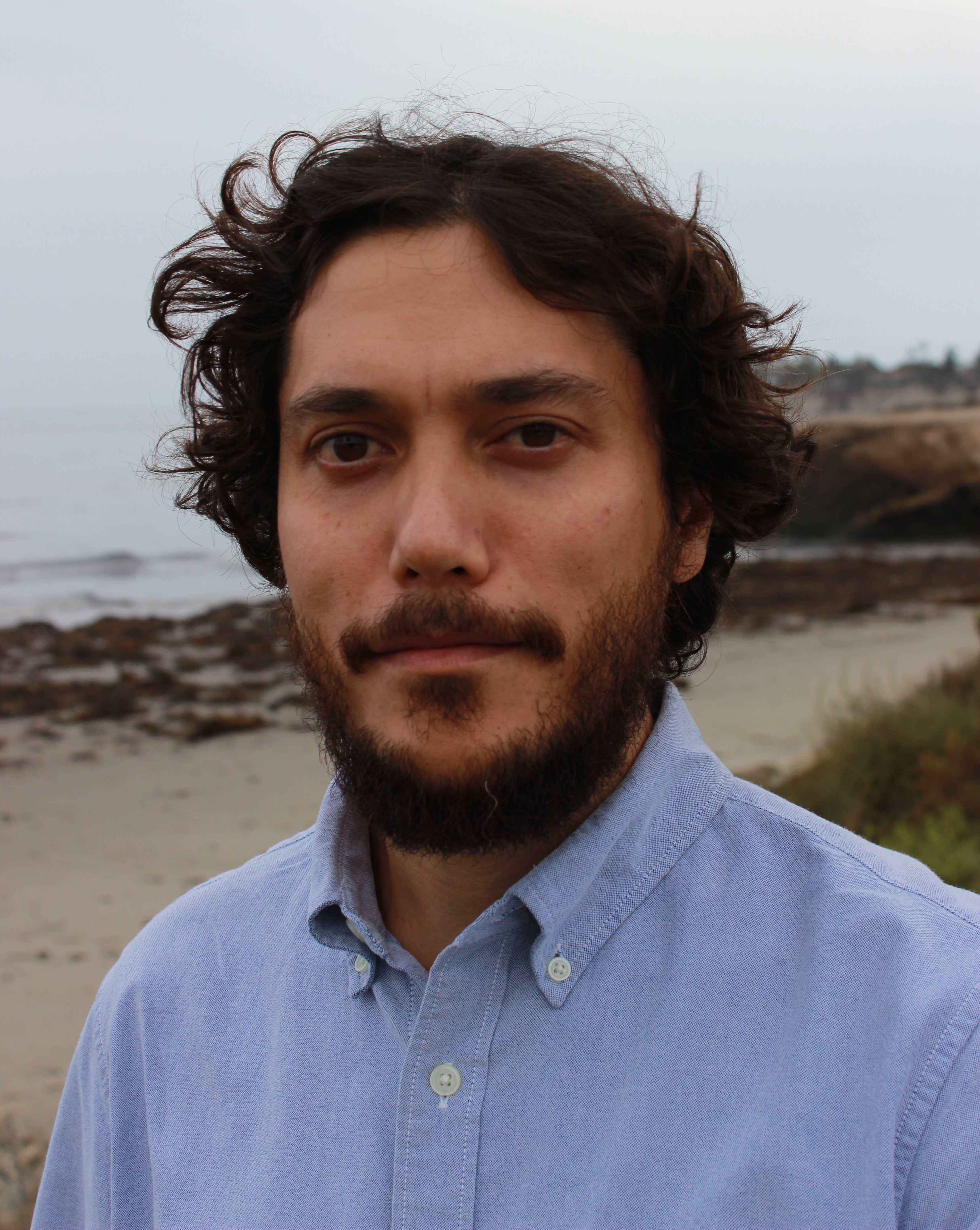
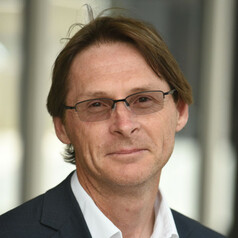
Robin S. Matoza is a Professor in the Department of Earth Science at the University of California, Santa Barbara (UCSB). His research focuses on volcano seismology, acoustics, and infrasound, with particular emphasis on understanding volcanic processes through seismic and infrasound data. He leads studies on volcanic eruption dynamics, infrasound propagation, and the application of seismoacoustic methods for hazard mitigation. Roles: Professor, Principal Investigator Affiliations: Department of Earth Science, Earth Research Institute, UCSB Research interests include volcano acoustics, infrasound source characterization, and the development of infrasound monitoring tools. He has contributed to global volcanic eruption detection systems, such as the IMS_VASC software for automated volcanic infrasound cataloging. His work integrates field data from volcanoes like Tungurahua (Ecuador), Yasur (Vanuatu), and Kīlauea (Hawaii) with computational modeling. Key projects include studying infrasonic signals from explosive eruptions, submarine volcanic activity, and the interaction between volcanic processes and atmospheric dynamics. He collaborates on international initiatives like the International Monitoring System (IMS) for nuclear treaty verification and volcanic monitoring.
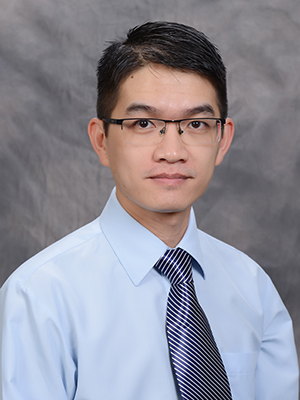
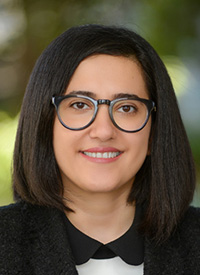
Khanh Nguyen is an Assistant Professor in the Department of Computer Science & Engineering at Texas A&M University, part of the College of Engineering. His research focuses on improving scalability and efficiency in Big Data systems through compiler and runtime innovations, particularly in memory management and distributed computing. Education: Ph.D. in Computer Science, University of California, Los Angeles (2019) M.S. in Computer Science, University of California, Irvine (2015) B.S. in Computer Science, University of California, Irvine (2012) His research interests include programming languages, compiler design, memory management, and Big Data systems. He has developed techniques such as Gerenuk for thin computation over big data, Skyway for distributed heap connectivity, and Yak , a high-performance garbage collector. His work emphasizes resource efficiency and workload scalability, particularly for machine learning and data-parallel applications. Recent publications (2021–2024) highlight advancements in adaptive memory management for warehouse-scale computers, semantics-aware swapping in disaggregated systems, and query-driven distributed tracing. Awards: Google Ph.D. Fellowship (2017) Facebook Ph.D. Fellowship Finalist (2017) His research bridges compiler/runtime systems with large-scale data processing, addressing challenges in distributed systems and far-memory utilization. He collaborates with industry and academic partners to advance practical, scalable solutions for modern data-intensive workloads.
Rainer Schuhmacher is a Full Professor for Plant and Microbe Metabolomics at the University of Natural Resources and Life Sciences, Vienna (BOKU), affiliated with the Department of Agricultural Sciences and the Institute of Bioanalytics and Agro-Metabolomics in Tulln an der Donau. His research focuses on metabolomics, analytical chemistry, and plant-microbe interactions, with emphasis on fungal secondary metabolites, mycotoxin resistance, and environmental stress responses in crops. He leads projects funded by the Austrian Science Fund (FWF), European Commission, and national agencies. Research interests span: Metabolomic profiling of plant-pathogen interactions (e.g., Fusarium -wheat systems) Stable isotope-assisted techniques for metabolic pathway analysis Cold stress mitigation in plants using Antarctic bacteria Development of computational tools for untargeted metabolomics data processing His work integrates analytical chemistry, bioinformatics, and molecular biology to study metabolic crosstalk in agricultural systems. Awards include the Fritz-Feigl-Preis (2012) and Dr.-Wolfgang-Houska-Preis (2005). He has supervised multiple PhD projects and leads the Plant-Microbe Metabolomics group, managing core metabolomics platforms and international collaborations. Key projects: Chemical crosstalk in mycoparasitic interactions (FWF) Metabolomics of cold stress tolerance mediated by psychrotolerant bacteria Extension of metabolomics platforms for plant-pathogen studies
Baris Kasikci is an Associate Professor in the Paul G. Allen School of Computer Science & Engineering at the University of Washington. Previously (2017-2023), he was a Morris Wellman Assistant Professor in the Electrical Engineering and Computer Science Department at the University of Michigan. His research focuses on building efficient and trustworthy computer systems through innovative combinations of approaches from systems, computer architecture, and programming languages. Dr. Kasikci received his PhD in Computer Science at EPFL and has held research positions at Microsoft Research Cambridge, Google, Intel, and VMware. His work addresses critical challenges in system reliability, security, and performance in increasingly complex software ecosystems. His research interests center on improving the efficiency of datacenter applications and machine learning systems, analyzing and fixing failures, and enhancing hardware security. His lab develops techniques for automated bug detection, formal verification of distributed systems, and building systems support for heterogeneous hardware architectures. Recent projects include Whisper (profile-guided branch misprediction elimination), Huron (taming false sharing), and Agamotto (automatic detection and repair of bugs in persistent memory applications). Analysis of his recent publications shows a strong trend toward optimizing large language model serving, hardware security, and performance optimization for modern heterogeneous architectures. His work bridges traditional systems research with emerging AI infrastructure needs, particularly in efficient LLM serving, security vulnerabilities in modern hardware, and performance optimization for heterogeneous computing environments. NSF CAREER award Microsoft Research Faculty Fellowship Intel Rising Star Award VMware Early Career Faculty Grant Google Faculty Award Roger Needham PhD Award (best PhD thesis in computer systems in Europe) Patrick Denantes Memorial Prize (best PhD thesis at EPFL) Best Paper Award at OSDI'18 Best Paper Award at MICRO'22 Dr. Kasikci has advised numerous PhD students who have gone on to prestigious positions in academia and industry, including Tanvir Ahmed Khan (Assistant Professor at Columbia University), Akshitha Sriraman (Assistant Professor at CMU), and Jiacheng Ma (AMD). His research has been supported by significant grants from NSF, DARPA, Intel, Google, Microsoft, VMware, and Amazon. His lab, the EfesLab, focuses on building tools and techniques that make computer systems more reliable, secure, and efficient. The EfesLab, led by Dr. Kasikci, brings together postdocs, PhD students, and undergraduate researchers to tackle fundamental challenges in systems reliability and performance. The lab has developed numerous influential tools including Whisper, Huron, and Agamotto that address critical performance and reliability issues in modern computing systems. Current research directions include efficient LLM serving, security of emerging hardware technologies, and automated debugging techniques.
Dr. Vanika Sharma is a Lecturer at UniSA STEM , University of South Australia. Her research focuses on renewable energy systems, battery storage optimization, and smart grid technologies. Renewable Energy Integration Power System Voltage Regulation Energy Cost Minimization Smart Inverter Controls Vanika's work addresses critical challenges in high PV penetration and overvoltage-induced curtailment . She has developed optimization models for battery sizing and tariff analysis, demonstrating economic benefits for households and distribution networks. Her recent studies show how combining reactive power support and smart inverters can eliminate financial losses. In her 2024 IEEE Access paper, she proposed a method to reduce active power curtailment by 47% through coordinated battery and PV inverter control. Earlier works (2017-2020) established foundational insights on feed-in tariff economics and net zero energy homes . Her research has received support from the Australian Government and University of South Australia.
Dr. Franceli Cibrian is an Assistant Professor in the Department of Electrical Engineering and Computer Science at Chapman University's Fowler School of Engineering. Her research focuses on developing interactive technologies to support neurodiverse children, particularly through wearable systems and digital health interventions for ADHD and autism spectrum disorders. Education: Ph.D. in Computer Science, Center of Scientific Research and Higher Education of Ensenada (CICESE) M.S. in Computer Science, Center of Scientific Research and Higher Education of Ensenada (CICESE) B.S. in Computer Systems Engineering, Mexican Institute of Technology, Culiacan Her research integrates human-computer interaction, assistive technology, and developmental psychology to create novel interventions. Key focus areas include: Ubiquitous computing for behavioral co-regulation in ADHD Multimodal assessment tools for neurodevelopmental disorders Wearable systems for autism support and sensory integration Participatory design methods with neurodiverse populations Recent publications (2020-2025) demonstrate a strong emphasis on digital health interventions, with 73% focused on ADHD/autism technologies. Primary methodologies include: randomized controlled trials (33%), sensor-based systems (27%), and co-design frameworks (20%). Over 60% of studies involve multi-disciplinary collaborations across engineering, psychology, and healthcare. Dr. Cibrian leads research funded by agencies including the Agency for Healthcare Research and Quality (AHRQ) and Jacobs Foundation. Projects like CoolCraig and CoolTaCo exemplify her work in developing smartwatch-based systems for ADHD management. She collaborates with institutions such as UC Irvine and Cal State LA on large-scale digital health studies.
Professor Marina Gashinova, Chair in Pervasive Sensing at the University of Birmingham, leads the Pervasive Sensing Group within the Microwave Integrated Systems Laboratory (MISL). Her research spans radar sensing for autonomous vehicles, space domain awareness (SDA), and sub-THz/mmWave technology, with international recognition for advancing cognitive radar and space-borne ISAR systems. Research Focus: She pioneers the use of mmWave/sub-THz frequencies for long-range sensing, applying AI to redefine radar capabilities in automotive and aerospace domains. Her EPSRC-funded projects (e.g., PathCAD, EP/Y022092/1) and Innovate UK collaborations (CORTEX, COSMOS) highlight her leadership in cognitive radar and quantum-enabled SDA. Scientific Awards: Lead of REF 2021 Impact Case Study on Advanced Driver Assistance Systems Founding Chair of EMSIG Focus Groups: MODEST (Modern Trends in Medium/Short Range Sensing) and Radar for Space Associate Editor, IEEE Transactions on Aerospace and Electronic Systems Member of EPSRC ICT, EU, and Canadian funding panels Education & Teaching: With a PhD in Physics and Mathematics from St. Petersburg Electrotechnical University and PGCert in Learning and Teaching, she coordinates the MSc module Digital Communication and Signal Processing and contributes to radar and satellite communication curricula.
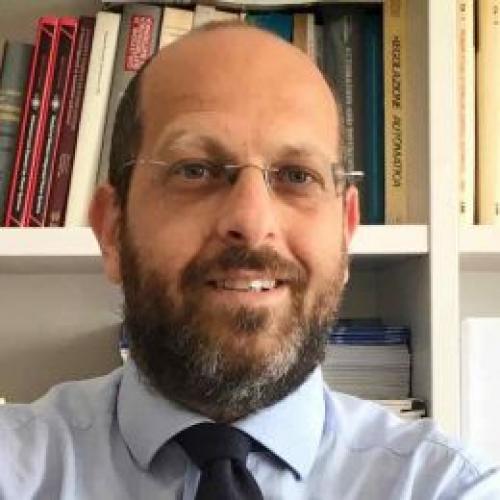
Federico Silvestro is a Full Professor at the University of Genoa , affiliated with the Naval, Electrical, Electronic and Telecommunications Engineering Department . His academic roles include being a Course Coordinator, Department Council Member, and Deputy Director of DITEN. His research focuses on Power systems stability and control Cybersecurity in energy networks Electric propulsion for marine applications Optimal energy storage and microgrid design Integration of renewable energy in maritime contexts Recent publications highlight trends in data-driven power system analysis , DC microgrid modeling , cybersecurity for virtual power plants , and advanced energy management strategies for maritime and port systems. Email: federico.silvestro@unige.it He leads the ENET-RT Lab , focusing on real-time power systems simulation and co-simulation platforms for marine and grid applications.
Associate Professor Michael Jack is a faculty member in the Department of Physics at the University of Otago, specializing in sustainable energy research that bridges theoretical physics with practical applications. His work focuses on transforming energy systems through innovative approaches to renewable integration and nanoscale energy conversion. His academic foundation includes undergraduate studies at the University of Canterbury and postgraduate work at the University of Auckland, followed by postdoctoral positions at Hiroshima University, Tokyo Institute of Technology, NTT Basic Research Laboratories, and Rice University. After serving as Science Leader of Clean Technologies at Scion until 2014, he joined the University of Otago as a Senior Lecturer before advancing to Associate Professor. Professor Jack's research spans two critical domains: smart energy systems for grid flexibility and nanoscale energy conversion using molecular motors. His team develops mathematical frameworks to optimize renewable integration through technologies like EVs and energy storage, while exploring thermal fluctuations in biological nanomachines to inspire next-generation energy-efficient technologies. This work contributes significantly to Active Matter research and sustainable energy transitions. His 2024-2025 publications reveal a concentrated effort on New Zealand's energy challenges, employing interdisciplinary methods from statistical physics to machine learning. Key themes include electric vehicle integration, residential energy demand modeling, and hydrogen transportation systems - all addressing the urgent need for low-carbon energy solutions through rigorous quantitative analysis. Professor Jack leads a collaborative research group working with the Centre for Sustainability (CSAFE), University of Canterbury, and Scion's Dr. Katharine Challis. His teaching portfolio includes EMAN 308 Thermoprocesses 2, EMAN 403 Linear Systems and Control Theory, and EMAN 405 Energy Practice (which he coordinates), preparing students for energy system challenges through hands-on practice.
Amir Aryani is an Associate Professor at the School of Business, Law and Entrepreneurship , Swinburne University of Technology . He leads the Social Data Analytics (SoDA) Lab within the Social Innovation Research Institute , focusing on data-driven solutions for health and social challenges. His work involves large-scale cross-institutional projects with international collaborators including the British Library , ORCID , and NIH . Research Focus: Data modeling, real-time analytics, and information retrieval for social-good initiatives Collaborations: CERN, Data Archiving and Networked Services (DANS), and Global Information Systems (GESIS) His research explores data science applications in mental health, community resilience, and sustainable development. Key trends in his publications include: Mapping research to United Nations Sustainable Development Goals Developing hybrid expert-finding models using NLP and graph algorithms Creating interoperable research graphs for cross-platform discovery Assessing social impact of data projects in non-profit sectors Amir is actively involved in PhD supervision and has secured funding from Australian Research Council , National Health and Medical Research Council , and philanthropic foundations . He also contributes to community data projects through the SoDA Lab , which builds tools for social connection analysis and humanitarian response optimization.
Dr. Francisco Pérez Fernández is a Professor at Camilo José Cela University (UCJC) in both Psychology and Criminology & Security departments, and holds a PhD in Philosophy & Education Sciences from Complutense University of Madrid (1997). He serves as coordinator of Criminology Degrees (2018-present), former Criminology Department Coordinator (2008-2013), and has been Academic Mentor Accreditation holder since 2008. His international collaborations include Evidentia University (Florida, USA) since 2022. PhD in Philosophy & Education Sciences (UCM, 1997) Postgraduate in Cognitive Sciences, Emotion & Stress (UCM) Accredited Academic Mentor (Spanish Mentoring Network) Civil & Commercial Mediator (UCJC) His research focuses on intersections between History of Psychology , Criminal Psychology , and Cultural Criminology , particularly examining: Crime-cultural system interactions Penitentiary system evolution Popular culture's role in criminal narratives Forensic science historical development Collective psychological phenomena Scientific contributions include establishing the Psychological Autopsy as investigative technology and developing the Method VERA behavioral analysis framework. His publications span: 15+ peer-reviewed articles (2019-2024) 6 book chapters on cultural anthropology 2 edited volumes on violence phenomena 1 book on vampire psychology 1 book on Batman's cultural origins Scientific recognition includes: 2015 In Memoriam Prof. Orozco Acquaviva Award 2016 Real Colegio de Médicos de Sevilla Award 2023 SECCIF Gold Insignia As academic leader, he has: Directed 60+ academic committees Mentored numerous doctoral candidates Coordinated postgraduate programs (2015-2016) Co-edited EduPsykhé journal Reviewed for 10+ international publications Current affiliations: Secretary of Spanish Society for the History of Psychology (SEHP, 2016-present) Member of American Psychological Association (APA) Full member of Spanish Society of Criminology and Forensic Sciences (SECCIF) Editor-in-Chief of EduPsykhé. Journal of Psychology and Education
Professor Emma Thomas is a leading social psychologist at Flinders University in the College of Education, Psychology and Social Work , where she holds the Matthew Flinders Professorship and an Australian Research Council (ARC) Future Fellowship (2025-2030). She directs the Flinders Social Influence and Social Change Lab and contributes to leadership roles in the Jeff Bleich Centre for Democracy and Disruptive Technologies and the Flinders Institute for Mental Health and Wellbeing. Education: BA (Hons) and PhD in Psychology (2005, 2009) from the Australian National University Her research bridges social and political psychology, focusing on collective action , political engagement , and extremism dynamics. Key areas include: Emotional drivers (anger, hope) in social change Online radicalization and misinformation Democratic resilience amid technological shifts UN Sustainable Development Goals (SDGs) contributions Recent publications examine: Politicization in digital democracies Conspiracy beliefs' impact on political systems Intergroup cooperation in cross-cultural contexts Psychological implications of minority rights Awards include the South Australian Tall Poppy Science Award (2018) . She serves as Associate Editor at Political Psychology and previously at British Journal of Social Psychology , with ARC-funded projects on radicalization and civic engagement.
Shane Dawson is the Executive Dean of UniSA Education Futures and Professor of Learning Analytics at the University of South Australia. His work bridges social network analysis and learner interaction data to enhance teaching quality and educational outcomes. Affiliation : University of South Australia Research Focus : Learning Analytics, Curriculum Mapping, K-12 Decision-Making Systems, and AI in Education Recent Research Trends : Shane’s 2025 publications emphasize generative AI for curriculum analytics, ethical considerations in K-12 dashboards, and longitudinal graduate attribute monitoring. His articles often integrate psychometric models, social network tools, and open-source software like OVAL and SNAPP . Advising and Collaboration : As a co-developer of key learning analytics tools and a supervisor for research students, he collaborates globally with institutions such as Johns Hopkins University and Shahid Beheshti University of Medical Sciences. Labs and Teams : Shane leads UniSA’s Teaching Innovation Unit and is a founding member of the Society for Learning Analytics Research , driving institutional and international initiatives in educational technology.
Hanieh Sardashti is an Assistant Professor at Adelphi University's Robert B. Willumstad School of Business, specializing in the Decision Sciences and Marketing Department. Her research bridges marketing strategy with financial outcomes, focusing on areas like marketing analytics and digital marketing. Ph.D. in Marketing, Michigan State University (2018) MBA in Finance and International Business, University of Toledo, Ohio (2013) Research Interests: Marketing Strategy Marketing Analytics Digital Marketing Quantitative Marketing Her publications analyze the intersection of marketing and financial risk, including studies on CSR during recessions, equity-based compensation effects on branding, and corporate risk mitigation through marketing capabilities. Articles often employ quantitative methodologies and emphasize strategic decision-making. Contact: Email: hsardashti@adelphi.edu LinkedIn: Profile
Nora H Prior, PhD, is a Senior Research Associate in the Psychology Department at Cornell University, focusing on sensory systems, social behavior, and neurogenomics. Her research team explores avian behavioral neuroscience, with expertise in neuroendocrinology, bioacoustics, and comparative psychology. 2020-2021: Sessional Instructor & course designer, University of British Columbia 2018-2021: Postdoctoral Associate, Avian Behavioral Neuroscience Lab (University of Maryland) 2016-2018: Postdoctoral Fellow, Center for Comparative and Evolutionary Biology of Hearing (University of Maryland) 2015: Postdoctoral Fellow, Neuroethology & Bioacoustics Lab (University of Lyon) 2009-2014: PhD Candidate (University of British Columbia) Her research combines neuroendocrinology, bioacoustics, and behavioral ecology to study avian communication, pair bonding, and neurogenomic responses to environmental stressors. Key topics include: Acoustic fine structure in zebra finch communication Neuroendocrine regulation of monogamy and aggression Effects of water restriction on vocal behavior Differential gene expression in extreme physiological states Temporal processing of vocal sequences Perceptual limitations in avian cognition While her publications span from 2010-2025, recent work emphasizes methodological rigor in neuroscience research, environmental impacts on brain development, and neurogenomic resilience in wild birds. Her 2025 paper on Science Democratization addresses systemic challenges in behavioral neuroscience.