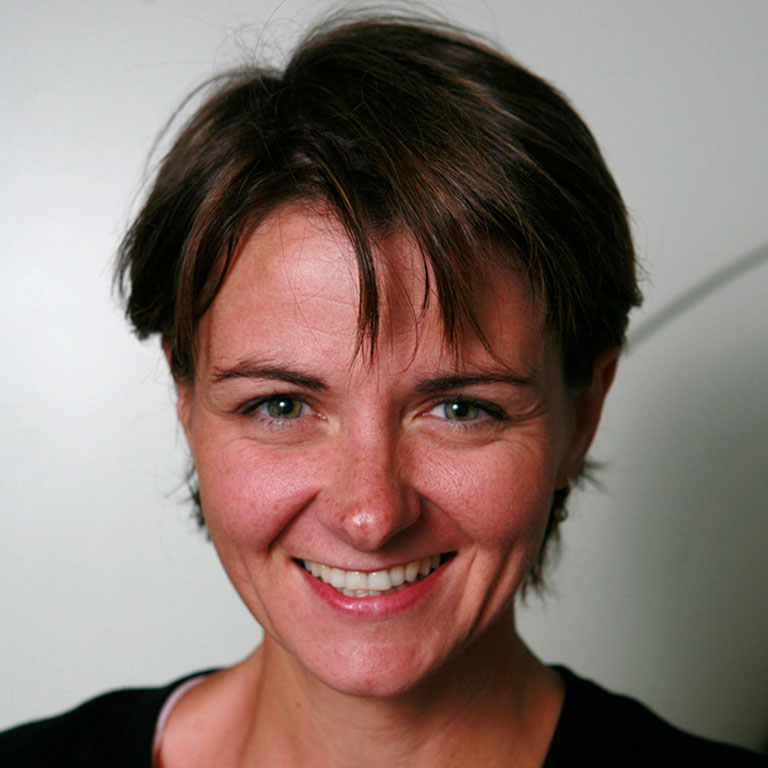
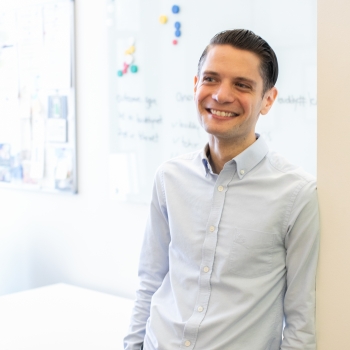
Dr. Ben Clarke is an Associate Professor and Department Head of Special Education and Clinical Sciences at the University of Oregon’s College of Education. His research focuses on mathematical development, assessment systems, and school-based interventions to support student achievement. He has led over 20 federally funded grants totaling ~$55 million, emphasizing early numeracy interventions and multi-tiered instructional models. Clarke’s work bridges theory and practice, with publications on mathematics instruction, assessment, and RTI frameworks. Education: PhD (2002), MA (2001) in School Psychology/Special Education from University of Oregon; BS (1997) in Psychology from Wabash College (Phi Beta Kappa). Research Interests: Mathematics intervention design and efficacy Early numeracy assessment Multi-tiered systems of support (MTSS) Technology in education Equity in mathematics education Publications highlight his focus on intervention fidelity, tiered models, and outcomes for students with learning difficulties. Awards include the AERA Special Education SIG Research Award and recognition for academic excellence. Grants and Advising: Principal Investigator on ~$55M in federal grants; advises graduate students in School Psychology and Special Education. His lab develops evidence-based tools like the KinderTEK iPad program and contributes to national practice guides (e.g., IES RTI for Mathematics). Labs/Teams: Leads research teams focused on early mathematics intervention and MTSS implementation, collaborating with schools and policymakers to scale effective practices.
Dr. Zara Ersozlu is a Senior Lecturer in Mathematics Education within the School of Education at the University of Newcastle, Australia. With a distinguished international career spanning multiple continents, she has held academic positions at prestigious institutions including North Carolina State University (USA), Gazi and Gaziosmanpasa Universities (Turkey), National Taiwan Normal University (Taiwan), The University of Western Australia, Murdoch University, and Deakin University. Her academic journey includes tenured positions as an Associate Professor and leadership roles as Department Head and Chair in teacher education disciplines. Currently, she teaches undergraduate and postgraduate courses in mathematics education, including Effective Pedagogies in Primary Mathematics, K-6 Mathematics, K-6 Numeracy, and Digitally Supported Learning. Dr. Ersozlu earned her Doctor of Philosophy from Firat University in Turkey and her Master of Art from Sakarya University. Her extensive academic preparation is complemented by five years of practical teaching experience in public schools prior to entering academia. This blend of theoretical knowledge and practical classroom experience informs her approach to teacher education and educational research. At the broadest level, Dr. Ersozlu's research investigates solutions to real-life problems impacting people's well-being, success, and capacity to achieve. Her scholarly work spans primary and secondary mathematics education, the psychology of mathematics (including metacognition, self-regulation, and anxiety), cross-cultural educational studies, teacher education, virtual simulated learning environments, and educational assessment. She has increasingly focused on the transformative potential of AI and machine learning in education, exploring how these technologies alter teaching, learning, and research processes. Her methodological expertise encompasses both quantitative and qualitative approaches, allowing her to effectively analyze both small and large educational datasets. Analysis of Dr. Ersozlu's recent publications reveals a strong emphasis on mathematics anxiety, teacher education, and the integration of technology in learning environments. Her work demonstrates a consistent focus on practical applications of educational research to address real-world challenges in mathematics education. The interdisciplinary nature of her research connects educational psychology, technology integration, and cross-cultural perspectives, with particular attention to how these elements intersect in teacher preparation and student learning outcomes. 2023 ATEA Research Recognition Award from the Australian Teacher Education Association 2021 Fellow of the Higher Education Academy (Advance HE, UK) 2010 Fellowship Program for Postdoctoral Researchers from the Council of Higher Education of Turkey Dr. Ersozlu is deeply committed to mentoring the next generation of scholars, currently supervising four PhD students and having successfully guided ten students to completion. Her grant portfolio includes significant funding for projects such as Best Practice Guidelines for RPL in Initial Teacher Education Programs ($60,000), Exploring the Reciprocal Relationship Between Mathematics Anxiety and Mathematical Resilience ($2,599), and multiple conference travel awards. She serves as an Associate Editor for several prominent journals including the International Electronic Journal of Mathematics Education and as Editor for Interdisciplinary STEM Education. Her editorial work reflects her standing as a respected voice in mathematics education research. Dr. Ersozlu's academic leadership extends to her role in developing innovative teaching approaches that integrate virtual simulation technology and learning analytics. Her work with TeachLivE™, a mixed-reality classroom simulation platform, demonstrates her commitment to creating authentic learning experiences for teacher education students. Through these initiatives, she bridges the gap between educational theory and classroom practice, preparing future educators to effectively implement evidence-based teaching strategies in diverse learning environments.
Dr. Angeline Lillard is Commonwealth Professor of Psychology and Director of the Montessori Science Program at the University of Virginia. She leads the Early Development Lab, focusing on children's social and cognitive development, particularly Montessori education's impact on learning and wellbeing. A Fellow of AAAS, APA, and APS, she earned her BA in English Literature from Smith College and PhD in Psychology from Stanford University. Research Interests: Dr. Lillard's work bridges Montessori pedagogy with developmental psychology, analyzing how play, educational environments, and culturally responsive teaching shape child outcomes. She explores standardized testing disparities, discipline equity, and the neurobiological underpinnings of pretend play. Key themes in her 15 most recent publications include Montessori's role in reducing educational inequality, the cognitive effects of fantasy in media, and the use of multilevel modeling to assess school discipline patterns. Her research spans preschool to adult wellbeing, emphasizing self-determination theory and longitudinal data. Scientific Recognition: Awarded the Nancy Staub Award for Puppetry Research (2024) Recognized for her book with the Cognitive Development Society Book Award (2006) James McKeen Cattell Sabbatical Fellow (2005-06) Albert Bandura Graduate Research Award (2016-17) Advising and Grants: Mentored 15+ graduate students including Lee LeBoeuf and Christina Carroll. Secured IES funding for a 600-child study on public Montessori preschools and Arnold Foundation support for kindergarten data collection.
Duncan Astle is the Gnodde Goldman Sachs Professor of Neuroinformatics at the Department of Psychiatry, University of Cambridge. He serves as a Programme Leader at the Medical Research Council's Cognition and Brain Sciences Unit (MRC CBU) and is a Fellow of Robinson College. Astle heads the 4D Lab (Development, Dynamics, Disorders, Data Science), which provides a research home for approximately 15 Early Career Researchers working at the intersection of developmental cognitive neuroscience and advanced data science methodologies. Astle's research focuses on understanding childhood development through innovative analytical approaches. His work employs transdiagnostic methods to study children with attention, learning, and memory difficulties, moving beyond traditional diagnostic categories. He investigates how neural systems develop in childhood, how they relate to developmental disorders, and how they respond to intervention. His research integrates network science, machine learning, and generative modeling to capture the complexity of neurodevelopmental diversity, examining how cognitive skills, literacy, numeracy, and mental health interrelate over developmental time. His publication record reveals a strong focus on brain connectivity and organization across development. Recent work explores structural and functional neurodevelopmental trajectories, brain wiring economics, and the impact of environmental factors on neural development. Astle's research frequently employs advanced data science techniques to identify sub-populations of children with different cognitive or brain profiles, regardless of diagnosis, and to map non-linear relationships between brain organization and cognitive difficulties. His work has increasingly focused on transdiagnostic approaches to understanding developmental disorders and the application of computational models to developmental neuroscience. Astle actively supervises PhD students and has built a substantial research group that contributes to major projects including the Centre for Attention Learning and Memory (CALM) and Resilience in Education and Development (RED). His work has been supported by prestigious funding bodies including the Royal Society, the British Academy, the Medical Research Council, and the Economic and Social Research Council, as well as multiple charitable foundations. The 4D Lab, under Astle's leadership, utilizes state-of-the-art facilities at the University of Cambridge, including on-site magnetic resonance imaging and magnetoencephalography scanners. The lab contributes to building specialist cohorts such as CALM (800 children with cognitive difficulties plus 200 comparison children) and RED, which study children's development, resilience, and educational outcomes. Astle's team explores how growing up in adverse environments affects children's brains, behavior, and mental health, with the aim of identifying early markers of risk and resilience.
Elena Katok is a Professor of Supply Chain Management at the University of Texas at Dallas, Naveen Jindal School of Management. She serves as Co-Director of the Center and Laboratory for Behavioral Operations and Economics (LBOE) and holds editorial positions as Department Editor for Management Science (Operations Department) and Associate Editor for Manufacturing and Service Operations Management. Her research focuses on Behavioral Operations Management (BOM), Behavioral Market Design, and Auctions, with particular emphasis on using laboratory experiments to understand human behavior in operational contexts. Her work bridges the gap between traditional analytical operations models and actual human decision-making in supply chain and procurement settings. The analysis of her recent publications reveals a consistent research trajectory examining how psychological and behavioral factors influence operational decisions. Her work spans auction design, contract theory, trust mechanisms, and behavioral aspects of supply chain coordination. A notable pattern is her focus on the intersection of behavioral economics and traditional operations management problems, particularly how fairness concerns, risk perception, and trust impact procurement and supply chain decisions. Professor Katok has developed and implemented numerous classroom games to teach supply chain management concepts, demonstrating her commitment to translating research into practical pedagogy. She has created simulation tools through the SoPHIE platform to enhance experiential learning in operations management courses. Her teaching portfolio includes OPRE 6371: Purchasing, Sourcing and Contract Management for SCM MS and MBA students, OPRE 7309: Behavioral Operations Management at the PhD level, and OPRE/MECO 6355: Deal Making Strategies. She has also authored several case studies including eBay sniping, Winter Gear, Sears Logistics, Spectrum, and General Hospital to facilitate hands-on learning. As co-editor of The Handbook of Behavioral Operations published by Wiley, she has helped establish Behavioral Operations Management as a significant subfield that incorporates insights from psychology and behavioral economics to study how individuals make decisions in operational contexts.
Daniel Hyde is an Associate Professor in the Department of Psychology at the University of Illinois Urbana-Champaign, affiliated with the College of Liberal Arts & Sciences and the Neuroscience Program. His research explores the nature and development of abstract conceptual knowledge through behavioral and neural measures. PhD in Psychology from Harvard University Hyde investigates cognitive development from infancy to adulthood, focusing on quantitative reasoning , spatial reasoning , and psychological reasoning using techniques like event-related brain potentials (ERPs) , functional near-infrared spectroscopy (fNIRS) , and behavioral assessments. His recent work examines how symbolic number knowledge builds on non-symbolic foundations and how neural sensitivity to mental states in infancy predicts later theory of mind abilities. Hyde's publications demonstrate a consistent focus on numerical cognition, multisensory integration, and developmental neuroscience. He leads the Brain and Cognitive Development Lab , participates in global initiatives like ManyNumbers and ManyBabies , and collaborates across disciplines to apply developmental insights to education and public health contexts.
Karen Mundy is a Professor of Educational Leadership and Policy at the University of Toronto's Ontario Institute for Studies in Education (OISE), cross-appointed to the Munk School of Global and Public Affairs. She holds the distinction of being a former Canada Research Chair (2002-2012) and has served as Associate Dean of Research and Innovation (2012-2014) and Director of the Comparative, International and Development Education Centre (CIDEC) at OISE (2002-2011). Dr. Mundy's research interests focus on education in the developing world , the global politics of 'education for all', educational policy and reform in Sub-Saharan Africa, and the role of civil society organizations in educational change. Her scholarly work bridges academic research with practical policy implementation, making significant contributions to both theoretical understanding and real-world educational challenges globally. Her recent publications demonstrate a strong focus on foundational learning challenges, particularly literacy and numeracy in low-income countries, as well as responses to educational disruptions like the COVID-19 pandemic. Her influential 2021 article 'Why Do We Keep Failing to Universalize Literacy?' critically examines global education architecture and challenges prominent actors like the Gates Foundation to rethink their approaches to educational reform. Two-time winner of the Bereday award for best article in the Comparative Education Review (1998, 2015) Named among Canada's 10 best educators by Time Magazine (2002) President of the Comparative and International Education Society (2014-2015) Dr. Mundy has supervised more than two dozen PhD students to completion and has received research funding from major organizations including the Gates Foundation. Her practical policy work includes serving as Chief Technical Officer at the Global Partnership for Education (2018-2022), where she led the development of strategic frameworks and built the Education Policy and Performance Team from one person to a group of 25 technical experts. She has advised numerous international organizations including the World Bank, UNESCO, UNICEF, and the Mastercard Foundation.
Helen Verran is a Professorial Research Fellow at Charles Darwin University's Northern Institute within the Faculty of Arts and Society. An accomplished ethnographer with a distinguished career spanning seven universities across four continents, she has dedicated her academic life to exploring cross-cultural knowledge work, particularly with Indigenous communities. Before joining Charles Darwin University, she spent twenty-five years teaching and researching in History and Philosophy of Science at the University of Melbourne, where she collaborated extensively with Yolngu Aboriginal knowledge authorities. University of Melbourne (25 years in History and Philosophy of Science) Nigeria (8 years in the 1980s working with Yoruba teachers) Charles Darwin University (current position at the Northern Institute) Verran's research centers on ethnographic approaches to knowledge production in an era dominated by numerics, algorithms, and big data. She investigates how first-person experience and Indigenous knowledge systems can inform policy and governance, preventing crucial aspects of human experience from being lost in purely quantitative approaches. Her work spans Indigenous knowledge traditions, philosophy of science, comparative philosophy, and decolonizing practices, with particular focus on Yolngu Aboriginal Australian knowledge systems and Yoruba knowledge from Nigeria. She has developed innovative 'Ground Up' research methods that enhance Indigenous sovereignties and has made significant contributions to Science and Technology Studies (STS), especially regarding numbers and enumeration in cross-cultural contexts. Her recent publications reveal a sustained engagement with decolonizing methodologies, museum epistemology, Indigenous knowledge systems, and the philosophical implications of cross-cultural knowledge exchange. Verran's work consistently examines the tensions between different knowledge systems while developing practical approaches for working across these differences respectfully. She has made notable contributions to understanding Indigenous mathematics and the role of numbers in different cultural contexts, as evidenced by her award-winning book 'Science and an African Logic' (2001). Vice Chancellor's Award for Research Impact (2023) International prizes for 'Science and an African Logic' (2001) Referenced in Wikipedia pages Verran actively supervises postgraduate research and shares her expertise through 'Espresso Yourself!' sessions for Higher Degree by Research students. Her current projects include 'Design and evaluation as strategies/practices for exploring organisational sustainability' and 'Hope and a Decolonising Pedagogy,' reflecting her commitment to developing practical applications of her theoretical work. She has established collaborative research frameworks with Indigenous communities in Arnhem Land, particularly focused on digital technologies, environmental management, and education in remote settlements. As an active participant in academic networks, Verran organizes conferences and workshops on STS and Indigenous methodologies, including the 'Making and Doing Top End Science and Technology Studies together' event in 2024. Her work contributes significantly to Sustainable Development Goals related to quality education, reduced inequalities, and peace, justice and strong institutions.
Jenn Brophy is an Assistant Professor of Bioengineering at Stanford University, developing technologies for genetic engineering of plants and microbes to address environmental stress resilience and agricultural sustainability. Her lab focuses on synthetic genetic circuits for plant root reprogramming and stress response optimization. B.S. in Bioengineering, UC Berkeley (2010) Ph.D. in Biological Engineering, MIT (2016) Postdoctoral Fellow, Stanford University (Biology) Research spans synthetic biology, plant genetics, and microbiome engineering, emphasizing climate adaptation and sustainable biotechnology. Current projects include: Plant-microbe interaction engineering Stress-responsive biosensors High-throughput genetic tool development Plant cell atlas integration Sustainable laboratory practices Her recent publications highlight advances in recombinase circuits, root architecture engineering, and plant cell mapping, with applications in climate resilience and microbiome design. Collaborators include José Dinneny (Stanford) in plant synthetic biology research.
Gustav Eje Henter is an Assistant Professor at KTH Royal Institute of Technology, holding roles as the Head of Research at Motorica AB and a Core Team Member of the Wallenberg Research Arena (WARA) for Media and Language. He is the Secretary of the ISCA SynSIG (Special Interest Group on Speech Synthesis) and a Co-Organiser of the GENEA Workshops on Embodied Agents' Non-Verbal Behavior. His research focuses on speech synthesis, gesture generation, and multimodal interaction, with contributions to TTS systems, neural networks, and embodied AI. He leads Digital Futures, a cross-disciplinary research center addressing societal challenges through digital technologies. This center is a collaboration between KTH, Stockholm University, and RISE. His work spans foundational research to industrial applications, emphasizing ethical AI, privacy in voice conversion, and human-robot interaction. Key research themes include causal reasoning in LLMs, adversarial privacy techniques, and benchmarking frameworks like the GENEA Leaderboard. He has organized international workshops (GENEA 2021-2024) and contributed to standards in TTS evaluation methodologies. His technical innovations include HiFi-Glot for formant synthesis and Matcha-TTS for fast waveform generation. His research integrates audio, gesture, and motion synthesis with deep learning, addressing challenges in spontaneous speech synthesis, multimodal coherence, and listener perception. He advocates for rigorous evaluation practices and open challenges to advance the field's reproducibility and real-world applicability.
Caitlin C. Rosenthal is an Associate Professor in the Department of History at the University of California, Berkeley's College of Letters and Science. A historian specializing in 18th and 19th century U.S. history, she is renowned for her interdisciplinary approach that blends qualitative and quantitative methods across business history, economic history, and labor history. Her research focuses on the development of management practices, particularly those based on data analysis, with special attention to the historical relationship between violence and innovation. Her groundbreaking work examines how accounting and management techniques evolved, including their disturbing applications on slave plantations. Rosenthal's scholarship bridges historical analysis with contemporary concerns about data practices and ethical business conduct. Her influential book Accounting for Slavery: Masters and Management (Harvard University Press, 2018) won the Simkins Award from the Southern Historical Association and the first book prize from the Economic History Society. It was featured as one of 'Five Books' best economics books of 2018 and was incorporated into the New York Times' 1619 Project. The book explores how plantation management contributed to modern business practices while examining the troubling intersection of violence and innovation. Simkins Award of the Southern Historical Association First book prize of the Economic History Society Carol D. Soc Graduate mentoring award (2019) Hellman Faculty Fellowship (2018-2020) American Cultures Innovation in Teaching Prize (2016) Rosenthal teaches undergraduate courses on the history of capitalism and data practices, including 'The History of American Capitalism' (which won the American Cultures Innovation in Teaching Prize in 2016) and 'Calculating Americans,' which examines the evolution of data practices from the U.S. Census to medical records. She actively mentors graduate students on topics related to data and economy, having received the Carol D. Soc graduate mentoring award in 2019. Her educational background includes a PhD in History of American Civilization from Harvard University, an AM in History from Harvard, and a BA in Political Science summa cum laude from Rice University.
Karin H. James is a Professor and Director of Graduate Studies in the Department of Psychological and Brain Sciences at Indiana University Bloomington's College of Arts and Sciences, actively reviewing applications for Fall 2026 admissions. Her research program investigates how self-generated actions shape cognitive development through neural mechanisms. Her educational background includes: Post Doctoral Fellow, Vanderbilt University (2001-2003) Ph.D. in Psychology, University of Western Ontario (2001) M.A. in Psychology, University of Western Ontario (1998) B.S. in Psychology, University of Toronto (1996) B.A. in History, University of Toronto (1991) Dr. James' research centers on the neural correlates of learning, specifically how motor experience influences visual recognition across domains including object recognition, reading acquisition, language learning, and mathematical understanding. Using fMRI and behavioral methods, she examines how sensorimotor interactions during symbol production (e.g., handwriting) reconfigure brain networks for perception. Her work demonstrates that visual-motor contingency during learning creates lasting neural changes that enhance recognition, with implications for educational practices in literacy and numeracy development. Analysis of her 2018-2021 publications reveals consistent focus on embodied cognition principles, particularly how action-perception loops establish neural representations. Key themes include gesture-based learning in mathematics, visual-motor integration in symbol recognition, and category formation mechanisms, bridging cognitive neuroscience with developmental psychology through innovative methodologies like the MRItab neuroimaging tool. Dr. James maintains active membership in the Society for Research in Child Development (2007-present), Cognitive Neuroscience Society (2004-present), and Vision Sciences Society (2000-present), reflecting her interdisciplinary approach to learning mechanisms. As Director of Graduate Studies, she oversees program development and student mentorship while leading the Cognition and Action Neuroimaging Lab. Her research infrastructure includes specialized neuroimaging tools developed for naturalistic experimental paradigms, supporting investigations into how embodied experiences shape cognitive architecture from childhood through adulthood. The Cognition and Action Neuroimaging Lab develops cutting-edge methodologies like the MRItab touchscreen system to study naturalistic learning during fMRI scanning, focusing on how sensorimotor experiences during symbol production reconfigure neural networks for perception and recognition across developmental stages.
Professor Michelle Ellefson is a Professor of Cognitive Science at the University of Cambridge's Faculty of Education, where she serves as Director of CAM-DTP and as Undergraduate Tutor for Gonville and Caius College. She convenes the INSTRUCT Research Group (Implementing New Student Thinking Resources Using Cognitive Theory) and is affiliated with multiple interdisciplinary initiatives including Cambridge Neuroscience, Cambridge Big Data, and Cambridge Language Sciences. Her educational background includes a PhD and MA in Brain and Cognitive Sciences from Southern Illinois University and a BA in Psychology, summa cum laude, from the University of Minnesota. She is a member of several professional organizations including the Psychonomic Society, Cognitive Science Society, Women in Cognitive Science, and SPARK Society. Professor Ellefson's research integrates cognition, neuroscience, child development, and education into a multi-disciplinary program aimed at improving math and science education. Her work focuses on executive functions in school achievement, children's causal reasoning about scientific phenomena, and applying cognitive principles like simplicity and desirable difficulties to classroom learning. Her research spans laboratory-based studies paired with classroom applications to understand cognitive development mechanisms and improve educational practice. Her recent publications reveal strong trends in executive function research across cultural contexts, particularly examining East-West contrasts and the relationship between executive functions and academic achievement. Her work increasingly focuses on developing and validating assessment tools like the Zoo Task for metacognitive problem-solving, and she is committed to open science practices including registered reports and pre-registration of studies. Psychonomic Society Cognitive Science Society (CogSci) Women in Cognitive Science (WiCS) SPARK Society Professor Ellefson actively supervises PhD students through the Psychology, Education & Learning Studies program and teaches cognitive psychology and educational neuroscience in the PGCE program. She emphasizes quantitative methods and R programming for data analysis, requiring doctoral students to develop strong statistical skills. Her lab follows Cambridge's inquiry-based learning model and maintains a commitment to diversity and inclusion, welcoming researchers from varied socioeconomic, national, and cultural backgrounds. The INSTRUCT Lab also focuses on open science practices, sharing data and materials through OSF and publishing preprints in Psych-Archive.
Alejandro J. Ganimian is an Associate Professor of Applied Psychology and Economics (with tenure) at New York University's Steinhardt School of Culture, Education, and Human Development, and a Visiting Associate Professor of Education at the Harvard Graduate School of Education. His interdisciplinary research bridges economics, psychology, and education policy to address critical challenges in educational systems, particularly in low- and middle-income countries, with a focus on transitioning from providing schooling to ensuring learning for all. Education: Doctorate in Quantitative Policy Analysis in Education (with concentration in economics) from Harvard University, where he was a fellow in the Multidisciplinary Program in Inequality and Social Policy Master's in Educational Research from the University of Cambridge, where he was a Gates Scholar Bachelor's in International Politics from Georgetown University Postdoctoral fellow at the Abdul Latif Jameel Poverty Action Lab (J-PAL) Ganimian's research centers on addressing educational challenges for "first-generation learners" in low- and middle-income countries. His methodology combines cutting-edge experimental designs from economics with innovative measures from education and psychology to evaluate causal effects of policies at scale. He specifically investigates how to prepare children for educational transitions, support teachers in large heterogeneous classrooms, and encourage principals to allocate resources to students who need them most. His work spans educational assessment, technology in education, teacher policies, and school management, with fieldwork conducted primarily in Latin America and South Asia. His research has been published in top journals including Nature , American Economic Review , Journal of Political Economy , and Review of Educational Research . Scientific Awards and Affiliations: Jacobs Foundation Research Fellow National Academy of Education/Spencer Foundation Post-Doctoral Fellow Gates Scholar Advisory-Board member at the Organization of Ibero-American States for Education, Science, and Culture (OEI) Non-Resident Fellow at the Center for Universal Education at the Brookings Institution Invited Researcher at the Abdul Latif Jameel Poverty Action Lab (J-PAL) at MIT Member of the CESifo Network on Economics of Education Ganimian actively mentors doctoral students at NYU, with primary advisee Verónica Mesalles and secondary or co-advisees including Sorana Acris, Berta Bartoli, Arja Dayal, Trenel Francis-Porter, and Jessica Siegel. His former advisees have secured prestigious positions at institutions including Oxford University, UC Irvine, Duke University, and Stanford University. He has consulted for major international organizations including the Bill & Melinda Gates Foundation, World Bank, and Inter-American Development Bank, and co-founded educational initiatives "Enseñá por Argentina" and "Educar y Crecer" in Argentina.
Tommaso Feraco is an Assistant Professor at the University of Padova , focusing on the intersection of education , psychology , and behavioral science . His work examines how social, emotional, and behavioral skills (SEBS) influence academic performance, well-being, and developmental outcomes across diverse populations, including adolescents, adults, and individuals with specific learning disabilities. Research trends highlight his contributions to character strengths , self-regulated learning , and adaptability in educational contexts. He has also developed methodological tools to address clustering analysis limitations in data science. His recent publications investigate SEBS applications in career readiness , pro-environmental behavior , and mental health resilience .