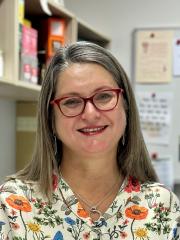
Professor Deborah Harris is a Joint Chair in Nursing and Midwifery Research at the University of Newcastle and Hunter New England Health. She is internationally recognized for her work in neonatal care, nurse practitioner workforce development, and health service research. PhD in Nursing, University of Auckland Masters in Health Sciences, University of Auckland Her research focuses on: Neonatal hypoglycemia management (Sugar Babies Study, GLOW Study) Nurse practitioner policy and practice (NPWORKS survey) Intravenous dextrose treatment and neonatal intensive care Scientific awards include the Prime Minister's Science Prize (2022) . She supervises postgraduate students and leads national collaborations on neonatal health guidelines.
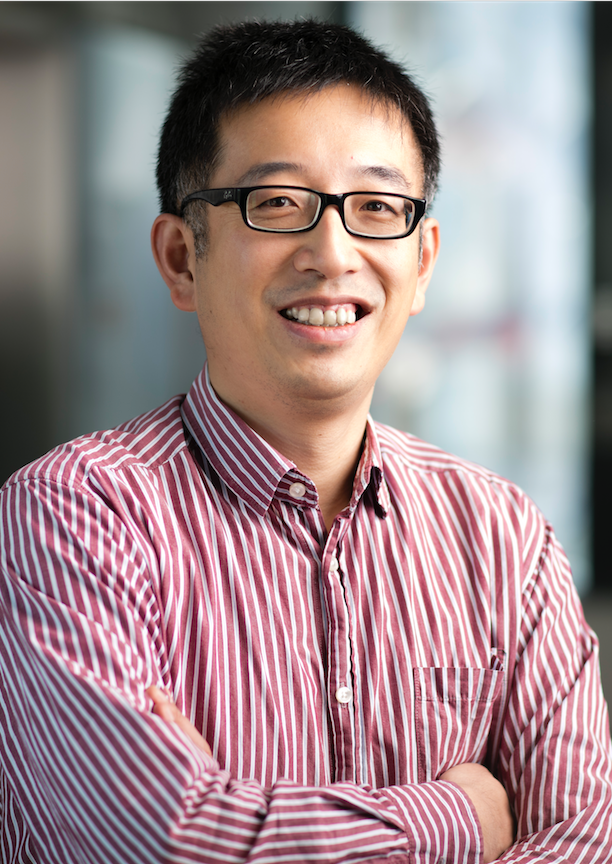
Quang Ha is an Associate Professor at the University of Technology Sydney (UTS) within the School of Electrical and Data Engineering. He has over 25 years of teaching experience and is internationally recognized for contributions to fuzzy sliding mode control and state/input estimation in robotics and smart structures. His research focuses on automation engineering, control systems, robotics, and construction automation. Ha has held leadership roles such as Deputy Head of School (Research) in the Faculty of Engineering and Information Technology. He leads a research group and has secured over $4 million in research funding from 25+ projects, including 2 ARC Discovery Projects and 3 ARC Linkage Projects. He has supervised 22 PhD and 6 Master's students to completion. His editorial roles include Associate Editorships for Automation in Construction , Robotica , and Frontiers in Robotics and AI . He has received prestigious awards, including the 2015 Sir George Julius Medal and 2023 Best Paper Award from Elsevier's Applied Soft Computing. His recent work emphasizes air quality forecasting, UAV control, and smart infrastructure monitoring. Ha's research spans environmental monitoring via AI, autonomous systems, and robotics applications in construction and energy sectors. His publications (over 300 peer-reviewed papers, 7500+ citations, h-index 40) reflect a strong focus on practical control solutions for complex engineering challenges.
Dr Sonya Stacey serves as an Adjunct Associate Professor at the School of Pharmacy and Pharmaceutical Sciences , The University of Queensland . Her work focuses on pediatric pharmacy , emphasizing medication safety , pharmacokinetics , and clinical pharmacology in hospital settings. Specializes in pediatric medication safety and adverse drug event analysis Develops clinical training frameworks for pharmacists Investigates antibiotic compatibility and dosing in critical care Active in respiratory pharmacology, particularly for cystic fibrosis Her recent research includes vaccine administration challenges ( 2025 ), antibiotic IV compatibility studies ( 2025 ), and safety evaluations of antifungal therapies ( 2024 ). Earlier work established standards for pharmacist training ( 2015 ) and advanced practice models in Australia ( 2014 ). Collaborative projects span multidisciplinary pediatric medicine safety initiatives and hospital pharmacy service development. As a co-author on over 20 publications, her work impacts healthcare policy and clinical practice. She contributes to the Safe and Effective Medication Collaborative and OPTMED-D research projects, addressing medication information continuity post-discharge.
André Stephan serves as Associate Professor in Construction and Environmental Performance at the Melbourne School of Design, University of Melbourne. His internationally recognized research pioneers practical methodologies for enhancing environmental performance across the built environment through life cycle assessment, material stocks and flows analysis, and parametric modeling, directly targeting industry decision-making processes. Stephan's research centers on sustainable construction innovation at multiple scales, with emphases on circular economy implementation, urban infrastructure decarbonization, and renewable energy integration. His work develops actionable tools like the EPiC Database and Nested Phoenix model that quantify embodied environmental flows while addressing material reuse pathways, wind energy potential in cities, and building stock dynamics from historical to future perspectives. Analysis of his recent publications reveals dominant themes in dynamic life cycle assessment of building stocks, material flow accounting for circular economy, and computational integration of environmental metrics into design workflows. His research consistently bridges theoretical frameworks with practical applications across urban infrastructure, building design, and regional resource management contexts. Stephan's contributions have been acknowledged through 18 awards in environmental assessment of the built environment. He serves as referee for top-tier journals and examiner for international research funding bodies while providing consultancy to governance organizations across Australia, Belgium, USA, and the United Nations. His industry engagement includes significant consultancy work for regional governance bodies and professional organizations, with featured projects including the Nested Phoenix computational model for urban built stocks and the EPiC Database providing hybrid environmental flow coefficients for construction materials. These initiatives demonstrate his commitment to translating academic research into practical industry tools for sustainable development.
Guanfeng Liu is the Vice Dean at the NNU-MQ Joint Institute, Macquarie University, within the Faculty of Science and Engineering. His research focuses on Recommender Systems, Privacy-Preserving Technologies, Graph Neural Networks, and Data Analytics. He leads projects like the 'Intelligent Health Data Analytics Platform' and 'Data-intensive Scheduling Optimisation in Database Systems.' His work emphasizes ethical AI, with contributions to trust prediction, spatio-temporal data analysis, and privacy-aware algorithms. In 2023, he won the Faculty of Science and Engineering Award for Inter-School Collaboration. Liu has published extensively in top journals like IEEE Transactions and ACM Conferences, with over 200 publications and a h-index of 34. Key projects include scalable document intelligence platforms and confidentiality preservation in graph learning. His research bridges theoretical advancements with practical applications in smart cities and healthcare, leveraging collaborative filtering and contrastive learning techniques.
Athena Vakali is a Professor at the School of Informatics, Aristotle University of Thessaloniki, Greece, where she leads the Laboratory on Data and Web Science (Datalab). Her distinguished career encompasses coordination of over 25 research projects under EU frameworks (FP7, H2020) and national programs, alongside leadership roles including Director of the Graduate Program in Informatics (2014-2015) and membership in the EU Future Internet Assembly Steering Committee (2012-2014). Her academic credentials include: PhD in Informatics from Aristotle University MSc in Computer Science from Purdue University, USA BSc in Mathematics Professor Vakali's research focuses on Data Science with emphasis on big data mining and analytics, next-generation Internet applications, online social networks mining, and data management across cloud, edge, and decentralized environments. Her scholarly output exceeds 160 refereed publications with over 8,060 citations and an h-index of 37, reflecting significant impact in her fields. She has received recognition for educational and research excellence, particularly in mentoring and student empowerment through ACM and ACM-W initiatives. Professor Vakali has supervised 10 completed PhD theses and actively mentors students through ACM chapters she helped establish. Her research leadership spans major EU projects and conference organization, including PC co-chair roles for ACM/IEEE Web Intelligence 2019 and WISE 2014. As head of Datalab, she directs cutting-edge research in data-intensive systems and web science, fostering innovation in distributed data management and social network analysis.
Professor Michelle Barakat-Johnson is a full-time Professor of Wound Care and Skin Integrity at the University of Sydney’s Sydney Nursing School, Faculty of Medicine and Health, and concurrently serves as Skin Integrity Lead for Sydney Local Health District. Over two decades she has built an internationally recognised program that translates evidence into policy and practice, securing more than AUD 9 million in competitive grants since 2019 and leading multi-centre trials enrolling >2,000 patients. Education & qualifications: PhD research program: “Getting to the bottom of hospital-acquired pressure injuries in one local health district” – University of Sydney (implementation-science thesis spanning four hospitals, >1,000 nurses & 1,500 patients). Research focus: Her work integrates implementation science, health economics and digital innovation to drive measurable reductions in pressure injuries, incontinence-associated dermatitis (IAD) and chronic wounds. Key strands include: Large-scale translational trials (HAPI & IMBED programs) that achieved 51% drop in pressure-injury incidence and 36% reduction in IAD prevalence across health districts. AI-enabled wound tools: led validation of Tissue Analytics app and creation of the first Australian Nurse-led Wound Care Command Centre, cutting patient wait-times from 13 days to 2 hours and saving >$1.1 M in 14 months. State-wide policy impact: toolkit adopted by NSW Clinical Excellence Commission; chairs NSW Wound Care & Skin Integrity Working Group for the Single Digital Patient Record. Scientific awards & honours: Federal Minister’s Award for Nursing Trailblazer 2025 European Pressure Ulcer Advisory Panel Early Investigator Award 2024 NSW Premier’s Award – Highest Quality Healthcare 2024 (Wound Care Command Centre) University of Sydney Alumni Graduate Medal for Research Excellence 2020 Rita & John Cornforth Medal for Research Excellence NSW Health Nursing & Midwifery Excellence in Innovation Award 2019 Grants & funding leadership: Chief Investigator on six competitively funded Q1 grants since 2019; Lead CI on four. 2025 FMH Start-up Scheme; 2024 NHMRC Partnership Project “ENABLE” (digital wound model of care); 2023 MRFF “VATICAN”; 2022 MRFF Rapid Applied Research Translation; 2019 TRGS “IMBED”. Teaching & supervision: She currently supervises two HDR students investigating digital wound-care models and virtual care in aged settings, and leads coursework development for a flexible APAC wound-care program targeting undergraduate, postgraduate and professional-development sectors.
Shane Nanayakkara serves as an Adjunct Senior Research Fellow affiliated with Monash University's School of Medicine and the Alfred Hospital. He holds dual professional appointments as a Cardiologist at the Alfred Hospital since June 2016 and as a Research Fellow at the Baker Heart and Diabetes Institute since March 2016. His work contributes to UN Sustainable Development Goals related to health and well-being. Dr. Nanayakkara's research focuses on cardiovascular medicine with particular emphasis on heart failure, transcatheter aortic valve implantation, acute coronary syndrome, and the application of artificial intelligence in cardiac diagnostics. His work spans clinical research, outcomes assessment, and innovative treatment protocols for cardiovascular conditions. His recent publications demonstrate a strong focus on advancing cardiovascular care through data-driven approaches, AI applications in ECG interpretation, and optimizing treatment pathways for heart failure and valve disease patients. This research trajectory shows increasing integration of computational methods with traditional cardiovascular medicine. His scientific recognition includes: Heart Failure Prize (2019) Mollie Holman Medal for Thesis Excellence (2020) Noel and Imelda Foster Prize for Cardiovascular Research (2019) Dr. Nanayakkara actively contributes to the academic community through editorial roles, currently serving as Editor in Chief for Cardiovascular Research and European Journal of Heart Failure, and as an Editorial Board Member for Frontiers in Cardiovascular Medicine. He has organized and spoken at major cardiology conferences including the Cardiac Society of Australia and New Zealand Annual Scientific Meeting and the Australia and New Zealand Endovascular Therapies Meeting. His current research includes leading a major project optimizing chest pain pathways for rural communities (2024-2028) and contributing to cardiovascular registries that inform clinical practice. He maintains an active media presence, providing expert commentary on cardiovascular topics including transcatheter mitral valve implantation and heart rate physiology, with his insights featured in news outlets and widely shared across academic platforms.
Dr. Christian Brakenridge is a Post-Doctoral Research Fellow at Swinburne University of Technology's School of Health Sciences and collaborates with the Baker Heart and Diabetes Institute (Melbourne) and the South-eastern Finland University of Applied Sciences . His work focuses on 24-hour behaviors (sitting, standing, activity, sleep) and their impact on cardiometabolic health , particularly in type 2 diabetes and obesity populations. PhD from Australian Catholic University Bachelor of Clinical Exercise Physiology from Queensland University of Technology His research leverages wearable sensors (accelerometers, EMG shorts, glucose monitors) to analyze movement patterns and health outcomes. Recent work includes: Optimizing 24-hour time-use for metabolic health Comparative muscle exertion in overweight individuals Neighbourhood walkability effects on stepping behavior Allogeneic stem cell transplant rehabilitation Scientific accolades include an Academy of Finland research grant and leadership in the OPTIMISE Your Health Clinical Trial . He supervises PhD students at Swinburne and Xamk Finland, and his 15 most recent publications span topics from sedentary behavior epidemiology to machine learning applications in activity monitoring.
Dr. Liming Zhu is a Conjoint Full Professor at the School of Computer Science and Engineering, University of New South Wales, and leads the Software and Computational Systems Research Program at Data61, CSIRO. This research program comprises over 200 personnel working across key technology domains including big data analytics infrastructure, computational science platforms, trustworthy systems, distributed systems, business process management, legal informatics, provenance tracking, behavior analytics, blockchains, and software engineering. His research expertise spans software architecture in enterprise and embedded systems, dependable and secure distributed systems, DevOps and continuous deployment methodologies, big data analytics infrastructure and pipelines, blockchain applications, software ecosystems, and model-driven development. His work intersects with multiple Fields of Research including Computer Software, Distributed Computing, Software Engineering, Computer System Security, and Data Security. Zhu's publication record demonstrates significant scholarly impact with 97 journal articles, 186 conference papers, 39 preprints, 7 book chapters, and 1 authored book. His research program at Data61 focuses on translating theoretical advances into practical systems that address real-world challenges in data management, system security, and software development processes. The research program has particular strength in developing infrastructure for computational sciences, including specialized applications in imaging processing and bioinformatics/life sciences. Software and Computational Systems Research Program, Data61, CSIRO (Leadership role) School of Computer Science and Engineering, University of New South Wales (Conjoint Full Professor) Dr. Zhu actively supervises PhD students at UNSW, having successfully guided 6 doctoral candidates to completion as primary supervisor. His teaching focuses on software architecture courses, connecting academic theory with industry practice. The research program he leads serves as a bridge between academic inquiry and practical application, working closely with industry partners to develop innovative solutions in data platforms, trustworthy systems, and software engineering practices.
Dr. Aloha Ambe is a Postdoctoral Research Fellow at the School of Electrical Engineering and Computer Science within the University of Queensland's Faculty of Engineering, Architecture and Information Technology. Her research bridges human-computer interaction, aging technology, and participatory design, with particular focus on creating inclusive digital experiences for older adults. Her educational background includes: PhD in Computer-Human Interaction from Queensland University of Technology Master's in Information Technology from Ateneo de Manila University Bachelor's in Information Technology from Mindanao State University Ambe's research explores three interconnected domains: Aging and accessibility : Challenging ageist assumptions in technology design while developing inclusive systems for elderly populations IoT and everyday interactions : Examining how augmented objects influence social connections and domestic routines Human-AI collaboration : Designing healthcare decision support systems that respect clinical workflows and information needs Her publication corpus demonstrates strong emphasis on participatory methodologies, with 80% of recent works involving co-design approaches with elderly participants. Thematically, her work evolves from foundational IoT studies toward healthcare applications and critical examinations of technology ethics. Ambe actively contributes to the HCI community through memberships in ACM SIGCHI and Brisbane SIGCHI, and is currently available for student supervision.
Muhammad Akram is a Research Fellow (Biostatistician) at the Mary MacKillop Institute for Health Research (MMIHR), Australian Catholic University, Melbourne. He is affiliated with the Behaviour, Environment and Cognition Research Program, contributing to major international and national health research initiatives. His work bridges statistical methodology with public health applications, particularly in physical activity, built environment, and injury prevention. Research Interests: His expertise lies in applied statistical modelling , with a focus on time-series analysis and forecasting , predictive modelling , and multilevel modelling in health and environmental sciences. He has developed methods for short interrupted time series, cluster randomized crossover trials, and case-crossover designs, which are widely used in epidemiological and behavioral research. The recent publications reflect a strong trend in environmental and behavioral epidemiology , particularly in understanding how built environments influence physical activity across different populations and countries. His work often involves large-scale, multi-country datasets and advanced statistical techniques to model complex health behaviors and outcomes. Scientific Awards: Travel grant from the Faculty of Medicine, Nursing and Health Sciences, Monash University (ASC-2012) Advising and Grants: Muhammad Akram is provisionally accredited as an HDR Supervisor. He has contributed to several major funded projects, including the International Physical Activity and the Environment Network (IPEN) Adolescent Study (funded by NIH, US$2.8M), active travel research in Hong Kong (GRF, HK$744K), preschool physical activity (HK$118K), and the KIAMA PROJECT on underage drinking (ARC Future Fellowship, $931K). He collaborates with leading investigators such as Prof. Ester Cerin, Prof. Jim Sallis, and Prof. Sandra Jones. Labs and Teams: He is an integral member of the Behaviour, Environment and Cognition Research Program at MMIHR and maintains an ongoing adjunct affiliation with the Department of Epidemiology and Preventive Medicine at Monash University since 2015, where he previously worked from 2009 to 2014.
Professor Victor Solo serves as Director of Research with the School of Electrical Engineering and Telecommunications at the University of New South Wales (UNSW). With an extensive academic career spanning over four decades since earning his PhD from the Australian National University in 1979, he has established himself as a leading expert in multiple interdisciplinary fields. University: University of New South Wales School: School of Electrical Engineering and Telecommunications Department: Electrical Engineering and Telecommunications Position: Professor and Director of Research Professor Solo received his BSc from the University of Queensland, followed by a BSc (first class honors) and BE (first class honors) from UNSW, culminating in a PhD from ANU in 1979. His educational background provided the foundation for his diverse research career spanning engineering, mathematics, and biomedical applications. His research interests encompass a wide range of theoretical and applied topics, with particular emphasis on Systems and Signal Processing, Control Theory, and Ill-Conditioned Inverse Problems. He has made significant contributions to Econometrics and Time Series Analysis, developing innovative approaches to System Identification. His work extends into biomedical domains through research in Medical Imaging and Computer Vision, as well as Neuroengineering through studies of Neural Coding and Point Processes. Professor Solo's interdisciplinary approach bridges theoretical mathematics with practical applications across engineering and medical fields. Analysis of Professor Solo's recent publications reveals a strong focus on advanced statistical modeling techniques, particularly in time series analysis and point process modeling. His work consistently addresses stability and identifiability challenges in complex models, with recent publications exploring Vector Autoregressive models, Hawkes processes, and stochastic differential equations on manifolds. The research demonstrates a progression from foundational theoretical work to increasingly sophisticated applications in network modeling and biomedical signal processing. Professor Solo has maintained an exceptionally productive research career with publications spanning from 1981 to the present, demonstrating remarkable longevity and adaptability in his research focus. His work shows consistent contributions across multiple high-impact journals including IEEE Transactions on Signal Processing, Automatica, and Neural Computation. While specific awards are not listed in the available information, his sustained publication record in top-tier journals indicates significant recognition within his fields of expertise. As Director of Research, Professor Solo likely oversees research strategy and development within the School of Electrical Engineering and Telecommunications. His extensive publication record suggests active supervision of graduate students and postdoctoral researchers, though specific names of advisees are not provided in the available information. His research has likely attracted substantial grant funding given the scope and duration of his work across multiple domains.
Professor Markus Barth is a Full Professor in Biomedical Engineering at the University of Queensland (UQ), specializing in MRI physics and medical imaging. He holds roles as Deputy Head of School (Research) in the Faculty of Engineering, Architecture and Information Technology, Director of the National Imaging Facility – Queensland Node, and member of the ARC College of Experts. His academic journey includes a Doctorate in Technical Physics from Vienna University of Technology (1999) and prior appointments at the Medical University Vienna, Donders Institute, and Erwin L. Hahn Institute. His research focuses on advancing MRI techniques for high-resolution anatomical and functional imaging, including susceptibility-weighted imaging (SWI), quantitative susceptibility mapping (QSM), and ultra-high field MRI applications. He has pioneered methods to enhance MRI sensitivity for neurodegenerative diseases, cancer, and cognitive neuroscience studies. Barth’s work integrates cutting-edge technologies like deep learning and parallel transmission to improve image quality and clinical utility. His contributions include developing open-source tools (e.g., QSMxT) and large-scale datasets (e.g., HumanBrainAtlas) for reproducible neuroimaging research. Education: Bachelor of Technical Physics, Vienna University of Technology (1995) Doctorate in Technical Physics, Vienna University of Technology (1999) Research Interests: Optimizing MRI for ultra-high field applications, neuroimaging of brain function and connectivity, SWI/QSM for disease markers, and translational imaging techniques for clinical diagnostics. His work addresses topics like layer-specific fMRI, brain-computer interfaces, and decoding neural activity. Grants & Awards: ARC Future Fellowship (2014), leadership in national imaging initiatives, and contributions to MRI software frameworks. Labs/Teams: Leads the Ultra-high Field Human MR Research program at UQ’s Centre for Advanced Imaging and collaborates with interdisciplinary teams in biomedical engineering and neurology. His lab develops novel MRI protocols and open-source tools for global research impact.
Associate Professor Robert Boots is a senior academic at The University of Queensland, affiliated with the Department of Thoracic Medicine at the Royal Brisbane and Women's Hospital (RBWH) and the Burns, Trauma and Critical Care Research Centre. He holds clinical roles as a Thoracic/Sleep Physician at RBWH and an intensivist at Bundaberg Base Hospital. Previously, he served as Deputy Director of ICU at RBWH for two decades and holds leadership positions in critical care education, including with the College of Intensive Care Medicine. Education: Bachelor of Medicine Surgery (Honours), The University of Queensland Master's (Coursework), University of Newcastle Doctor of Philosophy, University of Newcastle Fellow, Royal Australasian College of Physicians Research Focus: His work centers on circadian rhythm disruptions in critical illness recovery, virtual reality applications for patient therapy, and ICU innovations. Key projects include inhaled heparin for pneumonia prevention, telemedicine effectiveness, and sepsis rehabilitation. Collaborations with engineering teams explore AI-driven clinical decision support using multi-source data analytics. Publication Trends: Recent articles (2021–2025) emphasize ICU outcomes, circadian biology, and technology-driven interventions. Themes include predictive analytics for mortality/arrhythmias, virtual reality in oncology, microplastics contamination in diagnostics, and AI in evidence-based medicine. Multi-disciplinary approaches bridge critical care, data science, and engineering. Advising & Grants: Actively supervises postgraduate students in critical care research. Secured past funding for projects like inhaled heparin trials and telemedicine assessments. Current projects include optimizing ICU telemedicine at Bundaberg Base Hospital. Labs & Teams: Member of the Burns, Trauma and Critical Care Research Centre, fostering collaborations across engineering and clinical disciplines for innovations in ICU care.