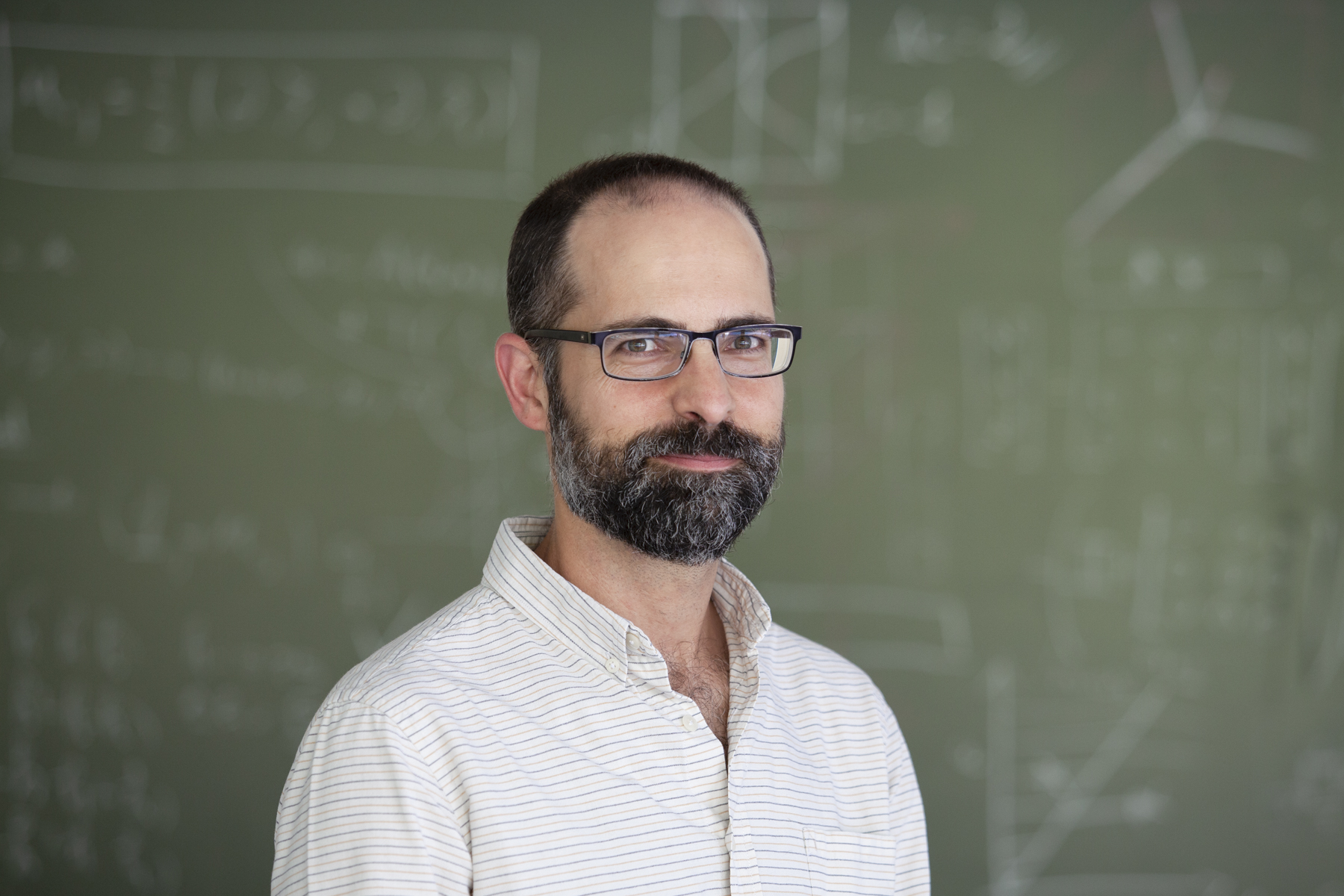
Annabelle Bohrdt is a Professor at the University of Regensburg's Faculty of Physics, affiliated with the Institute of Theoretical Physics. Her research focuses on strongly interacting quantum many-body systems, combining numerical methods, quantum simulation experiments, and machine learning techniques like neural networks. She explores topics such as the Fermi-Hubbard model, t-J model, and stripe formation in doped antiferromagnets. Her work bridges theoretical models and experiments, leveraging quantum gas microscopy and interpretable machine learning tools. Notable contributions include studies on pairing mechanisms in bilayer antiferromagnetic Mott insulators and the role of fluctuations in quantum many-body systems. Bohrdt actively collaborates with experimental groups to validate theoretical predictions. Teaching includes specialized courses on numerical methods for quantum many-body systems and machine learning applications in physics. She advises graduate and undergraduate students on projects in quantum matter and computational physics.
Harald Krüger is a Research Scientist at the Max Planck Institute for Solar System Research (Göttingen), specializing in planetary science and space dust analysis. He leads and contributes to multiple space missions, including the DESTINY+ Dust Analyzer (DDA), the Rosetta COSIMA instrument, and the PHILAE Dust Impact Monitor (SESAME-DIM). His research focuses on cometary dynamics, interstellar dust interactions, and solar system formation processes. Krüger holds a PhD from the University of Göttingen and has held research roles at prestigious institutions like the Max Planck Institutes for Nuclear Physics and Astronomy (Heidelberg). He chairs ESA’s working group on comet 67P/Churyumov-Gerasimenko and participates in international astronomical societies. His work integrates advanced instrumentation design with observational data from spacecraft missions, contributing to our understanding of cosmic dust properties and their role in planetary systems. Key projects include analyzing interstellar dust via the DESTINY+ mission and studying Martian moons through the MMX mission. His publications emphasize instrument constraints, cometary dust trail detection, and spacecraft outgassing effects on measurements.
Hernan G. Rey, PhD, is an Assistant Professor in the Department of Neurosurgery at the Medical College of Wisconsin (MCW) and the Marquette-MCW Joint Department of Biomedical Engineering. He previously held an Assistant Professor position at Baylor College of Medicine until July 2022. His research focuses on understanding human episodic memory, improving epilepsy diagnosis and treatment, and developing tools for electrophysiological data analysis. Rey's lab records single-neuron activity and intracranial EEG from epilepsy patients to investigate brain mechanisms underlying memory and neurophysiological processes. Education: PhD in Engineering, University of Buenos Aires (2009) Postdoctoral Fellowship in Biomedical Informatics, University of Leicester (2012–2015) Bachelor's in Electronics Engineering, University of Buenos Aires (2002) Research Interests: Dr. Rey explores anterior temporal lobectomy, drug-resistant epilepsy, electrophysiology, hippocampal function, machine learning applications in neuroscience, and signal processing. His work bridges clinical neurosurgery, biomedical engineering, and cognitive neuroscience to advance both fundamental understanding and clinical interventions. Publications: His recent work highlights studies on parietal cortex function in action monitoring, single-neuron responses in memory encoding, and neurophysiological correlates of depression. These reflect a focus on translational neuroscience and interdisciplinary collaboration. Awards: EPSRC Rising Star Award (2014) Labs/Teams: The ReyLab drives innovation in electrophysiological data acquisition and analysis, emphasizing clinical application for epilepsy and memory disorders.
Professor Rita Henderson is a Professor in the School of Chemical Engineering at UNSW and Deputy Dean (Societal Impact & Translation) at UNSW Engineering. Her research focuses on water quality and treatment, algal biotechnology, and sustainable engineering solutions. She leads the Algal and Organic Matter (AOM) Lab, collaborating closely with the Australian water industry to address challenges in algal blooms, membrane fouling, and cyanobacteria management. She serves as Editor for Water Research and AWWA Water Science , and chairs UNSW’s Sustainable Development Goal (SDG) Steering Committee. Education: PhD in Water Sciences (Cranfield University, 2008), MSc in Water Pollution Control Technology (2004), and MChem in Environmental Chemistry (University of Edinburgh, 2002). Her work integrates advanced analytical techniques, machine learning, and innovative separation methods to improve water treatment efficiency. Research interests include organic matter characterization, membrane technology optimization, and real-time monitoring of cyanobacterial blooms. Her contributions span algal harvesting via PosiDAF flotation systems, disinfection by-product formation, and sustainable wastewater pond technologies. She actively promotes equity, diversity, and inclusion in engineering education. Grants and collaborations highlight her industry partnerships, particularly in developing scalable solutions for water security. Her lab’s innovations aim to bridge gaps between research and practical applications, ensuring robust water treatment strategies for global challenges.
Dr. Christopher Spencer is an Assistant Professor in the Department of Geological Science and Geological Engineering at Queen’s University, Canada. His research focuses on the formation, destruction, and evolution of the continental crust through field-based studies and geochemical analysis. He holds adjunct roles at Curtin University and Syracuse University, and serves as an editor for journals including the Canadian Journal of Earth and Sciences, Himalayan Geology, and Geophysical Research Letters. Dr. Spencer earned a Ph.D. in Earth Science from the University of St Andrews, and B.Sc./M.Sc. degrees in Geological Sciences from Brigham Young University. His work combines igneous petrology, geochemistry, and geochronology to study tectonic processes and atmospheric oxidation history. Key research locations include Oman, China, India, Japan, and Canada. Awards include the GSA Donath Medal (2020) and John Curtin Fellowship (2015). His research interests span tectonochemistry, sediment subduction dynamics, and the interplay between biosphere and lithosphere. Current projects investigate modern tectonic processes, crustal evolution, and the Paleoproterozoic 'tectono-magmatic lull.' He actively supervises postdoctoral researchers and recruits students for fieldwork in the North American Cordillera, Marianas, and Oman ophiolite.
Stephen Jane is a Society of Science Postdoctoral Fellow at the University of Notre Dame, affiliated with the Galvin Life Science Center and Freimann Life Science Center. His research focuses on the impacts of climate change on aquatic ecosystems, particularly the deoxygenation of lakes and its cascading effects on biodiversity, nutrient cycles, and human health. Jane employs multi-disciplinary approaches including long-term dataset analysis, field observations, and predictive modeling to understand planetary boundary frameworks and feedback mechanisms in lake systems. Key research themes include dissolved organic matter dynamics, thermal stratification impacts, and the interplay between climate drivers and aquatic oxygen levels. His work highlights critical thresholds in ecosystem resilience and explores hidden ecological consequences of extreme events like hurricanes. Jane has contributed to high-impact studies on lake browning, cold-water fish habitat loss, and the interplay between selenium and mercury bioaccumulation in food webs. Publications span over two decades of lake monitoring data, revealing global patterns of deoxygenation and its implications for Earth system stability. His datasets from 822 lakes and case studies like the Müggelsee provide foundational evidence for climate policy development. Jane’s research bridges environmental chemistry, biogeochemistry, and biodiversity conservation, emphasizing both local and global scales.
Hollis Cline, PhD, is the Hahn Professor of Neuroscience and Director of the Dorris Neuroscience Center at The Scripps Research Institute (TSRI). She holds adjunct positions at the University of California San Diego and the Salk Institute. Her research focuses on understanding how sensory experience shapes visual circuit development, plasticity, and function, with a focus on neurodevelopmental disorders. Cline earned her PhD in Neurobiology from UC Berkeley (1985) and conducted postdoctoral work at Yale and Stanford. She has served in leadership roles including Co-Chair of TSRI’s Department of Neuroscience and President of the Society for Neuroscience (2015–2016). Her research integrates molecular genetics, electrophysiology, and imaging to study structural dynamics in neural circuits, neurogenesis regulation, and excitation/inhibition balance. Key projects include the Dynamic Connectome (3D connectomics in the optic tectum), neurogenesis control, and the role of inhibition in visual circuit function. Her work revealed activity-dependent mechanisms driving synaptic maturation and topographic map formation, and identified molecular pathways linking visual experience to brain development. Education : PhD (UC Berkeley), B.A. (Bryn Mawr College) Awards : NIH Pioneer Award, AAAS Fellow, TSRI Mentor Award Labs/Teams : Cline Lab at TSRI, Dorris Neuroscience Center Grants : Not explicitly listed but implied via NIH advisory roles and research infrastructure Professional Service : NINDS Board, NIH Advisory Council, Society for Neuroscience leadership Her recent work bridges neurodevelopmental mechanisms with translational insights, using Xenopus models to study exosome-mediated intercellular communication and regeneration responses to injury. Collaborative efforts include the BigNeuron project for neuronal morphology analysis and AI-driven behavior recognition studies.
Nicola Ballhausen is an Assistant Professor in the Department of Developmental Psychology at the Tilburg School of Social and Behavioral Sciences, Tilburg University, Netherlands. Her research focuses on cognitive and psychological aspects of aging, particularly prospective memory, executive function, and social influences on cognitive health in older adults. Her research interests include prospective memory , cognitive aging , metacognition , problem-solving in older adults , social cognition , and longitudinal studies of aging . She investigates how factors such as intergenerational contact, sense of purpose, and technology use impact cognitive performance and well-being in later life. Her work integrates experimental, survey-based, and qualitative methods, often in cross-national datasets like the Health and Retirement Study (HRS) and the English Longitudinal Study of Ageing (ELSA). The most recent articles highlight a strong focus on prospective memory across the lifespan , the role of social engagement in cognitive functioning , and designing accessible cognitive interventions for older adults. Her publications span top journals in gerontology, psychology, and cognitive science, reflecting interdisciplinary collaboration and methodological rigor. Dr. Ballhausen contributes to research aligned with the UN Sustainable Development Goals, particularly those related to healthy aging and well-being. She collaborates extensively with researchers across Europe and has contributed to major reference works such as The Oxford Handbook of Human Memory . Her work includes both empirical studies and methodological advancements, such as exploratory structural equation modeling. While no formal students or awards are listed, her role in supervising research and contributing to academic training is implied through her position and course involvement. Dr. Ballhausen is involved in the design and evaluation of web-based cognitive tools, such as the Shared, Web-based, Intelligent Flexible Thinking Training (SWIFT), emphasizing user-centered design and ecological validity. Her work bridges fundamental cognitive research with practical applications for aging populations.
David de Sancho Sánchez is a Ramón y Cajal Research Fellow at the University of the Basque Country (UPV/EHU) and the Donostia International Physics Center (DIPC) in Spain. His research employs computational methods to study protein dynamics, folding mechanisms, and biomolecular interactions, with a focus on quantitative comparisons between theory, simulation, and experimental data. Education & Training: Biophysical Chemistry training at San Pablo CEU and Complutense Universities PhD under Antonio Rey at Complutense University Postdoctoral work with Victor Muñoz (Spanish Research Council) and Robert Best (University of Cambridge) Research Focus: David's work spans protein folding landscapes, metal-binding proteins, mechanical unfolding, and phase separation. Recent investigations include amyloid-beta aggregation, titin mechanics in cardiac disease, and computational drug design for cancer and neurodegeneration. His methodologies integrate molecular dynamics, Markov state models, and force spectroscopy simulations. Scientific Awards: Ramón y Cajal Fellowship (UPV/EHU) Ikerbasque Research Fellowship (CIC nanoGUNE) Affiliations: He leads computational research at UPV/EHU's Theoretical Chemistry Unit and collaborates extensively with experimental groups at DIPC, focusing on protein engineering and disease mechanisms.
Rainer Böckmann is a Professor of Computational Biology in the Department of Biology at Friedrich-Alexander-University Erlangen-Nürnberg (FAU), Germany, where he leads the Group for Theoretical and Computational Membrane Biophysics. His research integrates molecular dynamics simulations with biophysical analysis to study membrane structure, dynamics, and function. Research Interests: His work focuses on computational biophysics, particularly lipid bilayers, membrane proteins, molecular dynamics, and structural bioinformatics. He investigates how lipid composition, cholesterol, and embedded peptides influence membrane organization, curvature, and permeability, with applications in antimicrobial strategies and mRNA vaccine delivery systems. Recent Research Trends: His recent publications reflect a strong emphasis on lipid nanoparticles (LNPs), particularly their phase behavior, pH-dependent protonation, and structural transitions relevant to mRNA vaccines. He also explores antimicrobial peptides, membrane domain formation, and the role of cholesterol in modulating membrane properties. His group develops and applies advanced simulation techniques, including constant-pH MD and coarse-grained modeling. Member of Editorial Board, Biophysical Journal (2024–present) Elected Member, DFG Review Board for Biophysics (2020–present) Chairman, Molecular Biophysics Section, German Biophysical Society (2011–2012) Leadership and Service: Böckmann is actively involved in academic governance, serving on editorial boards, DFG committees, and as a guest editor for special issues in Frontiers journals. He contributes to graduate education and high-performance computing initiatives at FAU, including the NHR@FAU and Life@FAU Graduate School. He has organized major conferences and workshops in biophysics and membrane modeling. Laboratory and Collaboration: He leads a research group focused on biomembrane physics, collaborating with experimentalists and theorists. His lab develops and applies simulation tools to study membrane systems, bridging computational insights with biological function.
Francisco Laranjo is a Portuguese graphic designer, researcher, and educator with a PhD in Design Methods and Criticism from the University of the Arts London. He holds an MA in Visual Communication from the Royal College of Art and a BA from ESAD – Escola Superior de Artes e Design. Currently serving as Assistant Professor at Lusófona University, he also works as an Associate Lecturer at Central Saint Martins and Co-director of the Shared Institute. PhD in Design Methods and Criticism MA in Visual Communication BA in Communication Design His work bridges graphic design with critical theory, focusing on design pedagogy, ethical implications of data-driven design, and the role of critique in professional practice. Publications span design criticism in Design Observer , Eye Magazine , and academic journals, while his teaching has reached institutions across 8 countries including CalArts, Sandberg Institute, and Zürich University of the Arts. Recent publications demonstrate a trajectory toward critical design theory, post-pandemic design adaptation, and curatorial practices. Key themes include the intersection of design and politics , digital-physical hybridity , and pedagogical innovation in graphic design education. As Editor of Modes of Criticism and co-director of Shared Institute, Laranjo fosters critical discourse through curatorial projects like the 2022 'Designers Troublemakers' exhibition and the upcoming 2025 'Graphic Collection – 50 years of design in Portugal' at the Polytechnic University of Porto.
Craig O'Neill is an Associate Professor in Geophysics/Remote Sensing at the School of Earth & Atmospheric Sciences, Faculty of Science, Queensland University of Technology (QUT). His research spans geodynamics, planetary science, geophysics, and engineering geology, with a strong focus on understanding Earth and planetary evolution through computational modeling and geophysical data analysis. His research interests include Geophysics, Geodynamics, Remote Sensing, Planetary Science, Engineering Geology, Geochemistry, and Geology . He applies advanced numerical methods to model planetary interiors, tectonic processes, and geohazards, with recent work exploring early Earth crust formation, Venusian core dynamics, exoplanet thermal evolution, and applied geophysical techniques for engineering and environmental monitoring. The trend in his recent publications shows a strong interdisciplinary focus, combining computational geophysics with planetary science and Earth systems analysis. His work appears in leading journals such as Nature , Science Advances , and Geophysical Research Letters , covering topics from asteroid impacts and craton formation to ambient noise tomography and groundwater response to climate change. Professional Memberships: Australian Society of Exploration Geophysicists American Geophysical Union Australian Geomechanics Society Craig O'Neill supervises research students in areas such as lunar seismology and planetary geodynamics. While no specific grants are listed in the provided text, his extensive publication record and active research programs suggest ongoing funding support. He has developed open-source tools like Planet_LB for lattice-Boltzmann modeling of planetary systems. He is actively involved in the geophysics community, with scholarly profiles on ORCID, Google Scholar, and Scopus, and shares his research via X (formerly Twitter). His work bridges fundamental planetary science with practical geophysical applications.
Dr. Marion Schrumpf is a Group Leader in the Soil Biogeochemistry research group at the Max Planck Institute for Biogeochemistry, affiliated with the Department of Biogeochemical Processes. Her work focuses on soil carbon dynamics, mineral-organic matter interactions, and climate change impacts on soil systems. Research areas: Soil biogeochemistry, carbon cycling, mineral-soil interactions, nutrient stoichiometry, microbial ecology, and climate modeling. Email: mschrumpf@... Phone: +49 3641 57-6182 Office: B2.015 Her recent publications address themes like mineral control over soil carbon stabilization, drought effects on soil processes, microbial stoichiometric adaptation, and the Jena Soil Model's role in simulating carbon-nutrient interactions. She leads efforts to disentangle the complex relationships between land use, mineralogy, and soil organic matter turnover across diverse ecosystems.
Professor Malcolm Fairbairn is a faculty member at King's College London's Department of Physics, part of the Faculty of Natural, Mathematical & Engineering Sciences. His research focuses on the intersection of cosmology, particle physics, and astrophysics, particularly dark matter, dark energy, and cosmological inflation. He leads projects like the ERC Consolidator Grant (2015–2020) investigating dark matter in the early Universe. He collaborates with initiatives such as the MoEDAL experiment at CERN (magnetic monopole searches) and the Cherenkov Telescope Array (CTA) for gamma-ray astronomy. His interests extend to gravitational waves, supermassive black hole formation, and particle astrophysics. Fairbairn has contributed to studies on axion dark matter, primordial black holes, and dark matter constraints from dwarf galaxies. He is affiliated with the Theoretical Particle Physics & Cosmology (TPPC) Group, exploring beyond-Standard-Model physics, including supersymmetry and extra dimensions. Publications span topics like dark matter relic abundance, JWST observations of black holes, and LHC searches for exotic particles. He has advised on outreach projects like the 'Dark Matter' exhibition at Science Gallery London and interviews with alumni (e.g., Royal Navy submariner Chris Tuckley).
Murat Arcak is a Professor of Electrical Engineering and Computer Sciences and Mechanical Engineering at the University of California, Berkeley, holding the Robert M. Saunders Endowed Chair in the College of Engineering. His research spans control theory, autonomous systems, and multi-agent systems with applications in transportation, energy, and biology. Dr. Arcak received his Ph.D. in Electrical Engineering from the University of California, Santa Barbara in 2000, following an M.S. from the same institution in 1997 and a B.S. from Bogazici University in Istanbul, Turkey in 1996. His research interests focus on developing scalable control design and verification methods for complex systems with many interconnected components, nonlinear dynamics, and learning capabilities. He has made significant contributions to control theory, particularly in areas like reachability analysis, dissipative systems, and compositional verification methods. His work bridges theoretical advances with practical applications in transportation systems, energy networks, and biological systems. A leading researcher in control systems, Dr. Arcak's recent publications demonstrate a strong focus on data-driven approaches for system verification, synthetic biology applications, and formal methods for traffic control. His research combines mathematical rigor with practical implementation, often developing novel theoretical frameworks that address real-world engineering challenges. CAREER Award from the National Science Foundation (2003) Donald P. Eckman Award from the American Automatic Control Council (2006) Control and Systems Theory Prize from SIAM (2007) Antonio Ruberti Young Researcher Prize from IEEE Control Systems Society (2014) Brockett-Willems Outstanding Paper Award (2021) IFAC Fellow (2020) IFAC Automatica Paper Prize (2020) CSS Transactions on Control of Network Systems Outstanding Paper Award (2017) Electrical Engineering Award for Outstanding Teaching (2014) CSS Antonio Ruberti Young Researcher Prize (2014) IEEE Fellow (2012) SIAM Activity Group Control and Systems Theory Prize (2007) Dr. Arcak has advised numerous graduate students and postdoctoral researchers, though specific names are not listed in the available information. His research has been supported by various grants from the National Science Foundation and other funding agencies, enabling his work on control theory and applications across multiple domains. He is affiliated with several research centers at UC Berkeley including the Berkeley Artificial Intelligence Research Lab (BAIR), Berkeley Deep Drive (BDD), the Center for the Theoretical Foundations of Learning, Inference, Information, Intelligence, Mathematics and Microeconomics at Berkeley (CLIMB), the Institute of Transportation Studies (ITS), and Partners for Advanced Transit and Highways (PATH).