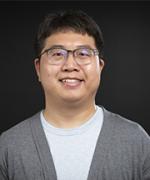
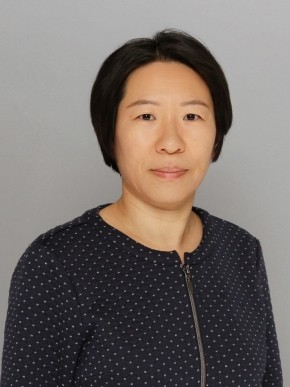
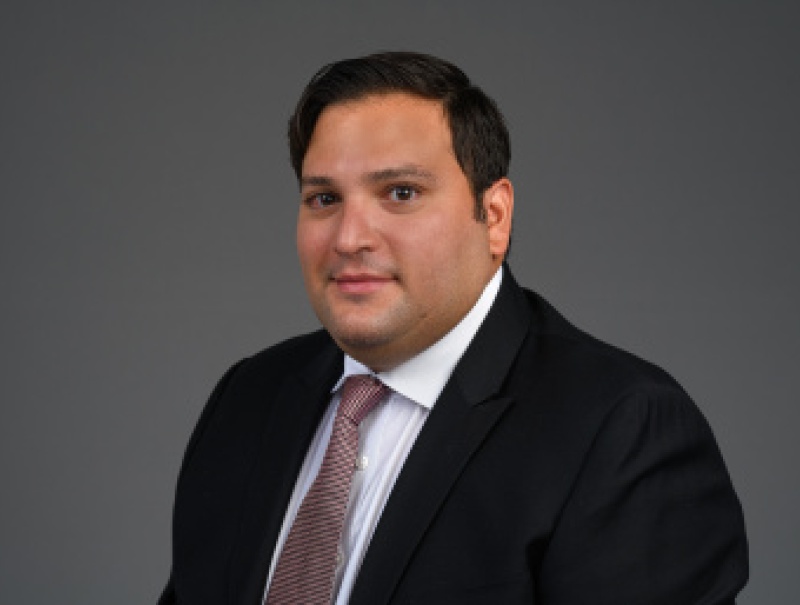
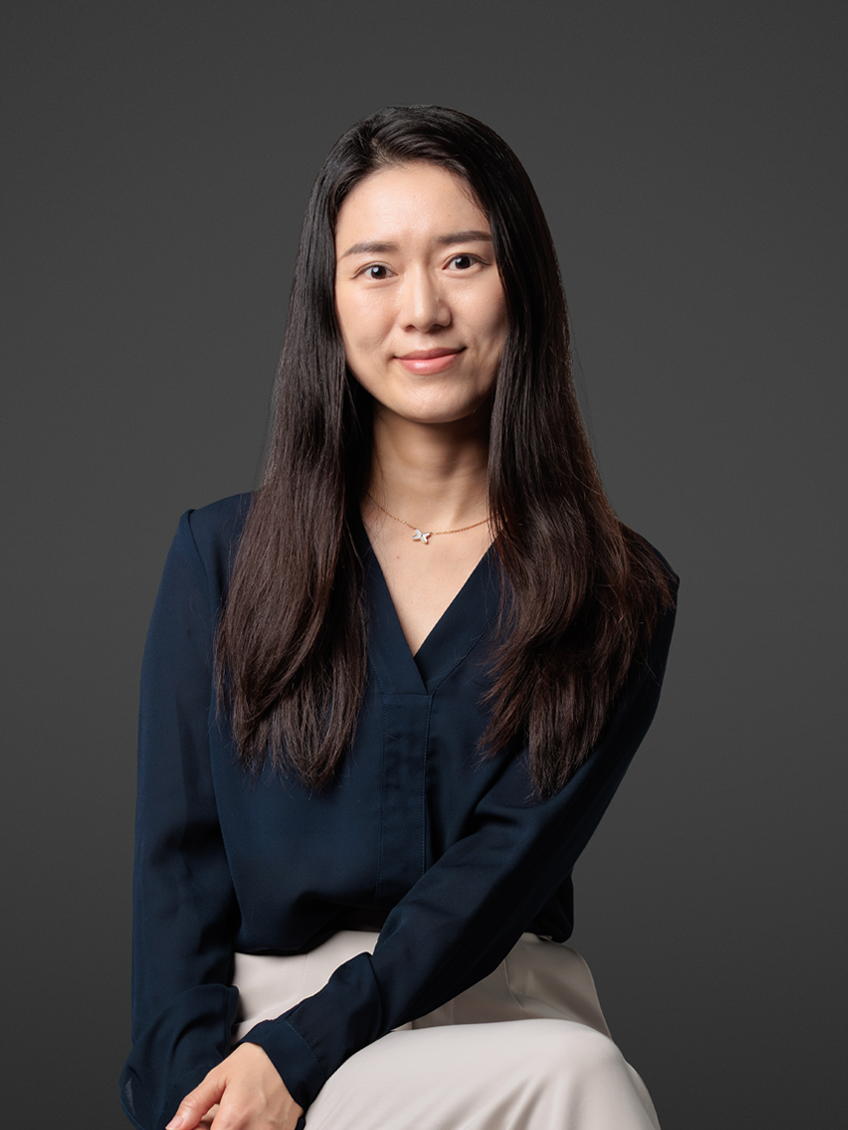
Dr. Armin Agha Karimi is a Lecturer in the School of Surveying and Built Environment at the University of Southern Queensland. He holds a BSc in Civil Engineering from Tabriz University, an MSc from Middle East Technical University (METU), and a PhD from the University of Newcastle. His research focuses on spatial data integration, cadastral systems modernization, environmental monitoring using remote sensing, and sea level variability analysis. Key research interests include 3D cadastral boundaries in BIM environments, digital twin applications in built environments, and the impact of hydrological loading on land motion. He has contributed to studies on erosion hotspot mapping in Queensland and the implications of coal seam gas activities on land subsidence. His work on Baltic Sea sea level dynamics and Australian coastal projections has advanced understanding of climate-driven environmental changes. Dr. Karimi is affiliated with the Centre for Sustainable Agricultural Systems and actively publishes on geomatics, climate science, and legal aspects of digital surveying. His recent articles highlight innovations in VR-ready survey data transformation and the legal challenges of electronic cadastral plans.
Dr. Tsz-Yan Milly Lo is an Honorary Reader at the University of Edinburgh’s Usher Institute and a Consultant Paediatric Intensivist at the Royal Hospital for Children and Young People in Edinburgh. She leads the Research Programme in Paediatric Critical Care Medicine and holds the NHS Research Scotland Career Research Clinician Award. Her work focuses on leveraging data informatics to improve outcomes for critically ill children, particularly in neurocritical care and brain trauma. She leads international initiatives like KidsBrainIT (a EU-funded pediatric brain trauma data initiative) and Window in the Brain (developing seizure detection tools). Dr. Lo’s education includes clinical training across Edinburgh, Birmingham, and Melbourne, complemented by a PhD and post-doctoral fellowships in Edinburgh and Toronto. Her research spans clinical informatics, multi-disciplinary data integration, and translational medicine. Key collaborations include academic, clinical, and industry partnerships (e.g., with BrainsView Ltd and engineers at the University of Edinburgh). Her scientific impact includes over 20 peer-reviewed publications, with recent work emphasizing intracranial pressure monitoring, EEG-based seizure detection, and pediatric critical care quality improvement. Her grants total over €1M, including EU NEURON funding and MRC support. She supervises a dynamic research team focusing on innovation in critical care informatics and clinical excellence. Grants: £90,953 (G-WiB), £298,740 (WiB-2), £103,164 (WiB-1), €621,834 (KidsBrainIT). Public Engagement: Launched Scotland’s first PPIE group for pediatric critical care (Intensive-Share). Her lab, IMPACT-ACE, emphasizes clinician-scientist collaboration to drive evidence-based improvements in pediatric critical care. Current projects include global seizure detection tools and pediatric brain trauma big-data analytics.
Li Wei is a distinguished academic affiliated with Tsinghua University, with a focus on interdisciplinary research spanning artificial intelligence, machine learning, and computer vision. His work often intersects with medical informatics, remote sensing, and signal processing, demonstrating a commitment to advancing technological solutions in healthcare, environmental monitoring, and engineering systems. Research interests include deep learning applications in clinical diagnostics, satellite data analysis for climate modeling, and optimization of energy storage systems. He has contributed to innovative solutions in areas such as UAV-enabled edge computing, privacy-preserving blockchain protocols, and thermal-based surveillance systems. His collaborative projects often involve multidisciplinary teams across institutions. Publications reflect a strong emphasis on practical applications, such as mobile health tools for tumor recognition, transformer-based super-resolution techniques for oceanography, and AI-driven risk classification models for respiratory diseases. While no specific awards or grants are listed, his prolific output across top-tier journals indicates sustained research impact. Professional activities include contributions to conferences like RecSys, MICCAI, and AAAI, and editorial roles are implied through his extensive publication record. Collaborations with industry partners (e.g., in energy systems and medical imaging) suggest engagement with real-world problem-solving.
Yalong Yang is an Assistant Professor at the School of Interactive Computing at Georgia Institute of Technology. His research focuses on immersive analytics, virtual reality (VR), and augmented reality (AR) interfaces, with a particular emphasis on spatial interaction, hybrid user interfaces, and data visualization techniques. He explores how embodied interactions and immersive environments enhance understanding in domains like education, sports analytics, and collaborative decision-making. Key research themes include hybrid immersive systems (combining VR/AR with physical devices), asymmetric collaboration in mixed environments, and AI-driven tools for programming education. His work spans both theoretical frameworks and applied systems, such as SPHERE for scalable personalized feedback in coding classrooms and VizGroup for collaborative learning analytics. Yang’s recent publications highlight trends in spatial hybrid interfaces, navigation in immersive environments, and the integration of generative AI in educational technologies. His projects often involve evaluating interaction techniques (e.g., label placement in AR) and comparing performance across desktop and VR platforms. Notable contributions include the SportsXR initiative for immersive analytics in sports, and systems like CompositingVis for creating complex visualizations in 3D spaces. His work addresses challenges in situated analytics, wearable technologies for outdoor activities, and audience analysis in VR exhibitions.
Caner Özer is a Researcher affiliated with Istanbul Technical University's Department of Artificial Intelligence and Data Engineering and the University of Twente's MIA group. He holds a PhD in Computer Engineering from Istanbul Technical University (2020), an MSc in Telecommunication Engineering (2017-2020), and a BSc in Electronics and Communications Engineering (2013-2017). His research focuses on medical imaging AI, explainable artificial intelligence (XAI), deep learning applications in healthcare, and computer vision techniques for artifact detection in medical imaging. He has conducted visiting research at the University of Twente (2024) and serves on academic committees at Istanbul Technical University. Research interests include developing explainable models for mammogram analysis, enhancing medical image quality assessment via transformers and neural networks, and addressing challenges in cardiovascular MRI segmentation through motion artifact detection. His work bridges deep learning theory with practical clinical applications, emphasizing transparency and accuracy in AI-driven medical diagnostics. Notable contributions include cross-domain artifact correction for cardiac MRI, joint CNN-RNN models for intracranial hemorrhage detection, and XAI methods for chest X-ray analysis. His research has been published in top-tier venues with a focus on medical imaging and deep learning advancements.
Lily Ge is currently a final-year Computer Science PhD candidate at Northwestern University, advised by Matthew Kay. She holds the academic rank of Lecturer at Northwestern and has previously served as a Research Fellow at Tohoku University, Japan. B.Sc. in Computer Science , University of Michigan PhD in Computer Science (in progress), Northwestern University Her research explores how people interact with visualizations, focusing on improving visualization literacy through assessment tools like AVEC and CALVI , frameworks such as V-FRAMER , and adaptive testing methods. Her work intersects human-computer interaction , information visualization , cognitive psychology , and learning sciences . Publications reflect trends in AI-driven visualization generation, literacy measurement, and critical reasoning about data. NSF Graduate Research Fellowship (2023) She has contributed to teaching roles, including courses on Computing, Ethics, and Society and Data Visualization at Northwestern, and instructional roles at the University of Michigan’s College of Engineering and School of Information.
Kangkang Yin is an Associate Professor in the School of Computing Science at Simon Fraser University (SFU). His research focuses on computer animation, computer graphics, humanoid robotics, machine learning, and multimedia analysis. He teaches courses such as Computer Animation and Scientific Computing, and holds a PhD from the University of British Columbia (2007), MSc from Zhejiang University (2000), and BSc from Zhejiang University (1997). His work bridges robotics and animation through projects like physics-based character controllers, motion diffusion models, and robotic manipulation. Key contributions include the SIMBICON biped locomotion framework and research into emotion-driven dance animation. Recent efforts emphasize reinforcement learning applications in motion synthesis and robust visual navigation for unmanned ground vehicles. Yin's publications span over two decades, addressing challenges in motion control, physics-based simulation, and machine learning applications. His lab contributes to both academic advancements and practical robotics solutions. Current research trends show strong emphasis on combining generative AI with traditional animation techniques, as seen in recent work on auto-regressive motion models (AAMDM) and physics-augmented reinforcement learning (PARC).
Juan Rojas, MD, MS is an Assistant Professor in the Department of Internal Medicine at Rush Medical College. He holds multiple leadership roles including Associate Chief Medical Information Officer and Director of the Rush Health Equity Analytics Studio. He is also the Associate Program Director for the Clinical Informatics Fellowship. His research focuses on critical care medicine, healthcare informatics, and machine learning applications in healthcare. Dr. Rojas leads the Rush Health Equity Analytics Studio, addressing disparities through data-driven solutions. He is a key contributor to the Common Longitudinal ICU Data Format (CLIF) initiative, advancing multi-institutional critical care research. His work emphasizes standardizing ICU-to-ward handoffs via tools like the ICU-PAUSE framework, improving communication and patient outcomes. His research spans ventilator management, sepsis protocols, and AI-driven predictive models for ICU readmissions and discharge planning. Collaborations across institutions highlight his commitment to evidence-based practices in critical care and health equity. He has also explored the impact of cultural factors, such as patient language preferences, on sedation practices in intensive care settings. Dr. Rojas has led quality improvement projects to enhance resident education and patient care in pulmonary and critical care fellowships. His contributions to national surveys on AI adoption in healthcare provide insights into health system priorities and challenges. His work continues to bridge clinical practice, technology, and health equity in critical care environments.
Paul Rosen is an Associate Professor at the University of Utah, affiliated with the Scientific Computing and Imaging Institute and the Kahlert School of Computing. He holds a Ph.D. in Computer Science from Purdue University (2010). Prior to his current role, he was an Assistant/Associate Professor at the University of South Florida (2015–2022) and a Research Assistant Professor at the University of Utah's SCI Institute (2010–2015). Research Focus: Rosen specializes in topology-based visualization techniques, with emphasis on network visualization, uncertainty quantification, and perceptual studies. His work bridges computational methods with human perception, aiming to enhance data understanding through effective visual design. Awards & Recognition: National Science Foundation CAREER Award (2019) Best Paper Awards at PacificVis 2016, IVAPP 2016, and multiple other conferences Honorable Mentions for IEEE VIS and VAST Challenge submissions Leadership: As General Chair of IEEE VIS 2024, Rosen led the planning for this flagship visualization conference, emphasizing community-driven design and in-person collaboration. Education Contributions: His research includes pedagogical innovations, such as predictive modeling for student feedback and peer review analysis in visual literacy courses.
Gita Reese Sukthankar is a Professor in the Department of Computer Science at the University of Central Florida (UCF) , where she directs the Intelligent Agents Lab . Her research focuses on activity and plan recognition , with applications in multi-agent systems, robotics, and human-robot interaction. She earned her Ph.D. from the Robotics Institute at Carnegie Mellon University and joined UCF in fall 2007. Research Interests: Her work spans activity recognition , intent inference , multi-agent coordination , and human-robot teams . She has applied these techniques to domains such as adversarial games (e.g., military simulations, Unreal Tournament), assistive technologies, and cooperative robotics. Her research integrates AI, machine learning, and probabilistic models to understand and predict complex team behaviors. Publication Trends: Her publications emphasize spatio-temporal modeling , probabilistic graphical models (e.g., HMMs, CRFs) , and multi-agent plan recognition . She frequently publishes in top venues like AAMAS, AAAI, and ICRA, with a focus on robust recognition of team behaviors, transfer learning, and real-world AI applications. Scientific Awards: NSF CAREER Award (2009) AFOSR Young Investigator (2009) ONR Summer Faculty Fellow (2008) UCF Faculty Excellence for Doctoral Mentoring (2012) CECS Dean's Research Professorship (2013) AAAI Senior Member (2021) ACM and IEEE Senior Member Advising and Grants: She mentors graduate students in AI and robotics and has led research funded by DARPA, AFOSR, and ONR. Her lab develops systems for intelligent agents that can understand and collaborate with humans. She has served on numerous program committees and editorial boards, including ACM Transactions on Autonomous and Adaptive Systems . She teaches courses such as Intelligent Systems , Robotics , and Machine Learning , and has been recognized for both research and teaching excellence. Labs and Teams: She leads the Intelligent Agents Lab at UCF, which focuses on data-driven social informatics and AI for human-agent teams. Her group collaborates with researchers in robotics, computer vision, and cognitive science to build adaptive, intelligent systems.
Dr. Zhao Na is a tenure-track Assistant Professor at the Singapore University of Technology and Design (SUTD), affiliated with the Institute of Sustainable Technology and Design (ISTD). She holds a Ph.D. in Computer Science from the National University of Singapore (NUS), where her thesis on 3D point cloud semantics earned the IMDA Excellence Prize. Her research bridges computer vision and machine learning, focusing on scene understanding, data-efficient learning, and domain generalization. Education: Ph.D. in Computer Science (NUS, 2021); Prior roles include Research Fellow at NUS. Research interests emphasize 3D scene analysis, object detection, semantic segmentation, and robust learning under noisy or limited data. Her work addresses challenges in multi-modal learning, continual learning, and open-world scenarios. Recent projects include geometry-semantics synergy in neural fields and cross-modal augmentation for visual grounding. Publications span top-tier venues like CVPR, ECCV, and ICCV, with a focus on 3D vision and AI. Key contributions include the PCTeacher framework for semi-supervised segmentation and Static-Dynamic Co-Teaching for incremental learning. Scientific Awards: IMDA Excellence Prize (2021). Active grants include a DSO Research Grant (2023–2026) and A*STAR MTC Grant (2023–2026). She leads the SUTD-ZJU Thematic Grant on 3D scene understanding (2022–2024). Laboratory/Team: Research group at ISTD/SUTD focuses on advancing AI-driven 3D perception and scene understanding systems.
Tania Cerquitelli is a Full Professor in the Department of Control and Computer Science (DAUIN) at Politecnico di Torino, where she leads research in data science, concept-drift management, and inclusive AI technologies. She is a member of SmartData@PoliTO, the GEDI Observatory for Gender Equality, and serves in leadership roles related to social affairs and community policies at the university level. She also acts as a scientific advisor for the partnership with Accenture. Her research interests span Data Science , Concept-Drift Management , Database Systems , Conversational Data Science , and Industry 4.0 . She applies AI and machine learning to industrial, societal, and ethical challenges, particularly in promoting inclusive communication and gender equality in research. The most recent publications highlight her work in explainable AI, concept drift detection, multimodal diagnostics, and AI for social good. Her research integrates machine learning, natural language processing, and computer vision to address real-world problems in manufacturing, healthcare, agriculture, and education. She is an Associate Editor for several prestigious journals including Expert Systems with Applications , Computer Networks , Future Generation Computer Systems , and Knowledge and Information Systems . She has served on the program committees of major conferences such as ECML PKDD, EDBT/ICDT, and ACM KDD, and has been a reviewer and selection committee member for ETH Zurich and EMPA. She actively supervises PhD students and teaches a wide range of courses including Data Science and Database Technologies, Business Intelligence for Big Data, and Gender and Diversity in Research. She is involved in multiple national and international research projects such as E-MIMIC, WEBFARE, and EnABLES, focusing on inclusive AI, smart data, and industrial applications. Her lab affiliations include the DBDM - Database and Data Mining Group (DAUIN) and the Interdepartmental Center SmartData@PoliTO - Big Data and Data Science Laboratory , where she contributes to advancing data science methodologies and their societal impact.
Diego Patiño is an Assistant Professor in the Department of Computer Science and Engineering at the University of Texas at Arlington (UTA), a position he began in September 2024. He earned his Ph.D. in Computer Engineering from the National University of Colombia in 2020, following M.S. and B.S. degrees from the same institution. Prior to joining UTA, he served as a Postdoctoral Fellow at Drexel University and a Postdoctoral Researcher at the GRASP Laboratory, University of Pennsylvania. B.S. in Computer Engineering, National University of Colombia, 2010 M.S. in Computer Engineering, National University of Colombia, 2012 Ph.D. in Computer Engineering, National University of Colombia, 2020 Dr. Patiño's research centers on geometric computer vision and machine learning, with applications in robotics and 3D vision. His primary interests include 3D reconstruction, graph neural networks, symmetry detection, physics-informed machine learning, and reinforcement learning. He develops algorithms that integrate geometric priors and physical constraints into deep learning models to improve robustness and generalization in real-world robotic systems. His recent publications demonstrate a strong trend in leveraging implicit neural representations for 3D shape reconstruction, applying graph neural networks to swarm robotics, and enhancing computer vision tasks with self-supervised and physics-informed learning. Work spans high-impact venues such as IEEE RA-L, ICRA, ICPR, and MICCAI, showing a consistent focus on geometric reasoning, robotic perception, and medical imaging applications. His scientific contributions have been recognized with awards from the UTA Division of Student Affairs for exceptional dedication and positive impact (2024 and 2025). He is actively involved in securing research funding, with multiple grants under review from NSF, Air Force SBIR, and industry partners like Sony. Exceptional dedication and positive impact recognition, UTA Division of Student Affairs (December 9, 2024) Exceptional dedication and positive impact recognition, UTA Division of Student Affairs (April 30, 2025) Dr. Patiño advises and serves on committees for multiple graduate students in computer science and engineering, including doctoral and master’s candidates. He is also leading or co-leading several research grants under review, covering topics such as aerial swarm navigation, neuromorphic sensing, and industrial computer vision. He teaches graduate courses in computer vision and is involved in service roles including PhD admissions and faculty appointments committees. He is affiliated with research initiatives at UTA, including the UTARI Research Institute, where he has presented on geometric modeling and physics-informed learning. His lab focuses on developing next-generation computer vision algorithms for robotics, industrial inspection, and safety-critical systems.
Mohamed Sarwat is an Associate Professor at Arizona State University specializing in databases , spatial data management , and recommender systems . His research focuses on GeoSpark —a cluster computing framework for spatial data—and its extensions like GeoSparkViz for visualization and GeoSparkSim for traffic simulation. Key Contributions: LARS* (Location-Aware Recommender System), Horton* (Graph Reachability), Sindbad (GeoSocial Platform), and Riso-Tree (Graph Database Indexing) Research Themes: Integration of spatial/temporal data with machine learning, efficient indexing for big geospatial datasets, and scalable frameworks for mobility data science His work spans collaborations with 23+ co-authors across institutions like University of Minnesota, University of Melbourne, and University of Salzburg. Current projects emphasize GeoTorchAI —a spatiotemporal deep learning system—and mobility data science infrastructure.
Daniel Campbell is a Lecturer in Web Development & Web AI at the Computer Science department of Edge Hill University. His work contributes to UN Sustainable Development Goals related to health and innovation. He is affiliated with the Centre for Intelligent Visual Computing and the Data and Complex Systems Research Centre. Education: He completed his Doctoral Thesis in 2018 titled 'An Ontology-Driven Approach To Personalised mHealth Application Development' under supervisors E. Pereira, G. McDowell, and C. Balakrishna. Research focuses on mHealth applications, ontology-driven frameworks, machine learning for health monitoring, and software engineering practices like bug prediction and open-source repository analysis. Recent projects include a Knowledge Exchange initiative with the water industry (2024-2026) as a Co-Investigator. His articles explore topics ranging from accelerometer-based elderly activity prediction to automated classification of software repository messages. Collaborations span institutions globally, with active engagement in topics like healthcare technology and user-centric design.