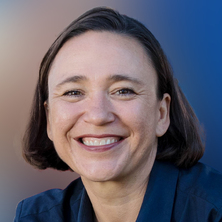
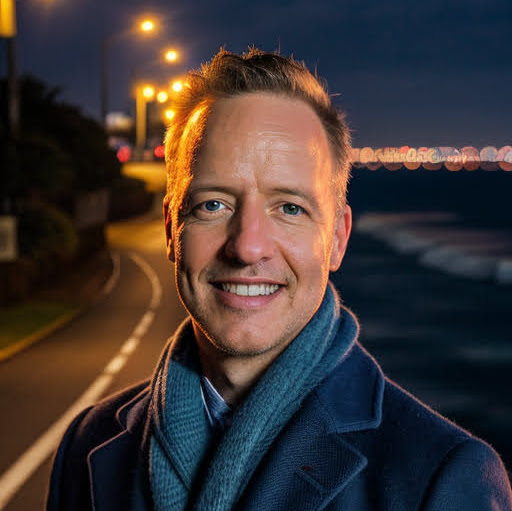
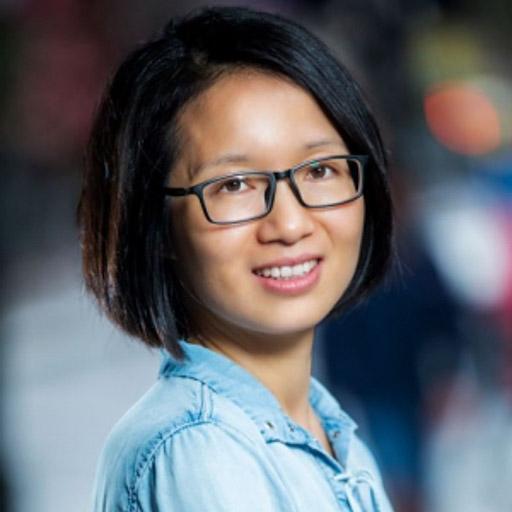
Professor Sara Dolnicar is an ARC Australian Laureate Fellow at the School of Business, Faculty of Business, Economics and Law, University of Queensland. With degrees in psychology and business administration from Wirtschaftsuniversität Wien, she specializes in market segmentation, sustainable tourism, social marketing, and environmental behavior. Born in Slovenia, raised in Austria, now based in Australia Over 300 refereed publications and 16 ARC grants Recipient of TTRA Distinguished Researcher Award (2017) and Slovenian Ambassador of Science (2016) Her research improves market segmentation methodology, addresses environmental sustainability in tourism, and develops behavioral interventions for eco-friendly tourist practices. She pioneered perceptions-based market segmentation and introduced bi-clustering techniques for improved data analysis. Recent publications focus on towel reuse interventions, buffet waste reduction, and smart sensor systems for hotel sustainability. She supervises PhD students in environmental behavior, tourism carbon emissions, and IoT applications for sustainability. Current grants include 'Mechanisms of Behaviour Change Theory' (2025-2028) and 'Reducing plate waste in hotels' (2021-2025). Key research areas: Sustainable tourism, market segmentation, social marketing Supervised over 15 PhD students in environmental behavior and disability employment Collaborates with industry partners like Energy Queensland and disability organizations
Istvan Albert is a Research Professor of Bioinformatics at Pennsylvania State University , affiliated with the Department of Biochemistry and Molecular Biology . He leads the Bioinformatics Consulting Center and teaches BMMB 852: Applied Bioinformatics . Research Interests: Specializing in bioinformatics, large-scale biological data analysis, microarray and sequence analysis, scientific programming, algorithm development, and database-driven web development. His work spans gene ontology visualization , RNA-Seq analysis , and coronavirus research . Software Development: Created GeneScape for gene function visualization and bio for bioinformatics workflows. Maintains the Biostar Handbook series and the Biostars Q&A Forum , a leading bioinformatics resource.
Marta Molinas is a Professor at the Department of Engineering Cybernetics within the Faculty of Information Technology and Electrical Engineering at the Norwegian University of Science and Technology (NTNU). Her research spans multiple interdisciplinary domains with a focus on EEG technology and brain-computer interfaces. She actively supervises numerous Master's projects and maintains extensive international collaborations with institutions including Kavli Institute for Systems Neuroscience, RIKEN Center for Brain Science, University of Tsukuba, Juntendo University, and several European universities. Professor Molinas' research interests center on developing innovative EEG technologies, particularly her FlexEEG concept for reduced-channel EEG systems with brain imaging capabilities. Her work integrates signal processing, artificial intelligence, and neuroscience to create practical applications in mental health, sleep research, neurorehabilitation, and human-computer interaction. She specializes in EEG source imaging, machine learning for brain signal analysis, and the development of brain-computer interfaces for various applications including locked-in syndrome communication, ADHD treatment, and driver monitoring systems. Her publication portfolio demonstrates strong trends in interdisciplinary research combining neuroscience with electrical engineering and artificial intelligence. The work shows particular emphasis on developing practical EEG-based systems that minimize invasiveness while maintaining analytical power, with applications spanning healthcare, rehabilitation, and human augmentation. Her research bridges theoretical signal processing with real-world implementations through numerous student projects and international collaborations. Professor Molinas actively supervises a large team of Master's and PhD students across multiple projects, with each project typically requiring two students working collaboratively. Her research is supported through numerous international collaborations with institutions in Japan, India, and Europe, indicating substantial research funding and project leadership. She has developed a pipeline of student projects that build upon previous work, creating a cumulative knowledge base within her research group. She leads the EEG ITK research team at NTNU, which focuses on developing the FlexEEG headset prototype featuring flexible, wireless, dry electrodes designed to move across the scalp. This team works at the intersection of neuroscience, electrical engineering, and computer science, developing applications for sleep research, mental health monitoring, neurorehabilitation, and brain-computer interfaces. The team collaborates extensively with international partners including the Kavli Institute for Systems Neuroscience, the International Institute of Integrative Sleep Medicine at University of Tsukuba, and several engineering departments across Europe and Asia.
Dr. Xin Zhou is an Oxford-Bristol Myers Squibb Fellow at the Department of Computer Science, University of Oxford. Her research integrates computational modeling, clinical data, and experimental findings to investigate cardiac disease mechanisms and develop human-based simulations for drug evaluation. BSc and MSc in Life Sciences, Beijing Normal University DPhil in Computational Biology, University of Oxford Her work focuses on multi-scale cardiac modeling , particularly in ischemic heart disease and heart failure, exploring ionic currents, tissue conduction, and organ-level dynamics. She develops electromechanical simulations to study cardiac alternans and arrhythmic risks, translating these into clinical applications for patient stratification and pharmaceutical testing. Recent publications emphasize in silico clinical trials , sex-specific cardiometabolic analysis, and Purkinje network modeling. Collaborative efforts with clinicians and pharmaceutical partners highlight her translational approach to regulatory science. Model of the Year 2024, BioModels EPSRC Impact Acceleration Account Microsoft Research Project Award Recognition Award, University of Oxford She supervises PhD and MSc students in computational cardiology, while serving on the editorial board of Frontiers in Physiology . Her current projects involve digital twinning and predictive cardiac safety models to reduce animal testing reliance.
Dr. Chunyan Lai is an Associate Professor at the Department of Electrical and Computer Engineering, Concordia University. Her research focuses on electric drives, motor control, power electronics, electrified vehicles, and vehicle-to-grid solutions. She contributes to both graduate and undergraduate education through courses such as Controlled Electric Drives and Hybrid Electric Vehicle Power Systems . Research Emphasis : Electric motor drives and control systems, electrified transportation, power electronics innovations, and energy management strategies. Publications : Specializes in sensorless control techniques for Permanent Magnet Synchronous Motors (PMSM), thermal management in electric machines, and advanced energy trading frameworks for smart grids. PhD Opportunities : The Power Electronics and Energy Research (PEER) Group under Dr. Lai offers positions for developing efficient motor drives for EVs and grid-connected power converters. Collaboration : Industry-adjacent research with requirements for professional communication, patent development, and technical dissemination.
Karthik Menon serves as an Assistant Professor with a joint appointment in the Woodruff School at Georgia Institute of Technology and the Coulter Department of Biomedical Engineering. His research integrates fluid mechanics, computational modeling, and data-driven methodologies to address critical challenges in healthcare, renewable energy, and bio-inspired engineering systems. His academic credentials include: Ph.D. in Mechanical Engineering, Johns Hopkins University (2021) M.S. in Mechanical Engineering, Johns Hopkins University (2019) B.E. in Mechanical Engineering, Birla Institute of Technology and Science, Pilani, India (2015) Menon's research program centers on three interconnected domains: cardiovascular flows for personalized treatment of heart disease, fluid-structure interactions in biological systems like heart valves and bio-mimetic robots, and vortex-dominated flows for renewable energy applications. His approach combines high-fidelity computational modeling with machine learning to uncover fundamental physics and develop clinical solutions, such as cardiovascular digital twins for non-invasive risk assessment. Current projects focus on patient-specific hemodynamics using CT imaging and uncertainty quantification to improve surgical planning. Analysis of his 15 most recent publications (2023-2025) reveals a dominant focus on advancing multi-fidelity computational frameworks for cardiovascular applications. Key trends include Bayesian uncertainty quantification, zero-dimensional solver development, and integration of clinical imaging data to create predictive digital twins. His work bridges fluid dynamics with clinical cardiology, targeting improved outcomes in coronary artery disease and Kawasaki-related complications through physics-informed machine learning. Menon's scholarly contributions have been recognized through competitive awards: WCCM-PANACM 2024 Travel Award, U.S. Association for Computational Mechanics (2024) Future Faculty Symposium Travel Award, Society of Engineering Science Conference (2023) Mark O. Robbins Prize in High-performance Computing, Johns Hopkins University (2021) Corrsin-Kovasznay Outstanding Paper Award, Johns Hopkins University (2020) Prosperetti Travel Award, Johns Hopkins University (2017) Mechanical Engineering Departmental Fellowship, Johns Hopkins University (2016) As principal investigator of the ComBiNE Fluid Dynamics Lab, Menon mentors graduate students in developing computational tools for fluid-structure interaction problems. His collaborative projects with cardiologists at Stanford and Emory hospitals translate engineering principles into clinical applications for cardiovascular disease management. Current grant activities focus on NSF and NIH-funded initiatives for uncertainty-aware cardiovascular modeling and bio-inspired flow energy harvesting. The ComBiNE Fluid Dynamics Lab operates as an interdisciplinary hub where engineers, clinicians, and data scientists collaborate on fluid mechanics challenges. Current lab initiatives include developing real-time hemodynamic simulators for surgical planning, creating reduced-order models for cardiac device optimization, and investigating vortex dynamics in fish schooling for underwater vehicle design. The lab maintains strong partnerships with Children's Healthcare of Atlanta and the Parker H. Petit Institute for Bioengineering and Bioscience.
Professor Göran Broström works at the Department of Marine Sciences at the University of Gothenburg . His research focuses on physical oceanography, marine turbulence, tidal energy systems, and biophysical processes in marine ecosystems. Current research themes include methane emissions from ocean infrastructure, turbulence in tidal flows, and wave-current interactions He utilizes advanced numerical modeling (e.g., Large Eddy Simulation, Bayesian inversion) and field observations Recent publications emphasize climate impacts (methane plumes), tidal energy innovations, and marine ecological connectivity His work appears in high-impact journals like Nature , Molecular Ecology , and Frontiers in Marine Science . Collaborative projects span oceanographic modeling, environmental monitoring, and marine renewable energy. No specific student advising information appears in the provided text.
Dan Suciu is a Microsoft Endowed Professor in the Paul G. Allen School of Computer Science & Engineering at the University of Washington. His research focuses on data management, query optimization, probabilistic databases, parallel data processing, and information theory applications to databases. Awards : ACM Fellow (2011), American Academy of Arts and Sciences (2024), ACM SIGMOD Codd Innovation Award (2022), NSF Career Award (2001), Alfred P. Sloan Fellow (2001-2002). Research Trends : Recent work emphasizes cardinality estimation using Lp-norms, submodular width for query evaluation, dynamic query processing, and tensor program optimization. His publications highlight intersections between database systems and formal methods, driven by mathematical rigor. Key Collaborators : Mahmoud Abo Khamis, Dan Olteanu, Amir Shaikhha, Maximilian Schleich, Kyle Deeds, Moe Kayali. Advising : PhD students Gerome Miklau (2006), Christopher Re (2010), Paris Koutris (2016), Nilesh Dalvi (2008 runner-up), Yisu Remy Wang (2024 runner-up) have excelled in dissertation awards.
Mustafa Taha Koçyiğit is a Full-time Assistant Professor at Bogazici University. His research focuses on Deep Learning, Self-supervised learning, Efficient training of deep learning methods, Computer vision, Efficient training of large language models, and Language grounded vision models. His recent work addresses computational efficiency in training methods and novel applications of deep learning across domains like aerospace defect detection and computer vision. His publications span advancements in self-supervised learning strategies (2023), efficient training for computer vision tasks (2023), and theoretical contributions like unsupervised batch normalization (2020). The 2025 work demonstrates cross-disciplinary impact in aerospace engineering through AI-driven defect detection via X-ray tomography. Notable Contributions: Bridging efficiency and accuracy in deep learning pipelines Technical Strengths: Neural architecture design, optimization strategies, and domain-specific model adaptation
Steven Meikle is a Professor of Medical Imaging Physics and Head of the Imaging Physics Laboratory at the Brain and Mind Centre, University of Sydney. He also serves as Deputy Director (Preclinical) of Sydney Imaging and Deputy Director of the National Imaging Facility's Sydney node. His expertise spans advanced imaging technologies, with a focus on PET/SPECT instrumentation and molecular imaging. He holds a B.App.Sc.(Hons) from the University of Technology Sydney and a PhD from the University of New South Wales. Research focuses include developing novel PET systems like Open-field PET (for freely moving rodents) and Total Body PET, which enhance imaging sensitivity and enable real-time behavioral studies alongside brain function analysis. Collaborations include Tsinghua University (China) and UC Davis (USA). He leads projects on motion correction, quantitative imaging, and AI-driven analysis. Key achievements include over 180 peer-reviewed publications, editorial roles in Physics in Medicine and Biology , and leadership in professional societies. Awards include IEEE Senior Membership and Australian Institute of Physics Fellowship. Current student projects explore Total Body PET applications, motion correction, and radiopharmaceutical evaluation. Teaching roles include medical physics courses in diagnostic radiography and medical physics programs. He advises on imaging ethics, facility implementation, and translational research bridging basic science and clinical applications.
Sabine Waschull is an Assistant Professor of Operations Management at the Faculty of Economics and Business, University of Groningen. She holds a MSc and PhD in Operations Management from the same institution. Her research focuses on human-centric design in Industry 4.0/5.0 contexts, including AI integration, digitalization, and work system evaluation. She is a member of the IFIP WG 5.7 working group on Production Management Systems. Her teaching includes courses such as Smart Industry Operations, Technology-Enabled Innovation, and Operations Strategy & Technology across bachelor and master programs. Her work emphasizes human-AI synergies and co-creation methodologies in manufacturing systems. Recent research trends highlight AI-driven enterprise interoperability, socio-technical evaluation of manufacturing systems, and human-centric design of augmented reality tools. Collaborations with co-authors like Christos Emmanouilidis and Joost Bokhorst explore AI ethics, digital twin integration, and assembly process optimization.
Jacob Krüger is an Assistant Professor at Eindhoven University of Technology , specializing in the development and evolution of variant-rich software systems. He holds a PhD from Otto-von-Guericke University Magdeburg (2021) and has held academic and research positions at institutions including Ruhr-University Bochum, Chalmers University of Technology, and the University of Toronto. His research focuses on the interplay between human cognition and software quality, particularly in complex systems requiring frequent adaptation. Education: PhD in Computer Science, Otto-von-Guericke University Magdeburg (2021) MSc Business Informatics, Otto-von-Guericke University Magdeburg (2016) Research Interests: Variant-Rich Systems Program Comprehension Software Product Lines Human Factors in Software Engineering Architecture Smells and Quality Assurance Articles Trends: Recent work emphasizes fork ecosystem visualization (VisFork tool), the impact of AI on scientific practices, and crisis-driven software development (e.g., Corona-Warn-App). Key themes include empirical studies, tool development, and industry collaboration. Awards: Best Dissertation Award (2022) Frank Anger Memorial Award (2019) Multiple conference best-paper and review awards Advising & Grants: Supervises 12+ PhD students across multiple institutions. Active in funding projects like INKleSS (German Research Foundation) and FOSD Meeting 2024 (NWO). Leads collaborations with ASML, Danfoss, and Axis AB. Labs/Teams: Member of the Software Engineering and Technology (SET) group at TU Eindhoven, focusing on industrial-strength software systems and cognitive aspects of development.
René van de Molengraft is a Full Professor of Robotics at the Mechanical Engineering Department of Eindhoven University of Technology (TU/e). He holds dual professorships in EAISI High Tech Systems and EAISI Foundational. His research focuses on autonomous robotic systems operating in human environments, emphasizing adaptability and task execution in varying conditions. Academic Background: MSc in Mechanical Engineering (TU/e, 1986) PhD in Identification of Mechanical Systems for Control (TU/e, 1990) Career progression: Assistant Professor (1990–2008) → Associate Professor (2008–2024) → Full Professor (2024) Research Interests: Autonomous robotics, human-robot interaction, agricultural automation, and control systems. His work emphasizes practical applications, such as the Tech United RoboCup team (world champion in multiple years) and large-scale robotics competitions. Projects: Key initiatives include the Tech United RoboCup team, the AI-matters manufacturing network, and the Frontiers in Autonomous Systems Technology (FAST) project. He has organized major robotics events like the 2013 and 2024 RoboCup World Championships in Eindhoven. Labs/Teams: Founder and leader of Tech United, a robotics team renowned for its achievements in robotic soccer and service robotics. Active in TU/e's Robotics research group and collaborations with industry partners.
Mykola Pechenizkiy is a Full Professor at the Department of Mathematics and Computer Science at Eindhoven University of Technology (TU/e), holding the Data Mining Chair. He also serves as an Adjunct Professor in Data Mining for Industrial Applications at the University of Jyväskylä. His research focuses on predictive analytics, data mining, and responsible AI, addressing real-world challenges in industry, healthcare, and education. He leads the Customer Journey research program at the Data Science Center Eindhoven, emphasizing ethical and transparent analytics. Academically, he holds a PhD from the University of Jyväskylä (2005) and has held visiting researcher positions at institutions like Columbia University and NYU. He has co-authored over 300 peer-reviewed publications and serves on editorial boards and committees for leading conferences (e.g., AAAI, IJCAI). He is the President of the International Educational Data Mining Society (IEDMS). His research interests include concept drift adaptation, sparsity techniques in neural networks, and fairness-aware AI. He has led projects such as the TKI PPS KPN Smart Two initiative and collaborates with industries like ASML, Philips, and Rabobank. His work contributes to UN SDGs, particularly in sustainable development through AI-driven solutions. Awards: Best Demo Paper Award (IEEE ICDE 2023), Best Paper Awards (ALA 2022, LoG 2022), and SensorKDD 2009 recognition. Grants/Projects: Active projects include TKI PPS KPN Smart Two (2019–2025) and Smart One W&I TKI KPN Flagship (2018–2022). Labs/Teams: Affiliated with EAISI Health, SIKS Scientific Board, and the University of Waikato’s AI Institute.
Tom Dhaene is a Full Professor at Ghent University, affiliated with the Department of Information Technology (INTEC-IDLab) within the Faculty of Engineering and Architecture (FEA). He also holds a position at imec, a research and innovation hub in nanoelectronics and digital technologies. Research Unit: Internet Technology and Data Science Lab (IDLab) Academic Rank: Full Professor Affiliations: Ghent University, imec His research focuses on data-efficient machine learning, surrogate modeling, Gaussian processes, Bayesian optimization, and system identification. He has developed widely used software tools such as the SUMO toolbox and ooDACE, and holds 5 U.S. patents. His work bridges theoretical advancements with practical applications in engineering and biomedical domains. Recent publications highlight his contributions to physics-informed machine learning, antenna design, microwave optimization, and healthcare applications. Notably, he explores Bayesian active learning, multi-objective optimization under uncertainty, and efficient modeling techniques for complex systems. Prof. Dhaene's research has been recognized through over 500 peer-reviewed publications and collaborations across academia, industry, and government sectors globally.