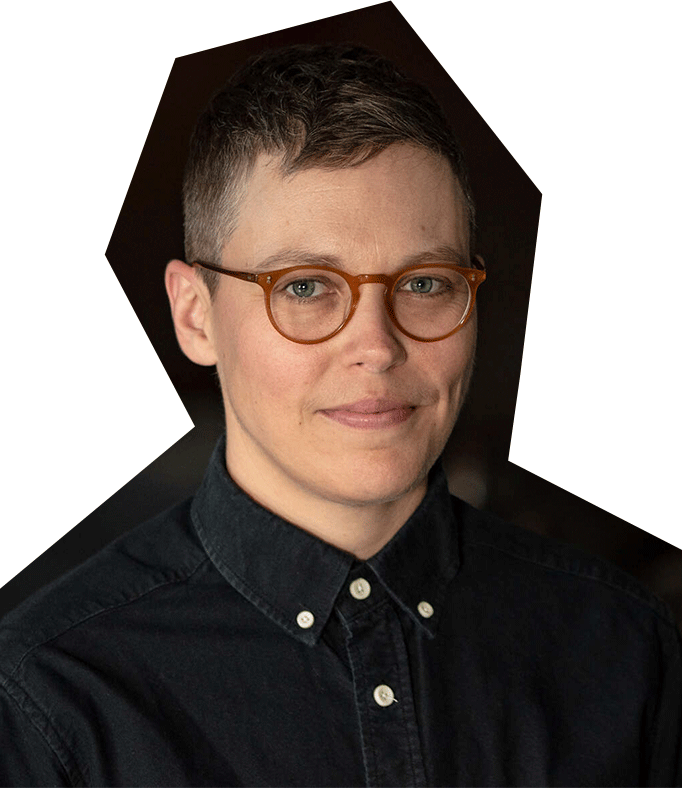
Benjamin D. Piekut is a Professor in the Department of Music at Cornell University, New York. His academic journey includes a Ph.D. in historical musicology from Columbia University, M.A. in composition from Mills College, and B.A. in music and philosophy from Hampshire College. Research Focus: Music and performance after 1950, critical improvisation studies, sound art, and intersections of music with race/gender politics Key Publications: Experimentalism Otherwise (2011), Henry Cow: The World Is a Problem (2019), and The Oxford Handbook of Critical Improvisation Studies (2016) Recognitions: Whiting Foundation Fellow, MIT Press '50 Most Influential Articles' selection, and funding from NEH and Arts and Humanities Research Council Editorial Roles: Co-editor of Oxford Handbook, editor of Tomorrow is the Question, and special issues for Contemporary Music Review and Third Text Contemporary Engagement: Curatorial advisory board member at Blank Forms (NYC), contributor to Flash Art and Texte zur Kunst His recent work explores the 'vernacular avant-garde' concept, analyzing experimental music's relationship with commercial institutions and mass audiences. Research spans from 1960s New York avant-garde to 1970s European experimental rock band Henry Cow. Current projects include sound art preservation challenges and media-specific music analysis.
Lauri Väkevä is a Professor in the Department of Education at the University of Helsinki, specializing in educational sciences with a focus on performing arts, music education, and STEAM pedagogy. He actively supervises doctoral students in the Doctoral Programme in School, Education, Society, and Culture and leads the SKAPA project (2024–2026) on developing study paths in arts education. His research explores the intersection of artificial intelligence, creativity, and multimodal learning environments. Key Affiliations: Department of Education, Sibelius Academy collaboration, Gaudeamus publishing network Research Themes: AI in music education, safe spaces for artistic expression, responsible AI pedagogy, historical evolution of Finnish music institutions Recent Work Highlights : 2025: Generative AI as a Collaborator in Music Education (Action-Network Theory application) 2025: Voicing Responsible AI Pedagogy (Ethical frameworks for arts education) 2024: Changing Role of Sibelius Academy (Historical analysis of Finnish music education) Leadership & Engagement : Project Manager for SKAPA, organizing committee member for the 2024 Ainedidaktinen Symposium, and active participant in AI research events.
Laurie Kincman is an Associate Professor and Chair of the Department of Theatre & Dance at the University of Wisconsin-La Crosse. She specializes in Stage Management, Arts Administration, and Dramaturgy, and serves as the department’s Production Manager. Her roles include overseeing the Stage Management and Arts Administration programs, teaching courses like Dramaturgy and Theatre Management, and advising productions. Education: MFA in Stage Management, University of California-Irvine BA in Drama & Political Science, Dartmouth College Research & Professional Contributions: Kincman authored The Stage Manager's Toolkit (4th ed., 2024), a foundational text for stage management education. Her work emphasizes communication techniques, digital tools, and ethical practices in theatre production. She has professional credits with institutions like the Old Globe Theatre and Opera Pacific. Recent Contributions: Led productions such as Cabaret (2025) and What the Constitution Means to Me (2024). Presented on legal and creative topics, including copyright in the arts and documentary drama. Affiliations: Member of the United States Institute for Theatre Technology, Stage Managers Association, and Literary Managers and Dramaturgs of the Americas.
Rebecca Schneider is a Professor of Modern Culture and Media at Brown University, specializing in performance studies, decolonial methods, and interdisciplinary art practices. Her work interrogates intersections of media, theatre, and Black feminist thought, with a focus on historical reenactment, gesture ethics, and postcolonial critique. Her research interests span decolonial methodologies, liveness in performance, and the prehistories of screen media. Key projects include *This Shoal Which is Not One* (2020), exploring African diasporic narratives, and *Slough Media* (2018), which examines media's materiality. She has been awarded a Guggenheim Fellowship (2021) and the Notable Book Award (2011). Schneider has contributed to journals like TDR, edited special issues on precarity and new materialisms, and collaborated with global institutions including the British Museum and Guggenheim. Her current projects include a digital book on gesture and a work on dance in post-slavery capitalism.
Dr. Kate Sicchio is Associate Professor of Dance and Media Technologies at Virginia Commonwealth University, serving as Graduate Director for Kinetic Imaging. Her interdisciplinary work explores choreography-technology interfaces. Research areas include: Wearable technology for performance Live coding systems for dance Human-robot choreography Real-time video systems Recent publications examine movement notation systems and collaborative live coding platforms, with performances exhibited internationally at venues including London's V&A Museum.
Maxwell Tfirn is a Lecturer and Director of Creative Studies at Christopher Newport University , Department of Music, Theatre and Dance, where he teaches Music Composition, Sound Synthesis, and Music Technology. His research focuses on real-time recursive compositions and data sonification for scientific analysis. PhD in Composition and Computer Technologies - University of Virginia M.A. in Music Composition - Wesleyan University His work bridges music composition with bacterial behavior studies through NSF-funded research on Data Sonification of Bacterial Chemotaxis . Notable performances include works at ICMC, SEAMUS, and Subtropics Music Festival. Collaborations with ensembles like Jack Quartet and Loadbang highlight his impact in contemporary music circles. Key Trends in Publications: Articles span real-time algorithmic compositions, sensor-based live performance tools, and interdisciplinary sonification projects merging microbiology with auditory analysis. Subfields include neural network integration, audiovisual data mapping, and glitch-based performance aesthetics. Scientific Awards: Best Use of Sound (Academic) - ICAD (2023) Research Collaborations: National Science Foundation grant exploring bacterial chemotaxis sonification. Mentorship roles include advising students at Christopher Newport University and contributing to experimental music festivals globally.
Professor L.M. Bogad is a prominent figure in political performance at the University of California, Davis, serving as Professor of Theatre & Dance and Director of the Center for Tactical Performance. A Guggenheim Fellow and co-founder of the Clown Army, his work integrates performance art with activism, addressing themes like labor rights, climate justice, and social movements. He has performed globally, including at SF MOMA and the Hemispheric Institute, and led workshops in over 20 countries, notably during Egypt’s 2011 revolution. His research focuses on tactical performance strategies, documented in seminal works like *Electoral Guerrilla Theatre* (2020), *Tactical Performance* (2013), and *Performing Truth* (2021). He has secured major grants, including the $150,000 Creative Work Fund/San Francisco Foundation Creative Corps Grant (2023) for *Sinfonia de la Justica*, a farmworker-led performance project. Awards include the Rockefeller Foundation Bellagio Residency (2025) and a Wolfsonian Creative Fellowship (2025) to adapt his screenplay *Orwell’s War* into a play. Bogad’s projects often collaborate with nonprofits, such as North Bay Jobs With Justice. His work spans performances like *ECONOMUSIC* (musicalizing economic data) and *Delivering Democracy* (engaging voters via public art). He chairs UC Davis’ Theatre & Dance department and hosts the *Plague* podcast on societal crises. His contributions bridge art and activism, emphasizing humor and radical memory to challenge power structures.
Claire Bishop is a Presidential Professor of Art History at the CUNY Graduate Center, widely considered an original thinker and creative interpreter of contemporary art, as well as a dynamic teacher. Her work critically examines participatory art, performance practices, and the relationship between art and politics. She has been based at the CUNY Graduate Center since 2008 and serves as a Contributing Editor to Artforum. Her publications have been translated into twenty languages, reflecting her international influence in the field of contemporary art history. Education: Ph.D. University of Essex, 2002 M.A. University of Essex, 1996 B.A. University of Cambridge, 1994 Bishop's research interests span Contemporary Art, Performance Art, Art & Politics, Exhibition History, History of Art Pedagogy, Post- and De-colonial Theory, and Museology. She is particularly known for her critical engagement with participatory art practices, questioning their political efficacy while exploring new modes of spectatorship in contemporary art. Her work examines how the digital revolution has transformed how we engage with art, arguing against simplistic narratives about technology's impact on visual culture. Bishop's scholarly contributions have been recognized with prestigious awards including the Guggenheim Fellowship (2024), the Mentoring and Teaching Award from CUNY Graduate Center (2024), and the College Art Association's Frank Jewett Mather Award for art criticism (2013). She has also received significant research support including a fellowship from the Center for Ballet and the Arts at NYU to study Merce Cunningham's Museum Events. Awards and Recognition: Guggenheim Fellowship, 2024 Mentoring and Teaching Award, CUNY Graduate Center, 2024 Andy Warhol Foundation Arts Writers Grant, 2017 Frank Jewett Mather Award for art criticism, 2013 Research Fellowship, Sterling and Francine Clark Institute, 2013 Bishop has received substantial grant support for her research, including the Andy Warhol Foundation Arts Writers Grant which enabled her to deepen her investigation into art and politics. Her work as a mentor has been formally recognized by CUNY Graduate Center, highlighting her commitment to developing the next generation of art historians. She has organized numerous academic events including the 'Post-Discipline? Contemporary Artists and Research' seminar series at the Center for the Humanities at CUNY Graduate Center. Bishop maintains an active presence in both academic and artistic communities, regularly contributing to major art publications and participating in international conferences. Her work bridges theoretical inquiry with practical engagement in contemporary art institutions and practices.
Dr. Tyler Hollett serves as an Associate Professor of Learning Sciences in the Department of Learning and Performance Systems at The Pennsylvania State University, contributing to the Learning, Design, and Technology program from 315 Keller Building, University Park, PA. His research champions interest-driven learning often devalued by formal institutions and neoliberal markets, investigating contexts like skateboarding, video gaming, and nature hobbies (fishing, birding). Hollett examines how passion-fueled activities generate embodied, affective learning that transcends goal-oriented education, advocating for equitable alternatives to capitalist learning trajectories. Current projects focus on intergenerational play through the FIGMENT Lab, exploring family gaming dynamics, climate engagement via outdoor hobbies, and evolving children's play across settings. Analysis of his recent publications reveals a methodological commitment to qualitative inquiry, with recurring themes of spatial-temporal rhythms, affective atmospheres, and embodied cognition. His work bridges learning sciences, critical pedagogy, and digital media studies, increasingly emphasizing intergenerational and ecological dimensions of informal learning. No scientific awards are listed in his current profile. However, Hollett actively mentors graduate students, inviting collaboration on FIGMENT Lab initiatives. His advising philosophy emphasizes rigorous scholarship within supportive, interest-driven research teams, with the FIGMENT Lab representing his current focus on family-centered learning in gaming, nature, and play contexts.
Susanne Marschall is a Professor of Media Studies (focus: audiovisual media, film and television) at the University of Tübingen , where she also serves as Director of the Center for Media Literacy and editor of the open journal "Colour Turn" . Her research bridges historical hermeneutics, media culture, and interdisciplinary studies of color and visual perception, with a strong empirical focus on film, television, and photography. Doctoral supervision across diverse topics (AI interaction, AR for environmental issues, Bollywood representations, health communication) Founded Tübingen Research Center for Animation and Emerging Media (2013) Interdisciplinary collaborations with neuroscience, cultural studies, and educational initiatives Recent publications explore cinematic color theory, animation aesthetics, and transcultural narratives. Her practical projects (e.g., Lotte Reiniger - Tanz der Schatten documentary, AR applications for social issues) demonstrate her commitment to connecting academic research with media practice. Awards include the 2003 Senate Teaching Prize and 2012 "Professor of the Year" (UNICUM BERUF).
José Morales Aznar is a Full Professor in the Department of Physical Activity and Sport Sciences and Sports Management at the Faculty of Psychology, Educational Sciences and Sports, Ramon Llull University (Blanquerna). His academic work focuses on the intersection of physical activity, sport sciences, and adapted physical education, with a particular emphasis on judo applications for diverse populations. Dr. Morales Aznar's research interests span Physical Activity, Sport Sciences, Martial Arts (particularly judo), Adapted Physical Activity for people with disabilities, Autism Spectrum Disorders, Intellectual Disabilities, Physical Education, Motor Skills, and Heart Rate Variability. His work demonstrates a strong commitment to applying sport science principles to improve quality of life across different demographic groups, especially those with special needs. Analysis of his recent publications reveals a clear trend toward adapted judo programs, particularly for individuals with autism spectrum disorders and intellectual disabilities. His research combines practical applications with theoretical frameworks to develop evidence-based approaches in adapted physical activity. The publications also show growing interest in technology integration in physical education and the physiological aspects of martial arts training. Dr. Morales Aznar is actively involved in multiple research projects including KATAUTISM (Judo program for autistic children), JUDODI (Effects of judo for adolescents with intellectual disabilities), JIDP (Judo for Intellectual Disability Project), SAFE (Health, Physical Activity and Sports), and AUTJUDO (Adapted Judo for Children with Autistic Spectrum Disorders). These projects demonstrate his leadership in developing and implementing specialized physical activity programs for vulnerable populations while securing significant research funding from various agencies including the EACEA Education, Audiovisual and Culture Executive Agency and Agència de Gestió d'Ajuts Universitaris i de Recerca.
Dr. Maria Witek is an Associate Professor at the Department of Music, University of Birmingham. Her research focuses on the psychology, cognitive neuroscience, and philosophy of musical experience, particularly rhythm, timing, emotion, and body-movement. She leads the Witek Lab, investigating how dance music experiences emerge from interactions between neural, social, and embodied processes. Notable projects include studying rhythmic skill in DJs (funded by AHRC) and ensemble synchronization in the ARME project (EPSRC-funded). She holds a DPhil from Oxford and previously worked at Aarhus University. Her methods span experimental psychology, neuroimaging, and participatory action research. Education: BA Musicology (Oslo, 2006), MA Music Psychology (Sheffield, 2008), DPhil Music (Oxford, 2013) Research interests include groove theory, disabled DJs' embodied timing, and the social dynamics of music-making. She collaborates with artists and tech companies like Drake Music and Native Instruments to develop inclusive musical tools. Articles focus on rhythmic entrainment, neurodiverse musical practices, and the neural basis of musical pleasure. Current grants include work on disability-inclusive DJ practices and virtual ensemble training systems.
Daisy Black is a Lecturer in English Literature at the University of Wolverhampton, Faculty of Arts, Business, and Social Sciences. She previously held a lectureship at the University of Hull. Her work bridges academic research and creative performance, with a strong focus on medieval and Renaissance drama. BA, University of Cambridge Her research centers on medieval religious drama, especially gender, temporality, and representations of the 'other' such as Jews and Saracens. She explores how performance reshapes lay theology during the early Reformation and investigates medievalism in modern board and card games. Her interests also include queer theory, fabliaux, Chaucer, Shakespeare, and writing for performance. Recent publications reflect a growing interdisciplinary trend, connecting medieval studies with cultural memory, performance theory, and popular media. Her monograph Play Time (2020) and recent articles examine how time, gender, and anti-Semitism are constructed in biblical drama. She has also published on cannibalism and the Eucharist, silence in performance, and the medieval 'Dark Ages' in gaming culture. BBC / AHRC New Generation Thinker (2018) As a public intellectual, she has contributed to BBC Radio 3 and BBC Radio Sheffield. She is also an active theatre director and storyteller, performing her own medieval storytelling shows across the UK. She serves as an editor for Year's Work in English Studies and supervises research in medieval and Renaissance literature. Her teaching includes courses on Shakespeare, children’s literature, and taboo in theatre. She performs in and leads projects on medieval storytelling and performance, including the 'Yde and Olive Storytelling Tour' (2025), and advocates for inclusive and safe conference dance practices.
En Li is an Associate Professor of Modern East Asian History at UT Dallas' Harry W. Bass Jr. School of Arts, Humanities, and Technology. Her research examines late imperial and modern China through social/cultural lenses, with foci on material culture, games, and Chinese diasporas. She earned her PhD from Washington University in St. Louis. Research interests include: Transnational cultural exchange through performing arts like Hula Pedagogical applications of historical board games Diaspora studies and material culture analysis Honors include the Sherman Emerging Scholar award and Provost Teaching Fellowship. Her work combines archival research with contemporary cultural analysis to explore meritocracy and social change.
Nica Ross is an Associate Professor of Video & Media Design and Director of The Frank-Ratchye STUDIO for Creative Inquiry at Carnegie Mellon University's School of Drama in Pittsburgh, Pennsylvania. With a background in cinema and advanced photographic studies, Ross brings a unique interdisciplinary approach to their work, blending technology, performance, and critical theory to explore how social constructions are reinforced by technology and performance. Ross holds a B.A. in Cinema from San Francisco State University and an M.F.A. in Advanced Photographic Study from The International Center of Photography-Bard College program. Their educational background has informed their practice as both an artist and educator, with a focus on critical applied learning and transdisciplinary collaboration. Through humor and play, Nica Ross creates participatory video installations and games that challenge social constructions reinforced by technology and performance. Their creative research focuses on “social machines” that reveal and interrogate cultural constructs, with particular attention to queer theory, gender non-conforming experiences, and the politics of visibility. Ross emphasizes liveness, human connection, and critical examination of tools and contexts in their teaching and artistic practice. Ross's recent work shows a trajectory moving from traditional video and media design toward increasingly interactive and participatory forms that engage audiences directly in questioning social constructs. Their projects increasingly incorporate game mechanics, queer theory, and critical examinations of surveillance technologies, often using RGB color systems and immersive environments to challenge perceptions of reality. Ross has received notable recognition including the Frank-Ratchye Fund for Art @ the Frontier, the Lighthouse Fellowship, and residency at Baxter Street CCNY. These awards support their innovative work at the intersection of technology, performance, and social critique. As Director of The Frank-Ratchye STUDIO for Creative Inquiry, Ross connects with researchers and creators across Carnegie Mellon University, fostering transdisciplinary practice and critical engagement with technology. Their leadership in this space has created opportunities for collaborative projects that challenge conventional boundaries between art, technology, and social inquiry. Ross's work often involves collaborative teams and labs, including partnerships with musicians like Geo Wyeth, artists like Ginger Brooks Takahashi, and technical collaborators at Carnegie Mellon's Panoptic Dome. These collaborations result in immersive installations, interactive games, and critical explorations of technology's role in shaping social reality.