Dr. Kaya de Barbaro is an Associate Professor in the Department of Psychology at the University of Texas at Austin (College of Liberal Arts). She holds a Ph.D. from the University of California San Diego. Her research focuses on bridging computer science and developmental/clinical psychology, particularly maternal mental health and infant social-emotional development. She directs the Daily Activity Lab, which uses mobile/wearable sensors and machine learning to analyze real-world interactions, aiming to develop just-in-time interventions for new mothers. Key research areas include maternal-infant dynamics, physiological synchronization, and the impact of environmental chaos on development. She has pioneered methods for analyzing high-density data, such as Granger causality and machine learning algorithms to detect behaviors like crying and holding. Recent work emphasizes leveraging ecological momentary assessment surveys and 24-hour LENA audio recordings to understand proximal mechanisms of development. Dr. de Barbaro teaches Psychology 333D (Introduction to Developmental Psychology) and has developed curricula for both in-person and online formats. She is actively involved in training students through the Eureka program at UT Austin. Her lab collaborates on tools like chatbots for postpartum mental health and has published extensively on sensor-based methodologies in developmental science.
Christopher Turbill is an Associate Professor in Animal Science at Western Sydney University's School of Science, where he maintains an active research program focused on animal physiological ecology. He is affiliated with the Hawkesbury Institute for the Environment and serves as a Principal Investigator on multiple research projects while accepting HDR candidates for supervision. PhD from University of New England (2006) Thesis: Thermoregulatory Ecology of Tree-roosting Bats Supervised by Prof. Fritz Geiser Postdoctoral fellowships from Austrian Science Fund and Australian Research Council (DECRA) Former ecologist with NSW Government Professor Turbill's research integrates thermal and metabolic physiology with behavioral ecology to understand animal-environment interactions. His work has revealed significant ecological consequences of controlled body temperature variation in mammals and birds, linking these processes with metabolic energy expenditure, activity patterns, and life-history strategies. He specializes in bat biology and investigates conflicts between human environmental change and animal conservation requirements. His research keywords include ecophysiology, thermoregulation, energy expenditure, life-history ecology, body temperature, torpor, hibernation, and wildlife conservation. Analysis of Turbill's recent publications reveals a strong focus on thermal biology and conservation physiology, particularly regarding bats and birds. His work examines how animals manage energy through torpor, respond to climate change through thermal regulation, and adapt to anthropogenic disturbances. The research spans field studies of flying-foxes, microbats, and passerine birds across Australian ecosystems, with increasing emphasis on conservation applications related to white-nose syndrome, fire impacts, and wind energy development. Turbill leads significant research projects including the Ecology of the eastern horseshoe bat and its sensitivity to fire impacts (2024-2027), Vulnerability of Australian bats to white-nose syndrome (2021-2026), and Torpor use and burrowing behaviour in an arid zone passerine (2024). His work attracts funding from diverse sources including the Australian Research Council, Department of Planning and Environment, and various conservation organizations. Professor Turbill directs the BatsLab research group, which maintains a virtual hub for bat research at Western Sydney University. His team employs advanced methodologies including thermal imaging, GPS tracking, and physiological monitoring to study animal responses to environmental challenges. Current work focuses on developing conservation interventions for heat-stressed flying-foxes and assessing vulnerabilities of Australian bat species to emerging diseases.
Dr. Yi-Feng Chen is a Research Assistant Professor and Master's Supervisor in the Department of Biomedical Engineering at the Southern University of Science and Technology (SUSTech) in Shenzhen, China. He joined SUSTech as a postdoctoral fellow in November 2020 and was promoted to Research Assistant Professor in February 2023. His academic journey includes interdisciplinary training across engineering, neuroscience, and biomedical applications. Dr. Chen's educational background includes: Ph.D. in Engineering from Wuhan University of Technology (2014-2017), supervised by Professor Quan Liu M.Sc. from Wuhan University of Technology (2011-2014), supervised by Professor Zhou Zude B.Sc. from Wuhan University of Technology (2007-2011) He also participated in exchange programs at Yuan Ze University in Taiwan (2012) and the University of Auckland in New Zealand (2015). Dr. Chen's research spans the intersection of biomedical engineering, neuroscience, and artificial intelligence, with particular focus on brain-computer interfaces and rehabilitation technologies. His work combines advanced signal processing techniques with clinical applications, especially in decoding neural signals for movement intention and monitoring brain states during anesthesia. His research has significant implications for neurorehabilitation, assistive technologies, and intraoperative neurophysiological monitoring. His recent publications demonstrate a clear trajectory toward increasingly sophisticated neural decoding techniques, with a focus on coordinated limb movements and practical rehabilitation applications. The work shows progression from basic EEG signal processing to complex bimanual movement decoding and robot-assisted rehabilitation systems, reflecting a translational research approach from basic science to clinical applications. Dr. Chen has secured significant research funding as principal investigator and core contributor on multiple projects: National Natural Science Foundation of China Youth Science Fund Project (2024-2026) Guangdong Natural Science Foundation General Project (2024-2026) Ministry of Science and Technology National Key R&D Program Project (2023-2026) Shenzhen Science and Technology Innovation Commission Key Project (2022-2025) As a Master's Supervisor, Dr. Chen mentors graduate students in biomedical engineering with focus on neural engineering and rehabilitation robotics. His laboratory collaborates closely with clinical partners to ensure research relevance to real-world medical challenges, particularly in neurorehabilitation and intraoperative monitoring.
Lisa Walcott is an Associate Professor of Art at Hope College, where she has been a faculty member since 2018. She teaches sculpture courses, the capstone course for art majors, and a First-Year Seminar on artistic processes. Her studio practice focuses on kinetic sculptures and installations that explore themes of home, the everyday, and the feminine experience. MFA in Sculpture from Cranbrook Academy of Art (2010) B.A. from Trinity Christian College (2005) Walcott’s research intersects sculpture, installation art, and kinetic design, often recontextualizing domestic objects to investigate themes of interdependence, repair, and the unseen forces in everyday life. Her work frequently involves mechanical components and materials like wax, motors, and household items to create immersive, motion-driven installations. Her recent artworks, such as Making a Mountain (2024) and A Soft Punch to the Gut (2024), exemplify her focus on transforming utilitarian structures into emotive, kinetic pieces. These works, alongside digital collages like The Way I Figure It (2023), reveal a trajectory toward blending physical materials with conceptual frameworks to explore domestic ingenuity and tension. Walcott actively mentors students through faculty research collaborations and founded the Hope College Art Club. She exhibits nationally at institutions like the Eli and Edythe Broad Art Museum and The Sculpture Center, with solo exhibitions at venues including Manifest Gallery (Cincinnati) and the Urban Institute for Contemporary Art. Her studio practice integrates material investigations and workshops to refine techniques, which she translates into both pedagogy and art. Notable solo exhibitions include Swarm (2013) at the Broad Art Museum and Tight Spots (2021) at Saugatuck Center for the Arts.
Qimin Liu is an Assistant Professor at Boston University, serving as Lab Director of the Quantitative Psychopathology Laboratory. He holds a PhD in Psychological Sciences from Vanderbilt University with specializations in Clinical Science and Quantitative Methods. His research focuses on emotional disturbances across development, statistical methodology development, and health equity with an emphasis on intersectional marginalization. He has expertise in analyzing intensive longitudinal data and has published extensively on topics like irritability, suicidality, and mental health disparities among sexual and gender minority populations. Dr. Liu’s work frequently integrates advanced statistical techniques such as latent variable modeling, network analysis, and machine learning. His recent studies explore the temporal dynamics of affect, the impact of stigma on mental health, and the role of childhood adversity in psychiatric outcomes. Notable contributions include developing methods for analyzing zero-inflated longitudinal data and creating algorithms for digital phenotyping of mood disorders through mobile device usage patterns. His scholarship emphasizes bridging clinical phenomena with rigorous quantitative approaches, addressing gaps in understanding how social determinants and individual differences shape mental health trajectories. He has collaborated on large-scale datasets like the Collaborative Psychiatric Epidemiological Surveys and contributed to interdisciplinary research on public health outcomes among aging sexual minority men. Dr. Liu’s methodological innovations include the DACF framework for ceiling/floor effect data and the lamme package for log-analytic multiplicative effects modeling. He actively publishes in high-impact journals such as Psychological Methods and Journal of Abnormal Psychology , focusing on both empirical findings and statistical best practices.
Rick Hoyle is a Professor of Psychology and Neuroscience at Duke University, where he serves as Associate Chair of the Department of Psychology and Neuroscience. He is also a Faculty Network Member of the Duke Institute for Brain Sciences. His academic career spans decades, with significant contributions to understanding self-regulation and adolescent development. Dr. Hoyle earned his B.A. from Appalachian State University (1983), followed by an M.A. (1986) and Ph.D. (1988) from the University of North Carolina, Chapel Hill. He progressed from Assistant to Associate to Full Professor at the University of Kentucky from 1989 to 2003 before joining Duke University. His research focuses on how adolescents and emerging adults manage goal pursuit through self-regulation, taking a broad view that accounts for personality, environment, cognition, emotion, and social influences. He employs longitudinal methods with repeated assessments, sometimes spanning years with data collection multiple times per year, or intensive studies with assessments several times daily. His lab develops innovative measurement tools including self-report measures of self-control and grit, as well as unobtrusive approaches using mobile phones and wearable devices to track goal pursuit in natural settings. His recent publications reveal a strong focus on self-regulation in digital contexts, adolescent substance use, socioeconomic influences on development, and innovative measurement approaches. His work increasingly integrates technology (social media analysis, wearable devices) with traditional psychological research methods to understand real-world behavior. Fellow, Association for Psychological Science (2013) Dr. Hoyle has secured numerous research grants totaling millions of dollars, including the current Real-Time and Randomized Tests of Social Media and Mental Health Links in Early Adolescence (2024-2029), NCCU Duke - Substance Use Research & Education (2024-2029), and Mid-Life Health Inequalities in the Rural South: Risk and Resilience (2023-2028). His grant portfolio demonstrates sustained funding for research on adolescent development, substance use, self-regulation, and health disparities. He teaches advanced courses including Applied Structural Equation Modeling and Psychology and Neuroscience Grant Writing, mentoring the next generation of researchers in quantitative methods and research design. His work through the Center for the Study of Adolescent Risk and Resilience (2008-2025) has established a significant research infrastructure for longitudinal studies of adolescent development. Current projects examine social media effects on mental health, substance use patterns, and the impact of environmental factors on adolescent well-being using innovative digital tracking methods.
Dr. Tracy Hecht is an Associate Professor of Management and Graduate Program Director of the PhD Program in Business Administration at the John Molson School of Business, Concordia University . She earned her PhD in Industrial and Organizational Psychology from the University of Western Ontario. Her research focuses on the interplay between work, family, and other life roles, particularly how these interactions influence job search behaviors, career trajectories, and well-being. Key themes include work-family boundary management, career procrastination, and the impact of multi-role dynamics on professional outcomes. As an Associate Editor at the Journal of Organizational Behavior , Dr. Hecht contributes to advancing scholarly discourse in her field. Her work has been published in top-tier journals such as Journal of Applied Psychology and Journal of Occupational and Organizational Psychology . Recent research highlights include studies on gender differences in job search intensity and the psychological mechanisms behind career decision delays. Her teaching and supervision span the Management (MSc) and Business Administration (PhD) programs. While no specific grants or labs are explicitly noted, her research consistently addresses contemporary challenges at the intersection of work and personal life, offering actionable insights for organizations and policymakers.
Suvi Saarikallio is a Professor of Music Education at the University of Jyväskylä, Finland , affiliated with the Faculty of Humanities and Social Sciences and the Department of Music, Art and Culture Studies . She leads interdisciplinary research bridging music psychology, education, and therapy, with a focus on youth development, emotion regulation, and well-being. Research Groups: Centre of Excellence in Music, Mind, Body and Brain (2022-2029), Musiconnect (2022-2027) Key Projects: Music and You, Stress & music listening, MPACT (Music and Sports), Music and Cross-modal Associations, SOSUS (Social Sustainability for Children) Research Trends: Her recent publications explore music's role in emotional regulation, cross-modal perception, health outcomes, and educational applications. Themes include AI's impact on music evaluation, rhythm's connection to cognitive skills, and music's influence on stress and social-emotional development. Contact: suvi.saarikallio@jyu.fi
Prof. Dr. Mike Martin is a leading researcher at the University of Zurich's Center for Gerontology . His work spans cognitive aging, social development in old age, and life-span developmental psychology, with a focus on ecological validity in aging research. Professor, University of Zurich Director, Zurich Longitudinal Study on Cognitive Ageing Co-editor, Journals of Gerontology series Key research areas include: Healthy aging and quality of life Cognitive-emotional interactions in aging Dyadic adaptation in dementia caregiving Mobile sensing of aging-related behaviors Participatory research methodologies Language use as a biomarker of aging His recent publications analyze: GPS mobility and cognitive function Machine learning in reminiscence detection Prospective memory trajectories Emotion regulation in couples Digital interventions for cognitive health Neuroimaging correlates of aging
Christopher Conway serves as Associate Professor of Psychology at Fordham University's College of Arts and Sciences, where he directs the Bronx Personality (B-PER) Lab. His research investigates borderline personality disorder, anxiety, depression, and distress tolerance using experience sampling methods and longitudinal designs. The lab examines personality development across key transitions such as romantic breakups and financial strain. 2007 BS in Psychology and Spanish, Duke University 2009 MA in Clinical Psychology, University of California, Los Angeles 2013 PhD in Clinical Psychology, University of California, Los Angeles Conway's work centers on distress tolerance as a protective factor against self-injurious behaviors, momentary personality processes using ecological assessment, and the HiTOP consortium 's dimensional classification of psychopathology. His lab develops quantitative models linking personality dimensions to clinical outcomes, with emphasis on how stressors trigger symptom changes. Recent publications reveal neuroticism's specific association with broadband internalizing symptoms rather than narrowband anxiety or anhedonia. His publications demonstrate consistent focus on transdiagnostic mechanisms and dimensional classification systems . Key trends include validating the HiTOP framework across cultures, examining distress tolerance in substance use contexts across four continents, and developing within-person models of self-injury using registered report methodology. Professional affiliations include: Society for Research on Psychopathology Association for Psychological Science Association for Behavioral and Cognitive Therapies Association for Research in Personality Conway advises multiple graduate students in the B-PER Lab and leads several active studies including MOMENT (Measuring Our Momentary Emotions and Negative Thoughts), DENEM (Daily Experiences of Negative Emotions), and READI (Responses to Emotions And Daily Interactions). His lab participates in the multinational Cross-cultural Addictive Behaviors Study examining distress tolerance across seven countries. All research materials follow open science principles through his OSF repository. The B-PER Lab maintains active research programs examining personality development through: 3-year longitudinal Multiyear Adult Personality Project (MAPP) Cross-cultural Addictive Behaviors Study (CABS) Daily emotion regulation projects using smartphone-based assessments
Dr. Nancy L. Sin is an Associate Professor in the Department of Psychology within the Faculty of Arts at the University of British Columbia. She teaches undergraduate and graduate courses in health psychology and supervises students at multiple levels. She is Co-Chair of the Antiracism Task Force for the Society for Biopsychosocial Science and Medicine and a member of the Steering Committee at the UBC Edwin S.H. Leong Centre for Healthy Aging. Previously, she served on the Executive Committee for the American Psychological Association's Division on Adult Development and Aging and established the Diversity Mentorship Program. PhD, University of California, Riverside, 2012 Dr. Sin's research focuses on biological and behavioural pathways linking daily well-being and stress to health. Her work demonstrates that emotional responses to daily stressors are associated with inflammatory, neuroendocrine, and autonomic mechanisms implicated in aging-related conditions like cardiovascular disease. She investigates daily positive events as protective factors for stress processes and health, with particular interest in emotional well-being and aging, stress-sleep cycles, and health equity. Her research spans multiple disciplines including health psychology, gerontology, and social psychology. Analysis of Dr. Sin's recent publications reveals consistent focus on daily stress processes, positive emotions, and health outcomes across the lifespan. Her work increasingly examines pandemic-related stressors, social determinants of health, and health disparities, with strong emphasis on methodological rigor through daily diary and longitudinal approaches. The publications demonstrate interdisciplinary collaboration across psychology, public health, and medicine, with growing attention to diversity, equity, and inclusion in health research. Distinguished Alumni Award, Department of Psychology, University of California, Riverside (2025) Fellow, Gerontological Society of America (2025) Innovative Research on Aging Award (Bronze Award) from the Mather Institute (2021) Michael Smith Foundation for Health Research Scholar (2020) Springer Early Career Achievement Award in Research on Adult Development and Aging (2019) Gerontological Society of America's Behavioral and Social Sciences Student Research Award Editor's Choice article at Annals of Behavioral Medicine Dr. Sin actively supervises undergraduate, MA, and PhD students, with a current focus on Health Psychology graduate students specializing in adult development and aging, stress, and health equity/disparities. Her research has been supported by significant grants as PI or Co-I from the U.S. National Institute on Aging, Social Sciences and Humanities Research Council of Canada, Canadian Institutes of Health Research, Canada Foundation for Innovation, and the Michael Smith Foundation for Health Research. She has established a strong research program examining daily experiences and their health implications across adulthood. Dr. Sin directs the UPLIFT Health Lab (Understanding Pathways Linking Inter- and Intraindividual Factors To Health), which explores psychosocial well-being and biobehavioural mechanisms underlying healthy aging. The lab investigates how daily positive events promote health through lower inflammation, adaptive cortisol profiles, and better health behaviors, with particular attention to how positive emotions buffer stress processes. The lab actively recruits community participants for studies on daily experiences and health, contributing to intervention development for promoting psychological and physical well-being across adulthood.
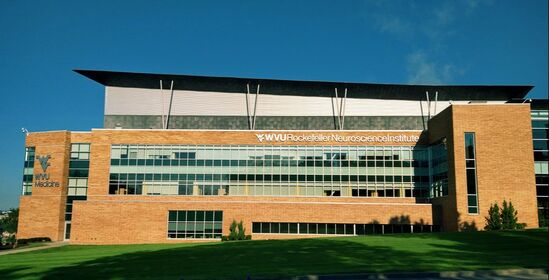
Michelle CD Bridi is an Assistant Professor in the Department of Neuroscience at West Virginia University School of Medicine , with a joint affiliation at the Rockefeller Neuroscience Institute . Her research integrates synaptic plasticity , sleep physiology , and neurological conditions to investigate dynamic synaptic regulation under typical and atypical states. Education: BS , McGill University, 2006 PhD , University of Pennsylvania, 2013 Research Focus: The Bridi Lab explores how daily oscillations in excitation/inhibition (E/I) balance are disrupted in Autism Spectrum Disorder (ASD) , aging , and post-stroke states . Current projects address: 1) synaptic adaptation to sleep/wake cycles, 2) E/I imbalance in neurodevelopmental disorders, and 3) molecular mechanisms maintaining neuronal firing rate homeostasis. Publication Trends: Recent work spans REM sleep plasticity , autism models , and neurodegenerative interventions , emphasizing synaptic oscillations , NMDA receptor pathways , and gene therapy applications. Collaborative efforts with Morgan Bridi's lab extend findings to stress and stroke contexts. Grants & Collaborations: Research is funded by NIH/NIGMS , BBRF , and NSF . The lab actively collaborates with cross-institutional teams and is recruiting postdocs and students for ongoing studies.
Elena Karahanna is a Professor at the Terry College of Business , University of Georgia. Her research spans Artificial Intelligence , Health Information Technology , and the social and algorithmic implications of digital platforms . PhD in MIS, University of Minnesota (1993) MBA in Business Administration, Lehigh University (1988) BS in Computer Science, Lehigh University (1986) Her work examines how conversational agents and social bots reshape e-commerce and social media, the algorithmic coordination in organizations, and the integration of IT in healthcare systems . She has contributed to foundational theories like the Needs-Affordances-Features (NAF) framework for social media analysis. Recent publications highlight her focus on digital governance (e.g., firm-sponsored online communities), chatbot applications in public health (e.g., pandemic response), and privacy concerns in online social networks. Her research often bridges information systems and marketing (e.g., hyper-privacy and dark web insights). Scientific Awards Terry College of Business Service Award, 2024 INFORMS Information Systems Society President's Service Award, 2023 MIS Quarterly Best Paper Award, 2022 AIS Leo Award for Exceptional Lifetime Contributions, 2020 AIS Fellow, 2012 Karahanna has served as Senior Editor for MIS Quarterly , Information Systems Research , and Journal of AIS . She co-founded the Doctoral Student Corner (2014) and the Senior Scholar Consortium (2004), emphasizing her leadership in academic mentorship. She has taught courses on theory development and business intelligence , and her international teaching includes stints in Hong Kong, Cyprus, Singapore, and Australia .
Professor Anne Burmeister is a full Professor of Organizational Behavior at the University of Cologne, Faculty of Management, Economics, and Social Sciences. She specializes in knowledge transfer, age diversity, inclusion, and interpersonal dynamics in workplaces. Her research bridges organizational psychology with practical applications in aging and diverse teams. Education: PhD in Psychology (summa cum laude), Leuphana University of Lueneburg (2016) MSc in Management and Organizational Analysis, Warwick Business School (2011) BSc in Business Psychology, Leuphana University of Lueneburg (2010) Research Interests: Her work focuses on work and aging, age diversity, inclusion, knowledge transfer, and workplace friendships. She investigates how social interactions influence productivity and organizational health, particularly in multigenerational environments. Recent Trends: Recent publications analyze DEI initiative responses, knowledge sharing dynamics, and interventions for aging workforces. Themes include cognitive load theory, intergenerational collaboration, and ambivalent employee reactions to diversity policies. Scientific Recognition: Awarded 40 leading HR minds 2025 by HR magazine Contact: Email: burmeister@wiso.uni-koeln.de Phone: +49 221-470-5887
Leah Doane is a Professor and Chair of the Department of Psychology at Arizona State University (ASU) since 2025. She holds affiliations with the Biodesign Center for Personalized Diagnostics and previously served as Associate Dean of Graduate Initiatives in the College of Liberal Arts and Sciences (2024). Her academic background includes a B.A. in Psychology from Cornell University (2002), M.A. and Ph.D. in Human Development and Social Policy from Northwestern University (2006/2008), and a postdoc at the University of Chicago in Psychiatry and Behavioral Neuroscience. Research focuses on developmental psychopathology, examining links between health behaviors, physiological stress (e.g., cortisol), and stressful experiences across childhood, adolescence, and emerging adulthood—with particular emphasis on Latinx youth and college transition challenges. Key themes include cultural adaptation, sleep health, epigenetic influences, and bicultural stress. Funded by NIH, CDC, and Army Research Institute, her work integrates ecological and ambulatory assessment methods. Leadership roles include Director of Faculty Success, Developmental Graduate Training Area Head, and Deputy Chair in ASU's Psychology Department. Awards include William T. Grant Foundation Scholar (2025-). Active in teaching advanced courses on research methods and thesis supervision, she mentors students through courses like Honors Thesis (PSY 493), Research (PSY 792), and Dissertation (PSY 799). Key grants include studies on Latino youth college pathways (Helios Education Foundation, 2015-2016), genetic/environmental influences on sleep and behavior (NICHD, 2015-2020), and culturally informed interventions. The Adolescent Stress and Emotion Lab (adolescentstressandemotionlab.org) serves as her research hub.