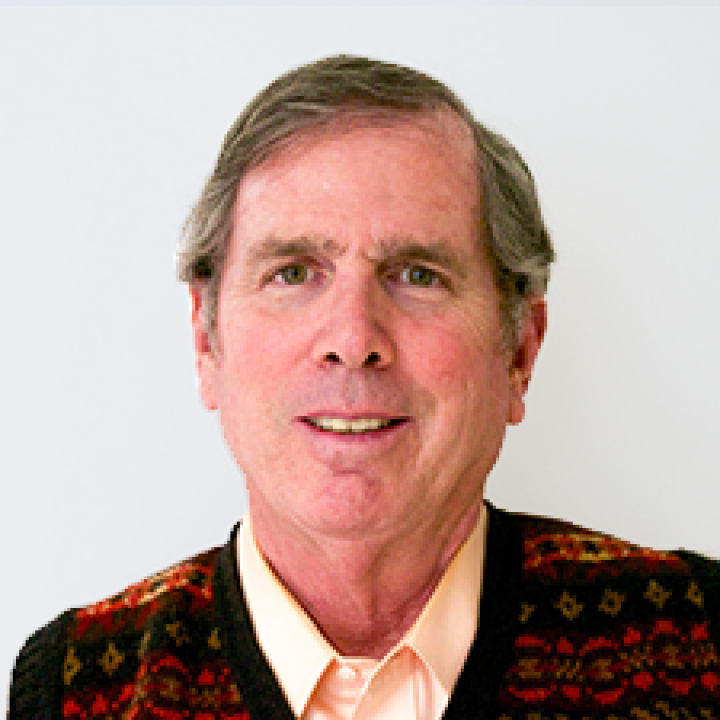
Stephen Meisenbacher is a Research Associate at the Technical University of Munich (TUM) , affiliated with the School of Computation, Information and Technology and the Department of Computer Science, I19 . He has been part of the Software Engineering for Business Information Systems (SEBIS) chair since March 2022. His research focuses on Privacy-Preserving Natural Language Processing (NLP) , Differential Privacy , and Privacy-Enhancing Technologies (PETs) , with a particular interest in their integration into software development and business applications. His work also explores Hybrid, Expert-Driven Classification Systems and Usable Privacy solutions. Stephen’s recent publications address trends in AI Privacy Risks , Text Rewriting with DP , Legal AI Use Cases , and Data Protection Compliance . He has contributed to GDPR-related research and PETs adoption in small enterprises. His teaching includes Natural Language Processing seminars and Software Engineering lecture courses for Master’s and Bachelor’s students at TUM. He also organizes Entrepreneurship for Small Software-Oriented Enterprises seminars. Stephen holds a Master’s in Informatics from TUM (DAAD Graduate Scholarship) and a Bachelor’s in Computer Science from the University of Notre Dame, with additional studies in German Language and Literature. Contact: stephen.meisenbacher@tum.de | LinkedIn
Qiang Tang is currently an Associate Professor (Level D) at the School of Computer Science of The University of Sydney. Previously, he was a Senior Lecturer (2021.1-2024.12) at USYD and an Assistant Professor at the Computer Science Department of New Jersey Institute of Technology (2016.8-2021.1), where he co-directed the JACOBI Blockchain Lab with Prof. Jian Pei and Prof. Zhenfeng Zhang. He completed his PhD at the University of Connecticut under Prof. Aggelos Kiayias and Prof. Alexander Russell, following postdoctoral research at Cornell University with Prof. Elaine Shi. His research spans applied and theoretical cryptography, blockchain technology, privacy, and computer security. His work is supported by ARC, Google, Ethereum Foundation, Stellar Foundation, Protocol Labs, Algorand Foundation, Oracle, and USYD. Previous funding includes NSF, JD.com, AFRL, DoE, and Particl Foundation. His research has led to significant contributions in consensus protocols, distributed randomness generation, secure multi-party computation, and privacy-preserving technologies. Tang's publications reveal a strong focus on practical cryptographic solutions for blockchain and distributed systems. His recent work demonstrates expertise in asynchronous consensus, optimal protocol design, and secure implementations for real-world applications. His research shows consistent innovation in improving efficiency, security, and scalability of distributed systems. Scientific Awards: 2025 DSN Best Paper Award 2024 ICDCS Distinguished Paper Award 2023 SOAR Prize, USYD 2023 Oracle for Research Award 2022 Stellar Foundation Research Awards 2022 Ethereum Academic Award 2019 MIT Technical Review, 35 Chinese Innovators Under 35 Tang actively mentors PhD and Master's students, with several alumni now holding faculty positions or research roles at institutions like City University Hong Kong, Chinese Academy of Sciences, and A*STAR Singapore. He has received significant research funding including a multi-year Google project on End-to-End Secure Cloud and an ARC DP grant on Order Fairness in Decentralized Systems. He leads the research in his lab focusing on blockchain protocols and cryptographic applications, with strong industry connections through collaborations with Google, Ethereum Foundation, Stellar Foundation, and Protocol Labs. His team regularly publishes in top security and cryptography venues including CRYPTO, CCS, USENIX Security, and S&P.
Prof. Dr. Franziska Jahnke is a Professor in the Faculty of Mathematics and Computer Science at the University of Münster, affiliated with the Institute for Mathematical Logic and Foundational Research. She specializes in model theory and its applications to algebra, particularly valued fields, set theory, and arithmetic definability. Her research bridges foundational mathematics and algebraic structures, with a focus on henselian valuations, NIP fields, and combinatorial aspects of valued fields. Education: Diplom in Mathematics from Albert-Ludwigs-Universität Freiburg (2009), DPhil in Mathematics from the University of Oxford (2013). Academic roles include Junior Professor at Münster (2017–2024), and a visiting position at the University of Amsterdam (2023–2024). Research Interests: Model theory of fields, arithmetic definability of valuations, perfectoid fields, and connections to infinite combinatorics. Key contributions include work on Ax-Kochen-Ershov principles, NIP fields, and classification conjectures in strongly dependent fields. Recent Activities: Organized workshops on non-archimedean geometry and model theory of valued fields. Recipient of the Teaching Prize 2022 and a fellow of the Daimler und Benz Stiftung. Deputy Equal Opportunity Representative in her department. Supervision: Advised multiple PhD students (e.g., Blaise Boissonneau, Simone Ramello) and postdocs. Taught courses on algebra, logic, and model theory, including lectures on valued fields and stability theory.
Yang Luo is a Kennedy Trust Senior Research Fellow in Data Science at the University of Oxford's Kennedy Institute of Rheumatology. His research bridges statistical genomics and computational immunology to unravel genetic contributions to immune-mediated traits, with a focus on the major histocompatibility complex (MHC) region. His work leverages large biobank datasets (UK Biobank, Biobank Japan), gene expression resources (GTEx), and proteomic data to decode molecular mechanisms linking genetic variation to disease risk. Specific interests include tuberculosis genetics, multi-ancestry polygenic risk scores, and single-cell eQTL modeling. Recent publications highlight expertise in HLA association studies, evolutionary immunogenetics, and disease-specific cell state dynamics. Key contributions include constructing a global HLA haplotype panel and developing novel statistical methods for admixed population genetics. Scientific Awards: Kennedy Trust Senior Research Fellow in Data Science His lab integrates computational and experimental approaches to translate genetic findings into clinical applications for immune disorders.
Associate Professor Ken Chung is affiliated with the University of Sydney's School of Project Management, serving as Associate Head of Education. He holds a PhD (University of Sydney) and dual undergraduate degrees (B.Sc (Hons I), B.Com). His research focuses on social network theory applied to stakeholder engagement in projects, healthcare coordination, and complex systems. Notable awards include the 2021 Faculty of Engineering Dean's Award for Excellence in Teaching and a PMI grant for infrastructure stakeholder engagement research. He has collaborated with organizations like NSW Department of Planning, Google, and Western Sydney Airport. Teaching includes courses like ENGG1850 and PMGT5871. Current projects explore stakeholder analysis, community engagement in infrastructure, and healthcare networks. His expertise spans 20+ years, with international partnerships at Webster Vienna and University of Southern Denmark. Professional activities include editorial roles, ARC grant reviewing, and industry advisory roles. Education highlights: PhD in Information Technologies (2009, Sydney), prior lectureship at University of Wollongong. Industry experience includes Telstra Messaging Group and DoubleClick Australia. Research integrates social physics principles, examining network structures' impact on project success, healthcare outcomes, and organizational behavior. Grants include ARC DP-funded health research and PMI-funded infrastructure studies. Key themes include network-based models for stakeholder engagement, project management innovation, and social capital utilization.
Dr. Tyler H. Summers is an Assistant Professor of Mechanical Engineering at the University of Texas at Dallas (UTD), with an affiliate appointment in Electrical Engineering. He holds a PhD in Aerospace Engineering from the University of Texas at Austin (2010) and completed a postdoctoral fellowship at ETH Zurich (2011–2015). His research focuses on feedback control and optimization in complex dynamical networks, including electric power grids and distributed robotics. Key contributions include stochastic optimal power flow methods, distributed formation control algorithms, and robust control design under uncertainty. Education: PhD in Aerospace Engineering (University of Texas at Austin, 2010) M.S. in Aerospace Engineering (University of Texas at Austin, 2007) B.S. in Mechanical Engineering (Texas Christian University, 2004) His research interests emphasize theoretical and computational tools for cyber-physical systems, including power networks and robotic teams. Notable achievements include a NSF CAREER Award ($500K) and an Army YIP grant ($350K). He leads the Control, Optimization, and Networks (COIN) Lab, which develops algorithms for robust control and distributed optimization. Recent work addresses challenges in integrating renewable energy into power systems and enabling safe autonomous robotics in uncertain environments. Grants and projects involve collaborations with institutions like the University of Melbourne and the Australian National University. Grants & Awards: NSF CAREER Award (2021) Army Research Office YIP (2017) Air Force Office of Scientific Research (2019) Lab & Team: The COIN Lab focuses on interdisciplinary projects involving students and postdocs in control theory, robotics, and optimization.
Børge Rokseth is an Associate Professor at the Department of Engineering Cybernetics, Norwegian University of Science and Technology (NTNU). His work focuses on maritime systems, autonomous vessel control, and safety verification. He actively supervises Master's students and contributes to research on risk-informed control systems, hybrid power systems, and systems-theoretic process analysis (STPA). Research Interests: Rokseth's research spans autonomous ship systems, dynamic risk assessment, and safety verification. He explores risk-based decision-making for maritime autonomy, hazard identification in hybrid propulsion systems, and control function allocation in dynamic positioning. His work integrates systems theory, machine learning, and regulatory compliance (e.g., COLREGS) to enhance safety and environmental performance in marine operations. Publications: His recent work includes probabilistic trajectory prediction frameworks for autonomous ships, STPA-based safety analyses, and studies on decarbonization barriers in the maritime industry. These publications emphasize risk modeling, systems-theoretic approaches, and simulation-based verification. Teaching: Rokseth teaches courses such as TTK4130 - Modelling and Simulation, contributing to the education of future engineers and researchers in cybernetics and maritime systems.
Dr. Paul Melendez serves as a University Distinguished Outreach Professor at the University of Arizona's Eller College of Management within the Department of Management and Organizations. He has held this position since 1996 and currently leads the Center for Leadership Ethics as its Founder, while also serving as Lead Faculty for Academic Programs and Interim Director of Executive Education. His educational background includes an EdD from the University of Arizona with a specialization in privatization. Dr. Melendez specializes in organizational ethics , business ethics , and international business , with significant contributions to ethical decision-making frameworks and transformational leadership. His research emphasizes practical applications in global corporate environments, as evidenced by his consulting work with multinational entities including DP World, BHP Billiton, and Grupo Bal. His distinguished recognition includes: University Distinguished Outreach Professor Eller College Outstanding Business Management Faculty Award Undergraduate Faculty Member of the Year Departmental Outstanding Undergraduate Teaching Award Neville Cramer Faculty Award Dean's Course Innovation Grant University Team Award for Excellence Dr. Melendez secured the Dean's Undergraduate Course Innovation Grant and contributed to the University Team Award for Excellence through curriculum development. His extensive consulting practice demonstrates significant real-world impact, advising executive leadership at major international corporations on ethical transformation and innovative strategy. Previously, he served as Assistant Dean for Executive Education and Assistant Department Head. The Center for Leadership Ethics operates as his primary research hub, driving initiatives that integrate cutting-edge ethics education with corporate outreach programs to reshape organizational culture globally.
Dr Sonia Wilson is a Senior Lecturer in French and Francophone Studies and Director of International Comparative Literature and Translation Studies at the University of Sydney's School of Languages and Cultures. She holds a PhD from the University of Queensland (after MA/McGill University and DEA/Paris III). Her research focuses on women's diary writing in French contexts, exploring intersections of temporal practices, material culture, and colonial histories. Education: PhD (Queensland), DEA (Paris III), MA (McGill), BA (Adelaide) Affiliations: University of Sydney since 2015; previously University of Melbourne Research interests include diary studies, gendered temporalities, multilingual archives, and photographic self-representation. Current projects examine discarded diaries' ethical implications (Finders, Keepers?) and Australia's non-English language historical records (ARC DP 2021-2025). Teaching spans French literature, comparative life writing, and cultural studies. Supervision areas include 19th-century women's writing, diary-photography interactions, and Francophone visual practices. Grants: $11,322 in recent research funding (2013-2015) Leadership: Chief Investigator for French-language materials in ARC DP project Labs/Teams: Central role in multilingual archive initiatives; collaborates with international scholars in life writing studies.
Itsuro Morita is Professor in the School of Fundamental Science and Engineering, Faculty of Science and Engineering, Waseda University, Tokyo. Before joining Waseda in 2022 he spent 23 years at KDDI R&D Laboratories, advancing from researcher to executive research fellow, and has been a visiting researcher at Stanford University. He is an IEEE Fellow and IEICE Fellow recognized for pioneering large-capacity, long-haul optical transmission systems. Education: 2004 – 2005 Tokyo Institute of Technology, Graduate School of Science & Engineering, Department of Electrical and Electronic Engineering (Doctoral coursework) 1990 – 1992 Tokyo Institute of Technology, Graduate School of Science & Engineering, Department of Physical Electronics (M.E.) 1986 – 1990 Tokyo Institute of Technology, School of Engineering (B.E.) Research Interests: Morita’s work sits at the intersection of optical fiber communication and software-defined networking. He explores ultra-high-capacity transmission via space-division multiplexing (multi-core/few-mode fibers), real-time MIMO digital signal processing for modal crosstalk mitigation, and SDN/NFV orchestration of disaggregated optical networks. Additional interests include quality-of-transmission estimation using machine learning, telemetry-enabled control planes (gRPC/gNMI), and metro-embedded edge/cloud architectures for IoT services. Publication Trends: Recent articles emphasize two converging themes: (i) petabit-per-second SDM/WDM experiments using novel fiber geometries and real-time DSP, and (ii) cloud-native SDN control frameworks that integrate machine-learning-based QoT prediction, YANG/NETCONF modeling, and open APIs (TAPI/OpenConfig) for multi-domain, partially disaggregated networks. These works collectively push both the physical capacity frontier and the agility of next-generation optical infrastructure. Scientific Awards: C&C Prize 2024 (NEC C&C Foundation) – contributions to WDM optical submarine cable systems IEICE Achievement Award 2021 – pioneering research on 10-Pbit/s ultra-large-capacity SDM transmission Telecom System Technology Award 2021 – 10.16-Pbit/s dense SDM/WDM transmission record IEEE Fellow (2021) – contributions to large-capacity high-speed transmission systems IEICE Fellow (2020) – research on trans-oceanic high-speed optical signal transmission Ichimura Industrial Award – Contribution Prize 2018 – development of terabit-class submarine cable systems Maejima Hisoka Award 2012 – proposal and demonstration of distributed-control soliton communication Minister of Economy, Trade and Industry Award for Advanced Technology 2006 – 160 Gbit/s ultra-high-speed optical transmission technology Advising & Grants: At Waseda University Morita advises graduate students on experimental photonic networking and leads externally funded projects on petabit SDM transmission and SDN orchestration. While specific grant numbers are not disclosed, his continuous industry-university collaborative testbeds (with KDDI, CTTC, and others) indicate substantial competitive funding. Labs & Teams: He heads the Optical Space-Division-Multiplexing Laboratory at Waseda, maintaining joint experimental facilities with KDDI Research and international partners (e.g., CTTC, Spain). The group operates real-time coherent MIMO testbeds, multi-domain SDN controllers, and fiber-level SDM prototypes capable of petabit-per-second demonstrations.
James Lawler is a Professor in the Seidenberg School of Computer Science and Information Systems at Pace University, focusing on Information Technology. He has dedicated his career to advancing Disability Studies and STEM technologies for individuals with developmental and intellectual disabilities (IDD), while also contributing to e-Business strategies and social entrepreneurship. His work bridges technology and inclusivity, with a strong emphasis on community engagement and equity. Education: DPS, School of Computer Science and Information Systems, Pace University (2002) MBA, Graduate School of Business, Pace University (1974) BBA, Business Administration, Saint Francis College (1971) APC in Computer Applications (Audited), New York University (1979) Research Focus: Professor Lawler's research spans Customer Relationship Management (CRM) technologies, service-oriented architecture, and web services. He has pioneered initiatives for neurodiverse students in STEM, developed multisensory environments using virtual reality, and created programs like the Disability Film Festival to promote inclusion. His work often involves partnerships with AHRC New York City and other organizations. Awards: National Jefferson Award for Community Service (2024) Pace University Golden Graduates Reunion 50th Year of Service (2024) SEINFORMS Certificate of Recognition (2021) ISECON Meritorious Paper Award (2013) Grants & Professional Contributions: He has secured multiple grants for projects like the Disability Film Festival, robotics for elderly people with disabilities, and mobile app development for food waste reduction. His professional service includes roles with AHRC NYC, IEEE Education Society, and editorial boards for academic journals. He also teaches courses on design thinking, information systems, and e-commerce strategies.
Jonathan Cullen is Professor of Sustainable Engineering at the University of Cambridge and President of Fitzwilliam College, specializing in resource efficiency and decarbonization through top-down analysis of industrial material and energy systems. His work bridges academic research with industry applications across energy-intensive sectors. Education: Bachelor's in Chemical and Process Engineering, University of Canterbury, New Zealand MPhil in Engineering for Sustainable Development, University of Cambridge PhD in Engineering Fundamentals of Energy Efficiency, University of Cambridge His research develops metrics for quantifying energy and material consequences of production systems, focusing on circular economy implementation, minimum energy requirements, and zero-carbon transition pathways. Key applications target cement, steel, plastics, and petrochemicals where he pioneers methods like exergetic analysis and material flow accounting to expose carbon lock-ins and circularity opportunities. Recent publications reveal three dominant trends: (1) Frameworks for theoretical minimum energy requirements across industrial processes, (2) Geopolitical analysis of critical mineral flows and ownership structures, and (3) Circular economy metrics for plastics and construction materials. These consistently employ system-scale modeling validated through industry partnerships. Research Funding: Lead: C-THRU ($4M, VKRF) - carbon clarity in petrochemical supply chains Co-I: UK FIRES (£5.2M, EPSRC) - industrial decarbonization program Co-I: CirPlas (£1.25M, UKRI) - plastic waste elimination 7+ projects (EPSRC, Innovate UK, Horizon 2020) Academic Leadership: Teaching: Energy Systems and Policy (MPhil in Energy Technologies) Undergraduate supervision in Materials/Mathematics Graduate Tutor at Fitzwilliam College IPCC AR6 Lead Author (Industry Chapter) He directs the Resource Efficiency Collective, which develops open-source tools like Mat-dp for material demand projections and Starter Data Kits for energy planning. Current work focuses on scaling circular business models for construction retrofitting and quantifying geopolitical risks in critical mineral supply chains.
Professor Matthew Simpson is a leading figure in applied mathematics at the School of Mathematical Sciences, Faculty of Science, Queensland University of Technology (QUT). He holds the position of Professor of Applied Mathematics and is an Australian Research Council (ARC) Future Fellow, reflecting his sustained research excellence. His work bridges mathematical theory and biological applications, particularly in cell migration, tissue invasion, and multiscale modeling. BE (Environmental) Honours 1, University of Newcastle (1995–1998) PhD (with Distinction), Environmental Engineering, University of Western Australia (2000–2003) Research Fellow, Department of Mathematics and Statistics, University of Melbourne (2003–2006) ARC Postdoctoral Fellow, University of Melbourne (2006–2009) Lecturer (2010–2011) and Senior Lecturer (2011–2013), QUT Associate Professor (2013–2014), QUT Professor and ARC Future Fellow (2014–present), QUT Matthew Simpson’s research focuses on mathematical and computational modeling of biological systems , particularly collective cell motion, diffusion processes, and reaction-diffusion dynamics. His interests span multiscale modeling , random walk processes , cell biology , and numerical and computational mathematics . He develops and analyzes models to understand phenomena such as wound healing, cancer progression, and tissue engineering. His recent publications (2023–2025) demonstrate a strong trend toward integrating data-driven modeling , likelihood-based inference , and equation learning with traditional mechanistic models. These works emphasize parameter identifiability , uncertainty quantification , and prediction robustness in biological contexts. Themes include sharp-fronted wave propagation, mechanical cell interactions, tumor spheroid formation, and generalized diffusivity in food drying, showcasing the breadth and depth of his modeling expertise. Among his key accolades are: J.H. Michell Medal (2012) – Awarded by ANZIAM for distinguished research by an early-career applied mathematician in Australia and New Zealand. ARC Future Fellowship (2013–2017) – For the project 'New data-driven mathematical models of collective cell motion' (FT130100148). Professor Simpson has also played significant editorial and leadership roles, including: Executive Associate Editor, Journal of Engineering Mathematics Academic Editor, PLoS ONE Editorial Board Member, ANZIAM Journal Co-chair of the 2015 ANZIAM meeting He has supervised PhD students on topics such as moving boundary problems, first-passage times, stochastic simulations, and curvature-dependent growth in biological systems. His research projects have been funded by competitive Australian grants (ARC DP and FT schemes), including studies on 3D cell migration, ghrelin’s role in cell invasion, and epithelial-to-mesenchymal transition in cancer and wound healing. He is actively involved in developing computational tools for biological modeling and promoting best practices in scientific publishing.
Bernhard von Stengel is a Professor of Mathematics at the Department of Mathematics, London School of Economics and Political Science . His work bridges game theory, computational complexity , and mathematical economics , with a focus on equilibrium computation and algorithmic aspects. Developed Game Theory Explorer , open-source software for analyzing strategic and extensive-form games. Organized major workshops like What is Strategic Information? (2024) and Game Theory and Machine Learning (2023). Authored the textbook Game Theory Basics (Cambridge University Press, 2021). His research spans zero-sum games , correlated equilibrium , inspection games , and communication over noisy channels . Recent work includes characterizing the Condorcet dimension of metric spaces (2024) and stable-set bounds for Nash equilibria in bimatrix games. He has collaborated with institutions like the Game Theory Society and contributed to public discourse via talks on algorithms' societal impact (2021) and game theory in politics (2020).
Dr. Yi Guo is an External Scientific Staff member at the Power Systems and High Voltage Lab, part of ETH Zurich's Department of Information Technology and Electrical Engineering. His research focuses on advancing smart grid technologies, particularly in power system coordination, stochastic control, and distributed energy resource integration. His work emphasizes real-time operational frameworks for integrated transmission-distribution systems, flexibility modeling, and robust optimization under uncertainty. Collaborations include projects funded by NCCR Automation (SNF). Key research areas include: - Real-time grid control and NMPC applications - Stochastic modeling of distributed energy resources (DERs) - Sparsity-promoting control design for power grids - Joint optimization-estimation architectures for distribution networks - Two-stage electricity market frameworks for DER participation Recent publications (2020-2024) highlight contributions to grid resilience, DER aggregation, and sensor placement optimization. His work addresses challenges in energy transition through advanced control systems and market mechanisms. Lab affiliations include the Power Systems and High Voltage Lab, collaborating on projects like NCCR Automation Phase I. His research bridges theoretical control advancements with practical grid implementation.