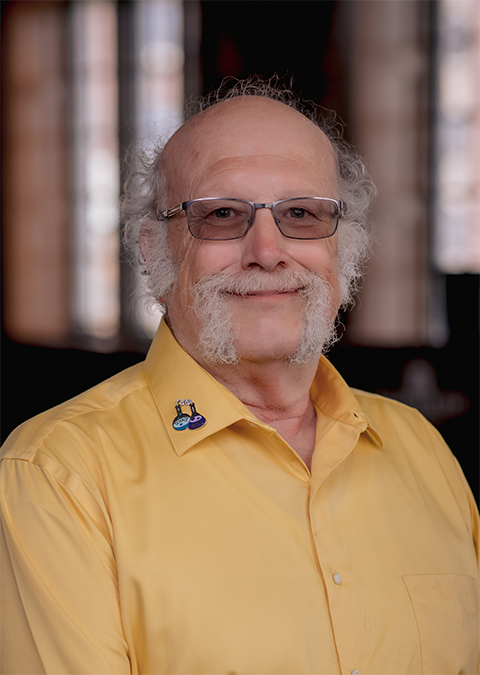
Professor Thomas Bein is affiliated with the Department of Chemistry at Ludwig-Maximilians-Universität München (LMU) , where he leads the Functional Nanosystems research group. His work focuses on synthesizing and characterizing nanostructured materials with applications in energy, catalysis, and biomedical delivery. Mesoporous nanoparticles for drug delivery Semiconductor nano-morphologies for photovoltaics Photoelectrochemical water splitting Metal-organic frameworks (MOFs) Electroactive networks His research emphasizes atomic-scale control of material architectures using self-assembly, hydrogen bonding, and covalent interactions, enabling precise tuning of electronic, optical, and catalytic properties. A review of his recent publications reveals cutting-edge investigations into covalent organic frameworks (COFs), perovskite-inspired solar materials, and functional nanoparticle systems. Key trends include optimizing energy conversion efficiency, enhancing stability in optoelectronic devices, and exploring bio-compatible nanocarriers for targeted therapies. Professor Bein’s group actively contributes to interdisciplinary projects at the intersection of chemistry, physics, and biomedical engineering, with ongoing collaborations in solar energy, sustainable materials, and nanomedicine.
Britt Adamson is an Associate Professor in the Department of Molecular Biology and the Lewis-Sigler Institute for Integrative Genomics at Princeton University, where she serves as Director of the Undergraduate Program in Quantitative and Computational Biology. Her lab investigates molecular networks in human cells with focus on stress response mechanisms and genome editing technologies. She received her B.S. in Biology from the Massachusetts Institute of Technology (2005) and Ph.D. in Genetics and Genomics from Harvard University (2012), followed by postdoctoral training at UCSF under Jonathan Weissman supported by a Damon Runyon Cancer Research Foundation Fellowship. Adamson's research centers on how cells organize stress response networks during DNA damage and endoplasmic reticulum stress, developing CRISPR-based functional genomics and single-cell sequencing tools to map molecular behaviors. Her work bridges fundamental cell biology with therapeutic applications in genome editing. Analysis of her 15 most recent publications reveals dominant themes in precision genome editing (prime/base editing optimization) and systematic dissection of DNA repair pathways through combinatorial CRISPR screening. Her lab consistently integrates computational approaches with high-resolution experimental techniques to uncover context-dependent cellular behaviors. Her scientific recognitions include: Damon Runyon Cancer Research Foundation Postdoctoral Fellowship Princeton IP Accelerator Award (2025) STAT Who to Know: 10 Scientists leading a new generation of gene editors (2024) Adamson actively mentors eight graduate students (including alumni Ann Cirincione and Jun Hussmann) and two postdocs, with research funded through institutional awards and collaborative grants. Her lab's technological developments have enabled projects spanning virology, immunology, and developmental biology. The Adamson Lab operates within Princeton's Lewis-Sigler Institute for Integrative Genomics, fostering an interdisciplinary environment that merges cell biology, genomics, and computational science. Current projects focus on improving prime editing efficiency and understanding stress response adaptation in disease contexts.
Dieter Braun is a Professor in the Faculty of Physics at Ludwig Maximilian University of Munich (LMU), leading the Functional NanoSystems research group. He serves as speaker of the CRC 235 Emergence of Life and coordinates the Molecular Origins component of the Origins Cluster. Dr. Braun holds an ERC Synergy Grant (starting April 2025), leads the CRC 392 Molecular Evolution (starting April 2024), and is a Fellow in the Max Planck School Matter to Life (since October 2023). His research focuses on understanding the physical mechanisms that could have led to the emergence of Darwinian evolution from prebiotic molecules on early Earth. Braun's laboratory investigates non-equilibrium settings, particularly asymmetrically heated open cracks in rocks, which create intricate wet-dry cycles, temperature gradients, and fluidic effects that could drive molecular evolution. His work bridges physics, chemistry, and biology to explore how dead molecules might combine through physical forces into autonomous mechanisms of evolution. Analysis of Braun's recent publications reveals a strong focus on thermal gradients and non-equilibrium physics in prebiotic environments. His research demonstrates how heat flows can concentrate molecules, drive polymerization, create pH gradients, and enable non-enzymatic replication of nucleic acids. The publications span high-impact journals including Nature, Nature Physics, and Nature Chemistry, showing interdisciplinary work connecting physics, chemistry, geology, and biology in the context of life's origins. Klung-Wilhelmy Weberbank Price (2011) Technology Transfer Price of the DPG (with LMU and NanoTemper) Deutscher Innovationspreis (2012) Step Award (2012) Dr. Braun has successfully mentored numerous PhD students, including Stefan Duhr and Philipp Baaske who founded the award-winning startup NanoTemper Technologies. His research is supported by multiple prestigious grants including ERC Starting, Advanced, and Synergy Grants, as well as funding from the Simons Collaboration on the Origins of Life. His laboratory collaborates extensively with other researchers across disciplines and institutions, particularly with Hannes Mutschler in the new ERC Synergy project. The Braun laboratory operates within the CRC 235 Emergence of Life and the Origins Cluster at LMU Munich, with strong connections to the Max Planck Society through the Max Planck School Matter to Life. The research group maintains active collaborations with geochemists, biophysicists, and molecular biologists to create comprehensive experimental models of prebiotic environments.
Dr. Yi David Ju is a Senior Research Fellow at RMIT University's School of Science and an ARC DECRA Fellow at La Trobe University's School of Cancer Medicine. He leads the Nanomedicine and Gene Therapeutics Laboratory at the Olivia Newton-John Cancer Research Institute (ONJCRI) and holds Honorary Fellowships at the University of Melbourne's Department of Microbiology & Immunology and Chemical Engineering. PhD from University of Melbourne (2017, Frank Caruso) 2017–2021 : Research Fellow at University of Melbourne 2021 : Vice-Chancellor’s Postdoctoral Fellow at RMIT 2023 : Visiting Researcher at University of Manchester's Nanomedicine Lab His research focuses on Bio-Nano Interactions , particularly Nanoparticle-Immune System dynamics, Lipid Nanoparticle Engineering for mRNA Delivery , and Poly(ethylene glycol) Alternatives . Key contributions include stealth nanoparticles for prolonged circulation, anti-PEG antibody dynamics in vaccine development, and patient-specific targeting models for chronic lymphocytic leukemia . Recent publications analyze hybrid immuno-PET-MRI probes for inflammation monitoring, zwitterionic PEG nanoparticles for reduced immunogenicity, and RAFT polymer-based LNPs for enhanced gene delivery . His work also explores supramolecular DNA-polyphenol assemblies and metal-phenolic coatings for controlled drug release . Scientific Awards : 2023 ACIS ECR Lectureship Finalist, 2023 ACS Nano Impact Award 2022&2023 RMIT Enabling Capability Platform Funding 2021 CBNS Most Significant Publication Award 2020 CBNS Career Development Award 2019 Outstanding Postdoctoral Researcher Award 2019 Nanoscale Advances Oral Prize 2017 Reviewer Excellence Award for Chemistry of Materials 2014 Best Tutor Award Professional Roles : Associate Editor, Journal of Materials Science Committee Member, Royal Australian Chemical Institute (Victorian Branch) Active Member, Australasian Colloid and Interface Society
Thomas Ouldridge is a Royal Society University Research Fellow and Reader in Biomolecular Systems at the Department of Bioengineering, Faculty of Engineering, Imperial College London. He leads the 'Principles of Biomolecular Systems' group, which focuses on theoretical and computational modeling of complex biochemical systems, particularly exploring the interplay between molecular details and emergent behaviors like sensing, replication, and self-assembly. His work integrates natural systems analysis with synthetic biology applications, aiming to engineer artificial analogs of biological processes. His research spans interdisciplinary areas including stochastic thermodynamics, DNA-based computation, and molecular reaction networks. Key affiliations include the Physics of Life, Synthetic Biology Hub, and the Leverhulme Centre for Cellular Bionics. He has contributed to over 60 peer-reviewed articles since 2009, with recent work emphasizing energy-efficient molecular information processing and thermodynamic limits of biochemical systems. Awards: Royal Society University Research Fellowship (current). Labs/Teams: Principles of Biomolecular Systems Group, collaborating with multiple centers including the Centre for Synthetic Biology and Institute of Chemical Biology. Grants/Positions: Maintains research funding through the Royal Society and UKRI grants, focusing on non-equilibrium biomolecular systems and synthetic biology tools. Recent publications highlight advances in DNA templating networks, stochastic thermodynamic modeling of computation, and optimal protocols for molecular copying systems. His work bridges foundational physics with applied biotechnology, aiming to push the boundaries of synthetic biological engineering.
Prof. Dr. Job Boekhoven is an Associate Professor at the Department of Bioscience , TUM School of Natural Sciences , Technical University of Munich . His research focuses on synthetic life , chemically fueled self-assembly , and supramolecular materials , aiming to synthesize life from scratch. Research Interests include creating synthetic cells that compete for resources, replicate, and undergo Darwinian evolution . His lab designs molecules like lipids , peptides , and nucleic acids that self-assemble into active compartments regulated by chemical energy. These systems exhibit life-like hallmarks such as emergence , self-division , and controllable lifetimes . Scientific Awards include: ERC Consolidator Grant (2024) Lecturer Award by Association of the Chemical Industry (2024) ERC Starting Grant (2019) Volkswagen Foundation 'Life?' Grant (2019) Max Planck Fellow (2019) VCI Dozentenpreis (2021) Thieme Chemistry Journal Award (2017) Rubicon Postdoctoral Fellowship (2013) Publications highlight trends in nonequilibrium materials , dynamic combinatorial libraries , and protocell engineering . His work bridges synthetic chemistry with biophysics to explore life's origins and applications in materials science .
California Institute of Technology (Caltech)United States
Koray Aydin is an Associate Professor in the Electrical and Computer Engineering department at Northwestern University 's McCormick School of Engineering. His research focuses on nanophotonics , optical metamaterials , and inverse design of photonic devices. PhD in Physics, Bilkent University MS and BS in Physics, Bilkent University The Metamaterials and Nanophotonic Devices Lab (MNDL) explores light-matter interactions at the nanoscale. Key research areas include: Plasmonic materials and devices for absorption engineering Metasurfaces for subwavelength light control Two-dimensional materials in optoelectronics 3D printing of millimeter-wave and optical metadevices Hybrid and tunable nanophotonic systems Dynamic metamaterials via self-assembly His publications highlight inverse design methodologies, DNA-assembled metasurfaces , and active nanophotonic materials . Collaborations with Chad Mirkin, Vinayak Dravid, and Prem Kumar have led to breakthroughs in scalable photonic systems and programmable metamaterials. Current efforts in MNDL aim to integrate machine learning with nanophotonic device design, enabling non-intuitive geometries and ultra-compact optical components with applications in telecommunications, defense, and consumer electronics.
Allegra Hosford Scheirer is an Adjunct Professor in the Department of Earth & Planetary Sciences at Stanford University. Her research focuses on basin and petroleum system modeling, integrating 3D geologic frameworks with geochemical, tectonic, and fluid flow processes to evaluate hydrocarbon resource potential. She specializes in unconventional reservoir characterization, gas hydrate systems, and the application of advanced modeling techniques to complex sedimentary basins globally. Education: Ph.D. in Geology/Petroleum Geology (likely from Stanford or comparable institution, inferred from affiliation) Research interests span: 3D basin modeling of gas hydrate deposits in the Gulf of Mexico and New Zealand margins Thermal maturation and rock physics templates for unconventional shale reservoirs Integration of seismic interpretation with petroleum system analysis in Alaska, California, and Colombia Impact of tectonics and fluid migration on reservoir quality and hydrocarbon distribution Recent work emphasizes: Gas hydrate destabilization mechanisms linked to tectonic uplift Quantitative workflows for sweet spot identification in organic-rich mudrocks Multi-dimensional scaling methods for uncertainty quantification in reservoir properties Key projects include: San Joaquin Basin (CA) thermal history modeling Shublik Formation unconventional potential on Alaska's North Slope 3D petroleum system analysis of the Jeanne d’Arc Basin (Newfoundland) Her work bridges academic research and industry applications, focusing on improving resource assessment in complex geological settings.
Andreas Peil is a Researcher and Project Leader of the RISC project ('Hybrid DNA Nanomotors') at the 2nd Physics Institute of the University of Stuttgart. His work focuses on the intersection of nanotechnology, biophysics, and materials science, particularly in DNA-based nanomaterials and their applications in diagnostics, therapeutics, and optoelectronics. He leads research on DNA origami architectures, dynamic nanoscale systems, and plasmonic materials. His recent projects include the development of transformable plasmonic helices and modular rotary nanodevices. Peil’s research interests span DNA nanomotors, photonic nanomaterials, and lipid membrane modulation using DNA origami networks. He has contributed to advancements in gold nanoparticle-mediated nanoarchitectures and enzymatic functionalization of polyketide biosynthesis pathways. His work frequently appears in high-impact journals like Angewandte Chemie and Small . While no scientific awards are explicitly listed, his publications reflect innovation in biomimetic systems and nanomechanical designs. He advises students in experimental nanotechnology and collaborates on grants related to hybrid nanomaterials. His lab focuses on translating fundamental research into applied technologies for diagnostics and drug delivery systems.
Somayeh Gholami is an Assistant Professor at the University of Utah School of of Medicine and a Medical Physicist in the Department of Radiation Oncology at Huntsman Cancer Hospital. With a PhD in Medical Physics from Tehran University of Medical Sciences and a MSc in Radiation Medicine Engineering from Shahid Beheshti University, she specializes in Monte Carlo simulations for radiotherapy, brachytherapy, grid therapy, and radiobiological modeling. Her work focuses on radiation dose optimization, nanoparticle-enhanced treatments, and advanced dosimetry techniques. Primary affiliation: University of Utah School of Medicine Medical physicist role: Huntsman Cancer Hospital Education: PhD (TUMS), MSc (Shahid Beheshti), BS (Tarbiat Moallem) Residency: University of Arkansas for Medical Sciences (2024) Postdoctoral fellowship: Virginia Commonwealth University Dr. Gholami's research centers on improving radiation therapy through computational modeling (Monte Carlo simulations) and innovative applicator designs. She has developed novel surface brachytherapy molds and direction-modulated brachytherapy tandem applicators, with a particular emphasis on dose distribution optimization and radiobiological modeling. Her work also explores the impact of magnetic fields on radiation parameters and the use of nanoparticles for enhanced treatment efficacy. Recent publications demonstrate trends in Monte Carlo simulations for brachytherapy applications (2025), AI-driven dose distribution prediction (2024-2025), and comparative studies on radiation sources (2023-2024). These works span subfields including medical device design, radiation dosimetry, and computational modeling of biological responses to radiation. U.S. Patent No. 104322 (Surface Mould for Skin Brachytherapy, 2021) U.S. Patent No. 102889 (Respiratory Control Belt, 2020) U.S. Patent No. 103470 (Dynamic Thorax Phantom, 2020) U.S. Patent No. 73752 (Brachytherapy Phantom, 2012) Her clinical research group develops advanced phantoms and dosimetry tools for radiation therapy validation, including 4D XCAT digital phantoms for gated radiotherapy studies and customized 3D printed vaginal templates for adaptive brachytherapy. The team also investigates FLASH radiotherapy efficacy and normal tissue complication probability models for various radiation techniques.
Erkin Şeker, Ph.D. , is a Professor in the Department of Electrical and Computer Engineering at the University of California, Davis, where he also serves as Co-Director of the Center for Neuroengineering and Medicine and Chair of the Designated Emphasis in Neuroengineering . His research integrates micro- and nanofabrication, electrochemical biosensors, multifunctional neural interfaces, and microfluidic tissue chips to address challenges in healthcare and life-science miniaturization. Education: Ph.D. in Electrical Engineering, University of Virginia (2007) Research Interests Prof. Şeker’s group operates at the intersection of nanoporous metals , microfluidics , and device engineering . Current thrusts include: Nanostructured electrochemical biosensors for nucleic-acid detection in food safety, water quality, and medical diagnostics. Multifunctional biomedical device coatings that combine neural recording with on-demand drug delivery to combat epilepsy and other neurological disorders. Nanoporous metal morphology libraries for high-throughput investigation of structure–property relationships. Microphysiological models of neuroinflammation and gut–brain-axis interactions using tri-culture tissue chips. Publication Trends Over the past decade the group has produced >80 peer-reviewed articles spanning Analytical Chemistry , ACS Applied Materials & Interfaces , Advanced Functional Materials , Lab on a Chip , and Journal of Neuroinflammation . The work reveals a clear trajectory from fundamental studies of nanoporous gold mechanics and surface chemistry to translational applications in closed-loop neural control, nucleic-acid diagnostics, and tissue-level disease models. Scientific Awards & Honors NSF CAREER Award NIH NIBIB Trailblazer Award UC Davis Academic Senate Distinguished Graduate and Professional Teaching Award UC Davis Graduate Studies Distinguished Graduate and Postdoctoral Mentorship Award BMES Cellular & Molecular Bioengineering Young Innovator Next Level Research Award (College of Engineering) Fund for Medical Discovery Award (Massachusetts General Hospital) Elevation to IEEE Senior Member Advising & Funding Prof. Şeker has mentored >25 Ph.D. and M.S. students and numerous undergraduates. Active funding includes NSF, NIH (NIBIB, NINDS, NIA, NCCIH), USDA-NIFA, UC Lab Fees, and industry partnerships totaling several million dollars. He is PI or Co-PI on grants such as: "NeuralStorm: Taking Neuroengineering by Storm" (NSF NRT) "Closed-Loop Electro-Fermentation…" (USDA-NIFA) "Next-Generation Neural Interfaces Based on Axonal Confinement…" (NIH NIBIB Trailblazer) "A Scalable Primary Cortical Tri-Culture Model…" (NIH R03) Labs & Teams He directs the Şeker Research Group , a multidisciplinary team of graduate students, post-docs, and undergraduates housed in the UC Davis College of Engineering. Shared resources include College clean-room facilities, the Center for Neuroengineering and Medicine, and collaborative ties with the UC Davis Alzheimer’s Disease Research Center, Comprehensive Cancer Center, and Environmental Health Sciences Center.
Dirk P. Bohmann, Ph.D. is a part-time Professor in the Department of Biomedical Genetics at the University of Rochester Medical Center , specializing in Drosophila models to study transcriptional stress responses, aging, and signal transduction pathways. His research focuses on: Nrf2 signaling in oxidative stress and longevity JNK pathway regulation of development and stress tolerance Proteasome dysfunction in aging processes AP-1 transcription factors in cell differentiation Redox regulation of gene expression Protein degradation mechanisms Recent publications highlight his work on anti-aging strategies , neurodegenerative disease models , and genomic stress responses . Scientific accolades include prestigious German Research Foundation and German Cancer Center fellowships. Key awards: German Research Foundation Post-doctoral Fellowship Award (1986-1988) German Cancer Center Predoctoral Fellowship Award (1983-1986) As a leading Drosophila researcher , he has supervised numerous graduate students and mentored significant discoveries in developmental biology and stress response mechanisms. His laboratory investigates: Molecular aging pathways Transcription factor dynamics Proteostasis regulation Stress signaling networks Developmental gene expression Integrative biological modeling
David Robertson is a Research Professor and Head of CVR Bioinformatics at the University of Glasgow's Centre for Virus Research (College of Medical, Veterinary and Life Sciences). Previously, he held positions as Principal Investigator at the University of Manchester (2002-2017), Wellcome Trust Research Fellow at the University of Oxford, and ANRS Research Fellow in France. He holds a PhD in Genetics from the University of Nottingham/Trinity College Dublin and a BSc from the University of Edinburgh. His research focuses on computational virology, particularly virus evolution , host-pathogen interactions , and viral emergence , with extensive work on SARS-CoV-2 origins and evolution. His lab employs data-driven approaches to study molecular determinants of cross-species transmission, viral fitness, and pandemic preparedness. Publication analysis reveals a strong emphasis on viral genomics , evolutionary modeling , and bioinformatic tool development . Key themes include SARS-CoV-2 variant tracking, recombination mechanisms, protein language models for host prediction, and mutational signatures in viral adaptation. Awards/Honors: Wellcome Trust Research Fellowship ANRS Research Fellowship He leads the Robertson Lab, specializing in computational analyses of viral datasets and collaborating globally on pathogen genomics projects. Current efforts focus on integrating AI with genomic surveillance to predict viral evolutionary trajectories.
St. Cyril and St. Methodius University of Veliko TarnovoBulgaria
Assoc. Prof. Zlatko Georgiev Varbanov is a distinguished academic at the Faculty of Mathematics and Informatics, University of Veliko Tarnovo (Bulgaria). With expertise spanning discrete mathematics, coding theory, and software development, he has established himself as a prominent researcher in both theoretical and applied computer science domains. His scholarly work bridges mathematical theory with practical implementations, particularly in DNA coding, quantum error correction, and software engineering principles. Dr. Varbanov's research interests encompass a diverse range of topics including Discrete Mathematics, Coding Theory, Algorithms, Programming, DNA codes, Quantum codes, and Information security. His scholarly work demonstrates a consistent focus on the intersection of algebraic structures and practical coding applications, with particular emphasis on self-dual codes over finite fields and their applications in DNA computing and quantum information theory. In software engineering, he has made significant contributions to design patterns, asynchronous programming in C#, and static site generation techniques. Analysis of Dr. Varbanov's recent publications reveals a dual research trajectory: one strand focusing on theoretical aspects of coding theory (particularly DNA codes and quantum codes), and another addressing practical software engineering challenges. His work on design patterns, SOLID principles, and asynchronous programming in C# demonstrates his commitment to improving software development practices. The publications on static site generation and data storage services reflect his engagement with contemporary web development technologies and their optimization. Dr. Varbanov has been actively involved in numerous research projects, with current engagements extending into 2025. These projects focus on AI-driven information systems, mobile technologies for students with special needs, digital accessibility for visually impaired users, and enhancement of research indicators for faculty members. His collaborative work spans multiple institutions and demonstrates a strong commitment to both theoretical research and practical applications that address real-world challenges.
Dr. Kevin R. Siebenlist is an Associate Professor Emeritus in the Department of Biomedical Sciences at Marquette University's College of Health Sciences. He holds a Ph.D. in Biochemistry from the Medical College of Wisconsin (1984) and completed postdoctoral training in hemostasis at The Blood Center of Southeastern Wisconsin and Sinai Samaritan Medical Center. His research focuses on hemostasis, particularly fibrinogen structure and function, factor XIII activity, and thrombin interactions. Education: B.S., Chemistry, University of Wisconsin-Milwaukee (1977) Ph.D., Biochemistry, Medical College of Wisconsin (1984) Postdoctoral Fellowships in Hemostasis (1984–1987) Research Interests: Dr. Siebenlist studies fibrinogen's role in blood clotting, including its structural variations (e.g., γ' chain function), factor XIII-mediated crosslinking, and thrombin binding dynamics. His work explores how these molecular interactions influence clot formation, stability, and thrombotic risks. Publications reflect contributions to understanding fibrinogen mutations (e.g., Fibrinogen Cedar Rapids), factor XIII activity, and fibrinolysis regulation. He has authored/co-authored over 50 peer-reviewed articles and abstracts, with recent work focusing on α2-antiplasmin incorporation into fibrinogen and Factor XIII variants' crosslinking activity. Scientific Awards/Honors: Phi Beta Kappa Phi Kappa Phi Member, American Association for the Advancement of Science Member, International Fibrinogen Research Society Member, 'Scientist Panel' of Index Copernicus International Teaching and Curriculum: Dr. Siebenlist teaches courses in biochemistry, organic chemistry for health sciences, and pre-medical/pre-dental advising. He contributes to programs like the Undergraduate Summer Research Program and the Pre-Dental Post-Baccalaureate Program. Lab Affiliations: Collaborates with the Fibrinogen Research Laboratory at The Blood Center of Southeastern Wisconsin (Dr. Mosesson) on in vitro fibrinogen expression systems and mutagenesis studies.