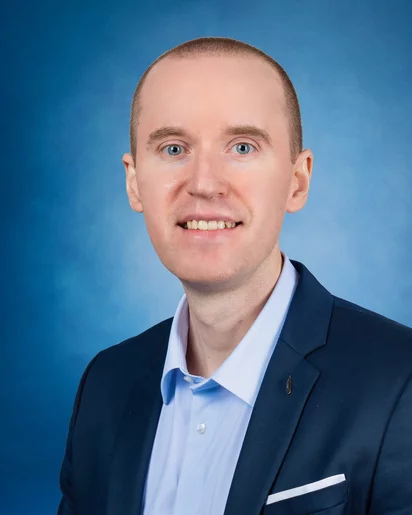
Kovács Katalin is a Leading Researcher at the National Institute for Research and Development of Isotopic and Molecular Technologies (INCDTIM) in Cluj-Napoca, Romania, within the Department of Isotopic and Molecular Technologies and the Laser Induced Processes research team. She holds a PhD in Physics from Babeș-Bolyai University (2007) and an MSc in Computational Physics from the same institution (2003). Her work is centered on advanced computational modeling in ultrafast optics and attosecond science. Her research interests span Nonlinear Optics , Laser-Matter Interaction , Attosecond Physics , and Modeling of High-Order Harmonic Generation (HHG) . She develops numerical tools to simulate laser pulse propagation in gaseous media and to control the generation of attosecond pulses. Her expertise includes femtosecond pulse shaping, relativistic laser intensities, and quasi-phase matching techniques. She integrates artificial neural networks into pulse reconstruction software for facilities like ELI-NP, demonstrating a strong interdisciplinary approach combining physics, modeling, and machine learning. Kovács has played key roles in numerous national and international research projects. She has served as Project Coordinator for grants such as Obtaining single attosecond pulses through high-order harmonic generation by terahertz assisted infrared pulses (PD-2011) and Femtosecond pulse shaping to control attosecond pulse generation (RUTE-2014). She has been a Key Expert in major initiatives including Attosecond Chemistry (CA18222), eXtreme ultraviolet to soft-X-ray Photonic Integrated Circuits (X-PIC), and several ELI-related projects. Her collaborations include institutions such as Universidad Autónoma de Madrid, Seconda Università di Napoli, University College Dublin, and IFIN-HH. Her work contributes to the development of compact, high-flux EUV and soft X-ray sources for scientific and industrial applications. She has participated in peer-review activities for international programs and holds a Web of Science ResearcherID (B-5629-2011). Her research has strong implications for fundamental physics, materials science, and next-generation photonic technologies. She is actively involved in modeling coherent beam combining, characterizing laser propagation effects, and exploring the photochemical behavior of nanomaterials using time-resolved spectroscopy and DFT/TDDFT methods.