Tsao-Hsien Chen is an Associate Professor in the School of Mathematics at the University of Minnesota, Twin Cities, with office contact at Vincent Hall (206 Church Street SE, Minneapolis). His research focuses on geometric representation theory, particularly the geometric Langlands program, D-modules, and perverse sheaves. Chen actively organizes advanced seminars including the Geometric Methods in Langlands Program series (2021-2025) covering Springer correspondence, character sheaves, and Weil representation. He co-organizes international workshops such as the Summer School on Relative Langlands Duality (2024) and Beijing-Shanghai Summer School (2025), demonstrating leadership in the global mathematics community. His publication analysis (2015-2024) reveals sustained contributions to Langlands program foundations, with emphasis on Hitchin systems in characteristic p , symmetric varieties, and depth preservation. Collaborations with leading mathematicians like David Nadler and Xinwen Zhu underscore his work's significance in bridging algebraic geometry and representation theory. No scientific awards are documented in available sources. Information regarding academic advising or grant funding is not provided in current materials, though his seminar leadership suggests active mentorship roles. Chen's community engagement extends to directing specialized workshops including D-modules applications (2024) and Modern Perspectives in Representation Theory (2025), positioning him at the forefront of current research trends.
Professor Naomi Hawkins is a faculty member at the School of Law , University of Sheffield, specializing in Intellectual Property Law with a focus on biomedical science intersections. She leads empirical research on gene patents, data sharing practices, and translational genomics. Her work bridges legal frameworks with practical implications in healthcare innovation. Education DPhil in Law, University of Oxford Bachelor of Civil Law (BCL), University of Oxford Bachelor of Science (BSc), University of Queensland LLB (Hons), University of Queensland Research Focus Hawkins investigates: Legal implications of human gene patents Conflicts between IP rights and public health Data governance in genomic research Translational outcomes in biotechnology Bioethical dimensions of genetic testing Regulatory challenges in space technology Scientific Awards ESRC Future Leaders Research Fellowship Grants & Professional Roles ESRC-funded project (2014-2020): £176,837 Collaborative Platforms in Genomics (2020): ESRC-OECD partnership Space Law and IP Research (2018-2019): £7,392 Member of Sheffield Institute for Corporate and Commercial Law (SICCL) Editorial contributor: Patenting Biotechnical Innovation (Edward Elgar Publishing, 2022) Teaching Delivers modules on: Intellectual Property and Innovation Law Patent Law Health Law and Bioethics
F. Jon Kull '88 serves as Dean of the Guarini School of Graduate and Advanced Studies at Dartmouth College and holds the prestigious Rodgers Professorship in Chemistry. As an active faculty member in the Chemistry Department, he leads a research laboratory focused on understanding protein structure and function at the molecular level using X-ray crystallography and complementary biophysical techniques. His dual leadership roles position him at the intersection of academic administration and cutting-edge scientific research. Dr. Kull earned his A.B. in Chemistry from Dartmouth College, graduating magna cum laude and as a member of Phi Beta Kappa. He completed his Ph.D. in Biochemistry at the University of California, San Francisco, where his groundbreaking work included solving the first structure of a kinesin motor domain in 1996, published in Nature. His research program spans two primary areas of investigation: structural analysis of bacterial virulence gene regulatory proteins and fine-tuning the catalytic cycle of kinesin motors. In bacterial pathogenesis research, his laboratory focuses on Vibrio cholerae, investigating the structural and functional characteristics of regulatory proteins involved in virulence gene expression. This work has significant implications for developing therapeutics against cholera and other enteric bacterial infections. In molecular motor research, his lab studies kinesin proteins to understand the detailed mechanism of force generation, with applications in developing treatments for diseases involving motor protein defects. Analysis of his recent publications (2012-2021) reveals a strong focus on bacterial virulence mechanisms, particularly in Vibrio cholerae and enterotoxigenic E. coli, with increasing emphasis on identifying and characterizing small molecule inhibitors of virulence regulators. His structural biology approach consistently combines X-ray crystallography with functional studies to provide mechanistic insights into protein function. The Rodgers Professor at Dartmouth College, Endowed Chair (2012) Dartmouth Center for the Advancement of Learning Faculty Fellow (2012) Gridley Faculty Fellow (2011) Dean of the Faculty Award for Outstanding Mentoring and Advising (2010) Linda B. and Kendrick R. Wilson III Fellow (2007) Education Fellow in the Life Sciences by the National Academies (2006) March of Dimes Basil O'Connor Starter Scholar Research Award (2003) Dr. Kull has mentored numerous graduate and undergraduate students through the Kull Laboratory, with alumni including Justin Cruite, Jessica Day, Britney Privett, and Anne Woodbrey. His current research team includes Research Assistant Professor Charles R. Midgett and graduate students Jessica D. Tolbert and Minje Kim. The laboratory's work on bacterial virulence regulation has been supported by grants investigating structural mechanisms of virulence gene expression in Vibrio cholerae, with potential applications for developing novel anti-infective strategies that target virulence rather than viability. The Kull Laboratory maintains active research programs in two main areas: structural analysis of bacterial virulence gene regulatory proteins (particularly AphA, AphB, ToxR, ToxS, ToxT, and HapR in Vibrio cholerae) and investigation of kinesin motor mechanics. The laboratory employs X-ray crystallography as its primary tool, complemented by spectroscopy, calorimetry, small angle X-ray scattering, kinetics studies, NMR, and computational methods to study macromolecular structure-function relationships.
Shafaat Rabbani, MD , is a Professor in the Department of Medicine at McGill University and a Senior Scientist at the RI-MUHC Glen Site within the Metabolic Disorders and Complications Program under the Centre for Translational Biology . His work bridges clinical practice at the MUHC Division of Endocrinology with translational research in epigenetics and cancer biology. Research focuses on DNA methylation signatures in breast cancer, prostate cancer, and osteoporosis for clinical application. His group develops epigenetic therapies to block cancer progression through methyl donor S-adenosylmethionine (SAM) and uPA/PAI-1 pathway inhibition . They utilize xenograft and transgenic models to validate therapeutic approaches. Recent publications highlight epigenetic regulation of cancer via MBD proteins combination therapies with immune checkpoint inhibitors protease inhibitors for metastasis prevention nano-biomarkers for liquid biopsies nutritional epigenetics (vitamin D, SAM) metastatic mechanism studies in bone and lungs across multiple cancer types and metabolic disorders.
Siam Oottamasathien, MD, FAAP, FACS, is an Adjunct faculty member in the Department of Surgery at the University of Utah, where he directs the pediatric urology basic science research program. A board-certified pediatric urologist and principal investigator, he couples clinical expertise with innovative translational research focused on bladder inflammation, fibrosis, and hyaluronic-acid–based therapeutics. Education & Training BA in Molecular Biology & Biochemistry – University of Colorado at Boulder MD – University of Colorado School of Medicine Urology Residency & Chief Residency – University of Colorado Health Sciences Center Pediatric Urology Fellowship – Vanderbilt University Research Interests Dr. Oottamasathien’s laboratory integrates developmental biology, biomaterials science, and urologic translational medicine. A central theme is the use of hyaluronic-acid derivatives to modulate inflammatory cascades within the bladder wall. By developing in vivo murine models that recapitulate interstitial cystitis and painful bladder syndrome, his group identifies molecular targets and validates novel anti-inflammatory therapeutics. His team has pioneered photocrosslinkable hyaluronan-gelatin hydrogels for 3-D bioprinting of bladder constructs, engineered gold-nanoparticle/HA composites for localized drug delivery, and elucidated T-box transcription-factor networks governing genitourinary organogenesis. These efforts bridge bench discoveries to bedside applications, with several patents and an FDA-track small-business partnership (GlycoMira Therapeutics) advancing lead compounds toward clinical trials. Scientific Awards & Honors American Academy of Pediatrics Section on Urology – Basic Science Research Award (2006, 2010, 2012) American Urological Association / Pfizer Award – Benign Urologic Disease Research Society of Pediatric Urology Early Career Investigator Representative & 2nd Place (AUA 2013) Primary Children’s Hospital Early Career Development Award Primary Children’s Hospital Integrated Science Award Funding & Grants NIH R01 DK100868 – Glycosaminoglycan derivatives for bladder pain NIH K12 UL1RR025764 – University of Utah CCTS Career Development Award NIH Phase I SBIR R43DK093413 – GlycoMira Therapeutics collaboration NIH T32 HL079874 – Post-doctoral training under Nobel Laureate Dr. Mario Capecchi National Kidney Foundation – Utah Chapter grant American Urological Association / Pfizer Research Award Laboratory & Collaborations Dr. Oottamasathien leads a multidisciplinary team housed within the University of Utah’s Department of Surgery and maintains active collaborations with the Department of Medicinal Chemistry (Glenn Prestwich, PhD). The group integrates murine genetics, biomaterials engineering, and translational pharmacology to accelerate pediatric urologic therapeutics from concept to clinic.
Baldomero Olivera is a Professor in the Department of Biological Sciences at the University of Utah. His research focuses on molecular neuroscience, conotoxins, ion channels, and non-opioid pain therapeutics. He is affiliated with the Molecular Biology and Biological Chemistry Programs. Education: B.S., University of the Philippines Ph.D., California Institute of Technology Olivera's lab investigates venom peptides from predatory cone snails (Conus) as tools to study nervous system function. These peptides target specific ion channels and receptors, offering insights into synaptic signaling, pain pathways, and chemotherapy-induced neuropathy . His work includes developing non-opioid analgesics like the FDA-approved drug Ziconotide (ω-conotoxin MVIIA), which blocks calcium channels to treat severe pain. Key research directions involve constellation pharmacology to analyze multi-channel interactions, TRPA1 channel studies for cold sensitivity, and α9α10 nicotinic receptor inhibition to prevent chemotherapy side effects. His lab has characterized over 50,000 peptides across 700 Conus species. Selected Recent Publications (2019-2015) highlight work on peptide engineering, venom evolution, and clinical applications . These studies span neuropharmacology, structural biology, and evolutionary ecology of cone snails. Collaborative Networks: Olivera collaborates with institutions like the University of Utah, NIH-funded programs, and international researchers on venom-based drug discovery.
Lili Dai is an Associate Professor in Accounting at the University of New South Wales (UNSW) , serving as Chair of the School Research Committee at the School of Accounting, Auditing & Taxation. She holds a PhD from Nanyang Technological University, an MA from Humboldt University of Berlin, and a BSc from Shanghai Jiao Tong University. Research focuses on capital markets-based accounting, auditing, and financial issues , with publications in top-tier journals like The Accounting Review and Journal of Accounting Research. Current editorial leadership includes Editor of Corporate Governance: An International Review and Deputy Editor of Accounting and Finance. Recognized through awards such as the UNSW Business School Dean’s Research Fellowship (twice) and multiple Best Paper Awards at AFAANZ Conferences. Education innovator behind UNSW’s Accounting Data Analytics Module , integrating programming skills into postgraduate accounting courses. Recent research trends span Fintech, political economy, and corporate governance , with grants from institutions like the National Natural Science Foundation of China. Her work bridges academic rigor with practical applications in auditing, financial reporting, and sustainability .
Peter D. Balsam serves as the Samuel R. Milbank Professor of Psychology at Barnard College, where he has been a faculty member since 1975. His academic appointments include teaching core courses in Animal Cognition, Introduction to Statistics, Psychology of Learning, Senior Research Seminars, and Theories of Learning within the Neuroscience & Behavior department. Education M.A., Ph.D., University of North Carolina B.A., SUNY, Stony Brook Professor Balsam's research centers on behavioral neuroscience, specifically investigating how animals perceive, encode, and utilize temporal information to guide flexible decision-making. His work examines neural mechanisms underlying adaptive behavior, with emphasis on motivation, learning, and memory processes. Current projects explore dopamine's role in schizophrenia-related cognitive deficits and temporal processing abnormalities. Analysis of his 2013-2015 publications reveals consistent focus on neural substrates of timing and motivation. Key trends include dopamine receptor modulation in goal-directed behavior, orbitofrontal cortex involvement in reward-based decisions, and thalamocortical circuits in cognitive flexibility. His work bridges animal models with translational applications for psychiatric disorders, particularly schizophrenia. Scientific Recognition Samuel R. Milbank Professorship (endowed chair) Two Distinguished Accolades (February 2025) Professor Balsam mentors students through senior research seminars and collaborative publications, though specific advisees aren't listed. His research receives institutional support as evidenced by Barnard faculty awards including Fulbright grants (February 2020). He maintains active collaborations with Columbia University researchers, notably Nobel laureate Eric Kandel, focusing on neural mechanisms of behavior in interdisciplinary teams.
Dr. Ellen Sandford is an active researcher in neutrino physics and dark matter detection, affiliated with major international collaborations including T2K and DarkSide-20k. Her work bridges experimental high-energy physics with advanced cryogenic engineering systems. Key research areas include: Neutrino-oxygen quasielastic interactions Dark matter particle sensitivity studies Underground argon cryogenics optimization Neutral-current scattering cross-section measurements Subatomic detection technology development Recent publications demonstrate specialization in accelerator neutrino experiments and noble gas detector design. Collaborative work spans institutions across 11 countries with contributions to Physical Review D and Communications Physics journals.
Tormod Rogne is a Professor at the Department of Community Medicine and Global Health, University of Oslo, and holds an Assistant Professor Adjunct position in Chronic Disease Epidemiology at Yale University School of Public Health. His research focuses on perinatal epidemiology, climate change impacts on pregnancy, and genetic approaches to understanding reproductive health risks. Specializes in Mendelian randomization and population-based registry data Conducts interdisciplinary work linking environmental exposures to birth outcomes Collaborates with Yale Center for Perinatal, Pediatric and Environmental Epidemiology Recent publications highlight his work on: Causal relationships between maternal health conditions and child disease risks Environmental factors (heat, pollution) in pregnancy outcomes Genetic determinants of infection and sepsis susceptibility His methodological expertise includes: Negative control designs Inverse probability weighting GWAS and genetic epidemiology Scientific recognition includes: Fulbright Scholarship (2018) Janeway Society (2023) Team Science Award (2025)
Professor Jaroslaw Nowak is a faculty member in the Department of Physics at Lancaster University. He serves as Chair of the Nuclear & Particle Physics Theme Group and actively coordinates and teaches multiple advanced physics modules including Phys311 (Particle Physics) and Phys133 (IT Skills - LaTeX). As a leading figure in neutrino physics, he contributes to detector development and simulation software. Phys311 (Particle Physics) - Coordinator/Instructor Phys133 (IT Skills - LaTeX) - Coordinator/Instructor Phys450 (MPhys projects) - Report Moderator His research program focuses on experimental particle physics with particular emphasis on neutrino interactions, dark matter detection, and liquid argon detector technology. Key areas include resonance excitations, hyperon production, and nuclear effects in neutrino scattering. He leads the NuWro generator development and contributes to GENIE and NUANCE neutrino simulation frameworks. Recent publications highlight his work on neutrino cross-section measurements (MicroBooNE, DUNE), detector calibration (DarkSide-20k), and software development (ProtoDUNE-SP algorithms). His team investigates supernova neutrino detection capabilities and MeV-scale sensitivity in LArTPCs, while maintaining active participation in the DUNE, SBND, and MicroBooNE collaborations. Professor Nowak supervises PhD candidates including Krittika Adhikari and Bethany McCusker, while previous students like Dr. Christophe Thorpe and Dr. Adam Lister have completed neutrino interaction studies. His research receives support from STFC and MSCA grants, including DUNE-related projects and DarkSide travel funding.
Dr. Paul Armstrong is a Lecturer in Pharmacology at the Centre for Immunobiology within the Blizard Institute at Queen Mary University of London. His research focuses on platelet pharmacology, particularly investigating how platelet turnover in disease states influences thrombotic risk and how platelet-monocyte aggregates contribute to disease pathophysiology. These studies aim to refine therapeutic approaches for cardiovascular diseases. Education : BSc in Pharmacology (University of Edinburgh), PhD at William Harvey Research Institute (2009) Research Themes : Platelet Reactivity, Thrombosis, Immune Cell Interaction, Cardiovascular Pharmacology Collaborations : Timothy D Warner's Lab; international institutions like Baker Institute (Australia) His recent publications emphasize platelet aging dynamics, noncoding RNA biomarkers, and novel assay development for platelet function testing. Collaborative studies explore cross-disciplinary approaches in thrombosis and hemostasis. No formal student advising or specific grants mentioned in available texts. Armstrong's work frequently addresses antiplatelet therapy optimization and platelet-endothelium interactions.
Dr. Emma Chambers serves as Senior Lecturer in Immunology at the Centre for Immunobiology, Blizard Institute, Faculty of Medicine and Dentistry, Queen Mary University of London, where she established her independent research program in April 2020. Her work bridges clinical immunology and translational research with a focus on life-course immune changes. Her academic foundation includes: BSc in Immunology with Study from University of Bristol (2008), featuring industrial placement at UCB Slough MSc and PhD in Immunology from King's College London under Prof. Catherine Hawrylowicz Chambers' research program centers on life-course immunology, investigating how aging and sex hormones modulate immune function and immunosenescence. Her laboratory specializes in barrier immunity mechanisms within skin and lung tissues, with dedicated focus on inflammatory pathways in severe asthma and Junctional Epidermolysis Bullosa (JEB). Current projects employ innovative immune-responsive skin models and clinical interventions targeting inflammaging through Vitamin D modulation and p38-MAPK inhibition. Analysis of her recent publications reveals dominant themes in aging immunity research, particularly cellular senescence in fibroblasts, inflammaging countermeasures, and population-specific vaccine responses. Her work consistently connects fundamental immunological mechanisms with clinical applications in age-related immune decline and barrier diseases. Her scientific recognition includes: MRC Centenary Fellowship for postdoctoral research on steroid-resistant asthma Chambers actively mentors the next generation of immunologists, supervising PhD candidates Shuwei Zhang (developing age-related cutaneous inflammation models) and Cameron Ferguson (DEBRA UK-funded JEB pathology research). Her laboratory operations are sustained through competitive grants from DEBRA UK and Barts Charity, enabling translational investigations into life-course immune trajectories. The Chambers Lab operates within the Blizard Institute's Centre for Immunobiology, maintaining collaborative clinical partnerships while developing novel tissue models. Current team composition includes postdoctoral researcher Dr. Justyna Sikora, with past contributions from Dr. Weigang Cai on inflammaging mechanisms.
Vittorio Scolamiero is a Lecturer at the Department of Architecture and Design at Politecnico di Torino. He is also affiliated with the Interuniversity Department of Territorial Sciences, Planning and Policies (DIST) and holds a PhD student position at another university. His teaching roles include collaborations in courses focused on geomatics, architectural modeling, and sustainable design. Master's Degree Course: Project for the Use and Management of Sites of Cultural Interest (Geomatics Module) Course Collaborator: Integrated Restoration and Conservation A (Geomatics Module) Atelier on Architectural Restoration D (Advanced Tools for Architectural Modeling) His research interests center on geomatics , digital twin , and 3D modeling for urban planning and architectural heritage conservation. His work explores semi-supervised techniques for LiDAR segmentation, tangible model creation from spatial data, and historical architectural surveys. Recent publications highlight his contributions to urban data analysis and heritage preservation.
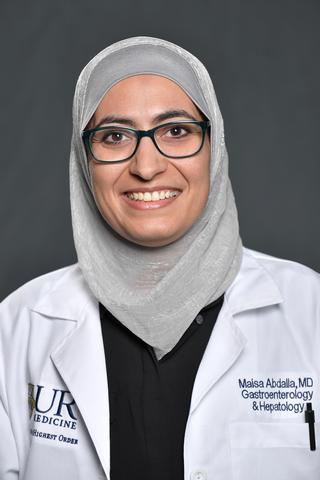
Maisa Abdalla, M.D., M.P.H., is an Associate Professor in the Department of Medicine, Gastroenterology/Hepatology at the University of Rochester Medical Center. She specializes in Inflammatory Bowel Disease (IBD), including Crohn’s disease, ulcerative colitis, and pouch disorders, with a focus on patient-centered care and clinical research. Clinical Focus: IBD epidemiology, patient-outcome research, and clinical trials for novel therapies. Awards: Young Investigator Award (2016), CCFA National Visiting IBD Fellow (2014), Excellence in Research Award (2011), and Intern of the Year (2009). Her research explores the intersection of IBD, immune modulation, and regenerative medicine, with recent work on engineered dendritic cells and zinc supplementation for regulatory T cell induction. She has contributed to studies on treatment optimization, dysplasia detection, and surgical complications in gastrointestinal diseases. Scientific Awards: Young Investigator Award (2016) Travel Grants for Advances in IBD Conferences (2014–2015) CCFA National Visiting IBD Fellow Rotation Program (2014) Excellence in Research Award (2011) Intern of the Year (2009)