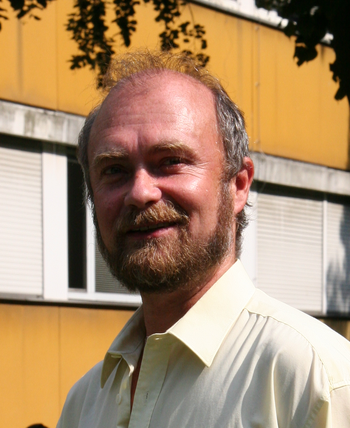
Bastian Kirsch is currently a postdoctoral researcher and scientific coordinator of the North Atlantic Waveguide, Dry Intrusion, and Downstream Impact Campaign (NAWDIC) at the Institute of Meteorology and Climate Research Troposphärenforschung (IMKTRO) within the Karlsruhe Institute of Technology since November 2023. His research focuses on atmospheric dynamics in extratropical cyclones, mesoscale tropopause structures, dry intrusions, and extreme weather events in the North Atlantic region. Education : M.Sc. in Meteorology (University of Hamburg, 2017); B.Sc. in Meteorology (University of Hamburg, 2014). Prior Roles : Postdoctoral researcher (University of Hamburg, 2022-2023); Doctoral student (University of Hamburg, 2019-2022); Research associate (2017-2018). His work involves advanced measurement systems including airborne and ground-based remote sensing, radiosondes, and weather station networks. Publications highlight his expertise in convective cold pools, radar reflectivity relationships, and urban weather applications. He collaborates with researchers like Dr. Julian Quinting, Prof. Dr. Felix Ament, and Dr. Cathy Hohenegger. Scientific Awards : None explicitly mentioned in the provided text.
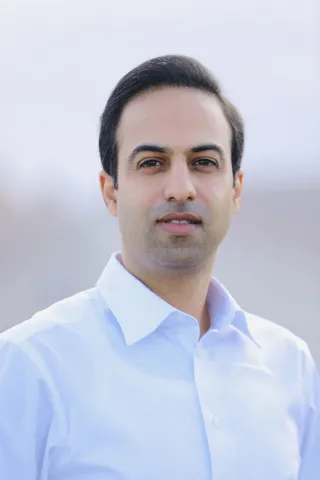
Takeshi Horinouchi is a Professor at the Faculty of Environmental Earth Science, Graduate School of Environmental Science at Hokkaido University, Japan. His academic work focuses on the dynamics of atmospheric phenomena with particular expertise in tropical cyclones and related meteorological processes. Geophysical fluid dynamics Cumulus convection and atmospheric waves Tropical meteorology and cyclone dynamics Middle atmosphere processes Dynamics of Venus's atmosphere Software development for geophysical fluid sciences His recent publications (2020-2024) demonstrate a strong focus on tropical cyclone structure and dynamics, particularly using advanced satellite observations from Himawari-8. His work frequently examines eye structure, wind distribution, asymmetric features, and intensity estimation techniques. A notable trend is his innovative use of high-frequency satellite imagery to derive atmospheric motion vectors, revealing previously unobserved dynamics within tropical cyclone eyes. His research often involves collaborations with international researchers and has practical implications for tropical cyclone monitoring and forecasting. Excellence in Refereeing for JGR-Planets (2021) Horinouchi serves as a mentor to numerous researchers, with several postdoctoral researchers joining his lab in recent years. He also holds a visiting professor position at the Typhoon Science and Technology Research Center, Yokohama National University. As chief editor of the Journal of Meteorological Society of Japan, he contributes significantly to the academic community. His laboratory, the Horinouchi Lab at Hokkaido University, maintains an active research program focusing on tropical cyclone dynamics. The lab has developed several software tools for atmospheric analysis, including VTTrac for cloud tracking and GVTD-X for vortex circulation retrieval. The lab regularly welcomes international researchers, including recent postdocs from IFREMER in France, demonstrating its global collaborative nature.
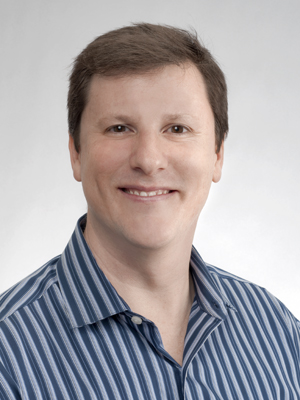
Shoichi Shige is an Associate Professor at Kyoto University's Graduate School of Science, Division of Earth and Planetary Science, since 2009. He has held visiting positions at Colorado State University (2013-2014) and has been affiliated with institutions like Osaka Prefecture University and JAXA's Earth Observation Research Center. Education: PhD in Earth and Planetary Sciences from Kyoto University (2001). Professional Memberships: American Meteorological Society, American Geophysical Union, IEEE Geoscience and Remote Sensing Society (2008-2019), and Japanese meteorological societies. Research Interests Latent heat retrieval algorithms using TRMM/GPM satellite data. Global precipitation mapping via microwave radiometers (GSMaP project). Orographic rainfall dynamics in monsoon regions. Rain/no-rain classification methods for remote sensing. Scientific Contributions Developed the Spectral Latent Heating (SLH) algorithm. Collaborated on TRMM latent heating intercomparisons. Published 15+ peer-reviewed articles since 1999, focusing on tropical convection, precipitation profiles, and satellite data validation. Awards 2018 Meteorological Society of Japan Award for contributions to precipitation research.
Minia Manteiga Outeiro is a researcher and educator at Universidade da Coruña (UDC), specifically affiliated with the Higher Technical School of Nautical and Machinery within the Department of Navigation Sciences and Marine Engineering. Her academic work spans both astronomy and nautical sciences, with a unique interdisciplinary approach connecting stellar evolution with maritime applications. Her research interests focus on stellar evolution, particularly stellar populations and late phases including planetary nebulae. She specializes in applying Artificial Intelligence techniques to astronomical data analysis, Big Data in Astronomy, optical and infrared spectroscopy, and nebula kinematics. Her work bridges astronomy with practical maritime applications, particularly in meteorology and oceanography. Dr. Manteiga Outeiro has been actively involved in numerous research projects funded by Spanish and European agencies since the late 1990s, with a particularly productive period from 2015 to present. Her recent publications (2023-2025) demonstrate continued productivity in both astronomical research and maritime applications. She frequently collaborates with researchers like José Carlos Dafonte Vázquez, D. Garabato, and M.A. Álvarez. She has supervised multiple master's theses on topics including meteorology in extreme conditions, climate change impacts on maritime transport, wave dynamics, and optimal maritime routes. Her work demonstrates a unique integration of astronomical data analysis techniques with practical maritime challenges. As an educator, she teaches courses in the Master's Degree in Nautical Engineering and Maritime Transport and the Degree in Nautical Science and Maritime Transport, including Nautical Meteorology in Extreme Conditions, Meteorology and Oceanography, and Final Degree Projects.
Professor Alex Lo is a human geographer and interdisciplinary researcher at York Business School , York St John University. His academic journey includes a bachelor’s in business administration, master’s in environmental management and human geography, and PhD from the Australian National University (2011). He has held faculty roles at Griffith University, University of Hong Kong, and Victoria University of Wellington, where he served as Programme Director of Climate Change Science and Policy. Currently, he contributes to international climate policy discussions and serves on editorial boards for Environmental Values and Population and Environment . Research Themes: Ecological economics, business resilience to climate change, sustainability transitions, carbon trading, and urban green infrastructure. Professional Roles: Panel member for Research Foundation Flanders (Belgium), former adjunct professorships in China, and visiting associate professor at Education University of Hong Kong. Scientific Achievements: 90+ peer-reviewed articles, h-index 40, 5,386 citations (March 2024). Notable awards include World Social Science Fellow (2014), Pete Hay Environmental Politics Prize (2015), and multiple international fellowships. His research has secured funding from the National Natural Science Foundation of China , Australia’s Department of Education , and the Asia-Pacific Network for Global Change Research , focusing on community resilience and China’s climate strategies.
Romualdo Romero March is a Professor of Meteorology at the University of the Balearic Islands, Department of Physics, a position he has held since December 2011. His academic career spans over two decades with the university, having progressed through various academic ranks from Superior Degree holder under a European Project (1994-1996) to Numerary Full Professor (2002-2011). He maintains an active research profile as Principal Researcher of the Meteorology (Meteo-UIB) consolidated R&D group. His educational background includes a Degree in Physical Sciences (1993), Research Proficiency (1995), Doctorate in Physical Sciences (1998), and European Doctor Diploma (1999), all from the University of the Balearic Islands. Romero March specializes in high-impact meteorological phenomena in the Western Mediterranean, with particular expertise in medicane formation, climate change impacts, and numerical weather prediction. His research integrates observational analysis with sophisticated modeling techniques to understand atmospheric processes affecting the Mediterranean region. He has made significant contributions to understanding precipitation climatology in the Spanish Mediterranean area and associated atmospheric circulations. His publication record includes 77 articles in international specialized journals and 45 book chapters or scientific-technical documents. His most recent work focuses on climate change impacts in the Mediterranean, numerical simulation of extreme weather events, and medicane development. The research demonstrates a consistent trajectory toward increasingly sophisticated modeling approaches and interdisciplinary applications. Romero March has been Principal Investigator for numerous significant research projects including Amphore, Precioso, Medicanes, Estcena, Plinius-4, and various Red Ibérica MM5 initiatives. He has participated in 29 funded R&D projects from diverse sources including the European Community, CICYT, MEC, and regional environmental agencies. He teaches Computational Physics, Geophysical Fluid Dynamics, and Numerical Simulation of Geophysical Fluids at both undergraduate and master's levels. His teaching spans multiple degree programs including the Degree in Physics and the Master's Degree in Advanced Physics and Applied Mathematics.
Víctor Homar Santaner is a University Professor in the Physics Department at the University of the Balearic Islands (UIB), specializing in meteorology and atmospheric physics. His research focuses on high-impact weather phenomena in the Mediterranean region, particularly severe storms, flash floods, and climate change implications. Member of European Severe Storms Laboratory (2009-2012) Associate Editor of Atmospheric Research Participated in HyMeX international program His work integrates numerical weather prediction (NWP) models, ensemble forecasting systems, and data assimilation techniques (e.g., Ensemble Kalman Filter) to analyze predictability limits and improve early warning systems. He has contributed to understanding climate change impacts on tourism, ecosystems, and human health, emphasizing the need for adaptation strategies. Recent publications reveal expertise in: Ensemble forecasting for Mediterranean weather Hydrological modeling of flash floods Climate projection bias correction Storm-scale data assimilation Maritime convection dynamics He supervises two doctoral students and has coordinated multiple research projects with over €750k in funding. His scientific output includes 65+ peer-reviewed articles and 20+ book chapters.
Steven Krueger is a Professor at the University of Utah, where he leads the Clouds, Turbulence, and Fire Weather Research Group . His research focuses on atmospheric processes including cloud systems dynamics, turbulence, boundary layer interactions, and fire weather modeling. Krueger employs advanced numerical techniques like Large Eddy Simulation (LES) and cloud-resolving models to study convection, cloud physics, and climate feedback mechanisms. Research Interests: Krueger's work spans cloud modeling (from stratocumulus to cumulonimbus), convective cold pools, stratocumulus entrainment, and wildfire-atmosphere interactions. Key methodologies include LES benchmarks (e.g., GigaLES), super-parameterized climate models (SP-CAM), and observational data analysis from field campaigns like KWAJEX. Publication Trends: His recent articles (2007–2012) emphasize cloud microphysics, turbulence parameterization, fire weather simulations, and Arctic climate feedbacks. Work demonstrates consistent application of high-resolution modeling to quantify convection dynamics, aerosol impacts, and precipitation processes across diverse climates. Group Leadership: Krueger directs a team studying cloud physics, fire weather, and convective analysis. Current projects include developing tools to quantify cloud responses to climate states and improving wildfire spread models through turbulence analysis.
Dr. Ali Sarhadi serves as an Assistant Professor at Georgia Institute of Technology's School of Earth and Atmospheric Sciences, leading research at the intersection of climate science, engineering, and machine learning to address extreme weather risks in a changing climate. Education Ph.D. in Civil and Environmental Engineering, University of Waterloo, 2017 Research Focus : His work integrates physics-informed modeling and data-driven approaches to study tropical cyclones and compound hazards, emphasizing systemic risk assessment and climate adaptation. Key methodologies include high-resolution simulations of storm surge, extreme rainfall, and cascading flooding events. Hurricane Dynamics and Risk Assessment Climate Risk and Resiliency Compound and Cascading Dynamics Tropical Hydrometeorology Machine Learning Applications in Climate Science Scientific Awards : No awards were specified in the source material. Advising and Research Direction : While specific students aren't listed, his Climate Risk & Extremes Dynamics Lab actively recruits researchers to develop probabilistic risk frameworks and nature-based infrastructure solutions through interdisciplinary collaboration. Laboratory Leadership : The Climate Risk & Extremes Dynamics Lab pioneers integrated approaches combining numerical modeling, uncertainty quantification, and machine learning to transform early warning systems and resilience planning for coastal communities facing climate-driven extremes.
Jud Partin serves as a Research Associate Professor at the University of Texas Institute for Geophysics (UTIG), part of The University of Texas at Austin, with primary affiliation in the Department of Earth and Planetary Sciences. His research integrates paleoclimate archives—particularly tropical speleothems, corals, and foraminifera—with climate modeling to evaluate historical climate variability and improve future projections. Education: Ph.D. in Earth and Atmospheric Sciences from Georgia Institute of Technology M.A. in Physical Chemistry from University of Southern California B.S. in Chemistry from The Citadel Dr. Partin's work centers on paleoclimatology , specializing in tropical hydroclimate dynamics and ENSO reconstruction . He develops quantitative methods for interpreting proxy records while rigorously assessing reconstruction uncertainties. Current projects address abrupt climate transitions, Holocene hydroclimate shifts, and millennial-scale ENSO behavior through field-based proxy development and model-data comparisons. His approach emphasizes translating paleoclimate insights into constraints for modern climate models. Analysis of his 2019-2025 publications reveals three dominant themes: methodological innovation in proxy interpretation (e.g., speleothem trace element calibration), tropical climate dynamics during key periods (Holocene, Common Era), and systematic data-model comparisons for ENSO and hydroclimate. Notable community contributions include the Iso2k paleoclimate database and PaCTS 1.0 reporting standards, reflecting his commitment to open science and reproducible research in paleoclimatology. Based at UTIG's J.J. Pickle Research Campus, Partin collaborates extensively with climate modelers and field researchers across institutions. His work has received significant media attention, including coverage of tropical paleosea level studies in Micronesia and analyses of Greenland ice sheet dynamics, demonstrating the real-world relevance of his paleoclimate research to contemporary climate challenges.
Gregory S. Jenkins is a Professor of Meteorology and Atmospheric Science, Geography, and African Studies at The Pennsylvania State University, where he is affiliated with the College of Earth and Mineral Sciences. He also serves as the Director of the Alliance for Education, Sciences, Engineering and Development in Africa (AESEDA), demonstrating his commitment to advancing scientific understanding and educational opportunities in Africa. Dr. Jenkins received his BS in Physics from Lincoln University and went on to earn both his MS and Ph.D. in Atmospheric and Space Sciences from the University of Michigan. After completing his doctoral studies, he spent two years as a post-doctoral fellow at the National Center for Atmospheric Research (NCAR) in Boulder, Colorado, before joining the faculty at Penn State University in 1996. Dr. Jenkins' research primarily focuses on atmospheric chemistry, climate, and tropical meteorology, with a specific emphasis on West Africa. His work investigates the complex interactions between atmospheric processes, climate variability, and human health in the region. He has made significant contributions to understanding tropospheric ozone dynamics, Saharan dust transport, and the impacts of climate change on West African weather patterns. Analysis of Dr. Jenkins' recent publications reveals a consistent focus on atmospheric chemistry and climate dynamics in West Africa. His research spans multiple interconnected areas including ozone chemistry, Saharan dust transport, tropical cyclone formation, and climate change impacts. A notable trend is his integration of field observations with modeling approaches to address complex atmospheric phenomena in the region, particularly focusing on how natural and anthropogenic factors interact to influence air quality and weather patterns. NSF Career award Fulbright Senior Research Fellow (2003/2004) 2007 Alumni Merit Award from the AOSS department at the University of Michigan Fellow of the American Meteorological Society (2014) Dr. Jenkins has been actively involved in significant research initiatives including the NASA African Monsoon Multidisciplinary Analysis (NAMMA) field campaign in Cape Verde and Senegal. As Director of AESEDA, he leads efforts to strengthen educational and research collaborations between Penn State and African institutions. His work bridges atmospheric science with practical applications for communities in West Africa, addressing challenges related to weather hazards, air quality, and climate change impacts. Through AESEDA and his participation in international field campaigns, Dr. Jenkins has established research partnerships across West Africa, particularly in Senegal and Cape Verde. His work often involves collaborative teams that combine U.S. and African scientists to address regional atmospheric phenomena with global implications.
Bin Wang is a distinguished Professor of Meteorology at the University of Hawaii at Manoa, recognized as one of the world's leading environmental scientists with a D-Index of 133 and over 65,000 citations. Ranked 49th globally and 24th nationally in Environmental Sciences, he has received the Research.com Environmental Sciences in United States Leader Award for three consecutive years (2022-2025) and was elected Fellow of the American Geophysical Union in 2013. Professor Wang's research focuses on climatology, monsoon systems, atmospheric sciences, and climate dynamics, with particular expertise in Asian monsoon variability, ENSO teleconnections, and climate prediction. His work spans fundamental climate processes to practical applications in seasonal forecasting. His publication record shows consistent productivity with research evolving from foundational monsoon dynamics to contemporary climate change impacts. Recent work examines how historical El Niño properties inform future extreme events, demonstrating his ability to connect past climate behavior with future projections. Research.com Environmental Sciences in United States Leader Award (2025) Research.com Environmental Sciences in United States Leader Award (2023) Research.com Environmental Sciences in United States Leader Award (2022) Fellow of American Geophysical Union (2013) Professor Wang maintains active collaborations across the Pacific, working with institutions in China, South Korea, and Australia. His research group focuses on advancing monsoon prediction and understanding climate system interactions, contributing significantly to both theoretical climate science and practical seasonal forecasting applications. His work provides critical insights for regions vulnerable to monsoon variability and extreme climate events.
Uwe Ulbrich is a Senior Professor of Meteorology at the Free University of Berlin, where he serves as Head of the Climate Diagnostics and Meteorological Extreme Events Working Group within the Institute of Meteorology, part of the Department of Geosciences. He has held this senior professorship since October 1, 2024, following a distinguished career that included a C3-Professorship in Meteorology at the same institution from 2004-2024 and earlier work as a scientific staff member at the Institute of Geophysics and Meteorology at the University of Cologne from 1990-2004. Ulbrich earned his habilitation in Meteorology at the University of Cologne in 2000 with a thesis on "baroclinic wave disturbances and cyclones in the Northern Hemisphere." He completed his doctoral studies in Meteorology at the University of Cologne from 1985-1989, with a dissertation titled "The atmospheric energy cycle of stationary and transient waves," and earned his diploma in Geophysics from the same institution between 1978-1985. His research focuses on diagnosing atmospheric physical processes, particularly understanding climate variability and meteorological extreme events in mid-latitudes, climate model validation, and anthropogenic climate change. His work specifically examines cyclone activity, large-scale variability patterns like the NAO, and identifying large-scale conditions for storms, floods, and extreme rainfall events. He also engages in interdisciplinary research with the insurance industry and legal sciences regarding the impacts of climate change and extreme events. Analysis of Ulbrich's recent publications reveals a strong focus on practical applications of meteorological research, particularly in infrastructure risk assessment. His work increasingly examines how extreme weather events impact transportation systems (railways, roads, public transit), with a growing emphasis on developing predictive models for weather-related risks. His research combines climate modeling with real-world impact assessment, bridging the gap between theoretical meteorology and practical risk management. Scientific Awards THE GORDON MANLEY WEATHER PRIZE OF THE ROYAL METEOROLOGICAL SOCIETY (2008) Ulbrich serves as Executive Editor of the journal "Natural Hazards and Earth System Sciences" (NHESS) and holds leadership positions in several international scientific initiatives including the Steering Committee of "MedCLIVAR," the Advisory Board of the "National Grid Initiative" (NGI-DE), and the Belmont Forum E-infrastructure & Data Management working group. He is also Deputy Chair of the Scientific Advisory Board of the "Deutsches Komitee Katastrophenvorsorge" (DKKV) and serves on the Scientific Advisory Board of the "Forschungsforum öffentliche Sicherheit." As Head of the Climate Diagnostics and Meteorological Extreme Events Working Group, Ulbrich leads a team conducting research on windstorms, climate extremes, and their societal impacts. His group participates in major research projects including ClimXtreme, NFDI4Earth, and WEXICOM, focusing on understanding and predicting extreme weather events and their implications for climate adaptation strategies.
Dr. Edmund Meredith is a Researcher at the Institute of Meteorology, Free University of Berlin, affiliated with the Working Group on Climate Diagnostics and Meteorological Extreme Events. His work focuses on high-resolution climate modeling and analysis of extreme meteorological phenomena. Research Focus Meredith's primary research explores: Climate change impacts on precipitation patterns and extremes Development and validation of convection-permitting models Diurnal cycles in precipitation systems Regional climate modeling uncertainties and limitations Extreme event attribution and diagnostic methods Project Involvement He actively contributes to major research initiatives including: ClimXtreme (Module C Coordination) Climate and Water under Change NFDI4Earth Stormy climate in Hesse WEXICOM SpreeWater:N Research Trends Analysis of Meredith's publications reveals consistent focus on improving the understanding of extreme precipitation through high-resolution modeling. His recent work emphasizes convection-permitting simulations, diurnal cycle analysis, and the development of specialized algorithms for tracking and classifying extreme weather events. The research demonstrates increasing focus on climate change attribution and regional impacts. Collaborative Work Meredith regularly collaborates with interdisciplinary teams across meteorology, hydrology, and climate impact assessment, including significant contributions to multi-institutional projects like the analysis of the 2017 Berlin precipitation extreme.
Shane Macfarlan is an Associate Professor at the University of Utah , affiliated with the Department of Anthropology in the College of Social & Behavioral Sciences . His work integrates cultural anthropology with ecological research , focusing on Latin America and the Caribbean. He holds a PhD in Anthropology from Washington State University and a postdoctoral fellowship at the University of Missouri. Education: Dual BA in Anthropology & History, University of Pittsburgh (1994) MA in Museum Science, Texas Tech University (2003) PhD in Anthropology, Washington State University (2010) Postdoctoral Fellow, University of Missouri (2010–2011) His research interests span anthropology , ecology , demography , and social psychology , with a focus on human adaptation to arid environments , reproductive strategies , and political alliance formation . His scholarly output includes studies on climate shocks, drought resilience, and the social implications of ecological disruptions in Baja California Sur. He also investigates gender bias in reputations and cooperative dynamics in small-scale societies. Key Scientific Awards: John G Francis Prize for Undergraduate Mentorship (2024) Distinguished Teaching Professor (2024) Outstanding Undergraduate Research Mentor Award (2024) Sustainability Integration Leadership Award (2020) Superior Teaching Award (2019) Award for Advancing Equity and Connecting Communities (2021) Macfarlan’s teaching activities include courses on Ethnographic Methods , Cultures of Latin America , and Undergraduate Research . His grants support interdisciplinary work on birth seasonality , ecological shocks , and traditional livelihoods .



/prod01/yorksjacuk/media/content-assets/staff-profile-images/Alex-Lo.jpg)