Professor Thomas Bein is affiliated with the Department of Chemistry at Ludwig-Maximilians-Universität München (LMU) , where he leads the Functional Nanosystems research group. His work focuses on synthesizing and characterizing nanostructured materials with applications in energy, catalysis, and biomedical delivery. Mesoporous nanoparticles for drug delivery Semiconductor nano-morphologies for photovoltaics Photoelectrochemical water splitting Metal-organic frameworks (MOFs) Electroactive networks His research emphasizes atomic-scale control of material architectures using self-assembly, hydrogen bonding, and covalent interactions, enabling precise tuning of electronic, optical, and catalytic properties. A review of his recent publications reveals cutting-edge investigations into covalent organic frameworks (COFs), perovskite-inspired solar materials, and functional nanoparticle systems. Key trends include optimizing energy conversion efficiency, enhancing stability in optoelectronic devices, and exploring bio-compatible nanocarriers for targeted therapies. Professor Bein’s group actively contributes to interdisciplinary projects at the intersection of chemistry, physics, and biomedical engineering, with ongoing collaborations in solar energy, sustainable materials, and nanomedicine.
Catherine Pinel is a Research Director (DR2) at the Institute for Research on Catalysis and Environment of Lyon (IRCELYON, UMR 5256), a joint research unit of the French National Center for Scientific Research (CNRS) and Claude Bernard University Lyon 1. She has held this senior research position since October 2008, following progression from CR1 (1998-2008) and CR2 (1994-1998) roles at the same institution. Her academic journey includes postdoctoral research at Cambridge University (1992-1993) under Professor S.V. Ley and with Professor M. Lemaire (1993-1994). Her educational foundation includes: Diplôme Universitaire de Technologie in Chemistry from Paris XI University (1986) Engineering Degree from École Nationale Supérieure de Chimie de Paris (1989) Advanced Studies Diploma in Organic Chemistry from Paris VI University (1989) PhD in Organic Chemistry from Paris VI University (1992) on chiral ruthenium complexes and enantioselective reductions Habilitation à diriger des recherches from Lyon I University (1999) on catalysis and fine chemistry Dr. Pinel's research pioneers sustainable catalytic processes with emphasis on biomass valorization, green chemistry, and heterogeneous catalysis. Her work bridges fundamental catalyst design with industrial applications, particularly in hydrogenation, oxidation, and biorefinery processes. Current focus areas include catalytic conversion of biomass-derived platform molecules (glucose, succinic acid, polyols), development of bimetallic catalysts, and valorization of hemicellulose streams. Her approach integrates advanced catalyst characterization with reaction engineering to create environmentally benign chemical transformations. Analysis of her recent publication trajectory (2019-2025) reveals evolving expertise from fundamental organometallic chemistry toward applied sustainable catalysis. Key trends include increasing focus on biomass-derived feedstocks (glucose, succinic acid, polyols), development of metal-carbide/nitride catalysts, and optimization of aqueous-phase reactions for industrial biorefineries. Her work demonstrates strong interdisciplinary collaboration across catalysis, materials science, and green chemistry, with growing emphasis on circular economy principles and renewable chemical production. No scientific awards were explicitly mentioned in the source materials. Dr. Pinel actively contributes to academic training through graduate instruction at University of Lyon (Master 2 'Catalysis and Physical Chemistry' since 2007) and University of Savoie (M2 courses in New Catalysts in Organic Chemistry since 1999 and Coordination Chemistry since 2012). While specific grant details aren't provided, her extensive publication record across high-impact journals indicates sustained research funding. She maintains collaborative networks within IRCELYON and internationally, particularly in biomass conversion and catalyst characterization. As a core researcher at IRCELYON (celebrating 60 years of catalysis research in 2021), she operates within a world-class facility housing specialized equipment for catalyst synthesis, characterization (including in situ techniques), and testing. Her work aligns with the institute's focus on sustainable catalysis for energy transition, air/water depollution, and biomass valorization, contributing to France's strategic research priorities in green chemistry.
Stéphane BAUDRON is a CNRS Research Director at the Laboratory for the Synthesis and Functions of Molecular Architectures within the Faculty of Chemistry at the University of Strasbourg. His research spans multiple areas of molecular materials chemistry, with particular expertise in coordination polymers, metal-organic frameworks, and supramolecular architectures. Dr. BAUDRON's educational background includes undergraduate studies at the National School of Chemistry of Paris (1998), a Ph.D. from the University of Angers under Dr. Patrick Batail (2002), and postdoctoral research at the University of California Berkeley with Prof. Jeffrey R. Long (2002-2004). He joined CNRS as a researcher in 2004, received his Habilitation from the University of Strasbourg in 2009, and was promoted to CNRS Research Director in 2019. His primary research interests focus on dipyrrin-based complexes and assemblies for luminescent materials and heterometallic frameworks, conducting coordination polymers using redox-active ligands, and the application of deep eutectic solvents for sustainable synthesis of porous materials. His work bridges fundamental coordination chemistry with practical applications in materials science. Analysis of his recent publications reveals a strong trend toward green chemistry approaches for synthesizing metal-organic frameworks, with increasing focus on deep eutectic solvents as environmentally friendly alternatives to traditional solvents. His research spans both fundamental coordination chemistry and applied materials science, with particular emphasis on structure-property relationships in crystalline materials. Lavoisier fellowship (French Ministry of Foreign Affairs) JSPS short-term invitation fellowship at Kyoto University USIAS fellowship ANR DEEPCatCOF project (Principal Investigator) Dr. BAUDRON has successfully mentored numerous graduate students who have gone on to careers in both industry and academia, including positions at Michelin, BASF, and various universities. His current research is supported by multiple grants, including the ANR DEEPCatCOF project focused on deep eutectic solvents for catalytic metal-organic frameworks. His laboratory maintains strong international collaborations with research groups in Japan, Portugal, and other European institutions. Based at the University of Strasbourg's Institute Le Bel, Dr. BAUDRON leads a research team within the Laboratory for the Synthesis and Functions of Molecular Architectures, which is part of the larger Faculty of Chemistry structure. His group actively collaborates with other laboratories within the chemistry faculty, particularly those working on spectroscopy, mass spectrometry, and molecular modeling.
Professor Hak-Kim Chan of the Sydney Pharmacy School at the University of Sydney is a world-renowned expert in respiratory drug delivery, particularly pulmonary aerosols and inhalation therapies. With over 480 publications and 17,580+ Google Scholar citations, he has pioneered advancements in powder formulation , in silico modeling , and clinical applications of inhalation technologies. His work includes the development of FDA-approved diagnostics like Aridol™ (inhaled mannitol for asthma) and Bronchitol™ (for cystic fibrosis), and groundbreaking research on inhaled bacteriophage therapy to combat antibiotic-resistant respiratory infections. Education: BPharm (University Medal, 1983), PhD (1988), DSc (2009) from University of Sydney Professional Experience: Postdoc at University of Minnesota (1988–89), Scientist at Genentech Inc. (1992–95) Leadership: Executive Editor of Advanced Drug Delivery Reviews , Fellow of AAPS and RACI His research spans in vitro production methods, computational modeling of inhaler design, and in vivo imaging of aerosol deposition. Current projects focus on nanomedicine , phage therapy , and combating superbugs via inhalation routes. He has secured significant recognition for his work, including NHMRC case studies highlighting public health impacts. Professor Chan has supervised numerous researchers, including PhD student Grace YAU studying pulmonary probiotic delivery . His team's 10 patents (7 as first inventor) reflect practical innovations in dry powder inhalers , antimicrobial formulations , and drug stabilization technologies.
Professor Maryse Bailly is a Professor of Cell Biology at the UCL Institute of Ophthalmology, University College London, where she has been employed since December 2000, progressing from Lecturer to Reader/Associate Professor and finally to Professor in October 2020. Her research focuses on understanding fibroblast behavior in the context of ocular diseases, scarring, and fibrosis, with particular emphasis on cytoskeletal dynamics and mechanotransduction pathways. Education: Doctor of Philosophy, Universite Claude Bernard (Lyon 1), 1992 Diplome Universitaire de Technologie, Universite Claude Bernard (Lyon 1), 1983 Professor Bailly's research program investigates how fibroblasts sense and respond to mechanical and chemical stimuli in their environment, with applications to multiple ocular pathologies including trachoma, thyroid eye disease, glaucoma scarring, and myopia. Her laboratory has developed innovative in vitro and ex vivo models that allow the study of tissue contraction mechanisms within pseudo-physiological 3D environments, leading to the identification of novel therapeutic targets such as the Rac1 small GTPase and the MRTF/SRF pathway. She has established significant collaborations with clinicians at Moorfields Eye Hospital, particularly with Dr. Annegret Dahlmann-Noor on pediatric eye growth and myopia research. Analysis of Professor Bailly's publication record reveals a consistent focus on fibroblast mechanobiology with increasing emphasis on pediatric ocular development in recent years. Her work bridges fundamental cell biology with translational applications, particularly in understanding the biomechanical properties of fibroblasts in myopia development and post-surgical scarring. The research demonstrates strong interdisciplinary connections between ophthalmology, cell biology, and tissue engineering. Teaching: CELL0016 - Actin cytoskeleton and Intermediate Filaments CELL0017 - Fibrosis and mechanotransduction CELL0009 - Models organisms and techniques MECH0031 MSc Biomaterials & Tissue Engineering - Modeling tissue contraction and fibrosis
Dr. Oluwasesan Adegoke is a Senior Lecturer in the School of Science and Engineering at the University of Dundee, UK. He holds a PhD in Chemistry from Rhodes University (2014) and has held postdoctoral fellowships in South Africa, Japan, and the UK. His expertise lies in developing advanced nanomaterials-based optical and electrochemical biosensors for environmental, biomedical, and forensic applications. Education: PhD in Chemistry, Rhodes University (2014) MSc in Nanoscience, University of Nottingham (2008) BSc in Chemistry, University of Agriculture, Abeokuta (2006) Research Interests: Synthesis of functional nanomaterials (e.g., quantum dots) Development of aptamer-based and nanozyme biosensors Applications in drug detection, environmental monitoring, and virus diagnostics Awards & Funding: Royal Society Research Grant (2023–2025) EPSRC New Investigator Award (2023–2026) Medical Research Council Future Leaders Fellowship (2024–2028, Co-I) Key Projects: Developing nanobiosensors for illicit drugs and explosives Heavy metal-free quantum dots for SARS-CoV-2 detection Surface-enhanced Raman scattering probes for disease diagnostics Labs & Teams: Leads the research group on optical/electrochemical nanobiosensors within the Leverhulme Research Centre for Forensic Science.
Caitriona M. O'Driscoll is Professor and Chair of Pharmaceutics at University College Cork's School of Pharmacy, Ireland. With over four decades of academic experience, she previously served as Head of the School of Pharmacy at UCC from 2003-2009 and 2010-2013. Her established drug delivery research team spans from pre-formulation through to production and manufacture of prototype delivery systems suitable for clinical trial, with strong industry links underpinning many research projects. Her research interests focus on translational drug delivery with emphasis on 'problem' drugs including poorly water soluble compounds and biopharmaceuticals like peptide/protein drugs, plasma DNA and siRNA. She develops nano-sized delivery constructs that are robust enough to survive processing, stable on storage, and achieve cell/site specific delivery in vivo. Greater than 40% of new chemical entities are poorly water soluble Biopharmaceuticals now approach 50% of all new drugs in development Major barrier is design of efficient delivery systems Special focus on oral drug delivery despite challenges Analysis of her recent publications reveals a strong emphasis on targeted nanodelivery systems for cancer therapy, particularly prostate and colorectal cancer, as well as neurodegenerative diseases like Huntington's. Her work demonstrates expertise in cyclodextrin-based nanoparticles, siRNA delivery, and disease-specific formulations that account for conditions like Crohn's disease that affect drug delivery. Scientific awards include: 'Person of the Year award' by Parenteral Drug Association (Ireland Chapter) in 2013 'Award for Professional Excellence' by Helix Health in 2007/2008 'Award for Pharmacist of the Year' by Helix Health in 2007/2008 With €10.5M in career research income and 25 PhDs graduated, Professor O'Driscoll's work has attracted funding from diverse sources including Science Foundation Ireland, Enterprise Ireland, and industry partners. Her research group maintains strong links with Pharmaceutical Chemistry and Process & Chemical Engineering at UCC, creating a unique strength for drug development research from design through to clinical trial. She has served as external examiner for multiple universities and as PhD thesis examiner at institutions worldwide. Her research team operates within UCC's drug delivery group, which has established expertise spanning from pre-formulation through to production and manufacture of prototype delivery systems. The group maintains strong industry connections and offers various PhD positions, focusing particularly on translational research with product-driven applications.
Kim Joo-yeon is an Associate Professor at the Department of Clothing and Textiles , Seoul National University , within the College of Human Ecology . She holds a Ph.D. in Fiber and Polymer Science from North Carolina State University, with prior Master's and Bachelor's degrees in Clothing and Textiles from Seoul National University. Research Interests focus on Textile Engineering , Nanotechnology , and Environmental Materials , particularly photocatalytic fabrics, biodegradable filters, and sustainable textile processing. Her work integrates Photocatalytic degradation of pollutants Nanoparticle functionalization Smart filtration systems Waste-to-resource strategies Publications (2022–2024) highlight innovations in Photocatalytic fabric design Bacterial adhesion control Multi-jet electrospinning MOF-based gas filters with a focus on environmental and healthcare applications. She teaches undergraduate courses in Clothing Material Evaluation and Experimental Studies , and graduate courses in Textile and Polymer Chemistry and Filter Materials . Kim leads the Textile Materials Lab , part of the multidisciplinary W.E.A.R. Lab ( Wearable Ergonomics + Anthropometrics Research ), addressing real-world challenges through textile innovation.
Horst A. von Recum, PhD, is the Executive Vice Chair of the Case School of Engineering and a Professor in the Department of Biomedical Engineering at Case Western Reserve University. He is also a member of the Cancer Imaging Program at the Case Comprehensive Cancer Center. His research focuses on developing novel platforms for molecular and cellular delivery, including affinity-based systems for controlled drug release and directed stem cell differentiation. Key applications include HIV therapies, wound healing, ocular disease treatments, and tissue engineering. His work emphasizes improving drug delivery precision through molecular interactions and enhancing stem cell viability for therapeutic use. Dr. von Recum’s research interests span drug delivery systems, biomaterials science, and regenerative medicine. His lab explores cyclodextrin polymers for sustained antibiotic release, affinity-driven drug refilling mechanisms, and engineering biocompatible materials to combat implant-related infections. Recently, his team has investigated microbiome interactions with neural implants and developed polymer-based solutions for localized chemotherapy. Notable contributions include advancements in PMMA bone cement composites for drug refillable depots, cyclodextrin hydrogels for controlled release, and affinity-based systems for anti-fibrotic treatments. His work bridges materials science with clinical applications, addressing challenges in orthopedic infections, neural interfaces, and cardiovascular regeneration. Scientific achievements include over 100 peer-reviewed publications. Research funding has supported projects on antimicrobial coatings, drug delivery mechanics, and stem cell differentiation. Dr. von Recum collaborates across disciplines to translate biomaterial innovations into clinical solutions.
Dr. Kibret Mequanint is a full Professor at Western University's Department of Chemical and Biochemical Engineering, with cross-appointments in Biomedical Engineering. Holding a PhD from University of Stellenbosch and postdoctoral experience at Technical University of Darmstadt and McMaster University, his research bridges polymer science, materials engineering, and life sciences with applications in Biomaterials , Tissue Engineering , and Regenerative Medicine . His work spans both fundamental and translational research in cell-material interactions , polymer biomaterial design , and therapeutic radiation dosimeters , with technologies transferred to commercial applications. Leading scholar and educator with awards from NSERC, CIHR, and Western University Fellow of: American Institute for Medical and Biological Engineering (AIMBE), Ethiopian Academy of Sciences, International Union of Societies for Biomaterials Science and Engineering, Canadian Academy of Engineering Extensive editorial and panel service for NSERC, CIHR, and international journals His research program has produced over 170 refereed publications, focusing on conductive hydrogels , bioadhesives , and vascular tissue engineering . Recent work on endoscopy-deliverable bioadhesives and snake venom-derived hemostatic gels has attracted global media attention. He has served in leadership roles at the Canadian Biomaterials Society and university governance bodies including Senate and Board of Governors.
Prof. Dr. Bart Jan Ravoo is a Professor of Organic Chemistry at the University of Münster, Germany, where he leads the "Synthesis of Nanoscale Systems" research group. He is also co-director of the Center for Soft Nanoscience (SoN) and spokesperson of the Collaborative Research Center (CRC 1459) "Intelligent Matter". His research focuses on creating novel nanoscale materials through supramolecular chemistry and molecular self-assembly. Prof. Ravoo received his PhD from the University of Groningen in 1998 and completed postdoctoral work at University College Dublin. He joined the University of Münster in 2007 as a professor, after serving as an assistant professor at the University of Twente. From 2012-2014, he served as Dean of the Department of Chemistry and Pharmacy. His research spans three main areas: biomimetic supramolecular chemistry, surface functionalization by molecular self-organization, and responsive materials. Prof. Ravoo's group is particularly known for developing photoresponsive materials using arylazopyrazoles and cyclodextrin-based systems for applications ranging from drug delivery to smart adhesives. His work often bridges the gap between fundamental molecular design and practical applications in biomedicine and materials science. Prof. Ravoo's recent publications demonstrate a strong focus on light-responsive materials, with particular emphasis on arylazopyrazole and arylazoisoxazole photoswitches. His research shows how molecular photoswitches can be integrated into various material systems including hydrogels, nanoparticles, and surface coatings to create materials with tunable properties that respond to specific wavelengths of light. This work has important implications for drug delivery, sensing, and adaptive materials. Recipient of the Schering-Plough Newman Scholarship in Organic Chemistry Member of the "Cells in Motion" research cluster Supervisor in the CiM-IMPRS Graduate Programme Prof. Ravoo has supervised over 40 PhD students and has been instrumental in establishing interdisciplinary research collaborations at the University of Münster. His group, consisting of approximately 25 researchers, is supported by multiple funding agencies including the Deutsche Forschungsgemeinschaft (DFG), European Union, and Volkswagen Foundation.
Liqiu Hu is a Doctoral Researcher at the Laboratory of Natural Materials Technology , affiliated with the Faculty of Science and Engineering at Åbo Akademi University. Their research focuses on bio-based materials , polymerization techniques , and nanocellulose applications , contributing to Sustainable Development Goals like responsible consumption and climate action. Key research areas: Lignin, Nanocellulose, Polymerization, Bio-based films, Green chemistry, Biocomposites Recent work trends: In-situ polymerization, Pickering emulsions, Drug delivery systems, Agricultural waste upcycling, Aqueous dispersion processing Collaborations include researchers from Åbo Akademi University and TAPPI Press. Publications span from 2017 to 2025, highlighting innovations in biopolymer interfaces and sustainable packaging . The laboratory's fingerprint indicates strong alignment with lignin (100%), nanocellulose (75%), and polymerization (66%) research.
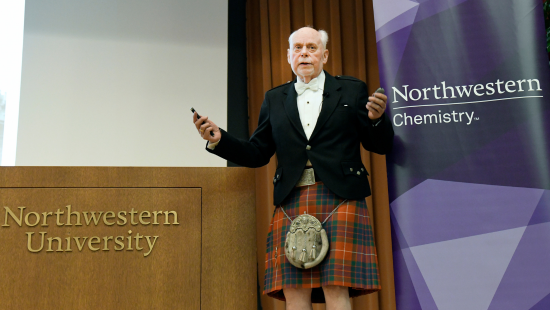
Sir Fraser Stoddart (1942-2024) was the Board of Trustees Professor of Chemistry and Director of the Center for the Chemistry of Integrated Systems at Northwestern University. A pioneer in supramolecular chemistry, he pioneered mechanical bonds and molecular machines, co-winning the 2016 Nobel Prize in Chemistry. Education: B.S. and Ph.D. from University of Edinburgh (1964/1966), followed by honorary doctorates from multiple institutions globally. Research focused on molecular recognition, self-assembly, and mechanically interlocked molecules, leading to innovations in molecular switches, rotaxanes, and nano-electronic devices. His work enabled molecular lifts, muscles, and advanced computer chip technologies. Major awards include the Nobel Prize, Royal Medal, Davy Medal, and knighthood from Queen Elizabeth II. He established a laboratory at Hong Kong University and led Northwestern's chemistry department to international prominence. Known for mentorship, he inspired generations of researchers through his energy and vision. His legacy includes over 1,400 publications and foundational contributions to nanotechnology and molecular engineering.
Professor Wolfgang Fritzsche serves as Head of the Nanobiophotonics Department at the Leibniz Institute of Photonic Technology (Leibniz-IPHT) in Jena, Germany, where he leads cutting-edge research at the intersection of nanotechnology and photonics. His laboratory, located in HG 269, maintains active collaborations across multiple international institutions as evidenced by his extensive publication record. Dr. Fritzsche's research spans multiple nanotechnology domains with particular emphasis on plasmonic nanoparticles, nanozymes, and optical sensing platforms. His work demonstrates exceptional versatility across fundamental nanomaterial synthesis and practical biomedical applications. Recent projects include developing innovative antibiofilm agents using β-cyclodextrin inclusion complexes, engineering laccase-mimetic nanozymes for food safety monitoring, and creating plasmonic nanocomposites for antibacterial applications. His expertise in localized surface plasmon resonance (LSPR) sensing has led to significant advancements in real-time monitoring of nanomaterial interactions and biosensing platforms. Analysis of his recent publication trajectory reveals a strategic research focus on translating nanomaterial discoveries into practical diagnostic and therapeutic applications. His work demonstrates increasing integration of multiple nanotechnology approaches, particularly combining plasmonics with enzymatic mimetics and advanced imaging techniques. The consistent high-impact journal placements across chemistry, materials science, and biomedical engineering publications indicate strong cross-disciplinary recognition of his contributions to nanobiophotonics. While no specific awards are mentioned in the available documentation, Professor Fritzsche's leadership position at a Leibniz Association institute and his prolific publication record in top-tier journals represent significant professional recognition. His research program appears well-funded through the substantial output of collaborative papers spanning multiple application areas. Professor Fritzsche maintains an active research laboratory focused on nanobiophotonics, with particular expertise in plasmonic nanoparticle synthesis, surface functionalization techniques, and optical biosensing platforms. His team appears to specialize in bridging fundamental nanomaterial properties with practical biomedical applications, particularly in infection control, cancer therapy, and diagnostic technologies. The interdisciplinary nature of his publications suggests collaboration across chemistry, physics, biology, and medical research domains.
Bernard MARTEL is a Professor at the University of Lille's Faculty of Science and Technology, Department of Chemistry, and leads research in the Polymer Systems Engineering team at the Materials and Transformations Unit (CNRS UMR 8207). His work focuses on developing functional polymer systems for biomedical applications, including drug delivery, tissue engineering, and antibacterial materials. Research interests span: Design of therapeutic biomaterials (hydrogels, nanofibers) Functionalized medical implants and textiles Antimicrobial/antiviral material engineering 3D-printed medical devices His recent publications (2019-2024) demonstrate strong emphasis on: Advanced characterization of biomaterial interactions Functionalization techniques for controlled drug release Solutions for diabetic wound care and orthopedic reconstruction Eco-friendly materials for environmental remediation Patent innovations include: 3D-printed endoprostheses (WO2024213841) Antiadhesive hydrogel compositions (FR3080539) Cyclodextrin-modified biomedical textiles Significant PhD supervision includes 23+ students, with current research on: Functionalized visceral implants (Camille DUCHEMIN) Antithrombotic stent design (Kim VANDEN BROECK)