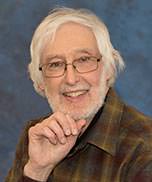
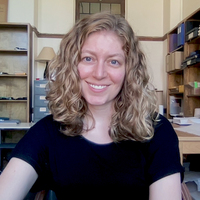
Paul-Alain Beaulieu is a Professor of Assyriology at the University of Toronto, specializing in the civilizations of ancient Mesopotamia. He holds a PhD from Yale University and has held academic positions at Yale, Harvard, and Notre Dame before joining Toronto in 2006. His research focuses on Babylonian history, cuneiform archives, and intellectual history, with a geographic emphasis on Babylonia and temporal focus on the first millennium BC. He teaches courses on Akkadian/Sumerian languages, cuneiform script, and Mesopotamian civilization, including a popular first-year seminar contrasting Babylon’s historical reality with mythological depictions. Education: LL.L. in Law, University of Montreal M.A. in History, University of Montreal M.A. and PhD in Assyriology, Yale University Research Interests: Beaulieu’s work examines political history, religion, intellectual life, and linguistics in ancient Mesopotamia. Key areas include Babylonian priestly migrations, cuneiform archives, and the intersection of Aramaic and Babylonian languages. He has extensively studied the pantheon of Uruk, legal texts from Nabonidus’ reign, and the fall of Babylon to the Persians. Administrative Roles: Chair Graduate Chair Publications: His works analyze Babylon’s historical trajectory, Judeo-Babylonian interactions, and linguistic dynamics in first-millennium Iraq. Recent publications include Judah in the Shadow of Babylon (2020) and A History of Babylon (2018).
Stephen J. Tinney is Clark Research Associate Professor of Assyriology (Sumerian) at the University of Pennsylvania's School of Arts & Sciences. He also serves as Deputy Director of the Penn Museum, Associate Curator of the Babylonian Section, and director of the Pennsylvania Sumerian Dictionary Project. Education BA in Assyriology from Cambridge University PhD in Assyriology from the University of Michigan at Ann Arbor Research Interests Sumerian language, literature, and culture Digital analysis and publication of Sumerian texts Cuneiform language preservation and computational tools Leadership and Projects Director of the Pennsylvania Sumerian Dictionary Project (ePSD) since joining Penn in 1991 Primary contributor to the Cuneiform Digital Library Initiative (based at UCLA) Curatorial responsibilities for the Penn Museum's Babylonian Section
Rev. Prof. Dr. Hab. Henryk Drawnel is a leading scholar in biblical theology and Qumran studies at the Institute of Biblical Studies, Faculty of Theology, John Paul II Catholic University of Lublin. His work bridges Second Temple Judaism with Aramaic literature, focusing on Enochic texts and their Mesopotamian influences. Education: Studied at Salesian seminaries in Cracow and Cremisan, Israel; Pontifical Biblical Institute (Rome); École Biblique (Jerusalem); Harvard Divinity School. His research centers on Aramaic manuscripts from Qumran, particularly the Book of Enoch and Levi Document , examining intersections with Mesopotamian astronomy, priestly education, and apocalyptic traditions. Key projects include critical editions of 4Q201-212 Enoch fragments and Mesopotamian influences on Jewish angelology. Recent publications (2025–2010) analyze literary structures of Enochic texts, lunar calculations, and Fallen Angels' theology. His 2011 monograph on the Aramaic Astronomical Book earned the Minister of Science award. Scientific Awards: Bronze Cross of Merit (2021) Minister of Education and Science Award (2021) KUL Internal Award for Top Publications Minister of Science and Higher Education Prize (2011) Drawnel's editorial roles include Journal for the Study of the Pseudepigrapha and Biblical Annals . He has organized major conferences, such as the 2017 Qumran Scrolls 70th Anniversary Symposium.
Wiebke Meinhold is a Professor of Ancient Near Eastern Philology at the University of Tübingen's Faculty of Humanities. Her career spans key roles in Assyriology, including scientific collaborations at institutions like the University of Geneva and Heidelberg Academy of Sciences. Education: MA in Assyriology, Semitic Studies, and Greek from Heidelberg and Leiden (2001) Doctorate: University of Leipzig (2006) Research focuses on cultural and religious history of the Ancient Near East, with specific attention to Mesopotamian deities, legal traditions, and social structures. Her work includes analysis of cuneiform legal texts from Nippur and studies on temple economies. Recent publications emphasize inheritance practices across Old Babylonian cities and the socio-economic role of prebends. She contributes to academic discourse through editorial work and participation in international conferences. Organizations: Member of Deutsche Orient-Gesellschaft (DOG) and International Association for Assyriology (IAA) In university governance, she holds leadership roles as Executive Director of the Institute for Ancient Near Eastern Cultures (2021-2023, 2025+) and Equality Commissioner in the Faculty of Humanities (2025+).
Prof. Dr. Markus Hilgert is currently serving as President of the Berlin University of the Arts (since April 2025). Prior to this role, he was the Executive Director and Secretary General of the Cultural Foundation of the German Federal States (2018–2025) and Director of the Museum of the Ancient Near East at the Pergamon Museum (2014–2018). He held a professorship in Ancient Near Eastern Studies at Heidelberg University (2007–2014) and has been an honorary professor at Heidelberg, Marburg, and Freie Universität Berlin since 2014, 2015, and 2017 respectively. Additionally, he has served on the board of the German Commission for UNESCO since 2018. Research Interests : Hilgert's work bridges Ancient Near Eastern Studies , Cuneiform Studies , and Epistemology , focusing on the materiality of writing, cultural heritage, and interdisciplinary approaches to understanding ancient knowledge systems. He explores the intersection of objects, science, and politics, particularly in museum contexts and cultural property management. Publication Trends : His scholarly output spans the analysis of Ur III administrative texts, theoretical frameworks for material culture, and critical reflections on museum practices. Key themes include epistemology of ancient writing , cultural heritage responsibilities , and interdisciplinary methodologies .
Gojko Barjamovic is a Senior Lecturer & Senior Research Scholar in Assyriology at Yale University, joining from Harvard University in 2024. His research focuses on the economic and social history of Assyria in the 2nd millennium BCE, ancient foodways (including the Yale Babylonian Recipes project), human aDNA, and absolute chronology. He collaborates with economists to study early markets and trans-regional price convergence, bridging archaeology, economics, and textual analysis. Affiliations: Yale University (current), Harvard University (previous), University of Copenhagen (education). Research Interests: Barjamovic’s work spans ancient trade networks, Bronze Age Anatolia, and the intersection of Assyrian, Hittite, and Mesopotamian studies. His interdisciplinary approach integrates archaeological data, cuneiform texts, and scientific methods to explore topics like commodity exchange, urbanization, and political frontiers. Key contributions include editing volumes on ancient libraries (e.g., Libraries before Alexandria ), analyzing the Uluburun shipwreck’s tin origins, and studying ceremonial plant consumption in Anatolia. His research highlights Eurasian connectivity and the socio-economic dynamics of early states. Publications emphasize trade technologies, ancient economies, and archaeological methodologies, with notable works on Kültepe’s commercial networks and the Hittite palace architecture. His work underscores the role of small-scale communities in ancient trade systems, challenging traditional narratives of centralized state dominance.
Andrew Pottorf serves as a Teaching Associate in Assyriology at the University of Cambridge's Department of Archaeology, where he specializes in social structures of ancient Mesopotamia with particular focus on the Ur III period (ca. 2110-2003 BCE). His academic appointment falls under the Faculty of Human, Social, and Political Science. Dr. Pottorf's research concentrates on: Socio-political organization of ancient Mesopotamian societies Assyriology and Mesopotamian Languages Epigraphy & Paleography of cuneiform texts The muškēnum and UN-il2 social categories as intermediate statuses between slavery and full citizenship Economic and legal systems of third-millennium BCE Mesopotamia His recent publications reveal a consistent scholarly trajectory examining nuanced social stratification in ancient Mesopotamia, challenging traditional binary models of social status. His work demonstrates how groups like the muškēnū functioned as 'settled outsiders' requiring protection from rulers, occupying a precarious position between citizens and slaves. His textual analyses of Ur III administrative documents reveal how these groups were typically conscripted for full-time agricultural and animal husbandry work without the economic flexibility of citizen-class individuals. Dr. Pottorf actively contributes to academic discourse, having presented 'The lives and work of the serflike UN-IL2 in the Ur III period' at the 68th Rencontre Assyriologique Internationale workshop 'Beyond Slavery and Freedom in the Ancient Near East' at the University of Leiden in July 2023. His research connects with broader departmental themes including Heritage Studies and Material Culture research at Cambridge.
Cécile Michel is a renowned Assyriologist holding dual roles as a Senior Researcher at CNRS (France) and Professor at Universität Hamburg (Germany). She specializes in the history of Upper Mesopotamia and Anatolia during the second millennium BCE, focusing on private archives, literacy, material culture, and ethical research practices. Her work integrates interdisciplinary approaches, particularly in analyzing cuneiform tablets and ancient textiles. Michel leads the 'Ethics' working group within the Cluster of Excellence ‘Understanding Written Artefacts’ (UWA) at Hamburg and coordinates international projects like the RFA09 (CT scanning sealed tablets) and RFE04 (Assyrian manuscript culture). Education details are not explicitly provided, but her career highlights include: Doctor honoris causa from Copenhagen University (2017) and Hamburg University (2023) President of the International Association for Assyriology (2014–2018) Scientific delegate at CNRS's Scientific Integrity Mission Recipient of the Knight of the Legion of Honor (2019) Her research interests span: Materiality of cuneiform tablets and digital preservation Gender roles in ancient societies Archival literacy and education Textile archaeology and trade networks Her documentaries, such as Thus speaks Taram-Kubi (2016) and Cuneiform script: writing and calculating (2017), have garnered international acclaim. She actively promotes ethical practices in archaeology and cultural heritage preservation, including work on safeguarding manuscripts from Timbuktu and Nepal. Key grants and projects include leadership roles in the SFB 950 ‘Manuscript Cultures’ (2011–2020) and Cluster of Excellence UWA (2019–2025). Her research teams collaborate globally, integrating archaeology, digital humanities, and experimental archaeology to decode ancient texts and artifacts.
Aaron J. Koller is Professor of Near Eastern Studies at Yeshiva University. His scholarship bridges Semitic languages , Jewish intellectual history , and writing system evolution , with particular focus on ancient Hebrew and Aramaic contexts. Education: BA from Yeshiva University, PhD from Revel Graduate School (2009) Affiliations: Bye-Fellow at Cambridge University (2022-2023), Visiting Scholar at Oxford's Centre for Hebrew and Jewish Studies Research explores: Writing Systems : Evolution from cuneiform to alphabetic scripts , including vowel marking and word division mechanisms Dead Sea Scrolls : Reconstructing Persian period Aramaic literature and analyzing language contact between Hebrew and Aramaic Biblical Interpretation : Gender dynamics in Genesis narratives and ethical frameworks in Ezekiel and Deuteronomy Recent publications examine Qur'anic references to Mishnah , alphabetic order historiography , and ancient scribal practices . He has edited five academic volumes including Studies in Mishnaic Hebrew and Semitic, Biblical, and Jewish Studies in Honor of Richard Steiner . Key collaborations include research at Cambridge University , Oxford University , and with scholars like Steven Fine and Mordechai Cohen . His work has been featured in 38 academic books and 25 journal articles .
Ira Spar is a Professor of History and Ancient Studies at Ramapo College of New Jersey, where he has been teaching since 1974. His academic work focuses on ancient civilizations, particularly Mesopotamian and Egyptian history, cuneiform studies, and the intersection of archaeology and biblical narratives. B.A., American University M.A., Michigan State University Ph.D., University of Minnesota His teaching portfolio includes courses on World Civilizations, Ancient Law, Biblical Archaeology, and Akkadian language. He has contributed to significant scholarly works such as The Ebabbar Temple Archive and publications on imperial identity in Assyria, Persia, and China. His research emphasizes comparative temple economies and the role of material culture in shaping historical narratives. Recent publications span topics from Babylonian-Judean relations to Assyrian imperial symbolism, with a focus on cross-disciplinary methodologies linking archaeology, linguistics, and cultural studies. Key journals and institutions like the Metropolitan Museum of Art and World History Connected have featured his work.
Benjamin Foster is the William M. Laffan Professor of Assyriology at Yale University, specializing in Akkadian literature, Mesopotamian history, and cuneiform studies. He holds a PhD from Yale University (1975) and has authored over 100 works including seminal texts like Before the Muses (1993), The Epic of Gilgamesh (2001), and Civilizations of Ancient Iraq (2009). Research focuses on Sumerian/Akkadian literature, third millennium BCE social history, and cuneiform epigraphy Recipient of the Felicia A. Horton Book Award (2009) Edited over 40 cuneiform texts from institutions like Istanbul Archaeological Museum and Yale Babylonian Collection Teaching encompasses all periods of Mesopotamian history and language instruction. His recent work examines Yale's 300-year engagement with Near Eastern studies in From New Haven to Nineveh (2023). Active in preserving cultural heritage through publications like Iraq Beyond the Headlines (2005).
Jonathan Valk is a researcher affiliated with the University of Helsinki, specializing in the history and archaeology of the Ancient Near East. He contributes extensively to the field through projects such as the Centre of Excellence in Ancient Near Eastern Empires (ANEE) and the Helsinki Inequality Initiative (INEQ) , focusing on topics like Assyrian identity, Aramaic language studies, and digital humanities approaches.
Nicola Laneri is a Full Professor of Archaeology and Art History of the Ancient Near East and Eastern Mediterranean at the University of Catania, Department of Humanities. He also serves as Director of the School of Religious Studies at CAMNES in Florence. His academic career includes visiting positions at Columbia University, the University of Chicago, Leiden University, and the Middle East Technical University in Ankara. University: University of Catania School: Department of Humanities Academic Rank: Professor Email: nlaneri@unict.it, nicolalaneri@hotmail.com Office: Palazzo Ingrassia (Via Biblioteca 4), Catania Office Hours: Monday and Thursday, 9:00–12:00 Website: disum.academia.edu/nicolalaneri Education and Academic Appointments: Ph.D., University of Naples L'Orientale (1999) Fulbright Research Scholar, Columbia University (2000) Research Fellow, Italian Academy at Columbia University (2000) Visiting Professor, Middle East Technical University, Ankara (2002–2004) Research Fellow, Oriental Institute, University of Chicago (2005) Erasmus Visiting Professor, Leiden University (2015) Research Interests: Nicola Laneri specializes in the archaeology of religion, funerary practices, and material culture in the Ancient Near East. His work investigates the development of religious systems, ritual transformation, and socioeconomic dynamics across Mesopotamia, Anatolia, and the Eastern Mediterranean. He has conducted extensive fieldwork in Turkey, Iraq, Syria, Iran, and Azerbaijan. Recent Publications and Research Trends: His recent publications reflect a strong focus on the material dimensions of religion, funerary archaeology, and urban development. Key themes include the emergence of polytheism, the social analysis of death rituals, and ceramic production technologies. The 15 most recent works demonstrate a consistent engagement with interdisciplinary approaches, combining archaeology, anthropology, and textual analysis to reconstruct ancient belief systems and socioeconomic structures. Scientific Awards: Laurentum Prize (2024) Advising and Research Grants: Laneri supervises graduate students in topics ranging from Mesopotamian iconography to contemporary museum practices. He has directed or co-directed major archaeological projects including the Hirbemerdon Tepe Archaeological Project (2003–2016), the GaRKAP in Azerbaijan (since 2017), and the Baghdad Urban Archaeological Project at Tell Muhammad (since 2022). He is Principal Investigator of the PRIN 2020 project 'Godscapes: Modeling Second Millennium BCE Polytheisms in the Eastern Mediterranean,' funded by MUR. Labs and Research Teams: He leads international research collaborations involving scholars from Italy, Azerbaijan, the United States, and the Netherlands. His teams integrate archaeological excavation, material analysis, and digital modeling to explore ancient urban and religious landscapes. He is actively involved in training the next generation of archaeologists and fostering cross-institutional academic partnerships.
Elizabeth Knott is an Assistant Professor in Classics at the College of the Holy Cross, specializing in Assyriology. She holds a PhD from New York University (2018) and a BA from the University of Michigan (2006). Her research bridges textual and visual analysis of ancient Near Eastern cultures, focusing on religion’s role in state formation, ritual performance, and the interplay between art and power. Previously, she served as a Postdoctoral Associate at Yale University and a Research Associate at the Metropolitan Museum of Art. Her work examines Mari’s Investiture Scene, Ištar rituals, and Mesopotamian cultic objects, emphasizing how material culture and texts co-constructed political and religious ideologies. Recent publications explore affective engagement with royal imagery, scribal practices in ritual texts, and the symbolic functions of votive objects. She teaches courses on ancient Mesopotamian history, languages, and archaeology. Her research agenda includes digitization projects like Yale’s Babylonian Collection seal archives and interdisciplinary collaborations on ambiguity in ancient Near Eastern records. Grants and fellowships have supported her work, though specific awards are not listed in sources. No lab affiliations are explicitly mentioned, but her research involves collaborations with museums and academic institutions.
Amar Annus is an Associate Professor of Near Eastern Religions at the University of Tartu , Faculty of Arts and Humanities, School of Theology and Religious Studies since 2021. He has held visiting positions at institutions like the Free University of Berlin (Marie Curie Fellow) and École française d’Extrême Orient in Pondicherry, India. PhD in Assyriology from the University of Helsinki (2003) Specializes in Assyriology and Cognitive Science of Religion Active in translating and commenting on classical Near Eastern texts His research interests span ancient Mesopotamian mythology, royal ideology, cognitive science of religion, and intertextuality between ancient Near Eastern and Judeo-Christian texts. His 2025-2024 publications focus on Assyrian royal genealogy, Enochic responses to Mesopotamian sages, and comparative cognitive models in ancient scholarship. He received Estonian National Science Awards in 2023, 2022, and earlier Akadeemia magazine awards. Annus supervises two PhD students and has led major projects like Forms of Creativity in the Intellectual History of Ancient Mesopotamia (2017-2020), funded at €177,600.