معرفی
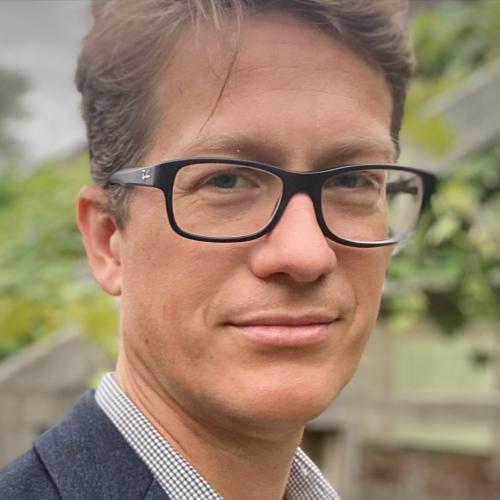
Andrew Pottorf serves as a Teaching Associate in Assyriology at the University of Cambridge's Department of Archaeology, where he specializes in social structures of ancient Mesopotamia with particular focus on the Ur III period (ca. 2110-2003 BCE). His academic appointment falls under the Faculty of Human, Social, and Political Science.
Dr. Pottorf's research concentrates on:
- Socio-political organization of ancient Mesopotamian societies
- Assyriology and Mesopotamian Languages
- Epigraphy & Paleography of cuneiform texts
- The muškēnum and UN-il2 social categories as intermediate statuses between slavery and full citizenship
- Economic and legal systems of third-millennium BCE Mesopotamia
His recent publications reveal a consistent scholarly trajectory examining nuanced social stratification in ancient Mesopotamia, challenging traditional binary models of social status. His work demonstrates how groups like the muškēnū functioned as 'settled outsiders' requiring protection from rulers, occupying a precarious position between citizens and slaves. His textual analyses of Ur III administrative documents reveal how these groups were typically conscripted for full-time agricultural and animal husbandry work without the economic flexibility of citizen-class individuals.
Dr. Pottorf actively contributes to academic discourse, having presented 'The lives and work of the serflike UN-IL2 in the Ur III period' at the 68th Rencontre Assyriologique Internationale workshop 'Beyond Slavery and Freedom in the Ancient Near East' at the University of Leiden in July 2023. His research connects with broader departmental themes including Heritage Studies and Material Culture research at Cambridge.