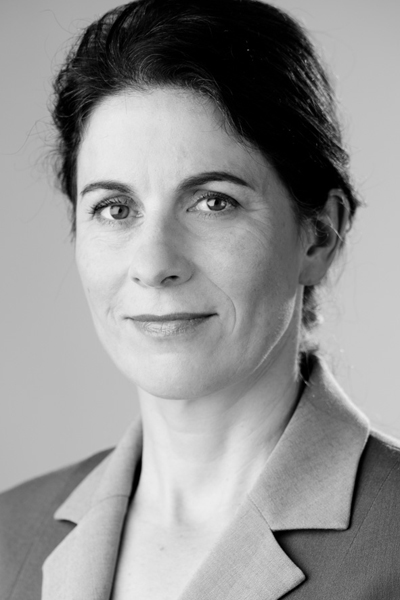
Shiyanthi Thavapalan
استادیار · Ancient Near Eastern Languages and Cultures
Vrije University Amsterdamمعرفی
Shiyanthi Thavapalan serves as Assistant Professor of Ancient Near Eastern Languages and Cultures at Vrije Universiteit Amsterdam's Faculty of Social Sciences and Humanities, Department of Art and Culture, History, Antiquity, and is affiliated with the Amsterdam Centre for Ancient Studies and Archaeology. Her interdisciplinary research bridges cultural anthropology, philology, and material culture studies to investigate Mesopotamian technical knowledge systems from 2000-330 BCE.
Education:
- PhD in Assyriology (with distinction), Yale University (2017)
- MA in Assyriology, Yale University (2011)
Her research centers on Akkadian technical recipes, ancient color perception, and craft technologies in Mesopotamia, with particular focus on natural dyes, pigment analysis, and metaphor theory in ancient texts. She employs innovative methodologies combining textual analysis with experimental archaeology to reconstruct ancient technological practices and their cultural contexts.
Analysis of her recent publications reveals consistent exploration of material-symbolic relationships in Mesopotamian society, especially the interplay between technological innovation, ritual practice, and cognitive frameworks. Her work demonstrates growing emphasis on interdisciplinary approaches that integrate philological evidence with scientific analysis of material culture.
Scientific Awards:
- William J. Horwitz Dissertation Prize
- International Association for Assyriology Dissertation Prize
- Baden-Württemberg Stiftung Fellowship (2014-2015)
- University of Tübingen Fellowship (2017)
- Brown University Fellowship (2017-2019)
- Alexander von Humboldt Foundation Fellowship (2020-2022)
Dr. Thavapalan currently directs an NWO Vidi project (2025-2030) examining human-technology-material relationships in Mesopotamia, building on prior funded research at Brown University and the University of Tübingen. She serves on editorial boards for Colour Turn and Bibliotheca Orientalis, and as committee member for The Netherlands Institute for the Near East, demonstrating significant leadership in advancing Assyriological scholarship through institutional collaboration and academic service.
/prod02/channel_1/media/faculty/Dr.-Miglio-(1)-1000X1200.jpg)