Dr Seb Franklin is a Senior Lecturer in the Department of English Language & Literature at King's College London, Faculty of Arts & Humanities. Their research explores intersections between media theory, racial capitalism, Marxism, and the history of science and technology. Key research areas include: Digital humanities and media archaeology Critical race and postcolonial studies Cybernetics and technocultural analysis Political economy of digital labor Visual culture and post-Fordism Recent publications examine: 2024 works on analog-digital distinctions and digital ethics 2023 analyses of data dispossession and racial capitalism 2021 monograph 'The Digitally Disposed' 2015 foundational text 'Control: Digitality as Cultural Logic'
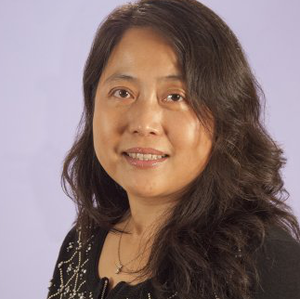
Xiaojun (Jenny) Yuan is an Associate Professor at the University at Albany, State University of New York, within the College of Emergency Preparedness, Homeland Security, and Cybersecurity. Her research focuses on Human-Computer Interaction (HCI) and Information Retrieval, emphasizing user interface design and human information behavior. She has secured grants from institutions like the Institute of Museum and Library Services and the New York State Education Department. Dr. Yuan holds a Ph.D. from Rutgers University and the Chinese Academy of Sciences, alongside advanced degrees in Statistics and Computer Science. She actively contributes to professional committees (e.g., ACM SIGIR, ASIS&T) and editorial boards, including the Aslib Journal of Information Management and Annual Review of Information Science and Technology . Her work addresses technology accessibility, pandemic response systems, and inclusive design for marginalized populations. Her research spans decades, with notable contributions to voice search optimization, cultural aspects of interface design, and technology adoption patterns during crises. Recent studies investigate algorithmic fairness, privacy concerns in aging populations, and pandemic-era educational technology. Dr. Yuan's interdisciplinary approach bridges computer science, sociology, and public health to tackle real-world challenges like health equity and emergency preparedness. Grants: Institute of Museum and Library Services, SUNY Seed Grant, NY State Education Department Editorial Roles: Aslib Journal of Information Management, Annual Review of Information Science and Technology Professional Memberships: ASIS&T, ACM, IEEE Her publications highlight trends in conversational search systems, gamified learning tools, and the societal impacts of AI. Ongoing research explores culturally responsive keyboard designs and pandemic data visualization for underrepresented groups.
James Cornford is an Associate Professor in Organisational Behaviour at the Norwich Business School, University of East Anglia (UEA). He joined UEA in 2009 from Newcastle University, where he held roles including Senior Lecturer and Principal Research Associate. His research focuses on multi-agency organisational change in public sectors, information technology-driven organisational transformation, and regional development processes. He has led or co-investigated projects funded by the ESRC, EPSRC, European Commission, and UK government departments. **Career & Affiliations**: Associate Professor, Norwich Business School (2009–present) Co-founder of the Centre for Social and Business Informatics (now part of KITE at Newcastle University) Visiting Fellow at Newcastle University’s KITE Member of the EPSRC Peer Review College **Research Interests**: Public sector transformation through ICT integration E-government and customer focus in public services Regional development strategies and innovation ecosystems Network governance and multi-stakeholder collaboration His recent work explores challenges in information sharing across public services, the impact of AI in healthcare, and the role of science parks in supporting entrepreneurs. He has published extensively on topics like virtual universities, e-government policy, and the socio-economic effects of industrial closures. **Grants & Projects**: Smart Data Analytics for Business and Local Government (ESRC-funded, 2014–2020) Regionalising Adoption in Yorkshire and Humberside (Barnardo’s, 2016–2017) He leads the BSc in Business Analytics and Management and teaches modules on project management, innovation, and data management. His work bridges academic research and practical policy implications in public service innovation and organisational change.
Priya Prasad, PhD, MPH , is an Assistant Adjunct Professor at the University of California, San Francisco (UCSF) School of Medicine , affiliated with the Division of Hospital Medicine . Her work focuses on leveraging electronic health records (EHR) to improve patient care quality, particularly in sepsis surveillance , antibiotic stewardship , and health disparities in inpatient settings. Education : BS in Biology (2003), University of North Carolina at Chapel Hill MPH in Epidemiology & Biostatistics (2005), University of California, Berkeley PhD in Epidemiology & Translational Science (2016), UCSF Diversity, Equity, and Inclusion Champion Training (2019), UCSF Her research explores data-driven interventions for hospital quality improvement, including alarm fatigue reduction , opioid prescribing equity , and timing of sepsis treatment . She has secured grants like the UCSF Chancellor's Fund Travel Award (2022) and Center for Health Quality and Innovation grant (as primary analyst). Prior roles include Clinical Epidemiology Research Associate at Children’s Hospital of Philadelphia. Selected publications highlight her work in critical care cardiology , antimicrobial resistance , and equity in hospital medicine , with collaborations across the UC Health system. Scientific awards include multiple Top Peer Reviewer distinctions from the Journal of Hospital Medicine .
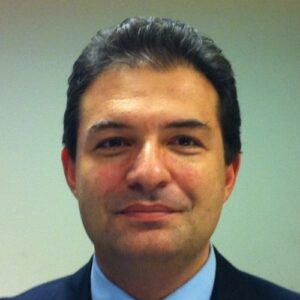
Dimitrios D. Vergados is a Professor in the Department of Informatics at the University of Piraeus, holding the UNESCO Chair in 'Creative Cities in Motion: Urban Sustainable Mobility and Utilization of Cultural Resources.' As an IEEE Senior Member, he specializes in wireless networks, computer networks, and advanced digital technologies, with a focus on 5G, IoT, and smart systems. His research spans telecommunications systems , cloud computing , machine learning for industrial applications , and digital cultural heritage preservation . Recent work explores vehicular networks, drone communication in 5G architectures, and privacy challenges in smart cities. He has contributed to energy optimization, security frameworks, and digital twin implementations for sustainability. Key trends in his publications include the intersection of 5G security , IoT , and machine learning in industrial and healthcare contexts, alongside digital heritage modeling for cultural preservation. His work bridges theoretical and applied domains in telecommunications and smart technologies. Scientific Awards IEEE Senior Member Vergados has served as a committee member, technical program committee member, and reviewer for international conferences and journals. He previously chaired the UNESCO Chair and participated in national and international evaluations, including roles at the Hellenic Telecommunications and Post Commission. His research emphasizes interdisciplinary applications of digital systems in mobility, healthcare, and cultural management.
Jonathan Gray is a Reader in Critical Infrastructure Studies at King’s College London’s Department of Digital Humanities, affiliated with the Public Data Lab, Digital Methods Initiative, and Sciences Po’s médialab. His research focuses on digital data’s role in shaping collective life, with expertise in critical technical practice, environmental data studies, and public data portals. He co-leads projects like SUPERB (forest restoration) and datatesting (data infrastructure evaluation). His work spans environmental policy, digital methods, and social media analysis, addressing topics like algorithmic accountability, climate activism, and misinformation. Notable awards include the Activist-in-Residence and Being Human, Being Visible distinctions. Collaborative grants include ESRC, EC, and AHRC funding for projects on infodemics, East Asian heritage, and forest governance. Gray’s teaching emphasizes engaged research and digital tools like KingsCAT for social media analysis. Key labs include the Public Data Lab and forestscapes, exploring soundscapes and participatory inquiry into forest ecosystems. His 80+ publications include books on data journalism and scholarly communication infrastructures, reflecting his interdisciplinary approach to digital humanities.
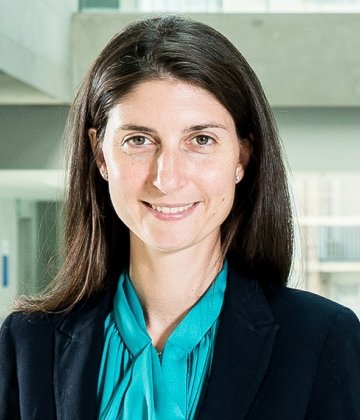
Dr. Agnès Patuano is an Assistant Professor at Wageningen University & Research, specializing in Landscape Architecture and Spatial Planning. Her research integrates environmental psychology and design methodologies to create health-promoting urban environments. She leads the BENIGN project, investigating blue-green infrastructure's impact on urban health, involving municipalities like Leiden and Dordrecht. She teaches courses such as MSc Thesis Landscape Architecture, Research Methodology for Planning, and Design Practice. Her expertise spans urban green infrastructure, behavioral studies, and interdisciplinary approaches to spatial design. Education & Teaching: She instructs multiple graduate courses including MSc Theses supervision, Research Methodology, and Design Practice. Her courses emphasize evidence-based design and research through design principles. LAR80424 MSc Thesis Landscape Architecture LUP36806 Landscape Theory and Analysis LAR71824 Design Practice Research Focus: Agnès bridges theory and practice by developing methodologies to optimize urban spaces for both human and ecological health. Key topics include urban heat mitigation, green infrastructure design, and the psychological benefits of green spaces. Her work addresses climate adaptation and equity in spatial planning. Projects: The BENIGN project (2022–present) focuses on co-designing blue-green interventions to improve urban living conditions through interdisciplinary collaboration with municipalities and civil society. Awards & Recognition: No specific scientific awards are listed, though her contributions to urban health research are notable. Grants & Advising: She secures research funding through consortium partnerships. Her advising focuses on MSc theses in landscape architecture, emphasizing interdisciplinary research. Labs & Teams: Collaborates with Wageningen's research groups on projects involving urban ecology, spatial planning, and behavioral science.
Maura R. Grossman is a Research Professor at the University of Waterloo, specializing in High-Recall Information Retrieval, AI ethics, and legal technology. Her work focuses on ensuring comprehensive information retrieval in high-stakes contexts like electronic discovery in law, healthcare data curation, and medical evidence synthesis. She explores the intersection of artificial intelligence and legal systems, particularly addressing challenges posed by AI-generated evidence and deepfakes in judicial processes. Education: J.D. (Georgetown University Law Center, 1999), Ph.D. (Adelphi University, 1984), M.A. (Adelphi University, 1982), A.B. (Brown University, 1980). Research interests include AI accountability in courts, responsible data science practices, and improving electronic discovery methodologies. Recent work analyzes AI’s role in legal proceedings, ethical AI frameworks, and healthcare data governance. Her publications emphasize validating technology-assisted review (TAR) systems and evaluating generative AI impacts on marginalized communities. Her articles highlight trends in AI’s legal implications, healthcare data sharing protocols, and the need for transparent algorithmic systems in justice contexts. She contributes to TREC tracks, advancing high-recall retrieval techniques for legal and medical document analysis. Notable projects include developing frameworks for unbiased health data sharing and analyzing AI’s effects on marginalized writers. Her work underscores interdisciplinary collaboration between law, computer science, and healthcare to address emerging technological challenges.
Scott McIntosh, Ph.D., is a Professor in the Department of Public Health Sciences at the University of Rochester School of Medicine and Dentistry (SMD). He holds joint appointments in the Cancer Center, Center for Community Health and Prevention, Department of Dentistry, and Department of Orthopaedics. His research focuses on technology-assisted interventions for risk behavior change, particularly in tobacco control. Dr. McIntosh co-founded the Web-Assisted Tobacco Interventions (WATI) initiative and has led numerous studies on vaping cessation, e-cigarette toxicity, and culturally tailored health interventions for Latino populations. Education: Ph.D. in Counseling Psychology (University of Miami, 1993), M.A. in Counseling Psychology (University of Missouri-Columbia, 1986), B.S. in Psychology (Iowa State University, 1984). Research Interests: Digital health interventions, vaping cessation, tobacco policy, health equity, and participatory research methods. His work addresses emerging public health threats like flavored e-cigarette use and social media's role in nicotine exposure. Awards: Over a decade of recognition for leadership in tobacco control, including the 2008 Fight Back Award and multiple NIH-funded grants. Dr. McIntosh has also been honored for educational contributions, including the 2004 Educational Program of the Year and Who's Who in Medical Sciences Education. Collaborations: Leads the Nicotine & Tobacco Research Core at URMC, collaborating with institutions globally on vaping cessation strategies and health policy. His team evaluates interventions through randomized trials, qualitative studies, and policy audits.
Marcelo Milrad is a Full Professor in Media Technology at Linnaeus University's Department of Computer Science and Media Technology, part of the Faculty of Technology. He leads the Center for Learning and Knowledge Technologies (CeLeKT) and co-directs the Information Institute. His research focuses on Technology-Enhanced Learning (TEL), mobile technologies in education and healthcare, computational thinking, and AI integration in education. He has published over 240 articles and collaborates extensively with industry and public sector partners. Education: Advanced degrees in computer science and educational technology (not explicitly detailed). Research interests include designing learning environments for complex domains, mobile applications for collaborative learning, and AI in education. He actively develops master's programs like Digital Humanities and teaches courses on programming for teachers and healthcare professionals. Notable projects include the EREDWeB project on VR in education and Exten.D.T.² on design thinking with emerging tech. He chairs international conferences like WMTE and serves on editorial boards in TEL. His work emphasizes cross-disciplinary collaboration, with initiatives like the Digital Humanities Center and the Linnaeus Media Observatory. He leads projects funded by grants such as the SEK 25M cultural entrepreneurship initiative and a 4M grant for archival AI.
Giulia Cappellaro is Associate Professor in the Department of Social and Political Sciences at Bocconi University, with affiliations at CERGAS and DONDENA research centers. She holds a PhD in Management Studies from the University of Cambridge. Her interdisciplinary research examines collaborative governance, institutional change, and ambiguity in public sector organizations, particularly in healthcare contexts. Cappellaro's publications investigate how organizations navigate complex policy environments, with recent focus on public-private hybrids, COVID-19 physician experiences, and technology implementation in healthcare. Her methodological expertise includes ethnography and qualitative analysis of organizational phenomena. Bocconi Research Excellence Award (2024, 2021, 2020) ABCD Award - OMT Division, Academy of Management (2017, 2015, 2012) EGOS Best Student Paper Award (2012) Best Young Researcher Award, Italian Health Economics Association (2012)
Marco Scialdone is a Lecturer at the European University of Rome, specializing in Information Technology Law and Legal Categories related to Technology. He holds a PhD from the same university (2016) and Master’s degrees from La Sapienza University of Rome (2005). A Fellow of the IAIC – Italian Academy of the Internet Code, he focuses on AI ethics, digital rights, and consumer protection law. His research bridges legal frameworks with emerging technologies like artificial intelligence and robotics. Education: PhD in Legal Categories and Technology (2016), European University of Rome Master’s in Computer Law (2005), La Sapienza University of Rome LL.B. in Law (Cum Laude, 110/110), LUISS Guido Carli University Research Interests: His work explores the intersection of law and technology, including AI governance, digital copyright, consumer rights in the digital age, and the legal implications of robotics. He emphasizes ethical AI development, regulatory challenges in digital markets, and public administration digitization. Recent studies analyze algorithmic bias in judicial systems and the legal protection of user-generated content. Publications & Expertise: Authored over 20 publications, including monographs like Living with Artificial Intelligence (2021) and The Legal Protection of User-Generated Content (2018). His articles address topics such as non-human creativity rights, predictive justice models, and cross-border copyright conflicts. He has served as an expert in AI policy (Italian Government’s High-Level Group on AI, 2018) and on the Permanent Advisory Committee for Copyright (2019). Professional Roles: Head of Litigation & Academic Outreach at Euroconsumers (since 2021) Former lecturer at La Sapienza University (2015–2018) and University of Perugia (2007–2012)
Dr. Sumeyra N. Tayfur is a Research Fellow at the Department of Psychiatry , Yale School of Medicine , and serves as an Early Detection and Assessment Coordinator (EDAC) for the Specialized Treatment for Early Psychosis (STEP) Program , overseeing the Southwest region of Connecticut. Education Ph.D. in Psychology from Queen Margaret University, Edinburgh, UK B.Sc. in Counseling Psychology from Bogazici University, Istanbul, Turkey M.Sc. in Clinical Psychology (institution not specified) Dr. Tayfur's research focuses on early risk and protective factors in youth mental health trajectories, emphasizing preventive strategies and early interventions for psychosis and depression. Her work spans interdisciplinary teams and clinical settings, utilizing quantitative methods to assess treatment efficacy, suicide risk, and the role of insight in psychosis management. She has contributed to statewide initiatives like the STEP program and Mindmap campaigns for early detection of first-episode psychosis. Recent publications highlight trends in AI-driven mental health tools , duration of untreated psychosis , and suicidality mechanisms in early psychosis. Her clinical experience includes working with adolescents, young adults, and families in diverse therapeutic environments.
Dr. James Orbinski is a Professor and the inaugural Director of York University’s Dahdaleh Institute for Global Health Research. He holds a BSc from Trent University, an MD from McMaster University, and an MA in International Relations from the University of Toronto. As a physician, humanitarian leader, and author, his career focuses on global health equity, humanitarian action, and the intersection of climate change with health. He served as International President of Médecins Sans Frontières/Doctors Without Borders (MSF), accepted the Nobel Peace Prize on behalf of MSF in 1999, and co-founded initiatives like the Drugs for Neglected Diseases Initiative and Dignitas International. Leadership & Affiliations: Board Member, Grand Challenges Canada Member, Global Alliance for TB Drug Development Member, Davos World Economic Forum’s Global Agenda Council on Health Care Systems Research Focus: The Dahdaleh Institute’s core themes under his direction include Global Health and Humanitarianism, Planetary Health, and Global Health Foresighting. His work emphasizes transdisciplinary research addressing climate change health impacts, health equity, and humanitarian innovation. Awards: Officer of the Order of Canada, Meritorious Service Cross (for leadership during Rwanda’s 1994 genocide), and author of the award-winning An Imperfect Offering: Humanitarianism in the 21st Century . Recent Projects: Includes modeling climate change’s health impacts in Malawi, advancing digital technologies for food security, and advocating for global solidarity in pandemic responses. He also spearheaded the Safe Water Optimization Tool project and collaborated with the Rainmaker Enterprise to address water scarcity in South Sudan.
Zhanming Liang is a researcher affiliated with James Cook University, focusing on health service management, digital health transformation, and competency development for healthcare leaders. His work spans cross-cultural studies in China, Iran, and Australia, addressing challenges in hospital management, patient-centered care, and policy implementation. Collaborated on studies related to veterinary management, pandemic response, and telemedicine. Contributed to frameworks for evidence-informed decision-making and digital health competencies. Research interests include: Health Management: Competency frameworks, workforce capacity building, leadership training. Digital Health: Technology adoption, informatics competencies, organizational transformation. Patient-Centered Care: Feedback mechanisms, quality improvement, autonomy in clinical settings. Recent articles highlight trends in digital health transformation, competency development for managers, and human-animal relationships in crisis contexts. Awards and grants are not explicitly mentioned in available data. He collaborates with institutions such as Australian Health Review, BMC Health Services Research, and Routledge.