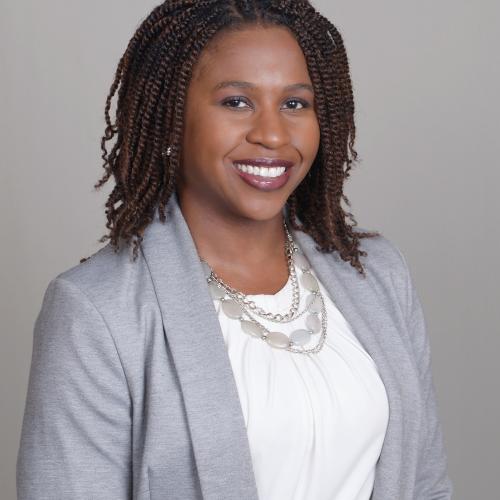
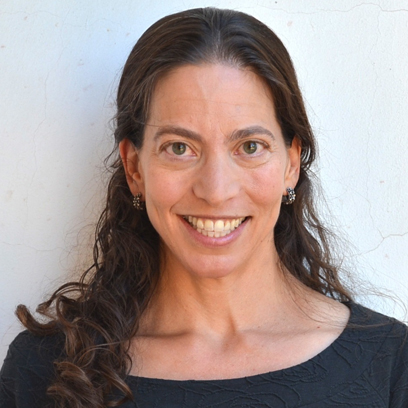
Celeste Malone, PhD, is an Associate Professor and Coordinator of the School Psychology Program at Howard University's School of Education. She holds a PhD in School Psychology from Temple University and postdoctoral training from Johns Hopkins University. Her research focuses on multicultural competence in school psychology, diversification of the profession, and culturally responsive practices. She leads the Multicultural School Psychology Research Group (MSPRG), developing tools like the School Psychology Multicultural Competence Scale. Dr. Malone has held leadership roles in NASP (2022–2023 President, first Black woman in the role) and APA, advocating for equity. She received presidential awards from NASP, APA Division 16, and others. Education: Brown University (BA Psychology), Johns Hopkins (MS Counseling), Temple University (PhD School Psychology) Research interests include bridging research-practice gaps, addressing microaggressions, and improving mental health access for marginalized youth. Notable contributions include frameworks for MTSS (Multi-Tiered Support Systems) in anti-racist schooling and pandemic-era advocacy for educational equity. Key awards: 2024 Outstanding Article Award (School Psychology Review), Jean Baker Mid-Career Service Award (APA) Her work emphasizes social justice through leadership development, policy advocacy, and anti-oppressive training. Current projects explore faculty diversity recruitment, LGBTQ+ competency in training, and liberatory mentoring practices.
Helen Martin is a Lecturer in the School of Education at the University of Aberdeen. She holds a BSc (Hons) in Mathematics from the University of St. Andrews, a PGDE(S) in Mathematics from the University of Edinburgh, and a PhD in Mathematics Education from the University of Aberdeen. Her research focuses on innovative pedagogical approaches, particularly in mathematics education, Indigenous education, Arctic pedagogy, and the integration of drama into teaching practices. She has collaborated with organizations like the Scottish Mathematical Challenge and Techfest Setpoint on initiatives such as Enterprising Maths Challenge and Royal Institution Maths Masterclass. Her work emphasizes culturally responsive teaching methods, the revitalization of minority languages (e.g., Scots and Sámi), and the intersection of education with healing and community engagement. Recent publications explore topics such as cognitive dissonance in Indigenous education, Sámi perspectives in leadership, and Arctic pedagogy through Scots language revitalization. She is also involved in editorial roles for the Education in the North journal, overseeing thematic issues on drama conventions, northern pedagogy, and vocational education. Her teaching responsibilities include courses on mathematics education for undergraduate and postgraduate programs (BEd and PGDE). She actively engages in educational collaborations, promoting inclusive and community-centered learning approaches. Her research often intersects with global educational challenges, addressing equity, cultural preservation, and the adaptation of teaching methods to diverse contexts.
Cindy Broholm is an Assistant Professor of Nursing at Long Island University's School of Nursing, where she has taught since 2012 in both graduate and undergraduate programs. Her courses include FNP Diagnosis and Management, Advance Health Assessment, and Primary Care. Clinically, she provides urgent care at Callen-Lorde Community Health Center specializing in LGBTQ+ health. Her educational credentials include: Doctor of Nursing Practice (DNP) candidate, Case Western Reserve University Master of Science in Family Nurse Practitioner (MS FNP) and Master of Public Health (MPH), Columbia University Bachelor of Science in Nursing (BSN), University of Massachusetts, Boston Dr. Broholm's research centers on eliminating health disparities through educational interventions targeting implicit bias in healthcare systems. Her work specifically addresses LGBTQ+ health equity, HIV prevention strategies, and culturally competent care for underserved populations. She develops curriculum tools to help nursing faculty address bias and promote diversity within academic institutions. Analysis of her 2018-2024 publications reveals consistent focus on three interconnected domains: (1) LGBTQ+ patient care preferences and gender-affirming practices, (2) implicit bias reduction in nursing education through structured activities, and (3) HIV prevention modalities including PrEP accessibility. Her work consistently bridges clinical practice with educational innovation, often featuring collaborative interdisciplinary authorship. Her professional recognition includes: Case Western Reserve University Alumni Award for 'outstanding clinical competence' (2022) Nomination as 'Rising Star of Research and Scholarship' by Case Western Reserve University (2021) Dr. Broholm founded and chaired NONPF's Diversity Special Interest Group to develop resources addressing health disparities and promoting faculty/student diversity. She serves on the National Minority Quality Forum's Scientific Advisory Board for the Cancer Stage Shifting Initiative and holds leadership roles in Sigma Theta Tau (Vice President of Omega Nu Chapter) and AANP. She collaborates with interdisciplinary teams at Callen-Lorde Community Health Center where she co-developed a post-graduate nurse practitioner fellowship program in LGBTQ+ health, working alongside physicians, public health specialists, and community advocates to create specialized clinical training pathways.
Chad Hoggan is a Professor in the Department of Educational Leadership, Policy, and Human Development at North Carolina State University's College of Education. He serves as Co-director of the Institute of Civic Studies and Learning for Democracy and holds editorial leadership roles as Co-editor of the Journal of Transformative Education and The Good Society: A Journal of Civic Studies , while also contributing as Consulting Editor for Adult Education Quarterly . Doctor of Education in Adult Learning & Leadership, Teachers College, Columbia University (2011) Master of Education in Adult Education, NC State University (2006) Bachelor of Science in Business Administration, Brigham Young University (1993) Hoggan's research centers on transformative learning theory and its applications in civic education, with particular focus on migration contexts. His work examines how transformative experiences reshape individuals' engagement with democratic societies, drawing from studies with refugees, military veterans, cancer survivors, and postsecondary students. Since 2019, he has conducted extensive research on migrant integration in Central and Eastern Europe following refugee influxes from Syria and Ukraine, collaborating with institutions in Germany and Italy while co-founding the Deutsch-Ukrainischer Dialog association to support Ukrainian refugees. His recent publications reveal a strong trajectory toward civic learning in democratic societies, with 2022-2025 works addressing epistemic crises in post-truth contexts, radicalization processes, and democratic infrastructure. The scholarship demonstrates consistent application of transformative learning frameworks to contemporary challenges in migration, political extremism, and democratic resilience, with increasing emphasis on practical applications for civic engagement. Cyril O. Houle Award for Outstanding Literature in Adult Education (2020) for Transformational Learning in Community Colleges International Adult & Continuing Education Hall of Fame induction NCSU College of Education Outstanding Global Engagement Award UNESCO Chair of Lifelong Learning Professional Education appointment (2021) Hoggan advises doctoral students in transformative learning theory and civic education while leading international collaborations through the Institute of Civic Studies. His work bridges academic research with community engagement, particularly through refugee support initiatives in Germany and Ukraine-focused educational projects. Current research examines democratic learning structures in migration societies and the ethical dimensions of transformative education in polarized political contexts.
Marissa Abram is an Assistant Professor in the School of Nursing at Duke University, holding this position since 2023. She earned her Ph.D. from Adelphi University in 2017 and maintains active external relationships with the International Nurses Society on Addictions (IntNSA) and Wake County HIV Clinic. Education: Ph.D., Adelphi University, 2017 Dr. Abram's research centers on psychiatric-mental health nursing with critical contributions to substance use disorder treatment, harm reduction frameworks, and innovative simulation-based education. Her work addresses urgent gaps in preparing mental health nurse practitioners for traumatic scenarios like patient suicide, developing nurse-led care models for substance use disorders, and combating stigma in addiction nursing. She demonstrates strong commitment to health equity through research examining racial justice in clinical training and intersecting vulnerabilities like climate impacts on rural substance users. Analysis of her 2023-2025 publications reveals three dominant trajectories: (1) Simulation methodology for interprofessional trauma-informed training, (2) Structural analysis of nursing's role in the national addiction crisis, and (3) Implementation science for nurse-led models of care. Her work consistently bridges clinical practice, education innovation, and policy advocacy with emphasis on vulnerable populations. Grants: Faculty Scholars Program 2025 Research (Principal Investigator), Josiah Macy, Jr. Foundation (2025-2027) Dr. Abram actively mentors through DNP projects (NURSING 975) and teaches advanced courses including NURSING 766 (Assessment and Management of Addictive Disorders). Her external partnerships with IntNSA and Wake County HIV Clinic demonstrate applied commitment to addiction nursing practice and HIV care integration. She contributes to professional discourse through editorial work with major nursing journals while advancing workforce development for behavioral health through interprofessional fellowship models.
Sharon L. Youmans is a Clinical Professor in the Department of Clinical Pharmacy at the University of California San Francisco (UCSF) School of Pharmacy , where she serves as Executive Vice Dean . She received her PharmD from UCSF in 1985 and MPH from San Jose State University in 2005. She oversees strategic priorities including DEI (Diversity, Equity, Inclusion) , global partnerships , PharmD program leadership , and pharmacy practice partnerships . PharmD, University of California San Francisco (1985) MPH, San Jose State University (2005) Licentiate in Pharmacy, California State Board of Pharmacy (1985) Her research focuses on pharmacy education administration , curriculum transformation , health communication , health disparities , and global health . She has led significant PharmD curriculum reform and telehealth education programs during the pandemic. Her work extends to LGBTQ+ healthcare education , counterfeit medication prevention , and international pharmacy education partnerships with institutions in Malawi and Tanzania. Recent publications highlight her 2023 study on academic pharmacy administration , 2021 PharmD curriculum innovation , and 2020 telehealth interventions for vulnerable populations. She has published extensively on pharmacy education , health disparities , and interprofessional training since 2003. 2023 ASHP-ABHP Joint Leadership Award 2016 Founder's Champion Award for DEI contributions 2013 APhA Fellowship 2008 AETNA African American History Calendar Profile 2005 Sam Radelfinger Award As Executive Vice Dean, she has shaped pharmacy education policy through roles on the Accreditation Council for Pharmacy Education (ACPE) , Xavier University's Health Disparities Advisory Board , and AACP Council of Deans . She teaches public health , pharmacist-patient communication , and cultural humility curricula.
Dr. Azadeh Block is an Associate Professor of Social Work at PennWest University, specializing in cultural humility, competence, and immigrant/refugee populations. She has held faculty positions at Slippery Rock University, University of Pittsburgh, and Youngstown State University, with a career rooted in mental health services research. Her research focuses on culturally grounded interventions for refugees, adolescent mental health treatment dynamics, and diversity education in social work. She collaborates with community partners in Southwestern Pennsylvania to advance social justice initiatives. Dr. Block's work spans disciplines including: Cultural Competence Refugee Integration Group Therapy Adolescent Mental Health Neurodevelopmental Studies
Christopher Raymond is a Professor of Sustainability Science at the University of Helsinki, where he is based at the Ecosystems and Environment Research Program within the Helsinki Institute of Sustainability Science (HELSUS). He is also affiliated with the Department of Economics at the University of Helsinki and leads the transdisciplinary Human-Nature Transformations Research Group. Raymond serves as Executive Director of the International Association of Society and Natural Resources and Director of the Enabling Multispecies Transitions of Cities and Regions (MUST) Strategic Research Council Project. His research group hosts over 15 researchers committed to "Transforming human-nature relationships for a just, healthy and sustainable future." PhD in Philosophy, University of South Australia (2012) BAppSc (Honours) in Environmental Management, University of South Australia (2005) Guest Professor, Swedish University of Agricultural Sciences (2019-2021) Professor Raymond's research focuses on conceptualizing and assessing the diverse values of nature and finding new ways to embed them into sustainability transformations. His work examines innovative approaches to represent and engage diverse communities (including other species) in nature-based solutions planning in urban areas. He has authored seminal works on Senses of place, socio-cultural valuation of Ecosystem services, and served as Coordinating Lead Author of the IPBES Values Assessment, where his team co-created "an inclusive typology of values for navigating Transformations towards a just and sustainable future." His research contributes significantly to urban and regional planning, biodiversity conservation, restoration planning, Sustainability science, and human geography. Raymond's recent publications demonstrate a strong focus on multispecies justice, urban nature-based solutions, and the integration of diverse values into sustainability governance. His work increasingly examines the temporal dimensions of urban green infrastructure, the role of listening in interdisciplinary scholarship, and the application of role-playing for justice awareness in educational contexts. A consistent theme across his recent work is the exploration of how to better incorporate relational values and justice considerations into environmental policy and planning, particularly in urban contexts where climate, biodiversity, and human health intersect. World's Most Cited Scholar (2019) World's Most Cited Scholar (2020) Professor Raymond serves as Supervisor in the Doctoral Programme in Interdisciplinary Environmental Sciences and has supervised Master's theses for students including Juulia Lehtinen and Anna Ahdekivi. His research is supported by numerous grants including GREEN TALENT (2025-2029), GoGreenNext (2024-2028), MUST (2023-2026), and CO CARBON (2023-2026) projects. These projects focus on urban sustainability transitions, carbon sequestration in urban green infrastructure, and multispecies justice in nature-based solutions. Raymond leads the Human-Nature Transformations Research Group, which actively engages in the Helsinki Institute of Sustainability Science (HELSUS) and carries out research through collaborative projects including MUST, Transformative Cities, RECONNECT, GO GREEN NEXT, GREEN TALENT and SusTra Doctoral Pilot. The group utilizes acoustic recorders for long-term socio-ecological monitoring across Finland as part of their research infrastructure.
Sarah Bratt is an Assistant Professor at the University of Arizona College of Information Science (InfoSci), focusing on Digital Curation & Preservation. Her research explores scholarly communication, research data management, and the science of science, aiming to advance long-term data sustainability and actionable science policy. BS in Philosophy from Ithaca College MS in Library and Information Science with a Data Science certificate from Syracuse University Her work addresses practices, metrics, and infrastructures for data-intensive science, including international collaborations and AI applications in libraries. Recent projects analyze GenBank metadata, dataset co-authorship, and software use in computational biology. She has presented at ASIS&T, 4S, ICSSI, and NetSci conferences. Masters’ prize in Library & Information Science at Syracuse University 2022 Better Scientific Software (BSSw) Fellow honorable mention Bratt collaborates with institutions like UIUC, University of Tennessee, and Metadata Lab @Syracuse University. She co-supervises students with Dr. Cristian Román-Palacios and leads the Metadata Analytics Lab at UA.
Professor Rosalind Love is the Elrington and Bosworth Professor of Anglo-Saxon at the University of Cambridge, affiliated with the Department of Anglo-Saxon, Norse, and Celtic (ASNC) under the Faculty of English. She serves as a Fellow of Robinson College and holds leadership roles including Head of Department (since 2023) and Deputy Warden of Robinson College (from 2024). Her teaching focuses on Insular Latin language/literature, textual criticism, and graduate supervision in Insular Latin and Old English literature. Research Interests : Specializing in Insular Latin literature, particularly hagiography from the 10th-11th centuries, Bede's biblical commentaries, and glossed manuscripts. Key projects include the Leverhulme-funded Latin Arthurian Literature and the Rise of Fiction (2019-2023) and collaborative work on Boethius commentaries. Her editorial leadership spans the Oxford Medieval Texts and Early Medieval England and its Neighbours . Scientific Awards & Roles : Principal Investigator for Leverhulme-funded Latin Arthurian Literature project Co-Investigator for Boethius in Early Medieval Europe General Editor of Oxford Medieval Texts Executive Editor of Anglo-Saxon England Council Member of the Henry Bradshaw Society Academic Contributions : Her publications examine Insular Latin sources, Bede's influence, and classical reception in medieval England. Recent work explores saints of Kent, Boethius glosses at Canterbury, and the evolution of hagiographic humility tropes. She contributes to databases like Fontes Anglo-Saxonici and collaborates on manuscript studies.
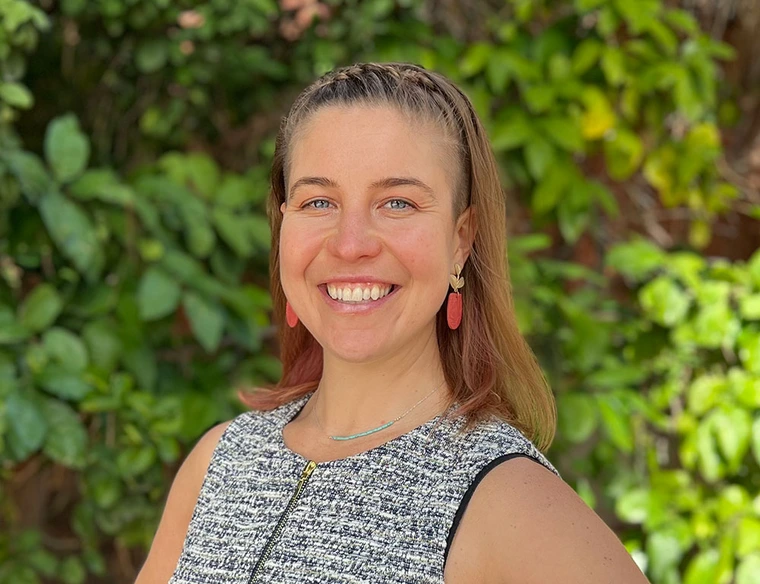
Michele Tilstra is the founding Program Director of the Doctor of Occupational Therapy Program at the University of Western States. She holds a PhD in Health Science (2023), a post-professional Occupational Therapy Doctorate (2018), and a Bachelor of Science in Occupational Therapy (1995). Licensed in Ohio and Oregon, she has 30+ years of clinical experience across diverse settings including hand therapy, mental health, acute care, and community outreach. PhD in Health Science, Youngstown State University (2023) Post-Professional OTD, Rocky Mountain University (2018) Bachelor of Science in Occupational Therapy, Louisiana State University (1995) Her research focuses on mental health across the lifespan, emphasizing trauma-informed care, student mental wellness, cultural competence with humility, and interprofessional education. She has co-developed the COPE in the Community Program, funded by a $1.9 million HRSA grant, and conducted studies on employability skills frameworks and technology-driven interventions for older adults. Scientific awards include the HRSA BHWET Professional Track Grant. She has taught continuing education courses nationally and served on the American Occupational Therapy Association’s Academic Leadership Council and Mental Health Specialty Interest Section. Tilstra is also active in community initiatives, including volunteer work at Living Water Church and interprofessional collaboration projects.
Suzanne C. Hopf is a Senior Lecturer and Course Director for the Master of Speech Pathology at Charles Sturt University, Australia, within the School of Allied Health, Exercise and Sports Sciences. Based in Nadi, Fiji as an Australian-Fijian citizen, she leads the blended online Master of Speech Pathology program and serves as Discipline Lead for Speech Pathology. Her work bridges academic leadership with on-ground clinical innovation in Pacific Islander communities. Her educational background includes: BAppSc (Speech Pathology) Hons Cert TESOL AdCert TEYL GradCertLTHE (Graduate Certificate in Learning and Teaching in Higher Education) PhD in 'Supporting Fijian children's communication' Dr. Hopf's research centers on equity in communication disability services, examining how individual, community, and societal factors create barriers and facilitators in underserved regions. She developed the Communication Capacity Research and Culturally Responsive Teamwork frameworks to guide evidence-informed, culturally responsive service development. Current projects focus on Fijian children's oral/written communication acquisition and culturally appropriate pre-school interventions, with strong emphasis on Pacific Islander contexts and multilingual populations. Her work directly contributes to UN Sustainable Development Goals for health equity and quality education. Analysis of her recent publications reveals consistent thematic focus on culturally responsive practice across 111 research outputs, with accelerating productivity (21 publications in 2024). Key trends include innovative arts-based methodologies for child voice research, decolonizing clinical frameworks, and virtual work-integrated learning models addressing global workforce shortages. The research demonstrates strong interdisciplinary connections across speech pathology, early childhood education, and Pacific Islander health equity. Scientific recognition includes: 2021 Charles Sturt Executive Dean’s Teaching Award for blended online Master of Speech Pathology 2021 Staff Excellence Award: Successful Graduates 2022 Research Excellence Through Partnership Award 2023 Excellence Awards: Research (Early Childhood Interdisciplinary Research group) 2023 Excellence Awards: Social Responsibility (Highly Commended) As an educator and supervisor, Dr. Hopf has guided PhD and Honours students to timely completion while fostering collaborative publication opportunities. Her student-centered approach maximizes engagement through innovative learning spaces, recognized through departmental teaching awards. Current grants support Fijian communication capacity building and virtual study abroad placements, with active partnerships including the Frank Hilton Organisation's Technical Governance Team. Dr. Hopf co-leads the Children's Voices Centre and Social Equality Intersectionality & Inclusion Research Group, while contributing to the Early Childhood Interdisciplinary Research group. Her Pacific-focused work involves community co-design through initiatives like the Fiji National Consultation on Assistive Technology, ensuring research directly addresses local needs while building sustainable service capacity.
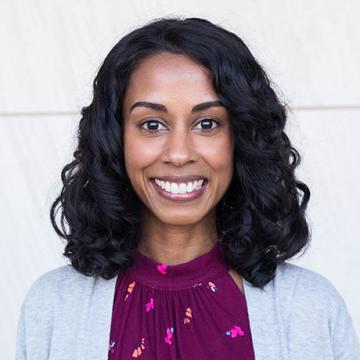
Urshila Sriram is an Assistant Professor in the Department of Nutrition at Simmons University, specializing in community-based programs for nutrition and health equity. She holds a PhD in Nutritional Sciences and an MSPH in Human Nutrition from Cornell University and Johns Hopkins School of Public Health, respectively. Education: PhD in Nutritional Sciences (Cornell), MSPH in Human Nutrition (Johns Hopkins), BS in Biochemistry (McGill) Her research focuses on nutrition and health equity , community-based interventions , and food security . She emphasizes cultural humility and structural inequities in dietetics practice. Her work includes evaluating civic engagement programs for rural health promotion and developing NIH-funded health intervention measures. Dr. Sriram’s teaching philosophy prioritizes experiential learning and student-centered growth . Courses taught include NUTR 452 (Program Planning), NUTR 490 (Nutrition Research), and LCIS 201 (Health Promotion). She mentors students in nutrition equity and policy. Community engagement highlights: Co-Chair for Food Is Medicine Massachusetts , co-advisor for Simmons Nutrition Diversity Mentorship Program, and member of Diversify Dietetics Mentorship Program . She advocates for health equity through civic action and curriculum innovation.
Jessica Goodkind is a Professor and Associate Chair in the Department of Sociology at the University of New Mexico (UNM). Her research focuses on the mental health of refugees and immigrants, particularly addressing social determinants of health, community-based interventions, and cultural competency. She leads the Refugee & Immigrant Well-Being Project (RIWP), a research and community engagement initiative. Education: PhD in Community Psychology from Michigan State University (2002). Community Roles: Co-Director of DEI Curricular Development for UNM School of Medicine, Board Member of United Voices for Newcomer Rights. Research Interests: Sociology of Health and Medicine Race, Ethnicity, and Gender Community-Based Participatory Research Refugee and Immigrant Mental Health Advising & Engagement: Advises resettlement agencies on policy and practice, develops culturally effective healthcare curricula, and collaborates with tribal communities in New Mexico. Recent work includes interventions targeting post-migration stressors and systemic inequities affecting mental health. Labs/Teams: Directs the Refugee & Immigrant Well-Being Project (RIWP), fostering transdisciplinary partnerships to improve newcomer integration and healthcare access.
Cassandra Boness is an Assistant Professor in the Department of Psychology at the University of New Mexico (UNM), specializing in Clinical Psychology and Diversity and Health Data Science Across the Lifespan . She leads the Boness Addictions Lab (BAL), a research team within UNM's Center on Alcohol, Substance use, and Addictions (CASAA), focusing on substance use disorders, harm reduction, and psychometric assessment development. Licensed clinical psychologist with expertise in alcohol use disorders NIH-funded research on community-engaged measure development Principal investigator for NIH and PCORI studies Research Interests Cassandra Boness investigates the etiologic and maintenance mechanisms of addiction, emphasizing person-centered approaches and harm reduction strategies. Her work combines psychometrics, mixed methods, and community-academic partnerships to improve treatment outcomes for substance use disorders, particularly alcohol-related conditions. Current projects include: Reforming Alcohol Use Disorder Assessment (RAUDA) - NIH-funded program to refine diagnostic tools Research Engagement and Activities in Collaborative Teams (REACT) - PCORI-funded community-partnered measure development Stigma & Harm Reduction - structural interventions to combat substance-related discrimination Scientific Awards Recipient of a National Institute on Alcohol Abuse and Alcoholism (NIAAA) career development award to support her research on evidence-based assessment of substance use disorders. Education & Mentorship Actively mentors graduate students in clinical psychology, advising on mixed-methods research, motivational interviewing, and empirically supported treatments. Leads the BAL team in collaborative projects with community partners like Jack Rothermich.