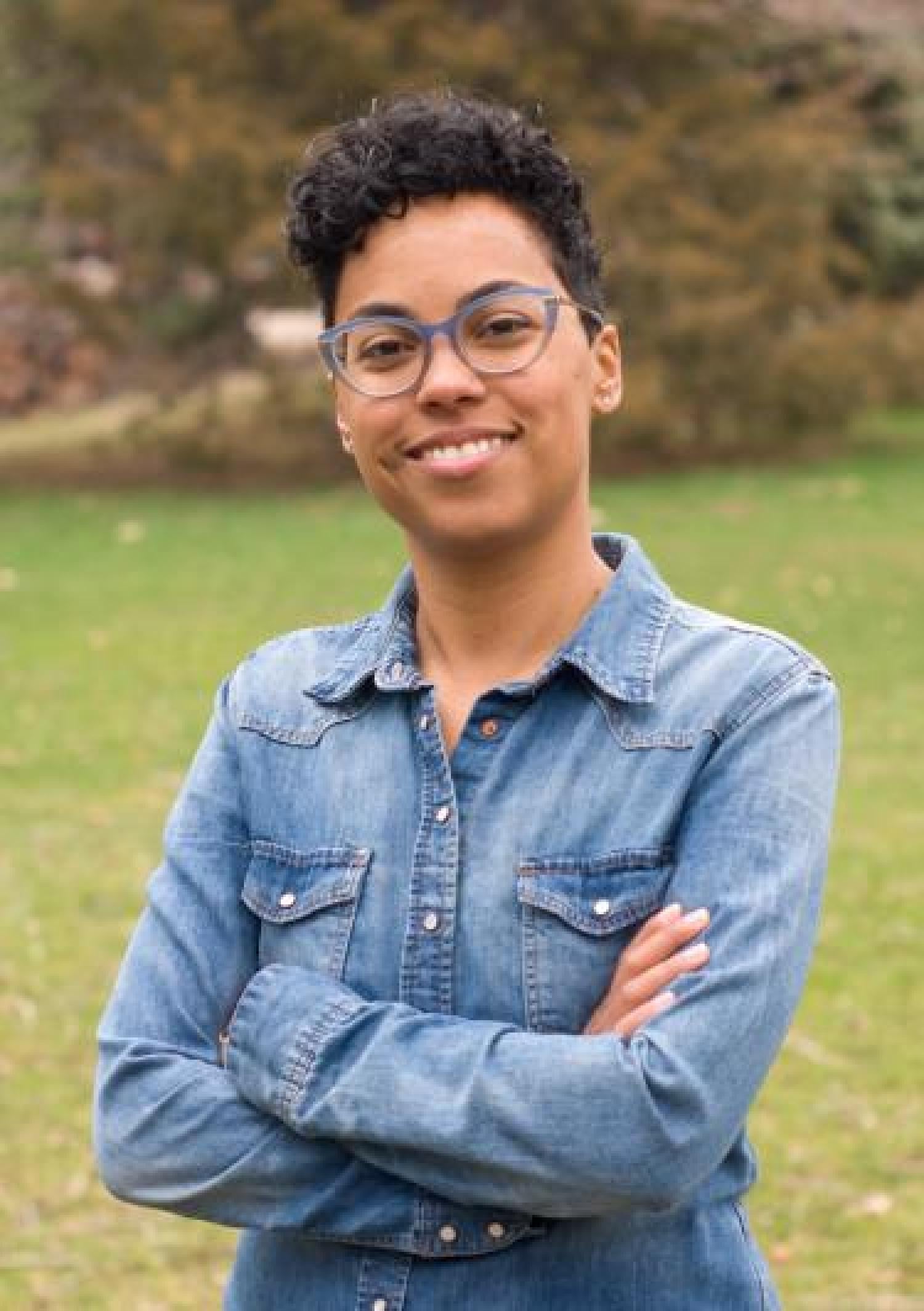
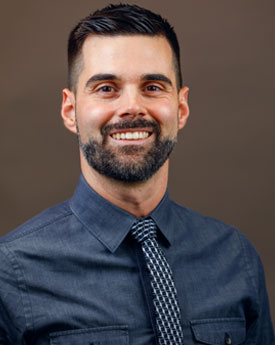
Kristie Soares is an Assistant Professor in Women and Gender Studies, focusing on feminist media, queer theory, and Caribbean cultural critique. Her work explores intersections of race, gender, and affect in Latinx and diasporic communities. Academic Rank: Assistant Professor Department: Women and Gender Studies Her research spans antiracist pedagogy , speculative aesthetics , and decolonial epistemologies , often analyzing media, literature, and historical movements through feminist and queer lenses. The 15 most recent publications highlight themes like joy as resistance , Caribbean futurism , and queer diaspora across disciplines including media studies and critical theory.
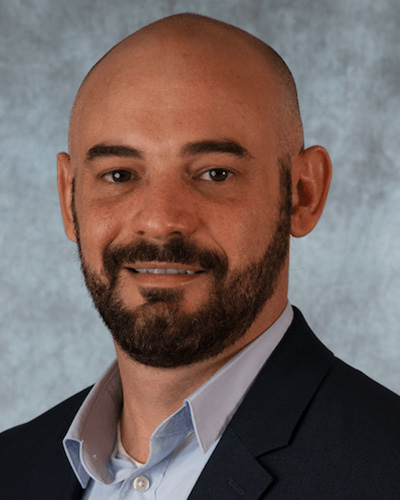
Jorge Felipe-Gonzalez is an Assistant Professor in the Department of History at the University of Texas at San Antonio. He earned a B.A. (Magna Cum Laude) in History from the University of Havana and a Ph.D. in History from Michigan State University. His research focuses on 18th-19th century Caribbean and Cuban history, the transatlantic slave trade, digital humanities, and Afro-Latin American history. His book project explores Cuba's role in the post-abolition slave trade through multilingual archival research. Recent publications highlight his work on transatlantic networks, slave trade databases, and connections between African kingdoms and Caribbean slavery. He has received prestigious awards such as the Du Bois Research Institute Fellowships at Harvard and the Ralph Lee Woodward Jr. Prize. He has taught courses on U.S./Latin American relations, slavery in the digital age, and Cuban history. Current projects include developing a Trans-Pacific Slave Trade database with an Australian Research Council grant.
Dr. Amelia Kiddle is a Professor of Latin American history in the Department of History at the Faculty of Arts, University of Calgary. She also serves as Associate Dean, Research and Communities for the Faculty of Arts and is Editor In Chief of the Canadian Journal of Latin American and Caribbean Studies. Dr. Kiddle's educational background includes: Doctor of Philosophy in History, University of Arizona (2010) M.A. in Social Sciences, University of Chicago (2003) B.A. in International Relations and Ibero-American Studies, University of Toronto (2001) Dr. Kiddle specializes in the political and cultural history of Mexican foreign relations, with particular focus on the Cárdenas era, Mexican oil expropriation of 1938, and resource nationalism in Latin America. Her research explores the intersections of diplomacy, gender, cultural representation, and energy politics in 20th century Latin America. She has developed significant expertise in how Mexico positioned itself internationally during periods of revolutionary change and resource nationalism. Her extensive publication record reveals consistent themes in Latin American diplomatic history, with particular attention to Mexico's international relations during the 20th century. Her work spans diplomatic history, cultural studies, gender studies, and energy history, demonstrating interdisciplinary approaches to understanding Latin America's place in the world. Dr. Kiddle has received numerous prestigious awards: Great Supervisor Award (2020) Annual Fellow, Calgary Institute for the Humanities (2017) Killam SSHRC Emerging Research Leader Award (2014) Andrew W. Mellon Postdoctoral Fellowship (2010) Premio Genaro Estrada (2010) As an educator and mentor, Dr. Kiddle supervises undergraduate and graduate students in Latin American history at the University of Calgary. She has secured significant research funding, including an Insight Grant from the Social Science and Humanities Research Council of Canada for her work on 'The Mexican Oil Expropriation of 1938 and the Roots of Resource Nationalism in Latin America.' She spent 2017-2018 as a fellow at the Calgary Institute for the Humanities working on this project. Dr. Kiddle is actively involved in academic community building through her editorship of the Canadian Journal of Latin American and Caribbean Studies and her organization of scholarly events, including a SSHRC-supported conference that led to her edited volume 'Energy in the Americas: Critical Reflections on Energy and History' (2021).
Gabriel Solomons is a Senior Lecturer in Graphic Design at the Faculty of Arts, Creative Industries, and Education at the University of the West of England (UWE Bristol). He maintains an active dual career as both an academic and practicing graphic designer with expertise in editorial production management, art direction, and design. His research interests span multiple areas of design and media: Graphic Design Editorial Design Typography Publishing Design Education Poster Design Architecture and Media Cinetourism Solomons has developed numerous trade and academic publications covering film, design, fandom, and fashion, with a focus on collaborative practice and the societal influence of creativity. He previously served as innovation manager and book series editor at Intellect, a UK-based publisher specializing in creative practice and popular culture (2011-2016), where he edited and art-directed the 'World Film Locations' book series and 'Fan Phenomena' series. He is chief editor of The Big Picture magazine, which explores film in a wider context, and writes extensively on film, design, material culture, and architecture for international publications. Professionally, he is a member of the Education team and judging panel for the International Society of Typographic Designers (ISTD), an education member of Design & Art Direction (D&AD), and serves as an external examiner at Ravensbourne (UCL, London). His publication record demonstrates expertise across typography, film locations, and cultural studies, with recent work focusing on family monograms, Hollywood architecture, design education reform, and street fashion in Havana. Solomons has over 20 years of experience in editorial production management, contract publishing, and project facilitation, working with clients including Sky Television, The V&A, MTV, California Tourism, and others.
Dr. Michelle Rutty is an Assistant Professor at the University of Waterloo , where she holds a Canada Research Chair (Tier 2) in Tourism, Environment, and Sustainability . Her research focuses on tourist behavioral responses to environmental change, climatic risks to tourism, and opportunities for sustainable practices in a warming world. As Director of the deTOUR Lab , she employs virtual reality to study climate-induced environmental changes (e.g., natural disasters, glacier retreat) and their impacts on global tourism. Her work spans mountain, coastal, and winter tourism, integrating climatology, geography, and policy analysis. Key research areas include: Behavioral adaptation in tourism Climate change and recreational activity Virtual reality applications Weather-tourism relationships Climate risk management Publication trends show interdisciplinary focus on climate change impacts, with emphasis on winter tourism, coastal destinations, and stakeholder adaptation. Recent work examines athlete activism, Olympic Winter Games sustainability, and climate indices for tourism forecasting. Scientific awards include recognition from: Travel and Tourism Research Association World Meteorological Organization International Center for Research and Education in Tourism World Tourism Forum She is a contributing author to the IPCC Sixth Assessment Report (North American chapter) and co-chair of the International Society of Biometeorology Commission on Climate, Tourism and Recreation . Graduate students interested in sustainable tourism and VR technologies are encouraged to apply.
Darlene Weston is an Associate Professor in the Department of Anthropology at the University of British Columbia, serving as Chair of the Undergraduate Studies Committee. She specializes in biological anthropology, osteoarchaeology, and paleopathology, focusing on interpreting health and disease through human remains analysis. Her research spans geographic regions including Canada, Europe, and the Caribbean, with particular attention to lifeways, deathways, and Indigenous repatriation efforts. Education: She holds a Ph.D. from University College London (UK), an M.Sc. from the University of Bradford (UK), and a B.A. from Simon Fraser University (Canada). Before joining UBC in 2010, she held roles at institutions including the Max Planck Institute, Durham University, and Leiden University, where she developed an undergraduate program in Human Osteoarchaeology. Research Interests: Her work integrates bio-cultural analysis of health, infectious disease, and stress indicators in skeletal remains. She collaborates with First Nations communities on repatriation and osteobiographies. Key themes include funerary archaeology, archaeothanatology, and the impact of colonialism on Caribbean societies. Awards: Recipient of the National Award for Scientific Investigation (shared) for collaborative work on El Chorro de Maíta, Cuba, highlighting archaeological and anthropological contributions to Caribbean studies. Advising & Grants: Supervises graduate students in biological anthropology and osteoarchaeology. Notable advisees include Madeleine Lamer (PhD) and Claire Thorimbert (MA). Her research has been published in journals such as PLOS ONE , BMC Evolutionary Biology , and Journal of Human Evolution . Labs/Teams: Active in interdisciplinary projects, including collaborations with the Biological Anthropology Research Centre (BARC) and the Max Planck Institute. Engages in community-based initiatives focused on Indigenous rights and cultural heritage preservation.
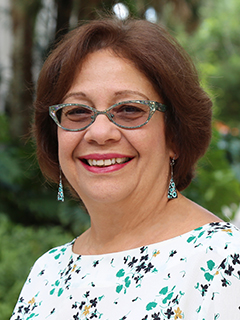
Lillian Manzor is a Professor and Associate Chair in the Department of Modern Languages & Literatures at the University of Miami's College of Arts and Sciences. She also serves as Faculty Director of UParis. Her academic work focuses on US Cuban theater and performance studies, with particular attention to identity formation, transculturation, and the Cuban diaspora experience. Her research interests include: US Cuban Theater and Performance Studies Cuban Diaspora and Migration Studies Transculturation and Identity Formation Theater Documentation and Digital Archives Latin American and Hispanic Literature Critical Multiculturalism in Performance Professor Manzor's scholarly trajectory demonstrates consistent engagement with US Cuban theatrical productions from the 1980s and 1990s, examining how performances navigate complex identity politics between Cuba and the United States. Her recent publications explore evolving landscapes of Latine theater in Miami and Florida, with particular attention to historical connections from cigar factory workers to contemporary Pulitzer Prize-winning playwrights. She has developed the Cuban Theater Digital Archive, a significant multimodal resource that preserves and makes accessible Cuban theatrical materials that were previously little known outside the island. Her notable publications include the critically acclaimed book "Marginality Beyond Return: US Cuban Performances in the 1980s And 1990s" (2022), which provides a comprehensive historical and cultural analysis of US Cuban theater development beyond simplistic exile narratives. Through her work, Professor Manzor challenges essentialist frameworks of Cuban-American identity, instead highlighting hybrid, heterogeneous identities that emerge through performance. Professor Manzor's contributions bridge academic research with practical documentation efforts, particularly through her leadership of the Cuban Theater Digital Archive, which serves as both a research repository and teaching resource for scholars worldwide. Her work has been instrumental in documenting theatrical productions that have often been overlooked in mainstream narratives about Cuban exile culture, revealing how these performances create "networks of proximity" that challenge conventional understandings of Cuban-American relations.
Dr. Robert M. Ceresa is an Associate Professor of Political Science at Huston-Tillotson University, where he has taught since 2013. His research explores political development, community engagement, and ethnic politics through a multidisciplinary lens. Education: Ph.D. in International Relations, Florida International University M.A. in Public Affairs, University of Minnesota (Hubert H. Humphrey Institute) B.A., University of Michigan Ceresa positions himself as a political anthropologist, examining how local communities influence broader cultural and political environments, with a focus on racial/ethnic identity and diaspora politics. His professional experience spans community organization and education in cities such as Chicago, Miami, Omaha, and Pine Bluff. A book link provided suggests deeper exploration into his research on Cuban diaspora groups in the U.S. ( The Miami Paradox ).
Dr. Analays Alvarez Hernandez is a postdoctoral fellow in the Department of Art at the University of Toronto , where she has conducted research on commemorative public art, diasporic memory, and multicultural heritage. She holds a PhD in Art History from UQAM (2015) and a BA from the University of Havana (2005). Her academic work bridges art history, urban studies, and memory politics, with a focus on Canada and France. Education: Bachelor of Art History, University of Havana (2005) Master of Art Studies, UQAM (2010) PhD in Art History, UQAM (2015) Her research centers on commemorative public art , particularly monuments erected by ethno-cultural communities in multicultural cities. She investigates how diasporic groups use public art to assert identity, memory, and belonging—especially in the context of contested histories like the Armenian genocide. Her work critically examines policies in Toronto, Montreal, and Vancouver, highlighting tensions between national unity and transnational memory. She also explores digital commemoration, such as Facebook memorials, and the impact of digital art on urban public space. Her recent publications reveal a strong thematic trend in monumental controversies , transnational memory , and inclusive representation in public art. She frequently analyzes case studies from Montreal, Toronto, Lyon, and Marseille, using theoretical frameworks from Pierre Nora, Nathalie Heinich, and Alfred Gell. Dr. Alvarez Hernandez is an active contributor to academic discourse, having organized conference sessions and published extensively in journals and edited volumes. She has also worked as an independent curator , organizing exhibitions in Montreal and Havana since 2003. Scientific Contributions: Coined the term "ethno-cultural monuments" Developed a registry of over 80 such monuments in Canadian cities Authored influential studies on Armenian genocide memorials in France Advocated for revised commemorative practices in public art policy She has held curatorial roles at the National Museum of Fine Arts of Havana and L’Artothèque in Montreal. While no formal advising or grant details are listed, her research was supported by an FRQ-SC postdoctoral fellowship. Labs and Teams: While no formal lab is mentioned, her work is collaborative, involving institutions like Culture Montréal and academic networks in Canada and Europe.
Dr. Horacio Sierra is a Professor of English in the College of Arts & Sciences at Bowie State University. He earned a B.S. in Communication from the University of Miami and a Ph.D. in English from the University of Florida. His research spans Renaissance literature and culture , Shakespeare , Hispanic literature and culture , gender and sexuality , popular culture , and journalism . He has published extensively in journals like Comparative Drama , The Sixteenth Century Journal , and Women's Studies , and authored the book Sanctified Subversives: Nuns in Early Modern English and Spanish Literature (2016). The 15 most recent publications highlight his work in Shakespearean adaptations , feminist interpretations , Hispanic cultural analysis , and digital humanities , often intersecting gender , religion , and transatlantic studies . Scientific awards include the 2023 President Biden Appointment to the President's Committee on the Arts and Humanities, the 2022 Japan-U.S. Friendship Committee Grant , and multiple teaching excellence awards. Dr. Sierra serves as Editor of the College English Association's Mid-Atlantic Review and has advised student organizations like Sigma Tau Delta and the Hispanic Student Association . He has received research grants from the NEH , University System of Maryland , and MSI Research Grant .
Delia Solomons is an Associate Professor and Program Director of Art History at Drexel University’s Westphal College of Media Arts & Design. Her research examines intersections between exhibition practices, Cold War politics, transnational exchange, and visual culture across the U.S. and Latin America in the 20th and 21st centuries. She has authored significant works including her 2023 book Cold War in the White Cube , which analyzes U.S. institutional exhibitions of Latin American art during inter-American tensions. PhD, MA, and BA in Art History (Institute of Fine Arts, NYU/Washington University in St. Louis) Solomons’ research explores themes like monument critique , gendered visual narratives , and U.S.-Latin American cultural diplomacy , with a focus on artists such as Marisol. She investigates how art constructs national and transnational imaginaries during periods of political upheaval, including the Cuban Revolution and Alliance for Progress. Her recent publications span analyses of Marisol’s sculpture The Generals , Cold War-era collecting practices at MoMA, and co-edited journals on gun representation in American visual culture. Awards include grants from the Kress Foundation and the Institute for Studies on Latin American Art . At Drexel, she teaches courses on Contemporary Art , Latin American Art , and Art and Revolution , while developing a new class on Global Pop Art .
Alan Dye is a Professor of Economics at Barnard College, Columbia University, where he has held a faculty position since 1995. His academic expertise centers on the economic history of Latin America and the Caribbean, with specialized focus on institutional economics and political economy. He has enriched his scholarly profile through visiting appointments at Yale University, the University of Michigan, and the Universidad de Carlos III de Madrid, demonstrating international academic engagement. His educational foundation includes a B.A. from Texas Tech University and a Ph.D. from the University of Illinois, providing rigorous training for his research in historical economic analysis. Professor Dye's research interrogates the complex interplay between economic institutions and historical development in Latin America, particularly Cuba. He investigates how trade protection mechanisms, imperialist policies, and sugar industry dynamics shaped socioeconomic trajectories. His methodological approach combines economic theory with deep historical contextualization, examining contractual arrangements, institutional change, and U.S.-Cuban political economy. This scholarly focus directly informs his teaching of economic history courses covering Latin America, Western Europe, and institutional economics applications to organizational behavior and innovation. Analysis of his publication record from 1994-2009 reveals a concentrated scholarly trajectory centered on Cuban economic history, predominantly through the lens of the sugar industry. His work systematically examines U.S. trade policy impacts, international sugar agreements, and technological change within colonial and post-colonial frameworks. Key contributions include studies on asset specificity, cane contracting systems, and the political economy of pre-revolutionary U.S.-Cuba relations, demonstrating consistent application of economic theory to historical case studies for understanding long-term development patterns. Scientific Awards: No awards, fellowships, or medals are documented in the available information. Advising and Grants: The source material provides no details regarding graduate student supervision, doctoral committees, or research grant acquisitions. His academic responsibilities likely include student mentorship, but specific advisees or funded projects are not referenced. Labs and Teams: There is no indication of Professor Dye leading or participating in dedicated research laboratories, interdisciplinary centers, or collaborative research teams within the provided documentation.
Oliver Hahl is an Associate Professor of Organization Theory, Strategy and Entrepreneurship at the Tepper School of Business, Carnegie Mellon University . He serves as Associate Dean, Undergraduate Programs and Director, International Partnerships . His research bridges economic sociology, organizational theory, and strategic management, focusing on how perceptions of authenticity, status, and commitment shape market behavior. Education : PhD in Management (MIT Sloan), MBA (Yale), BS in Economics (Wharton, University of Pennsylvania) His work explores authenticity paradoxes in organizational expansion, gendered assumptions in hiring , and knowledge transfer mechanisms in firms. He has taught core and elective courses across BBA, MBA, and PhD programs, including international management and innovation strategy. Recent publications address ingroup bias in regulatory compliance , traditional practices in modern markets , and partisan moral flexibility . His research has appeared in top journals like Organization Science and Administrative Science Quarterly . Scientific Awards : Frank A. and Helen E. Risch Faculty Development Professorship MIT Sloan Research Fellowships He advises PhD students in organizational behavior and macro OB, with prior roles as OBT Group Head of the PhD Program . His work connects with labor market dynamics, political sociology, and cultural economics through interdisciplinary approaches.
Dr. Kerstin Oloff is an Associate Professor in the School of Modern Languages and Cultures at Durham University, specializing in postcolonial studies, environmental humanities, and feminist theory within Latin American and Caribbean contexts. She has authored Ecology of the Zombie (2023) and co-edited volumes such as World-Ecology and the Global Food System (2021). Her research bridges Gothic aesthetics, eco-criticism, and socio-political critique, focusing on works from Mexico, the Caribbean, and the U.S. Dr. Oloff has organized interdisciplinary events including the 'Ecologies and the Arts' research group (since 2014), the 'World-Ecology Network' conference (2016), and currently directs the Centre for Culture and Ecology. Her work addresses themes like energy humanities, anti-extractivism, and the intersection of gender with ecological crises. She teaches courses on Caribbean ecocriticism, Cuban cinema, and postcolonial debates. Her publications span peer-reviewed journals ( Journal of Postcolonial Writing , Green Letters ), edited collections, and book reviews. She frequently engages with speculative fiction and Gothic traditions to explore socio-ecological degradation and global systems of power.
Andrew Zimbalist is the Robert A. Woods Professor of Economics at Smith College and member of the Five College Graduate Faculty. He received his B.A. from University of Wisconsin-Madison (1969), and M.A./Ph.D. from Harvard University (1972/1974). His visiting appointments include Hamburg University, Doshisha University, and University of Geneva. Research interests focus on sports economics, economic development, and Latin American political economy. His work examines stadium financing impacts, Olympic economics, college sports reform, and Cuban economic policy, combining empirical analysis with policy evaluation. Recent publications explore athlete compensation models and mega-event economic sustainability. Honors include: America's Top 100 Influential Sports Educators Frank Press Public Service Award Who's Who in America Presidency of the Drake Group Extensive consulting includes testimony before U.S. Senate committees, work with MLB/NFL/NBA organizations, and contributions to documentary films. Leads projects on Title IX compliance and sports antitrust cases while serving on editorial boards for multiple academic journals.