معرفی
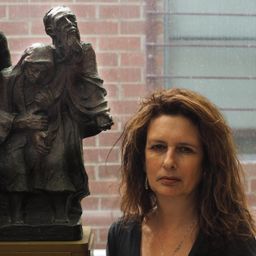
Dr. Analays Alvarez Hernandez is a postdoctoral fellow in the Department of Art at the University of Toronto, where she has conducted research on commemorative public art, diasporic memory, and multicultural heritage. She holds a PhD in Art History from UQAM (2015) and a BA from the University of Havana (2005). Her academic work bridges art history, urban studies, and memory politics, with a focus on Canada and France.
- Education:
- Bachelor of Art History, University of Havana (2005)
- Master of Art Studies, UQAM (2010)
- PhD in Art History, UQAM (2015)
Her research centers on commemorative public art, particularly monuments erected by ethno-cultural communities in multicultural cities. She investigates how diasporic groups use public art to assert identity, memory, and belonging—especially in the context of contested histories like the Armenian genocide. Her work critically examines policies in Toronto, Montreal, and Vancouver, highlighting tensions between national unity and transnational memory. She also explores digital commemoration, such as Facebook memorials, and the impact of digital art on urban public space.
Her recent publications reveal a strong thematic trend in monumental controversies, transnational memory, and inclusive representation in public art. She frequently analyzes case studies from Montreal, Toronto, Lyon, and Marseille, using theoretical frameworks from Pierre Nora, Nathalie Heinich, and Alfred Gell.
Dr. Alvarez Hernandez is an active contributor to academic discourse, having organized conference sessions and published extensively in journals and edited volumes. She has also worked as an independent curator, organizing exhibitions in Montreal and Havana since 2003.
Scientific Contributions:
- Coined the term "ethno-cultural monuments"
- Developed a registry of over 80 such monuments in Canadian cities
- Authored influential studies on Armenian genocide memorials in France
- Advocated for revised commemorative practices in public art policy
She has held curatorial roles at the National Museum of Fine Arts of Havana and L’Artothèque in Montreal. While no formal advising or grant details are listed, her research was supported by an FRQ-SC postdoctoral fellowship.
Labs and Teams: While no formal lab is mentioned, her work is collaborative, involving institutions like Culture Montréal and academic networks in Canada and Europe.
حوزههای پژوهشی