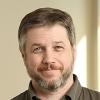
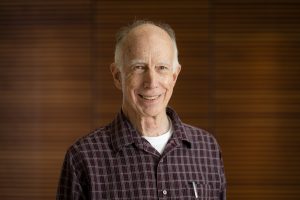
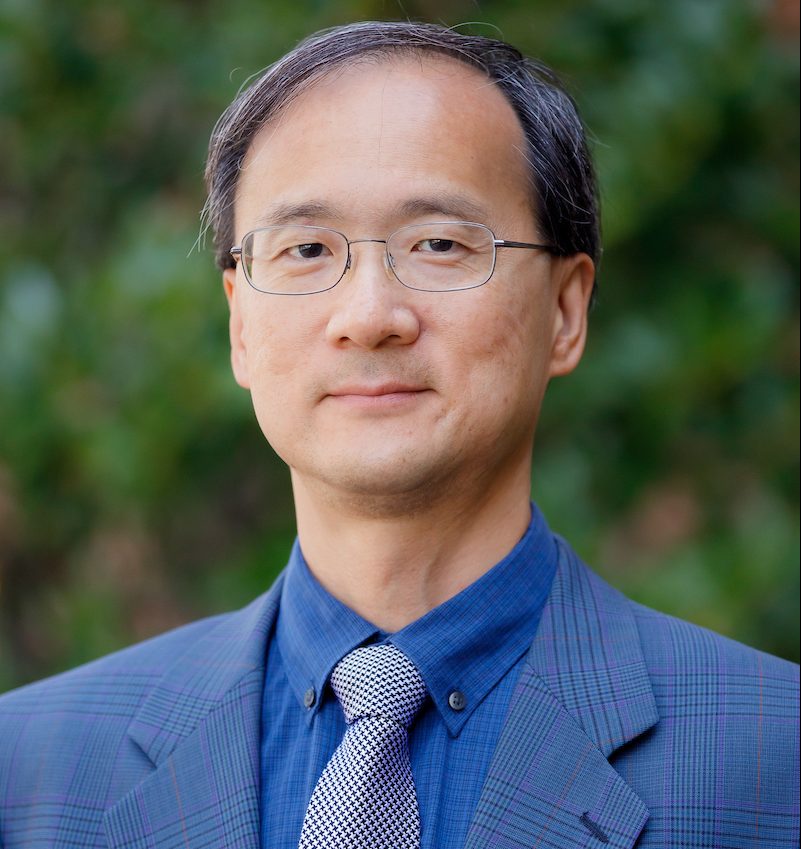
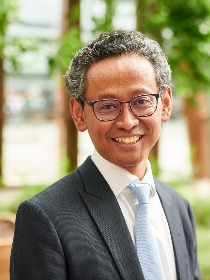
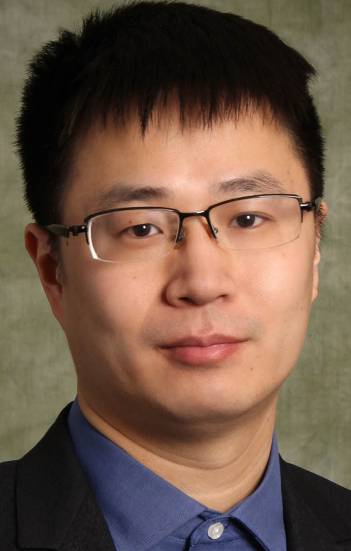
Boris Murmann is Professor at Stanford University, specializing in integrated circuit design, mixed-signal computing, and energy-efficient AI hardware. His research advances neural interface technologies, analog design automation, and tinyML systems. Recent work develops ultra-low-power neural recording ICs for brain-computer interfaces, RRAM-based memory systems, and open-source semiconductor design frameworks. Publications demonstrate innovations in compressive sensing for neural data, hardware-algorithm co-design, and reinforcement learning for analog circuit synthesis. Significant contributions include Medusa (TinyML processor), EMBER (RRAM macro), and methodologies for coarsely-quantized computer vision and analog design automation.
Doç. Dr. Muhammed Aras is an Associate Professor in the Department of Mechanical Engineering at Baskent University (Başkent Üniversitesi), with a research focus on sustainable machining processes, tool wear monitoring, and surface roughness optimization. His work spans advanced manufacturing technologies, energy storage systems, and biomedical device design. PhD in Manufacturing Engineering (2018), Gazi Üniversitesi MSc in Mechanical Education (2013), Gazi Üniversitesi BSc in Mechanical Engineering (2010), Tabriz Islamic Azad University Research interests include sustainable machining (dry/hard turning, cooling-lubrication strategies), tool wear analysis (CBN, ceramic and coated inserts), and surface integrity optimization using AI-based methods (firefly algorithm, TOPSIS, Grey Relational Analysis). His 15 most recent articles (2017-2024) examine topics like: Surface roughness prediction in dry hard turning Energy storage technology viability assessments Cutting parameter optimization for various steels Acoustic/vibration monitoring in machining He has received scientific awards including the Teşvik Ödülü (Encouragement Award, 2015). His patent on an automatic orthognathic surgery articulator and book chapters on tool monitoring systems demonstrate his multidisciplinary impact.
Dr. Scott Chen is an Assistant Professor in the Department of Electrical & Computer Engineering at McMaster University, where he focuses on teaching and research in embedded systems, RF technologies, and biomedical sensors. He previously held roles as a lecturer at the University of Waterloo and program coordinator at Conestoga College, alongside industry experience in embedded systems engineering and sensor development. Education: B.A.Sc. (Simon Fraser University, 2007) and Ph.D. (University of Waterloo, 2015), followed by a MITAC postdoctoral fellowship. His industry experience includes roles at Thalmic Labs/North, Sober Steering Sensors, and Equustek Solutions. Research interests span embedded systems for IoT, RF biomedical sensors, cleanroom micro/nano-fabrication, and game design in Unity. Notable achievements include a 2018 US patent for ethanol sensing technologies and a 2021 teaching award nomination. Current courses taught include Principles of Programming (COMPENG 2SH4), Data Structures and Algorithms (COMPENG 2SI3), and Introduction to Electrical Engineering (ELECENG 2CI4). Awards: US Patent 9,958,444B2 (2018), nominated for Aubrey Hagar Distinguished Teaching Award (2021). His work bridges academia and industry, emphasizing practical applications in wearable sensors, quantum computing components, and interdisciplinary engineering solutions.
Robert M. Weikle, II is a Professor in the Charles L. Brown Department of Electrical and Computer Engineering at the University of Virginia, with a courtesy appointment in the Department of Physics. He earned his B.S. from Rice University (1986), M.S. (1987), and Ph.D. (1992) in Electrical Engineering from Caltech, followed by postdoctoral work at Chalmers University of Technology (1992). His research focuses on millimeter-wave and terahertz electronics , applied electromagnetics, integrated antennas, low-noise sensors, and heterogeneous integration of compound semiconductors. His work bridges electronics and photonics for spectrum access, with applications in astronomy, spectroscopy, and metrology. He has published extensively on micromachined silicon substrates, superconducting materials, and emerging technologies. Scientific Awards: IEEE Microwave Prize (1993) David A. Harrison III Award (1999) University of Virginia All-University Outstanding Teaching Award (2000) Edlich-Henderson Innovator of the Year (2016) Fulbright Scholar (2001) As Chief Technology Officer and co-founder of Dominion Microprobes, Inc., he commercializes micromachined wafer probes for high-frequency metrology. His lab, located in E220 Thornton Hall and the Jesse W. Beams Physics Building, has produced 15+ recent publications on submillimeter-wave devices, THz probes, and calibration techniques.
Nathalie P. de Leon is an Associate Professor of Electrical and Computer Engineering at Princeton University and an Associated Professor of Physics. She is affiliated with the Princeton Plasma Physics Laboratory and co-leads the Co-Design Center for Quantum Advantage (C 2 QA). Her lab focuses on quantum hardware development using color centers in wide bandgap materials and superconducting qubits, with applications in quantum networks and nanoscale sensors. Ph.D., Chemical Physics, Harvard University, 2011 B.S., Chemistry, Stanford University, 2004 Her research spans optical materials , light-matter interactions , and quantum information processing , integrating nanophotonics , surface science , and quantum metrology . Recent publications highlight advances in diamond-based quantum sensors , superconducting circuit engineering , and noise/loss mitigation in quantum systems. Scientific Awards: APS Rolf Landauer and Charles H. Bennett Award in Quantum Computing (2023) DOE Early Career Award (2018) DARPA Young Faculty Award (2018) NSF CAREER Award (2018) Her lab has advised 22 graduate students and collaborates extensively with institutions like Princeton Plasma Physics Laboratory, University of Chicago, UZH, and Brookhaven National Laboratory. Current projects emphasize hybrid quantum devices , telecom band photonics , and many-body quantum physics .
Dan McCammon is a Professor in the Department of Physics at the University of Wisconsin-Madison, affiliated with the College of Letters & Science. His research focuses on X-ray astronomy, including studies of the diffuse X-ray background, interstellar and intergalactic media, and the development of advanced X-ray instrumentation. He is a key contributor to the XRISM (X-ray Imaging and Spectroscopy Mission) satellite, leading efforts in high-resolution X-ray spectroscopy and mission operations. McCammon's work emphasizes understanding cosmic plasma dynamics, galaxy cluster physics, and supernova remnant evolution through cutting-edge observational techniques and detector technology. His research interests span multiple subfields, including the thermodynamic properties of galactic clusters, charge-exchange processes in astrophysical plasmas, and the design of cryogenic microcalorimeters for space-based observatories. He has pioneered advancements in transition-edge sensors (TES) and superconducting detectors, enhancing the precision of X-ray spectral measurements. McCammon has contributed to numerous sounding rocket missions, such as Micro-X, and has been instrumental in the development of the Line Emission Mapper (LEM) probe concept, aimed at mapping the soft X-ray sky with unprecedented resolution. His work on the Hitomi (ASTRO-H) satellite demonstrated breakthroughs in resolving the thermal and dynamic properties of cosmic plasmas, such as the Perseus galaxy cluster and the Crab Nebula. His publications highlight a focus on high-resolution X-ray spectroscopy of cosmic sources, including galaxy clusters, active galactic nuclei, and supernova remnants. He has explored topics like non-thermal pressure contributions in cluster cores, ionized plasma diagnostics, and the role of charge-exchange emissions in interpreting diffuse X-ray backgrounds. McCammon's instrumentation innovations have enabled breakthroughs in measuring spectral features with sub-eV resolution, advancing our understanding of astrophysical processes. Despite the absence of explicitly listed awards or grants in the provided text, his leadership in major space missions and pioneering detector technologies underscores his contributions to the field. His research team collaborates on international projects, such as XRISM and LEM, reflecting a commitment to advancing observational astrophysics through interdisciplinary collaboration.
Dr. Jayshri Sabarinathan is an Associate Professor in the Department of Electrical and Computer Engineering at Western University's Faculty of Engineering, and a Faculty Member with the Institute for Earth and Space Exploration. She joined Western University in Fall 2003, received the NSERC University Faculty Award in 2004, and was promoted to Associate Professor in 2010. She previously served as Associate Director of Training (2019-2022) with the Institute for Earth and Space Exploration. Education: Ph.D. in Electrical Engineering, University of Michigan, Ann Arbor (2003) M.S.E. in Electrical Engineering, University of Michigan, Ann Arbor (1999) B.S.E. in Electrical Engineering and Engineering Physics, University of Michigan, Ann Arbor (1997) Her research focuses on developing novel nano-photonic sensors and miniature remote sensing instrumentation, with expertise spanning photonic crystals, plasmonic sensors, and CubeSat technology. Her work integrates nanofabrication techniques with practical applications in precision agriculture, geology, and space exploration. She has extensive experience with nanofabrication facilities including the University of Michigan Solid State Electronics Laboratory and Western's nanofabrication facility. Analysis of her 15 most recent publications reveals strong emphasis on plasmonic sensing technologies, photonic crystal applications, and nanoscale optical phenomena. Her research consistently bridges fundamental photonics with practical sensor development, particularly for environmental monitoring and space applications. The publications demonstrate progression from basic photonic crystal research to applied space instrumentation. Scientific Awards: NSERC University Faculty Award (2004) US Patent 8839683 for Photonic Crystal Pressure Sensors (2014) OSA (Optica) Senior Member Co-founder of LightSail Ltd space startup Dr. Sabarinathan actively mentors graduate students through her Nanophotonic Sensors Engineering (NPSE) and Remote Sensing Instrumentation (RSI) research groups. She has secured significant funding including Canadian Space Agency projects, notably as PI for the Western University-Nunavut Arctic College CubeSat Project Ukpik-1. Her research has resulted in three patents for micro photonic-sensors and multi-spectral camera innovations. Her labs focus on two primary research thrusts: the NPSE group developing hybrid photonics micro/nano-sensors including IR/THz plasmonic sensors and bio-photonic sensors, and the RSI group creating multispectral camera imagers for UAV/mobile robots with XRD instrumentation miniaturization for Mars rovers.
Michael P. Bradley is a Professor in the Department of Physics and Engineering Physics at the University of Saskatchewan, affiliated with the College of Arts and Science. He holds a Ph.D. from MIT and is a Professional Engineer (P.Eng.). His research focuses on precision measurement techniques, plasma-based nanofabrication, and quantum metrology, including work on diamond NV-centre magnetometers and superconducting watt balance systems. He leads the University of Saskatchewan Plasma Physics Laboratory (U of S PPL) and has received a Canada-UK Joint Quantum Technology grant for quantum sensor development. Education BSc (Honours) in Applied Physics, University of New Brunswick Ph.D. in Physics, Massachusetts Institute of Technology (MIT) Research Interests Bradley specializes in quantum magnetometry , plasma processing , semiconductor nanostructures , and precision electromagnetic measurements . His lab develops novel techniques for materials characterization and fabrication, including plasma immersion ion implantation (PIII) for micro- and nano-scale engineering, graphene doping, and silicon photonics. Recent work includes advancements in diamond NV-centre magnetometry for quantum technologies. Grants & Collaborations Recipient of a prestigious Canada-UK Joint Quantum Technology grant (2023). Collaborated internationally, including at the Bureau International des Poids et Mesures (BIPM) in France, where he contributed to superconducting watt balance prototypes for redefining mass standards. Teaching Teaches courses in optics, thermodynamics, and planetary astronomy, including EP421: Optical Systems & Materials and ASTR104: Planetary Astronomy .
Dr. Patrick Kung serves as Associate Professor and Associate Department Head for Undergraduate Programs in the Department of Electrical and Computer Engineering at the University of Alabama's College of Engineering. His research spans nanotechnology, quantum computing, and terahertz photonics with significant contributions to metamaterials and optical systems. Research Focus: Dr. Kung specializes in terahertz spectroscopy, polarization-sensitive imaging, and nanoscale material engineering. His work integrates machine learning with optical systems for applications in underwater imaging, quantum networking, and biodegradable polymers. Recent projects include $1 million Department of Energy funding for quantum networking research (2024) and development of materials for slowing light propagation. Publication Trends: His recent publications (2022-2025) demonstrate a clear trajectory toward multimodal sensing systems combining terahertz technology, polarization control, and AI-driven image processing. Key themes include underwater object recognition using single-photon LiDAR, compact drone-compatible imaging platforms, and cryogenic photonic components for quantum applications. The work consistently bridges fundamental nanophotonics with practical engineering solutions. Department of Energy Funding ($1 Million for Quantum Networking Research, 2024) Dr. Kung actively mentors students in EPA-funded water disinfection projects using UV-LED technology and collaborates with industry partners through the Southeast Executives-on-Roster program. His laboratory work focuses on nanowire-based thin films and metamaterial absorbers, with applications in environmental monitoring and quantum communication hardware.
Prof. Zheshen Zhang is a Professor in the Department of Electrical and Computer Engineering at the University of Michigan College of Engineering . He leads the Quantum Engineering Lab , focusing on harnessing quantum mechanical resources like entanglement to advance sensing, communication, and computing systems. Academic Rank: Professor Institution: University of Michigan School: College of Engineering Department: Electrical and Computer Engineering Research Interests: His work spans quantum engineering, emphasizing: Quantum computing architectures using continuous-variable cluster states Quantum communication via entanglement-assisted protocols Quantum sensing for precision metrology and dark matter detection Hybrid photonic circuits with Scandium Aluminum Nitride and Silicon Nitride Application of machine learning to quantum information processing Publications Trends: Recent articles highlight: Advances in integrated photonics for scalable quantum devices Development of entanglement-enhanced sensors for covert and precision applications Exploration of exceptional points in optical cavities for metrology Quantum network prototypes enabling open-access quantum computing Machine learning integration with quantum data acquisition
Hugh Churchill is a Professor in the Department of Physics at the University of Arkansas, College of Arts & Sciences. His research focuses on quantum materials and devices, particularly condensed matter physics with applications in 2D systems and quantum transport. Education: PhD in Physics from Harvard University, BA in Physics and BM in Music Performance from Oberlin College Recent research trends include studies on 2D materials like transition metal dichalcogenides and black phosphorus, investigating quantum transport phenomena, supercurrent tuning, strain engineering for exciton control, and applications of machine learning in quantum material discovery. His work also explores THz emission mechanisms and quantum noise mitigation strategies. Arkansas Research Alliance Fellow Presidential Early Career Award for Scientists and Engineers NSF CAREER Award ORAU Powe Junior Faculty Award AFOSR Young Investigator Connor Faculty Fellowship Hugh teaches graduate and undergraduate courses in quantum mechanics, modern physics, and 2D materials, including PHYS 5413 Quantum Mechanics I and PHYS 6713 Condensed Matter Physics II.
Jesse Liu is an Assistant Professor of Physics at the New York University College of Arts & Science , joining in Spring 2025. He collaborates with the ATLAS Experiment at CERN and leads the NYU Experimental Particle Physics group. Research Interests: Liu's work bridges fundamental particle physics and detector innovation. He investigates Tau-lepton electromagnetic dipoles via photon collisions at the LHC High-luminosity LHC silicon tracker upgrades Dark matter searches through collider experiments and the BREAD axion detection project Cosmic ray physics using ATLAS data Recent Publications focus on tau magnetic moment measurements, detector thermal stress mitigation, and cosmic ray signature analysis. His work has been featured in Phys. Rev. D , Phys. Rev. Lett. , and JINST . Outreach & Mentorship: Liu actively engages in public science communication through Pint of Science talks The Conversation articles School visits to CERN First-gen student mentorship at NYU CU*iP Contact: Office at 726 Broadway, Room 852, New York City. Email: jesse.liu2@nyu.edu
Niklas Rorsman is a Research Professor at the Microwave Electronics group, part of the Department of Microtechnology and Nanoscience at Chalmers University of Technology . His work focuses on advanced semiconductor devices, particularly gallium nitride (GaN) and silicon carbide (SiC) high-electron-mobility transistors (HEMTs) for microwave and cryogenic applications. Expertise : Semiconductor device physics, microwave electronics, cryogenic transistor characterization Key Technologies : GaN HEMTs, SiC MESFETs, graphene FETs Rorsman's research investigates trapping effects, thermal management, and material optimization in GaN/SiC devices. Recent studies explore field plates for cryogenic stability, recessed ohmic contacts, and high-κ dielectric interfaces. His publications demonstrate a focus on improving device linearity, noise performance, and reliability through structural and process innovations. Selected trends in his work include: Cryogenic GaN HEMTs with superconducting Nb gates Buffer-free AlGaN/GaN heterostructures for high breakdown voltage Graphene integration for millimeter-wave communication systems Advanced SiNx passivation and gate stack engineering Contact: niklas.rorsman@chalmers.se
Prof. Bayu Jayawardhana is a Full Professor in Mechatronics and Control of Nonlinear Systems at the University of Groningen, affiliated with the Faculty of Science and Engineering. He leads the Jayawardhana Group focusing on opto-mechatronics and advanced nonlinear control theories. His roles include Director of Engineering and Scientific Director of the Engineering and Technology Institute Groningen. He holds editorial positions in journals like International Journal of Robust and Nonlinear Control and European Journal of Control . Education: PhD in Control and Power Group from Imperial College London (2006), M.Eng from Nanyang Technological University (2003), and B.Eng from Institut Teknologi Bandung (2000). Research interests span opto-mechatronics for high-tech systems, nonlinear control, and systems biology. Key projects include digital twins for energy optimization, control of ocean energy systems, and modeling of cryogenic actuators for telescopes. His work integrates AI and model-based methods for high-performance systems. Notable awards include the 2016 FSE Faculty Teacher of the Year Award and the Ben Feringa Impact Award (2020). He advises on ventures like Ocean Grazer B.V. and Sencilia B.V. Teaching includes graduate courses on nonlinear control, opto-mechatronics, and fitting dynamical models to data. His research labs include the Groningen Centre for Systems and Control and the Data Science and Systems Complexity Center.
Wenfeng Zhao is an Assistant Professor in the Department of Electrical and Computer Engineering at Binghamton University. He holds a PhD from the National University of Singapore (2014) and BS/MS degrees from Huazhong University of Science and Technology (2007-2009). Prior to this role, he conducted postdoctoral research at the University of Minnesota's Biomedical Engineering Department. His research focuses on neural engineering, compressed sensing, ultra-low-power VLSI systems, and in-memory computing. Key areas include hardware security, biomedical signal processing, and energy-efficient computing architectures. His work spans applications in neural interfaces, cryptographic hardware, and IoT edge devices. Recent publications highlight advancements in block-cipher-in-memory architectures, emotion recognition via EEG analysis, and energy-efficient FPGA accelerators for neural networks. His research also addresses challenges in cryogenic memory systems and MRI-compatible neural recording devices. Zhao's contributions emphasize interdisciplinary approaches at the intersection of hardware design, signal processing, and cybersecurity. His lab develops novel solutions for low-power embedded systems and trustworthy IoT infrastructure.