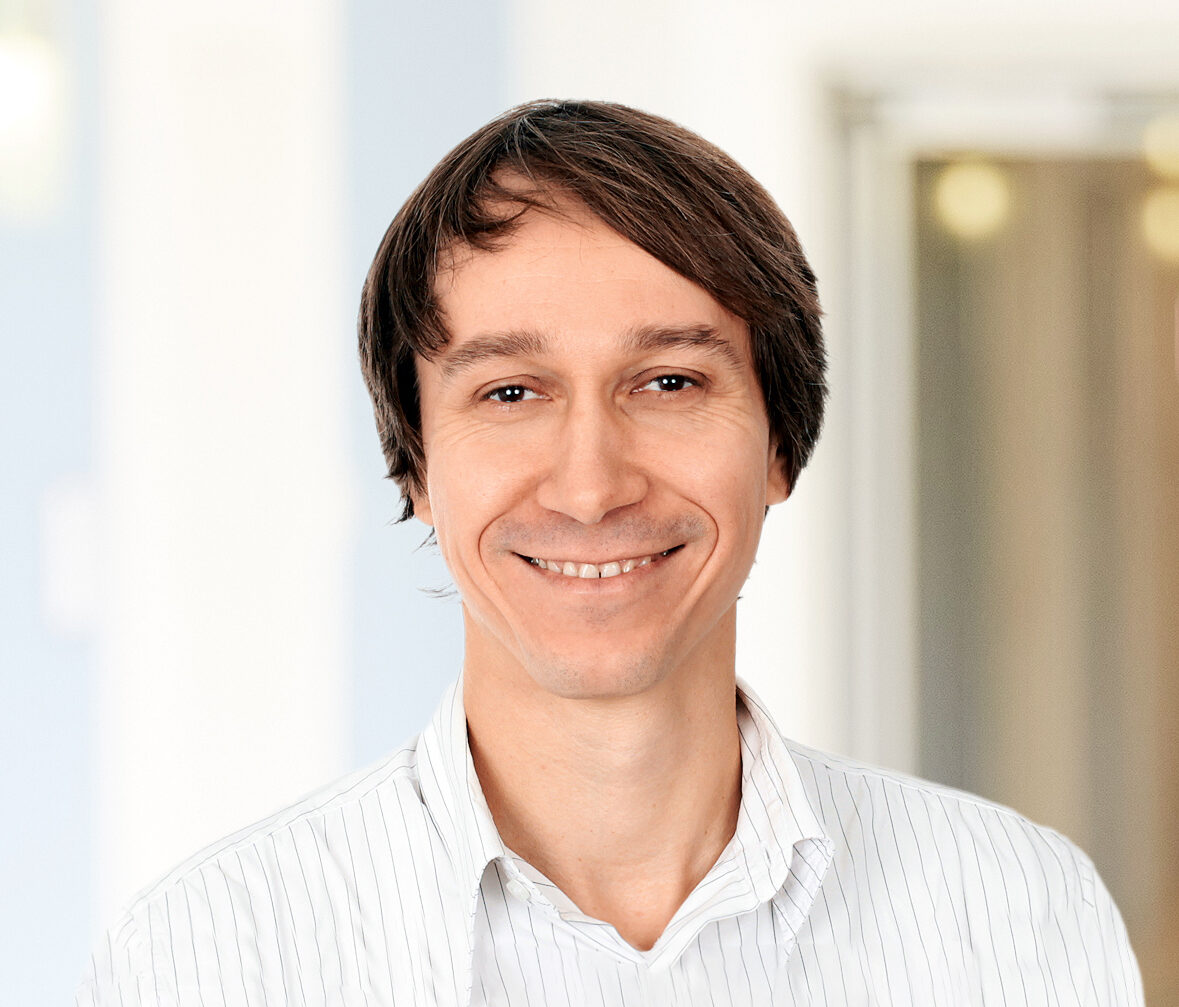
Sebastian Kube is a Professor of Behavioral and Experimental Economics at the University of Bonn, Germany. He holds concurrent positions as Senior Researcher at the Max Planck Institute for the Study of Public Goods, Research Fellow at the Institute for the Future of Labor (IZA), and Vice Director of the BonnEconLab. He also coordinates the European Doctoral Program in Quantitative Economics and serves on multiple editorial/research boards. University of Bonn Max Planck Institute for Research on Collective Goods Institute for the Study of Labor (IZA) BonnEconLab European Doctoral Program in Quantitative Economics His experimental research examines social preferences , cooperation mechanisms , incentive design , and norm enforcement . Key areas include: how remuneration schemes affect workplace cooperation, the effectiveness of social sanctions in social dilemmas, and the psychological foundations of environmental behavior. Recent work explores trust communication strategies for maintaining cooperation, information asymmetry effects in group dynamics, and incentive reversal phenomena where higher rewards paradoxically reduce effort. His 2025 publications particularly focus on sanction removal strategies and environmental behavior. Scientific Awards: Excellence in Teaching Award (2017, 2016, 2015, 2012) IZA Young Labor Economist Award (2011) Etienne-Laspeyres Prize (2011) Heinz Sauermann Prize (2004) As Vice Director of BonnEconLab, he oversees experimental infrastructure for economic research. His methodological approach combines field experiments with laboratory studies , often using behavioral game theory frameworks. He has published extensively in top journals including American Economic Review , Journal of Public Economics , and Management Science .
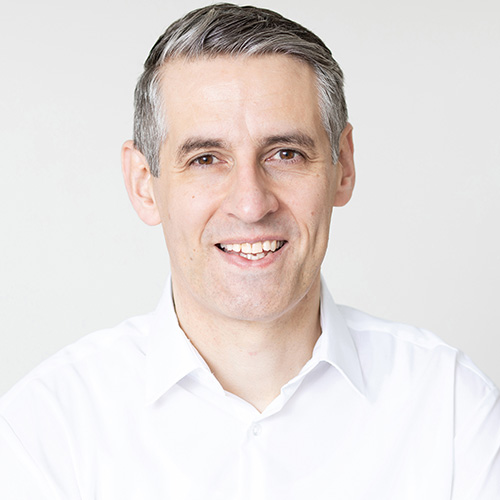
Prof. Dr. Martin Burger is a leading scientist at DESY and a Full Professor in the Department of Mathematics at Universität Hamburg, where he leads the Computational Imaging Group. His research bridges applied mathematics, imaging sciences, and machine learning, with a focus on inverse problems, mathematical modeling, and partial differential equations. He has held professorial positions at Universität Münster and FAU Erlangen-Nürnberg prior to his current dual appointment. Full Professor, Universität Hamburg (2023–present) Leading Scientist, DESY, Hamburg (2023–present) Full Professor, FAU Erlangen-Nürnberg (2018–2023) Full Professor, Universität Münster (2006–2018) His research interests include inverse problems, variational regularization, optimal transport, kinetic models, and mathematical modeling in biology and social sciences. He has made significant contributions to imaging reconstruction, sparse neural networks, and the analysis of transformer architectures. His work often integrates theoretical analysis with computational methods, influencing both pure and applied mathematics. The most recent articles reflect a strong trend toward interdisciplinary applications, combining deep learning with PDE-based modeling, analyzing social and biological systems via kinetic and mean-field models, and advancing mathematical imaging through graph-based and optimal transport methods. His publications span high-impact venues in applied mathematics and computational science. Calderon Prize, Inverse Problems International Association (IPIA) ERC Consolidator Grant (2014) Invited speaker at ECM (2021), ICM (2022), and ICIAM (2023) Editor-in-Chief, European Journal of Applied Mathematics (since 2017) Prof. Burger has supervised numerous PhD students and postdoctoral researchers, many of whom appear as co-authors in his publications. His research is supported by major grants, including funding from the German Federal Ministry of Education and Research (BMBF). He is actively involved in collaborative projects across mathematics, physics, and engineering disciplines. He leads the Computational Imaging Group at DESY, fostering a collaborative environment for developing novel mathematical tools in imaging science. The group works on both theoretical foundations and practical implementations, contributing to advancements in tomography, machine learning, and data analysis.
Prof. Dr. Janick Edinger is a Professor of Distributed Operating Systems at the Department of Informatics, Faculty of Mathematics, Informatics and Natural Sciences, University of Hamburg, Germany. He leads a research group focused on distributed, context-aware, and adaptive computing systems, with a strong emphasis on edge computing, computation offloading, and assistive technologies. Education: PhD in Computer Science, University of Mannheim Studies at National Taiwan University Studies at University of Alberta, Canada Research stays at University of British Columbia, Hong Kong Polytechnic University, and Georgia State University, USA His research explores how edge computing and computation offloading can enable efficient, privacy-preserving processing of sensor and video data close to their sources, particularly in dynamic environments. He investigates the integration of autonomous and heterogeneous systems—such as drone fleets and mobile devices—into scalable middleware platforms for real-time monitoring and decision-making in logistics and industrial operations. His work also emphasizes societal impact, contributing to accessible routing, adaptive interfaces, and crowd-sourced mapping. The recent publications reflect a strong trend in edge computing, federated learning, privacy-preserving analytics, and assistive technologies. Topics include WebAssembly-based offloading, emotion prediction via eye tracking, real-time traffic detection, and predictive maintenance in Industry 4.0, showcasing a blend of foundational systems research and applied human-centered computing. Scientific Awards: PerCom 2021 Mark Weiser Best Paper Award Best Paper Award at IEEE PerCom 2021 for 'Voltaire: Precise Energy-Aware Code Offloading Decisions with Machine Learning' Prof. Edinger actively advises students and leads research projects involving grants and collaborations. His team includes PhD candidates and researchers working on middleware, edge systems, and context-aware applications. He has served on conference program committees, such as shadow PC member for EuroSys 2021, and publishes in top venues including IPDPS, PerCom, CHIIR, and COMPSAC. Labs and Teams: He leads the Distributed Operating Systems research group at the University of Hamburg, where he mentors students and collaborates on projects involving edge computing, IoT, and adaptive systems.
Julian Berger is a postdoctoral researcher at the Max Planck Institute for Human Development in the Center for Adaptive Rationality , where he explores how to enhance decision-making through hybrid human-AI systems. He is also a fellow of the Joachim Herz Foundation and has received funding from the Foundation of German Business and the Danish Data Science Academy. Education: M.A. Psychology in Business and Economics, Universidade Catolica Portuguesa (2021) B.A. Politics, Administration and International Relations, Zeppelin Universität (2018) His research spans human-AI collaboration , collective intelligence , and interpretable machine learning . A recurring theme in his work is developing methods to combine human expertise with AI capabilities for accuracy in domains like medical diagnostics , credit scoring , and football analytics . He has authored publications in high-impact venues such as PNAS , Nature Human Behavior , and Science and Medicine in Football . Scientific awards and funding include: Fellowship for interdisciplinary economics, Joachim Herz Foundation (2024) PhD funding from the Foundation of German Business (Stiftung der deutschen Wirtschaft) Research grant from the Danish Data Science Academy His recent article trends emphasize ensembling techniques that leverage complementary human and AI errors, algorithmic fairness, and practical heuristics like Hybrid Confirmation Trees. These works demonstrate significant improvements in diagnostic accuracy and decision cost-efficiency. Beyond academia, Berger works as a consultant and ML engineer with Simply Rational , focusing on interpretable models for financial and sports analytics. His work bridges theoretical research with real-world applications, prioritizing fairness, transparency, and human accountability in AI systems.
Peter Pal Zubcsek serves as Senior Lecturer of Marketing at Tel Aviv University's Coller School of Management, previously holding an Assistant Professor position at University of Florida. His academic work bridges marketing, network science, and consumer psychology through rigorous quantitative analysis. His educational background includes: Ph.D. in Management from INSEAD M.Sc. in Informatics from Budapest University of Technology and Economics Zubcsek's research investigates how social network structures shape consumer behavior, with special focus on mobile advertising effectiveness, customer relationship management, and innovation diffusion. His work employs advanced network analysis to model consumer interactions and predict market responses. His publication trajectory from 2011-2017 reveals evolving expertise: starting with foundational network diffusion models (2011), progressing through mobile advertising frameworks (2016), and culminating in connected consumer intelligence systems (2017). This progression demonstrates increasing sophistication in integrating real-world network data with consumer behavior prediction. Key recognitions include: Journal of Interactive Marketing Best Paper Award (2016) MSI Research Grants totaling over $70,000 for mobile consumer behavior projects International Mathematical Olympiad silver medal (1998) He has secured significant research funding including MSI's $40,000 'Ideas Challenge' grant and leads the 'mLab' mobile research initiative, though specific student mentorship details remain undisclosed. His editorial role at Journal of Interactive Marketing underscores disciplinary leadership. The 'mLab' research initiative represents his current focus on mobile consumer behavior, leveraging collaborative frameworks to study real-time advertising response and device ecosystem interactions.
Haoyi Xiong is an active academic researcher in artificial intelligence, machine learning, and data science, with extensive publications in top-tier journals and conferences including IEEE TPAMI, NeurIPS, ICML, KDD, and AAAI. His work spans explainable AI, graph neural networks, diffusion models, remote sensing, and large language models. Research Interests: Explainable AI (XAI) and model interpretability Graph Neural Networks and contrastive learning Diffusion models and generative AI Medical and remote sensing image analysis Large language models and autonomous agents Learning to rank and web search His recent publications (2023–2025) show a strong trend toward self-supervised learning , model robustness , and integration of LLMs with structured data and knowledge graphs . He frequently collaborates with researchers from major tech and academic institutions. Scientific Awards: No explicit awards mentioned in the provided text. Advising and Grants: While no direct mention of students or grants, his role as a senior author on numerous papers suggests he advises graduate students and likely leads funded research projects in machine learning and AI. His work on frameworks like COLTR , GS2P , and MUSCLE indicates leadership in developing scalable AI systems. Labs and Teams: Though not explicitly stated, his frequent collaboration with Jiang Bian, Dejing Dou, and Dawei Yin suggests affiliation with a well-established AI research lab or industry-academia partnership focused on data mining, intelligent systems, and large-scale learning.
Rainald Loehner is a Distinguished Professor of Fluid Dynamics at George Mason University's Center for Computational Fluid Dynamics. Since 2003, he has led the Center for Computational Fluid Dynamics at George Mason University. He is currently a Hans Fischer Senior Fellow at the Technical University of Munich's Institute for Advanced Study (TUM-IAS) for 2023, hosted by Professors Kai-Uwe Bletzinger and Roland Wüchner in the 'Adjoint-Based System Identification of Large-Scale Structures' Focus Group. Loehner received his Diplom Ingenieur (Maschinenbau) degree from the Technical University of Braunschweig, and his PhD and a DSc in civil engineering from the University College of Swansea, Wales. After teaching at Swansea for a year, he worked at the Naval Research Laboratory in Washington, DC, followed by a research professorship at George Washington University. He joined George Mason University as an associate professor and was promoted to full professor in 1995 and distinguished professor in 2004. With over 35 years of experience, Professor Loehner's research spans the complete pipeline of numerical solvers and simulation tools. His expertise includes pre-processing, grid generation, numerical methods, field solvers, parallel computing, adaptive mesh refinement, fluid-structure interaction, shape optimization, system identification, and computational crowd dynamics. His current work focuses on developing advanced field solvers for compressible and incompressible flows, acoustics, electromagnetic wave propagation, heat and mass transfer, structural mechanics, and fluid-structure interaction. Key application areas include blast mitigation, ship hydrodynamics, blood flow, contaminant transport, and pedestrian safety. Loehner's recent research output (2020-2024) shows a strong trend toward digital twin technology and adjoint-based methods for structural analysis and optimization. His publications focus on high-fidelity digital twins for detecting structural weaknesses, risk assessment in engineering systems, and optimization of sensor placement. His work bridges computational mechanics with machine learning approaches, particularly in system identification and inverse problems, demonstrating how computational methods can solve complex real-world engineering challenges. 2020: Ranked #15119 in the Stanford List of Most Influential Scientists of the World; #8 in Aerospace and Aeronautics 2010: Distinguished International Career Award, Argentine Association of Computational Mechanics 2008: Fellow, International Association for Computational Mechanics 2006: Associate Fellow, AIAA 2005: Honorary Professor, University of Wales Swansea 2005: Advisory Professor, Shanghai Jiao Tong University 2004: Distinguished Professor of Fluid Dynamics, George Mason University 1999: Computational Mechanics Achievements Award, Japan Society of Mechanical Engineering 1993: Doctor of Science in Civil Engineering, University College of Swansea 1979-1983: Studienstiftung des Deutschen Volkes (Top 1% of German Students) Professor Loehner has mentored numerous students through his work at George Mason University and has supervised research in computational fluid dynamics, structural mechanics, and related fields. His research has been supported by various grants from government agencies and industry partners, enabling the development of advanced simulation tools applied in aerodynamics, hydrodynamics, shock-structure interaction, and medical applications. His codes and methods have been widely adopted in industry and academia for applications ranging from aircraft and ship design to medical simulations and urban pathogen transmission modeling. Loehner leads the Center for Computational Fluid Dynamics at George Mason University, which focuses on developing cutting-edge computational methods for fluid dynamics and related multiphysics problems. The center works on strategic application areas including blast mitigation, ship hydrodynamics, blood flow simulation, and pedestrian movement modeling. As a TUM-IAS Fellow, he collaborates with the Chair of Computational Modeling and Simulation at TUM on adjoint-based system identification of large-scale structures, bringing together expertise in computational mechanics and digital twin technology to address complex engineering challenges.
Christoph Heinzl is a Professor of Cognitive Sensor Systems at the University of Passau since September 2022. He leads the Knowledge-based Image Processing research group at the Fraunhofer Development Center X-ray Technology (EZRT) . His academic background includes a PhD in Informatics and a Habilitation in 2022 , both from TU Wien . Research Focus: Scientific visualization, visual analytics, immersive analytics, virtual/augmented reality, machine learning, and X-ray computed tomography (XCT). Key Trends: Development of novel visualization techniques for complex volumetric data (e.g., dynamic volume lines, visual coherence frameworks), parameter space analysis, and cross-virtuality collaboration tools. Applications: Aerospace component inspection, defect analysis in composites (CFRP, GFRP), porosity quantification, and 4DCT time-series exploration.
Dr. Bahador Bahrami serves as an ERC Group Leader and junior faculty member at the Graduate School of Systemic Neurosciences (GSN), affiliated with the Chair of General and Experimental Psychology within the Faculty of Psychology and Educational Sciences at Ludwig Maximilian University of Munich. Previously associated with the Munich Center for Neurosciences (MCN), his current research integrates psychological, neurobiological, and computational approaches to investigate human interactive behavior. His primary research interests center on the cognitive and neurobiological mechanisms of social decision-making, with emphasis on collective intelligence, confidence calibration, influence dynamics, and consensus formation. Utilizing behavioral experiments, fMRI neuroimaging, and psychopharmacology, his work examines how humans share information and negotiate during joint decisions, particularly investigating biases like equality distortion and vulnerability to disinformation in group contexts. The lab actively explores neural substrates of social influence and human-AI collaborative decision-making. Analysis of his 2015-2021 publications reveals a consistent trajectory examining social influence mechanisms across behavioral, neural, and computational domains. Key themes include the neural basis of strategic advice-giving, cultural universality of decision biases, exploitation vulnerabilities in human-AI systems, and disinformation's impact on social influence competition. His work demonstrates interdisciplinary integration of psychology, neuroscience, and game theory to model collective cognition. Scientific recognition includes: ERC Group Leader award supporting his independent research program Dr. Bahrami supervises graduate researchers including Jamal Esmaily, with his ERC-funded laboratory enabling comprehensive investigation of interactive decision-making. His research program combines theoretical modeling with multimodal empirical approaches, securing significant European funding for exploring the biological foundations of social cognition. Current projects examine neural correlates of influence reciprocity and algorithmic exploitation in human-machine teams. He leads an active research group at LMU Munich investigating crowd cognition dynamics, with laboratory facilities supporting behavioral testing, fMRI studies, and computational modeling of social interactions. The team maintains international collaborations across neuroscience and decision science domains, focusing on translating fundamental research into understanding real-world collective behavior in digital and social environments.
Verena Tiefenbeck is a Professor and Chair of Digital Transformation at Friedrich-Alexander-Universität Erlangen-Nürnberg (FAU), leading a Bavarian Ministry-funded junior research group since 2019. Her work bridges digital transformation with behavioral science, focusing on high-resolution behavioral data to drive sustainability in energy, mobility, health, and human-AI collaboration. Education: MSc in Mechanical Engineering & Management (TU Munich, Ecole Centrale Paris) Doctorate: ETH Zurich (2014) Research explores how digital technologies shape human behavior through real-time feedback, algorithmic transparency, and nudges. Key areas include energy conservation, sustainable mobility, and AI adoption in organizational contexts. Her recent publications examine peer-to-peer energy markets, digital food labeling, and algorithmic fairness in HR. Core research themes across 2024-2025 publications include: Digital feedback mechanisms for energy/water conservation Algorithmic transparency in AI-driven recruitment Behavioral economics of renewable energy communities Digital nudges in health decisions and sustainable consumption Methodological transparency in design science research
Shueng-Han Gary Chan is a faculty member in the Department of Computer Science and Engineering at the Hong Kong University of Science and Technology (HKUST), within the College of Engineering. He is actively engaged in research and mentoring, with a strong publication record in mobile computing, indoor localization, and AI for pervasive systems. His research focuses on indoor localization using Wi-Fi, geomagnetic, and inertial signals , sensor fusion , crowd counting with deep learning , domain adaptation , and efficient mobile AI systems . His work bridges theoretical innovation with real-world deployment, as seen in systems for missing person search and indoor navigation. Recent publications (2023–2025) show a consistent trend toward self-supervised and domain-agnostic learning , efficient model design for mobile devices , and robust signal fusion in noisy environments . His team leverages transformer architectures, graph neural networks, and novel optimization techniques to solve real-world challenges in urban and indoor spaces. He has advised numerous graduate students, including Jierun Chen, Zhuoxuan Peng, and Tianlang He, who have contributed as first authors to joint publications. His collaborations span institutions and include work on large-scale system deployments and mobile AI. He leads a research group focused on mobile and pervasive computing , with projects involving IoT-based contact tracing, indoor navigation (e.g., DeepNavi, SiFu), and real-time localization systems. The team emphasizes practical deployment and system robustness.
Alexander Conrad is Professor of Economics, particularly Regional Economics, at Eberswalde University of Sustainable Development (HNEE), serving as Deputy Head of the Undergraduate School and Head of the Bachelor's Program in Sustainable Economics and Management since 2025. Previously, he held leadership roles including Pro-Dean of the Faculty of Sustainable Economics (2018-2022) and Research Professor with transfer focus (2021-2025). His academic journey includes: Doctorate in Economics (Dr. rer. pol.) from University of Rostock (2006-2009) on banking in shrinking regions Economics studies at University of Rostock (2002-2006) Bank clerk training at Sparkasse Uckermark (2000-2002) Conrad's research centers on plural economics and sustainable rural development, with emphasis on innovative supply systems, demographic change impacts on regional actors (municipalities, SMEs, banks), and sustainable regional development instruments. His work bridges theoretical economics with practical applications in rural logistics, business succession, and public sector economics, often addressing infrastructure gaps in shrinking regions through empirical field studies. His 2022-2024 publications reveal strong thematic convergence in rural logistics innovation and demographic adaptation strategies. Key trends include integrating public transport for goods distribution (UCKER Warentakt), empirical assessment of parcel depot systems, and business succession monitoring in rural economies. These works consistently emphasize co-creative stakeholder approaches and sustainable transition pathways for peripheral regions. Conrad has secured significant external funding from BMBF, EU, and Sparkassen-Finanzgruppe for projects including Inno4Ufo (business succession), soLo (social logistics), and RIM (regional innovation management). While specific advisees aren't listed, his program leadership in Sustainable Economics and FutureLab project (2015-2019) demonstrates active student engagement through workcamps and network-building initiatives for reducing dropout rates. He actively shapes regional innovation ecosystems as coordinator of the WIR!-Innovation Alliance region 4.0 and co-founder of AngerWERK (2019-2024). His 2025 launch of student-run Forum N with Sparkasse Barnim establishes a living lab for sustainable regional finance research, extending his commitment to student-driven knowledge transfer in rural development contexts.
Leonardo Tonetto is a researcher at Technical University of Munich (TUM) within the Chair of Connected Mobility, working under Prof. Jörg Ott. His office is located in FMI 01.05.038 and he maintains an active presence in both academic research and open-source development with significant GitHub contributions (19 repositories, 73 stars). His work bridges theoretical research and practical implementation in mobility systems. Dr. Tonetto's research spans Mobile User Modeling , Deep Learning & Data Analysis , Signal Processing , and Complex Networks . His work demonstrates particular expertise in extracting meaningful patterns from human mobility data while addressing critical privacy concerns. Recent publications show increasing focus on ethical implications of location-based data and energy-efficient computing for augmented reality applications. Analysis of his publication record from 2014-2025 reveals a consistent research trajectory evolving from fundamental mobility pattern analysis toward more complex systems integrating privacy considerations and energy efficiency. His work increasingly intersects computer science with social implications, particularly in location-based services and epidemic modeling. The research shows strong methodological diversity, employing machine learning, network analysis, and signal processing techniques across various application domains. Through his GitHub profile and open-source contributions, Tonetto demonstrates commitment to reproducible research and community engagement. His technical skills span multiple programming languages and systems, supporting both theoretical research and practical implementation of mobility-aware systems. While specific grant information isn't publicly available, his consistent publication output suggests successful research funding.
Prof. Dr. Philipp Slusallek serves as Scientific Director and executive board member at the German Research Center for Artificial Intelligence (DFKI), where he leads the Agents and Simulated Reality research area. He holds a Full Professorship in Computer Graphics at Saarland University since 1999, co-founded the European AI initiative CAIRNE as Director of Strategy, and directs research at the Intel Visual Computing Institute. His career spans leadership roles in the Excellence Cluster on Multimodal Computing and Interaction and prior visiting positions at Stanford University and Nvidia Research. His academic foundation includes: 1983-1990: M.Sc. in Physics, University of Tübingen 1992-1995: Ph.D. in Computer Science, University of Erlangen Slusallek's research bridges Artificial Intelligence, Simulated Reality, and Computer Graphics with applications in high-performance computing, motion synthesis, and AI for science. His interdisciplinary work integrates real-time rendering, heterogeneous system programming (CPU/GPU/FPGA), and biomechanical modeling, driving innovations in digital reality frameworks and AI-driven simulation systems across medical, engineering, and autonomous vehicle domains. His 2025 publications reveal a strong focus on graphics compilation (Vulkan SPIR-V), rehabilitation biomechanics, and multi-agent motion simulation, demonstrating consistent integration of computer graphics foundations with emerging AI methodologies for practical real-world applications. Award highlights include the Eurographics Gold Medal (2023), acatech membership (2018), Land of Ideas Awards (2015, 2010), and Eurographics Fellowship (2013), recognizing his transformative contributions to computer graphics and AI. Eurographics Gold Medal (2023) acatech Membership (2018) Land of Ideas Award: Display as a Service (2015) Fellow of Eurographics Association (2013) CeBIT Innovation Award (2013) Land of Ideas Award: DFKI Visualization Center (2010) Slusallek leads major research initiatives including B5GCyberTestV2X (cybersecurity for autonomous driving), ENGAGE (AI computing environments), Carousel+ (digital character interaction), PRIME (predictive rendering), and TAILOR (trustworthy AI). His DFKI research group pioneers virtual environment frameworks while his academic mentorship has shaped generations of computer graphics researchers through Saarland University's programs. He co-founded the Intel Visual Computing Institute and established foundational visualization infrastructure at DFKI, maintaining active leadership in European AI strategy through CAIRNE and prior service on the European Commission's High-Level Expert Group on AI.
Prof. Dr. Julian Reif is a Professor of Tourism and Deputy Director at the German Institute for Tourism Research (Department of Economics) at the West Coast University of Applied Sciences. His research focuses on tourist demand analysis, digital visitor measurement, smart destinations, and urban tourism dynamics. He holds a PhD in Tourism Geography from the University of Bonn (2021) and has authored/co-authored over 80 peer-reviewed publications. Research interests include Big Data applications in tourism, crowding perception, overtourism challenges, and the socio-spatial impacts of tourism. He leads projects like the AI-based Recommender for sustainable tourism and the Landesweites digitales Besuchermanagement (LAB-TOUR SH) in Schleswig-Holstein. His work bridges academic theory with practical destination management solutions. Key achievements include the Best Paper Award 2020 (Journal of Destination Marketing & Management) and co-authoring the award-winning Tourismusatlas Deutschland (2021). He teaches modules on scientific writing, tourism geography, and digitalization in international business management. Current research explores spatial footprint analysis of urban events, business traveler behavior, and the role of nudging in sustainable tourism. Leading projects: AI-Basierter Recommender, CRUISE (cruise passenger analysis), and EMOBÜS (tourist emotion mapping) Coordinated 10+ research initiatives including GreY (Grey Market Analysis), PUNK (punk subculture tourism), and DIGIPARK (national park visitor tracking) Teaching portfolio includes 'Digitalisierung im Tourismus' and 'Tourismusgeographie' at undergraduate and master's levels