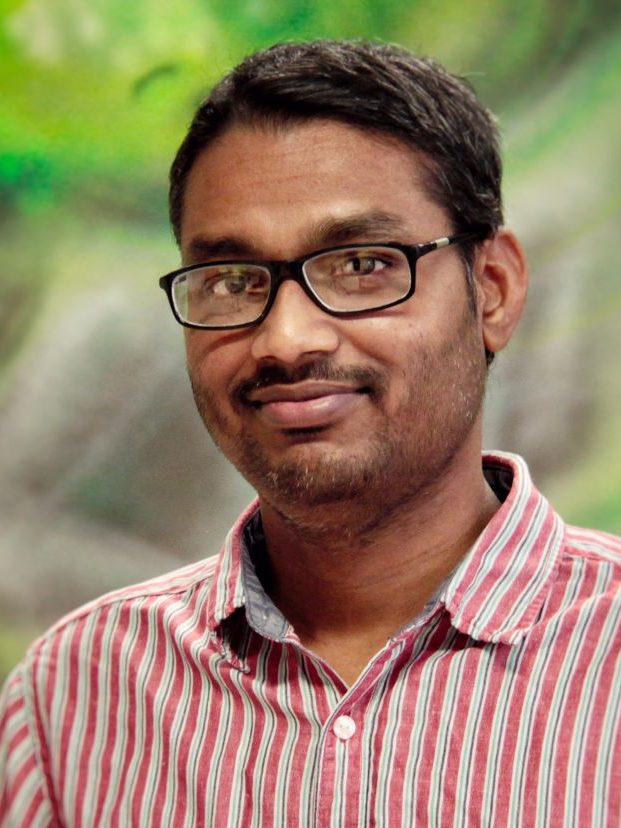
Jack McSweeney is an Assistant Professor at the School of Marine and Atmospheric Sciences (SOMAS), Stony Brook University. His research focuses on coastal physical oceanography, including estuarine dynamics, coastal sediment transport, and the dynamics of shoaling internal waves. He leads the McSweeney Lab, which specializes in observational studies using moorings, ship surveys, and gliders. Education: Ph.D. in 2016 from Rutgers University His research interests include the interconnected dynamics of coastal subregions (inner shelf, surfzone, estuaries), buoyant plumes, and spatiotemporal stratification variability. Recent studies highlight contributions to understanding internal bore evolution, cross-shelf transport mechanisms, and sediment-transport interactions.
Rafael Marin-Lopez is a full-time Lecturer in the Department of Information and Communications Engineering at the University of Murcia, Spain. He earned his B.E., M.E., and Ph.D. in Computer Science from the University of Murcia in 1998, 2000, and 2008, respectively, and completed a pre-doctoral internship at Toshiba America Research (2005-2006). His research focuses on Authentication, Authorization, Access Control, and Key Distribution across mobile networks , Intelligent Transport Systems (ITS) , and Internet of Things (IoT) . He actively contributes to standardization, co-authoring RFC 5193 , RFC 5609 , RFC 5637 , and the IEEE 802.21a standard. His recent publications analyze trends in IoT bootstrapping (e.g., CoAP-based solutions), cloud SSO for federated access, secure handover protocols in mobile networks, and privacy frameworks for Kerberos. He has advised Dan Garcia-Carrillo on IoT bootstrapping research and participated in European/national projects, including software-defined networking (SDN) and network function virtualization (NFV) security. Contact: rafa@um.es , Facultad de Informática, Campus de Espinardo, Murcia, Spain.
Mustafa Kishk is an Assistant Professor in the Department of Electronic Engineering at Maynooth University, Ireland, and serves as the PhD/MSc Programme Director. He is also an associate editor for IEEE Wireless Communications Letters and has been affiliated with the Hamilton Institute. His research focuses on stochastic geometry, UAV-enabled and satellite-enabled communications, energy-harvesting IoT, and non-terrestrial networks. Education Ph.D. in Electrical Engineering, Virginia Tech, 2018 M.Sc. in Electrical Engineering, Cairo University, 2015 B.Sc. in Electrical Engineering, Cairo University, 2013 Research Interests Mustafa Kishk’s work lies at the intersection of stochastic geometry , non-terrestrial networks , and energy-efficient wireless systems . He employs advanced mathematical tools to model and optimize emerging network architectures such as UAV-assisted communications, satellite mega-constellations, and RF-powered Internet of Things. His investigations span coverage analysis, secrecy performance, energy harvesting, and sustainable transportation electrification. Publication Trends Over 2021–2023, Kishk has published prolifically in top-tier IEEE journals and magazines, with a clear focus on stochastic geometry-based modeling . A dominant theme is the integration of aerial and space platforms—UAVs, LEO satellites, and tethered drones—into next-generation networks. His studies address coverage, latency, energy efficiency, and coexistence issues, often supported by rigorous theoretical frameworks and large-scale performance evaluation. Scientific Awards IEEE ComSoc Outstanding Young Researcher Award for Europe, Middle East, and Africa Region (2022) IEEE Communications Society Internet for All competition – Honorable Mention (2022) IEEE Communications Letters Exemplary Reviewer recognition (2020) Editorial & Professional Service He serves as an Associate Editor for IEEE Wireless Communications Letters and has been a member of the Technical Program Committees for Globecom 2022, ICC 2022, and WCNC 2022. Labs & Research Groups Kishk is affiliated with the Hamilton Institute at Maynooth University, a multidisciplinary research institute focusing on applied mathematics and ICT. Previously, he conducted post-doctoral research in Prof. Slim Alouini’s group at King Abdullah University of Science and Technology (KAUST).
Assoc. Prof. Selcuk Okdem is a faculty member at Erciyes University, Faculty of Engineering, Department of Computer Engineering, specializing in Computer Hardware. With academic ranks from Research Assistant (2001-2011) to Assistant Professor (2011-2017) and current Associate Professor (2017-present), his career spans 25+ years in academia and industry. Doctorate : 2004-2011, Erciyes University, Computer Engineering Postgraduate : 2001-2003, Erciyes University Undergraduate : 1996-2001, Erciyes University His research focuses on Wireless Sensor Networks , Optimization Algorithms , and Embedded Systems , with notable work on AI integration in cybersecurity and evolutionary optimization techniques. His 15 most recent publications (2024-2004) span topics like genetic algorithm scheduling , neural networks for localization , and cross-layer protocol design . Scientific achievements include: 2021: Certificate of Honor for Top Graduation Term 1999-2000: Turkish-Japanese Foundation Scholarship He has served as peer reviewer for SCI journals (Wireless Networks, Applied Soft Computing) and participated in 15+ international conferences (IEEE CEC, INISTA, IWCMC). His managerial role since 2015 includes Erciyes University leadership positions.
Rob Godman is a Professor in Music at the University of Hertfordshire , specializing in interdisciplinary practices through his role in the School of Creative Arts . As a composer and sound artist, he has been active since the 1990s, with works commissioned by major festivals like Huddersfield Contemporary Music Festival and St Magnus Festival. Research Interests : Live instrument with responsive electronics Algorithmic and spatial sound Interdisciplinary collaborations with architects, sculptors, and medical experts Integration of scientific principles (e.g., Faraday Instability) into sound design Field recordings for hidden environment exploration Ancient acoustics, particularly Vitruvian principles Recent Research Outputs include audio-visual installations like Cosmoscope (Wellcome Trust funded, 2017-2018) and Hydrosiren (2018), alongside film soundtracks and academic contributions such as the chapter on Echeia in The Companion to the Reception of Vitruvius (2024). His 2025 projects involve glass sculptures using wren sonograms and reinterpretations of William O Smith’s electroacoustic clarinet works. Scientific Awards and Grants : Royal Philharmonic Society Prize for Composition ACE funded commissions AHRC IAA network grant (2023-2025) Wellcome Trust funded Anarchy in the Organism Extension (2013-2015) AHRC Research in Film Awards (2018, 2020) Teaching and Supervision focus on Music Composition and Music Technology pathways. He has supervised multiple PhD students and served as an External Examiner for institutions like the Institute of Contemporary Music Performance.
Dr Alan Marvell is a Senior Lecturer and Lead for Learning and Teaching in the School of Business, Computing, and Social Sciences at the University of Gloucestershire. As a National Teaching Fellow, he specializes in tourism, events management, and geography education. He serves as Academic Course Leader for international programs in Malaysia and Vietnam, and holds professional recognition as a Chartered Geographer and Fellow of the Royal Geographical Society. Alan earned his BA (Hons) in Geography and History from the College of St Paul and St Mary (1990), PGCE in Geography from the University of Southampton (1991), MA in Landscape and Society from Cheltenham and Gloucester College of Higher Education (1999), and PhD from the University of Gloucestershire (2016). His research focuses on experiential pedagogies, emotional geographies, and student-led learning, particularly in international fieldwork contexts. His work explores how students develop a 'sense of place' through active engagement with locations like Barcelona, examining the emotional dimensions of fieldwork experiences and their impact on learning outcomes. He has made significant contributions to understanding how innovative teaching strategies can enhance students' emotional responses to place and improve their overall educational experience. Analysis of his recent publications reveals a strong thematic focus on emotional geographies in fieldwork education, with particular attention to student experiences in international settings. His work consistently examines how emotional responses to place can be leveraged to create more effective learning experiences, with a growing emphasis on sustainability, solidarity, and wellbeing in educational contexts. National Teaching Fellow (NTF), 2021 Geographical Association Distinguished Service Award, 2020 University of Gloucestershire Teaching Fellow, 2017 University of Gloucestershire Learning for Sustainable Futures Award: Responsible Events, 2015 Alan supervises doctoral candidates and has previously led the Doctorate in Business Administration programme. He serves as Chair of the RGS-IBG Geography and Education Research Group and sits on the international Editorial Board for the Journal of Geography in Higher Education. He also acts as an external examiner for International Event Management at the University of Brighton. His community engagement includes being a founding member of the Gloucestershire Sustainability Champions and collaborating with local business groups to promote Gloucestershire as a visitor destination. Alan's professional activities extend to knowledge exchange through editorial work, conference presentations, and collaborations with international institutions. His leadership in the Geography and Education Research Group demonstrates his commitment to advancing geographical education across all levels.
Vania Conan is a Professor at Conservatoire National des Arts et Métiers (CNAM) in Paris, France, affiliated with the Cédric Laboratory, where they lead research in networking and communications. Their work spans nearly two decades of continuous contributions to the field of mobile and wireless networking. Professor Conan's research focuses on Mobile Networking, Delay-Tolerant Networks, Opportunistic Networking, Edge Computing, and Network Security . Their work has significantly advanced our understanding of how to optimize network performance in challenging environments where traditional connectivity assumptions don't hold. They've pioneered approaches to data offloading, network function virtualization, and physical-layer network coding, with practical applications in vehicular networks, public safety communications, and 5G security. Their recent publications (2020-2025) show a clear evolution toward addressing security challenges in 5G networks, optimizing edge-cloud interactions using reinforcement learning, and developing sophisticated anomaly detection methods for mobile applications. Their research demonstrates a consistent trajectory from theoretical foundations in delay-tolerant networking toward practical implementations in modern edge and cloud computing environments. Professor Conan has collaborated extensively with researchers across France and internationally, particularly with colleagues at CNAM and other French institutions. Their work appears consistently in top networking venues including IEEE INFOCOM, IEEE Transactions on Network and Service Management, and Computer Networks.
Dr. Nikolaos Giannopoulos serves as Assistant Professor in International and European Law at Utrecht University's School of Law. He is also a Postdoctoral Research Fellow in EU Energy Law at the Utrecht Centre for Water, Oceans and Sustainability Law (UCWOSL). His academic career is focused on legal frameworks governing energy transition within the EU's multi-layered legal system. Faculty of Law, Economics and Governance, Utrecht University Utrecht Centre for Water, Oceans and Sustainability Law (UCWOSL) CrossGov research project Pathways to Sustainability research theme Dr. Giannopoulos' research interests span multiple interconnected legal domains with a strong focus on sustainability challenges. His work examines the complex interactions between environmental and economic legal frameworks, particularly in marine and energy contexts. His expertise encompasses Law of the Sea, International and European Energy Law, International Investment Law, EU Economic Law, International and EU Environmental Law, and Climate Change Law. His research often addresses regime interaction in ocean governance and the legal challenges of offshore renewable energy development. His most recent publications reveal a strong focus on policy coherence in marine domains, vertical alignment between national and EU frameworks, and the interplay between EU law and regional sea conventions. These works demonstrate his expertise in bridging theoretical legal frameworks with practical policy implementation challenges, particularly regarding sustainable energy development in marine environments. Graduated first in class at Panteion University Multiple distinctions in LLM programs Dr. Giannopoulos has organized and participated in numerous academic activities including the Sustainable Ocean Project, ERC workshops on regime interaction in ocean governance, and conferences addressing EU energy law challenges. His work contributes significantly to UN Sustainable Development Goals, particularly those related to sustainable energy, climate action, and life below water. His research network spans multiple European countries, reflecting the international nature of his work on cross-border environmental and energy governance.
Sharief Saleh is a Postdoctoral Researcher at the Communication Systems department within Chalmers University of Technology . His work focuses on advanced wireless communication and localization technologies for next-generation networks. Research Affiliation: Chalmers University of Technology School: College of Engineering Department: Communication Systems Contact: sharief@chalmers.se | +46 31 772 20 27 Research interests center on: 6G Network Localization - Integrating terrestrial and non-terrestrial networks Sub-THz Communication Systems - Addressing propagation and interference challenges Radio Wave Positioning - Enhancing accuracy through signal processing Vehicle Tracking Algorithms - Optimizing Kalman filter covariance parameters Recent publications analyze: Ground-air-space network localization techniques Sub-THz communication standards RIS-aided satellite localization Multipath reflection utilization in 5G Active projects include: 6G LUNAR (2025-2029): European Commission-funded lunar communication network research Hexa-X-II : EU-COST project on 6G cross-layer design
Sergey Vasilyevich Golub is a Professor at the Department of Software for Automated Systems at Cherkasy State Technological University. He holds a Doctor of Technical Sciences degree and has been part-time faculty since 2018. His career spans multiple roles, including dean at CHNU and head of departments in intelligent systems and software engineering. His research focuses on agent programming, intelligent monitoring, medical informatics, and machine learning. He has contributed to interdisciplinary projects linking software engineering with environmental monitoring and healthcare diagnostics. Recent publications emphasize multi-agent systems, social network analysis, and data-driven disease prediction. Key article trends include integrating satellite data for climate monitoring, authorship classification in social media, and agent-based modeling for pandemic forecasting. He collaborates with researchers in Ukraine and abroad, with works in Springer LNNS and CEUR-WS proceedings. Thanks and honorary diplomas from Cherkasy National University (2000, 2003, 2015) Honorary diplomas from Cherkasy Regional State Administration (2001, 2014) Honorary diploma from Ukraine's Ministry of Education and Science (2011) He has authored monographs on data analysis technologies and cross-platform decision support systems. His work bridges academic research and practical applications in intellectual monitoring across healthcare, ecology, and cybersecurity domains.
Takamichi Matsuno is an Assistant Professor at Waseda University's School of Advanced Science and Engineering , specializing in inorganic chemistry and nanoporous materials . His work focuses on synthesizing crystalline layered silicates , self-healing elastomers , and thermoelectric oxides . He serves as a FOREST researcher at JST and holds affiliations with multiple research institutes. Ph.D. in Applied Chemistry (Waseda University, 2021) Previous roles: JSPS Research Fellow (2019-2021), Teijin Limited (2018) Research Interests include: Control of multi-scale ordered structures in siloxane-based materials Development of dynamic chemical bonds for self-healing materials Crystallization of mesoporous oxides with large crystallites Recent Article Trends demonstrate expertise in siloxane chemistry , template synthesis , and metal-oxide hybrid materials , with applications in thermoelectrics , catalysis , and nanoparticle separation . Scientific Awards : Best Presenter Award (Materials Oceania 2023) Shimomi Prize (2023) WASEDA e-Teaching Award (2023) JXTG Energy Excellent Research Award (2019) CSJ Chemical Festa 2014 Outstanding Poster Award Research Projects funded by JST and JSPS cover zeolite synthesis in nanoporous scaffolds , pressure-driven piezocatalysts , and crystallinity control in aluminosilicates . He contributes to Advanced Science and Engineering education through courses like Inorganic Solid State Chemistry and Applied Chemistry Exercises .
Dr. Kristi Lynn Stringer serves as an Assistant Professor of Community and Public Health within the Department of Health and Human Performance at Middle Tennessee State University's College of Behavioral and Health Sciences. A native of Murfreesboro, she maintains deep community ties while conducting groundbreaking research on health-related stigma with national recognition. Her educational background includes a PhD (2017) and MA (2012) from the University of Alabama at Birmingham, and a BS (2009) from Middle Tennessee State University. Her doctoral training established the foundation for her current research trajectory focusing on marginalized populations. Dr. Stringer's research program centers on intersectional stigma affecting people living with HIV, substance use disorders, and criminal justice involvement. She examines how gender, race, sexuality, and poverty compound health disparities through mixed-methods approaches. Her work demonstrates how layered stigmas create barriers to healthcare access, treatment adherence, and social support systems, particularly in the Deep South context. Analysis of her publication record reveals consistent focus on stigma measurement, harm reduction implementation, and structural barriers to care. Her most recent work employs advanced statistical methods like latent class analysis to model complex stigma pathways. The publications span high-impact journals across public health, addiction science, and HIV research domains. Beyond academia, Dr. Stringer actively contributes to community health through harm reduction organizations serving Nashville's homeless population, providing both supplies and education. This practical engagement directly informs her research on street-level health interventions and policy implementation. Her professional activities include significant contributions to the AIDS and Behavior journal, participation in the HEALing Communities Study, and leadership in the FRESH (Finding Respect and Ending Stigma around HIV) initiative. She maintains active collaborations with researchers at UAB, Meharry Medical College, and Columbia University.
Sophia Meeres serves as Lecturer at University College Dublin's School of Architecture, Planning and Environmental Policy since 2004, directing Master's programs from 2013-2022 and undergraduate landscape architecture programs from 2006-2009. Her dual expertise bridges professional practice and academia, informed by 18 years in international design firms including SOM, Fosters, and BDP. BSc Civil, Structural and Environmental Engineering: University College London MLA Landscape Architecture: University of Edinburgh Other: Institute des Hautes Etudes de Défence Nationale (AA-IHEDN) Her research centers on anthropogenic landscape transformation, with current focus on Irish tree management policy and rural-urban connections. She explores communication methods for illustrating landscape change to communities, emphasizing transparent planning processes and fundamental connections between local/global environments. Recent work examines trees outside forests and develops strategies for rural County Councils. Publications reveal evolving focus from European urban gardens and allotments to Irish-specific landscape challenges, with significant contributions through EU projects like LE:NOTRE and COST Action TU1201. Her work increasingly addresses climate adaptation through rural tree policies and small town studies. As active committee member in European Council of Landscape Architecture Schools (ECLAS) and ARENA Architectural Research Network, she connects Irish planning with continental frameworks. Her professional activities include French Ministry of Culture consultancy (2009-2011) and municipal projects in Nice and Alpes Maritimes. Principal supervisor for Landscape Architectural THESIS (30 ECTS) and Landscape STUDY modules since 2016 Coordinator of Nature as Builder, Landscape Research, and Understanding Landscape modules Participant in EU-funded LE:NOTRE (2010-2013) and COST Action TU1201 (2013-2016) Based in UCD's Richview campus, her work integrates studio teaching with policy development, particularly through collaborations with Irish rural councils on tree management strategies and community engagement frameworks.
Petra Bencurova serves as a Postdoctoral Fellow at the Futureneuro Centre, Royal College of Surgeons in Ireland (RCSI), specializing in neuroscience research with emphasis on epilepsy and stress-related neurological disorders. Her work bridges molecular biology, neuroimaging, and translational medicine. Education: PhD in Neuroscience (2021) - Masaryk University, Brno, Czechia MSc (Mgr) in Biochemistry/Genomics and Proteomics - Masaryk University BSc (Bc) in Biochemistry - Masaryk University Her research focuses on epilepsy mechanisms , particularly age-dependent epileptogenesis, miRNA dysregulation, and white matter development disruptions. She investigates prenatal/perinatal stress impacts on brain structure using longitudinal cohorts, and explores cortisol biomarkers in dental tissues for archaeological stress assessment. Her work aligns with UN Sustainable Development Goal 3 (Good Health and Well-Being) through neurological disorder research. Analysis of her 8 most recent publications (2017-2023) reveals three dominant research trajectories: (1) Epilepsy-related miRNA profiling across developmental stages, (2) Structural brain changes from early-life stress exposure, and (3) Novel biomarker development using dental cortisol. Her work demonstrates strong translational focus, connecting rodent models with human patient data while emphasizing age-of-onset as critical variable in neurological disorders. Scientific Recognition: ORCID: 0000-0002-4147-1277 Publications cited 295+ times across multiple platforms (Mendeley, X, Wikipedia) As a Postdoctoral Fellow at Futureneuro Centre, she contributes to RCSI's Neurological and Psychiatric Disorders research cluster. Her work involves advanced techniques including diffusion tensor imaging, miRNA sequencing, and ELISA-based cortisol measurement. Current projects examine developmental origins of epilepsy comorbidities and cross-species validation of molecular biomarkers. The Futureneuro Centre provides her research infrastructure within RCSI's School of Medicine, facilitating collaborations between basic scientists and clinicians to address unmet needs in neurological care.
Dr. Surjyakanta Rana is a Researcher at the Department of Functional Materials, Alexander Dubček University of Trenčín, Slovakia, and concurrently serves as a Visiting Scientist at Friedrich Schiller University Jena, Germany. His research program focuses on developing advanced nanomaterials for catalytic applications in energy conversion and environmental remediation, with particular expertise in graphene-based composites and plasma catalysis. Dr. Rana completed his Ph.D. in Chemistry from Council Of Scientific And Industrial Research–Institute Of Minerals And Materials Technology (CSIR–IMMT) and Utkal University, Odisha, India in 2013. His doctoral research investigated modified mesoporous materials for organic transformation reactions, establishing the foundation for his current work in functionalized nanomaterials. His research spans multiple cutting-edge areas of materials chemistry including mesoporous silica, zirconia, layered double hydroxides, and carbon-based graphene materials. Dr. Rana has pioneered work in plasma catalytic CO 2 conversion over 3D printed catalysts and the growth of MOFs on ceramic scaffolds for gas separation. His scientific approach consistently bridges fundamental materials science with practical applications in sustainable chemistry and environmental technology, demonstrating particular strength in designing catalysts that operate under green chemistry principles. Analysis of Dr. Rana's publication record reveals a strategic progression toward increasingly sophisticated nanomaterial systems for catalytic applications. His recent work shows a clear trend toward integrating multiple functionalities into single catalyst systems, with emphasis on sustainability metrics including catalyst recyclability, use of green solvents, and energy-efficient reaction pathways. The predominant research themes across his publications include C-C and C-S coupling reactions, epoxidation processes, and hydrogenation reactions, all utilizing novel nanomaterial catalysts that offer superior performance compared to conventional systems. Dr. Rana's scientific achievements have been recognized through several prestigious awards: Marie Skłodowska-Curie Individual Fellowship Independent researcher award Excellence project (research and innovation) award CSIR-Senior Research Fellowship With 54 journal publications, 2 book chapters, and over 1,529 citations, Dr. Rana has established significant research impact. His work is supported by international projects including Horizon 2020 funding for the Centre for Functional and Surface Functionalized Glasses. He serves in editorial capacities for Catalytic Reactions and Chemistry as Associate Editor and for Catalysts and Molecules as Guest Editor, demonstrating leadership in his field. Dr. Rana is actively engaged with the FunGlass Centre, a Horizon 2020 funded initiative advancing glass science and technology. Within this collaborative framework, he contributes to developing functionalized glass materials with applications in energy conversion and environmental technologies, working alongside partners from Erlangen, Jena, Madrid, and Padova.