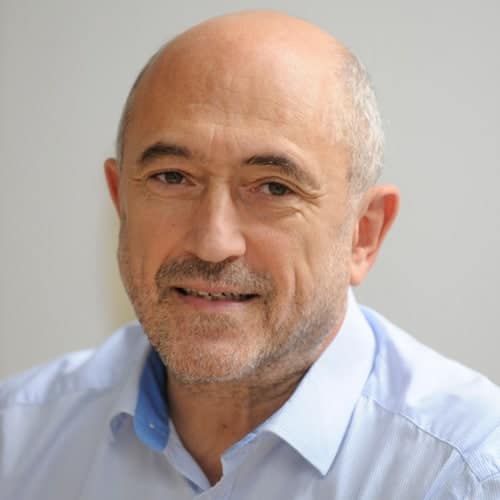
Tom Kirchmaier is Professor of Governance, Risk, Regulation and Compliance at Copenhagen Business School's (CBS) Department of Accounting and Centre for Corporate Governance. He concurrently serves as a Professorial Fellow and Director of Policing and Crime at the London School of Economics' Centre for Economic Performance. He is also a Faculty Affiliate at LSE's Data Science Institute and member of the UK Home Office Scientific Advisory Council. Research Interests: Kirchmaier's work empirically analyzes organizational governance using large datasets. Primary domains include: Law/economics intersections Policing systems and crime patterns Anti-money laundering (AML) and organised crime networks Corporate boards with emphasis on gender dynamics Risk management and compliance frameworks Publication Trends: Recent articles (2021-2025) demonstrate strong focus on empirical crime analysis (e.g., terrorism impacts, domestic abuse recidivism) and corporate governance in banking. Methodologies leverage big data to study spatial crime patterns, behavioral economics, and organizational efficiency across financial and public sectors. Awards: 2024 LSE Innovation Challenge Winner Teaching & Advising: Supervises 1 PhD and 1 Master's student. Teaches graduate/executive courses: Corporate governance and finance MBA compliance/risk management Board training programs
Ingo Zettler is a Professor in the Department of Psychology at the University of Copenhagen, affiliated with the Faculty of Social Sciences. His research focuses on personality psychology, particularly the study of aversive traits (dark personality), prosocial behavior, and their societal implications. He also investigates behavioral science, open science practices, and sports psychology. His work integrates experimental, cross-cultural, and psychometric methodologies to explore how personality traits like dishonesty, moral reasoning, and social preferences manifest across contexts. Key themes include the Dark Factor of Personality (D), Honesty-Humility, and the interplay between personality and societal outcomes such as crime, cooperation, and political behavior. Recent research highlights include examining cultural and institutional influences on dark traits, developing assessment tools for political elites, and investigating pandemic-related behaviors during the COVID-19 crisis. His contributions span theoretical frameworks for personality measurement, meta-analyses of trait relationships, and applied studies in sports ethics and leadership. Zettler collaborates internationally, with publications addressing topics like vaccination readiness, pandemic fatigue, and the role of creativity in ethical justifications. His work emphasizes rigorous methodology and open science practices to advance psychological research reliability.
Vera Rocha is an Associate Professor at the Department of Strategy and Innovation , Copenhagen Business School. Her research focuses on entrepreneurship, organizational dynamics, and labor markets, with particular emphasis on hiring strategies, startup performance, and the societal impacts of entrepreneurial activity. Her work contributes to UN Sustainable Development Goals related to decent work and economic growth. Key areas of expertise include the role of affiliations in startup hiring, refugee integration in organizations, gender dynamics in entrepreneurship, and innovation strategies in early-stage ventures. Her recent articles explore topics such as successive entrepreneurial stints, refugee hiring's impact on organizational performance, and the hidden costs of platform economies. She actively participates in academic conferences and media discussions, addressing issues like female founder leadership and entrepreneurial labor markets. Dr. Rocha has supervised three academic works and collaborates internationally on research projects. Despite her prolific output, no formal scientific awards or dedicated grants are explicitly mentioned in the provided texts.
János Kertész is a Professor and Head of the Department of Network and Data Science at the Central European University (CEU), currently based in Vienna. He is also an elected member of the Hungarian Academy of Sciences. Previously, he held professorial and research positions at the Budapest University of Technology and Economics and the Hungarian Academy of Sciences, where he served as Director of the Institute of Physics. His research lies at the intersection of statistical physics and social sciences, with major contributions to network science, econophysics, computational social science, and algorithmic fairness. He investigates systemic risks in economic networks, opinion dynamics in algorithmically biased environments, poverty mapping using big data, and the role of automation in online extremism. The most recent articles highlight a strong trend in applying complex systems methodologies to real-world socioeconomic problems—particularly through large-scale network analysis, multimodal data integration, and policy-relevant modeling in inequality, supply chains, and digital fairness. His collaborative work spans institutions like the Complexity Science Hub (CSH) in Vienna. Elected member of the Hungarian Academy of Sciences He has advised numerous researchers and contributed to major interdisciplinary grants, particularly in complexity science and data-driven social science. His leadership in organizing NetSci 2023, the largest network science conference, underscores his role in fostering global scientific collaboration. He is central to projects involving high-resolution poverty mapping, economic systemic risk, and ethical AI applications. He is actively involved with the Complexity Science Hub (CSH), where CEU is a partner institution, and contributes to interdisciplinary teams working on economic modeling, social network analysis, and crisis preparedness using granular supply chain and VAT data.
Takayuki Mizuno is an Associate Professor at the National Institute of Informatics and SOKENDAI (The Graduate University for Advanced Studies), where he leads interdisciplinary research at the intersection of informatics, econophysics, and computational social science. His work focuses on analyzing complex global systems such as economic networks, financial markets, human mobility, and geopolitical dynamics using big data and network science. Doctor of Science, Chuo University (Physics) JSPS Research Fellow (2004) Lecturer, Institute of Economic Research, Hitotsubashi University (2007–2010) Associate Professor, University of Tsukuba (2011–2013) Senior Research Fellow, Canon Institute for Global Studies (2009–present) His research interests include computational social science, econophysics, network science, wealth inequality, financial bubbles, cryptocurrency regulation, public opinion manipulation, and global supply chain ethics. He develops models to understand market dynamics, detect hidden financial influences, and visualize geopolitical power shifts. The recent articles highlight a consistent trend in applying big data and network analysis to real-world socio-economic problems: visualizing China's indirect control in global shareholder networks, detecting financial risks, analyzing online market competition, studying supply chain ethics, and understanding cultural integration through human mobility. The work bridges physics, economics, computer science, and political science. Scientific Awards: Best Paper Award, Japanese Society for Artificial Intelligence (2019) Best Paper Award, Information Processing Society of Japan (2019, 2013) Student Encouragement Award, IPSJ (2019) Best Paper Award, Transdisciplinary Federation of Science and Technology (2019) JSPS Research Fellow (2004) Dr. Mizuno advises multiple Ph.D. and master’s students and leads the Mizuno Laboratory, which conducts cutting-edge research on global challenges. He has secured significant research grants from JSPS, JST (Sakigake), and other funding bodies. His work is frequently featured in major media outlets including Nikkei, NHK, The Wall Street Journal, and Yomiuri Shimbun, indicating broad societal impact. He is actively involved in professional service, including as Director of the Society for Computational Social Science of Japan and member of the Editorial Board of the Japanese Society for Artificial Intelligence. He also participates in government advisory committees on big data, economic policy, and telecommunications. His lab, the Mizuno Laboratory, focuses on the fusion of political economy and data science, aiming to disentangle complex global networks to address issues like economic bubbles, terrorism, and social polarization.
Sofie Amalie Ringgaard is a Tenure Track Assistant Professor at Aalborg University Business School (Faculty of Social Sciences and Humanities), affiliated with the Accounting Research Group. Her work focuses on credit risk management, banking systems, and management control in financial sectors. She holds an ORCID identifier (0000-0001-9055-7766) and has been affiliated with École des Hautes Études Commerciales (2022–2023) as a visiting researcher. Research interests include risk management frameworks in banks, boundary systems analysis, and the interplay between budgeting and forecasting. Recent work examines Anti-Money Laundering (AML) compliance and evolving budgetary models in finance sectors. She has published in journals like Journal of Management Control and presented at academic conferences. Current projects include 'Valuation Studies of Management Control in the Insurance Sector' (2024–2027) and 'New Management and Budget Models in the Financial Sector' (2020–2026). Her work bridges accounting theory with practical financial governance challenges.
Daniel le Maire is an Associate Professor at the Department of Economics , University of Copenhagen , specializing in labor economics, labor finance, and applied microeconometrics. His research explores wage bargaining, tax policy responses, and labor market dynamics through empirical analysis and theoretical modeling. Academic Affiliation: Associate Professor (2014–present), Assistant Professor (2008–2014) Education: PhD, M.Sc., and B.Sc. in Economics from University of Copenhagen Research Interests include: Labor market search and income distribution Self-employment and tax bunching Managerial wage premiums and labor share Peer effects in workplace absenteeism His recent publications focus on mortgage reforms, wage bargaining decentralization, and policy evaluation. Awards include the Tuborg Foundation's Economic Prize (2006) and grants from the Danish Social Science Research Council (2010).
Martina Bader is a Guest Researcher in the Department of Psychology at the University of Copenhagen, Denmark, focusing on personality psychology with emphasis on aversive traits, societal influences, and criminal behavior implications. Her research interests include: Dark Triad personality structure and decomposition Personality-state measurement frameworks using latent state-trait theory Cross-cultural variations in personality traits Links between basic personality and criminal convictions Societal determinants of personality expression Recent publications (2023-2025) in high-impact journals like PNAS and Journal of Personality and Social Psychology reveal trends in decomposing aversive personality constructs, analyzing large-scale societal data, and developing methodological innovations for personality assessment. Her work consistently integrates cross-national comparisons and real-world behavioral outcomes.
Johan Heinsen is a Professor at the Department of Politics and Society, Faculty of Social Sciences and Humanities, Aalborg University. His research focuses on coercion, convict labor, and colonial history, particularly within the Danish Atlantic world context. Current projects: 'Run Away: Coercion and autonomy, c. 1800' (PI), 'Empire in Disarray' (Project Coordinator) Key datasets: Carceral Copenhagen, Interrogations of runaway convicts, Aalborg Adresseavis Online He leads the History Research Group at the Centre for the Study of Coercion and Accountability, and contributes to the MASSHINE MIX research center. His work intersects with UN Sustainable Development Goals through historical analysis of penal systems and labor practices. Recent publications analyze coercive networks in Copenhagen and develop dynamic historical dataset frameworks. He has received four major awards, including the Atlantic Studies Early Career Essay Prize and educational honors. Scientific awards: Årets historiske forskningsresultat (2018) Årets underviser (2020) Det Obelske Familiefonds Undervisningspris (2019) Atlantic Studies Early Career Essay Prize (2017) Heinsen actively presents at conferences on topics ranging from prison systems to maritime colonial networks, and contributes to public history initiatives through media appearances and digital archiving projects.
Rafael Prieto-Curiel is a postdoctoral research fellow at the Complexity Science Hub in Vienna, Austria. He holds a PhD and master’s in statistics from University College London (UCL) and previously worked at the University of Oxford and UCL's Centre for Advanced Spatial Analysis. His research spans urban dynamics, human migration, crime modeling, and urban sustainability, employing mathematical and data-driven approaches to complex societal problems. His research interests include urban sustainability, human migration, crime in the digital age, and mobility. He applies mathematical modeling to understand urban form, migration patterns, and organized crime dynamics, particularly in Mexico. He has pioneered models to estimate cartel recruitment and its link to violence, influencing policy discussions at institutions like the World Bank and OECD. His recent publications reflect a strong interdisciplinary trend, combining urban planning, network science, demography, and security studies. Notably, his 2023 Science paper on cartel recruitment and his work critiquing Saudi Arabia’s 'The Line' urban project have drawn international attention. His research often uses large-scale datasets and complex systems theory to derive actionable insights. Science Breakthrough of the Year 2024, Falling Walls Foundation Prieto-Curiel advises international organizations and has been instrumental in public engagement through science communication. He founded the Chalkdust magazine at UCL and the Punto Decimal MX website. His work bridges academic research and policy, particularly in urban planning, migration management, and crime prevention. He has led projects such as the MigraCapax initiative, developing simulation tools for migration scenarios in Austria. He is actively involved in research projects at CSH, including studies on refugee housing stability, African urban morphology, and global mobility patterns. He collaborates widely across disciplines and institutions, contributing to a deeper understanding of complex urban and social systems.
Camilla Bank Friis is a Research Fellow at the Department of Sociology, University of Copenhagen, specializing in sociological analysis of conflict and violence in frontline interactions. She holds a PhD (2022) and Cand.scient.soc (2018) from the same institution. Primary Affiliations: Department of Sociology, Faculty of Social Sciences Key Roles: Postdoc researcher, Co-PI on workplace violence prevention projects Research Interests: Focuses on microsociological analysis of conflict dynamics using body-worn camera (BWC) and CCTV footage. Her work examines status, emotion, and motivation in high-tension interactions between frontline staff (e.g., ticket inspectors, prison officers) and citizens/residents. Specializes in combining observational and interview data for comprehensive conflict analysis. Current Projects (2022–2024): Work-related threats and violence at residential care institutions (Co-PI): Analyzing 150 conflict situations to identify risk factors and de-escalation strategies for adolescent residential care staff. Do body-worn cameras reduce workplace victimization? (Co-researcher): Randomized controlled trial testing BWC efficacy for public transport ticket inspectors. Methodological Expertise: Pioneering use of video-based ethological methods for human behavior analysis, combining qualitative and quantitative approaches. Proficient in observational studies and interview-based ethnography. Grants: Arbejdsmiljøforskningsfonden (Multiple Projects) Crown Princess Mary Center, KU Collaborations: Works with Lasse Suonperä Liebst and Marie Rosenkrantz Lindegaard on criminological and workplace safety projects. Active in cross-disciplinary teams analyzing frontline worker interactions.
Kerstin Carlson is an Associate Professor in the Department of Social Sciences and Business at Roskilde University. She holds additional positions as a Global Fellow at the University of Copenhagen and a Lecturer at The American University of Paris. Her research focuses on legal doctrine and its societal implications, particularly in transitional justice, terror law, and criminal law. She actively follows terror trials in Denmark, Norway, and France, and examines the Colombian JEP court's role in post-conflict justice through a decolonial lens. Carlson has collaborated internationally, evidenced by her extensive publication network. Her work bridges critical legal studies, political theory, and national legal scholarship. Notable research includes analyzing the Habré trial in Chad and the implications of international criminal law in Africa. She has been featured in media discussions on genocide in Gaza, migration policies, and legal responses to terrorism. Carlson's recent projects include a 6 million DKK grant to study presumptions of guilt in terror cases and has contributed to debates on emojis as terror support indicators. She participates in the Forum for Africa Research network, reflecting her engagement with African legal and political dynamics. Her articles frequently address legal ambiguities, institutional failures, and the intersection of law with societal expectations. Themes include the limitations of international courts, the ethical dimensions of genocide classification, and the impact of legal frameworks on marginalized groups. Carlson’s interdisciplinary approach ensures her work remains influential across legal scholarship and policy discourse.
Keith Devlin is an Adjunct Professor of Mathematics Education and Science Outreach at the University of Southern Denmark's Department of Mathematics and Computer Science, appointed in 2022. He is renowned for his dual role as a mathematician and science communicator, popularly known as 'The Math Guy' on American National Public Radio. With a PhD from the University of Bristol (1971), he has held academic positions at institutions like Stanford University, King's College London, and the University of Lancaster, and led initiatives such as the Stanford Mathematics Outreach Project. His research focuses on applying mathematical thinking to information theory, communication models, reasoning systems, and mathematics education. He has authored over 80 articles and 29 books, including influential works like The Millennium Problems and Introduction to Mathematical Thinking . Notable awards include the Carl Sagan Prize for Science Popularization (2007) and the American Mathematical Society Fellowship (2012). Devlin’s outreach efforts bridge academia and the public, including co-founding the Human-Sciences and Technologies Advanced Research Institute (H-STAR) and the BrainQuake educational gaming company. His work emphasizes the societal role of mathematics, blending rigorous scholarship with accessible communication.
Jan Kloster Staunstrup is a Teaching Associate Professor at Aalborg University's Department of Sustainability and Planning, part of The Technical Faculty of IT and Design. His research focuses on geography, urban development, and regional policy, with a strong emphasis on spatial data infrastructure and climate change adaptation. He has led and participated in projects addressing second-home markets, climate risks, and rural land-use policies. His work bridges theoretical and applied aspects of spatial planning, emphasizing interdisciplinary approaches to sustainability challenges. Recent publications explore second-home pricing dynamics, climate adaptation in coastal regions, and wastewater management in tourism areas. He has collaborated on projects like 'Sommerhuse og verdensmål' and 'Tvangsauktioner over énfamilie boliger', contributing to policy debates on housing markets and urban renewal. Media engagements highlight his role in translating research into public discourse on housing and environmental issues. Education and career details, while not explicitly stated, his academic trajectory aligns with advanced research and teaching roles in spatial planning. Advising one PhD student reflects his mentorship in interdisciplinary studies. His projects often involve multi-stakeholder collaborations, addressing practical challenges in Denmark's urban and rural landscapes. He actively engages in policy discussions through media contributions and academic publications, emphasizing evidence-based solutions for sustainable development.
Jeppe Dyrberg Andersen serves as Associate Professor in the Section of Forensic Genetics at the University of Copenhagen's Faculty of Health and Medical Sciences. His research focuses on advanced genetic analysis techniques for forensic applications, particularly with degraded biological samples from crime scenes. His primary research domains include: Forensic investigative genetic genealogy using shotgun sequencing Molecular autopsy for sudden unexpected death investigations Pigmentation genetics (hair, skin, eye color prediction) Ancestry determination using AIMs Epigenetic analysis for age/lifestyle prediction Skin cancer and melanoma biomarker research Recent publications demonstrate leadership in developing RNA and DNA analysis protocols for challenging forensic samples, with 77 research outputs including high-impact journals like Forensic Science International: Genetics. His work integrates methylome, transcriptome, and genome analyses to solve complex forensic cases. Professional activities include 14 recorded engagements such as lectures at ISFG 2024 and workshops on shotgun sequencing preparation. His technical expertise spans whole genome/exome/transcriptome sequencing, bioinformatics, and high-throughput data analysis for forensic contexts.