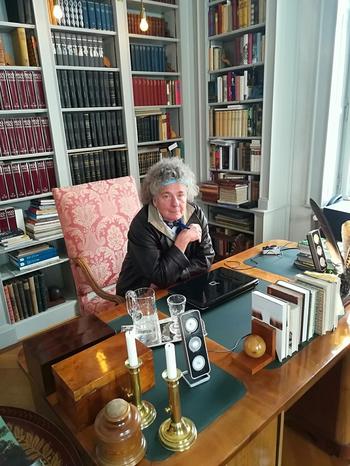
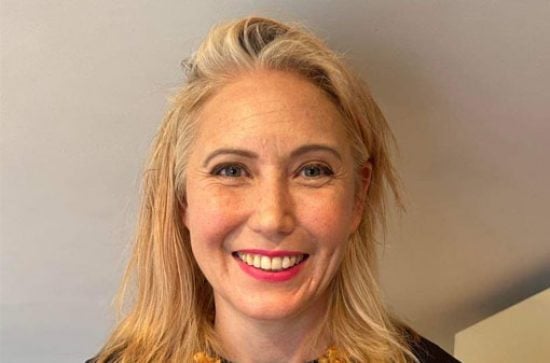
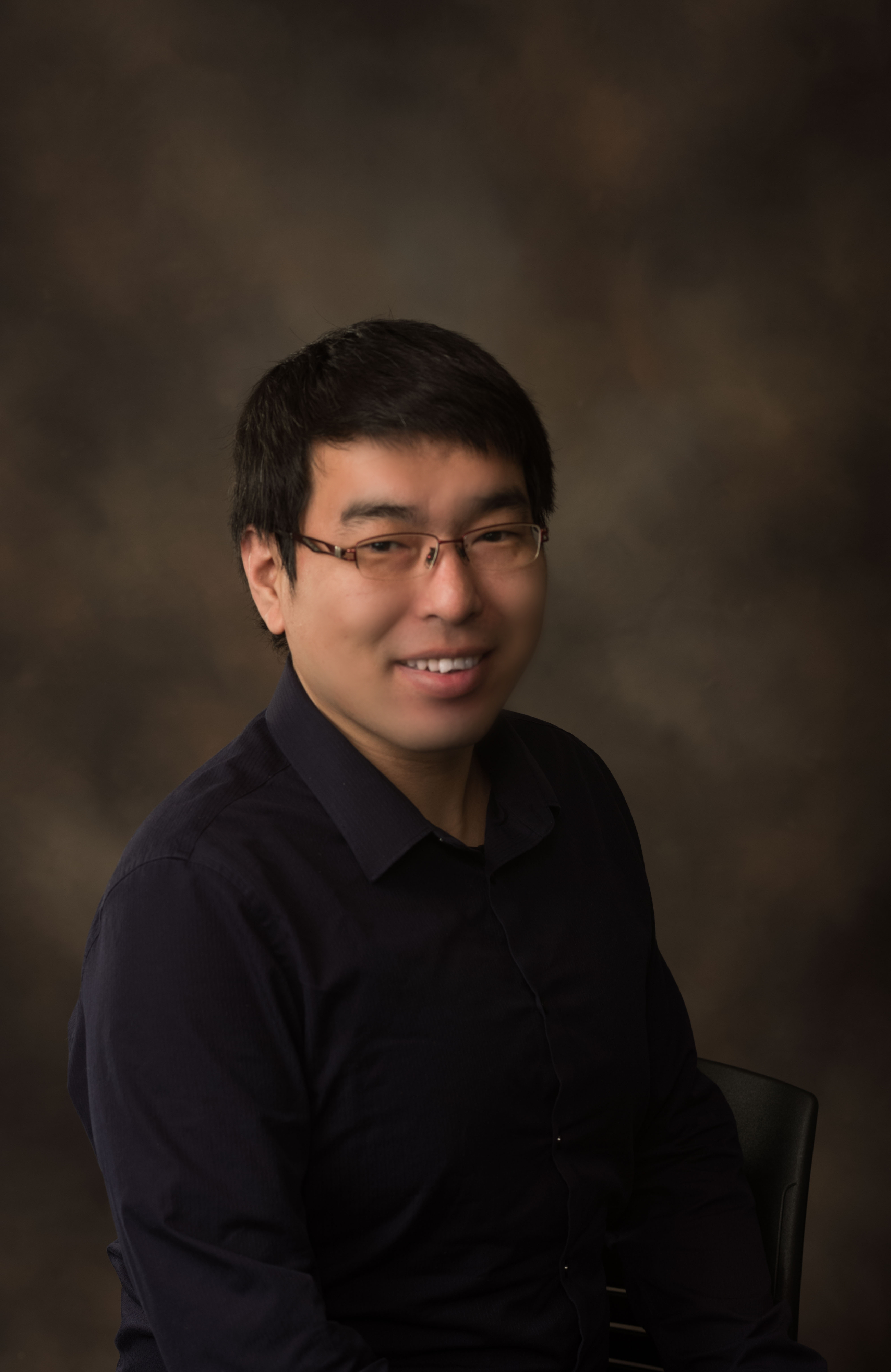
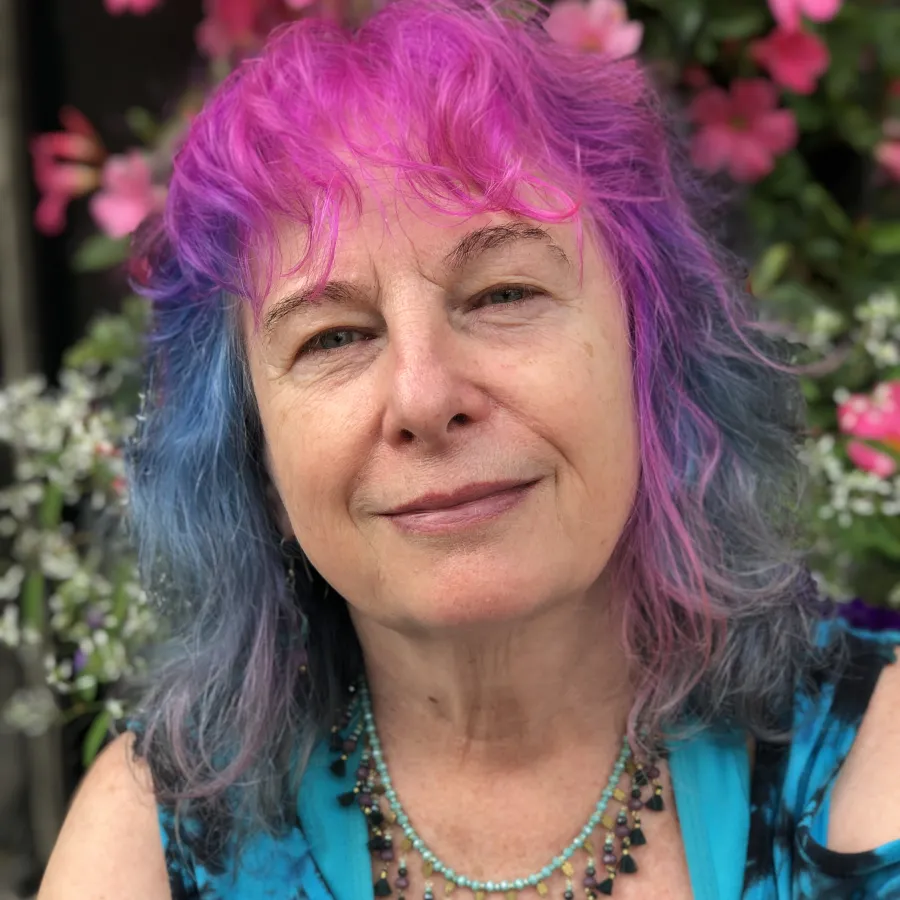
Begona Rodriguez De Cespedes is a Senior Lecturer and Course Leader of the MA Translation Studies at the University of Portsmouth , affiliated with the School of Education, Languages and Linguistics and the Centre for European and International Studies Research . Her work bridges academic translation education with industry practices. Research Interests : Focuses on pedagogical challenges in translator training, professionalisation, automation's impact, enterprising education, and UK language service provision. Her studies explore employability, industry training practices, and technology integration. Recent Research Trends : Analysis of AI's role in translation, digital transformation of language service providers, and curriculum innovations for freelance readiness. Collaborative projects include the European Master’s in Translation and National Network for Translation. Scientific Awards : No specific awards listed in the provided text. PhD Supervision & Grants : Supervises PhD students and participates in knowledge exchange projects. Served as Portsmouth coordinator for the European Project OPTIMALE and EMT (European Master’s in Translation) from 2011-2021. Labs & Teams : Active in the Sociology and Social Theory Research Group and ELIA Exchange UK , collaborating with language service providers and European universities.
Mike S. DuBose serves as a Senior Lecturer in the Composition Program within the Department of English Language and Literature at the University of Toledo's College of Arts and Letters. Based at Memorial Field House, he teaches undergraduate composition and literature courses while maintaining an active research profile as a media scholar with international conference presentations. His academic foundation includes a Ph.D. in American Culture Studies from Bowling Green State University, providing interdisciplinary depth to his scholarly work. This educational background directly informs his research methodology and theoretical frameworks. DuBose's research program centers on critical television studies and the innovative application of complexity theory to analyze popular culture phenomena. He investigates how media narratives in television and comic books reflect and shape societal structures, political ideologies, and cultural values. His scholarship bridges humanities and systems theory, producing nuanced interpretations of texts like House, M.D. and superhero comics. Publications in journals such as Television & New Media and the Journal of Popular Culture demonstrate his expertise in media criticism, with recurring themes examining authority systems, political allegory, and narrative complexity within visual culture. Analysis of his publication trajectory from 2007 to 2013 reveals consistent scholarly output focused on the political economy of television and cultural significance of comic book heroes. His work employs theoretical frameworks to dissect media-power dynamics, contributing significantly to television studies discourse through examinations of boutique television formats, medical drama ethics, and Cold War-era superhero narratives. The cohesive thematic thread across his publications connects media content to broader societal structures through complexity theory lenses. No scientific awards or major honors are documented in available institutional records. Available information indicates no formal student advising responsibilities or graduate mentorship activities. The VIVO database explicitly confirms no research grants associated with his profile, suggesting his scholarly activities are primarily teaching-focused and independently conducted without external funding support. Beyond academia, DuBose maintains a creative practice as a musician performing under TheMikeDuBose, having released two albums. This artistic endeavor complements his academic work on popular culture, though it operates independently from any university-affiliated research labs or collaborative teams at the University of Toledo.
Riccardo Morri is an Associate Professor at the Department of Modern Literature and Culture , Sapienza University of Rome . With a PhD in Geography (1999) and a Master in Human Geography (1993), he specializes in Historical Geography , Cartographic Education , and Public Geography . His work bridges geographical theory with educational practices and heritage preservation. Education PhD in Geography, University of Cassino (1999) Master in Human Geography, Sapienza University (1993) Morri's research focuses on historical urban landscapes , geographical heritage , and interdisciplinary methodologies . He explores how cartography and geography intersect with literature, memory, and education, particularly through projects like the MAGISTER initiative for territorial enhancement using geospatial tools. His recent publications (2022-2025) emphasize: Democratizing geographical knowledge Digital humanities applications in heritage studies Cartographic language in early childhood education Urban memory landscapes Participatory approaches to geographical heritage These works often integrate GIScience with cultural analysis and educational innovation. Scientific Awards include national qualifications as Full and Associate Professor, CNR's 'Promozione Ricerca 2005', and multiple research scholarships from Sapienza University and the Italian Foreign Office. Morri has: Led the MAGISTER Project (€165,000) for geospatial territorial enhancement Coordinated the Geocartography Laboratory at Sapienza since 2014 Managed EU-funded educational initiatives on remote sensing He serves on editorial boards for journals like J-Reading and Geotema , and organizes annual geography conferences with hundreds of participants.
Claudia Böhme is a researcher at the Georg-Eckert-Institute for International Textbook Research , specializing in media transformations in educational contexts. She collaborates with Dr. Andreas Weich and Prof. Dr. Macgilchrist on the Telekom Foundation-funded project Educational Ecosystems - Patterns, Practices and Services (EPPS), focusing on digital STEM education for children and youth through maker spaces and museum-school partnerships. Doctorate from Johannes Gutenberg University Mainz (Swahili film studies) Former DFG-funded researcher at the University of Trier Expertise in East African media practices and refugee camp digital cultures Her research bridges digital media studies and anthropology of migration , examining how educational ecosystems evolve through transnational technological interactions. Recent publications explore: Arts' role in refugee future-making Temporal dimensions in African art forms Swahili film industry representation Digital communication during resettlement She actively presents findings at academic conferences, discussing topics like: STEAM educational ecosystem dynamics Queer representation in Kenyan cinema Media practices in maker spaces Current work engages with Nairobi-Kakuma research networks and German educational infrastructure development.
Tuhin Chakrabarty is an Assistant Professor in the Department of Computer Science at Stony Brook University. His research focuses on developing AI systems that address implicature, ambiguity, and human-aligned requirements, with applications in natural language processing and human-AI collaboration. Education: Ph.D. in Computer Science from Columbia University Research Interests: Tuhin explores methods to enhance AI reliability through Long Form Text Generation Evaluation, Benchmarks for Reasoning and Explainability, and Human-AI Collaboration frameworks. His work bridges computational linguistics, machine learning, and creative applications of AI. Scientific Awards: Columbia Center of Artificial Intelligence & Technology (CAIT) Research Support Amazon Science Ph.D. Fellowship Computational Journalism Fellow at NYTimes R&D (2021-2022) Publications Trends: His recent work spans AI safety, creativity support, figurative language understanding, and multimodal systems. Key themes include human-AI alignment, ethical considerations, and empirical studies on generative models. Additional Contributions: Tuhin collaborates with Stony Brook’s Institute for AI-Driven Discovery and Innovation, advancing interdisciplinary research in AI applications.
Dr. Marion Ziesmer serves as a Research Fellow in the Department of German Didactics within the Faculty of Educational Science and Psychology at Free University of Berlin. Her expertise centers on literary and aesthetic education with emphasis on intercultural understanding, particularly examining poetry's impact on children from immigrant families in primary education settings. Her academic foundation includes: Studies in German Studies, Musicology, and Primary School Education at Freie Universität Berlin (1992) Second State Examination for the teaching profession Dr. Ziesmer's research investigates how traditional poetry shapes educational behavior among immigrant children, originating from her 2011 dissertation "Die entfesselte Sprache". Current work explores literary-aesthetic education as a bridge for intercultural dialogue, developing practical classroom applications through poetry analysis and mythological studies. She has created extensive teaching materials for classics like Goethe's works and Prometheus adapted for multicultural primary classrooms. Analysis of her 1996-2021 publications reveals consistent integration of literary heritage with contemporary educational challenges. Key trends include mythology (Gilgamesh, Siegfried) in modern pedagogy, poetry analysis for immigrant students, and strategies for cultural dialogue through texts like Mignon and Neruda's works. Her contributions span academic journals, exhibition catalogs, and practical teaching resources. Her scholarly impact is recognized through: Marie-Schlei-Preis for dissertation (2012) Honor Award for "entfesselte Lehre" (2016) Award for Excellent Teaching in Primary Education (2024) Dr. Ziesmer actively mentors through the Learning and Research Workshop for Literary Education, providing resources via unterrichtstipps.com and maintaining consultation hours at FU Berlin. Her work demonstrates sustained commitment to practical application of literary research in diverse urban educational environments.
Anna Hickey-Moody is Director of the Arts and Humanities Institute and inaugural SALI Professor of Intersectional Humanities at Maynooth University, Ireland. Previously Professor of Media and Communication at RMIT University (where she held an Australian Research Council Future Fellowship) and Associate Professor of Gender and Cultural Studies at the University of Sydney, she brings a distinctive blend of creative practice and critical theory to the humanities. Education & Career: PhD supervision expertise across religion, disability, sexuality, gender and race. Led the CRiMP Lab (Creative Research in Methods and Practice) at RMIT. Future Fellowship project “Interfaith Childhoods” conducted arts-based fieldwork across Australia and the U.K. Research Interests: Hickey-Moody’s work mobilises new materialist, feminist and Deleuzian thought to explore how young people negotiate identity, faith, disability and class. Current projects examine pleasure and class in brown-coal mining communities and the role of arts methodologies in fostering inter-faith understanding. Publications trajectory: Her recent outputs (2022-23) foreground youth arts as popular education, decolonial pedagogies, and children’s carbon cultures, evidencing a sustained engagement with socially engaged practice, environmental humanities and inclusive education. Honours: Australian Research Council Future Fellowship Doctoral Supervision & Grants: An experienced PhD supervisor, she welcomes projects on religion, youth, disability, sexuality, gender and race. She has secured competitive international grants, most notably the ARC Future Fellowship, and continues to lead collaborative interdisciplinary teams. Labs & Teams: Founder of the CRiMP Lab at RMIT, a feminist research laboratory fostering queer and gender-diverse researchers working across creative practice-as-research, visual sociology and creative anthropology.
Rachel Blau DuPlessis is a distinguished poet and literary critic affiliated with Temple University's Tyler School of Art, where she has taught for decades and significantly influenced contemporary poetry through her innovative work and pedagogy. Her career spans over forty years of groundbreaking contributions to feminist poetics and serial literary forms. Her research interests focus on long-form poetic sequences, particularly her monumental Drafts project that began in 1987 and continues to evolve through multiple volumes including Toll , Pledge , Torques , Pitch , and most recently Surge and Daykeeping . DuPlessis has pioneered approaches to serial poetry that incorporate feminist theory, historical documentation, and visual elements, creating works that challenge traditional poetic forms while addressing political and social concerns. Her writing explores the intersections of personal experience, collective history, and linguistic innovation. DuPlessis's recent publications reveal increasing engagement with documentary poetics, visual-textual relationships, and the politics of form. Her work demonstrates remarkable consistency in exploring how poetic structures can embody political commitments while maintaining aesthetic rigor. The evolution from early Drafts through Daykeeping shows deepening engagement with time consciousness, memory work, and the documentation of everyday life through poetic means. As a mentor and educator, DuPlessis has influenced generations of poets and scholars through her teaching at Temple University and numerous guest readings and workshops internationally. Her critical works, including The Pink Guitar: Writing as Feminist Practice and Writing Beyond the Ending , have been foundational texts in feminist literary criticism.
Brett Ashley Kaplan is a Professor and Conrad Humanities Scholar at the University of Illinois, Urbana-Champaign, affiliated with multiple departments including Comparative and World Literature, Germanic Languages and Literatures, Jewish Culture and Society, Unit for Criticism and Interpretive Theory, French and Italian, School of Art and Design, and Center for Global Studies. Her research spans Holocaust postmemory, Jewish-American literature, and race/ethnicity in contemporary art. Ph.D. in Rhetoric from University of California, Berkeley (2002) Key research areas include: Holocaust art and literature Jewish American literary analysis Race/ethnicity in visual and performance art Environmental trauma narratives Critical theory applications Recent publications focus on Jewish identity dynamics, Holocaust memory frameworks, and interdisciplinary aesthetics. As director of the Initiative in Holocaust, Genocide, and Memory Studies, she shapes global discourse on trauma and cultural memory through edited works like Critical Memory Studies: New Approaches (2023). Current creative work includes the novel Rare Stuff (2022) and its ecological themes, with Vandervelde Downs in progress.
Hiromichi Hosoma is a Professor at Waseda University's Faculty of Letters, Arts and Sciences, where he has been teaching since 2019. Previously, he was affiliated with The University of Shiga Prefecture's School of Human Cultures from 1995 to 2019. He holds a Doctor of Science degree from Kyoto University Graduate School and specializes in the study of human interaction through bodily movements, gestures, and multimodal communication. Professor Hosoma's research focuses on how multiple people coordinate their bodily movements and spatial awareness in various settings including daily conversations, traditional performing arts, and caregiving situations. His work spans cognitive science, social psychology, linguistics, and social welfare, with particular attention to interaction analysis, conversation analysis, gesture studies, onomatopoeia, and elderly care. He investigates how speech and gesture work together to create shared understanding in social contexts, examining phenomena from mundane activities like card games and page-turning to specialized settings like tap dance instruction and dementia care. His scholarly output reveals a consistent focus on multimodal interaction across diverse contexts, with recent work examining latency in telecommunication, weight representation through touch, and deaf-hearing interaction in dance instruction. His publications demonstrate an interdisciplinary approach that bridges cognitive science with practical applications in healthcare and cultural analysis. Professor Hosoma has secured multiple research grants from the Japan Society for the Promotion of Science, including his current project on home care for elderly people with dementia (2025-2028). He is an active member of the Japanese Cognitive Science Society, Qualitative Research in Psychology, and the Japanese Association of the Sociolinguistic Sciences, contributing to both academic discourse and public understanding through book reviews and media commentary on manga, animation, and visual culture.
Tom Duscher is a Professor of Interactive Media at the Muthesius Academy of Art and Design in Kiel, Germany, affiliated with the Center for Media. He has held this position since 2003, leading research in information design and scientific visualization. Duscher founded the Science Communication Lab in 2015, focusing on innovative visual communication for scientific topics, and serves as a Principal Investigator at the Kiel Science Communication Network (KSCN) since 2021. His research explores: Information Design : Creating visual frameworks for complex scientific data Scientific Visualization : Developing interactive formats for oceanography and environmental science Experience Design : Studying impact processes in science communication Interdisciplinary Collaboration : Bridging art, design, and marine science His publications demonstrate a consistent focus on digital media evolution , interdisciplinary communication , and experimental visualization techniques , with recent works emphasizing science-art collaborations and immersive educational formats. Awards include: Information is Beautiful Award Gold (2019) German Design Award in Gold (2016, 2019) Red Dot 'Best of the Best' (2014) Innovation Award of Kiel (2017) He directs the Science Communication Lab and co-leads transdisciplinary projects through KSCN, a consortium involving Muthesius Academy, Leibniz Institute, and Kiel University. His Future Ocean Explorer project developed interactive exhibition technologies.
Garrett Hongo is a Professor in the Creative Writing Program at the University of Oregon , within the College of Arts and Sciences . A seminal figure in Asian American literature, Hongo is celebrated for his poetry and memoirs that explore identity, diaspora, and cultural hybridity. His work is deeply informed by his upbringing in Hawai‘i and Los Angeles, and his literary voice bridges multiple traditions—from Hawaiian pidgin and Japanese heritage to African American blues and Western literary forms. Hongo’s research and creative interests span Modern and Contemporary Poetry, Asian American Literature, Diasporic Literatures, Critical Theory, Creative Nonfiction , and the intersections of music and poetry . His writing is characterized by lyrical precision, historical depth, and a commitment to personal and collective memory. He often draws from plantation histories, urban landscapes, and philosophical meditation to craft works of enduring resonance. His literary output includes seminal poetry collections such as Yellow Light (1982), The River of Heaven (Lamont Poetry Prize, Pulitzer finalist), and Coral Road (2011), as well as the acclaimed memoirs Volcano: A Memoir of Hawai‘i (Oregon Book Award winner) and The Perfect Sound (2022). His recent publications in The New Yorker , including “An Ocean of Clouds” (2025) and “On Emptiness,” reflect a continued engagement with themes of solitude, loss, and the natural world. These works demonstrate a poetic evolution toward meditative and philosophical reflection, often grounded in specific landscapes like the Mediterranean or Hawaiian volcanoes. Hongo has received numerous accolades, including: Guggenheim Fellowship National Endowment for the Arts Fellowship Rockefeller Foundation Fellowship Aiken Taylor Award for Modern American Poetry (2022) Lamont Poetry Prize Finalist, Pulitzer Prize in Poetry Oregon Book Award for Nonfiction He has mentored and been influenced by literary figures such as C.K. Williams, Quincy Troupe, and Ishmael Reed, and his critical writings engage deeply with literary theory, Emersonian transcendentalism, and global poetic traditions. While no formal advising list is provided, his role as a professor suggests ongoing mentorship of emerging writers. Hongo has not been associated with formal research grants in the scientific sense, but his fellowships represent significant support for his creative and scholarly work. Though not affiliated with a formal lab or research team, Hongo’s intellectual community includes fellow poets, memoirists, and scholars in creative writing and ethnic studies. His work continues to shape conversations around race, language, and artistic authenticity in American literature.
Haohan Wang is an Assistant Professor at the University of Illinois Urbana-Champaign's School of Information Sciences, with affiliations to the Carl R. Woese Institute for Genomic Biology and the National Center for Supercomputing Applications. His research focuses on developing trustworthy machine learning methods for computational biology and healthcare applications , emphasizing robustness , causality , and interpretability in vision-based models. Recent research trends in his work include: Large Language Model interactions with biomedical challenges (GenoAgent, GenoTex) Adversarial security in language and vision models (Guard, Jailbreakzoo) Genomic data analysis through robust machine learning frameworks (Precision Lasso, Kernel Mixed Models) Interactive toolkits like Robustar for data annotation and model training Scientific awards include recognition as Baidu's Top 50 AI+X Rising Young Scholars (2022), Best Paper Honorable Mention at WSDM 2023, and Broad Institute's Next Generation status (2019). Current projects explore AI-made scientists for biomedical discovery and Robustar development for GUI-based robust vision learning.
Alexander Repenning is a Professor in the Department of Computer Science at the University of Colorado Boulder's College of Engineering and Applied Science. He has been a leading researcher in computer science education, particularly in the areas of visual programming, computational thinking, and game-based learning for over three decades. Repenning's research focuses on making programming accessible to novices through innovative environments like AgentSheets and AgentCubes. His work emphasizes blocks-based programming, computational thinking patterns, and scalable approaches to computer science education. He has pioneered the Scalable Game Design methodology which has been implemented in schools worldwide to teach computational thinking through game design. His recent publications (2021-2024) show a continued focus on blocks-based programming environments, with emerging work integrating AI concepts into educational programming tools. His research demonstrates consistent interest in understanding how to make programming more accessible while preserving computational thinking principles, with particular attention to flow theory, scaffolding techniques, and measuring educational impact. Significant contributions to scalable game design methodology Pioneering work in blocks-based programming for education Development of AgentSheets and AgentCubes environments Repenning has mentored numerous researchers who have become leaders in computer science education themselves, including Ashok Basawapatna, Andri Ioannidou, and David Webb. His work has been supported by multiple NSF grants focused on broadening participation in computing and developing scalable approaches to computer science education. He leads the Scalable Game Design project which has created a comprehensive ecosystem for teaching computational thinking through game design. His laboratory focuses on developing and evaluating visual programming environments, with particular attention to how students engage with computational concepts through game design activities. The team has developed sophisticated analytics to measure computational thinking patterns in student projects, enabling formative assessment in programming education.
Katharyn Howd Machan is a Professor of Writing at Ithaca College's School of Humanities and Sciences. With a career spanning over four decades, she specializes in creative writing, poetry, and fairy tale studies. Her academic journey includes a Ph.D. in Interpretation (Performance Studies) from Northwestern University, an M.A. in English from the University of Iowa, and a B.A. in English and Speech from The College of Saint Rose. Ph.D., Interpretation (Performance Studies), Northwestern University (1984) M.A., English, University of Iowa (1975) B.A., English and Speech, The College of Saint Rose (1974) Her research integrates poetry with performance studies, focusing on fairy tales, narrative dance, and embodied creativity. Her work explores how literature intersects with physical expression and community storytelling traditions. Key themes include metaphor, identity, historical memory, and the fusion of dance with written language. Recent publications like A Slow Bottle of Wine (2020) and Secret Music: Voices from Redwing, 1888 (2018) reflect her interest in lyrical storytelling and temporal layering. Awards include the Ann Stanford Poetry Prize and Luna Negra Poetry Prize, alongside her 2002 appointment as Tompkins County's first Poet Laureate. Ann Stanford Poetry Prize (University of Southern California) Luna Negra Poetry Prize (Kent State University) First Poet Laureate of Tompkins County (2002) As Zajal the Sugarplum Fairy, she combines belly dancing with poetic performance, offering workshops and community classes. Her scholarship also extends to editing anthologies like Adrienne Rich: A Tribute Anthology (2012).