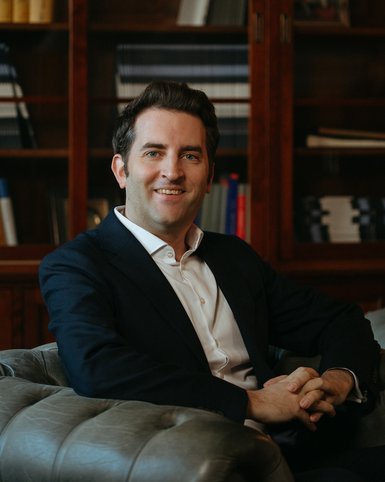
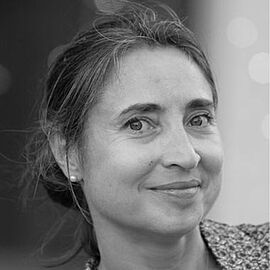
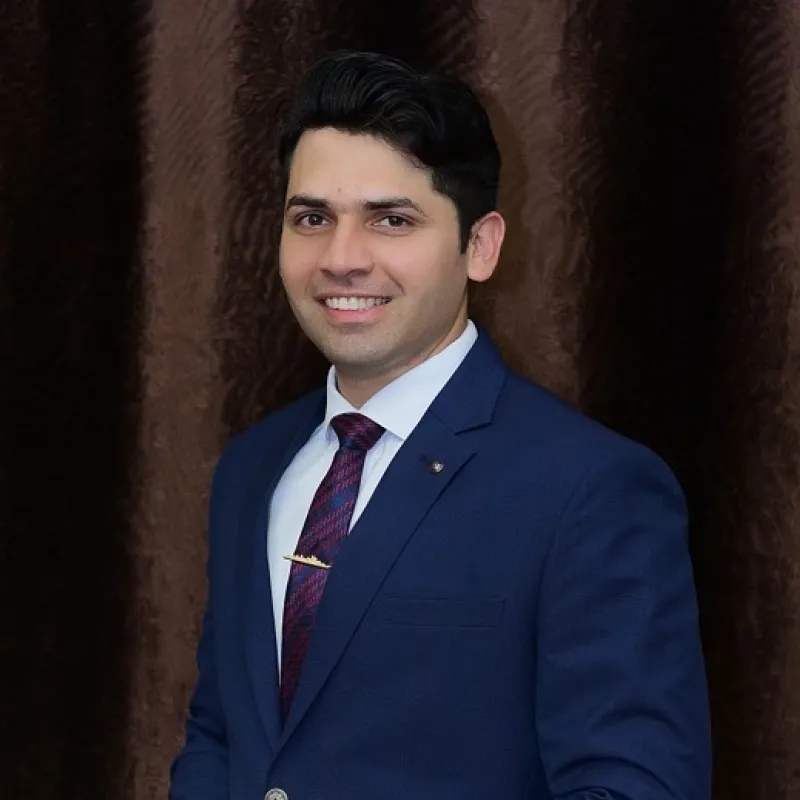
Isobel Hurst is a Lecturer in the Department of English and Creative Writing at Goldsmiths, University of London. Her research specializes in Classical Reception Studies, focusing on the interplay between Greek and Roman literature and 19th-century women's writing. Academic qualifications: D.Phil. (2003), M.Phil. in English Studies (2000), BA in Classics and English (1995) - all from the University of Oxford Her research explores how women writers like Elizabeth Barrett Browning and George Eliot creatively engaged with classical texts to challenge gender norms and societal constraints, particularly through reworkings of Homeric and Virgilian themes. She examines intersections between domesticity and epic traditions, feminist reinterpretations of mythology, and the role of classical education in women's authorship. Recent publications analyze Louise Glück's mythic poetry, Victorian epic traditions, and transatlantic classical dialogues. She supervises PhD students working on topics including Sapphic poetics, prophetic figures in literature, and epic subversions in contemporary forms. Isobel contributes to academic discourse through her involvement with the Decadence Research Centre and Centre for Comparative Literature, bridging classical traditions with modern literary innovations through both teaching and research.
Dominic Thibault is an Assistant Professor at the Faculty of Music, Université de Montréal . His research-creation explores human-machine interaction in musical contexts, focusing on embodied cognition through electroacoustic compositions, audiovisual performances, and musical software development. Co-director, Laboratoire Formes·Ondes Active member, CIRMMT (Centre for Interdisciplinary Research in Music Media and Technology) Research axis leader, Expanded Musical Practice (CIRMMT) Member, Québecor Millénium entrepreneurship committee Scientific committee member, ACFAS
David M Feldshuh is a Professor in Performing and Media Arts at Cornell University with over 40 years of service, uniquely combining a board-certified emergency medicine physician career with theater artistry. As founding Artistic Director of the Schwartz Center for the Performing Arts, he leads a resident company of professional actors collaborating with students across Cornell. His education spans Dartmouth College (B.A. Philosophy, Phi Beta Kappa, cum laude), London Academy of Music and Dramatic Arts, and dual Ph.D. (Theatre) and M.D. (Medicine) from the University of Minnesota, followed by Emergency Medicine residency at Hennepin County Medical Center and board certification. Feldshuh’s research centers on theater as a vehicle for social change, particularly at the arts-healthcare intersection. He pioneers creativity training methodologies derived from Zen meditation, Gestalt Therapy, and martial arts to enhance professional presence. His work examines ethical dilemmas in medical practice through performance, with emphasis on cultural bias mitigation and historical trauma processing. His creative output reveals consistent focus on social justice narratives, evolving from historical adaptations like Antigone to contemporary explorations of systemic inequity. Recent works demonstrate increasing formal innovation through multi-role performance structures and transmedia storytelling approaches that bridge academic and public engagement. Major honors include: Pulitzer Prize Finalist and 5 Emmy Awards for Miss Evers' Boys Cornell’s Stephen H. Weiss Presidential Fellowship (highest teaching honor) Distinguished Service Award from Tuskegee University’s National Bioethics Center AMA “Freddy” Award for medical film excellence CINE Golden Eagle for documentary work Feldshuh mentors through honors tutorials and developed the globally adopted eCornell course Acting in Public , teaching 1,600+ students across 15 countries. His Schwartz Center leadership established institutional grant frameworks supporting large-scale productions like Bernstein’s Mass with 138 performers. Current initiatives include leadership workshops for Cornell Tech and corporate clients, extending his presence-training methodology beyond academia. He maintains active creative practice through the Schwartz Center’s resident company, directing major productions while integrating medical ethics into performance pedagogy. His stadium announcing role at Cornell commencements for 20+ years exemplifies his commitment to institutional community engagement.
Joël Thibeault is a Professor at the Faculty of Education, University of Ottawa and Adjunct Professor at the Faculty of Education, University of Regina . His research focuses on the teaching and learning of French grammar in Francophone minority contexts, the integrated instruction of French and English, and the use of children’s literature in linguistic education. He has secured major funding from the Social Sciences and Humanities Research Council of Canada for studies on bilingual grammar pedagogy. Research Themes: Francophone minority education, plurilingual approaches, drama-based pedagogy, and curriculum innovation. Awards: Received the Prix du nouveau chercheur (2024) from the University of Ottawa’s Faculty of Education. Recent Publications emphasize inductive grammar strategies, plurilingual vocabulary instruction, and drama/literature integration in minority language classrooms. His work bridges policy, practice, and technology in Canadian French-language education. Scientific Awards: SSHRC Grant (2024) Prix du nouveau chercheur (2024)
Anna Villarroya Planas is a Professor at the Universitat de Barcelona, serving as Director of the Research Center for Information, Communication and Culture. She holds a law degree and economics degree from the Universitat de Barcelona, and a PhD in Public Sector Economics from the same institution. Affiliated with both the Faculty of Information and Audiovisual Media and the Department of Economics, she has been teaching courses related to cultural economics and cultural policies since 1993. Her research focuses on digital culture and content, with special emphasis on open access to science and economic studies on culture, particularly examining gender perspectives in cultural sectors. She serves as President of the European Association of Cultural Researchers and coordinates the Interuniversity Doctoral Program in Gender Studies: Cultures, Societies and Policies. Analysis of her recent publications (2022-2024) reveals a strong focus on gender equality in cultural sectors, particularly examining gender discrimination in the performing arts, LGBTQ perspectives in information studies, and cultural policies with gender perspectives. Her work spans multiple disciplines including cultural economics, gender studies, library science, and policy analysis, demonstrating interdisciplinary approaches to understanding cultural production, consumption, and policy implementation. She has participated in numerous research projects funded by public entities including the World Bank, Council of Europe, ERICarts, Organization of Ibero-American States, Spanish Ministry of Culture, Catalan Department of Culture, and Barcelona Provincial Council, as well as private foundations like "la Caixa" Banking Foundation, Carulla Foundation, and Alternativas Foundation. Since 2006, she has authored the report on cultural policy in Spain included in the Compendium of Cultural Policies and Trends, and since 2017 has been a member of the Council of the Association of the Compendium of Cultural Policies and Trends. Her leadership extends to directing research projects focused on gender perspectives in information and media studies, including the GEMPIMS (Gender Perspective Mentoring Program in Information & Media Studies) initiative at the University of Barcelona.
Jim Rogers is an Associate Professor and Chair of PhD Studies at the School of Communications, Dublin City University. His research focuses on media and cultural industries, music, and copyright, with an emphasis on the digital transformation of the music industry, global strategies, and policy implications. He has authored and edited multiple books and articles on topics such as the evolution of performing rights organizations, the audio-visual nexus, and Ireland's music industry success. Rogers has presented at international conferences across Europe, Africa, Asia, and the Americas, engaging with issues like intellectual property, creative destruction, and cultural policy. His work bridges academic theory and industry practice, addressing the intersection of technology, law, and cultural production.
Shannon Bell is a Professor in Political Science at York University, working as a performance philosopher who integrates digital video technology with political theory. Her research examines intersections of cyberpolitics, aesthetics, and power through projects like 'Shooting Theory', which visualizes philosophical concepts through film. She has authored books including 'Fast Feminism' and 'Reading, Writing and Rewriting the Prostitute Body'. Current SSHRC-funded projects explore bioart and robotic art extremes, with residencies at Symbiotica (UWA) and international exhibitions. She teaches courses on modern political thought, technopolitics, and aesthetics. Educational background includes a PhD in Political Science from York University. Professional leadership includes directing the Resource Centre for Public Sociology.
Dr. Jan Christoph Munck-Rieder is a Lecturer at EBS Business School in Oestrich-Winkel, Germany. He serves as Co-Head of the Strascheg Center for Impact in Innovation & Entrepreneurship (SCIIE) and leads the Gründungsfabrik Rheingau , a joint initiative with Geisenheim University. In addition to his academic role, he is the managing director of varISO GmbH in Mainz, a consultancy firm. Education: Business Administration studies at Johannes Gutenberg University Mainz Business Administration studies at Karlstad University, Sweden Research Interests: Dr. Munck-Rieder’s research focuses on innovation management , entrepreneurship , and innovation controlling . He explores how organizations can systematically manage innovation processes through effective control systems, balancing creativity with efficiency. His work also delves into the implications of digital transformation on budgeting, management accounting, and organizational development. He has contributed extensively to understanding how Industry 4.0 technologies reshape business models and control mechanisms in manufacturing and service sectors. Publications Overview: His recent publications span peer-reviewed journals and industry-focused outlets, with a clear emphasis on innovation control systems , new product development , and digital transformation . Topics include the performance effects of control instruments in innovation stages, bibliometric evolution of innovation control as a field, and empirical studies on digital budgeting. His work often bridges theoretical frameworks with practical applications in corporate and startup environments. Books and Editorial Contributions: Controlling von Start-Ups & Start-Up-Initiativen (2019, co-authored with R. Gleich) Co-editor of Kennzahlen optimal nutzen (2018) Multiple chapters in edited volumes on controlling, innovation, and digital transformation Industry Engagement & Consulting: Dr. Munck-Rieder has extensive consulting experience with firms such as INVENSITY , Volkswagen Consulting , Horváth , and SGP Management Consultants . His dual role in academia and industry allows him to integrate practical insights into research and teaching, particularly in innovation and entrepreneurship education.
YUE Heng is a Full-time Professor of Accounting at Singapore Management University (SMU), holding dual roles as Director of the SMU-ZJU Doctor of Business Administration (Accounting & Finance) Program and Programme Director of the SMU Tsinghua Joint Master of Science in CFO Leadership. He joined SMU in 2015 after teaching at Peking University, where he earned his Bachelor's degree in Management from the Guanghua School of Management. He holds a PhD in Accounting from Tulane University's Freeman School of Business. His research focuses on corporate governance, earnings management, voluntary disclosure in emerging markets, and capital market dynamics. Notable contributions include studies on tunneling through intercorporate loans, political corruption impacts on reporting quality, and cultural influences on corporate risk-taking. His work has been published in top journals like the Journal of Financial Economics and The Accounting Review . Honors include the Liyining Research Award (2013) and the ICBC Economic Scholar Award (2011). He advises doctoral students in accounting and has contributed to curriculum development in executive education programs. His current research explores green transition challenges, audit quality in anti-corruption contexts, and information asymmetry in emerging markets. Key Research Themes: Corporate Governance Failures, Financial Transparency, Political Economy of Accounting, Emerging Market Financial Systems Teaching Areas: Advanced Financial Accounting, CFO Leadership, Financial Statement Analysis
Catherine Stinson is an Assistant Professor and Queen’s National Scholar in Philosophical Implications of Artificial Intelligence at Queen's University. She holds joint appointments in the School of Computing and the Philosophy Department, blending technical and philosophical expertise to address ethical challenges in AI. PhD in History & Philosophy of Science, University of Pittsburgh (2013) MSc in Computer Science, University of Toronto (2013) Dr. Stinson's research focuses on methodological and ethical dimensions of artificial intelligence, including: Bias and explanation in machine learning Computational psychiatry Embodied intelligence Community-led design AI ethics education Her recent publications analyze corporate influence in NLP, privacy implications of large language models, and documentation practices in AI datasets. They explore intersections between technical performance, ethical responsibility, and societal impact. Scientific awards include: Queen’s National Scholar Finalist for Outstanding Certification at Transactions in Machine Learning Research As director of the Ethics and Technology Lab at Queen's, she leads interdisciplinary projects challenging algorithmic bias, investigating AI creativity, and developing tools to resist targeted violence. Current initiatives include: Critical evaluation of chatbots for mental health support Tracking (In)justice project on police-involved deaths in Canada
Samuel Jean Bassetto is an Associate Professor in the Department of Mathematics and Industrial Engineering at Polytechnique Montréal. He serves as Director of the Continuous Improvement Laboratory (LABAC) and holds membership in multiple prestigious research groups including the Research Group on Globalisation and Management of Technology (GMT), Poly-Industries 4.0 Laboratory, Interuniversity Research Centre on Enterprise Networks, Logistics and Transportation (CIRRELT), and Institute for Data Valorization (IVADO). Dr. Bassetto's research spans multiple disciplines, focusing on continuous improvement through the integration of engineering, artificial intelligence, cognitive science, psychology, and design. His primary sphere of excellence is in New Frontiers in Information and Communication Technologies, with secondary expertise in Modeling and Artificial Intelligence and Human Health. He develops tools that place humans at the center of technology to enhance organizational performance while respecting human rhythms and cognitive limitations. His recent publication portfolio reveals a strong interdisciplinary approach, with research bridging industrial engineering, cognitive neuroscience, and AI ethics. His work addresses practical challenges in lean manufacturing assessment, racial bias in medical AI systems, cognitive data collection in natural environments, and condition monitoring for industrial machinery. The research consistently demonstrates a commitment to developing practical solutions that integrate human factors with technological innovation. NSERC Synergy Prize for Innovation recipient Principal investigator on multiple research grants from NSERC, FRQ, and MITACS Collaborations with over a dozen institutions across multiple countries Supervision of over 150 highly qualified personnel throughout his career Dr. Bassetto teaches specialized courses including CAP7011 (Creativity in Research), IND8444 (Continuous Improvement), IND8203 (Industrial Launch), and previously taught IND8178 (Production). His teaching philosophy emphasizes practical application, with courses featuring hands-on exercises, real-world scenarios, and gamification techniques to enhance learning. His supervision portfolio includes numerous Ph.D. and Master's students working on topics ranging from human-technology collaboration to reinforcement learning for production management. Through LABAC, Dr. Bassetto leads research initiatives focused on developing human-centered tools for continuous improvement in organizational settings. The laboratory conducts projects related to industrial IoT applications, cognitive aspects of process improvement, and the development of practical frameworks for organizations to enhance performance while maintaining respect for human rhythms and cognitive capabilities.
Anna Abrahams is a Senior Programmer Artist Film and Artistic XR at Eye Filmmuseum in Amsterdam and teaches Moving Image at the Royal Academy of Art, The Hague, within the Photography department. She has been active in experimental film since 1989 as a co-founder of Rongwrong, an independent production foundation. Education: Studied film theory at the University of Amsterdam. Her research and practice focus on experimental film, virtual reality (XR), and moving image art. She bridges traditional film techniques (35mm, 16mm) with digital innovations, emphasizing immersive storytelling and artistic exploration of landscapes, urban spaces, and sociocultural themes. The films she has directed or co-directed, spanning 1995–2022, explore topics like psychogeography, counterculture, and digital experimentation. Her 2022 VR work Angels of Amsterdam highlights her engagement with extended reality technologies. As a co-author, she contributed to publications including Warhol Films , mm2. Experimental Film in the Netherlands , and film³ [kyü-bik film] , documenting avant-garde film practices and theoretical frameworks.
Béatrice Parguel is a CNRS Research Director at Paris-Dauphine University where she directs the Center for Marketing and Public Policy Research. Her academic career spans consumer psychology with a focus on experimental methodology, examining implications for public authorities in consumer information and education. Her research interests center on greenwashing, environmental labeling, ecology education for children, and reduction of over-packaging. She investigates how marketing practices influence consumer behavior, particularly in sustainable consumption contexts, with significant contributions to understanding luxury brand management, CSR communication, and the psychological mechanisms behind consumer responses to environmental claims. Her work bridges academic research with practical policy implications, often exploring the tension between commercial interests and public welfare. Parguel's publications reveal consistent themes in sustainable consumption, with a growing emphasis on food-related behaviors, digital activism, and luxury market dynamics in recent years. Her research employs rigorous experimental methods to uncover both conscious and subconscious consumer responses to marketing stimuli, particularly in ethically charged contexts. As director of the Center for Marketing and Public Policy Research, she leads a team investigating the intersection of marketing practices and societal impact, with particular attention to regulatory implications and consumer protection.
Prof. Dr. Frank T. Piller is a University Professor and Co-Leader of the Institute for Technology and Innovation Management (TIM) at RWTH Aachen University, where he also serves as Academic Director of the Executive MBA program at RWTH Business School. He leads a research team of approximately 30 doctoral students, 5 postdocs, and over 20 student researchers within the TIME Research Area of the School of Business and Economics. His educational background includes a doctoral degree in Operations Management from the University of Würzburg (1999) and a Habilitation degree from TUM Business School (2004) on "Innovation and Value Co-Creation." Prior to joining RWTH Aachen in 2007, he was a Research Fellow at MIT Sloan School of Management and faculty at TUM Business School. Prof. Piller is recognized as one of the world's leading experts in customer-centered value creation, specializing in mass customization, personalization, and customer co-creation. His current research focuses on how established companies can transform in response to disruptive business model innovations, with particular emphasis on digital transformation (Industry 4.0), AI-augmented innovation, and sustainable business models. He is particularly known for his work on innovation ecosystems, platform-based business models, and stakeholder-oriented technology development. His recent publications demonstrate a clear trajectory toward integrating artificial intelligence with traditional innovation management frameworks, exploring how AI transforms manufacturing systems, innovation processes, and business models. His work increasingly addresses the challenges of digital transformation in established industries while maintaining focus on customer co-creation and mass customization principles. His scientific achievements have been recognized with numerous awards: Co-Creation Award of the PDMA Nomination for "Innovating Innovation" Prize by Harvard Business Review and McKinsey "Lecturer of the Year" by Executive MBA students at TU Munich RWTH Aachen Rector's Prize for Excellent Teaching (since 2010) Grant for innovative "Flipping the Classroom" teaching concept ERC Synergy Grant for SAFER Grid project (2025-2031) Prof. Piller maintains an extensive research network spanning academia and industry. He collaborates with numerous corporations including 3M, Adidas, BASF, EON, J&J, P&G, Siemens, and Vodafone, as well as many technology startups across Europe and North America. As a co-founder, supervisory board member, and investor in innovative startups, he actively transfers research into practice. His research has received significant funding, most notably the prestigious ERC Synergy Grant for the SAFER Grid project. He leads the Technology and Innovation Management Group (TIM) within the TIME Research Area at RWTH Aachen, which comprises over 100 senior and junior researchers working at the intersection of innovation, technology management, marketing, and entrepreneurship. The institute is a leading European research institution for strategic, behavioral, and computer-supported technology and innovation management.
Adeel Tariq is a Post-Doctoral Researcher at the Industrial Engineering and Management department of LUT School of Engineering Sciences , Lappeenranta University of Technology, Finland. He completed his Ph.D. (2019) and MBA (2014) at the School of Management , Asian Institute of Technology, Thailand. Research Focus: Technology and innovation management, digital transformation, sustainable development, knowledge management, and leadership studies. Peer Review: Active reviewer for journals including Leadership & Organization Development Journal , Journal of Intellectual Capital , and European Journal of Innovation Management . Collaborations: Regular co-author with Waqas Tariq, Muhammad Saleem Sumbal, and Marko Torkkeli on topics like digital governance, fintech, and SME sustainability.

.jpg)