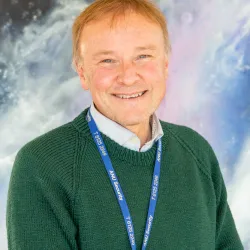
Professor David Bacon is a leading academic in cosmology and astrophysics at the University of Portsmouth's Faculty of Technology, serving as Director of the Institute of Cosmology & Gravitation (ICG). His research focuses on cosmology at radio wavelengths, gravitational lensing, and theories of gravity, with significant contributions to dark matter and dark energy studies. Education : PhD in Natural Sciences from the University of Cambridge (2002) Appointments : PPARC/STFC Fellow (2002–2004), University of Edinburgh; Senior Research Fellow/RCUK Academic Fellow (2007), University of Portsmouth; Professor (2018–present) His work leverages data from major surveys like the Dark Energy Survey (DES), Atacama Cosmology Telescope (ACT), and Euclid mission, employing techniques such as weak lensing , galaxy clustering , and machine learning . Recent publications analyze dark energy constraints , galaxy cluster profiles , and cosmological parameter estimation using FRBs and supernovae. Scientific Awards : PPARC Research Fellowship (2002) STFC Advanced Fellowship (2004)
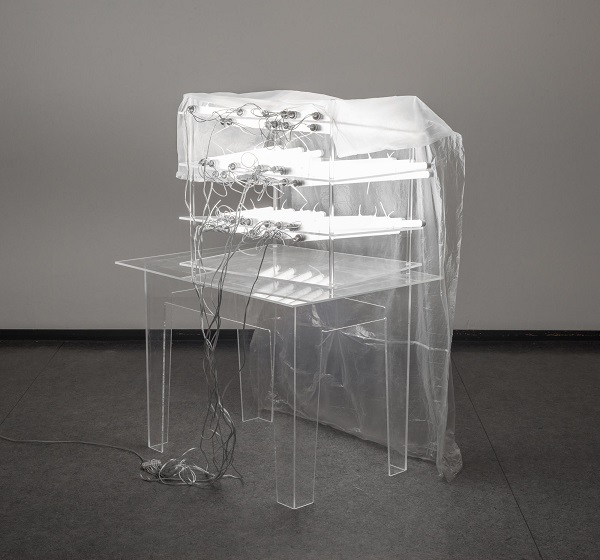
Christian Ertel is a contemporary artist and visiting professor specializing in light, object, and installation art. He is currently serving as Vertretungsprofessor for Painting and Graphics at the Academy of Fine Arts Munich during the summer semester 2025. He has previously taught at the State Academy of Fine Arts Karlsruhe, HfG Karlsruhe, and Hochschule Pforzheim, establishing a strong presence in German and international art education. His research and artistic practice centers on context-sensitive, site-specific installations that explore meaning shifts, spatial boundaries, and perception through the use of artificial light. Ertel's work blends formal minimalism with conceptual depth, engaging with historical, scientific, and sociopolitical themes. His fields of interest include installation art, light-based media, spatial perception, and interdisciplinary art practices. The body of his artistic output—treated as publications in the context of artistic research—demonstrates a consistent engagement with perception, material transformation, and conceptual minimalism. Recent works such as The Druse, Inverted (2009), Halocline (2018), and Immersion / Inversion (2015) reflect his interest in optical phenomena, immersive environments, and historical references, often blurring the boundaries between sculpture, architecture, and sensory experience. His scientific and artistic awards include: Work Grant from Kunstfonds Foundation (2022) Prize of the Toni Merz Foundation Sasbach (2011) Scholarship from the State of Baden-Württemberg, Cité Internationale des Arts, Paris (2009–2010) Project Grant from Akademie Schloss Solitude (2006) Multiple prizes from the State Academy of Fine Arts Karlsruhe (2002, 2003) Ertel has been awarded significant grants and residencies, including a postgraduate scholarship in Mexico City and a residency at Cité internationale des arts in Paris. He has exhibited widely in solo and group exhibitions across Europe and Japan, often in collaboration with other artists and institutions. His work is represented in catalogs and artist directories, including the New Museum's Younger Than Jesus directory (2009). He is affiliated with key artistic networks and has contributed to interdisciplinary dialogues, such as the Dialog–Trialog series. Christian Ertel's work is realized through a network of collaborations, institutional support, and artistic residencies. He has been associated with production galleries such as Alpineum Produzentengalerie and Ferenbalm-Gurbrü Station, and his projects often involve technical and conceptual teams, particularly for large-scale installations. His ongoing project The 3K Amps (since 2012) suggests sustained exploration in energy and light systems.
Nikhil Padmanabhan is an Associate Professor of Physics at Yale University. His research focuses on theoretical and observational cosmology, particularly in the areas of baryon acoustic oscillations (BAO), dark energy probes, and galaxy clustering analysis. He is a key contributor to the Dark Energy Spectroscopic Instrument (DESI) project, which aims to map the universe’s large-scale structure to constrain cosmological parameters. Padmanabhan holds a Ph.D. from Princeton University (2006). His work integrates advanced statistical methods, machine learning, and high-performance computing to analyze galaxy surveys. Research interests include ultra-light dark matter dynamics, cosmic density field reconstruction, and systematic uncertainties in BAO measurements. He has contributed to instrumental design for future surveys like the MegaMapper and NANCY, targeting precision cosmology. Recent studies emphasize optimizing BAO analyses using neural networks, exploring Lyman-alpha forest signals, and probing primordial non-Gaussianity. His publications often address methodological improvements in covariance matrix estimation, redshift weighting, and mock catalog generation for large galaxy surveys. Education : Ph.D. in Physics, Princeton University, 2006 Key Projects : DESI, MegaMapper, NANCY, SDSS-IV Labs/Teams : Part of Yale’s Theoretical Astrophysics group and DESI Collaboration No scientific awards explicitly listed in the provided materials. Advising and grants remain unspecified in the scraped text.
Hume A. Feldman is a Professor in the Department of Physics & Astronomy at the University of Kansas, where he has maintained an active faculty position since 1996. His research program bridges observational cosmology and theoretical astrophysics, focusing on the fundamental structure of the universe through advanced statistical methodologies. Education: PhD in Physics, Institute for Theoretical Physics, Stony Brook University, 1989 MA in Physics, Institute for Theoretical Physics, Stony Brook University, 1986 BA in Physics, University of California, Santa Cruz, 1984 Research Focus: Professor Feldman specializes in mapping the universe's mass distribution through proper distance surveys and cosmic velocity fields. His current investigations include analyzing the kinetic Sunayev-Zeldovich effect in galaxy clusters to constrain dark energy parameters and Hubble parameter evolution, characterizing the void-supercluster network's topology, and modeling neutrino mass impacts on matter power spectra across linear and non-linear regimes. This work integrates N-body simulations with large-scale observational datasets to probe fundamental cosmological parameters. Scientific Recognition: APS Fellow, Division of Astrophysics
Keith Vanderlinde is an Associate Professor at the David A. Dunlap Department of Astronomy & Astrophysics and the Dunlap Institute at the University of Toronto. His research focuses on cosmology and long-wavelength instrumentation, particularly large-scale structure studies and the expansion history of the universe. He leads projects like CHIME/FRB, CHORD, and HIRAX, developing radio telescopes to detect fast radio bursts (FRBs) and map cosmic evolution. Education: PhD in Physics (University of Chicago, 2008); BS in Physics with EE (MIT, 2002). Awards include CIfAR Junior Fellow (2011-2012) and McGill Trottier Fellow (2009-2011). Research interests span cosmological instrumentation, dark energy probes, and transient astronomy. Key projects include the CHIME radio telescope (studying 21cm emission and FRBs), the CHORD observatory, and international collaborations like HIRAX in South Africa. His work emphasizes instrument design, data analysis pipelines like kotekan, and multi-messenger astronomy. Lab involvement includes the Algonquin Radio Observatory and contributions to SPT-3G. Active in graduate/undergraduate training, mentoring students in cosmology and radio instrumentation.
Rajendra Gupta is an Assistant Professor in the Department of Physics at the University of Ottawa. His research focuses on astrophysics, cosmology, and general relativity, with an emphasis on evolving physical constants, the dynamics of the universe, and observations using facilities like the James Webb Space Telescope (JWST). He holds a PhD in Physics from the University of Allahabad, India, and has been affiliated with institutions including the National Research Council of Canada, McGill University, and the University of Manitoba. His research interests include cosmological models beyond the standard framework, analysis of cosmic microwave background (CMB) data, baryon acoustic oscillations (BAO), and dark matter/energy studies. He actively explores how variations in fundamental constants (e.g., gravitational constant, fine-structure constant) impact astrophysical phenomena such as supernova luminosity, quasar spectra, and early universe conditions. His recent publications (2020–2024) investigate topics like CCC+TL cosmology, JWST observations of the early universe, and constraints on varying constants using quasars and gravitational lensing. He also contributes to metrology through experiments like inertial mass measurement with Kibble balances. Dr. Gupta teaches astrophysics at both undergraduate and graduate levels and maintains an active research program analyzing observational data from cutting-edge telescopes and theoretical models. His work bridges theoretical cosmology with experimental astrophysics, addressing longstanding questions like the lithium problem and the faint young Sun paradox.
Rachael L. Beaton is a Postdoctoral Research Fellow at Princeton University with a joint affiliation at the Observatories of the Carnegie Institution for Science. Her research focuses on galactic halos using deep photometry and large-scale surveys including SPLASH, APOGEE, and M31AGES to study galaxy assembly, dark matter, and cosmic distance scales. She earned her Ph.D. in Astronomy from the University of Virginia in 2014 as a Jefferson Graduate Fellow, where her thesis received the Robert J. Trumpler Prize. Her research spans stellar halos of galaxies like M31, utilizing multi-wavelength data to probe dynamical memory in outer galactic regions. She investigates globular clusters, satellite galaxies, tidal debris, and stellar components while leading major observational campaigns and securing hundreds of competitive telescope nights. Her publication trends emphasize observational galactic astronomy through large collaborations, with recent work on carbon stars in M31's halo and GLIMPSE survey open clusters advancing stellar population studies and galactic structure modeling. Key awards include: Robert J. Trumpler Prize Jefferson Graduate Fellowship Hubble Fellowship Carnegie-Princeton Fellowship All University Graduate Teaching Award Graduate Teaching Center Teaching Award Lawrence Fredrick Teaching Award Dr. Beaton actively mentors undergraduate and graduate students across multiple institutions, guiding research in stellar populations and observational techniques. She has secured extensive nationally competitive observing time and collaborates with non-observing colleagues on technical projects. Her outreach initiatives include Dark Skies, Bright Kids! and the Central Virginia Star Party, emphasizing underserved community engagement through multi-lingual resources like the Snapshots of the Universe astronomy book. She participates in major collaborations including SDSS-IV APOGEE-2 (as former Science Working Group Chair), SPLASH, M31AGES, and the Hyper Supreme Cam Survey, operating from Las Campanas Observatory through Carnegie-Princeton resources.
Mara Salvato is a Senior Scientist at the Max Planck Institute for Extraterrestrial Physics (MPE) and the Origins Excellence Cluster in Garching, Germany, specializing in high-energy astrophysics with a focus on X-ray astronomy and active galactic nuclei (AGN). Her work bridges observational astronomy, cosmology, and data science through comprehensive multiwavelength surveys. Research Interests: Photometric redshifts for AGN, developing advanced methods to determine distances to active galaxies using multiwavelength data X-ray Surveys, particularly through missions like eROSITA, analyzing large-scale cosmic structures and AGN populations Environment of AGN and morphology of their host galaxies, studying how active nuclei relate to their galactic environments across cosmic time Multiwavelength survey integration, creating comprehensive catalogs that combine data from across the electromagnetic spectrum Dr. Salvato's research has significantly advanced our understanding of AGN populations and their evolution through innovative approaches to photometric redshift estimation and multiwavelength data analysis, with particular emphasis on the COSMOS field and eROSITA survey data. Scientific Awards: 2017/2018/2019/2022: Listed among the top 100 Highly Cited Researchers in Space Science (Clarivate Data, ex Thomson Reuters); one of the only 9 women in the list at that time 2023/2024/2025/2026: Listed among the top 3% scientists in Germany, Europe and World 2024: Ranked N.84 among the Best female scientists in the world 2023: Listed among the 100 women more successful women in Italy (Forbes Italia) Dr. Salvato leads significant contributions to major astronomical surveys and has developed influential methodologies for photometric redshift estimation specifically tailored for AGN populations. Her work on the COSMOS field and eROSITA survey has provided critical insights into the evolution of supermassive black holes and their host galaxies. She maintains active collaborations across international astronomical communities and contributes to major data archives that support the broader research community.
Clive Dickinson is a Professor of Astrophysics at the Jodrell Bank Centre for Astrophysics within the School of Physics and Astronomy at the University of Manchester. He holds a PhD in Radio Astronomy from the University of Manchester (2002) and has held research positions at institutions including Caltech and NASA's Jet Propulsion Laboratory. His research focuses on understanding radio/microwave emission, particularly its role as a contaminant for CMB and HI/CO intensity mapping experiments. He leads the C-Band All-Sky Survey (C-BASS) and BINGO projects, and has secured major grants including an ERC Consolidator Grant and STFC Advanced Fellowship. Education: MPhys in Physics and Astronomy (University of Manchester, 1999) PhD in Radio Astronomy (University of Manchester, 2002) Research interests span cosmic microwave background studies, diffuse Galactic radiation (synchrotron, free-free, dust emissions), and advanced data analysis techniques in radio astronomy. His work contributes to UN Sustainable Development Goals by enhancing scientific understanding and public engagement in cosmology. Key achievements include the Royal Astronomical Society Group Achievement Award (2018) and impactful collaborations on missions like Planck and LiteBIRD. Dickinson has advised 21 students and contributed to influential publications on CMB foregrounds, spinning dust emission, and intensity mapping techniques. His research teams engage in global collaborations, advancing our knowledge of the early universe and galactic structures.
Dr. Tomislav Prokopec is an Associate Professor at Utrecht University, affiliated with the Dutch Research School of Theoretical Physics (DRSTP). His research focuses on cosmology, quantum gravity, and theoretical physics, with a particular emphasis on gravitational interactions, quantum field theory in curved spacetime, and inflationary cosmology. He explores topics such as graviton mass, de Sitter space dynamics, dark energy, and gravitational wave signatures, often linking these to observational implications like those from the Laser Interferometer Space Antenna (LISA). His work addresses foundational questions in cosmology, including the role of quantum corrections in gravitational potentials, symmetry breaking in expanding universes, and the interplay between particle physics and cosmic expansion. Recent studies highlight investigations into gauge-independent logarithms from inflationary gravitons, photon propagators in covariant gauges, and the geometry of large-scale cosmic structures. Prokopec actively contributes to the DRSTP community, fostering collaborations across theoretical physics disciplines. His research often bridges theoretical frameworks with observational data, aiming to resolve tensions like the Hubble constant discrepancy and explore the quantum origins of dark energy.
Michael A. Troxel is an Associate Professor of Physics at Duke University's Department of Physics within Trinity College of Arts & Sciences. He earned his Ph.D. and M.S. from the University of Texas, Dallas, and dual B.A./B.S. in Physics from the University of Oklahoma. His research focuses on cosmology, dark matter, and galaxy evolution through advanced surveys like the Dark Energy Survey (DES) and the Nancy Grace Roman Space Telescope missions. Ph.D., University of Texas, Dallas (2014) M.S., University of Texas, Dallas (2011) B.A./B.S., University of Oklahoma (2008) Troxel's work leverages weak gravitational lensing, galaxy clustering, and multiwavelength observations to map cosmic structure and constrain dark energy models. His recent studies simulate next-generation telescopes' capabilities for redshift measurement and cosmic shear analysis, aiming to resolve non-linear matter suppression from baryonic feedback. He contributes to major collaborations like DES, SPT, and ACT, integrating machine learning for galaxy classification and cosmological inference. His publications highlight trends in cosmic structure mapping, Roman Space Telescope simulations, and baryonic feedback modeling. Awards include the Department of Energy's Early Career Award (2020). Troxel leads grants from Jet Propulsion Lab and DOE for cosmological software development (2020-2027) and Roman Survey optimization (2024-2026). He co-chairs the DES Science Committee and serves as Associate Chair of Duke's Physics Department (2025-present).
Jose Navarro Salas is a Professor in the Department of Theoretical Physics at the Faculty of Physics, University of Valencia. He is affiliated with the Institute of Corpuscular Physics (IFIC) and leads research in the QBHSC group focused on Quantum Black Holes, Supergravity, and Cosmology. His academic career is deeply rooted in mathematical and theoretical physics, with a PhD from the University of Valencia in 1989. His research interests span Theoretical Physics , Quantum Gravity , Black Hole Physics , Supergravity , Cosmology , and String Theory . His work often bridges quantum field theory in curved spacetime with gravitational phenomena, particularly in low-dimensional models and holography. The analysis of his recent publications reveals a strong focus on black hole thermodynamics, AdS/CFT correspondence, quantum anomalies, and the role of the Planck scale in gravitational phenomena. His work contributes significantly to understanding Hawking radiation, entropy, and quantum evolution in extremal and near-extremal black holes. He has received no explicitly mentioned scientific awards in the provided texts, but his extensive publication record in top journals like Nuclear Physics B , Classical and Quantum Gravity , and Physical Review Letters underscores his scholarly impact. Navarro Salas has collaborated with prominent physicists such as Iván Agulló, Alessandro Fabbri, Victor Aldaya, and Leonard Parker. While specific advisees are not listed, his long-standing position and research activity suggest mentorship roles. He has no known part-time appointments and is actively contributing to theoretical physics. He is a member of the QBHSC research group and affiliated with IFIC, a joint center of the University of Valencia and CSIC, indicating strong institutional support for collaborative and interdisciplinary research in fundamental physics.
Dr. Nigel Metcalfe is an Assistant Professor at Durham University, affiliated with the Department of Physics and the Institute for Computational Cosmology. His academic responsibilities include serving on the Laboratories Committee, managing teaching databases, coordinating computer classrooms, and supervising Level 4 projects. He is also an academic adviser and tutor for the Level 3 Problem Solving Computing Course. His research centers on galaxy evolution, cosmology, and large-scale cosmic structures. Key interests include: Deep galaxy counts and clustering analysis Interpreting data through theories of galaxy formation Leading roles in international surveys: Chair of the Pan-STARRS Data Reduction Group, member of VST Atlas and DESI Imaging Validation teams He leverages computational tools to study galaxy distribution and cosmological parameters. Metcalfe's recent publications (2017–2024) focus on: Quasar clustering and dark matter halo mapping Galaxy underdensities (e.g., the 'Local Hole') Pan-STARRS data processing and calibration Machine learning applications in astronomy His work emphasizes survey-based cosmology, instrumentation, and statistical analysis of cosmic structures. He mentors students in computational cosmology and oversees research projects. While no awards are listed, his leadership in major collaborations (Pan-STARRS, VST Atlas) highlights his field impact. Metcalfe co-leads the Durham team within these consortia, focusing on data validation and cosmological inference.
Matthew Colless is a Distinguished Professor at the Research School of Astronomy & Astrophysics (RSAA), ANU, where he served as Director from 2013 to 2022. He holds a BSc (Hons I) from Sydney University and a PhD from Cambridge. His research focuses on observational cosmology, galaxy evolution, and large-scale structure surveys. He has led major projects like the Australian Astronomical Observatory and contributed to initiatives such as the Giant Magellan Telescope and European Southern Observatory Council. Education: BSc (Sydney), PhD (Cambridge), research fellowships at Durham, Kitt Peak, and Cambridge. Research Interests: Utilizes large spectroscopic surveys to study galaxy formation, cosmic structures, and cosmological parameters. Key areas include peculiar velocities, redshift surveys, and astronomical instrumentation. Awards: AO (Order of Australia, 2023), Fellowships from the Australian Academy of Science, Royal Astronomical Society, and AAAS. ISI Citation Laureate. Grants/Advising: Supervised Paula Boubel and Thimo Timmermans. Led projects like the Galaxy and Mass Assembly (GAMA) survey and MANIFEST instrument design. Labs/Teams: Associated with the Research School of Astronomy & Astrophysics and Mount Stromlo Observatory.
Chris Lidman is an Associate Professor and Director of Siding Spring Observatory at ANU. He specializes in time domain astronomy, observational cosmology, and telescope operations. His research focuses on supernovae, dark energy, and gravitational wave sirens. He has contributed to major projects like the Dark Energy Survey (DES) and OzDES. Key achievements include co-discovering the accelerating universe (2011 Nobel Prize-winning work) and leading ESO instrument commissions. He holds a PhD from ANU and has over 700 publications. Affiliations: ANU Research School of Astronomy & Astrophysics, OzGRAV, LSST, 4MOST. Education: PhD in Astronomy (ANU, 1994). Research interests include exotic transients, cosmological parameter constraints, and telescope operations. Over 300 DES/OzDES papers have been published. Awards include the Gruber Prize (2007) and Breakthrough Prize (2014). Supervised students include Patrick Armstrong and Bailey Martin. Active in grant projects like the AAT facility upgrade and instrumentation development. Labs/Teams: ANU 2.3m telescope automation, OzDES collaboration, Stromlo Observatory operations. Current projects include testing thawing dark energy models and gravitational wave cosmology.