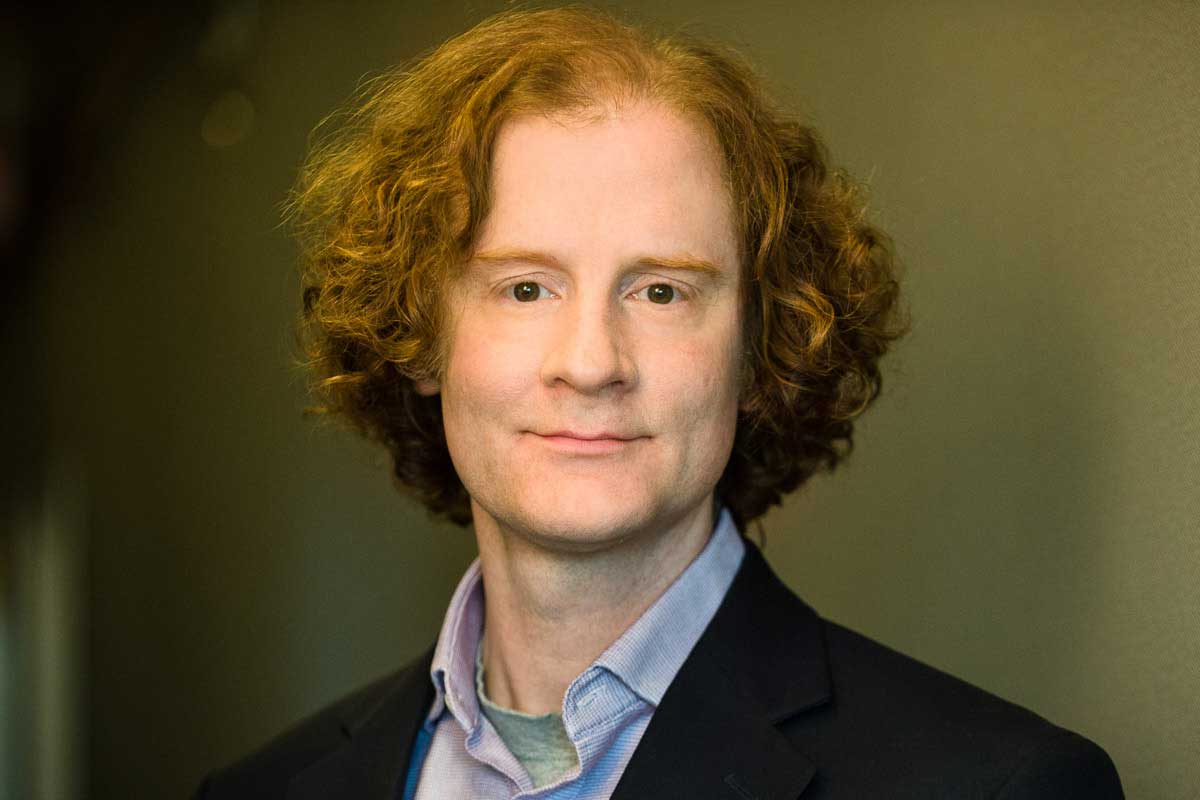
Ryan Heuser is an Assistant Professor in Digital Humanities at the University of Cambridge, specializing in computational approaches to literary and intellectual history, prosody, and artificial intelligence's impact on language. His work bridges data science, machine learning, and literary studies through digital methodologies. Doctoral training in Eighteenth-Century British Literature, Stanford University (2019) Founding member & Associate Research Director, Stanford Literary Lab Junior Research Fellow, King’s College Cambridge (2019-2022) Research interests span computational modeling of semantic revolutions, large-scale literary field analysis, and the intersection of digital methods with historical and intellectual studies. His book Explorations in the Digital History of Ideas (2023) co-edited with Peter de Bolla exemplifies this approach. Recent publications focus on historical semantics, metrical analysis, and digital mapping of emotions in literature, reflecting his interdisciplinary expertise in natural language processing, network theory, and literary data visualization. Currently leads teaching initiatives at Cambridge Digital Humanities and contributes to computational projects exploring textual rhythms and large language models.
Nicholas Evans is a Distinguished Professor in the Department of Linguistics at the School of Culture, History & Language, Australian National University. He is an ARC Laureate Fellow and serves as Director of the ARC Centre of Excellence for the Dynamics of Language (CoEDL), reflecting his leadership in integrating typology, descriptive linguistics, and cognitive science. His work spans linguistic diversity, endangered languages, and the interplay between language and culture. His research focuses on Australian and Papuan languages, with extensive fieldwork in remote communities. Key interests include linguistic typology, historical and contact linguistics, semantics, and the cognitive underpinnings of grammar. He has published foundational grammars and dictionaries of Kayardild, Bininj Gun-wok, and Dalabon, contributing significantly to the documentation of endangered languages. His recent publications reveal a strong trend in cross-linguistic studies of social cognition (SCOPIC), syntactic typology, and phylogenetic modeling of the Yam languages. These works integrate linguistic, cognitive, and genetic data, highlighting interdisciplinary approaches to understanding language evolution and human diversity. ARC Laureate Fellow Fellow of the Australian Academy of the Humanities (FAHA) Fellow of the Academy of the Social Sciences in Australia (FASSA) Fellow of the British Academy (FBA) Evans supervises research students and leads major projects such as 'The Wellsprings of Linguistic Diversity' and CoEDL, which involve extensive collaboration across institutions and disciplines. His grants include modeling Pacific creoles and phonemic analysis of Tok Pisin. He is also involved in digital archiving initiatives like PARADISEC and the Language Data Commons of Australia, ensuring long-term preservation of linguistic data. He leads and contributes to research teams focused on Southern New Guinea languages, paradigm syncretisms (PARABANK), and cultural heritage preservation. His work emphasizes reciprocal engagement with speech communities and training the next generation of language documenters.
Mark Y. Liberman is the Christopher H. Browne Distinguished Professor of Linguistics and Trustee Professor at the University of Pennsylvania. He holds a joint appointment in the Department of Linguistics and the Department of Computer and Information Science. His roles include Director of the Linguistic Data Consortium (LDC), Faculty Director of Ware College House, and former Director of the Institute for Research in Cognitive Science. Education: A.B. in Linguistics and Applied Mathematics from Harvard University (1965–1969), M.S. (1972) and Ph.D. (1975) in Linguistics from MIT. Research focuses on corpus-based phonetics, clinical linguistics applications, tonal phonology, formal models for linguistic annotation, and computational linguistics. He explores speech production, prosody, and interdisciplinary topics like language evolution and neurobiology of speech. Recent articles highlight advancements in speech biomarkers for neurodegenerative diseases, autism analysis, and computational linguistics. Awards include Fellowships from the AAAS and Linguistic Society of America. He advises graduate students and leads large-scale language resource initiatives like LDC, contributing to open-access linguistic datasets. Labs/Teams: Linguistic Data Consortium (LDC), Institute for Research in Cognitive Science (IRCS), and collaborations in computational linguistics and neuroscience.
Kai-Wei Chang is an Associate Professor at the University of California, Los Angeles (UCLA) in the Department of Computer Science, part of the Henry Samueli School of Engineering. He is also an Amazon Scholar at Alexa AI, focusing on advancing trustworthy AI and multimodal foundation models. His research bridges NLP, machine learning, and ethical AI, with a focus on fairness, robustness, and bias mitigation in language and vision-language systems. Education: Ph.D. in Computer Science (UIUC, 2015), M.S. and B.S. in Computer Science and Electrical Engineering from National Taiwan University. Research Interests: Trustworthy NLP (fairness, robustness), Multimodal Foundation Models (e.g., VisualBERT, GLIP), Reasoning in LLMs, and mitigating societal biases in AI systems. Notable contributions include pioneering work on aligning NLP models with human values and developing SOTA multimodal models like DesCo and GLIP. Awards: Sloan Research Fellowship (2021), Okawa Grant (2018), EMNLP Best Paper (2017), KDD Best Paper (2010). His work is funded by NSF, IARPA, ONR, and industry partners like Amazon, Google, and Facebook. Service: VP-Elect of SIGDAT, Ethics Committee Chair (NAACL 2022), Organizer of Trustworthy NLP Workshops, and Senior Area Chair for top conferences (ACL, NeurIPS, AAAI). Labs/Teams: Leads the UCLA Natural Language Processing Group, fostering interdisciplinary research on ethical AI and multimodal systems.
Elaine Francis is a Professor of English and Linguistics at Purdue University's College of Liberal Arts, where she serves as Associate Head of the Department of English and directs the Experimental Linguistics Lab. She holds additional affiliations as an Affiliate Faculty Member in the Department of Linguistics and a Courtesy Faculty Member in the Department of Speech, Language, and Hearing Sciences. Ph.D. in Linguistics, University of Chicago (1999) B.A. in Linguistics, College of William and Mary (1993) MA in Linguistics, University of Chicago (1995) Former Assistant Professor at the University of Hong Kong (1999-2002) Professor Francis's research focuses on syntax and its interfaces with semantics, discourse information structure, and language processing in production and comprehension. She employs experimental methods to investigate syntactic, semantic, discourse-pragmatic, and cognitive factors underlying complex sentence structures. Her primary research areas include word order alternations, filler-gap dependencies, resumptive pronouns, and grammatical acceptability. She examines how various factors contribute to grammatical alternations in language use and explores how processing pressures in production and comprehension contribute to grammatical conventions. Her recent publication record shows consistent output across multiple linguistic subfields, with a strong emphasis on experimental syntax and psycholinguistics. Her 2022 book, Gradient Acceptability and Linguistic Theory , represents a significant contribution to understanding acceptability judgment tasks in relation to syntactic theory. Her work spans theoretical syntax, experimental linguistics, second language acquisition, and cross-linguistic comparison, often bridging the gap between theoretical frameworks and empirical evidence. Regularly teaches short courses at Linguistic Society of America Linguistic Institutes Member of Linguistic Society of America Ethics Committee Editorial board member of Glossa Psycholinguistics Co-editor of Polymorphous Linguistics: Jim McCawley's Legacy (2005) Co-editor of Mismatch: Form-Function Incongruity and the Architecture of Grammar (2003) Professor Francis actively supervises graduate students in linguistics, though she has indicated she will be unable to take on new graduate students for the 2025-2026 academic year. She has received research support for her experimental work, particularly for investigating syntactic phenomena through controlled experiments and corpus analysis. Her collaborative work extends across multiple institutions and disciplines, including collaborations with researchers in computational linguistics, cognitive science, and clinical linguistics. She directs the Experimental Linguistics Lab at Purdue University, which conducts research on syntactic processing using various experimental methodologies. The lab investigates how speakers produce and comprehend complex sentence structures, with particular attention to how grammatical knowledge interacts with processing constraints. Current projects include research on relative clauses, syntactic islands, and acceptability gradient phenomena across multiple languages.
Alan Ritter is an Associate Professor at the School of Interactive Computing , Georgia Institute of Technology, with additional affiliation to the Machine Learning Center . His research focuses on Natural Language Processing , particularly robust models across domains/languages with fewer labels and efficient resource use, plus data-driven dialogue agents for open-topic conversations. Research Interests : Robust NLP models, cross-lingual transfer, resource-efficient learning, dialogue systems, cultural bias measurement, and privacy-aware language models Students : Mentors Ph.D. students in Georgia Tech's ML and CS programs, including Junmo Kang, Yang Chen, and Duong Minh Le. Alumni include Fan Bai (Ph.D. 2023), Yang Chen (Ph.D. 2024), and Andrew Li (M.S. 2024). Awards : NSF CAREER Award, Amazon Research Award, ACL 2024 Best Social Impact Paper, IUI 2009 Best Student Paper. Recent Work : Studies training budget allocation between supervised and preference-based finetuning, cross-lingual information extraction, cultural bias in LLMs, and privacy risk mitigation in social media disclosures. Service : Served as Program Chair for NAACL 2025, Area Chair for multiple top-tier conferences (COLM, EMNLP, ACL, EACL, AAAI). Email : alan.ritter@cc.gatech.edu
Bernard Comrie is a Research Professor Emeritus in Linguistics at the University of California, Santa Barbara (UCSB), affiliated with the College of Letters and Science. He previously served as Director of the Department of Linguistics at the Max Planck Institute for Evolutionary Anthropology in Leipzig (1998–2015) and held a Distinguished Professorship at UCSB (2002–2021). His career includes teaching positions at the University of Cambridge, University of Southern California, and leadership roles in major research institutions. Comrie’s research focuses on Language universals and typology Historical linguistics Languages of the Caucasus, New Guinea, and Great Andamanese He emphasizes fieldwork-driven cross-linguistic analysis of topics like tense/aspect, transitivity, numeral systems, and prehistoric migration studies through collaborations with archaeologists and geneticists. His recent publications explore morphosyntactic variation (e.g., verb indexing in Asian languages, reflexivity in Tsez), language contact (Kanashi prehistory), and numeral system typology. Articles often bridge theoretical linguistics with empirical data from understudied languages. Notable contributions include the World Atlas of Language Structures and foundational work on Nakh-Daghestanian and Andamanese languages. He advocates for interdisciplinary approaches to reconstructing prehistoric human movements via linguistic evidence.
Meredith Tamminga is an Associate Professor of Linguistics at the University of Pennsylvania, where she directs the Language Variation and Cognition Lab . Her work bridges sociolinguistics , psycholinguistics , and theoretical linguistics , focusing on how linguistic variability is represented in mental grammar and how social context influences speech perception and production. She co-leads the Philadelphia Signs Project , exploring sign language sociolinguistics with collaborators at Penn and Gallaudet University. PhD in Linguistics (2014), University of Pennsylvania BA in Linguistics (2009), McGill University Her research integrates experimental methods with naturalistic speech analysis to study individual and group-level language change. Keywords include phonetics-phonology mapping , intraspeaker variation , and quantitative modeling . Notable grants include NSF awards and SAS Dean’s Mentorship Award . Key affiliations include MindCORE , Penn’s hub for integrative mind sciences, and collaborative ties to the Phonetics Lab , Child Language Lab , and Cultural Evolution of Language Lab . Her lab emphasizes cross-departmental research and welcomes undergraduate RAs and PhD students.
David A. Smith is an Associate Professor at the Khoury College of Computer Sciences, Northeastern University. His research focuses on Natural Language Processing (NLP) and computational linguistics, with applications in machine translation, information retrieval, digital humanities, and social sciences. He is a founding member of the NULab for Texts, Maps, and Networks, a research center focused on digital humanities and computational social sciences. Smith's work has been funded by grants from the Mellon Foundation, NEH, and IMLS, supporting projects such as the Viral Texts initiative analyzing 19th-century newspaper networks and the Oceanic Exchanges project tracking transnational information flows. He has contributed to advancements in OCR for historical texts, text reuse detection, and computational analysis of classical languages. He has advised numerous PhD students, including Shijia Liu, Si Wu, and Ryan Muther, and teaches courses like Natural Language Processing and Information Retrieval. His research has been featured in outlets like Wired and the Economist .
Federico ZANETTIN is a Full Professor in the Department of Comparative Linguistic and Cultural Studies at Ca' Foscari University of Venice. His research focuses on translation studies with particular emphasis on corpus linguistics, graphic narrative translation, and journalistic translation. He maintains an active presence in the academic community through editorial work and research collaborations. Professor ZANETTIN's research interests span multiple areas of translation studies. He is particularly known for his work on corpus linguistics and its applications to translation analysis, with a focus on creating and using linguistic databases. His research on the translation of graphic narratives examines the verbal and visual aspects of translating comics and graphic novels across cultures. Additionally, he investigates journalistic translation , analyzing how information is translated and disseminated across media platforms. His scholarly work demonstrates consistent productivity, with numerous publications that explore the intersection of translation, culture, and media. Professor ZANETTIN's research shows particular strength in analyzing adaptation processes across linguistic, cultural, and modal boundaries, both synchronically and diachronically. Professor ZANETTIN serves on several important editorial boards: Co-editor of inTRAlinea Member of the international advisory board for The Translator Member of the international advisory board for Translang Member of the international advisory board for Entreculturas Member of the publications committee for Transletters. International Journal of Translators and Interpreters Member of the scientific committee for the Book series Interactio He is also frequently called upon as a referee for prestigious research projects, including those funded by The British Academy (UK), MIUR (Ministry of Education, University and Research), Italy, CSIC (Consejo Superior de Investigaciones Científicas), Spain, NRC (National Research Council), Canada, National and Kapodistrian University of Athens, Greece, and SNSF (Swiss National Science Foundation). Professor ZANETTIN teaches courses in English language and translation at both undergraduate and graduate levels, focusing on European, American, and postcolonial languages and literatures. His teaching reflects his research expertise in translation studies and cross-cultural communication.
Roberto Navigli is a Full Professor in the Department of Computer, Control and Management Engineering at Sapienza University of Rome, where he leads the Sapienza NLP Group. He has held academic positions at Sapienza since 2007, progressing from Researcher to Associate Professor, and now Full Professor. Navigli is internationally recognized for his groundbreaking work in multilingual natural language processing and computational semantics. His research spans multiple areas within Natural Language Processing, with a particular focus on multilinguality , lexical semantics (Word Sense Disambiguation and induction), sentence-level semantics (Semantic Role Labeling and Semantic Parsing), and Large Language Models . As the leader of the Minerva LLM project, he pioneered the development of the first pretrained LLM in Italian. His creation of BabelNet, the largest multilingual encyclopedic computational dictionary covering 271 languages and about 14 million concepts, represents a landmark achievement in computational linguistics. Professor Navigli's recent publications demonstrate a strong focus on advancing multilingual capabilities of language models, addressing challenges in semantic understanding across languages, and developing robust evaluation frameworks. His work on Italian LLM optimization, lexical ambiguity in machine translation, and cross-lingual safety gaps reflects his commitment to building more accurate and reliable language technologies that work effectively across diverse linguistic contexts. AAAI Fellow (2025) EurAI Fellow (2024) ELLIS Fellow (2024) ACL Fellow (2023) Outstanding Paper Awards at ACL 2024, ACL 2023, and NAACL 2021 Best Resource Paper Award at ACL 2022 Prominent Paper Awards from the Artificial Intelligence Journal (2023, 2017) META Prize 2015 for BabelNet Professor Navigli has successfully secured substantial research funding, including two prestigious ERC Grants (MultiJEDI ERC Starting Grant 2010-2016 and MOUSSE ERC Consolidator Grant 2017-2023, totaling around 3 million euros), PI of PRIN 2017 and PRIN 2020 projects (overall 1.4 million euros), and a Google Focused Research Award (around 300k$). He has mentored over 30 PhD students, many of whom have gone on to successful careers in academia and industry. His leadership extends to major international conferences, serving as General Chair of ACL 2025 and Program Co-Chair of ACL-IJCNLP 2021. As the director of the Sapienza NLP Group and co-leader of the Transversal Project on Large Language/Multimodal Models in the FAIR (Future Artificial Intelligence Research) project, Professor Navigli oversees a vibrant research ecosystem focused on advancing the state-of-the-art in natural language understanding across languages. His spinoff company, Babelscape, translates academic research into practical applications for industry.
Sara Stymne is a Senior Lecturer in Computational Linguistics at the Department of Linguistics and Philology, Uppsala University, where she has been working since 2012. She initially joined as a post-doc (2012-2015), then worked as a researcher (2015-2017), and served as an assistant professor (2017-2023) before her current position as Senior Lecturer. Prior to Uppsala, she was a researcher at Linköping University's Department of Computer and Information Science. Dr. Stymne earned her PhD in Computational Linguistics from Linköping University in 2012 with the thesis 'Text Harmonization Strategies for Phrase-Based Statistical Machine Translation,' following a Licentiate degree in Computational Linguistics (2009) and a Master's degree in Cognitive Science (2006), both also from Linköping University. During her doctoral studies, she spent the autumn of 2010 and spring of 2009 at Xerox Research Centre Europe in Grenoble, France. Her primary research interests focus on cross-lingual natural language processing and digital humanities, with particular emphasis on multilingual dependency parsing. Dr. Stymne is passionate about applying computational linguistics to solve research questions in other fields, including language history, literary analysis, and political science. Her earlier work concentrated on machine translation, with specific interests in discourse-aware translation, compound processing, and error analysis. She has made significant contributions to the development of language technology tools for analyzing dialogue, narrative, and stylistic features in literature. Analysis of Dr. Stymne's recent publications reveals a strong focus on cross-lingual and cross-domain natural language processing. Her work spans multiple subfields including dependency parsing across genres and topics, discourse relation analysis in low-resource languages like Egyptian Arabic, direct speech identification in Swedish literature, and causality detection in governmental documents. A notable trend is her application of NLP techniques to digital humanities problems, particularly in analyzing literary texts and historical language change. Her research often involves creating and utilizing specialized datasets for specific linguistic phenomena across multiple languages. Dr. Stymne actively supervises graduate students, having guided numerous master's and bachelor's theses on topics ranging from speech recognition to multilingual parsing and causality detection. She leads or participates in several research projects including 'Fictional prose and language change' (funded by VR, 2021-2023) and 'Enabling climate-resilient development' (funded by Marianne and Marcus Wallenberg Foundation, 2023-2027), demonstrating her commitment to interdisciplinary research with practical applications. Her work has resulted in several notable software resources including uuPronPred for cross-lingual pronoun prediction, uuparser for dependency parsing, and Docent for document-level machine translation. Within the Computational Linguistics and Language Technology group at Uppsala University, Dr. Stymne contributes to multiple research initiatives focused on developing language technology tools for digital humanities applications. Her team works closely with literary scholars and historians to create computational methods for analyzing large corpora of literary texts, particularly focusing on Swedish literature across different historical periods. Her research bridges the gap between theoretical computational linguistics and practical applications in the humanities, creating new methodologies for quantitative analysis of literary and historical texts.
Prof. Dr. Gülşen Eryiğit is a Professor at Istanbul Technical University within the Faculty of Computer and Informatics , Department of Artificial Intelligence and Data Engineering . She founded and directs the ITU Natural Language Processing Group , Turkey's leading team in Turkish-language NLP, and serves as Senior Action Editor for ACL RR , Director of ITU TÖMER (Turkish Language Teaching Center), and Co-Chair of the EU UniDive Cost Action WG3. Education: PhD in Computer Engineering from ITU (2007), MSc and BSc from ITU and Marmara University Research: Focuses on Natural Language Processing for Turkish, including dependency parsing , coreference resolution , multiword expressions , and language education technology Her recent work involves multilingual transfer learning , LLM applications for Turkish text simplification, and gamification for morphology education. She has received prestigious awards like the Siemens Excellence Award and TÜBİTAK's Above Threshold Award . Her research has produced 65+ publications and 29+ projects funded by EU, TÜBİTAK, and industry partners. Scientific Awards: Siemens Excellence Award (2007) Above Threshold Award (TÜBİTAK, 2015) Certificate of Appreciation (EU 7th Framework, 2012) Thank You Plaque (ITU, 2017) The ITU NLP Group under her leadership has developed Turkey's first licensed NLP software exported internationally. She collaborates with European institutions through COST actions and participates in ACL, CoNLL, and LREC conferences. Her lab focuses on language technology for Turkish , including sign language processing and social media normalization.
Pranav Anand is a Professor in the Department of Linguistics at the University of California, Santa Cruz (UCSC). He currently serves as the Faculty Director of the Humanities Institute at UCSC since July 2023. His research focuses on the interplay between context, interpretation, and grammatical perspective, particularly in areas like de re/de se contrasts, evaluative predication, and indexical shift. He has contributed to studies on narrative structures, evidential restrictions, and the syntax-semantics interface in sluicing. Dr. Anand has taught a variety of courses including Ling 119: Narratives , Ling 231: Semantics A , and special topics like Invented Languages: From Elvish to Esperanto . His work bridges theoretical linguistics with computational methods, evidenced by collaborations in projects such as the Santa Cruz sluicing dataset and analyses of political discourse in online commentary. His research has been published in journals like Linguistics and Philosophy , Language , and Discourse and Society , with a focus on semantics, pragmatics, and narrative linguistics. He has also contributed to computational linguistics initiatives, including the development of annotated corpora for sentiment analysis and argumentation studies. Dr. Anand's academic contributions span both theoretical exploration and applied computational linguistics, reflecting his interdisciplinary approach to understanding language structure and usage.
Mark Yatskar is an Assistant Professor in the Department of Computer and Information Science at the University of Pennsylvania. His research focuses on the intersection of natural language processing, computer vision, and fairness in machine learning. He earned his PhD from the University of Washington under advisors Luke Zettlemoyer and Ali Farhadi, and previously worked as a Young Investigator at the Allen Institute for Artificial Intelligence. Education: PhD in Computer Science, University of Washington (Advisor: Luke Zettlemoyer & Ali Farhadi) Research Interests: Yatskar's work explores how language can structure visual perception and mitigate human biases in machine learning systems. Key themes include: Natural language as a scaffold for visual intelligence Bias characterization and control in machine learning systems His lab currently investigates projects like language-guided bottlenecks, annotator cognitive heuristics, and gender bias amplification. Teaching: CIS 5300: Computational Linguistics (2021-2024) CIS 7000: Language and Vision (2020) CIS 6300: Efficient NLP (2023, 2025) Awards: Best Paper Award at EMNLP (Gender Bias Amplification Research) Advising & Grants: Yatskar advises a team of PhD/Master's students and actively seeks motivated researchers. His group has explored funding in areas like interpretable AI, multimodal reasoning, and dataset bias mitigation. Labs/Teams: Leads the Penn NLP & Vision Lab, focusing on projects like MolMo/PixMo open models, ViUniT visual unit tests, and bias mitigation frameworks.