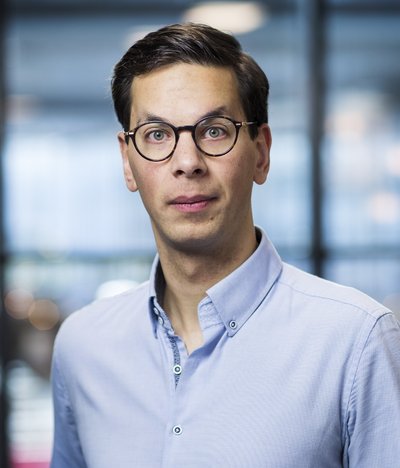
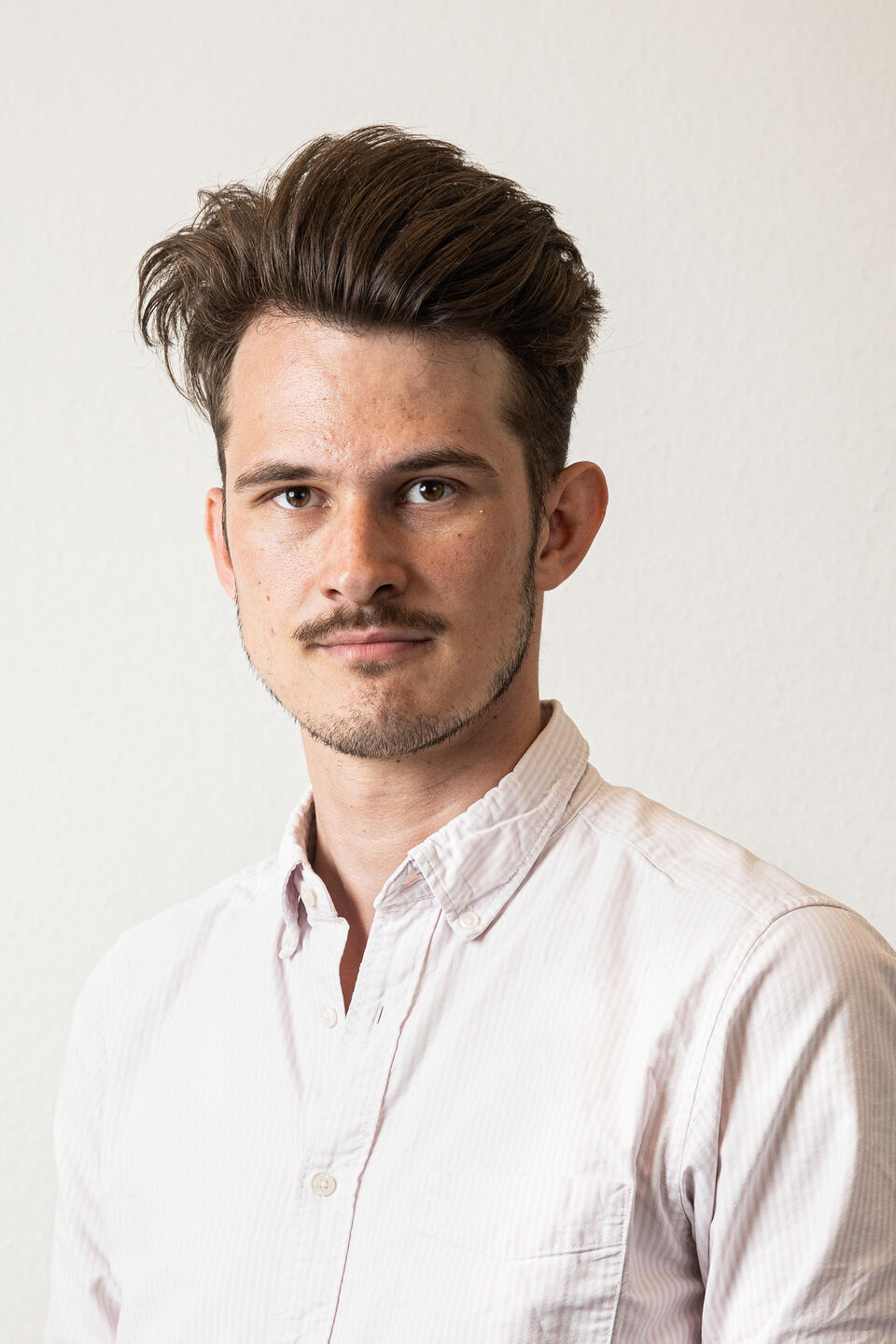
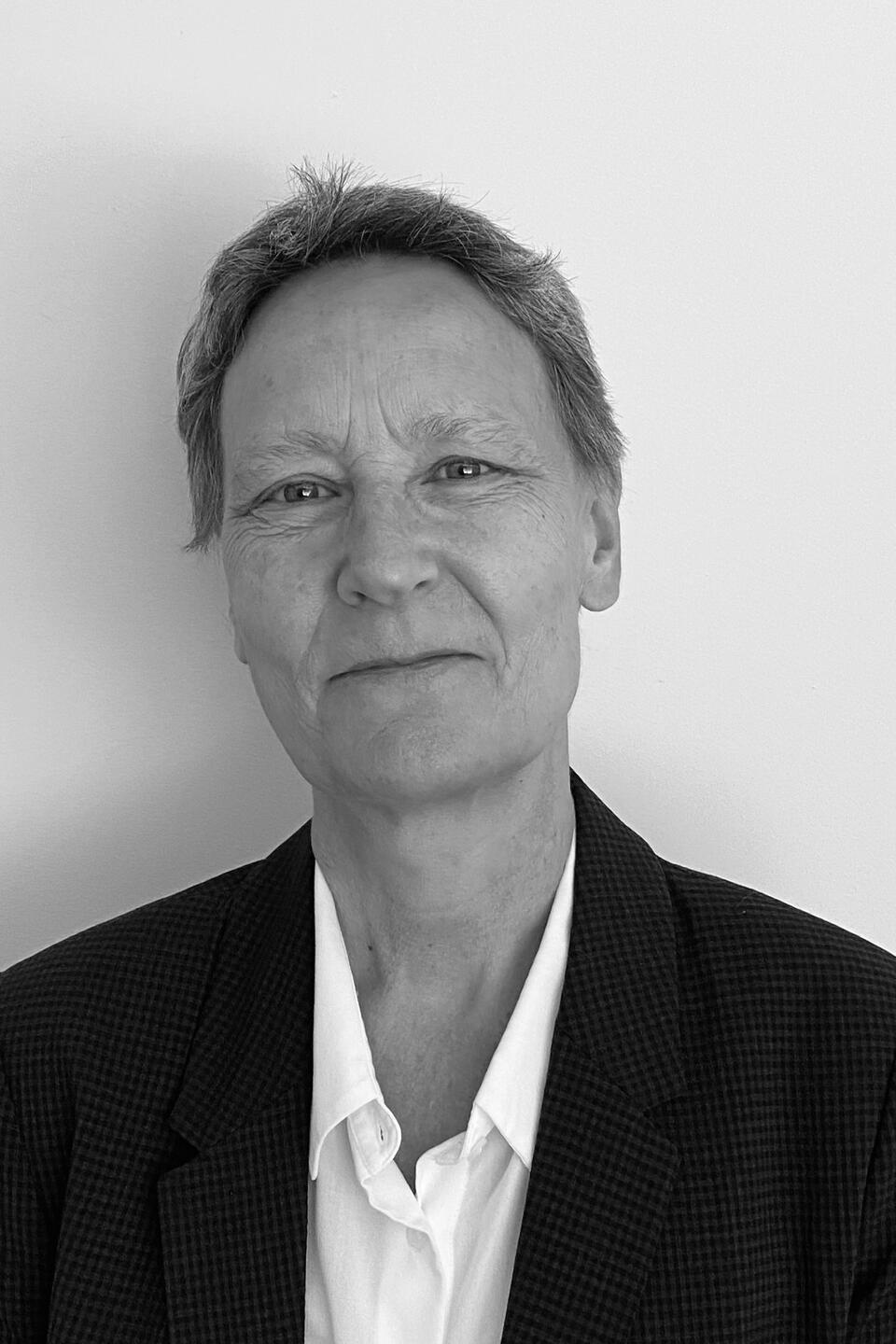
Javier Alonso-Mora is a Professor in the Department of Mechanical Engineering at Delft University of Technology, specializing in Learning & Autonomous Control. His research focuses on autonomous systems, robotics, motion planning, and transportation logistics, with applications in mobile manipulation, dynamic environments, and urban mobility. He leads key projects such as INTERACT (Intuitive Interaction for Robots among Humans) and ACT (Perceptive Acting Under Uncertainty), exploring human-robot interaction, autonomous vehicles, and healthcare robotics. Notable achievements include an ERC Starting Grant (2022) and a Veni Grant (2017). His work addresses challenges in robot navigation, control systems, and fleet optimization, with contributions to both theoretical advancements and practical implementations. Projects like TRiLOGy focus on sustainable water transportation, while HARMONY advances assistive robotics in healthcare. Alonso-Mora’s research leverages geometric fabrics for motion planning, probabilistic modeling for dynamic environments, and multi-agent coordination. He collaborates internationally and contributes to open-source frameworks for robotics. His recent publications emphasize safety-aware control, instance-aware semantic mapping, and adaptive systems for cluttered environments.
Pim de Vink is a doctoral researcher at Eindhoven University of Technology , affiliated with the Biomedical Engineering department and Chemical Biology group. Supervised by dr. L.-G. Milroy and prof. L. Brunsveld , his work bridges supramolecular chemistry and chemical biology , focusing on host/guest chemistry for protein complex modulation. Education: B.Sc. in Chemistry (2014) from University of Amsterdam M.Sc. in Biomedical Engineering (2016) from TU/e Internship at Max Planck Institute for Molecular Physiology (2016) on gold-catalyzed synthesis Research Themes: His research develops switchable cucurbituril-based systems for light-controlled enzyme activation and artificial signaling networks. Key areas include protein-protein interaction stabilization , thermodynamic modeling , and allosteric nuclear receptor modulation . Publication Trends: Across JACS , Chemical Science , and RSC Chemical Biology , his work from 2017–2023 emphasizes supramolecular tools for biochemical applications. Notable contributions include 100-fold affinity enhancement of 14-3-3 ligands and UV-responsive cucurbituril release mechanisms . Grants: Funded by Netherlands Organization for Scientific Research (NWO) through Gravity program 024.001.035 and VICI grant 016.150.366.
Ming Cao is a Full Professor at the University of Groningen (Netherlands), holding positions in the Department of Discrete Technology and Production Automation, the Engineering and Technology Institute Groningen, and serving as Chair of the Jantina Tammes School of Digital Society, Technology and AI. His academic roles include Director of the Jantina Tammes School and membership in prestigious organizations such as the International Federation of Automatic Control (IFAC) and the European Commission’s DG CNECT. Cao’s research focuses on multi-agent systems, autonomous robotics, complex networks, and cooperative control, with applications in robotics, epidemic modeling, and biomimetic sensors. Education: PostDoc in Mechanical Engineering from Princeton University (2008), PhD in Electrical Engineering from Yale University (2007). Research Interests: Multi-agent systems, distributed decision-making, cooperative control, robotic teams, seal whisker-inspired flow sensing, and privacy-preserving control systems. Recent Trends in Articles: Recent work emphasizes co-evolutionary dynamics in social-technical systems, privacy in control systems, and biomimetic robotics. Key topics include feedback mechanisms in cooperation, hypergraph-based epidemic models, and seal whisker mechanics for underwater sensing. Awards: European Control Award (2016), Manfred Thoma Medal (2017), ERC Grant (2012). Grants: Vidi Grant from NWO (2015) for agent coordination research. Labs/Teams: Jan C. Willems Center for Systems and Control, Research Center for Data Science and Systems Complexity (DSSC). Active in editorial roles for journals like Artificial Life and Robotics and the SIAM Journal on Control and Optimization .
Thiago Batista Soeiro serves as a Full Professor with exceptional scholarly impact, evidenced by over 200 research publications and an h-index of 27. His work fundamentally advances power electronics applications in transportation and energy systems, particularly through innovations in electric vehicle infrastructure and sustainable power conversion technologies. Despite the absence of explicit institutional affiliation in source materials, his research permeates critical IEEE journals and conferences. Professor Soeiro's research portfolio centers on: Power converter design for electric vehicle charging systems AI-driven battery health estimation using electrochemical impedance spectroscopy Wireless power transfer optimization for automotive applications High-efficiency topologies for more electric aircraft Hydrogen energy system integration Advanced semiconductor utilization in grid-connected systems Analysis of his 2023-2025 publications reveals accelerating innovation in wide-voltage-range converters, predictive battery management, and fault-tolerant power systems. His work increasingly bridges machine learning with power electronics, notably through computation-light AI models for battery diagnostics, while maintaining strong focus on practical implementation challenges in EV charging and aircraft electrification. No scientific awards or honors were documented in the available materials. Similarly, information regarding student supervision, research grants, laboratory facilities, or collaborative teams was not provided in the source texts.
Sergio Carrera serves as Senior Research Fellow and Head of the Justice and Home Affairs Unit at the Centre for European Policy Studies (CEPS), a prominent Brussels-based think tank. Additionally, he holds the position of Adjunct Professor at the Paris School of International Affairs (PSIA) in SciencesPo, France, where he contributes to academic teaching and research in international affairs. Dr. Carrera's academic background includes a Ph.D. on immigration and citizenship from Maastricht University (The Netherlands), an LL.M. in European, Comparative and International Law from the University of Maastricht, and a Law Degree from Universidad de Salamanca in Spain. His extensive educational foundation in European and international law underpins his expertise in EU justice and home affairs policy. His primary research interests focus on EU justice and home affairs (JHA) law and the Area of Freedom, Security and Justice policy, with particular emphasis on migration, asylum, citizenship, and Schengen policies. Dr. Carrera's expertise also extends to EU criminal justice law and police cooperation, examining their impacts on data protection, privacy, and the rights of the defense. His work consistently addresses the intersection between security measures and fundamental rights within the European context. Dr. Carrera has produced an extensive body of scholarly work, with over 190 published publications according to the available information. His recent research has particularly focused on EU-US data transfers, rule of law challenges in the context of migration management, global asylum governance, and the evolving landscape of EU security policy. His publications demonstrate a consistent concern with ensuring that security and migration policies uphold fundamental rights and the rule of law. Among his notable contributions are policy analyses on the European Green Deal's implications for climate policy, assessments of the EU's response to the Ukraine crisis, and examinations of the impact of the Trump administration on EU security policy. His research often bridges academic analysis with practical policy recommendations for EU institutions. Dr. Carrera leads and participates in numerous research projects addressing critical issues in EU policy. Current initiatives include "Reclaiming our past, rebuilding our future: new approaches to fighting antigypsyism" (2024-2026) and the "Study on Mapping Civil Dialogue Practices in the EU Institutions" (2024-2025). Previous significant projects include "Global Asylum Governance and European Union's Role" (ASILE, 2019-2023), "Pan-European Response to the ImpactS of COVID-19" (PERISCOPE, 2020-2023), and "IT tools and methods for managing migration FLOWS" (ITFLOWS, 2020-2023). His work has been commissioned by various EU institutions, including the European Parliament's Policy Department for Citizens' Rights and Constitutional Affairs, demonstrating the policy relevance and impact of his research. Dr. Carrera's expertise is frequently sought for task forces addressing timely issues such as EU-US data transfers, digital justice, and cross-border cooperation in criminal matters.
Konrad Kollnig is an Assistant Professor at Maastricht University’s Faculty of Law, specializing in the intersection of law and technology. He leads the RegTech4AI project, which combines legal and technical methods to address challenges in the AI and digital platforms sector. His academic background includes a PhD and MSc from the University of Oxford and a BSc from RWTH Aachen, with his PhD thesis winning the prestigious Stefano Rodotà Award 2024. Research focuses on market power analysis in digital platforms, ethical AI governance, and privacy-preserving technologies. He developed the TrackerControl app (200,000+ downloads) to expose app tracking practices. His work has influenced EU, OECD, US FTC, and other regulatory bodies, and been featured in Forbes, Wired, and New Scientist. Key achievements include winning the United Nations Privacy Competition 2022 and the Best Student Privacy Paper Award 2022. He holds a five-year RegTech4AI project grant (€2.1M) funding six researchers. Talks and collaborations span institutions like Georgetown University, CNIL, and the Council of Europe. His interdisciplinary approach bridges computer science, law, and policy to address systemic risks in digital ecosystems.
Nathan van de Wouw is a Full Professor at the Mechanical Engineering Department of Eindhoven University of Technology (TU/e), affiliated with ICMS, EAISI Mobility, EAISI High Tech Systems, EAISI Foundational, and EIRES. He also holds an adjunct Full Professor position at the University of Minnesota and a part-time Full Professorship at Delft University of Technology. His research focuses on dynamics and control of mechanical systems, including mechatronics, robotics, smart manufacturing, energy systems, and networked control. He has supervised over 150 students and led numerous projects funded by industry partners like ASML, Philips, and Shell. Education: M.Sc. (with Honors) in Mechanical Engineering, TU/e (1994) Ph.D. in Mechanical Engineering, TU/e (1999) Research Interests: Nonlinear systems and control Model reduction and complexity analysis Data-driven and networked control strategies Applications in high-tech systems, autonomous vehicles, and energy systems Awards: IEEE Control Systems Technology Award (2015) for variable-gain control in motion systems Grants & Projects: Lead projects on mechatronic design, lithography systems, and thermodynamic optimization Collaborations with TNO, ASML, and industrial partners Labs & Teams: Member of TU/e’s Dynamics and Control group Affiliated with EAISI (Eindhoven AI Systems Institute)
Hans van Ees is a Professor of Corporate Governance and Institutions at the Faculty of Economics and Business, University of Groningen, where he is affiliated with the Global Economics & Management department. His research focuses on corporate governance systems, executive compensation practices, and the influence of formal and informal institutions on corporate behavior. He maintains an active role in the academic and professional corporate governance community through editorial work and visiting professorships. Professor van Ees' research interests span several key areas in corporate governance. His work examines board diversity, executive compensation structures, corporate bribery, stewardship governance, and the evolving role of boards in corporate purpose and strategy. His approach combines theoretical frameworks with empirical analyses, particularly focusing on Dutch corporate contexts while maintaining international relevance. His research often takes a multilevel perspective, considering firm, industry, and macro environmental factors that shape governance practices. His recent publications demonstrate a strong focus on systematic reviews and interdisciplinary approaches to understanding boardroom dynamics. He has produced significant work on board diversity, examining both its antecedents and consequences through comprehensive literature reviews. His research also explores the relationship between CEO career horizons and corporate bribery, directors' digital expertise, and the transition from ambivalence to stewardship commitment in governance practices. These works collectively highlight trends toward more integrated, behaviorally informed approaches to corporate governance that consider both institutional contexts and individual decision-making processes. Professor van Ees serves on the Editorial Board of European Management Review and the Board of Jaarboek Corporate Governance. He is also a Visiting Professor at LUISS University in Rome and regularly contributes to corporate governance workshops including the Eden Workshop on Corporate Governance at the European Institute for Advanced Studies in Management. His expertise is frequently sought by media outlets, as evidenced by his expert commentary in popular press on corporate governance issues. In addition to his academic work, Professor van Ees has been actively involved in corporate governance education through the MBA and Executive Programs at the Faculty of Economics and Business. He has also contributed to governance capacity building in international contexts, including work with the Institute of Social Studies in Paramaribo, Surinam, in cooperation with Maastricht School of Management.
Dr. Salvatore Nicolosi is an Associate Professor in International and European Law at Utrecht University School of Law. He holds multiple leadership positions including founder and co-leader of the Migration Law (MiLa) Research Platform, leader of the Citizenship and Migration Building Block within RENFORCE, and coordinator of the LL.M. program in European Law. He is also a Fellow at the Netherlands Institute of Human Rights (SIM) and active in the Utrecht Center for Global Challenges. Dr. Nicolosi earned his PhD from La Sapienza University of Rome. His educational background combines European law, international human rights law, and international refugee law expertise. His research focuses on the development of the Common European Asylum System and the relationship between EU asylum legislation and international human rights instruments. His primary research interests include EU constitutional law, EU citizenship, free movement and fundamental rights, institutional matters in the EU and international organizations, and interactions between international law and the EU legal order. He examines EU institutional, law-making and enforcement dynamics in the context of Asylum and migration, with particular attention to vulnerable groups and human rights protection. His work demonstrates a strong commitment to bridging theoretical legal frameworks with practical implementation challenges. Dr. Nicolosi's extensive publication record reveals a consistent evolution in focus from foundational EU law concepts toward increasingly specialized areas of migration governance. Recent work shows growing emphasis on gender-based asylum, externalization of migration controls, and accountability mechanisms for EU border agencies like FRONTEX. His scholarship consistently addresses the tension between migration control objectives and human rights protection within the European legal framework. His notable honors include: EU Fulbright-Schuman Fellowship Michigan Grotius Research Scholar position at the Center for International and Comparative Law Dr. Nicolosi actively supervises PhD students, currently co-supervising three projects in EU law and human rights. He has participated in numerous research initiatives including the SHARED project on 'Shared Responsibility' for Integrated Border Management and the MIGROBAL project. His professional activities extend to organizing conferences such as 'The Admission and Integration of Refugees in Europe' and 'Same Old? Debating the New European Pact on Migration and Asylum.' He maintains significant institutional connections through his role as Senior Research Associate at Ghent University's Program for Studies on Human Rights in Context, Research Affiliate of the Refugee Law Initiative at the University of London, and inclusion in the List of legal experts of the EU Agency for Asylum. His work bridges academic research with practical policy implementation across multiple European and international contexts.
Anuj Pathania serves as an Assistant Professor in the Parallel Computing Systems (PCS) group within the Informatics Institute at the University of Amsterdam's Faculty of Science. His research pioneers sustainable computing systems operating under severe power, thermal, and reliability constraints, with significant contributions to energy-efficient hardware design and embedded systems. Education: PhD in Computer Science (2018), Karlsruhe Institute of Technology MSc in Computer Science (2012), National University of Singapore B.Tech in Computer Science (2009), Maharaja Agrasen Institute of Technology Pathania's research centers on low-power design and sustainable systems for constrained environments, with particular expertise in thermal management of 3D-stacked architectures and energy-efficient machine learning inference . His work bridges electronic design automation with real-world reliability challenges, developing novel power budgeting techniques like T-TSP that incorporate transient temperature effects ignored by conventional methods. Current projects include EU-funded initiatives on energy labeling for digital services, addressing ecological impacts through technological, behavioral, and legal frameworks. His publication trajectory reveals a strategic evolution toward zero-waste computing , with recent work (2023-2025) focusing on hardware-software co-design for edge AI, energy modeling across computing continua, and parameter-efficient neural adaptation. Key themes include thermal-aware scheduling for S-NUCA many-cores, cooperative processor utilization in heterogeneous systems, and sustainability metrics for digital services. Scientific Recognition: Best Paper Award Nomination at IEEE Computer Society Annual Symposium on VLSI 2023 for 3D-TTP power budgeting technique Pathania actively mentors 4 PhD students (Ehsan Aghapour, Saeedeh Baneshi, Sudam Wasala, Yixian Shen) and has successfully supervised 5 Master's theses (including Cum Laude defenses by Joris op ten Berg and Jurre Wolff). His research is supported by major grants including Energy Labels for Ecologically Sustainable Digital Services (2023-2024) and Towards Zero-Waste Computing (2021-2025), developing simulation frameworks like HotSniper and CoMeT for thermal analysis. The PCS group maintains strong industry collaborations with ARM and NVIDIA, particularly through tools like ARM-CO-UP for heterogeneous processor utilization.
Juliette Koning serves as Professor of Business in Society and Head of the Organisation, Strategy & Entrepreneurship Department at Maastricht University's School of Business and Economics. With a PhD in Social Anthropology from the University of Amsterdam, she brings interdisciplinary expertise spanning organizational studies, entrepreneurship, and business ethics. Her academic career includes prior appointments at Oxford Brookes University, Vrije Universiteit Amsterdam, Tilburg University, and Wageningen University. Her research centers on two interconnected domains: (1) small business organizations and entrepreneurship in Southeast Asia—particularly focusing on ethnic Chinese owner-managers—and (2) security studies including maritime security in Indonesia and organizational approaches to security across South Africa, the UK, and the Netherlands. Koning employs extensive qualitative methodologies, often incorporating creative and arts-based approaches, with publications in top journals including Organization Studies , Journal of Business Ethics , and Entrepreneurship & Regional Development . Analysis of her recent publications reveals a consistent focus on identity construction within organizational contexts, ethical dimensions of business practices, and the intersection of cultural-religious frameworks with economic activities. Her work demonstrates increasing engagement with security governance and cross-border cooperation, particularly evident in her NWO-funded research on interorganizational crime control. Koning actively contributes to academic discourse as Associate Editor of Human Relations and has secured significant research funding including an NWO SSH Open Competition grant for her project 'Cross-border Interorganizational Cooperation in Crime Control' investigating Euregional police cooperation in the Meuse-Rhine border region. Her methodological expertise in qualitative approaches extends to mentoring researchers through publications on autoethnography and ethnographic practice.
Oktay Türetken is a Full Professor at Eindhoven University of Technology (TU/e) in the Industrial Engineering and Innovation Sciences school, specializing in Information Systems . He chairs the Industrial Engineering Bachelor Program and contributes to the European Research Center for Information Systems (ERCIS) in Münster, Germany. PhD in Information Systems Research Fellow at European Research Institute in Service Science (2008-2012) Adjunct Lecturer at METU’s Software Management program (pre-2008) His research focuses on digital innovation and collaborative business models , particularly in urban mobility. He develops methods for operational design , business process management , and data analytics maturity models . Key projects include MobilitEU and EU-funded initiatives in smart mobility. Recent publications address KPI frameworks for business models, platform design for shared mobility, and maturity models for organizational capabilities. He leads multi-disciplinary teams and has co-authored over 129 research outputs, including 2025 articles in Production Planning & Control and Business & Information Systems Engineering . 2021 : 1st Prize at DESRIST for paper prototype 2022 : 1st Prize for MaaS Platform Features research He supervises PhD candidates Ginger Korsten , Yasmin Rettab , and Stella Lo Giudice , and teaches courses like Digitalization and Enterprise Systems and Green and Digital Transformation . His work bridges academic research with industry consultancy via Cogniton Business Engineering Consultancy.
A.A.J. (Erjen) Lefeber is an Assistant Professor in the Department of Mechanical Engineering at Eindhoven University of Technology (TU/e). His research focuses on control systems, cooperative driving, vehicle dynamics, and autonomous systems. He is affiliated with the EAISI Mobility cluster and the ICMS Core group, emphasizing interdisciplinary collaboration. Dr. Lefeber has contributed to over 150 research outputs, including peer-reviewed articles, conference contributions, and datasets. His work addresses challenges in platooning systems, model predictive control (MPC), cybersecurity in cooperative vehicles, and multi-agent systems. Research interests include cooperative adaptive cruise control (CACC), decentralized control strategies, and robust control against adversarial attacks. His projects integrate theoretical analysis with experimental validation, such as testing heterogeneous platoons with actuation delays. Dr. Lefeber has received the AVEC '24 Best Paper Award for contributions to vehicle platooning control. He teaches courses on nonlinear control, manufacturing networks, and mechanical engineering fundamentals. Collaborations span academia and industry, focusing on sustainable transportation and automation. Current efforts explore online learning for interaction dynamics in multi-agent systems and high-performance MPC for aerial robotics. His research aligns with UN Sustainable Development Goals, particularly addressing safe and efficient mobility solutions.
Erik PAM Bakkers is a Professor in the Applied Physics and Science Education department at the Technical University of Eindhoven, where he leads the Advanced Nanomaterials & Devices research group and is affiliated with the Center for Quantum Materials and Technology Eindhoven. He also serves as a part-time professor at Delft Technical University in the Quantum Transport group, maintaining dual academic appointments. His research spans three primary domains: Nanomaterials, with a focus on Majorana particles in collaboration with Delft University, where recent discoveries have opened new frontiers in quantum information processing Light emission from silicon through crystal structure engineering, potentially revolutionizing fiber-optic communications Nanowire applications in solar cells, achieving significant efficiency gains through flexible designs using III/V semiconductor nanowires embedded in PDMS polymer Bakkers' publication record reveals a strong trajectory in quantum technologies and nanomaterials science, with emphasis on Majorana fermions, topological superconductivity, and quantum transport phenomena. His work consistently appears in premier journals including Nature, Science, and Nature Nanotechnology, demonstrating exceptional impact across quantum computing and renewable energy fields. His scientific recognition includes: NWO Vici Award (2010) for "Control of nanomaterials" ERC Consolidator Grant (HELENA, 2013) ERC Advanced Grant (2019) for "New nanomaterial to definitively demonstrate teleportation of Majorana particles" Professor Bakkers has supervised 77 students throughout his career and currently leads the "Enabling Majorana Braiding" project (2018-2028). His research group, established at Eindhoven in 2017, maintains strategic partnerships with industry leaders including IBM, Microsoft, and Philips, bridging fundamental research with practical applications in quantum computing and sustainable energy technologies.
Dr. Rico Ihle is an Associate Professor at Wageningen University's Agricultural Economics and Rural Policy Group, affiliated with the Wageningen School of Social Sciences (WASS). He holds a PhD from Georg-August-Universität Göttingen and is also an Adjunct Professor at Universitas Padjadjaran in Indonesia. His research focuses on achieving SDG2 (Zero Hunger), food system sustainability, and resilience in regions like the EU, Indonesia, and the Middle East. He teaches courses on econometrics, agricultural policy, and EU food systems, and has organized study tours to Slovakia, Morocco, Hungary, and Munich. He supervises 5 PhD students and advises numerous BSc/MSc students. Education & Career: PhD in Agricultural Economics, Georg-August-Universität Göttingen (Germany) Adjunct Professor at Universitas Padjadjaran (Indonesia) Elected Secretary General of the International Network for MBA Agribusiness and Commerce (AgriMBA) in 2024 Research Interests: Economic analysis of agricultural markets and food prices Effects of political conflict on food systems EU agricultural policy and sustainability transitions Food security and resilience in developing regions Quantitative methods including time-series econometrics Recent Work: His 2025 publications explore food waste reduction in school canteens and household resilience in West Africa. He also leads projects like ClimAgri4Ukraine for post-war agricultural recovery. He has co-authored over 100 conference contributions and serves as an associate editor for Food Security . Grants & Networks: Principal investigator for the Genetically Modified Food in Dutch Grocery Shelves project (COGEM) Member of the International Agricultural Trade Research Consortium (IATRC) Co-organizer of webinars on global food markets and Ukraine's agrarian policies Labs/Teams: Leads Work Package 4 of the e-AgriMBA project and collaborates with institutions like the Kyiv School of Economics and OECD.