Brian Turnerمشاهده پروفایل
دانشیار
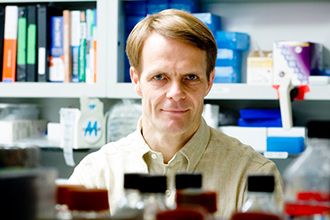
Brian Turner serves as an Associate Professor in the Department of History at Portland State University's College of Liberal Arts and Sciences, with his office located in CH 441U. His contact information includes phone (503) 725-3992 and email brian.turner@pdx.edu. He specializes in the Ancient Mediterranean world, particularly Roman history, military history, and historical geography, teaching courses such as HST 309U (Roman Republic), HST 310U (Roman Empire), HST 390U (Global History of Warfare), and HST 416 (Geography and Worldview in the Ancient Mediterranean). His educational background features a PhD from the University of North Carolina at Chapel Hill, an MA from Queen's University, Canada, and a BA (Honours) from Queen's University, Canada. This foundation underpins his scholarly contributions to ancient historical studies. Turner's research explores Roman military psychology, worldview construction through mapping, and commemoration of victories/defeats. His 2022 monograph Pliny the Elder's World (Cambridge) examines geographical knowledge in antiquity, while his 2018 edited volume Brill's Companion to Military Defeat pioneered analysis of Roman loss narratives. His work bridges historical methodology with sociological and geographical frameworks. Analysis of his 15 most recent publications reveals a core focus on Roman history (e.g., military cohesion, Batavian Revolt) but unexpectedly spans public health (SARS-CoV-2 pediatric studies), surgery (robotic cholecystectomy), political science (Paraguay's democracy), environmental science (invasive predators), and AI (image generation). This diversity suggests interdisciplinary collaborations despite his history department affiliation, particularly in medical/public health fields where multiple 2021-2023 papers share co-authors. Scientific Awards: No scientific awards were listed in the provided text. Turner advises potential Master of Arts students in Roman history at Portland State University, inviting them to review expanded field descriptions. While no specific grant funding is mentioned, his international cohort study (2023) indicates cross-institutional partnerships. His editorial work on Brill's Companion highlights leadership in academic collaborations. No dedicated laboratories or research teams were referenced. However, his involvement in international surgical studies, editorial projects, and Paraguay-focused political analysis implies participation in multi-institutional networks. His Google Scholar profile suggests active engagement in both primary historical research and applied interdisciplinary projects.