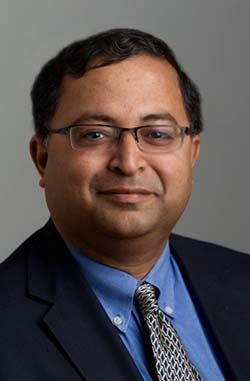
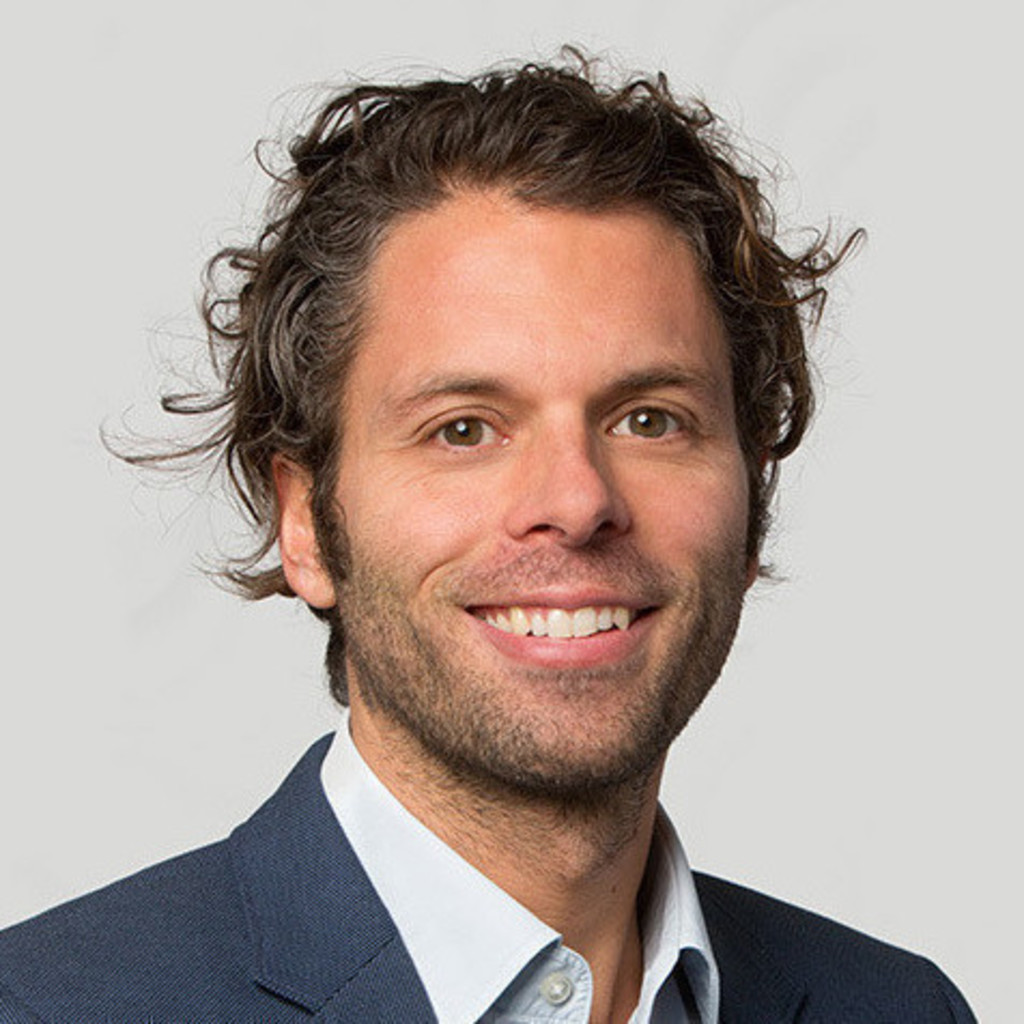
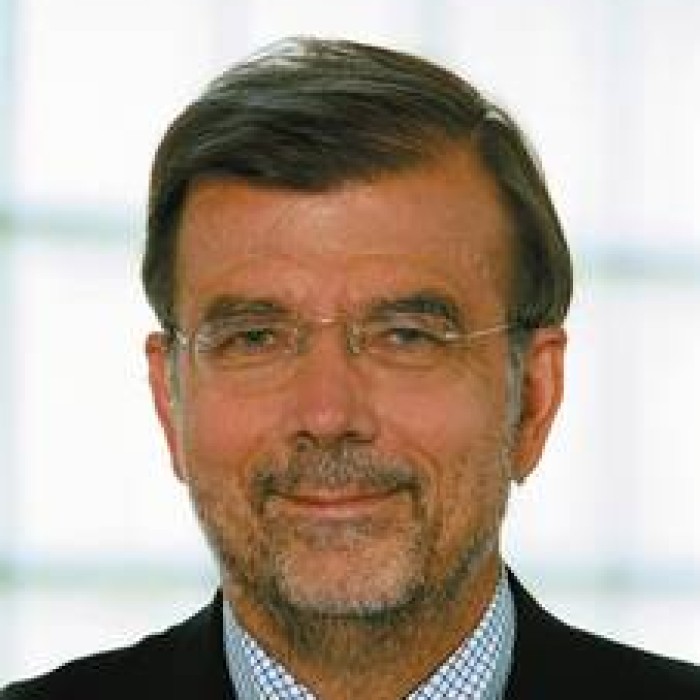
Professor Agba Salman is a distinguished academic at the School of Chemical, Materials and Biological Engineering , University of Sheffield, holding the Chair in Particle Technology . He serves as Director of the Diamond Pilot Plant and Course Director for MSc Pharmaceutical Engineering. His research bridges fundamental particle science with industrial applications across food, pharmaceuticals, fertilizers, and catalysts. Salman's work focuses on granulation processes, powder restructuring, and continuous manufacturing. He has pioneered methodologies linking early-stage granulation science with equipment design through computational modeling and real-time monitoring systems. Collaborations with major companies like Nestlé, AstraZeneca, and GSK demonstrate his industrial impact. Key article trends reveal expertise in: High-shear granulation for food/pharma Roll compaction optimization Sustainable granulation practices PAT implementation in continuous processing Lipid/oil migration analysis Microstructure engineering Salman has received recognition through 10 International Granulation Workshops he hosted and 18 special journal issues edited. His group's work on industrial-scale continuous manufacturing (powder-to-tablet systems) addresses critical knowledge gaps while enhancing economic efficiency across multiple sectors.
Professor Karl-Johan Lindholm is a prominent archaeologist at Uppsala University's Department of Archaeology, Ancient History and Cultural Preservation, specializing in Scandinavian prehistory and historical ecology. His research bridges archaeological theory with environmental science through extensive fieldwork across Northern Europe and Southern Africa. His research focuses on hunter-gatherer societies , biocultural heritage , and human-environment interactions across deep time. Key contributions include developing niche construction theory applications in boreal forest colonization, pioneering zooarchaeological studies of bear symbolism during the Viking Age transition, and establishing frameworks for biocultural heritage management. His work integrates pollen analysis, GIS, and ethnoarchaeological approaches to reconstruct past landscapes and societal responses to ecological uncertainty. Recent publications reveal strong trends in paleoclimatology-archaeology integration (notably volcanism impacts on Scandinavian societies), zooarchaeological studies of human-animal relationships , and theoretical advances in historical ecology . His research consistently addresses contemporary challenges like sustainable landscape management through deep-time perspectives, particularly evident in the TERRANOVA project policy frameworks. Research leadership includes directing long-term projects on Scandinavian boreal forest colonization and Viking Age transitions, with significant funding from European research councils supporting his interdisciplinary team's work on climate-human interactions and biocultural heritage conservation. His collaborations span archaeology, ecology, and social sciences across multiple continents. Professor Lindholm maintains active field research in Scandinavian river basins and boreal forests, with emerging work connecting historical resource management to modern sustainability challenges through his involvement in EU-funded landscape transformation initiatives.
Prof. Venkat N. Krovi serves as the Michelin Endowed Chair Professor of Vehicle Automation in the Departments of Automotive Engineering and Mechanical Engineering at Clemson University's College of Engineering, Computing and Applied Sciences (CECAS). He directs the Automation, Robotics and Mechatronics Laboratory (ARMLab) at the International Center for Automotive Research (CU-ICAR), focusing on smart embedded systems for autonomy in challenging environments. He earned his Ph.D. in Mechanical Engineering and Applied Mechanics from the University of Pennsylvania in 1998. His research leverages distributed autonomy and human-robot synergy to extend human capabilities, with applications spanning plant automation, consumer electronics, automobile, defense, and healthcare. The work emphasizes lifecycle treatment (design through verification) of robotic systems under uncertainty. Recent publications (2024-2025) demonstrate strong trends in digital twin frameworks for autonomous vehicle validation, sim2real transfer via reinforcement learning, and integration of large language models for editable simulations. Key themes include scalable cloud-based architectures, Koopman operator theory for robustness, and containerization for reproducible robotics development. His accolades include: National Science Foundation (NSF) CAREER Award Petro-Canada Young Innovator Award Multiple best paper awards at conferences and journals ASME Dedicated Service Award (2024) Prof. Krovi has advised doctoral students including Dr. Srivatsan Srinivasan (2024). His research receives substantial funding from NSF, DARPA, ARO, and industrial partners like Michelin. He leads the NSF I/UCRC RoSeHuB center and the AutoDRIVE ecosystem for autonomous driving education. As ARMLab director, he oversees projects including OpenCAV, the Robotics for AV Systems Bootcamp, and containerized terramechanics simulations. The lab specializes in mechatronic design, verification/validation frameworks, and human-autonomy coexistence studies for next-generation mobility solutions.
Prof. Sander M. Bohte holds a part-time appointment as a Professor of Computational Neuroscience at the Swammerdam Institute for Life Sciences (SILS), University of Amsterdam, and is a researcher at the CWI Machine Learning group. His research focuses on computational models of neural information processing, emphasizing spiking neural networks, predictive coding, and reinforcement learning. He bridges computational neuroscience and machine learning, exploring how biological insights can improve neural network designs and vice versa. Key collaborations include work with Cyriel Pennartz (UvA), Pieter Roelfsema (NIN), and Steven Scholte (B&C). His applied research spans scientific machine learning applications in finance and genomics. He actively supervises MSc thesis students, prioritizing those from UvA, with projects ranging from biologically inspired neural architectures to efficient spiking network simulations. Research highlights include developing biologically plausible learning rules for deep networks, predictive coding models for sensory data, and spiking network models for working memory tasks. His work also addresses challenges in temporal dynamics and scalable neural computation, leveraging both theoretical and applied perspectives.
Laharish Guntuka is an Assistant Professor in the Department of Management at the Saunders College of Business, Rochester Institute of Technology (RIT). His research focuses on supply chain resilience, climate risk management, and the application of generative AI in supply network design. He holds a leadership role in advancing climate-neutral supply chain strategies and has contributed to high-impact studies on supply chain plasticity and disruption recovery. Dr. Guntuka teaches courses including Operations Management (DECS-310), Supply Chain Analysis (DECS-750), and Seminar in Decision Sciences (DECS-758). His work integrates competitive dynamics perspectives with environmental, social, and governance (ESG) challenges, addressing topics like ESG rivalry and climate exposure assessment. He has been recognized in RIT's 2023-24 academic year for contributions to supply chain research. In public discourse, he co-authored an essay with RIT's Saunders College Dean Jacqueline Mozrall on nearshoring strategies for North American supply chains, published in the Rochester Business Journal. His research insights frequently address real-world challenges such as vulnerability to climate change and the strategic timing of recall campaigns. Dr. Guntuka's recent scholarship emphasizes actionable solutions for resilient supply chain design, leveraging AI tools and interdisciplinary approaches to sustainability. His work bridges academic research with industry relevance, offering frameworks for measuring and mitigating climate risks across global supply networks.
Prof. Frank-Peter Schilling is a Senior Lecturer at Zurich University of Applied Sciences (ZHAW) School of Engineering and Deputy Director of the Centre for Artificial Intelligence (CAI). He leads the Intelligent Vision Systems group and coordinates the PhD Programme in Data Science with the University of Zurich. As an Adjunct Professor at Victoria University of Wellington, he specializes in AI, Machine Learning, and applications in healthcare and physical sciences. His research focuses on deep learning-based computer vision, MLOps, and trustworthy AI certification frameworks. Education: PhD in Physics (University of Heidelberg, 2001) Dipl.-Phys. (MSc equivalent in Physics, University of Heidelberg, 1998) CAS University Didactics (PH Zurich, 2024) Research Interests: Developing AI systems for medical imaging (e.g., CBCT artifact reduction) Certification schemes for AI trustworthiness (e.g., certAInty project) Applications of deep learning in particle physics and industrial vision Achievements: Recipient of the EPS HEP Prize (2013) for contributions to the Higgs boson discovery at CERN Lead author of over 20 peer-reviewed articles on AI, MLOps, and medical imaging Principal investigator for projects like AI-BRIDGE (responsible AI development) and GenAI4SKA (Square Kilometre Array simulations) Teaching: Courses in MLOps, Machine Learning Operations, and Computer Vision at BSc and MSc levels. Developed the CAS Advanced Machine Learning program. Labs & Networks: Active in ELLIS (European Lab for Learning and Intelligent Systems), CLAIRE (AI research), and ZHAW’s Digital Health/Datalab initiatives.
SangWoo Park is an Assistant Professor in the Department of Mechanical and Industrial Engineering at the New Jersey Institute of Technology (NJIT). He holds a B.S. in Environmental Engineering from Johns Hopkins University (2016), and M.S. and Ph.D. in Industrial Engineering and Operations Research from the University of California, Berkeley (2017 and 2022, respectively). His research focuses on power systems optimization, supply chain resilience, and AI-driven engineering solutions. He is a recipient of the 2020 American Control Conference Best Student Paper Award. Education Background: Ph.D., Industrial Engineering and Operations Research, UC Berkeley (2022) M.S., Industrial Engineering and Operations Research, UC Berkeley (2017) B.S., Environmental Engineering, Johns Hopkins University (2016) Research interests include: Power grid operations and resiliency Circular supply chain modeling Advanced optimization algorithms Machine learning applications in energy systems His work bridges theoretical optimization with practical engineering challenges, such as anomaly detection in smart grids and post-disaster supply chain recovery. Awards: Best Student Paper Award, 2020 American Control Conference Professional Activities: Office Hours: Monday 10:30 AM–12:00 PM Website: https://sangwoopark-njit.github.io/
Professor Minh N. Do is the Thomas and Margaret Huang Endowed Professor in Signal Processing & Data Science at the University of Illinois at Urbana-Champaign (UIUC), with primary appointment in the Department of Electrical and Computer Engineering. He holds multiple affiliate appointments across campus including with the Coordinated Science Laboratory, Beckman Institute for Advanced Science and Technology, Department of Bioengineering, Department of Computer Science, Institute for Genomic Biology, College of Medicine, and School of Computing and Data Science. Additionally, he serves as Director of the joint VinUni-Illinois Smart Health Center and holds an Honorary Vice-Provost position at VinUniversity. Professor Do received his B.Eng. in Computer Engineering (First Class Honors) from the University of Canberra, Australia in 1997, followed by his Dr.Sci. in Communication Systems from the Swiss Federal Institute of Technology Lausanne (EPFL) in 2001. His educational journey was marked by exceptional achievement, earning the University Medal from the University of Canberra and a Silver Medal from the 32nd International Mathematical Olympiad. Professor Do's research focuses on developing new multidimensional signal processing tools with applications across several domains. His primary research interests include smart health, data science, computational imaging, and signal processing. His work spans biomedical imaging, machine learning, computer vision, and robotics, with particular emphasis on geometric image representations, integrating image formation and processing, and image processing from multiple sensors. His research bridges theoretical investigations with practical applications, creating impactful solutions in healthcare, diagnostics, and AI systems. His recent publications demonstrate a consistent trajectory toward multimodal AI systems, robust learning frameworks, and healthcare applications. Professor Do's work increasingly integrates signal processing with deep learning approaches to address challenges in medical imaging, cross-modal transfer, and real-world deployment of AI systems. His research shows strong emphasis on practical applications with societal impact, particularly in healthcare diagnostics and smart health technologies. Professor Do's scientific achievements have been recognized with numerous prestigious awards: Member of the National Academy of Artificial Intelligence (2025) Fellow of Asia-Pacific Artificial Intelligence Association (2023) Thomas and Margaret Huang Endowed Professor, UIUC (2020-present) Fellow of IEEE (2014) Young Author Best Paper Award, IEEE Signal Processing Society (2008) CAREER award from the National Science Foundation (2003) Best Doctoral Thesis Award from EPFL (2001) As an educator, Professor Do has taught numerous courses spanning digital signal processing, probability, data science, and image processing. His teaching excellence has been recognized with multiple "Teachers Ranked as Excellent" awards at UIUC. He also maintains active industry connections through tech-transfer efforts, having co-founded Personify and served as Chief Scientist of Misfit. His leadership extends to administrative roles, having served as Vice-Provost for VinUniversity during 2020-2021. Professor Do leads research initiatives at the intersection of signal processing and healthcare applications, with particular focus on the Smart Health Center collaboration between UIUC and VinUniversity. His lab develops innovative solutions for medical diagnostics, point-of-care testing, and neurological assessment using advanced signal processing and AI techniques.
Maxim Raginsky is a Professor at the University of Illinois at Urbana-Champaign, holding appointments in the Department of Electrical and Computer Engineering, Coordinated Science Laboratory, and a courtesy appointment in Computer Science. His work bridges probability, stochastic processes, control theory, machine learning, optimization, and information theory , focusing on modeling, learning, and simulation of nonlinear dynamical systems with applications to advanced electronics, autonomy, and artificial intelligence. Research Interests Nonlinear dynamical systems in machine learning and control Statistical machine learning theory Information-theoretic methods in learning Stochastic control and filtering Scientific Contributions Co-author of foundational monographs on concentration inequalities and generalization bounds Recipient of the NSF CAREER Award (2013) , IEEE Fellow (2025) , and Roberto Tempo Best CDC Paper Award (2024) Editorial roles in Foundations and Trends in Machine Learning , Journal of Machine Learning Research , and SIAM Journal on Mathematics of Data Science Academic Leadership Advising 15+ graduate students and postdocs including Joshua Hanson, Belinda Tzen, and Tanya Veeravalli Teaching core graduate courses: Control of Stochastic Systems , Statistical Learning Theory , Optimization by Vector Space Methods
PD Dr. Kaspar Riesen is the Head of the Pattern Recognition Group at the Institute of Computer Science, University of Bern. His research focuses on graph-based methods for pattern recognition, with applications in document analysis, environmental modeling, and healthcare. Key interests include graph matching, neural networks, and spatio-temporal modeling. His work spans structural pattern recognition, graph embeddings, and keyword spotting in historical documents. Recent projects involve river network analysis using graph regression and hypoglycemia prediction via LSTM-GNN hybrid models. Publications emphasize graph theory advancements, such as normalized graph compression and geometric similarity learning. Collaborations include developing specialized algorithms for automated error detection and improving decision-making in simulated sports. Labs/Teams: Pattern Recognition Group (PRG) at the University of Bern.
Rodrigo Olivares-Caminal is a Professor of Banking and Finance Law at the Centre for Commercial Law Studies (CCLS) , Queen Mary University of London. He previously held roles as Senior Lecturer and Academic Director at SOAS University of London and the University of Warwick's School of Law. His expertise spans international finance , insolvency law , sovereign debt restructuring , and cross-border litigation , with professional engagements in Africa, Asia, the Middle East, and Europe. Rodrigo has taught corporate finance law , bank resolution , and sovereign debt courses. His research focuses on sovereign debt sustainability , financial crisis management , and regulatory frameworks for banking and insolvency. Recent publications analyze post-pandemic debt challenges , UK financial regulation post-Brexit , and valuation complexities in bank resolution . His work has informed policy through advisory roles for the World Bank/IFC , UNCTAD , and sovereign states. He contributes to media outlets like the Financial Times and Bloomberg , and has participated in international conferences on Greek debt , Venezuela’s financial crisis , and Latin American restructuring . Rodrigo also serves as editor-in-chief for the Business Law Review and on advisory boards for multiple law journals.
Sjoerd van der Heide is a University Researcher at Eindhoven University of Technology, affiliated with the Electrical Engineering department and the Electro-Optical Communication group. His work focuses on advanced optical communication systems, with expertise in quantum key distribution, digital signal processing, and space-division multiplexing. Education: MSc in Optical Communication Systems (2017), thesis titled Low-complexity pre-compensation and advanced modulation techniques for high capacity intensity-modulated direct detection systems , supervised by Prof. C.M. Okonkwo. Research interests include: Quantum cryptography over free-space and fiber links GPU-accelerated real-time optical receivers Mode-division multiplexing techniques Holography-based fiber device characterization Atmospheric turbulence compensation Statistical modeling of mode-dependent loss Recent publications demonstrate trends in Continuous-variable QKD integration Co-propagation of classical and quantum signals Neural network applications for transmission High-capacity SDM systems Real-time GPU-based signal processing Off-axis digital holography techniques Scientific awards include: ECOC 2018 Student Paper Award Optica Student Paper Award (2022) OECC 2019 Best Paper Award Active in experimental validation of transmission systems, with collaborations on multi-core fiber implementations, turbulence generators, and software-defined optical receivers. Currently involved in the Zwaartekracht ECO project for integrated nanophotonics research.
Alfred Kieser is a distinguished academic and EGOS Honorary Member (2012), renowned for pioneering work in organizational theory with a focus on historical institutionalism. As a Professor, he has contributed foundational research on organizational evolution through comparative historical studies of guilds, monasteries, and cross-national business practices. His methodologies emphasize inductive theory-building grounded in historical analysis. Key contributions include exploring how formal organizations replaced medieval guilds and analyzing national institutional differences through the Aston Program's cross-cultural research. He has held leadership roles in EGOS, including serving as Chair in 2000 and co-founding the journal Organization Studies . Kieser's work bridges historical, comparative, and theoretical approaches to understanding organizational practices across time and cultures. Research Focus : Historical institutionalism, comparative management, organizational evolution Methodological Innovation : Inductive theory-building through case comparisons Impact : Shaped EGOS's transnational intellectual community and organizational studies' disciplinary rigor His articles span historical case studies (e.g., guilds, monasteries) to cross-national organizational comparisons, consistently emphasizing institutional context and temporal dynamics.
Trang Vu is a Lecturer in the Department of Data Science & AI at Monash University's Faculty of Information Technology. Her research focuses on trustworthy NLP methods, cultural-aware machine translation, and efficient ML techniques like active and transfer learning. She holds a PhD in AI and Machine Learning from Monash University, awarded in 2022. Education: Doctoral of Philosophy (AI and Machine Learning) - Monash University (2022) Research Interests: Safe and trustworthy NLP methods for LLM alignment and hallucination mitigation Cultural-aware machine translation systems Efficient NLP techniques including active learning and semi-supervised methods Recent Projects: TMLGenAI (2023-2026): Developing safe and aligned foundation models Knowledge-Intensive Multimodal ASR research (2024) Collaborations: International collaborations in generative AI and multilingual NLP Team leader roles in multiple large-scale AI projects
Zhongguo Li is a Lecturer in Robotics, Control, Communication & AI at the University of Manchester. He holds a B.Eng. (2017) and Ph.D. (2021) in Electrical and Electronic Engineering from the University of Manchester. Prior to his current role, he was a Lecturer at University College London (2022-2023) and a Research Associate at Loughborough University (2020-2022). His research focuses on distributed control, optimization, and reinforcement learning, particularly in robotics and autonomous systems. Key areas include multi-agent coordination, networked systems, and applications in autonomous vehicles. He has authored over 40 papers in top journals/conferences and co-authored a book on Distributed Optimization and Learning (2024). Teaching responsibilities include courses such as Control Systems II, Nonlinear and Adaptive Control, and Embedded Systems Project. He serves as an Associate Editor for Drones and Autonomous Vehicles and Guest Editor for Machines and Frontiers in Control Engineering. Dr. Li actively mentors PhD students, offering guidance on funding opportunities and research projects in distributed algorithms, robotics, and control systems. His work aligns with UN Sustainable Development Goals related to innovation and infrastructure.