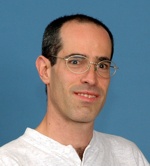
Assaf Libman is a Reader in the School of Natural and Computing Sciences at the University of Aberdeen. His research lies at the intersection of algebraic topology, homotopy theory, and group theory, with a focus on fusion systems, p-local compact groups, and their connections to representation theory. He also contributes to mathematical finance and argumentation theory, demonstrating interdisciplinary breadth. Research Interests: Homotopy Theory and its relations with Homological Algebra and Representation Theory The homotopy theory of fusion systems Applications to modular representation theory Mathematical finance and discrete market models Argumentation theory and logical semantics Recent publications reveal a sustained research output in both pure mathematics and applied domains. His work on fusion systems, boundedness of groups, and homotopy limits reflects deep theoretical engagement, while his papers on super-hedging, option pricing, and argumentation semantics show applied versatility. Trends indicate ongoing collaborations, particularly with Jarek Kędra and Nir Oren. Scientific Funding: Nuffield Foundation (2004) EPSRC (2006) – Project: "Combinatorial and Homotopy Theory of Classifying Spaces of Fusion Systems" Libman teaches undergraduate courses including Probability Theory (MA2505), Engineering Analysis and Methods (EG3006), and Understanding Data (ST1506). He has no listed advisees in the provided text. He maintains an active research profile with publications up to 2025.
Tay W. Johannes is an Adjunct Assistant Professor of Engineering Management and Environmental Management Instructor at The Civil Engineer School, Air Force Institute of Technology (AFIT). He holds a Ph.D. in Engineering Management from The George Washington University, an MS from AFIT, and a BS in Electrical Engineering from Montana State University. His primary roles include teaching and consulting in environmental management systems, risk management, and emergency response. He has over 26 years of active duty service as an Air Force Civil Engineer officer, including leadership roles in deployment missions and project management. Education: PhD (GWU), MS (AFIT), BS (Montana State) Experience: Director at 438th Air Expeditionary Wing, Deputy Relocations Program Manager (White House Military Office), and various engineering roles across global Air Force bases. Research interests focus on environmental compliance, disaster management, and Air Force operational readiness. He teaches courses such as WENV 020 (EMS Coordinator), WENV 175 (Environmental Management for Deployed Locations), and EMGT 611 (Crisis Management). His work integrates technical expertise with leadership training for military engineers. Recent initiatives include on-site training programs in Guam and Germany, emphasizing life-cycle cost estimating and cybersecurity for critical infrastructure. He is a Registered Professional Engineer in Montana and contributes to AFIT’s mission of advancing defense-focused education.
Dr. Christine Van Winkle is a tenured Associate Professor in the Department of Tourism and Hospitality Management at the University of Manitoba, specializing in community-based festival and event research. Her work uniquely bridges academic theory with practical event management, focusing on real-world applications that strengthen community resilience through cultural events. Her academic credentials include: Doctor of Philosophy (2007) from Clemson University Master of Arts (2002) from the University of Manitoba Dr. Van Winkle's research centers on festival experiences , emergency management at events , and festivals' role in community disaster recovery . She investigates how cultural events foster social cohesion during crises, examining technology's impact on attendee engagement and developing frameworks for crisis preparedness. Her community-engaged methodology emphasizes practical solutions for event planners and emergency managers. Analysis of her 2023-2025 publications reveals a critical shift toward integrating disaster management with event studies. Her work demonstrates how festivals serve as platforms for community recovery after wildfires and other disasters, while simultaneously addressing emerging challenges like smartphone distractions and volunteer coordination in emergency scenarios. Her scholarly excellence is recognized through prestigious awards: Outstanding Reviewer Award, International Journal of Event and Festival Management (2021) Outstanding Paper Award for 'Mobile device use during festivals' (2017) Highly Commended Paper Award for 'Sense of community and perceptions of festival social impacts' (2015) Best Conference Paper Award for 'Your Festival in 140 Characters or Less*' (2014) With extensive practical experience as a festival volunteer coordinator, supervisor, and consultant, Dr. Van Winkle currently serves on the board of directors for the Gas Station Arts Centre (producer of the nationally televised Winnipeg Comedy Festival). Her dual expertise in academic research and operational event management creates unique opportunities for knowledge translation between theory and practice.
Gábor Dávid Kiss is an Associate Professor at the Department of Finance, University of Szeged. His research focuses on unconventional monetary policy, capital market contagions, and financial contingency mechanisms. He has extensive international teaching experience, including guest lectures at MDI Gurgaon (India) and Silesian University in Opava (Czechia). Habilitation : Economics (Unconventional Monetary Policy, 2017) PhD : Economics (2012) MA : Business Administration (Finance, 2007) His research examines the impact of central bank policies on currency stability and cross-border financial linkages. Recent publications analyze ECB interventions and spillover effects of quantitative easing. He has supervised numerous PhD and Master’s students and participated in international workshops on time-series analysis and big data applications in finance. Scientific awards include no explicitly mentioned honors, but his work appears in Scimagojr Q3 journals. He teaches econometrics, international finance, and financial modeling using MATLAB and Eviews.
Will Foster serves as Professor of Law and Dean of the School of Law at the University of Arkansas, where he teaches tax, business, and transactional law courses including Federal Income Tax, Mergers & Acquisitions, and Wills & Trusts, while advising the Business Law Concentration program. His academic credentials include a B.S. in Political Science, summa cum laude, from the University of Central Arkansas; a J.D., summa cum laude, from the University of Arkansas; and an LL.M. in Taxation from New York University. Foster's research bridges tax policy, business entity design, and transactional law with contemporary applications in art markets and legal technology. His scholarship critically examines tax risk frameworks, presidential authority in tax administration, and the impact of automation on contract drafting, consistently connecting theoretical legal principles to real-world business practices. His publication trajectory reveals increasing focus on interdisciplinary intersections—particularly between tax law and art market dynamics, and the ethical implications of AI in legal practice—while maintaining core contributions to business entity structuring and tax compliance scholarship. Professional recognition includes: Professor of the Year, Washburn University (2013) Professor of the Year, University of Arkansas (2016) As faculty advisor for the Business Law Concentration, Foster guides curriculum development without documented graduate student mentorship. His administrative leadership includes serving as Associate Dean for Academic Affairs (2016-2020) and active bar association roles. Current professional engagements feature his position as reporter for the Arkansas Supreme Court Committee on Jury Instructions – Civil, building on prior service with the Supreme Court Task Force on Lawyer Wellbeing and leadership as president of the W. B. Putman American Inn of Court.
Francisco José Molina Castillo is a Full Professor at the Department of Business Organization and Finance, Faculty of Economics and Business, University of Murcia. He holds a PhD with Extraordinary and National awards from AEMARK, and dual undergraduate degrees from University of Murcia and Manchester Metropolitan University. His teaching spans undergraduate to PhD levels across disciplines like marketing, business models, and mobile marketing, with visiting professorships at Delft University, Michigan State University, and others. PhD in Marketing (University of Murcia, 2006) Master in Foreign Trade Management (ENAE Business School, 2002) Bachelor in Business Administration and Management (University of Murcia, 2001) Bachelor in Accounting and Finance in Europe (Manchester Metropolitan University, 2001) His research focuses on innovation and new technologies, particularly in launching new products and designing innovative business models. He has authored over 50 JCR journal articles and 90 conference communications, with research stays at Delft University of Technology (2005) and Michigan State University (2008). Key journals include Harvard Business Review , Journal of the Academy of Marketing Science , and Technovation . He has secured three six-year research periods and one six-year transfer fellowship. Scientific awards include the Fast Forward Entrepreneurship Educator of the Year and AEMARK’s National Thesis Award. Management roles include coordinating virtual classroom innovation (2018-2022), directing master’s programs in marketing and foreign trade, and serving as Erasmus tutor. He co-founded research groups ITO: Organizational Technological Innovation and Marketing , and contributes to chairs like Family Business and Innovation Ecosystem. Collaborations span institutions such as University of Manchester and WU Vienna University.
Aysu Göçer is an Associate Professor in the Department of Logistics Management at Izmir University of Economics, Turkey. She earned her PhD in Business Administration from Dokuz Eylul University in 2015 and her Master's in Logistics from Izmir University of Economics in 2010. With a Bachelor's degree in Business Administration from Bilkent University (1999), she brings 9 years of industry experience, predominantly at Japan Tobacco International, where she specialized in purchasing and planning within logistics and supply chain management. Education Bachelor of Business Administration, Bilkent University, 1999 Master of Logistics, Izmir University of Economics, 2010 PhD in Business Administration, Dokuz Eylul University, 2015 Research Interests Dr. Göçer's research spans supply chain management, procurement, global business models, risk management, and sustainability. She examines the contingent relationship between sustainability and risk in supply chains, particularly in emerging economies, and investigates digital transformation in logistics organizations. Her work also explores social media branding for logistics services and value co-creation in maritime and humanitarian logistics networks. Publication Trends Her recent publications (2019-2025) reveal a growing emphasis on sustainability-risk dynamics, digital transformation, and resilience in supply chains. She has analyzed crowd delivery sustainability, geopolitical impacts on food supply chains, and social media engagement for logistics branding. Much of her empirical work is grounded in the Turkish context, including studies on container ports and customs services. Professional Experience Prior to academia, Dr. Göçer spent 9 years in industry, primarily at Japan Tobacco International in Izmir, focusing on purchasing and planning in logistics and supply chain operations.
Dr Rifat Kamasak is an Associate Professor in Entrepreneurship at Henley Business School, University of Reading. He is affiliated with the Department of Leadership, Organisation and Behaviour , Centre for Euro-Asian Studies , and Henley Centre for Entrepreneurship . With a career spanning academia and industry, he has held leadership roles in conferences and is a honorary board member of EUMMAS . PhD in Management Studies (University of Exeter) PhD in Organizational Theory (University of Istanbul) MA and MSc degrees from Middlesex University London, Durham University, and University of Oxford His research focuses on emerging markets , knowledge and innovation strategy , toxic leadership , and EDI at work . He has conducted field studies in Turkey, China, Brazil, and Sri Lanka, emphasizing workplace democracy and humanization of work. A key area is English medium instruction in universities and sociolinguistics. Recent publications address digital inclusion , refugee entrepreneurship , and strategic flexibility in innovation ecosystems . His work is supported by international and national grants, including a study on English-medium instruction in Turkey . He teaches modules like Innovation Management and Financing for Entrepreneurship . Honorary EUMMAS Board : Recognized for leadership in marketing and management As an engaged scholar, he prioritizes cross-cultural competencies and multicultural education through modules like Applied Challenge and Practice of Entrepreneurship .
Claudia Rosales serves as Assistant Professor in the Department of Supply Chain Management at the University of Arkansas' Walton College of Business. Her academic appointment spans both the Walton College of Business (WCOB) and the Supply Chain Management department (LSCM), with research activities centered on healthcare operations and logistics optimization. Her educational background includes a Ph.D. in Operations Management and Master of Science in Quantitative Analysis from the University of Cincinnati's College of Business, Department of Quantitative Analysis and Operations Management. She completed her foundational education with a Bachelor of Science in Chemical and Industrial Engineering from Universidad Rafael Landivar in Guatemala City. Rosales' research focuses on critical supply chain challenges in healthcare systems, particularly examining inventory management for medical supplies, risk mitigation in vaccine distribution, and optimization of surgical supply chains. Her work bridges theoretical operations management with practical healthcare applications, emphasizing analytics-driven solutions for reducing waste and improving efficiency in high-stakes environments. Recent publications demonstrate increasing specialization in physician preference items and pandemic-related supply chain resilience. Her scholarly contributions appear in top-tier journals including Journal of Operations Management , Decision Sciences , European Journal of Operational Research , and Transportation Journal . She currently serves as Associate Editor for Decision Sciences Journal , reflecting her growing influence in the field. Best Paper of the Year Award - Decision Sciences Journal Best Paper of the Year Award - Transportation Journal Rosales brings significant industry experience to her academic role, having held multiple manufacturing and engineering positions in the Consumer Packaged Goods (CPG) sector prior to her doctoral studies. Her practical background informs her research on real-world supply chain challenges, particularly in healthcare settings where operational failures can have life-or-death consequences. Current work examines influenza vaccine contracts in developing nations and consignment inventory systems for medical supplies.
Professor Woo-Tsong Lin is a distinguished faculty member in the Department of Management Information Systems at National Chengchi University's College of Commerce in Taiwan. With over three decades of academic experience, he has established himself as a leading researcher in supply chain management and information systems. His career at NCCU spans from Assistant Professor (1990-1995) to full Professor (1995-present), with additional administrative roles including Department Chair (1996-1999) and Deputy Dean of the College of Commerce (2010-2011, 2013-2015). Ph.D. in Industrial Engineering & Operations Research, University of California, Berkeley (1988-1990) M.S. in Industrial Engineering, University of California, Berkeley (1985-1988) B.S. in Industrial Engineering, Tunghai University, Taiwan (1977-1981) Professor Lin's research focuses on supply chain management, supply chain innovation, e-business, decision support systems, and software industry development and management. His work bridges theoretical frameworks with practical business applications, particularly in developing optimization models for complex supply chain problems under uncertainty. He has made significant contributions to green supply chain management, reverse logistics, and the application of emerging technologies like blockchain in supply chain contexts. His research often integrates operations research methodologies with information systems perspectives to address contemporary business challenges. Analysis of Professor Lin's recent publications reveals a strong focus on supply chain resilience, sustainability, and the application of advanced computational methods to supply chain problems. His work frequently addresses uncertainty in supply chain networks, green logistics, and the integration of new technologies like blockchain into traditional supply chain operations. There's a clear evolution in his research from foundational supply chain management topics to more complex problems involving sustainability, risk management, and emerging technologies. Distinguished Professor award from National Chengchi University (2008) Professor Lin has led numerous research projects funded by Taiwan's Ministry of Science and Technology (previously National Science Council), focusing on supply chain risk management, green closed-loop supply chains, and innovative applications of information technology in business processes. His research has practical implications for industry, particularly in manufacturing, retail, and technology sectors. While specific student advising information isn't detailed in the provided materials, his extensive publication record with various co-authors suggests active mentorship of graduate students. Professor Lin's work intersects with several research labs at NCCU, particularly those focused on E-Business, Supply Chain Management, and emerging technologies. His research on blockchain applications in supply chain management aligns with interests of the Lab for Electronic Commerce and Service Science, while his work on sustainable operations connects with the Digital Sustainable Enablement Lab.
Scott Robertson is an Associate Professor in the Department of Finance at Boston University's Questrom School of Business. His research bridges mathematical finance, stochastic processes, and economic theory, focusing on equilibrium modeling with heterogeneous information flows and robust asymptotic growth strategies. Current affiliation: Boston University Academic rank: Associate Professor Research focus: Mathematical finance, stochastic modeling, and optimal control His recent work explores rational expectations equilibrium, information asymmetry in financial markets, and large deviations effects in contingent claims pricing. Notable collaborations include researchers like Kardaras, Guasoni, and Xing. Scott has presented at premier conferences such as the SIAM Conference on Financial Mathematics and Bachelier Finance Society Congress.
Gregory Colson serves as Professor and Department Head of the Department of Agricultural & Applied Economics within the University of Georgia's College of Agricultural & Environmental Sciences, while also directing the CAED. Based at 301 Conner Hall (147 Cedar Street, Athens, GA 30602), he maintains active research and teaching roles with contact details gcolson@uga.edu and 706-542-2481. Research Focus: His work centers on risk analysis and experimental economics applied to agricultural and environmental systems, with particular expertise in water economics , energy policy , and consumer decision-making . He employs choice experiments, survey design, and real options modeling to investigate behavioral responses to environmental constraints, policy interventions, and market innovations. His methodological rigor in economic survey design provides critical insights for resource management. Publication Trends: Recent work (2019-2025) reveals concentrated exploration of water recycling economics (including terminology effects on willingness-to-pay), biomass energy transitions (co-firing dynamics, jet biofuel investments), and conservation incentive structures (forest management, ecosystem services). His experimental approach consistently bridges theoretical economic frameworks with practical policy applications across agricultural, environmental, and educational domains. Awards and Recognition: D.W. Brooks Faculty Award for Excellence in Teaching, UGA CAES (2020) Early Career Teaching Award, UGA CAES (2018) Multiple Outstanding Faculty Awards from AAE Graduate Student Association (2011, 2013, 2014, 2018) Educator Award, NACTA (2015) Emerging Scholar Award, SAEA (2015) Teaching and Mentorship: In 2023, he instructed undergraduate courses AAEC 2580 (Applied Microeconomic Principles) and AAEC 3910 (Internships), alongside graduate seminars AAEC 6590 (Microeconomics: Theory with Applications II), AAEC 8010 (Seminar in Agricultural and Applied Economics), and AAEC 8150 (Survey Design and Experimental Economics). His repeated recognition by graduate students underscores effective mentorship of emerging scholars in experimental and environmental economics.
Mateusz Filipski is an Adjunct Associate Professor in the Department of Agricultural & Applied Economics within the College of Agricultural & Environmental Sciences at the University of Georgia (UGA). He is currently on leave from UGA, working as a Senior Economist on the Returns, ReCommerce, and Sustainability team at Amazon. Prior to his current position, Filipski was a Research Fellow at the International Food Policy Research Institute (IFPRI), where he continues to serve as a Non-Resident Fellow. His professional background also includes work as a postdoc at UC Davis, and consulting for the OECD, World Bank, and FAO. Dr. Filipski's educational background includes: Ph.D. in Agricultural and Resource Economics from University of California-Davis (2011) M.S. in Agricultural and Resource Economics from University of California-Davis (2007) M.S. (honors) in Development Economics from Université Paris-Saclay (AgroParisTech, formerly INAPG) (2005) M.Eng. in Life Sciences & Agronomy from Université Paris-Saclay (AgroParisTech, formerly INAPG) (2004) Mateusz Filipski is an applied economist whose research spans the areas of development, environmental, and health economics. His work focuses on economic development in rural areas around the world, with specific interests in rural transformation, migration, mechanization and technology adoption, trade, health economics, and consumer behavior. Much of his research evaluates the economic impacts of programs and policies aimed at improving the lives of rural populations. He employs a diverse methodological toolkit including econometric analysis, structural modeling, and experimental approaches. His recent work has focused on countries including Ethiopia, China, and Myanmar. Analysis of Filipski's recent publications reveals a strong focus on rural economic development across multiple dimensions. His work spans agricultural economics, development economics, environmental economics, and health economics. Common themes include rural transformation, migration patterns, agricultural mechanization, the impacts of natural disasters and pandemics, and the evaluation of social programs. His methodological approach often involves local economy-wide impact evaluation (LEWIE) models, combining econometric techniques with structural modeling to assess policy impacts on rural communities. Filipski's professional recognition includes his continued affiliation as a Non-Resident Fellow at the International Food Policy Research Institute (IFPRI) following his tenure as a Research Fellow. His work has been supported by major international organizations including the World Bank, FAO, and OECD. Dr. Filipski has extensive experience in research collaboration and project leadership, having worked with multiple international organizations. His current position at Amazon represents an application of his economic expertise to corporate sustainability challenges. Though specific information about graduate students he has advised is not provided in the available materials, his research output suggests active engagement with academic and policy communities through publications and presentations. Though not explicitly detailed in the available information, Filipski's work with IFPRI and UGA likely involved participation in research teams focused on agricultural and development economics. His current role at Amazon suggests engagement with teams working on sustainability and circular economy initiatives.
Klara Skogmyr Marian is an Associate Professor at Stockholm University , affiliated with the Department of Swedish Language and Multilingualism . Her research focuses on the social dimensions of multilingualism and second language learning , particularly through Conversation Analysis and multimodal perspectives . Her work examines how speakers develop interactional competence in L2 French , including studies on discourse markers like tu vois (‘you see’) and multimodal word-search behaviors. She contributes to understanding pragmatic variation in service interactions across Sweden-Swedish and Finland-Swedish contexts. Key publications include her 2022 monograph The Development of L2 Interactional Competence and longitudinal studies on L2 grammaticalization processes. She teaches multilingualism and second language learning courses while supervising degree projects.
Dr. Frederike Schotters is a researcher at the Institute of Modern History within the Faculty of Humanities at the University of Tübingen, Germany. Her work focuses on interdisciplinary historical research, particularly in the areas of International Relations, European Integration, and Global History. PhD in Contemporary History (2017) Master of Arts in History (University of Duisburg-Essen, 2010–2013) Bachelor of Arts in History and German Literature (University of Duisburg-Essen and Université de Nice Sophia Antipolis, 2006–2010) Her research explores the intersections of European Integration History , International Catholic History , and the Age of Mammoth Ivory (implied from contextual University of Tübingen research themes). She has contributed to themes of Managing Contingency through her work in the DFG-graduate programme. Scientific Awards : Fellow at the German Historical Institute in Paris (2014) Frederike collaborates with the Institute of Modern History, engaging in research on historical transformations such as Country Houses in Times of Change . Her office is located in Hegelbau, Room 230, and appointments can be arranged via email.