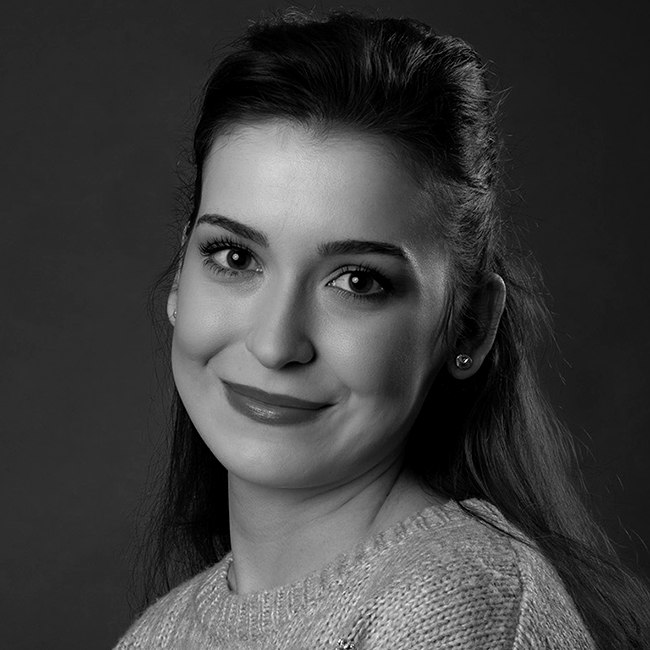
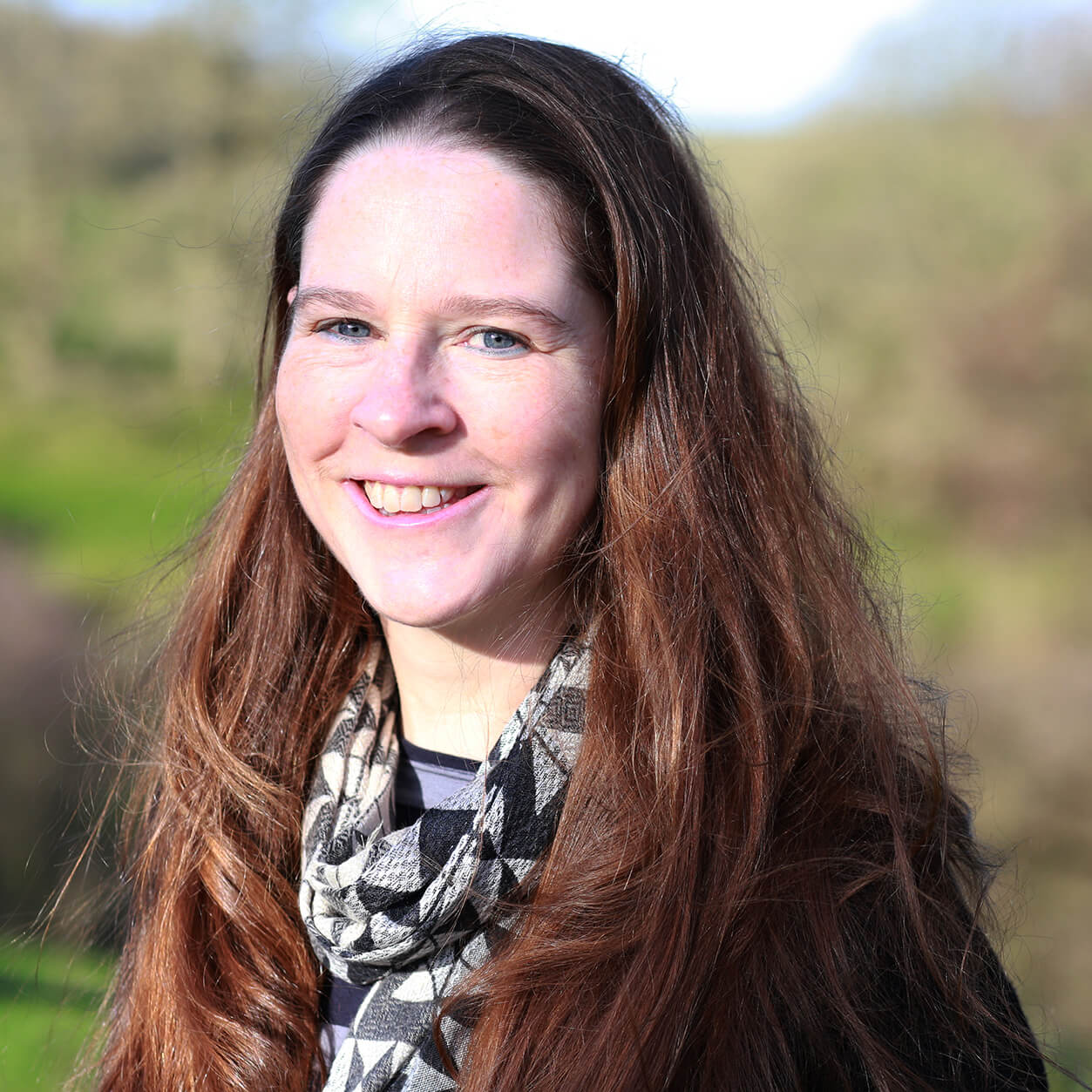
Esther Solomon is an Associate Professor of Museology at the Department of Visual Arts and Art Sciences, University of Ioannina. She has also taught at the School of Fine Arts and the postgraduate program 'Public History' at the Hellenic Open University. Education: Studied archaeology, museology, and social anthropology at the Universities of Ioannina, Florence, Sheffield, and London (UCL). Her research focuses on museum representations of the past , exhibition curation , cultural tourism , public history , museum education , and the social and political uses of cultural heritage . She has published studies in international and Greek journals, including her book Contested Antiquity: Archaeological Heritage and Social Conflict in Greece and Cyprus (Indiana University Press, February 2021). She coordinates the postgraduate program 'Exhibition Curation: Theoretical and Practical Approaches' at the University of Ioannina since 2018. Her work integrates theoretical approaches with practical applications in museology and exhibition design.
Tim Cason is a Distinguished Professor of Economics and holds the Gadomski Chair of Economics at the Krannert School of Management, Purdue University. He serves as Director of the Vernon Smith Experimental Economics Laboratory (VSEEL), a leading research center in experimental economics. His academic career spans over three decades with significant contributions to understanding market behavior through controlled laboratory experiments. Dr. Cason earned his Ph.D. in Economics from the University of California, Berkeley, and his B.A. in Economics and Mathematics from Indiana University, Bloomington. His strong quantitative background has enabled rigorous experimental approaches to economic questions. Professor Cason's research focuses on experimental markets, environmental regulation, and antitrust issues, with particular emphasis on emissions trading systems used globally to reduce pollution. His work bridges theoretical economic models with real-world applications, demonstrating how human behavior affects market outcomes in environmental policy contexts. Through controlled laboratory experiments, he has provided crucial insights into coordination problems, strategic interaction, and institutional design. His extensive publication record includes articles in premier journals such as Science, Journal of Political Economy, Econometrica, American Economic Review, and Review of Economic Studies. These publications reveal consistent themes in market design, environmental policy effectiveness, and behavioral responses to institutional structures. Distinguished Professor of Economics at Purdue University Gadomski Chair of Economics President of the Economic Science Association (2009-2011) Former Co-Editor of the Journal of Public Economics Past editor of the journal Experimental Economics Editorial board member for Games and Economic Behavior, Journal of Economic Behavior and Organization, Management Science, and Journal of Environmental Economics and Management As Director of VSEEL, Professor Cason oversees experimental research examining complex economic phenomena through controlled methods. His laboratory serves as an interdisciplinary hub where economists test theoretical predictions about market behavior, particularly in environmental contexts where traditional models may not fully capture strategic interactions.
Alice Wickenden is a Leverhulme Early Career Fellow at the Faculty of English, University of Cambridge, where she investigates contested histories of early modern library collections. Her research critically examines how libraries should address problematic pasts involving funding from slavery and the oil trade, or acquisitions obtained through theft, arguing these histories function as material forces shaping both physical books and resultant research. Her work bridges critical heritage studies and early modern scholarship, focusing on decolonial approaches to library collections. A key output is her forthcoming monograph Hans Sloane’s Library Collections and the Production of Knowledge (Cambridge University Press, 2025), which analyzes how colonial-era collecting practices influenced knowledge production. Her major recognition includes: Leverhulme Early Career Fellowship This prestigious fellowship supports her investigation into how historical contexts of library formation impact contemporary research ethics and collection management, positioning her work within the University of Cambridge's Collections Connections Communities initiative for collaborative collection-based research.
Marija Simojlović is a lecturer at the Department of Media and Communications within the Faculty of Media and Communications at Singidunum University in Belgrade, Serbia. She teaches multiple courses including Theory and Practice of Intercultural Communications, Media History, Propaganda in the Past and Present, Identity Communication, History of Gender and Family, Introduction to Visual Communications, and Media Tools and Immersive Media. Her educational background includes: Basic studies in Communications and Public Relations from the Faculty of Media and Communications in Belgrade Master's studies in Human Resources Management from the Faculty of Media and Communications in Belgrade, with thesis titled 'Application of communication skills and human resource management techniques in agile work methodology' defended in September 2023 Marija's research spans Communications, Human Resource Management, Agile Management, and Theories of Culture and Media. Her work focuses on the intersection of communication methodologies and management techniques within contemporary work environments. She has developed expertise across media history, propaganda studies, gender studies, and intercultural communication as evidenced by her diverse teaching portfolio. Her notable achievement includes: First prize in the contest 'How to reach responsible media and journalists we trust' announced in 2019 by the European Federation of Journalists and the Union of Serbian Journalists Prior to her current academic position, Marija gained substantial practical experience through professional engagements. She participated in organizing the Belgrade Game Festival in 2019 and the 47th FEST International Film Festival. In 2020, she contributed to improving internal and external communications at the French Institute in Belgrade as part of a professional practice program. Her background combines academic study with hands-on media industry experience.
Robert Case is an Associate Professor in Social Development Studies at Renison University College (affiliated with the University of Waterloo) and serves as Director of the Renison School of Social Science & Humanities (2025-2029). A Past President of the Renison Association of Academic Staff, his career bridges academic scholarship with grassroots environmental activism in Guelph, Ontario, focusing on community-driven solutions to social and ecological challenges. Education Ph.D. in Social Work, Wilfrid Laurier University M.S.W. in Social Work, University of British Columbia B.S.W. in Social Work, McGill University B.A. in Psychology, McGill University Research Focus Dr. Case investigates the nexus of social welfare policy, community resilience, and environmental justice through community-based activism. His work examines how local groups mobilize around water protection, child welfare, and income security, emphasizing participatory approaches that reduce reliance on formal systems. Key themes include social ecology’s role in social work practice, community-led environmental governance, and strategies for building protective factors around vulnerable populations through neighborhood networks. Scholarly Impact His publication trajectory (1999-2024) reveals an evolution from youth policy analysis to eco-social work frameworks, with recent scholarship addressing climate anxiety among youth, pandemic impacts on water advocacy, and institutionalizing community resilience. This body of work consistently centers community agency in confronting corporate extraction and environmental degradation, particularly through case studies of Ontario’s water activism movements. Scientific Recognition 2019 Marie O. Weil Award for outstanding scholarship (Journal of Community Practice) Research Leadership Dr. Case secures major grants including SSHRC Insight Development funding for comparative water activism studies across North America, Environment and Climate Change Canada support for the Green Resilience Project (25+ communities), and Renison Research Grants for documenting the Water Watchers’ oral history. His projects prioritize community-university partnerships, translating scholarship into tangible policy impacts like Ontario’s groundwater regulation reforms. Community Integration Deeply embedded in Guelph’s activist landscape, he served on the Water Watchers board (2012-2021) and as chair (2020-2021), co-founding initiatives like the Village Finding child welfare pilot. This lived experience directly informs his teaching of courses including Community Organization (SOCWK 222R) and Social Development and the Environment (SDS 260R), creating reciprocal knowledge exchange between campus and community.
Asli Özgen serves as Assistant Professor in Media and Culture at the University of Amsterdam, specializing in critical approaches to film history and cultural memory. Her research encompasses: Film Historiography with focus on marginalized narratives Audiovisual Memory of Contested Pasts Feminist and Decolonial Interventions in archival practices Activist methodologies for preserving ethnicized/racialized film heritage Community-centered approaches to migrant film legacies
Lisa B. Keränen is a Professor in the Department of Communication at the University of Colorado Denver, where she holds a lifetime appointment as a University President's Teaching Scholar. She serves as a Faculty Fellow for the CU Denver Office of Faculty Affairs and will begin serving as Interim Associate Dean for Academic & Strategic Planning for the College of Liberal Arts & Sciences starting in spring 2025. She is also a faculty affiliate of the Center for Bioethics and Humanities on the Anschutz Medical Campus. Dr. Keränen's educational background includes: PhD in Communication/Rhetoric of Science from the University of Pittsburgh MA in Bioethics from the University of Pittsburgh MA in Communication Studies from the University of Maine Dr. Keränen specializes in the rhetoric of health and medicine , an interdisciplinary field examining how health and medical discourses shape meaning, policy, and identity. Her research spans biopolitics, digital health narratives, Chinese public memory, and the rhetoric of medicine. She has developed significant expertise in analyzing how communication shapes public understanding of health crises, medical controversies, and bioethical issues. Her work often bridges communication studies with medical humanities, bioethics, and political theory, creating innovative approaches to understanding health communication. Her research has been particularly influential in examining pandemic rhetoric, bioterrorism discourse, and the politics of medical diagnosis. Her publications reveal a trajectory from early work on scientific misconduct and breast cancer research to contemporary analyses of pandemic communication and digital health narratives. Her scholarship consistently examines the intersection of rhetoric, power, and health, with increasing attention to global contexts including Chinese public memory and transnational health communication. Over the past decade, her work has increasingly focused on crisis communication, particularly around pandemics, bioterrorism, and end-of-life care. Dr. Keränen's scientific achievements have been recognized with numerous awards: University of Colorado President's Teaching Scholar (lifetime appointment) Xiaosui Xiao award for Outstanding Scholarship in Rhetoric (2019) Marie Hochmuth Nichols Award for Outstanding Scholarship in Public Address (2011) Karl R. Wallace Memorial Research Award Distinguished Teaching Award from Western States Communication Association CLAS Excellence in Teaching Award Dr. Keränen has made significant contributions to academic service, having served as Past President of the Association for the Rhetoric of Science, Technology, and Medicine (ARSTM) and Past Director of the National Communication Association Forum (NCA-F). She currently serves on the editorial boards of six scholarly journals. Her teaching portfolio includes courses on Fundamentals of Communication, Rhetorics of Medicine and Health, Digital Health Narratives, and Narratives of the New China. She has co-developed and implemented a support and training program for new chairs and directors through the CU Denver Office of Faculty Affairs. She has worked at the University of Colorado since 2003 and has developed connections with China through a BA program at the International College Beijing at China Agricultural University. Dr. Keränen maintains strong connections with both the Department of Communication and the Center for Bioethics and Humanities, bridging communication studies with medical ethics and practice. Her work on the rhetoric of health and medicine has positioned her as a key figure in this growing interdisciplinary field.
Dr. James Koranyi is Associate Professor (Modern European Cultural History) and Chair of Examiners in the Department of History at Durham University. A cultural historian specializing in east-central Europe, his research examines German minorities, memory cultures, and transnational connections through works like Migrating Memories: Romanian Germans in Modern Europe (2021) and the forthcoming Modern Europe: A Transnational History . He co-directs projects with IKGS Munich on German radicalization and explores Carpathian travel narratives. His research focuses on: Transnational frameworks for modern European history Memory construction across east-west divides Diaspora identities and minority experiences Bourgeois travel in borderlands (1860-1920) Koranyi's publications demonstrate consistent focus on contested memories, minority politics, and cross-cultural encounters in Central Europe, particularly through Cold War and post-socialist contexts. His editorial work includes Digging Politics: The Ancient Past and Contested Present (2023). He actively supervises PhD candidates working on Habsburg-world topics, minorities, and transnational history. Current projects include a DAAD-funded collaboration 'Futures of German Diasporas' and research on ancient pasts in political discourse with Dr. Emily Hanscam.
Clemens Bernardt serves as a Lecturer-researcher at the Research Centre for Built Environment – NoorderRuimte, part of the Hanze University of Applied Sciences in Groningen, Netherlands. His work bridges research, education, and spatial design practices at the Academy of Architecture Groningen, with a particular focus on the spatial and architectural dimensions of local energy transitions and community resilience. Dr. Bernardt's research interests span multiple interconnected domains centered around sustainable spatial development. His work primarily focuses on Energy Transition in built environments, examining how architectural design can facilitate local energy systems. He explores Participatory Planning Processes that engage communities in energy transition initiatives, with special attention to spatial scenarios and visualization techniques. His research also addresses Climate Adaptation in architectural education and practice, particularly in the context of the Wadden Sea landscapes. Additional interests include examining spatial experiences in border zones and asylum seeker centers, as evidenced by his ethnographic work on contested spaces. His scholarly output demonstrates a consistent trajectory examining the intersection of architecture, energy systems, and community engagement. Over the past decade, his work has evolved from examining spatial scenarios in energy planning to more recent focus on climate adaptation in architectural education and ethnographic studies of marginalized spaces. His research shows strong regional focus on Groningen and the Netherlands while addressing global challenges of energy transition and spatial justice. Dr. Bernardt serves as Principal Investigator for the active PhD project "The contested space of the Asylum Seekers' Center" (2021-2025) and was a Co-Investigator on the "RNE: Space for New Energy" project (2015-2017). His collaborative work extends across multiple institutions, with significant partnerships within the Netherlands focusing on energy transition initiatives and architectural education. As part of the Knowledge Center NoorderRuimte and the Academy of Architecture Groningen, Dr. Bernardt contributes to a vibrant research ecosystem focused on built environment challenges. Within the project team E+D, he specifically addresses the spatial and architectural components of local energy transition, working alongside colleagues from various disciplines to develop integrated solutions for sustainable spatial development.
Assoc Prof Vatthana Pholsena is Head of Southeast Asian Studies at the National University of Singapore (NUS). Her research interrogates the legacies of the Cold War and Vietnam War in Laos, Thailand and Vietnam, with particular attention to borderlands, ethnicity and memory practices. She previously held a decade-long research fellowship at the French National Centre for Scientific Research (CNRS) and was a post-doctoral fellow at NUS Asia Research Institute. Education Doctor of Philosophy, Humanities & Social Sciences – University of Hull, United Kingdom Graduate studies – Institut d’Études Politiques (Sciences Po), Grenoble, France Research Focus Vatthana Pholsena’s scholarship centres on war, memory and state formation in mainland Southeast Asia. She has conducted extensive fieldwork in Lao-Vietnamese and Lao-Thai borderlands, examining how violent pasts are remembered, silenced or re-interpreted across generations. Her work uses oral history, ethnography and archival research to trace how Cold War conflicts shaped ethnic relations, citizenship and territoriality. Current projects extend this inquiry to digital memory cultures and the reconstitution of multi-ethnic Cold War histories along the Mekong. Publication Trends Across more than forty refereed articles and book chapters (2013-2025), her output clusters around three inter-related themes: (1) massacres, trauma and mnemonic practices ; (2) revolutionary mobilisation and state-making in upland Laos; and (3) border infrastructures and memory corridors . Recent pieces in Memory Studies and Critical Asian Studies highlight forgotten colonial massacres and their lingering social traces, while earlier work analysed Route 9 and the Tonkin–Yunnan railway as contested colonial-modern artefacts. Scientific Awards & Recognition Principal investigator on multiple CNRS and NUS collaborative grants (details not enumerated in source) Invited keynote speaker at international Cold War and Southeast Asian Studies conferences ORCID: 0000-0001-5833-7691 Teaching & Mentoring She convenes courses on wars and revolutions in Southeast Asia, ethnic studies, and the histories and societies of mainland Southeast Asia. While specific advisees are not listed, her role as department Head implies active graduate supervision within NUS Southeast Asian Studies. Laboratories & Teams Assoc Prof Pholsena directs the Southeast Asian Studies Collaboration Network at NUS, fostering interdisciplinary research on regional histories and contemporary transformations.
Heather Winlow is a Senior Lecturer in Human Geography at Bath Spa University, part of the School of Sciences. She holds a PhD from Queen's University, Belfast (1999) and a BA from the University of Wales, Lampeter (1995). Her research focuses on cartographic representations of race, the history of cartography, and cultural landscapes. A Fellow of the Royal Geographical Society/Institute of British Geographers, she also serves on the Editorial Board of Cartographica and has been a Recognized Reviewer for Elsevier. Her teaching includes core modules such as Geography Dissertations , Identities and Inequalities: Past to Present , and Contested Geographies: Histories and Debates . She has held external roles including External Examiner for the University of Central Lancashire's Geography programs (2016–2020). Her research explores late 19th-century racial cartography, US state mapping of Indigenous exclusion, and photographic representations of Indigenous groups. Recent work examines the colonial underpinnings of Western mapping practices. Key contributions include analyses of Griffith Taylor’s racial zoning theories, W.Z. Ripley’s racial mapping, and Lamarckian influences on early geography. Her pedagogical research investigates foundation degree programs and focus groups in teaching and learning strategies.
Kate Mitchell is a Professor of Literary Studies and Director of the Research School of Humanities and the Arts at Australian National University. She specializes in 19th- and 20th-century literary and cultural history, with a focus on neo-Victorian fiction, historical memory, and the intersection of art and narrative. Her work examines how fictional narratives reconstruct marginalized or contested pasts, particularly through Victorian and colonial contexts. Education: PhD (Literary Studies) from the University of Melbourne; BA (Hons) from ANU. Research interests include neo-Victorian fiction, historical fiction, Victorian Gothic, Jane Austen adaptations, and the ethics of representing past events. Her current project explores artistic representations in Victorian-themed contemporary fiction, focusing on figures like the Pre-Raphaelites. Her publications include History and Cultural Memory in Neo-Victorian Fiction and co-edited volumes like Reading Historical Fiction . She has contributed to journals such as Neo-Victorian Studies and Victoriographies . Awards: None explicitly listed. Editorial roles include the Neo-Victorian Series (Brill Rodopi) and Encuentros: Culturas y Literatura . Supervision: Active in guiding research students in literary studies. Advocates for the humanities' role in societal discourse.
Dr. Anne Beggs-Sunter is a Lecturer in the School of Arts at Federation University Ballarat, located in Wathawurrung country. She holds a PhD (Melbourne, 2002), MA (Deakin, 1990), and other qualifications including a BA (Melbourne, 1970). Her research focuses on Australian social, cultural, and political history, with special emphasis on colonial-era Ballarat, heritage conservation, and the Eureka Stockade. She also explores Australian-Irish history, women’s history, and art history. Her research interests include Ballarat’s heritage protection mechanisms, the history of art education, and gold mining in Victoria. She has supervised 11 PhD students on topics related to Ballarat and Victorian colonial history. Dr. Beggs-Sunter is affiliated with research groups such as RAVE (Researching Adult and Vocational Education) and PeCALE (Pedagogy, Curriculum, Assessment and Learner Engagement). Publications include books like Rich Vein of Learning: The Origins of the University of Ballarat (1994) and Eureka Revisited (2004). Her articles analyze Eureka’s contested symbolism, Ballarat’s cultural memory, and colonial social dynamics. She contributes to associations like the Australian Historical Association and the Central Highlands Historical Association. Her work bridges historical scholarship with community engagement, emphasizing the interplay between past and present in shaping regional identity and national narratives.
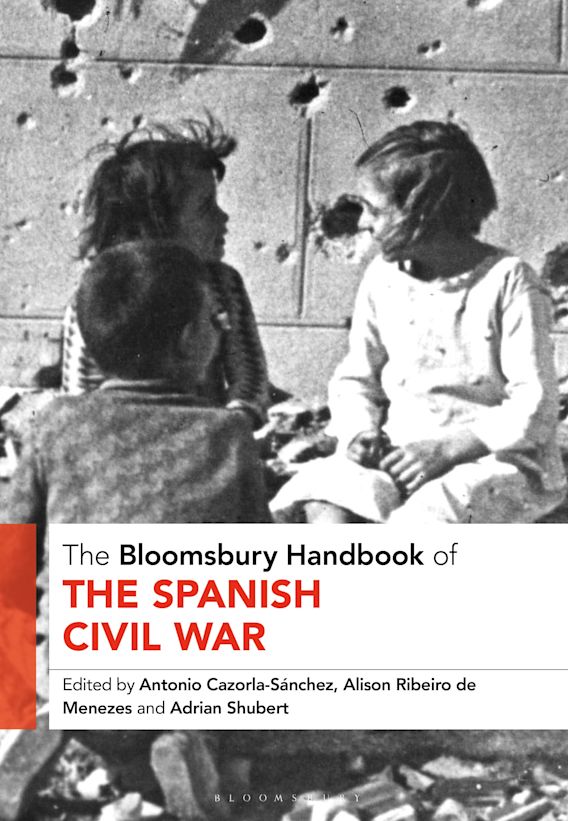
Antonio Cazorla-Sanchez is a Professor in the Department of History at Trent University, specializing in modern Spanish and European history, fascism, and transnational studies. He holds a Ph.D. from Universidad de Granada (1994) and has been a faculty member at Trent since 2010, previously holding positions at York University and Universidad Complutense de Madrid. His work bridges academic research and public history, with leadership roles including Department Chair (2015-2020) and directorship of the 'Online Museum of the Spanish Civil War' project. Education: Ph.D. in History, Universidad de Granada (1994) B.A. in Geography and History, Universidad de Granada (1989) His research explores the intersections of dictatorship, social change, and memory in 20th-century Spain. Key themes include: Francoist Spain's social dynamics, emphasizing everyday life under repression. Transnational approaches to fascism and authoritarian legacies. Digital humanities, particularly in curating contested histories like the Spanish Civil War. Public history initiatives addressing historical trauma and memory politics. Publications focus on Spanish Civil War legacies, Francoist propaganda, and material culture. Recent works prioritize digital archiving, transnational memory conflicts, and grassroots experiences of dictatorship. Methodologically, he blends social history with cultural analysis, increasingly incorporating digital tools to democratize historical access. Awards & Honors: Trent Distinguished Research Award (2020) Trent Service Award (2020) Five nominations for Symons Teaching Excellence Award (2006-2019) Multiple Trent Research Awards (2006-2017) Advising & Grants: He has supervised six M.A. theses on topics like Nazi-era famine and anti-fascism. Major grants include: SSHRC Insight Grant ($58,571) for 'Model Villages in Franco’s Spain' (2017). SSHRC Connection Grant ($33,222) for 'Confronting a Difficult Past: The Virtual Spanish Civil War' (2020). Mackenzie-Papineau Foundation grant ($52,500) for Spanish Civil War research (2021). He co-leads the Online Museum of the Spanish Civil War and collaborates internationally on digital public history projects. His lab focuses on European political violence memorials, with partnerships across Spain and the UK.
Mabel Newton is a Postgraduate Researcher at the University of Southampton, affiliated with the Politics and International Relations department and Southampton Law School. Her research focuses on the impact of radical right populism on international migration norms, particularly regarding refugees and asylum seekers in the UK and US over the past two decades. She is funded by the Economic and Social Research Council (ESRC) through the SCDTP program. Education: MA in Human Rights, University College London Research Interests: Mabel explores how radical right populist movements reshape policies and norms around human rights, migrant rights, and asylum. Her interdisciplinary work bridges International Relations, Law, and Political Theory, with a focus on norm contestation and institutional responses. She serves as Managing Editor of Global Constitutionalism , an interdisciplinary journal advancing global constitutionalism across legal and political disciplines. Teaching & Engagement: She has taught courses on International Relations, British Politics, and Public Law. Previously, she worked as an OISC Level 1 Immigration Adviser, assisting refugees and asylum seekers in Portsmouth. Research Groups: Centre for International Law and Globalisation Centre for Global Constitutionalism