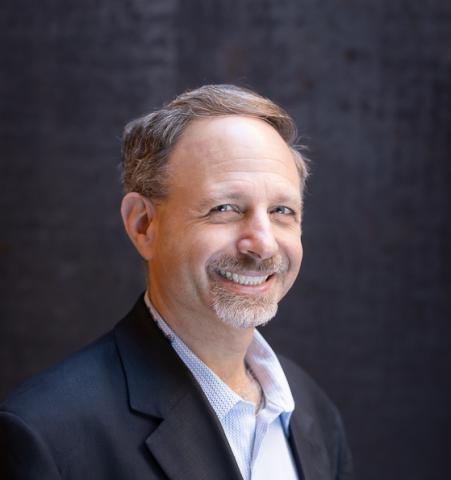
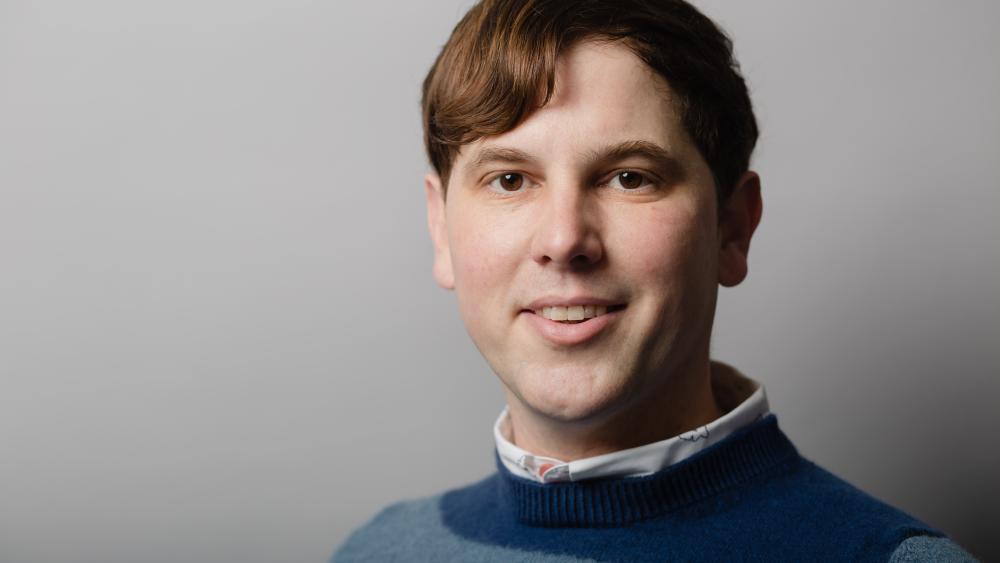
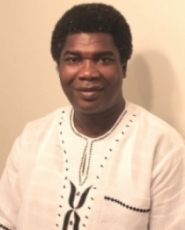
Brad Prager is a Professor of Film Studies and German Studies at the University of Missouri and currently holds the Catherine Paine Middlebush Chair of Humanities . He is also a Faculty Fellow for Faculty Success in the Office of the Provost (2024–2026). His research focuses on Film History, Holocaust Studies, Contemporary German Cinema, and German Romanticism. Prager earned a Ph.D. from Cornell University and a B.A. from Stanford University . He has held visiting professorships at Washington University in St. Louis (2020) and the Otto-Friedrich-Universität Bamberg (2017). Notable fellowships include the Alexander Grass Memorial Fellowship (2022–2023) for research at the United States Holocaust Memorial Museum. Research Interests: His work bridges film analysis, historical memory, and literary studies. Key themes include Holocaust representation in documentaries, the oeuvre of Werner Herzog, and German Romanticism’s influence on visual culture. Publications: He authored monographs like After the Fact: The Holocaust in Twenty-First Century Documentary Film (2015) and edited volumes such as Visualizing the Holocaust: Documents, Aesthetics, Memory (2008). His articles explore topics like Nazi perpetrator narratives, contemporary German cinema, and ethical representation. Awards: Recognitions include the Chancellor’s Award for Research (2015) and the Excellence in Education Award (2016). He serves on editorial boards for New German Critique , Leo Baeck Institute Year Book , and others. Professional Roles: Prager has served on the state’s Holocaust Education and Awareness Commission and contributed to initiatives at the United States Holocaust Memorial Museum. His work emphasizes interdisciplinary approaches to film, literature, and history.
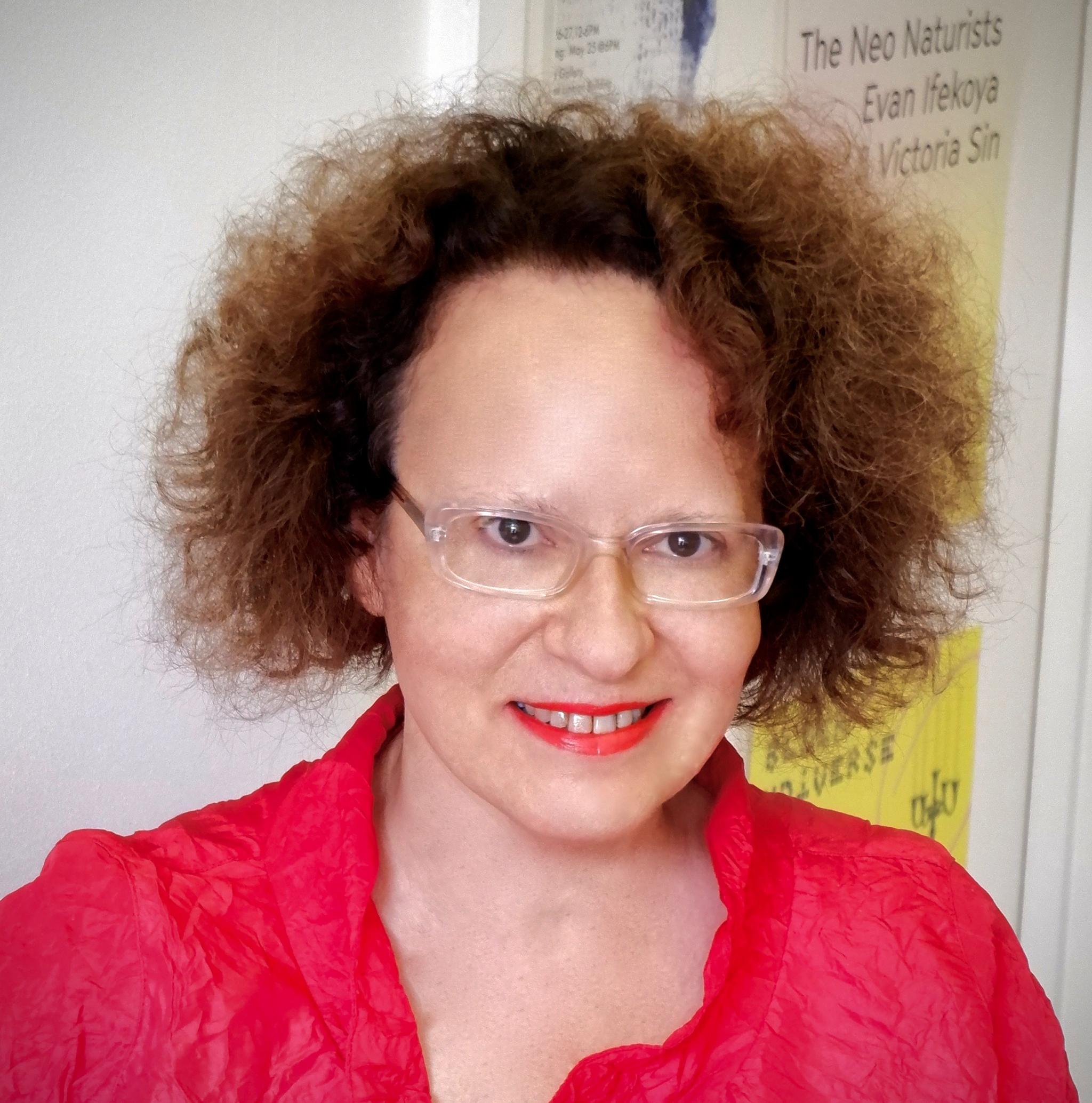
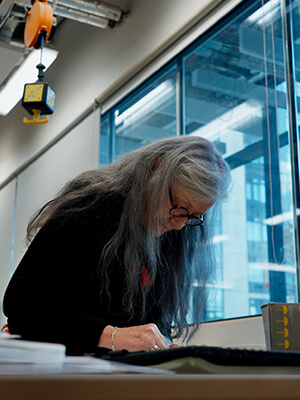
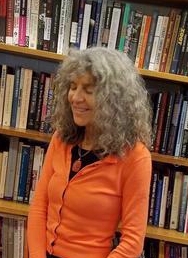
Isabel Capeloa Gil is a Full Professor of Culture Studies and the current Rector of Catholic University of Portugal (UCP). Previously, she served as Dean of the Faculty of Human Sciences at UCP from 2005 to 2012. She is an Honorary Fellow at the School of Advanced Studies of the University of London and has held numerous visiting professorships at universities in the United States, Germany, Brazil, Italy, Ireland and Wales. She is the founder of The Lisbon Consortium network and leads the International Doctoral Degree Program in Culture Studies. Additionally, she is a senior researcher and founder of the Research Centre for Communication and Culture. Her educational background includes: B.A. in Modern Languages and Literatures from the University of Lisbon (1987) M.A. in German Studies from the University of Lisbon (1992) PhD in German Language and Culture from Catholic University of Portugal (2001) Professor Capeloa Gil's research spans multiple interdisciplinary fields with a focus on Cultural Studies , particularly examining the intersections of visual culture, memory studies, and contemporary theoretical frameworks. Her work delves deeply into Mythography , analyzing representations of figures like Antigone, Cassandra, and Medea in 20th-century German drama. She has pioneered research in Visual Literacy , exploring how images communicate meaning and shape cultural understanding. Her scholarship on European Identity examines the complex tapestry of cultural identities across the continent. More recently, her work has engaged with contemporary cultural phenomena, including analyses of celebrity culture through figures like Beyoncé, and investigations into post-theoretical approaches to cultural analysis. Her publication record demonstrates a consistent evolution from traditional literary and cultural analysis toward more contemporary, interdisciplinary approaches that engage with visual culture, memory studies, and global cultural phenomena. Early work focused on German literature and European cultural identity, while more recent publications address contemporary issues like digital surveillance, posthumous representation, and the cultural significance of contemporary figures and movements. Her scholarship consistently bridges theoretical frameworks with concrete cultural analysis across multiple media forms. Among her notable recognitions: Honorary Fellow at the School of Advanced Studies of the University of London As an academic leader, Professor Capeloa Gil has mentored numerous graduate students through the master's and doctoral programs in Cultural Studies that she coordinates. Her leadership extends to shaping international academic partnerships and positioning Catholic University of Portugal within the global academic landscape. She has secured funding for research initiatives including The Lisbon Consortium and the Research Centre for Communication and Culture, which foster interdisciplinary collaboration across multiple institutions. Professor Capeloa Gil founded and leads the Research Centre for Communication and Culture, which serves as a hub for interdisciplinary research in cultural studies, media analysis, and visual culture. Through The Lisbon Consortium, she has established an international network connecting scholars and doctoral students from multiple institutions to explore contemporary cultural phenomena through interdisciplinary lenses. Her leadership in these initiatives has created collaborative spaces where researchers from diverse backgrounds can engage with pressing cultural questions of our time.
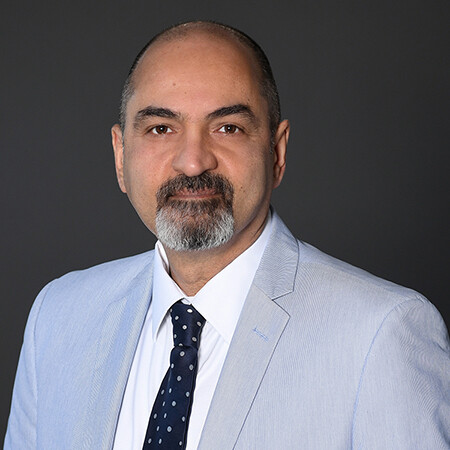
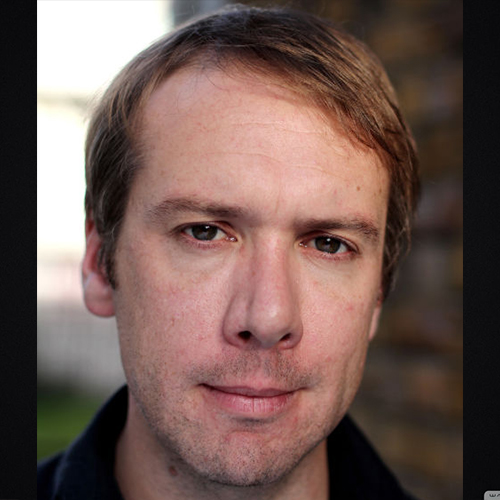
Astrid Schmetterling is a Senior Lecturer in Visual Cultures and co-Head of the Department of Visual Cultures at Goldsmiths, University of London. Her research focuses on intersections of history, culture, and memory, particularly examining how art and testimony interact. She holds an MA in Arts Criticism (City University, London, 1990) and a BA in Art History and German Literature (Hebrew University, Jerusalem, 1986). Her work explores contemporary international art practices (e.g., Arnold Dreyblatt, Vivienne Koorland) alongside early 20th-century German cultural figures like Charlotte Salomon and Else Lasker-Schüler. Current projects include a transgenerational study of two families’ experiences during WWII in Galicia, analyzing memory across Jewish, Polish, and Ukrainian perspectives through transcultural memory frameworks. Teaching includes the MA module 'Transcultural Memory' and supervision of PhD projects on memory and modern representational practices. She has examined PhDs at leading UK universities and participates in research clusters on 'Culture, Memory, Futurity' and 'Globalization and Transcultural Practices.' Professional affiliations include the International Association of Art Critics (AICA) and the Memory Studies Association's 'Memory & Arts' Working Group. Recent conference presentations include lectures on Charlotte Salomon at the Berlin Liebermann Villa and Munich’s Centrum für Jüdische Studien.
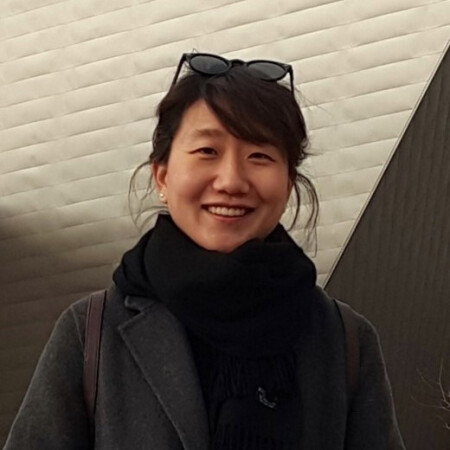
Professor Gavin Butt is a writer and creative researcher specializing in visual art, popular music, queer culture, and performance. He holds the position of Professor of Fine Art at Northumbria University's School of Design, Arts and Creative Industries and serves as co-chair of the Contemporary Arts Research Forum. Previously, he held roles including Professor of Visual Cultures and Performance at Goldsmiths, University of London, and the Attenborough Chair in Drama, Theatre and Performance at the University of Sussex. Trained as a fine artist and art historian, Butt's research explores the intersections of art, music, and queer culture. His award-winning book No Machos or Pop Stars examines the subversive influence of UK art schools on post-punk and pop music. Current projects include Radical Lessons , a collaboration with Heike Roms exploring regional UK art school histories and modern art education. Butt has delivered talks globally, including at institutions like MoMA Warsaw and the Museum of Contemporary Art, Umeå. His essays span topics from David Hoyle's camp performances to the legacy of the Leeds art school. He frequently collaborates with artists and institutions on creative research projects, emphasizing interdisciplinary and participatory approaches. Key Achievements: Award-winning author, internationally recognized researcher, and co-founder of multiple collaborative projects. Teaching Focus: Fine art, performance studies, and queer cultural theory. Public Engagement: Curating exhibitions, organizing festivals, and producing music compilations like The Art School Dance Goes On .
Shawn Alborz serves as a Professor of Instruction in the Management Department at the Naveen Jindal School of Management, University of Texas at Dallas, bringing extensive industry experience and scholarly expertise to his academic role. His educational credentials include: PhD in Management Information System, University of Melbourne (2010) EMBA in Business Administration, Peperdine University (2001) BS in Information Systems Management, University of San Francisco (1999) Dr. Alborz's research examines critical intersections between information technology and organizational dynamics, with primary focus areas in Management Information Systems, IT Outsourcing, Talent Management, Agile Practices, Learning Organizations, and Cross-Cultural Management. His work consistently investigates how relationship quality, cultural contexts, and management practices impact project outcomes and organizational effectiveness, bridging theoretical frameworks with practical industry applications. Analysis of his 15 most recent publications reveals an evolving research trajectory from foundational IT outsourcing studies (2003-2007) toward contemporary explorations of agile methodologies, talent definition frameworks, and cross-cultural dynamics in global business environments (2016-2024), demonstrating sustained scholarly contribution across multiple disciplines. His scholarly recognition includes: Best Paper award at the International Academy of Business and Public Administration Disciplines Conference (2016) With over 15 years of professional experience including senior roles at HP (1989-2008) as Senior Program Manager and various leadership positions, Dr. Alborz integrates real-world insights into his academic work. His industry background spans IT strategy development, relationship management, outsourcing, and leadership development, informing his research on practical organizational challenges. While specific grant details aren't provided, his publications in Engineering Management Journal, International Journal of Management, and IBIMA proceedings demonstrate rigorous scholarly output. No dedicated research labs or specialized teams are referenced in the available information.
Laura Hyunjhee Kim is Assistant Professor of Visual and Performing Arts in Global Performance Studies at UT Dallas, specializing in multimedia art that reimagines human/nonhuman interactions. Her practice-based research explores blobology, feelosophy and pigeonology through performances, digital installations, and collaborative projects shown internationally at venues including Venice Biennale and Pioneer Works. Her scholarly work examines digital identity construction and material theory, with publications exploring blob aesthetics and digital afterlife concepts. She received significant recognition including the 2020 Judson-Morrissey Excellence in New Media Award and Black Cube Video Art Award. Educational background includes PhD in Intermedia Art from University of Colorado Boulder, MFA from San Francisco Art Institute, and BS from University of Wisconsin-Madison. She maintains active collaborations with artists and researchers through initiatives like Centre for Emotional Materiality.
Fabio Gygi serves as Senior Lecturer and Chair in the Department of Anthropology and Sociology at SOAS, University of London. Born in Switzerland, he spent formative years in Japan, Germany, and England before earning his PhD in social anthropology from UCL. Prior to joining SOAS, he worked for three years as an assistant professor of sociology at Doshisha University in Kyoto. MA in European Ethnology and Japanese Studies from University of Tübingen PhD in Social Anthropology from University College London (UCL) Dr. Gygi's research centers on material culture, particularly examining human-object relationships through three interconnected lenses: how people engage with possessions and the cosmologies they create, the cultural construction of hoarding as pathology (following its 2013 DSM-V classification), and the materialization of gender in Japanese contexts. His work bridges historical anthropology with contemporary ethnographic studies, often employing participant observation methods such as assisting with apartment clean-ups in Tokyo to study hoarding behaviors. His recent publications reveal consistent thematic trajectories across Japanese cultural studies, with particular emphasis on material agency, waste practices, and the social life of objects. The 2022-2023 publications demonstrate expanding interest in robotics and human-technology interaction alongside continuing work on gender performance and material culture in Japan. As a dedicated supervisor, Dr. Gygi currently guides fifteen PhD students across diverse topics including Japanese sex work activism, transgender existence in Kansai, assistive technology in Japan, and queer feminist kinship in Taipei. His supervision portfolio reflects his interdisciplinary approach connecting material culture studies with gender, technology, and mental health anthropology. His fieldwork primarily conducted in Tokyo informs his theoretical contributions to understanding materiality, while his earlier work on trench art from World War I established foundations for examining how traumatic experiences become embodied in material culture across historical and contemporary contexts.
Dr. Mary O'Neill serves as Associate Head (Education) and Programme Leader for Fine Art at De Montfort University's School of Arts, Design and Architecture within the Faculty of Arts, Design and Humanities. Holding an AHRC-funded PhD in Ephemeral Art: Mourning and Loss from Loughborough University (2007), she is a Senior Fellow of the Higher Education Academy with extensive leadership in art education and research. Her academic journey includes significant professional development through prestigious awards including the AHRC Doctoral Award (2003) and Higher Education Academy Teaching Fellowship (2008). Her educational background culminated in a PhD focused on the intersection of ephemeral art and concepts of mortality, establishing the foundation for her ongoing research trajectory. Dr. O'Neill's research is fundamentally interdisciplinary, exploring how contemporary artworks engage with significant cultural issues. Initially focused on ephemeral art and concepts of mortality and immortality, her work has evolved to investigate intangible culture, particularly the lost skills embodied in museum objects. Her current project, 'Re-creative Practice: Learning from the Past,' examines how historical objects can inform contemporary artistic practice. She identifies key research areas including Ephemeral Practice, Collaborative Practice, Art and Society, Art Activism, Science Art, and Re-creative Practice. Her work bridges theoretical and practical approaches, connecting art practice with broader social, ethical, and cultural concerns through both academic texts and creative fiction. Analysis of her publication record reveals consistent engagement with themes of memory, loss, and artistic practice, with recent work showing increasing focus on art education methodologies, collaborative approaches, and the application of historical craft knowledge to contemporary practice. She has produced significant interdisciplinary work connecting art with healthcare, social policy, and cultural heritage, demonstrating the expanding scope of her research interests. Dr. O'Neill has received numerous awards and recognitions throughout her distinguished career: 2023 HEIF Award for the Artefacts Live project 2022 Academic Innovation Project Award 2015 Writer in Residence at Centre for Contemporary Art (CCA), Glasgow 2014 and 2012 Artist in Residence positions at Gray Zone and Grace Exhibition Center 2008 Higher Education Academy Teaching Fellowship 2003 AHRC Doctoral Award Her career has been marked by prestigious international residencies including at Banff Centre for Media and Visual Arts (1997), Frans Masereel Centrum, Belgium (1990), and House of Creativity, Chelyuskinskii, Moscow (1989). As an educator and mentor, Dr. O'Neill supervises PhD students including Rebecca Walker (researching 'Henry Moore: The Shape of Trauma') and Talvir Kaur. She has presented on collaborative teaching approaches internationally, notably 'A year of living dangerously: Collaborating with undergraduate students' at Temasek Polytechnic, Singapore (2010). Her leadership extends to directing the 'Artefacts Live' project (2022-2023), a HEIF-funded collaboration between DMU and The Museum of Leathercraft, Northampton, which resulted in the documentary 'The Museum of Leathercraft – Ordinary Objects: Extraordinary Stories' produced with filmmaker Nik Trzcinowicz. Dr. O'Neill leads the Practice Based Research group within the Institute of Art and Design. She actively contributes to academic discourse through international conference presentations, recently speaking at 'Psychogeography, How did we get here?' panel at Leicester Gallery (2024) and 'Flotsam, Jetsam, Lagan, Derelict. The Things We Have Lost' at the Narratives of Water conference in Torino (2024). Her teaching encompasses Fine Art Studio Practice, Critical Theory, Art History, and Professional Practice across multiple undergraduate and postgraduate courses.
Dr. James A. McLaughlin is a Lecturer in Drama and Lead of the Centre for Creative Futures at the University of Greenwich, within the School of Stage and Screen. He holds a PhD from the University of Northampton, an MA in Theatre Practice under Phillip Zarrilli, and undergraduate degrees in English, Philosophy, and Drama from the University of Auckland. His research focuses on the intersection of the Meisner Technique with contemporary performance practices, incorporating psychophysical training through yoga, tai chi chuan, and kalaripayattu. He has extensive professional experience as a comedian, writer, and theatre director, including founding New Zealand's Covert Theatre and participating in global improv tours. He won the inaugural World Cage Match Championship at the Chicago Improv Festival. McLaughlin’s career spans acting training (Meisner Technique under Michael Saccente), academic roles at the University of Northampton (2013–2017), and leadership in creative futures initiatives. He is a Fellow of the Higher Education Academy (FHEA). Awards World Cage Match Championship (201x) FHEA (201x) Advising & Grants Led the Centre for Creative Futures at Greenwich. Labs/Teams : Active in the Centre for Creative Futures, focusing on interdisciplinary performance innovation.
Paul Whitty serves as Professor of Music and Head of the School of Arts at Oxford Brookes University, where he leads the Sonic Art Research Unit (SARU) and co-directs audiograft, Oxford's Festival of experimental music and sound art. His academic leadership spans composition pedagogy, sound arts research, and institutional strategy within the arts faculty. Whitty's research explores experimental composition through sonic ethnography and environmental sound practices. Key projects include Sound Diaries (2008-present), examining everyday soundscapes with Dr. Felicity Ford; somewhere a field (2013-2017), investigating rural Devon soundscapes; and Get Some Chalk On Your Boots! (2016-2018), documenting grassroots football's sonic cultures. His methodology integrates field recording, site-specific interventions, and collaborative practices to challenge conventional boundaries between composed and environmental sound. Recent creative output demonstrates persistent exploration of recompositional strategies and sonic archaeology, particularly in works like The Morning (2023) and Nature is a language - can't you read? (2015), which rework historical materials through contemporary sound art lenses. These projects consistently engage with themes of perception, cultural memory, and environmental interaction. Scientific recognition includes: Arts Council of England award AHRC award Britten-Pears Foundation award British Council award Whitty actively supervises PhD candidates in experimental composition and sound arts, with recent graduates including Malcolm Atkins (Anglo-American experimental tradition), Felicity Ford (domestic soundscapes), and Sam Thomas (bass guitar in contemporary composition). His research has secured substantial funding from ACE, AHRC, British Academy, Britten-Pears Foundation, Cross-River Partnerships, RVW Trust, and Tate. He directs SARU's collaborative research environment and co-founded the experimental ensemble [rout], which tours internationally and appears on BBC Radio 3. Through audiograft and SARU, Whitty cultivates Oxford's experimental music ecosystem, connecting academic research with public engagement.
Manuela Nocker serves as a Senior Lecturer in Organisation and Sustainability at Essex Business School (EBS), University of Essex, where she teaches Organisation Studies, Business Ethics, and Research Methodology. She has held significant leadership roles including Undergraduate Programme Director for Management Science and Entrepreneurship Group (2012-July 2019), module leader for capstone projects across all programs, and representative for the PRME programme on Principles of Responsible Management Education. As the institutional liaison for the UNAI Academic Impact scheme, she actively promotes sustainability and ethical principles in alignment with the UN Global Compact initiative. Dr. Nocker earned her PhD in Organisational Psychology from The London School of Economics and Political Science and completed her BSc in Work and Organisational Psychology at the University of Padua, Italy. Her academic journey includes previous roles as careers adviser, trainer, and management consultant before joining EBS in 2006. Her research focuses on critical approaches to project work, organizational ethnography, narrative and poetic approaches in organizational analysis, identity construction, ethics, social responsibility, sustainability, collaboration, learning, strategy-as-practice, and organizational innovation. Her work often examines organizational dynamics through qualitative, ethnographic methods with particular attention to professional identity, belonging, and ethical considerations in workplace settings. Analysis of her recent publications reveals a strong emphasis on healthcare governance (particularly NHS Foundation Trusts), emotional dynamics in organizational settings, and the intersection of technology with business models. Her work consistently demonstrates methodological innovation, particularly in ethnographic approaches, while maintaining a critical perspective on organizational phenomena. Recent publications increasingly address contemporary challenges including AI implementation, big data applications in HR, and sustainability in organizational contexts. British Council award winner for Knowledge Economy Partnership Programme UK-Pakistan (2014-17) Elected Senate member at University of Essex (Oct. 2011-15) Vice-President of Free University of Bozen-Bolzano (2014-February 2018) British Council award winner for Researcher Links Workshop (2013-2014) LSE annual research scholarship awards (1999-2003) Dr. Nocker has successfully supervised numerous doctoral students, with seven completed PhDs as first supervisor on diverse topics including entrepreneurial identity of Afghan migrants, NHS governance, gendered practices in Pakistani banking, organizational innovation in healthcare, and professional identity in higher education. Her research has been supported by significant grants including the British Council Knowledge Economy Partnership Programme UK-Pakistan and the British Council Researcher Links Workshop, demonstrating her commitment to international collaboration and knowledge exchange. As Editor of the Journal of Organizational Ethnography for a decade (2012-2022), she has significantly shaped scholarly discourse in organizational studies.
Modesto Mawulolo Amegago is an Associate Professor in the Department of Dance at York University's School of the Arts, Media, Performance & Design. He holds a Theatre Arts Diploma from the University of Ghana, and an MFA and PhD from Simon Fraser University. His research focuses on West African Performance arts, dance ethnography, and cross-cultural aesthetics. Professionally, he has founded and directed cultural groups like the Dunenyo cultural group (Ghana, 1982) and Nutifafa African Music and Dance Ensemble (Vancouver, 1994). He has performed internationally with artists such as Alpha Yaya Diallo and Dido Morris, and curated events like the Performing Diaspora initiative at York University (2011-2012). Currently, he leads the Nutifafa Afrikan Performance Ensemble in North America. His teaching spans institutions including the University of Ghana, University of British Columbia, and Arizona State University. His work integrates traditional West African practices with contemporary performance studies, emphasizing cultural preservation and educational philosophy.
Annulla Linders is a Professor of Sociology at the University of Cincinnati. Her research focuses on capital punishment as a cultural institution, gender studies, historical sociology, and social movements. She leads a book project analyzing the transformation of execution audiences in the U.S., emphasizing symbolic forces and contentious politics. Her work integrates qualitative methods and comparative historical approaches. Dr. Linders has secured grants including a National Science Foundation award ($149,720) investigating human-technology interactions in smart buildings and a NCAA grant ($4,234) exploring race in college basketball mentoring. She co-led a European Commission-funded project on unemployment activism in Europe (€800,000). Her publications span topics like sonic elements in executions, gendered resistance at gallows, and immigrant health practices. She has presented widely on execution technologies and punishment sociology, including the 2018 NCSA Presidential Address on execution audiences. Linders’ research emphasizes interdisciplinary collaboration, combining historical analysis with contemporary social issues. Her work bridges cultural studies and criminology, addressing how institutions like capital punishment reflect societal values and contestations.
Taylor Cole Miller is an Assistant Professor of Communication Studies at the University of Wisconsin-La Crosse, directing the Communication and Media Lab (CaML). He holds a Ph.D. in Media & Cultural Studies from the University of Wisconsin–Madison, along with degrees from the University of Texas–Austin and the University of Kansas. His research focuses on television histories, syndication, and queer media studies, with notable work on Bewitched and The Golden Girls . Education: Ph.D., Media & Cultural Studies, University of Wisconsin–Madison (campus-wide teaching award) M.A., Radio, TV, Film, University of Texas–Austin (outstanding thesis award) B.S. & B.A., University of Kansas (with distinctions in Journalism/Media and Spanish) Non-USA Diplomas, University of Alcalá and University of Santiago de Compostela Research Interests: Television Syndication & Retextuality Queer and Feminist Media Criticism Broadcast History & Policy 1980s Television Cultures Awards: Wisconsin Teaching Fellow & Scholar (2022-23) Phi Beta Kappa, Sigma Delta Pi, and Kappa Tau Alpha honor societies Teaching & Labs: Directs CaML lab for digital media production and AI/virtual reality Teaches courses like Media & Sexuality, Digital Media Production, and 1980s TV seminars Media Projects: Co-edited The Golden Girls: Essays from the Lanai (forthcoming) Executive producer of Below Baldwin and Peabody Awards media initiatives
Daniel S. Traber serves as Professor of Maritime Studies within the College of Marine Sciences & Maritime Studies at Texas A&M University at Galveston. His teaching portfolio includes courses spanning American literature, cultural studies, and ethnic literature, with specific offerings such as ENGL 228 (American Literature, 1865 to Present) and ENGL 415 (Herman Melville's Sea Novels). His educational foundation comprises: Doctor of Philosophy in English and American Literature (University of Houston, 2000) Master of Arts in English and American Literature (University of Texas at El Paso, 1995) Bachelor of Arts in English with History minor (University of Texas at Austin, 1991) Traber's research interrogates the intersections of American literary traditions, subcultural formations, and identity politics. His scholarship consistently examines how marginalized communities negotiate power structures through cultural production, with particular emphasis on punk and ska subcultures as sites of racial, class, and gender resistance. This work bridges historical literary analysis with contemporary cultural phenomena. His publication trajectory reveals sustained engagement with cultural paradoxes across two decades, evolving from early Hemingway studies to contemporary analyses of digital subcultures. Key thematic threads include the commodification of resistance, transnational cultural flows, and the performative construction of identity within consumer capitalism. The monograph Whiteness, Otherness, and the Individualism Paradox from Huck to Punk (2007) establishes foundational arguments connecting 19th-century American literature to modern subcultural practices. Traber actively disseminates research through national and international conferences including the Popular Culture Association, European Popular Culture Association, and International Melville Conference. His scholarly service includes election to the South Central Modern Language Association Executive Committee (2014-2016) as American Literature Representative.