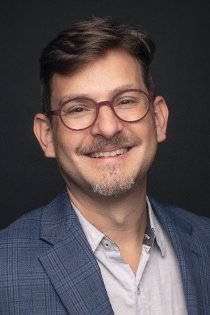
Dr. Christine Matzke is a Lecturer in English Literature at the University of Bayreuth's Faculty of Languages and Literatures. She joined in 2011 after teaching at Goethe-University Frankfurt and Humboldt-Universität Berlin. Her research focuses on African theatre (especially Eritrean), postcolonial crime fiction, and medical humanities. She has held editorial roles for African Theatre and Matatu , and is active in academic societies like AfTA and IFTR. Her academic journey includes a PhD from the University of Leeds (2003) and studies at Goethe-University and Queen Mary, University of London. She has authored/co-edited volumes on African theatre history, crime fiction, and diaspora studies. Recent works include entries in Kindlers Literatur Lexikon and co-editing African Theatre 19: Opera & Music Theatre (2020). Research interests span Eritrean performing arts, Shakespeare adaptations, and transnational cultural studies. She collaborates internationally on projects like analyzing a 1960s German-Nigerian TV production. Her publications reflect interdisciplinary engagement with theatre historiography, colonial legacies, and performance in conflict zones.
Lynn Helding serves as Professor of Practice in Voice and Vocal Pedagogy at the University of Southern California's Thornton School of Music, where she also coordinates the Vocology & Voice Pedagogy program. She is a distinguished author, most notably of The Musician's Mind: Teaching, Learning and Performance in the Age of Brain Science , and was appointed Editor-in-Chief of the Journal of Singing in 2023. With decades of experience as both a performer and pedagogue, Helding bridges the gap between voice science and artistic practice, advocating for cognitive science as the "Third Pillar of Voice Science" alongside physiology and acoustics. Helding's educational background includes: Master's Degree in Vocal Pedagogy with Distinction from Westminster Choir College of Rider University (2005) Artist Diploma from Indiana University (1988), where she was the first singer ever accepted into this prestigious program Completion of the Summer Vocology Institute at the National Center for Voice and Speech Helding's research focuses on the application of cognitive science to voice pedagogy, with particular emphasis on motor learning theory and expertise studies from social psychology. She pioneered the concept of cognitive science as the "Third Pillar of Voice Science," arguing that understanding the brain's role is essential for effective voice teaching. Her work challenges traditional approaches by emphasizing the "how" of teaching over the "what," advocating for science-informed (rather than science-based) pedagogy that respects both scientific findings and artistic tradition. Helding's research has significant implications for addressing performance anxiety, optimizing practice methods, and developing more effective teaching strategies that account for how musicians actually learn. Her scholarly contributions demonstrate a consistent focus on bridging cognitive science with practical voice teaching. Rather than treating voice science as purely technical knowledge, Helding examines how this information can be effectively communicated to students, recognizing that the delivery method is as important as the content itself. This approach has led to innovative frameworks for evidence-based voice pedagogy that consider both physiological realities and cognitive processing limitations. Helding's significant recognition includes: Lifetime Achievement Award from the Contemporary Commercial Music (CCM) Vocal Pedagogy Institute at Shenandoah University (2020) Van L. Lawrence Fellowship, jointly awarded by the Voice Foundation and the National Association of Teachers of Singing Foundation (2005) Induction into the prestigious American Academy of Teachers of Singing (2022) Recognition as a "legendary figure in the field of voice pedagogy" As an educator, Helding maintains a thriving studio with private clients including members of the Los Angeles Opera and Los Angeles Master Chorale. Her USC Thornton voice students have earned fellowships to prestigious programs including the Aspen and Tanglewood Music Festivals. She has presented masterclasses described as "life-altering" at major voice conferences throughout the United States, Europe, and Australia. Helding previously served twenty-two years as Associate Professor of Voice and Director of Performance Studies at Dickinson College, and four years as voice faculty at Vanderbilt University's Blair School of Music. Helding is actively involved with the USC Voice Center at Keck Medicine of USC as a team member, where she applies her vocology expertise to help singers with functional vocal issues and those recovering from voice surgery. She is a co-founder of the NATS Science-Informed Voice Pedagogy Institute and frequently collaborates with voice scientists and medical professionals to advance the field of vocology.
Riccardo Schulz is a Teaching Professor in the School of Music at Carnegie Mellon University, specializing in Sound Recording. He directs recording activities and oversees operations, including managing the Edgar Stanton Audio Recording Institute's summer program at the Aspen Music Festival. His work spans classical, jazz, rock, and hip-hop genres, with over 100 CD productions. He collaborates extensively with orchestras, soloists, and innovative artists. He holds a Master's in Mathematics from Duquesne University and a Master's in Musicology from the University of Pittsburgh. His expertise includes live performance recording for radio broadcasts with the Pittsburgh Symphony Orchestra and Opera, and he co-developed the School of Music's Webcast project and Destination website for live internet broadcasts. Notable collaborations: Cuarteto Latinoamericano, Pittsburgh Symphony Orchestra, Mendelssohn Choir, and hip-hop artists like Freestyle and Unknown Prose Recipient of Latin GRAMMY Award for Inca Dances recording (2009) Creator of Arts Greenhouse hip-hop workshops for teenagers His research emphasizes technical mastery across genres, with a focus on preserving classical music traditions while innovating in contemporary recording practices. Riccardo also serves as a music critic and program annotator, contributing to WQED-FM's cultural programming.
Susan McClary is the Fynette H. Kulas Professor of Music at Case Western Reserve University’s Department of Music (College of Arts and Sciences). A globally influential scholar, she has held professorships at the University of Minnesota, McGill University, UCLA, and the University of Oslo. Her work redefines music analysis by addressing its cultural, social, and gendered dimensions, challenging traditional aesthetic frameworks. Education : PhD in Music (Harvard University, 1976). Earlier degrees include a B.Mus. from Southern Illinois University (SIU). Research Focus : McClary’s interdisciplinary research spans the European classical canon and contemporary popular music. Key themes include gender in music, musical form’s socio-political content, and the intersection of music with identity, particularly in Renaissance and Baroque eras. Her approach emphasizes music as a dynamic social practice rather than an abstract art form. Publications & Impact : She authored landmark books such as Feminine Endings (1991) and Conventional Wisdom (2000), translated into 20+ languages. Her writings bridge musicology with feminist theory, cultural studies, and critical social analysis. Awards : 1995 MacArthur “Genius” Fellowship Advising : Oversaw over 50 doctoral dissertations Courses Taught : Music History, Music Theory, Early-Music Performance Practices Her work remains foundational in redefining music’s role in sociocultural contexts.
Prof. Katharina Thoma is a renowned opera director currently serving as Head of the Opera School at the University of Music Würzburg . She also holds the positions of Deputy Chair of the Music Academy and Dean of Studies . With a career spanning major European opera houses including the Royal Opera House Covent Garden and Glyndebourne Festival, she specializes in blending historical accuracy with modern theatrical innovation. Studied piano at Lübeck University of Music Resident director at Dortmund Opera (2011-2014) Visiting professor at Graz University of Music (2018) Freelance director since 2008 Katharina Thoma's research and practice focus on opera stage direction , scenic training for singers , and historical opera interpretation . Her work spans from Baroque masterpieces to contemporary political operas, emphasizing: Contextual authenticity in period-specific productions Modern reinterpretation of classical works Interdisciplinary approaches to staging Integration of visual and musical elements Training of next-generation opera performers Exploration of war-related themes in opera Notable productions include: 2024: Johann Strauss' The Bat (University of Music Würzburg) 2023: De Falla's El retablo de Maese Pedro 2022: Britten's The Rape of Lucretia 2019: Schönberg's Pierrot lunaire 2007: European Opera Directing Competition Finalist Her artistic contributions have been recognized with: Second Prize at the European Opera Directing Competition 'Camerata Nuova' (2007) Katharina Thoma actively mentors young singers and develops innovative opera productions at the University of Music Würzburg's Opera School. Her recent work includes: Wagner operas debut (2019/20 season) Collaboration with composers like Richard Jones and Christof Loy Participation in renowned festivals (Munich Biennale, Glyndebourne) The Opera School under her leadership focuses on comprehensive training combining: Historical performance practices Contemporary staging techniques Technical vocal training Interdisciplinary collaboration
Daniel Nesta Curtis is an Associate Teaching Professor and Interim Director of Orchestral Studies at Carnegie Mellon University's School of Music. He serves as Music Director of the CMU Contemporary Ensemble and leads initiatives like the Pittsburgh Composers Project. His roles include conducting the CMU Philharmonic, Baroque Ensemble, and orchestras in interdisciplinary productions. Education: BA in Music from Amherst College (2008) MM in Conducting from Carnegie Mellon University (2012) Research & Interests: Curtis specializes in adventurous programming of contemporary and underrepresented composers, blending orchestral music with theater, multimedia, and community engagement. He advocates for diversity in composition through projects like Nat 28 and Co-Opera, a collaborative initiative with CMU's drama department and Pittsburgh Opera. Advising & Grants: While no formal advisees are listed, Curtis mentors students through ensemble leadership and collaborative productions. His work includes premiering over 50 student/faculty compositions with the CMU Contemporary Ensemble. Labs/Teams: Directs ensembles such as Brass Roots, CMU Pre-College Orchestra, and the Contemporary Creative Practice group. Key collaborations include Quantum Theater, Chatham Baroque, and the New Hazlett Theater.
Mark Morris is an Adjunct Professor in the Department of English and Film Studies at the University of Alberta's Faculty of Arts, where he has taught since 2000. A multi-faceted academic, he is also an award-winning librettist, music critic, theatre director, broadcaster, curator, and photographer with international recognition for his creative and scholarly work. His educational background includes: BA from the University of Oxford MA from the University of Oxford PhD in Creative Writing (Canada's first) from the University of Calgary (1996) His research spans creative non-fiction, children's literature, Shakespeare studies (including authorship skepticism), and the social-political history of Western genre film/novel. He specializes in classical music's literary context, Victorian family history, Lawrence Durrell's interdisciplinary intersections, and Indian literature in English. His work bridges academic rigor with artistic practice through libretto composition and cultural criticism. Recent publications demonstrate his interdisciplinary fusion of musicology, literary analysis, and political biography, particularly examining opera's relationship to historical narratives and contemporary leadership. This reflects his consistent focus on cultural transmission across artistic mediums. His accolades include: Faculty of Arts Teaching Award (University of Alberta) Morris has mentored students across creative writing and literature disciplines while leading major collaborative projects including KidsOp (children's opera company), Vaughan String Quartet productions, and Durrell Society initiatives. His work has been supported through institutional affiliations, artistic commissions, and educational partnerships with Alberta schools and international festivals. He co-founded KidsOp for cross-generational opera productions, collaborated with the Vaughan String Quartet on immigrant narrative projects, and served on the Durrell School of Corfu's Advisory Board until 2014. His university roles include Visiting-Scholar-in-Residence for the 100th Anniversary project and ongoing cultural journalism through EdmontonScene.com.
Professor Scott Palmer is a distinguished academic at the University of Leeds, serving as Professor of Light and Performance within the School of Performance and Cultural Industries (Faculty of Arts, Humanities and Cultures). With over 30 years of teaching and management experience in Higher Education, he was a founder member of the School in 2001 and has held numerous senior management roles including Interim Head of School, Director of Student Education (2019-2022), Director of Enterprise and Knowledge Transfer, and Programme Manager for BA (Hons) Performance Design for over a decade. In 2017-18, he was appointed to an Excellence and Innovation Fellowship at the Leeds Institute for Teaching Excellence & Innovation. PhD (Leeds) - Light, Scenography and the Choreography of Space Cert. Education (Manchester) BA Hons. Drama (Wales) Professor Palmer is a leading international advocate for scenography as an intellectual discipline. His research focuses on light, darkness and atmosphere in performance, designing for audience experience, and since 2017, the field of XR (Extended Reality). His influential monograph Light: Readings in Theatre Practice (Palgrave Macmillan, 2013) significantly contributed to establishing scenography as a scholarly field, exploring how light has influenced staging practices throughout history. He has co-edited major works including Scenography Expanded (Bloomsbury 2017) and the groundbreaking Contemporary Performance Lighting (2023), the first critical anthology focused specifically on performance lighting. His recent publications reveal evolving research trends from historical analyses of light in theatre to contemporary explorations of XR, immersive environments, and audience experience. Keywords across his work consistently emphasize scenography, audience experience, light design, and the integration of digital technologies in performance. His sub-field specializations span historical lighting techniques, immersive theatre practices, site-specific performance, 360-degree environments, and the theoretical frameworks connecting technological innovation with theatrical expression. Excellence and Innovation Fellowship at the Leeds Institute for Teaching Excellence & Innovation (2017-18) Research impact highlighted by AHRC as an exemplar case study Contributions to BBC Radio 3's Illuminating the Stage (broadcast December 25, 2017) Professor Palmer has supervised numerous PhD candidates and led collaborative student projects resulting in public performances including Pandora's Box (2009), Dream/Play (2010), Just Before Dawn (2011), Into the Dark (2012), Blood Wedding (2013), The Dreaming (2015), The Waiting Room (2017), and Within This House (2018). His research has been supported by significant grants including the AHRC-funded Projecting Performance (2006-08), UKRI-funded Surround Stories (XR Stories), and AHRC-funded Bridging the Gaps exploring Mixed Reality Performance of Chinese Opera. He plays an active role in international scholarly communities as co-convenor of the IFTR Scenography Working Group (2013-16), inaugural member of the TaPRA Scenography Working Group, and contributor to OISTAT Education and History and Theory Commissions. Professor Palmer is a member of the PLACE, Practice as Research, and Participation Research Groups at Leeds, and was co-instigator of the Leeds-based Performing Light Network. His SignalSpace web resource, developed with colleague Maria Kapsali, explores digital creativity and mobile phone applications in performance contexts. He regularly presents research outcomes at international conferences including IFTR, TaPRA, ICIDS, and ZipScene, demonstrating his commitment to advancing both theoretical understanding and practical applications of performance design.
Rodney Waschka II is a Professor and Director of Arts Studies at North Carolina State University's College of Humanities and Social Sciences. He also directs the Arts NOW Series, presenting contemporary arts events. His expertise spans music composition, algorithmic processes, and electronic music. Waschka's works are globally recognized, with recordings across international labels. His operas like Saint Ambrose and Sappho's Breath showcase interdisciplinary collaboration. Recent works include A Note for Joe Alexander (2024) and In Memoria di Linda Garzoli Cardosi (premiering 2025). His research explores genetic algorithms in music composition and dynamical systems as compositional tools. Education: Doctor of Musical Arts in Computer Music/Media from the University of North Texas. Awards and recognitions include features in Computer Music Journal , Musical Opinion , and international festivals. He actively commissions new works and has performed across Europe, North America, and Australia. The Arts NOW Series, under his leadership, connects contemporary art forms with academic disciplines like mathematics, politics, and climate science. Notable collaborations include the Aizuri Quartet and filmmaker projects like Boris Karloff: The Man Behind the Monster (2022).
Andrew Cooper-James is a Senior Lecturer in Creative Film, TV & Digital Media Production at the University of Northampton, School of Arts. With over 30 years of experience as an independent filmmaker, he specializes in production design, performance, and sound design across film, television, and live art. He has been teaching for 17 years and holds a Fellowship from the Higher Education Academy. Research Interests: His creative and academic work focuses on interdisciplinary practices, particularly in screendance, collaborative art, and digital media. He explores the integration of performance, sound, and visual storytelling in both educational and artistic contexts. Publications and Conferences: Andrew has published in the International Screendance Journal and presented at GLAD and NAHEMI conferences. His recent work reflects trends in experiential learning, community engagement, and the fusion of live art with moving image. Fellowship from the Higher Education Academy Teaching and Creative Practice: He leads hands-on modules including Final Major Project, Sound for Screen, and Community Impact. His artistic projects have been supported by major institutions such as Arts Council England, The Royal Opera House, and The South Bank Centre. He mentors students in creative production and emphasizes practical, student-led learning. Labs and Creative Teams: While no formal lab is mentioned, Andrew collaborates with interdisciplinary teams in live art and film, often working with dancers, composers, and visual artists on hybrid projects supported by national and international arts organizations.
Ashley Thorpe is a Senior Lecturer in the Department of Drama, Theatre and Dance at Royal Holloway, University of London. He co-founded the Noh Training Project UK and is a core member of Theatre Nohgaku, with collaborations in Paris and Japan. Research Interests His work spans Chinese xiqu (especially jinju ), Japanese nō in global contexts, and material practices like ceramics and photography . He explores intercultural performance frameworks and feminist interpretations through experimental art forms. Recent Creative Outputs Encyclopaedia of Jingju (2026, in press) Portrayals of China in British Political Playwriting (2026, in preparation) English-language nō play Emily (2019) Interdisciplinary ceramic projects (2025) Intercultural performances in Japan and the UK (2025) Collaborative and Institutional Engagement Thorpe leads workshops and international projects funded by the Daiwa Anglo-Japanese Foundation and Great Britain Sasakawa Foundation . He serves as Advisor to the Center for Research and Translation of Chinese Opera (2021–present) and has held visiting professorships in China. Methodological and Thematic Focus His practice-based research integrates performance history , anthropological analysis , and material experimentation across theatre, photography, and pottery. Projects emphasize relational ontologies and demon meta-noh play as tools for cultural and artistic innovation.
Martin Robertson is a renowned saxophone professor at the Royal College of Music (RCM) and the Guildhall School of Music and Drama. He graduated from the RCM in 1984 with studies in saxophone and clarinet under Stephen Trier and John McCaw, winning the Boosey and Hawkes Music Prize. His career spans international solo performances with orchestras like the Berlin, Los Angeles, and London Philharmonics, collaborating with conductors such as Simon Rattle and Vladimir Jurowski. Robertson is celebrated for his fusion of classical, jazz, and world music, particularly through collaborations with composers Mark-Anthony Turnage and George Fenton. His work includes Turnage’s Blood on the Floor and Fenton’s orchestral scores for films like Earth and Planet Earth . Robertson’s academic roles include leading the Woodwind department at RCM since 1994 and teaching at Guildhall since 2012. His research interests emphasize cross-genre exploration, using instruments like the duduk and taragato to bridge cultural musical traditions. He has premiered works such as Turnage’s About Water (2007) and Anna Nicole (2011), an opera exploring tragic biography through modern musical language. His performances include high-profile events like the BBC Proms and collaborations with ensembles such as the Delta Saxophone Quartet, which he joined in 2009. Robertson’s film credits span major projects, including Shakespeare in Love , Billy Elliott , and King Arthur . Beyond the concert stage, he advocates for contemporary saxophone repertoire through academic and ensemble work, fostering innovation in woodwind performance. Robertson’s awards include the Boosey and Hawkes Prize (1984), and his recordings, such as Poirot Variants (2010) and Tony Banks’ Six (2012), highlight his versatility across genres. His teaching integrates jazz improvisation, classical technique, and contemporary experimentation, shaping a new generation of woodwind musicians.
Marco Uvietta is an Associate Professor of Musicology and History of Music at the Department of Literature and Philosophy, University of Trento. He holds a Laurea in Music Disciplines from the DAMS of Bologna (1991) and a PhD in History and Analysis of Musical Cultures from Sapienza University of Rome (1999). His academic career includes roles as a Researcher (2005–2016) and Associate Professor (2016–present) at the University of Trento. He teaches courses on Music History and Ethnomusicology and contributes to the PhD program in European Cultures. His research focuses on two main areas: 1) Musical Philology, particularly in 19th-century Italian opera (e.g., critical editions of Verdi’s Requiem and Bellini’s La straniera), and 2) Analysis of 20th-century musical language, with significant contributions on Luciano Berio’s style and compositional processes. He has authored numerous scholarly works, including books and articles on composers like Berio, Debussy, Stravinsky, and Martucci. Uvietta is actively involved in editorial projects, such as directing critical editions for Ricordi and contributing to the Rossini Critical Edition. He holds leadership roles in academic committees, including the editorial board of Il Saggiatore Musicale . His compositional works, influenced by his analytical research, have been performed by prestigious ensembles worldwide, including the Arditti Quartet and Monteverdi Cello Octet. Notable awards include recognition in composition competitions (e.g., Guido d’Arezzo International Competition), and his works span orchestral, choral, and chamber music. Uvietta’s interdisciplinary approach bridges historical musicology with contemporary compositional practice, reflecting his dual expertise as a scholar and composer.
Stephanie Shonekan is Dean of the College of Arts and Humanities and Professor of Ethnomusicology at the University of Maryland. She previously served as Chair of Afro-American Studies at the University of Massachusetts (2018–2020) and Senior Associate Dean at the University of Missouri (2020). Her academic career includes roles at Columbia College Chicago (2003–2011) and the University of Missouri (2011–2018), where she developed programs like Citizenship@Mizzou and The Huddle to foster inclusion and support underrepresented faculty. Shonekan holds a Ph.D. in Ethnomusicology and Folklore from Indiana University (2003). Her research explores intersections of identity, history, and music, with focuses on Afrobeat, Nigerian and African American hip-hop, soul music, and country music. Notable publications include Black Resistance in the Americas (2018) and Black Lives Matter & Music (2018). Her award-winning short film Lioness of Lisabi (based on Fela Kuti's mother) highlights her interdisciplinary work. She actively bridges academic leadership with community engagement through initiatives addressing diversity in higher education.
David Gram serves as Associate Professor of Theatre at Oakland University's School of Music, Theatre and Dance, specializing in directing and acting. He teaches courses including Directing I & II, Advanced Directing Project, Dramaturgy, Acting: The Script, Company Class, and Professional Practices for the Performer. Education: MFA in Directing and Graduate Certificate in Arts Administration from Boston University BFA in Theatre (Acting emphasis) from Simon Fraser University Professor Gram's research focuses on classical and contemporary farce; Canadian theatre; Shakespeare and his contemporaries; and the genres of mystery, horror, and espionage onstage. His scholarly work culminated in the 2024 publication Contemporary Farce on the Global Stage: or, Serious Laughter with Routledge, which examines farce as a serious theatrical form across international contexts. With nearly 30 years of professional experience, Gram has directed approximately 80 productions across the United States and Canada. His recent directing credits at Oakland University include Young Frankenstein (Fall '24), ¡Farsa/Farce! (Fall '23), Pippin (Winter '22), and Macbeth (Winter '20). Professional Affiliations: Stage Directors and Choreographers Society (Full Member) Association for Theatre in Higher Education Shakespeare Association of America Theatre Communications Group Literary Managers and Dramaturgs of the Americas (LMDA) Gram co-founded Renaissance City Repertory Theatre in 2020, which produced its first show in summer 2022 and continues to present contemporary and classical work from the international canon. Previously, he served as Associate Artistic Director at Theatre Aspen and as Artistic Director for Boston Opera Collaborative, Shifting Point Theatre, and GhostLight Productions.