Professor Emma Mason is a leading academic in the Department of English and Comparative Literary Studies at the University of Warwick . Her career spans roles as an educator, editor, and researcher with a focus on poetry, Christianity and literature, Catholic theology, and ecological themes in the long nineteenth-century . Editor of the Bloomsbury monograph series New Directions in Religion and Literature Co-editor of the Year's Work in Critical and Cultural Theory Director of the Comparative Religions and Literatures group at Warwick Her research explores spiritual materialism and ecological transformation , particularly through figures like Christina Rossetti. She is currently working on a study of Catholic mysticism in late 19th- to early 20th-century Europe. Mason's publications include Christina Rossetti: Poetry, Ecology, Faith (OUP, 2018) and co-edited volumes addressing religion in literary contexts. Recent Publications (2025-2027): Analysis of Newman's novels as ecological narratives Contributions to Cambridge and Oxford handbooks on religion and literature Editorial work on William Barnes' dialect poetry Studies on Victorian theological ecology and contemplation Scientific Awards: British Academy Postdoctoral Fellowship Mason supervises postgraduate research in poetry, religion, and affect theory . She is on study leave until Easter 2026 but remains active in editorial and collaborative projects.
Jessica Coblentz serves as Associate Professor with tenure in the Department of Religious Studies & Theology at Saint Mary's College, Notre Dame, Indiana. Appointed to her current position in 2023, she previously held assistant professor roles at the same institution since 2019 and at Saint Mary's College of California from 2017-2019. Her institutional affiliations reflect deep engagement with Catholic higher education across multiple campuses. Dr. Coblentz's educational background includes a Ph.D. in Theology from Boston College (2017), an M.T.S. from Harvard Divinity School (2011), and a B.A. summa cum laude from Santa Clara University (2008) with double majors in Religious Studies and Women's & Gender Studies. Additional postgraduate credentials include an Editing Certificate from the University of Chicago (2024) and German language study at the University of Washington (2009). Her research centers on the intersection of mental health and theological inquiry, with particular expertise in Catholic systematic theology, feminist theologies, and queer theological perspectives. Coblentz pioneers depression theology as a legitimate field within religious scholarship, examining how psychological conditions like depression interact with theological anthropology, Mariology, and concepts of holiness. Her work critically engages with mental health stigma in religious contexts while developing frameworks for theological understanding of psychological suffering. Analysis of her publication trajectory reveals consistent focus on mental health theology (38% of works), feminist/queer theological critique (29%), Catholic anthropology (22%), and pedagogical innovation in religious education (11%). Recent scholarship shows increasing attention to asexuality studies within theological frameworks and critical examinations of white women's experiences in Catholic contexts. Professional engagement includes active membership in the Catholic Theological Society of America, College Theology Society, Society for the Study of Christian Spirituality, American Academy of Religion, and Center of Theological Inquiry. Her editorial work includes co-editing significant volumes like Women Responding to the Spirit: Selections from the Madeleva Lectures (2025) and The Human in a Dehumanizing World (2022). Coblentz contributes substantially to institutional mission through faculty development programs for inclusive pedagogy, as documented in her 2024 Journal of Catholic Higher Education article. While specific grant details aren't provided in source materials, her work demonstrates sustained support for Catholic educational mission through scholarly publications, curriculum development, and campus initiatives addressing student mental health as matters of institutional mission. Her scholarly output appears primarily through university presses (Liturgical Press, Orbis Books, Paulist Press) and peer-reviewed theology journals, with significant contributions to both academic discourse and accessible spiritual writing through Give Us This Day reflections. Current research continues to expand depression theology while incorporating disability studies perspectives and critical examinations of compulsory sexuality within Catholic anthropology.
Sarah Jacoby is a Professor of Religious Studies at Northwestern University , specializing in Tibetan Buddhism with particular focus on gender and sexuality, religious autobiography, Buddhist revelation, and Tibetan literature. She holds a Ph.D. from the University of Virginia and previously held a postdoctoral fellowship at Columbia University’s Society of Fellows in the Humanities. Key academic affiliations: Northwestern University (2009–present), Columbia University (postdoc), University of Virginia (Ph.D.) Teaching areas: Introduction to Buddhism, Buddhism and Gender, Tibetan Religion and Culture, Feminist Theory, Religion and Celibacy Research Themes : Jacoby’s work centers on Tibetan Buddhist women’s voices through textual translation and analysis. Her groundbreaking study of Sera Khandro (1892–1940) explores: Autobiographical ventriloquy and spiritual legitimacy Interdependent personhood and relational ethics Translation methodology as ethical practice Gender dynamics in tantric Buddhist practices Academic Impact : 2016 E. Gene Smith Book Prize for Love and Liberation 2015 American Academy of Religion Book Award Finalist Co-organizer of 2022 Tibetan translation workshop Advocate for Tibetan script in academic publications Key Projects : Current book project on Lelung Zhepai Dorjé’s biographical texts Khyentse Foundation Buddhist Studies Lecture Series chair Collaborative translation initiatives with Tibetan writers and scholars
Dr. Stephen C. Berkwitz is a Professor and Department Head of Religious Studies at Missouri State University , affiliated with the Reynolds College of Arts, Social Sciences and Humanities. A leading scholar in South Asian religions, he has published extensively on Buddhism , Theravāda traditions , and religion-colonialism intersections since 1999. Education : PhD (1999), MA (1994) in Religious Studies from UC Santa Barbara; BA (1991) in Religion from University of Vermont. His research focuses on Sinhala and Pali literature , Buddhist kingship , and post-colonial religious identity . Recent publications analyze Buddhist relic veneration, colonial-era texts, and interfaith dynamics. He co-edited the Routledge Handbook of Theravāda Buddhism (2022) and translated the Sinhala Thupavamsa . Scientific Awards : Fulbright Senior Scholar Award (2005) Luso-American Foundation Scholarship (2009) Multiple Ruhr-Universität Bochum fellowships (2011, 2017) Wabash Center grants for religious pedagogy (2010, 2015-2017) University Teaching Award (2004) As series editor for Routledge Critical Studies in Buddhism and editorial board member of three journals, Berkwitz actively shapes global Buddhist scholarship. He has conducted fieldwork in Sri Lanka , Germany , and Portugal , with expertise in South Asian manuscript cultures and Buddhist nationalism .
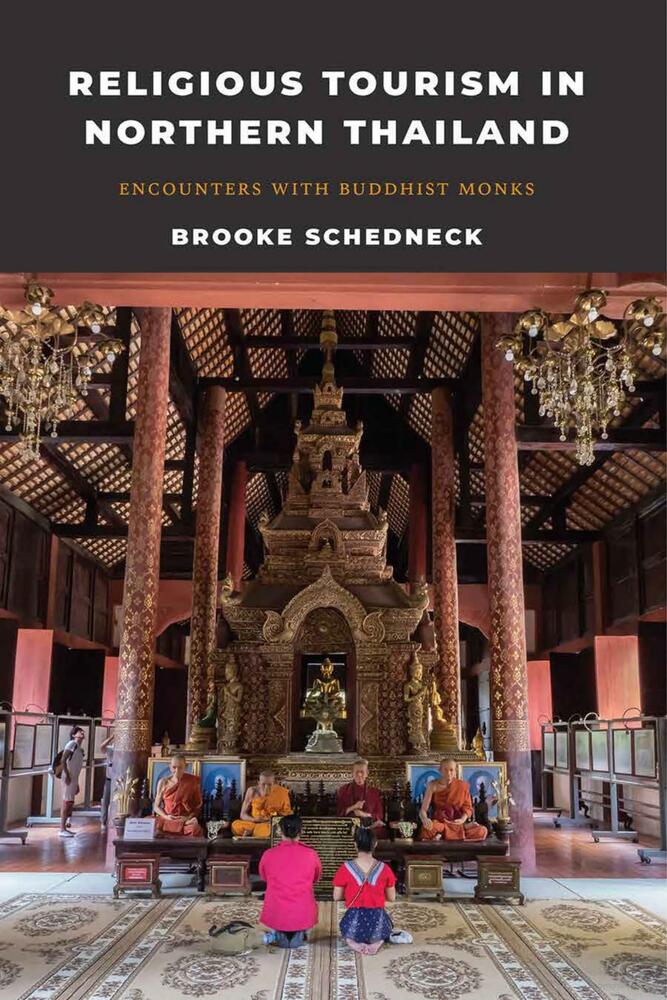
Dr. Brooke Schedneck is an Associate Professor and The W. J. Millard Professor of Religious Studies at Rhodes College, where she has taught since 2017. She specializes in Buddhism, Asian religions, and teaches courses in the Life program. Dr. Schedneck also leads the Maymester in Thailand, drawing on her extensive experience living and conducting research in Thailand for over eight years. Her research focuses on contemporary Buddhism in Thailand, with particular interests in global Buddhism, religions of Southeast Asia, gender in Asian religions, and religious tourism. Previous research has explored the modern vipassana meditation movement in Thailand's international meditation centers and tourist encounters with Buddhism in Northern Thailand. Her current research examines monastic scandals and the monastic body within Thai Buddhism. Dr. Schedneck's publications include the monograph Religious Tourism in Northern Thailand: Encounters with Buddhist Monks (University of Washington Press, 2021), which was short-listed for the EuroSEAS Humanities Book Prize 2022, and Living Theravada: Demystifying the People, Places, and Practices of a Buddhist Tradition (Shambhala Publications, 2023). She has also co-edited Buddhist Tourism in Asia (University of Hawaii Press, 2020) and authored Thailand's International Meditation Centers: Tourism and the Global Commodification of Religious Practices (Routledge, 2015). Short-listed for the EuroSEAS Humanities Book Prize 2022 Dr. Schedneck earned her Ph.D. in Religions of Asia from Arizona State University, an M.T.S. from Harvard University, and a B.A. from Boston University. Prior to joining Rhodes College, she taught study abroad students as a lecturer in Buddhist Studies at the Institute of Southeast Asian Affairs in Chiang Mai, Thailand, for four years. She has been invited to give research presentations in Thailand, Hong Kong, Singapore, and Malaysia.
Dr Joanne Yoo is a Senior Lecturer in the School of Education within the Faculty of Arts and Social Sciences at the University of Technology Sydney (UTS). She specializes in teacher education with expertise in writing pedagogy, academic literacy, and qualitative research methodologies. Her academic profile demonstrates extensive engagement with pre-service teacher education across primary and secondary programs at UTS, where she has worked intensively in quality teacher education development. Joanne began her career teaching English and ESL to secondary students in South Korea, where she first explored autoethnography and narrative inquiry methodologies. Her educational background in teaching English and ESL formed the foundation for her current research trajectory focused on writing as inquiry and embodied practices in academic contexts. Her research centers on writing as inquiry and embodied practices in academic work, investigating how creative, poetic, and sensory-rich writing approaches can transform research and teaching. She challenges conventional academic writing norms by advocating for methodologies that bridge personal and professional knowledge through lived experience. Her book Evocative Qualitative Inquiry Writing and Research Through Embodiment and the Poetic (2022) provides a comprehensive framework for understanding writing as an aesthetic and embodied practice in academic research. Analysis of her publication record reveals consistent exploration of feminist research methodologies , time and temporality in academia , and the relationship between embodiment and knowledge production . Her work often examines the tensions between institutional demands and authentic academic practice, particularly how writing can serve as a transformative tool for both teachers and researchers navigating contemporary academic pressures. Joanne actively supervises Masters Research and PhD students and has secured significant research funding including 'A day in a life' of a child in Australia and Korea (2019-2026), the Claremont PBL project (2016-2017), and research on the Implementation of the New English K-10 Syllabus (2015-2017). Her collaborative work extends through the UTS Hub School partnership with Sydney primary schools, demonstrating her commitment to bridging theory and practice in teacher education with attention to how creative writing approaches enhance both teacher development and student learning outcomes.
Marcelle Freiman is an Associate Professor in the School of Humanities at Macquarie University, Australia. Her research focuses on Creative Writing pedagogy, theory, and practice, with specialties in ekphrasis, cognition in creative processes, and postcolonial creativity. She has published extensively in journals like TEXT , AXON , and New Writing , and authored three poetry collections: Spirit Level (2021), White Lines (Vertical) (2010), and Monkey's Wedding (1995). Her work has been recognized with awards including the ASAL Mary Gilmore Award (Highly Commended) and a shortlisting for the Newcastle Poetry Prize (2021). Freiman has supervised 14 PhD and 6 MRes theses, with two recent doctoral works receiving Vice-Chancellor's Commendations. She has led research projects like Transformations of Writing: A Cognitive Approach to Creative Writing Process, Practice, and Technologies (2015) and Creative Writing, Literature, Cognition: Analysing Jean Rhys’ Writing Practices (2019). Her interdisciplinary work bridges creative practice with cognitive theory, examining how extended mind frameworks apply to writing processes. Key research areas include the intersection of poetry and visual art (ekphrasis), postcolonial creativity, and the evolution of the sonnet form. She actively publishes in literary journals globally and has contributed book chapters to volumes such as the Cambridge Guide to the Sonnet . Current projects explore distributed cognition in creative processes and the role of material objects (e.g., Patrick White’s briefcase) in shaping literary practices.
Paul Lynch serves as Professor in the Department of English within Saint Louis University's College of Arts and Sciences, where he maintains an active research profile at the intersection of rhetoric and religious studies. His scholarly work focuses on rhetorical theory, writing pedagogy, and the rhetoric of religion, with particular attention to Catholic educational traditions and spiritual formation. His educational background includes: Ph.D. in English, Purdue University (2008) Lynch's research explores how religious discourse shapes pedagogical practices, examining figures like René Girard and Pope Francis through rhetorical frameworks. His recent work investigates spiritual exercises in teaching, Jesuit educational identity, and the rhetoric of Catholic institutional crisis. This research bridges theoretical rhetoric with practical applications in faith-based education and writing instruction. His publication trajectory (2015-2025) reveals consistent engagement with three core areas: Girardian rhetorical theory (12 publications), Catholic educational rhetoric (9 publications), and writing pedagogy (7 publications). Notably, his 2024-2025 works show increased focus on contemporary Catholic institutional challenges while maintaining his longstanding interest in spiritual dimensions of teaching. His scholarly recognition includes: 2023 Ignite Seminar Teacher of the Year, University Core 2018 Article of the Year Award from the Religious Communication Association 2010 James H. Korn Scholarship of Teaching and Learning Award No information is available regarding graduate student advising or research grants. Lynch contributes to Saint Louis University's mission through his scholarship on Catholic rhetorical education and spiritual formation in teaching, though no specific labs or research teams are documented in the provided materials.
Jay Parini is a Professor in the Department of English and American Literatures at Middlebury College. He has taught courses in creative writing, modern poetry, and religious poetry, with a focus on poetic forms, literary traditions, and the intersection of spirituality and art. Research Interests Poetry and its structural forms Spiritual and religious traditions in literature Modernist and contemporary poetic movements Italian American cultural narratives Publications Last Steps: Late Writings of Leo Tolstoy (2009) Promised Land: Thirteen Books that Changed America (2008) Why Poetry Matters (2008) Teaching He has taught courses such as Structure of Poetry , Advanced Fiction Workshop , and Advanced Poetry Workshop , emphasizing revision, composition, and the exploration of poetic techniques through workshops and seminars.
Jennifer Sinor is a Professor of English at Utah State University, where she has taught since 2000. She serves as Chair of the Creative Writing Emphasis and Director of Graduate Studies, playing a key leadership role in both undergraduate and graduate creative writing programs. Her research and teaching focus on creative nonfiction, with specializations in non-linear forms, braided essays, flash nonfiction, and speculative nonfiction. She uniquely integrates yoga and somatic practices into writing pedagogy, emphasizing embodied creativity and mindfulness. This approach is central to her book The Yogic Writer: Uniting Breath, Body, and Page , which offers craft guidance through meditative and physical practices. Her recent publications span top literary journals such as The Writer's Chronicle , The Normal School , and Creative Nonfiction . These works explore themes of identity, desire, trauma, and ethical storytelling, often blending lyrical reflection with experimental form. Collectively, her articles reflect a deep engagement with the inner life of the writer and the emotional truth of personal narrative. Selected Honors: Stipend in American Modernism National Magazine Award nomination Inclusion in Best American Essays 2024 Work featured in The Norton Reader Jennifer advises graduate students in creative writing and leads curriculum development as Director of Graduate Studies. She has secured recognition and visibility for her program through her own nationally published work and editorial presence. While specific grant details are not listed, her sustained publication record and inclusion in major anthologies suggest strong scholarly impact and support. She is also a certified yoga instructor and actively incorporates mindfulness into her teaching. Though no formal lab or research team is mentioned, her pedagogical model represents an interdisciplinary approach that unites writing, embodiment, and contemplative practice.
Aneirin Karadog is a part-time Lecturer and Project Co-ordinator in Welsh at the University of Wales Trinity Saint David, affiliated with the Institute of Education and Humanities. He combines academic roles with a prolific career as a poet, author, and creative practitioner. His work spans teaching Welsh language pedagogy, producing educational resources, and media projects in Wales. Dr Karadog holds a BA and PhD from Swansea University (2020), with research focusing on poet-audience dynamics in Welsh creative writing. His academic interests include Welsh literature, Breton and Celtic studies, and the intersection of language and identity. He has contributed to media programs such as Wedi 7 and Siaradog , blending scholarly expertise with public engagement. His publications emphasize Welsh poetry, bilingual education resources, and comparative linguistics. Notable works include Y Gynghanedd Heddiw (2020) co-edited with Eurig Salisbury, and Byw Iaith (2019) exploring Breton-Welsh language parallels. His creative output includes six poetry collections and translations of children’s literature. Recipient of the Bardd Plant Cymru title (2013–2015), he actively promotes Welsh literary traditions while maintaining part-time university commitments. Current roles include teaching on the BA Education course and supporting Welsh language enhancement initiatives.
Dr. Anne Raine is an Associate Professor of English at the University of Ottawa, affiliated with the Faculty of Arts. Her research bridges modernist literature, ecocriticism, and climate justice, focusing on intersections between literary aesthetics, scientific discourse, and environmental activism. She holds a PhD in American Literature from the University of Washington (2002), an MA in Feminist Theory from the University of Leeds (1994), and a BA in English Literature from Simon Fraser University (1991). Her work examines how modernist texts engage with environmental discourses and contemporary climate crises, emphasizing contemplative pedagogy as a tool for addressing ecological anxiety. She is a member of the Association for the Study of Literature and Environment (ASLE), Modernist Studies Association, and Association for Literature, Environment and Culture in Canada (ALECC). Raine supervises graduate students, including Bahare Yousefi (focused on Environmental History and Climate Change Activism). Her publications explore topics such as feminist modernism, ecocritical theory, and mindfulness in education, with recent contributions to Contemplative Practices and Anti-Oppressive Pedagogies and Modernism/Modernity Print Plus .
Caroline Maun is an Associate Professor of English at Wayne State University, affiliated with the College of Liberal Arts and Sciences. She specializes in American Literature, particularly 20th-century women writers, and creative writing. She served as Director of Graduate Studies in English (2014–2018) and Chairperson of the English Department (2018–2024). Her teaching includes courses like ENG5860 and ENG2800, focusing on creative writing foundations. Education: Ph.D. in English (University of Tennessee Knoxville, 1998), M.A. in English (North Carolina State University, 1992), B.A. in English (Eckerd College, 1990). Research interests span American literature with a focus on women’s writing and creative writing pedagogy. Her publications include poetry volumes like Accident (2019) and scholarly works such as Mosaic of Fire (2012), examining 20th-century feminist literary voices. Her poetry explores themes of memory, identity, and existential inquiry. Awards: 2017 Outstanding Graduate Director, 2015 President’s Excellence in Teaching Award, and multiple fellowships including the 2009–2010 Humanities Center Resident Scholar. Grants/Advising: WSU Career Development Chair (2014), mentorship in English graduate programs. She collaborates with the English Department’s literary initiatives and has contributed to poetry events like the St. Clair Shores event. Her work bridges scholarly critique and creative practice, emphasizing women’s literary legacies.
Michelle Voss is Professor of Theology and Past Principal at Emmanuel College, Victoria University (University of Toronto), where she directs Master of Divinity Programs. An ordained United Church of Canada minister, she previously served as Associate Dean for Academic Affairs at Wake Forest University School of Divinity (2015-2018) and as Emmanuel College's 13th Principal (2018-2021)—the first woman to hold this position in its 90-year history. Her leadership emphasized race, class, gender, sexuality, and religious pluralism during institutional consolidation and the pandemic's onset. Her educational background includes: BA from Calvin College (1998) MTS from Candler School of Theology, Emory University (2002) PhD from Emory University (2006) As a leading scholar in comparative theology , Voss specializes in Christian-Hindu contexts with research spanning aesthetics , gender , embodiment , disability studies , and multiple religious belonging . Her work employs decolonial frameworks to examine how interreligious dialogue reshapes theological reflection, particularly through emotional and ritual dimensions. She develops theological anthropology informed by nondual Saiva Hindu perspectives, challenging dualistic frameworks in traditional doctrines. Analysis of her 15 most recent publications (2011-2025) reveals evolving engagement with decolonial approaches and indigenous perspectives , alongside consistent focus on Hindu-Christian relations and interreligious pedagogy. Recent work increasingly addresses pandemic-era challenges, institutional leadership in pluralistic contexts, and land-based spirituality, demonstrating practical application of comparative theology in ecclesial and educational settings. Her scholarly impact is recognized through: American Academy of Religion Award for Excellence in Constructive/Reflective Studies (2015) for Tastes of the Divine Society for Hindu-Christian Studies Best Book Award (2008-2011) for Dualities: A Theology of Difference Voss has secured significant grants from the National Endowment for the Humanities, Society for Hindu-Christian Studies, and United Church of Canada Foundation. Though specific advisees aren't listed, her curriculum development at Wake Forest and current Master of Divinity leadership demonstrate extensive mentoring in multireligious theological education. She served as Society for Hindu-Christian Studies President (2017-2018) and contributes to editorial projects like The Routledge Handbook of Hindu-Christian Relations . While not affiliated with a named laboratory, her collaborative work—such as editing Comparing Faithfully with diverse scholars—highlights team-based approaches to interreligious scholarship. Current initiatives focus on integrating disability studies and indigenous perspectives into theological frameworks through her ongoing research and teaching at Emmanuel College.
Kevin Hart is the Jo Rae Wright University Distinguished Professor at Duke University's Divinity School, concurrently holding a Professorship in the Department of English at Trinity College of Arts & Sciences. He holds a Ph.D. from the University of Melbourne (1987). His research explores intersections between theology, philosophy, and literature, focusing on contemplative practices, mystical theology, and continental philosophy. Recent works include Contemplation: The Movements of the Soul (2024) and memoir Dark-Land (2024). Primary affiliations: Divinity School & Trinity College Teaches courses on Augustine, mystical theology, and continental philosophy Research interests integrate religious phenomenology, aesthetic philosophy, and existential inquiry. His writing bridges medieval mysticism with contemporary postsecular thought, often engaging figures like Jean-Luc Marion and Maurice Blanchot. Recent articles address revelation theology, saturated phenomena, and the ethics of literary imagery. Recipient: Jo Rae Wright University Distinguished Professor title (2024–present) Teaching includes independent studies in critical research (ENGLISH 497/498) and specialized seminars on Augustine's thought and mystical theology. External collaborations include Bloomsbury Publishing and Glasgow University.