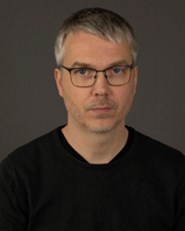
Ebru Turanoglu Bekar is a Senior Lecturer at the Department of Industrial and Materials Science, Chalmers University of Technology, specializing in Smart Maintenance and Production Systems. She contributes to the Production Service Systems & Maintenance research group. Research Interests: Total Productive Maintenance (TPM), Artificial Intelligence applications in manufacturing, Multi-Criteria Decision Making, Performance Measurement systems Recent Focus: Development of data-driven algorithms for predictive maintenance, integration of digital twins in industrial contexts Key Projects: Factory SensAI (2025–2028) - Data integration for AI in manufacturing Trustworthy Predictive Maintenance TPdM (2022–2025)
Maria Ojala is an Associate Professor and Senior Lecturer in Psychology at Örebro University (20% position until December 2026) and will transition to a Professor role (80%) at the University of Oulu, Finland, in August 2024. Her research focuses on young people’s emotional responses to climate change (2004–2025), examining climate anxiety, hope, coping strategies, and pro-environmental behavior across developmental stages. Current affiliations: Örebro University, University of Oulu (FRONT program) Key research areas: Environmental Psychology, Climate Change Education, Sustainable Development, Youth Mental Health Her work bridges emotional awareness and transformative learning, analyzing how climate-related emotions influence engagement, communication patterns, and educational practices. Recent projects include longitudinal studies on climate distress in Finnish adolescents (Swedish Research Council VR, 2022–2026) and youth trust in climate science (Swedish Research Council Forte, 2022–2025). Earlier, she explored food activism (Formas, 2018–2022) and mobile preschools (RJ, 2018–2022). Publications span empirical and theoretical analyses, with 15 recent articles (2021–2025) addressing climate anxiety, coping strategies, media exposure, and teacher practices. She collaborates with research groups like POCSUS and leads initiatives in the LEADER Center. Grants include SEK 5.95M (VR), SEK 3.94M (Forte), and SEK 3M (Formas). Her work emphasizes critical emotional awareness as a key competence for sustainable futures, integrating moral reasoning and anticipatory emotions into education.
Ulf Hedestig is a Senior Lecturer at the Department of Informatics, Umeå University. Based in MIT building, Umeå, Sweden, he focuses on technology-mediated education and digital government research. Contact: ulf.hedestig@umu.se , +46 90 786 61 32. Research Themes : IoT in public spaces, user-centered design, digitalization in education and government, mobile learning environments, knowledge transfer challenges Recent Trends : 2020 work on IoT urban applications, 2018 publications on China's digital strategies and O2O business models Key Collaborations : Mikael Söderström, Daniel Forest, Victor Kaptelinin Scientific Recognition : Excellent Teacher pedagogical qualification Distinguished University Teacher educational qualification
Jelena Zdravkovic is a Professor and Head of the Department of Computer and Systems Sciences (DSV) at Stockholm University. She leads the PRECIS research group which focuses on Process, Requirements, Enterprise, Capability, and Information Systems modelling. Her work spans theoretical and practical aspects of enterprise and IT solutions with a particular emphasis on digital transformation. Professor Zdravkovic's research interests center around Digital Business Ecosystems , Digital Twins , and Data-driven Requirements Engineering . Her work in Enterprise Modeling explores capability-oriented and consumer-oriented approaches to requirements engineering. She investigates how digital transformation and big data can be leveraged to improve requirements elicitation processes, and how organizations can model and manage complex digital business ecosystems. Her research has significant implications for how businesses can adapt to rapidly changing technological environments while maintaining resilience and competitiveness. Her recent publications reveal a clear trajectory toward integrating artificial intelligence with digital modeling techniques, particularly in the context of smart buildings and business ecosystems. There's a consistent focus on how data-driven approaches can transform traditional requirements engineering practices, making them more responsive to the velocity and variety of digital data sources. Her work bridges theoretical modeling with practical applications across various industries including healthcare, energy, and transportation. Professor Zdravkovic has been actively involved in mentoring PhD students, including supervising research on the Management Framework of Resilient Digital Business Ecosystems. She has participated in numerous national and international projects focused on interoperability and model-driven engineering, securing research funding for innovative work at the intersection of business and technology. She leads the PRECIS research group which deals with theories, methods and tools for analysis and design of organizational and IT solutions in congruence. The group's research covers three key topics – Enterprise Modelling, Business Process Management, and Conceptual Modelling. Their work brings together academic rigor with practical applications to solve real-world business challenges through innovative information systems approaches.
Kaisa Lund is a Senior Lecturer in Marketing at the School of Business and Economics , Linnaeus University. Her teaching focuses on sensory marketing, digital marketing, scientific methods, and bachelor theses supervision. Research Interests: Consumer information processing Judgment and decision making Branding Sensory marketing Retail atmospheric strategies Food and health marketing Scientific Awards: Finalist, Journal of the Academy of Marketing Science Best Paper Award (2019) Award for Best Paper in 'Food and Health' Track at the AMA Winter Conference (2018) Industry Collaborations: Extensive experience with Beiersdorf AG (Nivea producer) and ICA (Sweden's leading food retailer). Has presented to executives at IKEA, Beiersdorf AG, ICA, and the Swedish Marketing Confederation. Media Coverage: Research (notably in the Journal of the Academy of Marketing Science) has been featured in over 100 outlets including New York Times , Washington Post , Newsweek , and Fox .
Elina Eriksson is an Associate Professor at the Department of Media Technology and Interaction Design (MID) within the School of Electrical Engineering and Computer Science at KTH Royal Institute of Technology. She holds additional affiliations with Green Leap, Digital Futures, and the KTH Climate Action Center. Dr. Eriksson co-leads the Sustainable Futures Lab research group and serves as programme responsible for the new Sustainable Digitalisation master's programme launching in autumn 2024. Dr. Eriksson earned her PhD from KTH with the thesis 'Situated Reflexive Change - User-centred Design in(to) Practice' in 2013, while also working at Uppsala University during her doctoral studies. Her academic journey demonstrates a consistent focus on the intersection of technology and sustainability. Her research centers on sustainability and human-computer interaction (S-HCI), specifically exploring how computing can facilitate the transition to a more sustainable world. She investigates change processes and practices across multiple domains, with particular emphasis on energy transitions, academic travel emissions, sustainable behavior change, and futures thinking for sustainability. Dr. Eriksson approaches these challenges through both theoretical frameworks and practical interventions. Analysis of Dr. Eriksson's publication record reveals a strong trajectory in sustainable computing, with increasing focus on climate action and systemic change in recent years. Her work bridges technical computing research with social science perspectives, emphasizing practical applications for sustainability challenges across academic, organizational, and everyday contexts. Dr. Eriksson currently manages the project 'Beyond the event horizon: tools to explore local energy transformations' and contributes to 'Decreased CO2-emissions in flight-intensive organisations' and 'HabitWise - Creating Sustainable Everyday Habits.' She teaches courses including 'ICT and Sustainability,' 'Leading Complex Change Processes,' and 'Sustainable ICT in Practice,' while examining various degree projects across computing disciplines. As co-leader of the Sustainable Futures Lab, Dr. Eriksson fosters interdisciplinary research that examines how digital technologies can support sustainable practices and transitions. The lab serves as a hub for innovative approaches to sustainability challenges through human-centered computing research.
Cajsa Bartusch Kätting is a Senior Lecturer at Uppsala University's Department of Civil Engineering and Industrial Engineering within the Faculty of Science and Technology, and a Researcher at the Institute for Research on Conflicts of Goals in Sustainable Social Transition. As leader of the Uppsala Smart Energy Research Group (USER), she investigates electricity consumer and prosumer roles in smart grid development, focusing on demand response, decentralized generation, and sustainable energy transitions through industry-academic collaborations with partners including Ellevio and STUNS Energi. Her research centers on demand flexibility and consumer behavior in energy systems, examining how dynamic pricing, feedback mechanisms, and IT services influence residential and commercial electricity consumption. She integrates social psychology with engineering to design interventions for sustainable energy use, particularly studying gender differences in tariff understanding, prosumer integration challenges, and the impact of occupancy patterns on consumption. Analysis of her 15 most recent publications reveals increasing focus on behavioral aspects of smart grids, with empirical studies on dual-price signal confusion, microgrid optimization, and pandemic-driven consumption shifts. Her work consistently addresses the human dimension of energy transitions, moving beyond technical solutions to examine cognitive processes and social barriers in demand response adoption. Bartusch has secured significant funding from the Swedish Energy Agency and Familjen Kamprads stiftelse for projects like Användarnas roll i implementeringen av smarta elnät (2019-2024) and Holistiska affärsmodeller för prosumenter (2015-2018), often collaborating with municipalities and energy companies to translate research into practical solutions for grid congestion and renewable integration. She leads the USER research group which conducts applied interdisciplinary work combining engineering, psychology, and social sciences. The group's projects with partners like Uppsala Municipality and KTH focus on real-world implementation of demand response programs, prosumer business models, and microgrid optimization in multi-dwelling buildings, directly addressing Sweden's energy transition challenges.
Miralem Helmefalk serves as a Senior Lecturer at the Department of Marketing and Tourism Studies within the School of Business and Economics at Linnaeus University. His academic profile bridges theoretical marketing concepts with practical applications in sustainability, technology, and consumer behavior. Dr. Helmefalk completed his doctoral studies at Linnaeus University in 2017 with his dissertation titled 'Multi-sensory cues in interplay and congruency in a retail store context: Consumer emotions and purchase behaviors,' establishing his foundation in sensory marketing research. His research centers on three interconnected pillars: consumer psychology and sensory marketing , examining how multisensory stimuli influence emotional responses and purchasing decisions; gamification , investigating strategic implementation of game mechanics to enhance user experiences; and service research within the Service-Dominant Logic framework , focusing on service ecosystems and customer engagement dynamics. These streams converge in his applied work on sustainable solutions, where he explores how marketing principles can promote recycling behaviors and environmental consciousness. His recent work demonstrates a clear evolution from traditional sensory studies toward innovative applications of gamification in sustainability contexts. Dr. Helmefalk's publication output shows strong interdisciplinary reach across marketing, sustainability, and technology domains. Recent work spans esports business models, gamified recycling systems, sensory brand congruence frameworks, and machine learning applications in gamification. His research demonstrates practical relevance while maintaining theoretical rigor, with publications in journals such as Journal of Media Business Studies, Circular Economy and Sustainability, and Waste Management. As an educator, Dr. Helmefalk teaches diverse courses including Gamification, Sensory Marketing, Retail Management, Method Courses, E-commerce, Digital Marketing, and New Technology in Marketing. He is recognized for creative teaching approaches that integrate theoretical concepts with real-world applications through experiential learning. Dr. Helmefalk actively leads research projects including 'Collaboration towards a gamified waste sorting house' which investigates whether waste sorting can be made enjoyable through gamification, and 'Social cues for environmental messaging in tourist destinations' which examines how social attention mechanisms can enhance environmental communication in tourism contexts. His collaborative network spans international organizations and researchers across multiple disciplines, reflecting his commitment to interdisciplinary scholarship with practical societal impact.
Ulf Melin is Professor and Dean at Linköping University's Department of Management and Engineering, specializing in digital government, public sector transformation, and smart city solutions. His research examines how digital technologies reshape bureaucratic organizations and public service delivery, with particular focus on Scandinavian governance models. Key research areas include robotic process automation in government, open data ecosystems, AI governance policies, and socio-technical aspects of smart city development. His work balances technical innovation with institutional analysis to address tensions between digital efficiency and public values. Professor Melin has received multiple awards including the Emerald Literati Award and EGOV Outstanding Paper awards. He leads projects investigating automation ethics, administrative burden in digital services, and municipal transformation strategies, contributing to national policy discussions on AI governance in Sweden.
Eva Gustafsson is a Researcher at the Department of Business Administration and Textile Management within the Faculty of Textiles, Engineering and Business at University of Borås. She serves as main supervisor for doctoral students including Ida Hermansson and Josefine Nystrom, demonstrating her active role in academic mentoring and research supervision. Her research primarily focuses on sustainable fashion retail systems, textile management, and circular economy practices, with particular emphasis on reuse-based business models. Gustafsson's work examines the complexities of fashion waste management, institutional logics in sustainable retail, and consumer behavior related to clothing consumption and disposal. She frequently collaborates with researchers like Lars Hedegård on studies centered around the ReTuna recycling mall in Sweden, using frameworks like Actor-Network Theory to analyze sustainable fashion retail systems. Her publication portfolio reveals a consistent research trajectory examining sustainable fashion retail practices, with particular attention to the challenges and contradictions inherent in reuse-based business models. Her work spans from early research on gender representation in digital retail spaces to more recent investigations of textile waste management and sustainable fashion systems, showing an evolution toward environmental sustainability topics. Notable scientific contributions include her work on institutional logics in sustainable fashion retail, which analyzes how multiple competing logics affect management practices in reuse-based fashion retail environments. Her research demonstrates how sustainable fashion retail involves complex interplays between shopping mall logic, reuse logic, and work integration logic, creating managerial challenges that require balancing multiple perspectives. Supervised doctoral students: Ida Hermansson, Josefine Nystrom Gustafsson maintains an active research program with publications spanning from 2004 to 2020, demonstrating ongoing scholarly engagement in her field. Her work bridges theoretical frameworks with practical retail applications, contributing valuable insights to both academic literature and sustainable retail practices.
Hanife Rexhepi is an Associate Professor of Informatics at the University of Skövde , specifically affiliated with the School of Informatics and Department of Information Technology. She actively contributes to research on eHealth systems , patient online record access , and health information technology . Her research focuses on digital health innovations , particularly examining privacy and security in online medical records , patient empowerment through eHealth , and age-related technology adoption . She leads projects like "Predicting Elderly Healthcare Needs Using AI" (2024-2027) and "GPS Alarms for Elderly Independence" (2023-2026). Key research areas: Health Informatics, Medical Information Systems, Human-Computer Interaction Current projects: AI-driven elderly care, Nordic patient portal benchmarking Recent publications analyze cross-national eHealth implementations , adolescent health data privacy , and ethical implications of open medical records . Collaborations span institutions in Sweden, Norway, Finland, and Estonia through the DOME consortium.
Stanley Joel Greenstein is a Senior Lecturer in Law and Information Technology at the Department of Law, Faculty of Law, Stockholm University. He serves as Course Director for the optional Cyberlaw course. PhD in Law (Stockholm University, 2017) South African legal education background with civil/common law expertise His research focuses on technology-society interactions , particularly: Artificial Intelligence ethics and regulation Data protection and privacy frameworks Cybersecurity legal implications Algorithmic decision-making transparency Human dignity in digital environments Commercial data practices and autonomy Current projects include EXTREMUM (Explainable and Ethical Machine Learning for medical data) funded by Digital Futures initiative through 2024. His 2017 dissertation Our Humanity Exposed proposed empowerment strategies for regulating predictive modeling. Key research areas span: Digital society governance Algorithmic fairness in public services Legal aspects of environmental sustainability Digital innovation frameworks AI implementation in healthcare Explainable AI for regulatory compliance
Dr. Hui Han is a Senior Lecturer at Luleå University of Technology (LTU) in Sweden, working within the Machine Learning Group with a Wallenberg AI, Autonomous Systems and Software Program (WASP) professorship. She is affiliated with the Department of Computer Science, Electrical and Space Engineering, specifically within the Embedded Intelligent Systems LAB. Her office is located in Luleå at room A3424. Dr. Han earned her Ph.D. in Industrial Engineering from the Technical University of Madrid (UPM), Spain. Following her doctoral studies, she completed postdoctoral research at the Data Science department of Fraunhofer IESE in Germany and later served as a postdoctoral fellow in the Department of Computer Science at the Norwegian University of Science and Technology (NTNU), Norway. Dr. Han's research focuses on data science with specific expertise in Edge AI and TinyML (Tiny Machine Learning). She leads research efforts in developing sustainable modeling for Sustainable Supply Chain Management, particularly in reverse logistics and circular economy. Her work also encompasses social commerce and Industry 4.0 applications. As the first author, she has published 17 papers including 10 journal papers, 4 conference papers, and 3 magazine papers, accumulating over 1,000 citations according to Google Scholar. Her publications appear in high-impact journals such as Technological Forecasting & Social Change (IF 13.3), Expert Systems with Applications (IF 8.5), and Education and Information Technologies (IF 5.5). Dr. Han's teaching portfolio includes Management Information Systems, Project in Industrial AI, and TinyML. She has created an introductory TinyML course available on her YouTube channel. Her research spans multiple interdisciplinary areas including Industry 4.0, IoT, Cloud Computing, Big Data Analytics, Cyber-Physical Systems, Multicriteria decision support systems (particularly Fuzzy TOPSIS), Complex Relationships Analysis (PLS-SEM), Data Science, TinyML, Edge AI, Random Forest techniques, Information Systems, Social commerce, E-commerce, Sustainable Supply Chain Management, Reverse logistics, Closed-loop Supply Chains, Circle Economy, and Healthcare applications. Her Embedded ML for Health Project demonstrates practical applications of TinyML in healthcare, using Arduino Nano 33 BLE Sense and OV7675 Camera for melanoma detection through image processing and machine learning algorithms. This project showcases her ability to apply theoretical research to real-world healthcare challenges.
Björn Norén serves as University Lecturer and Deputy Director of Studies at Umeå University's Department of Food, Nutrition and Culinary Science, where he teaches cooking techniques, raw material handling, and gastronomic concept development across courses including Meal and Restaurant Science, Food Design, and Concept Development and Innovation. His educational background features a Bachelor's degree in Meal and Restaurant Science from Umeå University, supplemented by specialized coursework in Industrial Design (Umeå Institute of Design), Packaging Design (Mid Sweden University), and Food Design (HDK Gothenburg). Norén's research centers on sustainable food transitions and culinary craftsmanship , with particular expertise in fermentation science (koji, kombucha, lacto-fermentation), protein shift strategies, and time-geographic analysis of cooking processes. His work bridges haute cuisine creativity with industrial food product development through practical kitchen experimentation. Recent publications demonstrate his dual focus on food system sustainability (2020 edible waste reduction study) and cultural preservation (2019 Sami culinary workshop), reflecting his commitment to both environmental and cultural dimensions of food innovation. He currently supervises student projects on culinary craftsmanship and fish aging techniques while securing research funding through active involvement in three major initiatives: Sustainable Food Transitions (2024-2027), LOCALITY (2023-), and HealthFerm (2022-). Norén operates within Umeå University's Sustainable Food Transitions and Sympoietic Collaboratory research groups, where his industry-tested expertise in professional kitchen dynamics informs interdisciplinary approaches to food system challenges.
Renee Wever is a Professor of Industrial Design Engineering at Linköping University, Sweden, within the Department of Management and Engineering (IEI). Her research focuses on user-centered design for sustainability and circularity, alongside practices of design. She leads the Design research area, emphasizing packaging sustainability and systemic approaches to environmental challenges. Academically, she holds a PhD from Delft University of Technology (2009) and an MSc in Industrial Design Engineering (2003). She teaches in the PhD program in design, the international master’s program in design (MDES), and courses on design and product development. Her editorial roles include the Journal of Design Research and Packaging Technology and Science . Her work spans interdisciplinary collaboration, exploring topics like consumer behavior in packaging-free systems, design team dynamics, and circular design education. Notable contributions include frameworks for sustainable interventions and strategies for repurposing in circular economies. Renee actively engages in global academic networks, co-creating educational platforms and promoting innovation through storytelling and creative problem-solving. Her research often bridges theory and practice, addressing real-world challenges like food waste reduction and sustainable packaging solutions.




.jpg)