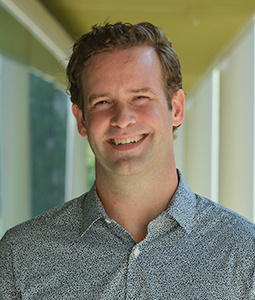
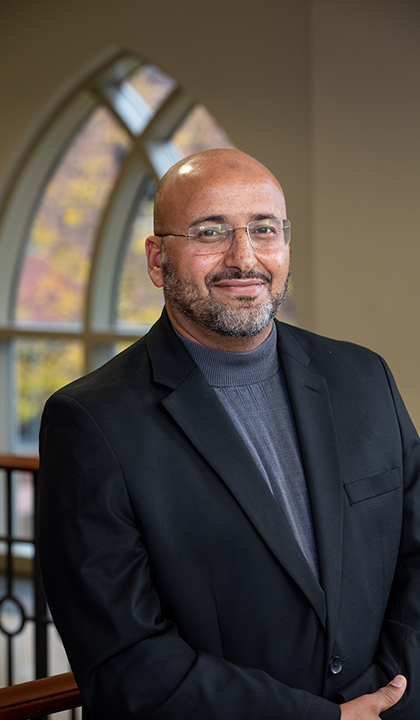
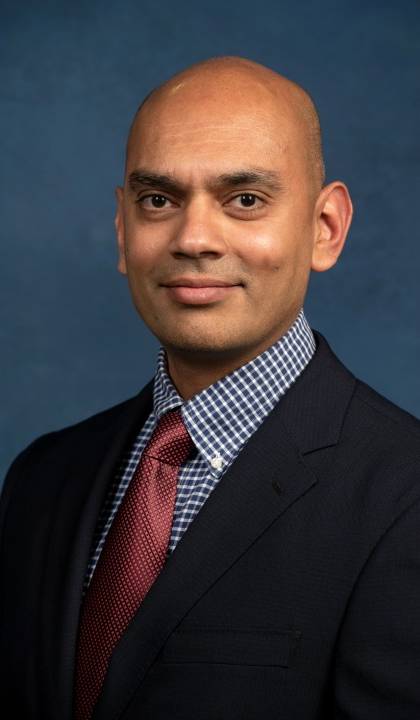
Oksana Loginova is a Professor and Director of Teaching Effectiveness in the Department of Economics at the University of Missouri. She holds a faculty position within the College of Arts and Science, focusing on Microeconomic Theory, Game Theory, and Industrial Organization. Her research explores strategic interactions in markets, particularly in digital platforms, pricing strategies, and consumer behavior dynamics. Her work addresses contemporary issues such as branded website vs. marketplace competition during the pandemic, multi-homing effects in ride-sharing markets, and pricing mechanisms in online environments. Recent studies investigate private label strategies in online marketplaces, SaaS platform complementarities, and supplier collaboration in co-created products. Loginova’s publications span over two decades, with a focus on advancing theoretical frameworks for understanding modern economic challenges in e-commerce, transportation, and consumer decision-making. Her research emphasizes practical implications for businesses and policymakers navigating competitive market landscapes.
Panos Markopoulos is an Associate Professor at the Department of Business Administration and Public Administration of the University of Cyprus , affiliated with the School of Economics and Management . He holds a PhD from the University of Pennsylvania (2004) and has extensive industry experience at the Athens Stock Exchange , IBM Research , and McKinsey & Co . His research focuses on Management Information Systems , Electronic Markets , and Consumer Product Information , with notable contributions to Game Theory applications in market mechanisms. Education: PhD in Management Information Systems, University of Pennsylvania (2004) Roles: Director of the MSc in Data Science program (UCY), former Director of the Entrepreneurship Center (2020–2024) Teaching Experience: Cornell University, Wharton Business School His research investigates how information disclosure and market mechanisms impact consumer decision-making and market efficiency. Recent work addresses dark net market review manipulation and information asymmetry mitigation .
Scott Roeder is an Assistant Professor of Marketing at the Darla Moore School of Business, University of South Carolina. He joined the faculty in 2019 after completing postdoctoral work at Washington University in St. Louis and holds a Ph.D. (2016), M.S. (2012) from UC Berkeley, and a B.S. (2009) from the University of British Columbia. Education: Ph.D. in Marketing, University of California, Berkeley (2016) M.S. in Marketing, University of California, Berkeley (2012) B.S. (Hons) in Psychology, University of British Columbia (2009) Research Interests: Dr. Roeder’s work examines how cognitive heuristics and biases shape consumer judgments and behaviors, particularly in domains like self-knowledge, enjoyment, and financial decision-making. His research bridges psychological theory with practical applications in marketing strategy. Professional Background: Prior to academia, Roeder worked in consumer electronics sales and gained experience as a web developer, providing him with unique insights into technology and consumer interactions. Awards/Grants: No specific awards or grants mentioned in the provided text.
Flavio De Paoli is an Associate Professor affiliated with the Insid&s LAB. His research focuses on semantic web technologies, data enrichment, and interactive tools for data management. Key projects include the enrichMyData initiative and the development of frameworks like SemT and Protobject . His work spans geospatial data analysis, services-oriented computing, and scalable data solutions. Notable contributions include tools for semantic table interpretation (e.g., MantisTable ), API-based data enrichment, and event-driven analytics. He has also contributed to cloud computing frameworks and semantic wiki integration for knowledge management. His research emphasizes human-in-the-loop systems, automated data processing, and tool development for both academic and industrial applications. Projects like EW-shopp and BEEO demonstrate his focus on applying semantic technologies to real-world challenges in marketing, urban planning, and smart systems.
Zhiping Walter is an Associate Professor in the Department of Information Systems at the University of Colorado Denver. She has been with the university since 2002, previously serving as an assistant professor at the University of Connecticut. Her research focuses on user interactions with information websites, digital entrepreneurship, and the economics of information systems. Expertise Areas: User Interaction with E-commerce Sites, Health Information Systems, Information Systems Success, Economics of Information Systems Recent Research Trends: Covers cybersecurity ethics, cross-platform design, digital disruption in media, and trust transfer mechanisms in online contexts. Scientific Awards: Reviewer of the Year Award for Information Systems Research (2007) Business School Nominee for Campus-wide Research Award (2006) Dean’s Research Award Runner-up (2005) Best Paper Award (1998) Grants: Conducted studies on e-healthcare success factors and internet systems management problems with collaborative grants.
Dr. Dongmin Kim serves as a Professor in the Faculty of Business at the University of New Brunswick Saint John campus since 2005, specializing in Management Information Systems and Business Data Visualization. His academic appointments include teaching undergraduate courses (BA2611, BA3672) and graduate courses (MBA7604), while holding significant service roles including chair of the Research Colloquium and membership on the Faculty Support Fund committee. His educational background includes a PhD in MIS from the University of British Columbia (2005), an MBA (1998), and a B.A. in Economics (1982) from Yonsei University. Prior to academia, he accumulated 17 years of industry experience at IBM Korea (1982-1999). Kim's research critically examines online trust formation in e-commerce environments, with notable contributions to trust assurance mechanisms and user interface optimization . His work extends to business analytics applications, information persuasion techniques, and low-code analytics tools. He has secured competitive SSHRC funding including principal investigator for "The Effects of Web Vendor Interventions on Customer Trust" ($26,867) and co-investigator for "Determining the Optimal Level of Filtering Spam Mails" ($18,539). His publication portfolio includes two Financial Times Top 50 journal articles in Information Systems Research and Journal of MIS , alongside editorial roles as Associate Editor for Asia Pacific Journal of Information Systems and reviewer for premier journals including Journal of Management Information Systems . UNB Saint John Faculty Excellence Award for Teaching (2011) Allan P. Stuart Award for Excellence in Teaching (2017) Kim maintains active leadership within academic communities as former Vice Chair for Research Resource at SIGHCI (2010-2012) and editorial board member for Information & Management and Decision Sciences . His current service includes membership on the Inter Campus Inter Faculty Assessment Committee and previous chairmanship of Senate and Faculty Curriculum Committees (2007-2012).
Dr. Susan Miertschin is an Active Retired Associate Professor in Information Science Technology at University of Houston's Cullen College of Engineering. With over 20 years at UH, she specializes in online education development and instructional technology. Education includes M.Ed. in Curriculum and Instruction from University of Houston, M.S. in Information Systems from Dakota State University, and Graduate Certificate in Medical Informatics from University of Texas. Research focuses on technology-enhanced learning with emphasis on: Online course design and student success factors Mobile learning applications Time management strategies for online learners STEM education innovations Publications emphasize practical applications of educational technology, particularly during the COVID-19 transition period. Recent work examines cloud computing adaptations, retail education, and gender-inclusive STEM programming. Awards include: El Paso Energy Faculty Achievement Award (2001-2002) College of Technology Outstanding Faculty Award for Teaching (1998) Taught courses include Internet Application Development, Enterprise Applications Development, and Technology in Society. Administrative contributions include ABET accreditation leadership and digital infrastructure development.
Waseemah Moedeen is a Lecturer in Computing and Programme Coordinator for the BSc(Hons) Computer Science (System Engineering) undergraduate programme at Middlesex University Mauritius. She joined the institution in 2014 as a Research and Graduate Teaching Assistant and completed her MSc in Business Information System Management in 2017. Her research focuses on Artificial Intelligence, Data Science, and Augmented Reality applications in aviation safety, sustainability, and environmental education. Teaching modules include Advanced Web Development with Big Data, Business Intelligence, Strategic Management, and Programming for Data Communication and Networks. Her research outputs include studies on AR-enhanced aviation emergency training, carbon footprint reduction through ICT, and sustainable consumption awareness. She has published in journals like Sustainable Energy Technologies and Assessments and Journal of Cleaner Production . No scientific awards are listed, but her work emphasizes practical applications of technology for societal challenges. She has been continuously employed at Middlesex University Mauritius since 2014 with no mention of part-time roles or grants.
James Roth is a Professor in the Department of Biological Sciences at the University of Manitoba's Faculty of Science. His research focuses on Arctic and sub-Arctic ecosystems, with a particular emphasis on food web dynamics, predator-prey interactions, and the ecological roles of ecosystem engineers like red and Arctic foxes. He employs stable isotope analysis and geospatial technologies to study nutrient cycling, population responses to climate change, and cross-habitat interactions. Key Research Areas: Food web dynamics, ecosystem engineering, predator-prey relationships, stable isotope ecology, Arctic marine and terrestrial systems Recent publications highlight his work on marine-terrestrial subsidies, beluga whale energetics, and fox-mediated vegetation changes. Roth is affiliated with the Churchill Fox Project, using innovative methods like satellite imagery and drone technology for wildlife monitoring.
Wilson Wong serves as an Associate Professor of Teaching in the Department of Computer Science at Worcester Polytechnic Institute (WPI), advising Wall Street/Fintech projects from his office in Fuller 132. With 22 years of teaching experience and prior industry roles as Chief Technologist and Director of Information Systems, he integrates real-world expertise into software engineering and databases courses through collaborations with Brigham & Women's Hospital, US Treasury, Dartmouth-Hitchcock Medical Center, and Massachusetts General Hospital. His educational credentials include: BS from Massachusetts Institute of Technology (MIT), 1989 MBA from Cornell University, 1991 PhD from Bentley University, 2013 Wong's research centers on innovative pedagogy in software engineering education, with emphasis on capstone project design, social network analysis in computing contexts, and computer systems architecture. He pioneers mobile-web parallel development frameworks and hospital application projects that challenge students to create creative software features through industry partnerships. His publication trajectory reveals consistent focus on educational innovation since 2013, evolving from mobile health applications and LCD market economics to advanced capstone methodologies emphasizing Android/web integration and situational leadership for student teams. Recent works demonstrate growing specialization in scalable project management for complex software development education. Scientific awards: No awards documented in source materials. As CS Advisor to Wall Street/Fintech Projects, Wong mentors students in financial technology applications while facilitating hospital-government partnerships for real-world software development. His grant activities likely support these institutional collaborations though specific funding details aren't provided, with emphasis on transforming student teams into professional development units through competition-based learning. He directs capstone innovation initiatives where students develop production-grade applications, particularly mobile clinic systems for major medical centers, using competition frameworks to drive feature creativity and technical excellence in software engineering education.
Prof. Melike Aktaş Kuyucu is a Professor at the Communication Faculty's Public Relations and Promotion Department at Ankara University. She holds roles such as Department Head and Curriculum Committee member. Her academic journey includes a PhD from Ankara University (2008), postgraduate studies at the University of Nottingham (2001–2002), and a bachelor’s degree from Ankara University's Communication Faculty (2000). Her research focuses on public relations history, consumer culture, digital communication, and crisis communication. Notable works include studies on Turkey's PR history, consumer behavior in marginalized youth, and digital campaigns against gender-based violence. She has supervised 16 theses and contributed to 6 funded research projects. Her publications span over 60 articles and book chapters, addressing topics like CSR, risk communication during the pandemic, and PR education trends. Active in academic service, she serves on journal editorial boards and international conferences, emphasizing socially responsible communication practices.
Mamoun Benmamoun is an Associate Professor of International Business at Saint Louis University's Richard A. Chaifetz School of Business, where he also directs the Ph.D. Program in International Business and Marketing. He holds a Ph.D. in Policy Analysis and Evaluation from Saint Louis University. His interdisciplinary research examines global e-commerce strategies, cultural adaptation of digital content, and AI applications in international business. Professor Benmamoun has developed new courses on Middle East Business Environments and International Business Intelligence, while coordinating the core Introduction to International Business curriculum. He has received multiple honors including the X-Culture Global Educator Award (2020) and Beta Gamma Sigma Outstanding Teacher Award (2016). His research has been recognized with Best Paper awards at international conferences. Beyond academia, he provides digital strategy consultation to non-profits and multinational corporations, and has developed educational resources for leading business textbooks.
Srikanth Mudigonda, Ph.D., serves as Associate Dean of Academic Affairs and Director of Analytics at the School for Professional Studies (SPS) at Saint Louis University. He holds an Associate Professor position in the Computer Information Systems department. His academic background includes a Ph.D. in Business Administration with an emphasis in Information Systems from the University of Missouri-Saint Louis, an M.S. in Information Systems (Data Management specialization) from Dakota State University, and dual degrees from Birla Institute of Technology and Science in India. His research focuses on modeling social phenomena emergence and innovative education methodologies in computing. Key areas include agent-based modeling, machine learning applications, and data science pedagogy. He has published extensively in computational social sciences, educational technology, and information systems journals. Dr. Mudigonda has received multiple recognitions including three Faculty Excellence Awards from SPS (2020, 2017, 2013) and the SLU Student Government Award. His professional affiliations include the ACM SIGSIM and Computational Social Science Society of the Americas. His recent work emphasizes interdisciplinary applications of analytics, particularly in health insurance disparities modeling and geospatial data analysis. Collaborative projects include developing simulation platforms for social processes and enhancing educational technology adoption in higher education environments.
Filippo Andrei is a Research Fellow at the Department of Sociology and Social Research, University of Trento. He holds additional roles as Teaching Fellow and Teaching Assistant in the same department. His expertise spans Computational Sociology, Cybercrime, Online Behavior, Social Norms, and Trust mechanisms in digital contexts. Research focuses on darknet markets, cybercrime dynamics, and the digital transformation of work environments. His work explores topics like signaling strategies in illicit markets, trust intermediation in cryptomarkets, and the impact of digital technologies on worker well-being. He has contributed to understanding social influence mechanisms in darknet markets and organizational structures in smart factories. Key research areas include the intersection of technology and crime, digital sociology, and workplace digitalization processes. His publications analyze illegal drug trade dynamics, corporate wellness program adoption, and the sociological implications of the Fourth Industrial Revolution. Filippo has presented at academic conferences and maintains active research collaborations. His CV includes academic career milestones and teaching activities in sociology and social research disciplines.
Dr. Michael Frisk is a Professor in the School of Marine and Atmospheric Sciences (SoMAS) at Stony Brook University. His research focuses on fish ecology, population modeling, and life history theory. He leads the Frisk Laboratory, collaborating with organizations like the New York State Department of Environmental Conservation (NYSDEC) and Kenya Marine & Fisheries Research Institute. His work integrates telemetry, ecosystem modeling, and field studies to address challenges in marine conservation, fisheries management, and climate impacts. Key projects include the Nearshore Ocean Trawl Survey, acoustic tracking of sharks and sturgeon, and studies on Lake Turkana fisheries. His lab emphasizes interdisciplinary approaches, involving students and postdocs in projects such as winter flounder thermal tolerance and PFAS accumulation in coastal sharks. Education: Ph.D. in 2004 from the University of Maryland, Center for Environmental Science. Research interests span fisheries ecology, migratory patterns, and ecosystem resilience. The lab’s activities include collaborative projects on species distribution modeling for offshore wind development and the ecological implications of climate change. Dr. Frisk mentors graduate students and advises on grants related to marine spatial planning and conservation. Scientific contributions include over 50 peer-reviewed articles, with recent work focusing on telemetry validation, PFAS contamination in marine species, and winter flounder population dynamics. The Frisk Lab also engages in outreach through field surveys and public education initiatives.