Ryan Stones is a Lecturer at the City Law School , City, University of London, specializing in competition law, behavioral economics, and the intersection of legal philosophy with antitrust enforcement. His work critically examines the application of the formal rule of law to EU competition policy and analyzes historical schools of antitrust thought like the Chicago School and Ordoliberalism.
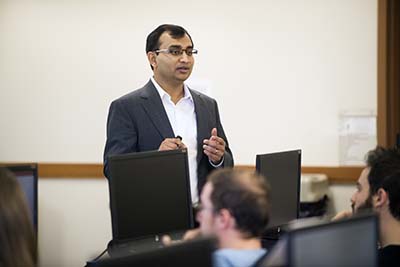
Mohammad Saifur Rahman is the Daniels School Chair in Management and a Professor of Management Information Systems at the Mitch Daniels School of Business, Purdue University. Previously, he was an Associate Professor at the Haskayne School of Business, University of Calgary. His academic journey includes significant leadership roles such as co-chairing the Conference on Information Systems and Technology (CIST) in 2013 and serving as president of the INFORMS eBusiness Society in 2014. Currently, he serves as an associate editor for both Management Science and Information Systems Research (ISR). Ph.D. in Management Information Systems, Krannert School of Management, Purdue University (2008) MBA in Management Information Systems, Southern Illinois University (2004) BS in Computer Science, Southern Illinois University (2002) Rahman's research primarily focuses on the economic implications of digital transformations. His work examines how digitization affects consumer behavior, market structures, and business strategies across various industries. He investigates the value of digital traces in driving consumer behavior and improving decision-making, particularly in omnichannel retail environments. His research on the sharing economy has revealed important insights about economic disparities, showing how platforms like Airbnb provide economic benefits to predominantly white neighborhoods while failing to generate similar spillover effects in predominantly Black or Hispanic neighborhoods. His recent publications reveal a consistent focus on the intersection of technology, economics, and social impact. Rahman's work frequently examines how local market structures interact with digital platforms to create or exacerbate economic inequalities. His research spans multiple disciplines including information systems, economics, marketing, and operations management, with a particular emphasis on empirical studies using real-world data from major companies like Walmart and Cisco. CICP Faculty Commercialization Award (2020) INFORMS Sandy Slaughter Early Career Award (2018) World's Top 40 Business School Professors Under 40 by Poets and Quants (2017) Jay N. Ross Young Faculty Scholar Award (2015) Dean's Award for Outstanding Research Achievement (University of Calgary, 2014) Rahman has secured substantial research funding from organizations including Social Sciences and Humanities Research Council (SSHRC), Adobe Systems ($50,000 grants in 2017 and 2020), Trask Innovation Fund ($21,218), and NSF I-Corps ($50,000). He has advised numerous PhD students and collaborated with industry partners to translate research into practical applications. Rahman co-founded RightFit Analytics, a precision health analytics solution that utilizes AI to learn success patterns in healthcare. He has organized significant academic events including the Krannert-Walmart Data Dive (believed to be the first data dive on a college campus) and the Dawn or Doom Data Dive in cooperation with Cisco. Rahman actively engages with industry through consulting and collaborative research projects. His work with Walmart, Cisco, and other major corporations demonstrates his ability to bridge academic research with practical business applications. He has been particularly active in studying how AI and big data analytics can be leveraged to improve business decision-making while addressing potential negative consequences like algorithmic bias and economic inequality.
Professor Andrew Murray is a leading academic in Law with expertise in New Media and Technology Law. He holds the position of Professor of Law at the LSE Law School and directs the LSE Law, Society and Technology Group. His research focuses on digital rights, AI ethics, and regulatory frameworks for emerging technologies. Murray has held roles including Fellow of the Royal Society for the Arts and advisor to the Saudi Arabian government on e-commerce law. He has advised parliamentary committees, including the House of Lords Communications Committee on digital regulation, and delivered the prestigious TMC Asser Lecture on AI and human agency. Education: LL.B. Hons from Edinburgh University (1994), followed by academic roles at Stirling University and LSE since 2000. Professional memberships include the Society of Computers and Law (SCL) and the Higher Education Academy (HEA). He has been a visiting professor at Amsterdam Law and Technology Institute and Sciences Po Paris. Research interests span cyberspace regulation, AI governance, and the intersection of technology with human rights. Key publications include Human Rights in the Digital Age (2004) and The Regulation of Cyberspace (2007). Awards include recognition as an Independent Expert in Nominet UK dispute resolution (2001–2008) and a 2024 Leibniz Prize reviewer. Advocacy includes contributions to EU e-commerce directives and UK surveillance law debates. His work emphasizes balancing innovation with legal accountability in digital spaces.
Susan L. Burns is a Professor at the University of Chicago, where she holds appointments in the Department of History, Department of East Asian Languages and Civilizations, and The College. She currently serves as Department Chair and Chair of the Undergraduate Studies Committee. Education: PhD, University of Chicago (1994) Her research focuses on Japan’s nineteenth-century social history, emphasizing intellectual and cultural practices, the intersection of medicine and public health, gender analysis, and legal discourses. She explores continuities between Japan’s early modern and modern eras, particularly how medical and legal frameworks shaped national identity. Recent publications span leprosy’s impact on citizenship, the rise of medical marketplaces, and gendered dimensions of reproductive health. Her digital humanities work on Mapping Medical Tokyo integrates GIS and text mining for historical analysis. Scientific Awards: Fulbright-Hays Fellowship IIE Fulbright Japan Foundation Japan Society for the Promotion of Science National Endowment for the Humanities She has secured grants for research on medical commodities, psychiatric practices, and the spatial dimensions of Meiji-era health policies. Her courses include Gender and Japanese History and Medicine and Culture in East Asia .
Janna Parker is a professor in the Department of Marketing at James Madison University, specializing in digital marketing, retailing, and nonprofit marketing. With a career transition from political campaigns, she focuses on social media's role in personal and professional branding. Her research examines work-personal social media boundaries, employer governance policies, and volunteerism in nonprofit contexts. Education: Bachelor's in History (California State University Sacramento), Master's (Cameron University), Doctorate (Louisiana Tech) Teaching Interests: Digital marketing education, social media strategy, nonprofit marketing Her scholarly work spans social media governance, volunteer engagement, and retail dynamics, with recent emphasis on digital marketing pedagogy and cancel culture implications. Parker has contributed to academic journals through empirical studies and conceptual commentaries. Key article trends include: Digital marketing education evolution (2024) Social media governance in corporate and nonprofit contexts (2024) Online teaching satisfaction in higher education (2022) Volunteer brand community dynamics (2020) Consumer behavior frameworks (2019) Her media appearances include expert commentary on holiday retail strategies and social media research, reflecting practical applications of her academic work.
David Harvey is a Distinguished Professor of Anthropology and Geography at the City University of New York (CUNY) Graduate Center and Director of Research at the Center for Place, Culture and Politics. He has been teaching and writing about Karl Marx’s Capital for over 50 years, earning recognition as a leading Marxist scholar and urban theorist. Research Interests Cultural anthropology Political economy Urbanization and capitalist development Environmental justice Geographical theory Advanced capitalist countries Publications & Trends Harvey’s work spans Marxist theory, neoliberalism, and urban studies, with recent focus on Grundrisse and capitalist contradictions. His scholarship connects historical materialism to contemporary crises, emphasizing spatial fixes, environmental limits, and anti-capitalist resistance. Awards & Honors Outstanding Contributor Award (Association of American Geographers) Centenary Medal (Royal Scottish Geographical Society, 2002) Isaac and Tamara Deutscher Book Prize (2010) for The Enigma of Capital Honorary degrees from University of Bristol, Goldsmith College, Kent, Buenos Aires, Roskilde, Uppsala, and Ohio State University
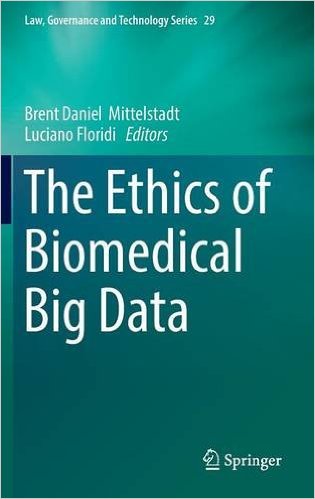
Professor Brent Mittelstadt is a leading academic in data ethics and AI governance at the University of Oxford's Oxford Internet Institute (OII), serving as Professor of Data Ethics and Policy and Director of Research. He coordinates the Governance of Emerging Technologies (GET) programme, focusing on ethics, law, and technology interplay. His work bridges academic research with policy impact, contributing frameworks like 'counterfactual explanations' and fairness metrics ('Conditional Demographic Disparity') used globally. He leads high-profile projects such as Trustworthiness Auditing for AI and A Right to Reasonable Inferences in Advertising and Financial Services. Research interests span AI ethics, medical ethics, technology governance, and non-discrimination law. He has pioneered ethical frameworks addressing algorithmic bias, GDPR compliance, and AI accountability. His work has influenced policy bodies like the UK Information Commissioner’s Office and the European Commission, and is implemented by tech giants such as Google and Microsoft. Awarded O2RB Excellence in Impact Awards (2018, 2021) and PLSC Best Paper (2019) Funded by Wellcome Trust, Sloan Foundation, and others Advisory roles for NHSx, GSK Consumer Healthcare, and regulatory bodies Recent work focuses on AI regulation (EU AI Act), generative AI ethics, and healthcare AI governance. He co-leads the OxonFair toolkit for algorithmic fairness and investigates societal impacts of deepfake proliferation and large language models.
Mallory Elizabeth SoRelle serves as the Tony & Teddie Brown Associate Professor at Duke University's Sanford School of Public Policy. Her research examines how public policies both stem from and perpetuate socioeconomic and political inequality in the U.S., with a focus on consumer financial protection and civil justice—issues critical to marginalized communities yet often neglected by welfare state scholars. Her academic credentials include: Ph.D. in Government, Cornell University (2016) M.A. in Government, Cornell University (2014) Master of Public Policy, Harvard University (2010) B.A. in Government, Smith College (2006) SoRelle's scholarly work centers on policy feedback effects, investigating how existing policies shape political behavior and future policy design. She analyzes consumer finance regulation, student debt relief, voting access reforms, and preemption politics, highlighting their disparate impacts on vulnerable populations and implications for democratic health. Her recent publications demonstrate a cohesive research agenda applying policy feedback theory across diverse policy domains. Key themes include the political consequences of financial regulation, the dynamics of student debt politics, and the erosion of voting rights, all examined through the lens of inequality and democratic participation. Dr. SoRelle holds the distinguished Tony & Teddie Brown Associate Professorship at Duke University. She is an active educator teaching courses such as The Political Economy of Policymaking and Public Policy, Political Power, and Social Change. Her research is supported by an NSF CAREER grant (2024-2029) investigating the political economy of fringe financial technologies and their impact on economic inequality.
Rosa Ferrer is a Serra-Hunter Associate Professor at Universitat Pompeu Fabra and an Associate Research Professor at the Barcelona School of Economics. She also serves as a Research Affiliate at CEPR in London and as Co-Director of the Master in Competition, Regulation & Markets program. Her academic journey began with a PhD from Vanderbilt University, establishing a strong foundation for her research career in economics. Dr. Ferrer's research spans several key areas within economics, with a particular focus on Law and Economics, Industrial Organization, and the Digital Economy. She combines empirical and theoretical methods to explore consumer choice, demand estimation, gender economics, and law enforcement challenges. Her work is inspired by Gary Becker's view on economic incentives beyond monetary rewards, applying industrial organization and applied microeconomics to diverse applications. She has made significant contributions to understanding gender gaps in professional performance, particularly in the legal profession, as well as consumer behavior in product-harm crises and digital markets. Her publication record demonstrates consistent scholarly output across high-impact journals including Management Science, Journal of Political Economy, and Review of Economic Studies. Her recent work focuses on digital economy challenges, gender differences in media consumption, and career trajectories in professional settings. This research portfolio shows a clear progression from foundational work in law enforcement and decision theory to contemporary issues in digital markets and gender economics. As Co-Director of the Master in Competition, Regulation & Markets, Dr. Ferrer plays a significant role in shaping the next generation of economists and policy experts. Her leadership in this program reflects her commitment to bridging academic research with practical policy applications in competition and regulatory frameworks.
Peter Seele is a Full Professor at the Faculty of Communication, Culture and Society at Università della Svizzera italiana (USI). He is affiliated with the Center for Climate Finance and Sustainability (CCFS), Ethics and Communication Law Center (ECLC), and the Luxury Observatory Lugano (LOLugano). His research focuses on Corporate Social Responsibility (CSR), Business Ethics, Digital Ethics, Greenwashing, and Machinewashing. Dr. Seele holds dual PhDs in Economics (University of Witten/Herdecke, Germany) and Philosophy (University of Düsseldorf, Germany). He previously served as an Assistant Professor at the University of Basel and conducted post-doctoral research at the Institute for Advanced Studies in the Humanities (KWI) in Essen. His educational background includes studies at the University of Oldenburg and Delhi School of Economics, followed by two years as a business consultant in Frankfurt. His research explores ethical challenges in digitalization, sustainability, and technology. Notable themes include AI ethics governance, ethicswashing in corporate communication, and the interplay between blockchain and business ethics. Recent work addresses greenwashing trends, the ethical implications of algorithmic systems, and sustainable practices in luxury industries. Publications highlight critical analyses of digital ethics frameworks, sustainability backlashes, and the societal impact of emerging technologies. His interdisciplinary approach bridges philosophy, business studies, and environmental science, with a focus on practical solutions for ethical dilemmas in modern organizations. Peter Seele collaborates across academic and industrial sectors, emphasizing real-world applications of ethical theories. He advises on CSR strategies, digital transparency, and regulatory frameworks for sustainable business practices.
Stephen Billings is an Associate Professor of Finance at the Leeds School of Business, University of Colorado Boulder, where he holds the Global Real Estate Capital Markets Chair position. He serves as the faculty director of the MS in Real Estate program and research director for the CU Real Estate Center. His work spans multiple research centers including the Center for Research on Consumer Financial Decision Making and the Michael A. Klump Center for Real Estate. Billings received his PhD in Economics from the University of Colorado, a MS in urban planning from the University of North Carolina, and a BS in economics from Georgetown University. Prior to joining CU Boulder in 2016, he was faculty at the University of North Carolina Charlotte with appointments in both economics and public policy, where he also served as faculty director for the real estate center. His research focuses on the intersection of housing, schools, neighborhoods and crime, addressing critical policy issues including the impact of public investment in light-rail transit on neighborhoods, school segregation's influence on academic achievement and crime, neighborhood gentrification causes, lead-based paint in low-income housing, and the effects of sea level rise and natural disasters on neighborhood sorting and household finances. Billings employs sophisticated analysis of large micro-datasets with studies based on data and policies in Charlotte, NC and Denver, CO. His work connects urban economics with public policy, demonstrating how neighborhood environments shape individual outcomes across multiple dimensions. Billings' recent publication record demonstrates a consistent focus on neighborhood effects, school choice impacts, crime economics, and housing market dynamics. His work frequently examines the intersection of race, housing, and economic outcomes, with particular attention to policy implications. He has developed innovative methodological approaches to studying residential amenities and neighborhood spillovers, with increasing attention to climate change impacts on housing markets. His research appears in top journals including The Quarterly Journal of Economics, American Economic Review: Insights, and Journal of Urban Economics. As an educator, Billings teaches undergraduate and masters classes in real estate finance and economics, as well as doctoral and masters level courses on cost-benefit analysis and statistical methods. He has extensive consulting experience conducting economic impact studies, including assessments of North Carolina's public higher education system, affordable housing needs in Colorado communities, and the economic effects of marijuana legalization on property markets. His practical policy work complements his academic research, creating a bridge between theoretical insights and real-world applications. Billings leads significant research initiatives through the CU Real Estate Center, where he directs studies examining the impact of business improvement districts and other urban development policies. His work bridges academic research with practical policy applications, making substantial contributions to our understanding of how housing, education, and neighborhood environments shape individual outcomes and community development. His December 2023 memo on the HUD Officer Next Door Program exemplifies his engagement with current housing policy issues.
Zoe Lee is a Reader (Associate Professor) in Marketing at Cardiff Business School, Cardiff University , and Programme Director for MSc Strategic & Digital Marketing. She serves as an Associate Editor for the Journal of Strategic Marketing and editorial board member for Journal of Business Research and Journal of Philanthropy & Marketing . Research Interests: Responsible Branding Brand Purpose & Activism Sustainability Communications in Fashion Nonprofit Marketing Strategy Digital Brand Management Recent Publications (2023-2025) examine brand activism in permacrisis, social media banter between brands, disability inclusion in luxury fashion, and sustainability communication strategies. Her work combines empirical studies with systematic literature reviews across Journal of Marketing Management , European Journal of Marketing , and Journal of Business Research . Scientific Awards: Outstanding Article in Nonprofit & Voluntary Sector Quarterly (2018) Nominated for ESLA Awards (2021-2025) for teaching excellence Dean's Award for Citizenship (2017) Supervision: Currently supervising PhD students in corporate brand purpose, sustainability, and brand activism. Actively engaged in grant-funded projects including British Council research on inclusive policies and Hodge Foundation public value internships.
Jakob Merane is a postdoctoral researcher at ETH Zurich's Professorship of Law, Economics and Business, and a visiting researcher at the Max Planck Institute and Harvard Law School. He holds a Ph.D. from ETH Zurich and law degrees from the University of Basel, with additional studies in applied statistics. His research focuses on AI-driven legal enforcement, legal technology, and compliance-by-design approaches, leveraging computational and empirical methods. Merane's work includes developing tools like SwiLTra-Bench for multilingual legal translation and LEXam for benchmarking AI legal reasoning. He has contributed to GDPR compliance studies, automation of legal enforcement processes, and quantitative analyses of Swiss legal datasets. Awards include the 2024 Young Scholar Prize from the German Law and Economics Association. Teaching responsibilities include ETH's Law & Tech course since 2020, emphasizing AI regulation and interdisciplinary collaboration between law and computer science. Merane's research also addresses AI liability in medical contexts, digital advertising regulations, and ethical AI integration in legal systems. His work bridges legal theory with practical applications, aiming to enhance justice accessibility through technology.
Stefan Bechtold is a Full Professor of Intellectual Property at ETH Zurich since 2013 and Associate Vice President IP Policy (2023–2026). He is affiliated with the ETH AI Center and serves on global advisory boards including the Academic Advisory Board of the German Federal Ministry for Economic Affairs and Climate Action. His interdisciplinary research bridges law, economics, and computer science.
Renaud Morieux is Professor of European History at the University of Cambridge and Fellow of Pembroke College. His research explores borders between Britain, France, and the wider world since the 18th century, with focus on migration, oceans, incarceration, and the social history of war. He holds editorial responsibilities for journals including Past & Present and Revue d'Histoire Moderne et Contemporaine . Research Interests: Morieux investigates maritime borders through interdisciplinary lenses combining legal history, family studies, and global perspectives. His projects examine political deportation in the Indian Ocean and a reflexive history of European statelessness. His award-winning publications analyze cross-Channel relations, war captivity, and oceanic governance. Article Analysis: Morieux's scholarship demonstrates consistent focus on transnational networks, legal pluralism, and subaltern agency. Recent work explores colonial knowledge systems, penal transportation, and epistolary communities, reflecting innovative methodological approaches to reconstructing marginalized histories across imperial spaces. Awards and Honors: Philip Leverhulme Prize for History (2014) Leo Gershoy Award for The Channel: England, France and the Construction of a Maritime Border (2017) Mémoires de la Mer book prize (2009) Advising and Grants: Morieux has supervised 10+ PhD students on topics ranging from naval mutinies to famine philanthropy. Current doctoral candidates explore Sir Joseph Banks' networks, WWI prisoner repatriation, and oral culture in the French Atlantic. His research receives international funding including EU and UK research council support.