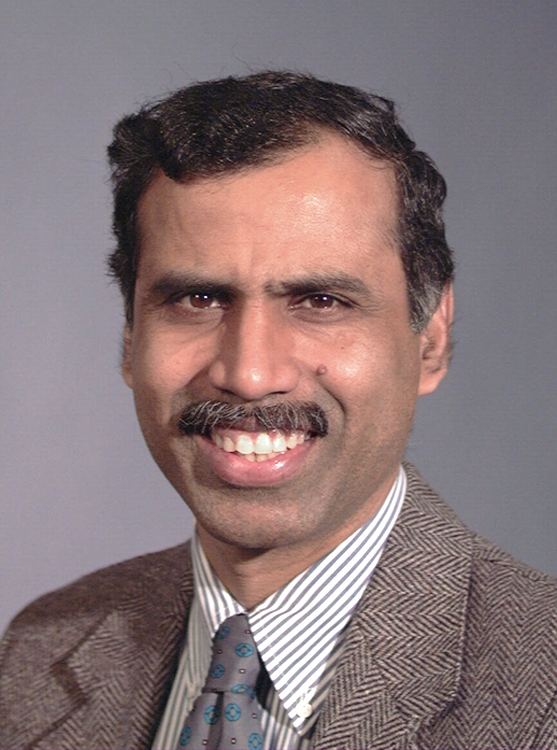
Prof. Dr. Alfred Taudes is a faculty member at the Vienna University of Economics and Business, affiliated with the Department of Information Processing and Process Management under the Institute for Production Management. His research spans Production Management, Strategic Management in High-Tech Industries, Real Options, Supply Chain Management, and SAP R/3 integration, with significant contributions to Quantitative Models of Learning Organizations. Key research areas: Production/Operations Management, Strategic High-Tech Industry Analysis, Real Options Theory Notable collaborations with researchers like Mild, Natter, and Dorffner Focus on empirical validation of models in marketing, supply chain optimization, and software platform decisions His publications demonstrate interdisciplinary trends combining Management Science , Information Systems , and Machine Learning . Recurring subfields include Neural Network Applications , Real Options Valuation , Consumer Behavior Modeling , and Process Migration in Distributed Systems . While no explicit scientific awards are listed, his work has been disseminated through leading journals and conference proceedings.
R. R. K. Sharma is a Professor in the Department of Management Sciences at the Indian Institute of Technology Kanpur , with a career spanning over three decades since joining in 1989. His work bridges Operations Research , Supply Chain Management , and Strategic Management . Specialization in Operations Research and Strategic Alignment Education: Fellow in Management (IIM Ahmedabad, 1988), BE in Mechanical Engineering (VNIT Nagpur, 1980) Research focuses on mathematical formulations for warehouse location, lot sizing, and supply chain optimization, with empirical studies comparing algorithmic approaches. His work extends to organizational culture-strategy alignment , ERP implementation , and technology management in manufacturing and retail contexts. Recent publications (2018-2023) emphasize sustainable supply chains , horizontal strategy in conglomerates, and IOT integration in retail formats. Earlier works (1991-2018) developed foundational methods in MRP performance , Benders' decomposition , and genetic algorithm applications . Key collaborations include work with researchers in Germany, Thailand, China, and India on manufacturing-flexibility interplay , TQM implementation , and retail analytics . His extensive 781 working papers cover diverse topics in management science, though no formal awards or student advisement details are listed in the provided text.
Ítalo José Da Silva Oliveira is a Researcher at the Digital Society Institute in the Semantics, Cybersecurity & Services department. He holds a PhD in Computer Science from the Free University of Bozen-Bolzano, Italy, where he focused on ontology-driven conceptual modeling for security domains under supervisors Enrico Franconi, Giancarlo Guizzardi, and Tiago Prince Sales. His current work bridges mathematical logic, philosophy of law, and computer science to develop ontologically rigorous solutions for cybersecurity risk management. His research interests include Ontology engineering Cybersecurity risk frameworks Knowledge Representation and Reasoning Semantic Integration . Recent publications analyze attack tree interoperability, phishing attack ontologies, and risk modeling in ArchiMate and domain-specific systems. Scientific recognition includes the EMMSAD 2025 Best paper award for collaborative work on phishing attack modeling. He contributes to open datasets on chess grandmasters and consumer law analysis via Zenodo. Collaborations span institutions like Leiden University Medical Center and international workshops such as FOIS 2024.
Jennifer Nguyen is a researcher at the Department of Operations, Innovation and Data Sciences, Esade School of Business Administration and Management, Ramon Llull University. She is affiliated with the Institute for Data-Driven Decisions and has an ORCID iD (0000-0002-7498-7536). Her work focuses on data science and artificial intelligence applications in decision-making and collaborative innovation. University: Ramon Llull University School: Esade School of Business Administration and Management Department: Operations, Innovation and Data Sciences Jennifer Nguyen's research interests primarily revolve around Artificial Intelligence , Natural Language Processing , and Open Innovation . She has extensively worked on Recommender Systems and Qualitative Reasoning models, integrating Fuzzy Linguistic Term Sets and Multi-Criteria Decision Making frameworks to enhance collaborative processes and knowledge generation. Her recent publications highlight trends in AI-driven Malpractice Detection and Media Coverage Analysis . The 2025 article on European media coverage of the Israel–Gaza war employs Hesitant Fuzzy Linguistic Term Sets for comparative cross-national analysis, while her 2024 work on health sector malpractices explores Deep Attention Mechanisms and Multiple Instance Learning . Earlier research (2014–2016) focused on optimizing Reviewer Assignment and Expertise Dimensions in collaborative innovation contexts. Jennifer Nguyen actively participates in multi-year research projects funded by both internal grants and external agencies like AGAUR. The 2017–2021 project JUICE examined Judgment and Decisions in Marketplaces , while her current 2022–2025 project investigates Natural Language Processing for Emotion Detection through fuzzy linguistic analysis. As a member of the Institute for Data-Driven Decisions, she collaborates with international researchers across disciplines like Computer Science , Environmental Science , and Health Informatics . Her work has been cited in Scopus and referenced in academic platforms like Wikipedia and Mendeley.
Faith Jeremiah is a Lecturer in the Department of Global Value Chains and Trade at Lincoln University's Faculty of Agribusiness & Commerce. She serves as Program Director for the Major/Minor in Entrepreneurship and Innovation, Research Fellow for the Centre of Excellence in Transformative Agribusiness, and CeLT Ambassador for the Centre for Learning and Teaching. Additional roles include ECR Co-Chair for the Institute for Small Business and Entrepreneurship (ISBE), editorial board member for the Journal of Small Business and Enterprise Development and European Research Studies Journal, and Lincoln University Wellbeing Supporter. Dr. Jeremiah's research centers on cognitive and behavioral sciences within entrepreneurship and innovation, exploring how individuals think, decide, and act in uncertain environments. Her work intersects behavioral economics, cognitive psychology, and decision science, with particular interest in mental models, heuristics, and biases that shape entrepreneurial action. She investigates the transformative potential of disruptive technologies like AI and their impact on human cognition and creative processes. Her recent publications reveal a strong trajectory toward AI-human interaction in business contexts, with increasing focus on generative AI's role in entrepreneurship, education, and consumer behavior. The research demonstrates interdisciplinary approaches connecting behavioral science with technological innovation, particularly examining cognitive processes in entrepreneurial decision-making and the psychological aspects of innovation. Nominated for Canterbury Tech Board (2024) Nominated for Institute for Small Business and Entrepreneurship (ISBE) Board (2024) LTL Teaching Shout Out Winner (2024) Nominated for Teaching Excellence Award (2024) ISBE Research and Knowledge Exchange (RAKE) Award (2024) As Program Director for Entrepreneurship and Innovation, Dr. Jeremiah has developed and successfully proposed three official courses and a new Major and Minor in Entrepreneurship and Innovation. She serves as an academic workshop developer on Artificial Intelligence for the CeLT Ambassadors Programme and provides business mentorship through the Canterbury Regional Business Partner Network. Her current supervision availability includes Masters Research, PhD student supervision, and membership on advisory committees. Dr. Jeremiah contributes to multiple collaborative networks including the Centre of Excellence in Transformative Agribusiness, where she conducts research on innovation processes, and participates in professional organizations such as BNI, The Networkers, ISBE, and ACERE to advance entrepreneurship research and practice.
Dr. Paula Arbouw is a Senior Lecturer in the Department of Agribusiness and Markets at Lincoln University's Faculty of Agribusiness and Commerce, where she has been employed since February 2022. With over a decade of teaching experience, she previously held roles at Ara Institute of Canterbury (2015-2021) and the University of Canterbury (2011-2013). Her academic credentials include a PhD and BCom (Hons) from the University of Canterbury, complemented by a CTLT certification. Her research centers on: Sustainable and ethical consumption from consumer/organizational perspectives Integration of indigenous Māori culture in marketing strategies Consumer morality's impact on prosocial behaviors Social marketing applications for community well-being She also explores sustainable branding, gift-giving rituals, and food-related digital behaviors. Publication analysis reveals strong focus on: Sustainability in consumer culture (e.g., ethical consumption, green branding) Cross-cultural marketing, particularly Māori business integration Marketing education-industry alignment challenges Behavioral psychology in charitable giving and digital ethics Teaching contributions include serving as examiner for: MKTG 681: Managing Marketing MKTG 308: Marketing New Zealand Products and Services MKTG 202: Social Marketing and Ethics She holds professional membership in the Marketing Association of New Zealand and reviews for Marketing Intelligence and Planning and the Journal of Consumer Services .
Christopher Cotropia serves as the David Weaver Research Professor of Law at The George Washington University Law School, specializing in patent law, intellectual property, and empirical legal studies. His influential research appears in top journals including the American Law and Economics Review and Northwestern Law Review, and he has testified before the U.S. Senate Judiciary Committee, FTC, and ITC on critical patent law issues. Education: BS in Computer Engineering and Electrical Engineering, Northwestern University (with honors and distinction) JD, University of Texas School of Law (Articles Editor, Texas Intellectual Property Law Journal) International and Comparative Intellectual Property Law studies, Queen Mary & Westfield College’s Centre for Commercial Law Studies Research Focus: Professor Cotropia employs rigorous empirical methodologies to analyze patent systems , copyright frameworks , and gender-related legal issues . His work uniquely bridges technical innovation (leveraging his engineering background) with legal doctrine , examining topics from patent valuation metrics to menstrual equity in schools. Recent scholarship reveals expanding interdisciplinary connections between intellectual property , online marketplaces , and public health policy . Publication Trends: Over the last five years, Cotropia's research has evolved from traditional patent analysis toward broader empirical examinations of judicial behavior during crises (e.g., pandemic impacts) and systemic gender disparities in legal institutions. His work consistently demonstrates how quantitative evidence can reshape understanding of intellectual property's role in innovation ecosystems while addressing emerging challenges in digital markets and social justice. Professional Background: Prior to GW, he held professorships at University of Richmond School of Law (Dennis I. Belcher Professor) and Tulane Law School (C.J. Morrow Research Associate Professor). His practical experience includes clerking for Federal Circuit Judge Alvin A. Schall and practicing patent litigation at Fish & Richardson. He co-authored the influential open-access casebook Patent Law and directs research initiatives like the SCALES Project for federal court transparency.
Li Xiaohui is Professor and Department Head at the Department of Information Management, College of Business, National Chengchi University. She has held the Department Head position since 2022 and has been a full-time professor at NCCU since 2019. Previously, she served as Associate Professor (2016-2019) and Assistant Professor (2011-2016) at the University of Hong Kong's Institute of Information Management. Dr. Lee earned her PhD from the University of Rochester's Simon Business School (2005-2010) and a Master's degree in Civil Engineering from National Taiwan University (2000-2002). Her research focuses on Supply Chain Management, Empirical Operations, Innovation, and Corporate Social Responsibility, examining how technology, sustainability, and risk management intersect in modern business operations. Her extensive publication record shows a strong trend toward studying supply chain resilience, corporate social responsibility, and technology adoption. She has published in premier journals including Management Science, Journal of Corporate Finance, and Production and Operations Management, with emphasis on empirical analyses of operational challenges in complex business environments. Distinguished Professor (2023) Academic Research Excellence Award (2021) Outstanding Research Award from National Science and Technology Council (2021) Dr. Lee currently leads multiple research projects including 'Application of Empirical Methods in Supply Chain Management Research' and 'The Evolution, Future Trends, and Value of ESG,' with consistent funding from Taiwan's National Science and Technology Council. She also directs research centers focused on Supply Chain Management and ESG initiatives within the Department of Information Management.
Dr. Poonam Renault Oberoi is an accomplished Associate Professor of Marketing at Excelia Business School, specializing in innovation and technology management with a particular focus on strategic sourcing. She is part of the Marketing department within the Business School at Excelia, where she teaches courses in Innovation Marketing, Principles of Marketing, International Marketing, and Marketing Research, and speaks both English and Hindi fluently. Dr. Oberoi has an impressive educational background: PhD in Marketing (Philosophiae Degree) from Grenoble École de Management, France (2014) MPhil in Business Administration from Grenoble École de Management, France (2012) MSc in Innovation & Technology Management from Grenoble École de Management, France (2010) Dr. Oberoi's primary research areas focus on open innovation , crowdsourcing , and crowdfunding , with additional interests in sustainable innovation, gendered marketing, and the impact of artificial intelligence on business practices. Her work bridges theoretical frameworks with practical applications, particularly examining how organizations can leverage external knowledge and collaborative approaches to drive innovation. She has developed a strong research profile that examines the intersection of technology, marketing, and innovation management, with a special emphasis on understanding how firms can effectively manage open innovation processes and crowdsourcing platforms. Her research often employs both quantitative and qualitative methodologies, reflecting a comprehensive approach to understanding complex innovation phenomena. Dr. Oberoi's publication record demonstrates consistent high-quality output across leading international journals. Her work shows a clear trajectory from foundational research on open innovation frameworks to more recent investigations into crowdsourcing dynamics, AI applications in marketing, and gender-related issues in business contexts. The breadth of her work spans marketing, information systems, organizational behavior, and sustainability, highlighting her interdisciplinary approach to business research. Dr. Oberoi actively contributes to the academic community through editorial roles, serving as a guest editor for Creativity and Innovation Management and as an associate editor for both the Journal of Asia Business Studies and the Journal of Management and Training for Industries . She is also engaged with professional organizations including the American Marketing Association and the Strategic Management Society, regularly participating in conferences and workshops to share her research findings and contribute to scholarly discourse. As an educator, Dr. Oberoi oversees BBA research at Excelia Business School and has been instrumental in developing curriculum related to innovation marketing and digital business strategies. She has authored numerous case studies on topics including open innovation, crowdfunding, and corporate social responsibility, providing practical learning materials for business students. Her teaching responsibilities demonstrate her commitment to preparing future business leaders for the challenges of digital transformation and innovation management.
Dr. Lucas Whittaker serves as a Lecturer in Marketing within the Department of Management and Marketing at Swinburne University of Technology's School of Business, Law and Entrepreneurship. His research program focuses on the implications of emerging technologies like deepfakes and Generative AI for marketing communication, with publications appearing in top journals including International Journal of Information Management, Psychology & Marketing, and Technovation. Dr. Whittaker's research interests center on digital innovation in marketing: Consumer appraisals of deepfake advertising and disclosure strategies Generative AI applications for strategic marketing advantage Digital human avatars for brand engagement and public figure representation Gamification techniques for promoting sustainable consumer behaviors Synthetic media incident response for business management His publication record demonstrates consistent scholarly productivity with multiple 2025 publications examining cutting-edge applications of AI in marketing. Whittaker's work reveals sophisticated understanding of how consumers process AI-generated content, particularly how disclosure timing and deepfake quality influence advertising effectiveness. His research extends beyond theoretical contributions to practical applications, as evidenced by his involvement in the 'Unlocking a Greener Australia' research project. Dr. Whittaker currently holds an internal research grant at Swinburne University investigating citizen sustainability enablers and barriers. While he indicates he's 'currently not available to supervise new PhD students,' his prior supervision includes doctoral research on conversational AI in service encounters. His scholarly work aligns with Sustainable Development Goal 11 (Sustainable Cities and Communities), reflecting his commitment to research with social impact.
Mohammadreza Akbari is a Professor at James Cook University, specializing in supply chain management, logistics, and Industry 4.0. His research focuses on sustainability, digital transformation, and operational innovation in global supply chains. He has contributed extensively to understanding Vietnam’s industrial dynamics, including renewable energy, circular economy practices, and the integration of advanced technologies like edge computing and additive manufacturing. Education: Holds a Professional Doctorate (Research) in Logistics Outsourcing from Victoria University (2013). Research Interests: Industry 4.0 technologies in supply chains Sustainability and circular economy frameworks Dynamic capabilities and organizational adaptation Global trade policies and logistics Technology-driven innovation in logistics Key Contributions: Authored/co-authored over 50 publications, including book chapters on Lean manufacturing, supply chain digitization, and Vietnam’s trade policies. His work bridges theoretical frameworks with practical applications, such as case studies on Savico Group’s Industry 4.0 adoption and TONTOTON’s knowledge management initiatives. Labs/Teams: Active in research networks focusing on sustainable logistics, digital transformation, and supply chain resilience. Collaborates with institutions in Vietnam, Australia, and globally on projects funded by industry and government partnerships.
Giri Kumar Tayi is a Professor of Management Science and Information Systems at the State University of New York at Albany. His expertise spans interdisciplinary research areas including Operations Management, Information Systems, and Operations Research with a focus on E-Commerce, Supply Chain Optimization, Data Quality, Digital Government, and Software Process Diversity. He holds a Ph.D. from Carnegie Mellon University. Dr. Tayi's research focuses on strategic challenges in digital ecosystems, such as omni-channel retailing dynamics, information security governance, and sustainable consumption practices. He has pioneered studies in consumer behavior in online platforms, supply chain transparency through certification systems, and the application of ontologies in data architecture design for ethical consumption. With over 60 refereed journal articles and 20+ conference proceedings, his work appears in top-tier journals like Operations Research , Management Science , and Information Systems Research . He has held editorial roles at 10+ journals including Information Systems Research and IEEE Intelligent Systems . His research has been supported by NSF and industry collaborations. Key contributions include frameworks for data quality management in clinical trials, ontological modeling for certification systems, and strategic analyses of digital platforms. His current projects explore blockchain applications in supply chain governance and AI-driven decision support systems for sustainable operations.
Yaman Roumani is an Associate Professor of Management Information Systems at Oakland University's School of Business Administration within the Department of Decision and Information Sciences. His research focuses on Information Security , Risk Assessment , Digital Transformation , and ERP Systems . Ph.D. in Information Systems from Kent State University Teaching interests: System Analysis and Design, Enterprise Information Systems, Business Problem Solving with Information Technology Roumani's scholarly work examines: Cybersecurity risk modeling and ransomware prediction Enterprise vulnerability assessment frameworks Cloud security incident patterns Digital transformation in business processes His research has appeared in leading journals like EJIS , Information & Management , and Computers & Security , with a notable Best Paper Award at ICIS 2019 . Roumani's publications demonstrate consistent application of quantitative methods to cybersecurity challenges, particularly in vulnerability analysis and incident prediction. Current research trends include: Temporal analysis of ransomware attack patterns Impact of social media on cybersecurity risks Exploitability risk modeling Digital business intensity metrics
Grażyna Chaberek serves as an Assistant Professor in the Department of Spatial Management at the Faculty of Social Sciences, University of Gdańsk. With 16 years of academic experience and a PhD in Earth Sciences specializing in economic geography, she combines expertise as an economist and logistician to advance spatial planning research. Her work focuses on the economic dimensions of urban logistics infrastructure, particularly its role in supporting businesses and residents within sustainable mobility frameworks. Her research interests center on spatial planning, urban logistics, and sustainable mobility systems. Dr. Chaberek investigates how geospatial technologies (GIS, remote sensing) and synthetic indicators can optimize transportation networks and regional development. She examines economic geography applications in urban contexts, with particular attention to railway infrastructure feasibility, last-mile logistics solutions, and socio-economic sustainability metrics across diverse geographical settings including Poland, India, Ukraine, and Serbia. Recent publications (2019-2025) demonstrate consistent focus on sustainable urban transport, with key themes including zero-emission bus adoption, e-scooter energy demands, and railway network optimization. Her work integrates economic geography with practical spatial management challenges, employing geostatistical analysis and machine learning to address real-world urban mobility problems across international contexts. As an academic tutor since 2014, Dr. Chaberek implements Design Thinking techniques from Stanford University and Oxford/Cambridge tutoring methodologies. She mentors students in research skill development, personal branding, and goal-setting through positive psychology frameworks. Her educational approach emphasizes practical application of spatial management concepts through essay writing and developmental exercises. Dr. Chaberek collaborates with commercial entities and local government teams on market expertise development projects. Her work bridges academic research with practical spatial management applications, contributing to regional planning initiatives through interdisciplinary approaches that integrate economic, social, and environmental perspectives.
Dr. Ivan Hernandez is an Associate Professor of Industrial-Organizational Psychology at Virginia Tech, directing the Computational Outreach Lab. He holds roles as a College of Science Diversity Fellow and Data Science Faculty Fellow, and affiliates with the Center for the Future of Work Places and Practices. His research focuses on expanding labor rights to nonhuman animals, promoting workplace equity, and developing computational tools for worker support. Education: Ph.D. Social/Organizational Psychology, University of Illinois at Urbana-Champaign (2015) M.S. Applied Measurement, University of Illinois at Urbana-Champaign (2014) M.A. Social Psychology, University of Illinois at Urbana-Champaign (2012) B.S. Psychology (Minor: Statistics), University of Florida (2009) Research Interests: Dr. Hernandez advocates for nonhuman animal rights within workplaces and society, emphasizing ethical labor considerations. He also explores computational methods to address workplace disparities and improve equity through data-driven strategies. Recent work includes winning the 2023 SIOP Machine Learning Competition for innovative approaches in labor rights. Awards: 2023 SIOP Machine Learning Competition Winning Team Leader Teaching and Advising: Teaches courses like PSYC 2084 (Social Psychology) and PSYC 6014 (Quantitative Methods). Currently accepting students interested in nonhuman animal rights advocacy in workplaces. Advises via email with a specific subject line. Labs & Teams: Leads the Computational Outreach Lab, focusing on applying data science to workplace challenges and advocating for ethical labor practices.