Mohamed Khamis is an Associate Professor at the University of Glasgow , specializing in Human-Computer Interaction (HCI) with a focus on Human-centered Security and Eye Tracking for privacy protection. His research spans Pervasive Displays , Usable Security , and User Privacy in immersive environments. PhD from Ludwig Maximilian University of Munich (LMU) Supervised by Florian Alt and Andreas Bulling Research Interests: Usable Security and Privacy Designing Gaze-based Systems Thermal Attacks and Shoulder Surfing Mitigation Security in Public Displays and Virtual Reality Recent Publications demonstrate expertise in: Drone Interaction and Proxemics Privacy Scales for Measuring Granular Constructs Gaze-enabled Mobile Authentication Multimodal Security Systems Deepfake Privacy Applications XR Dark Patterns Analysis Scientific Contributions: Recipient of multiple Honorable Mention Awards at CHI and MobileHCI Funding from EPSRC for thermal imaging research Keynote speaker at ECCV 2020 Open Eyes Workshop Co-organizer of ETRA workshops on Eye-Gaze for Security
Madison Lore is an incoming Assistant Professor in the Department of City and Regional Planning at Cornell University's College of Architecture, Art, and Planning, beginning her tenure in January 2026. Her interdisciplinary research integrates urban planning, data science, and sustainability, focusing on how large-scale data and information environments shape public behaviors and perceptions around sustainable transitions in housing, transportation, and energy systems. She holds a Ph.D. from the School of Community and Regional Planning at the University of British Columbia, a Master's in Applied Mathematics, and a dual Bachelor's in Mathematics and Physics from Rensselaer Polytechnic Institute. Her academic journey reflects a strong technical foundation applied to pressing urban challenges. Madison’s research interests span urban data science, machine learning, infrastructure and land use planning, social policy, and sustainable transportation. She investigates how algorithmic and data-driven methods can be used responsibly to uncover social norms, institutional influences, and individual support for sustainable policies, particularly in contexts of information overload. Her recent publications demonstrate a strong trajectory in applying hybrid deep learning and natural language processing to urban text data, evaluating equity in public mobility, and modeling transportation preferences through digital footprints. These works reflect a consistent theme: leveraging data analytics to promote equitable and sustainable urban futures. Vanier Canada Graduate Scholarship (2023–2026) Bombardier Sustainable Transportation Fellowship (2022) The Bill and Nancy Siegmann Applied Mathematical Modeling Prize (2018) Leonhard Euler Award for Excellence in Mathematical Modeling (2016) Climate Social Science Network Grant on Big Oil’s Climate Disinformation (2024) Madison has presented her work at major conferences including the Association of Collegiate Schools of Planning, the International Conference on Travel Behavior Research, and the American Planning Association National Conference. While no formal advisees are listed, her role as an incoming assistant professor suggests future mentorship of graduate students in urban planning and data analytics. She is affiliated with the PLACE Lab and brings expertise from prior work in nuclear physics and applied mathematics into her current urban sustainability research.
Murali Mani is a Professor in the Department of Computer Science, Engineering, and Physics at the College of Innovation and Technology, University of Michigan-Flint. He is actively involved in teaching courses such as Database Design (CSC 384, CSC 584) and Independent Graduate Study in Computer Science (CSC 591), and serves as Principal Investigator on multiple research grants focused on computing education and data science. His research interests span database systems, data provenance, generative AI for data augmentation, computing education, and the societal impact of technology . He has developed educational tools including epidemiology calculators and market basket analysis modules to support interdisciplinary learning. His work emphasizes integrating computing skills across disciplines such as health sciences and management. The 15 most recent scholarly contributions reflect a strong focus on data management, AI-augmented data curation, educational technology, and the cognitive aspects of learning programming. These publications appear in venues such as VLDB, IEEE FIE, and ACM conferences, with several under review or in preparation for top-tier journals like Communications of the ACM and the VLDB Journal. Scientific Awards: No awards explicitly mentioned in the provided text. Advising and Grants: Murali Mani actively mentors students through independent graduate studies and collaborative research projects. He has secured funding from the National Science Foundation (SGER grant on provenance metadata) and internal university sources, including the CIT/CHS Joint Grant and the Office of Research at UM-Flint, supporting projects on civic literacy, computational skills integration, and AI for social science data archiving. Labs and Teams: While no formal lab name is mentioned, Murali Mani leads a research group focused on data systems and computing education, collaborating with colleagues across departments and institutions. He contributes to initiatives such as the Michigan Institute for Data & AI in Society (MIDAS) and the Academic Data Science Alliance (ADSA), and has presented at conferences including IASSIST, FIE, and ICCTAC.
Prof. Dr. Sandra Transchel is a Full Professor of Supply Chain and Operations Management at Kühne Logistics University (KLU) in Hamburg, Germany. She has held this position since 2019, previously serving as Associate Professor (2011-2019) and Dean of Programs (2014-2015). Her academic journey includes appointments as Assistant Professor at Pennsylvania State University (2008-2011) and Visiting Assistant Professor at Tuck School of Business at Dartmouth (2011). Education includes: PhD in Business Administration, University of Mannheim (2008) Diploma in Business Mathematics, Otto-von-Guericke University Magdeburg (2004) Her research integrates supply chain management, inventory control, and revenue management with a strong focus on retail operations optimization and food supply chain sustainability . Key investigations examine perishable inventory systems, demand-supply synchronization, and substitution behavior. Current projects address food waste reduction through contract-based coordination in fresh food supply chains and development of urban food production networks (FabCity). Publications demonstrate consistent focus on inventory optimization under uncertainty, with recent work extending into pandemic impacts on humanitarian logistics and perishable inventory systems with lead-time variability. Research consistently bridges theoretical models with retail/manufacturing applications. Teaching includes Decision Analysis, Inventory and Warehouse Management, and Warehousing and Intralogistics across BSc, MBA, and MSc programs at KLU.
Danilo Brozovic is a Senior Lecturer in Business Administration at the University of Skövde, specifically within the School of Business and the Department of Commerce and Entrepreneurship. He maintains his office in Room E219 and serves as a course coordinator for multiple undergraduate and graduate business courses, each carrying 7.5 credits. His academic work spans teaching, research, and project leadership within the business administration domain. Brozovic's research interests focus on entrepreneurial resilience, particularly in family businesses and small-to-medium enterprises (SMEs), strategic flexibility in business growth, value creation processes, and service ecosystems. He has extensively examined organizational resilience during crises, including the COVID-19 pandemic's impact on retail and tourism sectors. His work also explores sustainability in business models, food tourism, societal collapse scenarios, and the evolution of service systems. Brozovic employs diverse methodologies including literature reviews, scenario-based analyses, and empirical studies to investigate how organizations adapt to multiple crises and changing market conditions. His publication record demonstrates a strong trend toward interdisciplinary research connecting business administration with futures studies, sustainability science, and crisis management. Recent work shows increasing focus on entrepreneurial resilience in the face of multiple concurrent crises, with projects examining how SMEs navigate complex challenges. His research bridges theoretical frameworks like service-dominant logic with practical business applications, particularly in tourism, retail, and family business contexts. Brozovic leads the research project 'Entrepreneurial resilience in small and medium-sized enterprises in the face of multiple crises' (July 2023 - June 2025), which develops knowledge about how SMEs manage multiple concurrent crises. His collaborative approach is evident in numerous co-authored publications with researchers like Börje Boers, Marco Tregua, and Hiroaki Saito across various business disciplines.
Ditte Alexandra Winther-Lindqvist is a Professor at the Danish Institute of Education (Aarhus University), specializing in Educational Psychology. Her work focuses on early childhood education, pedagogy of care, play theory, and grief psychology, with a strong emphasis on sustainability and ethical practices in educational settings. Research Interests: Ethics of care, pedagogy, children's wellbeing, play dynamics, grief in educational contexts, and sustainable development goals. Projects: Leads the UNESCO CHAIR initiative 'Supporting Early Years Care and Education' (2022–2027) and contributes to 'Strengthening pedagogical care in daycare institutions' (2024–2027). Scientific Awards: Recipient of the 2023 Award for best practice in School-Based Family Counseling for ‘Green transition and Worldcare in ECEC’. Collaborations: Active in international networks, including the International Society for Theoretical Psychology (ISTP) and the International Play Association, Denmark.
Devin G. Pope is the Steven G. Rothmeier Professor of Behavioral Science and Economics at the University of Chicago's Booth School of Business. His research examines psychological biases in economic decision-making using observational data across diverse markets including healthcare, voting, transportation, and consumer behavior. Pope has published extensively in top economics journals (American Economic Review, Quarterly Journal of Economics), general science publications (Science, Nature), and interdisciplinary outlets (Management Science, Psychological Science). His research interests bridge behavioral economics and psychology, focusing on vaccination incentives , racial bias measurement , consumer decision heuristics , and observational data analysis . Recent work leverages smartphone data to study religious attendance patterns, voting wait times, and geographic mobility. Pope's research methodology emphasizes real-world field experiments and large-scale observational datasets to identify psychological biases affecting economic outcomes. Notable scientific contributions include: Co-editing the American Economic Review Amazon Scholar appointment (2019-2021) Robert King Steel Faculty Fellowship Steven G. Rothmeier Professorship Pope advises PhD students and teaches graduate courses including Behavioral Economics and Workshop in Behavioral Science. His research has received significant external funding for pandemic response studies and behavioral interventions. Pope maintains active research collaborations across economics, psychology, and public health disciplines through the Booth School's research centers and workshops.
Nicolás de Roux is an Associate Professor in the Department of Economics at Universidad de los Andes in Bogotá, Colombia. He holds a PhD in Economics from Columbia University and an MA from Universidad de los Andes. His academic work focuses on applied microeconomics with a specialization in development economics, particularly examining firm behavior, financial inclusion, agricultural economics, and labor markets in developing countries. He actively contributes to the academic community as a co-organizer of the biweekly Virtual Development Seminar (VDEV/CEPR/BREAD). De Roux's research interests center on understanding economic development challenges in the Global South, with particular emphasis on how weather shocks affect agricultural productivity, labor market power in developing economies, and the impacts of trade disruptions on firm performance. His interdisciplinary approach combines rigorous econometric methods with theoretical insights to address pressing development issues. His work demonstrates how microeconomic analysis can inform policy decisions that improve economic outcomes for vulnerable populations in developing countries. His publications span multiple high-impact journals including the Journal of Labor Economics, The Review of Financial Studies, and Journal of Public Economics. De Roux's research demonstrates consistent focus on labor markets, agricultural productivity, and financial inclusion, with recent work examining how weather risk affects small farms, the extent of employer power in developing country labor markets, and how firms adapt to trade partner collapse. His research methodology typically combines detailed administrative data with innovative econometric approaches to establish causal relationships. Featured Economist Interview, International Economic Association (IEA), July 2025 De Roux has mentored numerous students through his teaching at Universidad de los Andes, where he teaches courses including Introduction to Mediation, Econometrics 1, and Haciendo Economía 1. His research collaborations extend across multiple institutions, working with economists from around the world including Giacomo De Giorgi, Garance Genicot, Gianmarco León-Ciliotta, and Eric Verhoogen. His work on academic tracking revealed the counterintuitive finding that students perform better when they're at the top of a lower-ability group rather than at the bottom of a higher-ability group, challenging conventional wisdom about educational tracking. His research team includes collaborators working on projects examining internet access and banking competition in rural credit markets, as well as quality upgrading in the Colombian coffee sector. De Roux maintains an active presence in policy discussions through media outlets like VoxDev, World Bank blogs, and Colombian publications including Foco Económico and La República.
Dr Elisabeth Huynh is a Senior Research Fellow at the Australian National University's Centre of Epidemiology for Policy and Practice. She specializes in health economics, focusing on understanding health-related preferences, choice behavior, and economic evaluations in public policy and medical interventions. Education: PhD in Economics (Econometrics) and B.Com from the University of Sydney. Affiliations: Research Affiliate at the University of Sydney (2021-2026). Research Interests: Her work spans health economics, applied econometrics, and public policy, with specific contributions to discrete choice experiments, best-worst scaling, health workforce dynamics, healthy aging, nutrition interventions, and quality-of-life valuation. She investigates decision-making patterns in health care, including patient preferences, end-of-life care, and health service provider behavior. Publications: Her recent articles focus on pediatric quality-of-life metrics, pandemic preparedness modeling, dietary supplement choices during pregnancy, and workforce dynamics in health care. These studies employ advanced econometric methods and systematic reviews to inform policy decisions. Supervision: Elisabeth supervises PhD candidates exploring topics like child health valuation, chronic disease management, and maternal nutrition programs.
Benjamin Goldstein is an Assistant Professor at the University of Michigan School for Environment and Sustainability, where he leads the Sustainable Urban-Rural Futures (SURF) lab. His work bridges quantitative methods (life cycle assessment, input-output analysis, geospatial data science) with social science theory to explore urban sustainability, distributive justice, and global supply chains. His research spans urban food systems, agri-commodities, residual resource engineering, and energy systems. Recent trends in his publications focus on urban agriculture's environmental trade-offs, supply chain transparency, and carbon-negative construction materials. He applies data science to map sustainability challenges across urban and rural landscapes while critically analyzing power asymmetries in global industries like beef production and cannabis cultivation. His work emphasizes actionable tools for policymakers and corporations to address environmental justice and resource efficiency.
Jacqui Webster is a Professor of Public Health at the University of Technology Sydney (UTS), leading the WHO Collaborating Centre on Nursing, Midwifery and Health Development. She serves as the Secretariat for the South Pacific Chief Nursing and Midwifery Officers Alliance (SPCNMOA) and continues collaborating with The George Institute for Global Health on salt reduction research. Key Grants: NHMRC Investigator Grant (Leadership 2), NHMRC IDEAS Grant, Global Alliance for Chronic Diseases grants Collaborations: Fiji National University, Deakin University, University of Sydney, UNSW, Northwestern University Her research focuses on reducing cardio-metabolic diseases through food/water security programs and salt reduction policies. Recent articles analyze potassium-enriched salt adoption barriers, global water sodium standards, ultra-processed food impacts in Fiji, and pandemic-related dietary shifts in Australia. She authored the public health-themed book Two Bugs on Bikes (Hembury Books 2025) based on her cycling journey across Europe and Africa. At UTS, she mentors early-career researchers and supports strategic operations for the WHO Collaborating Centre.
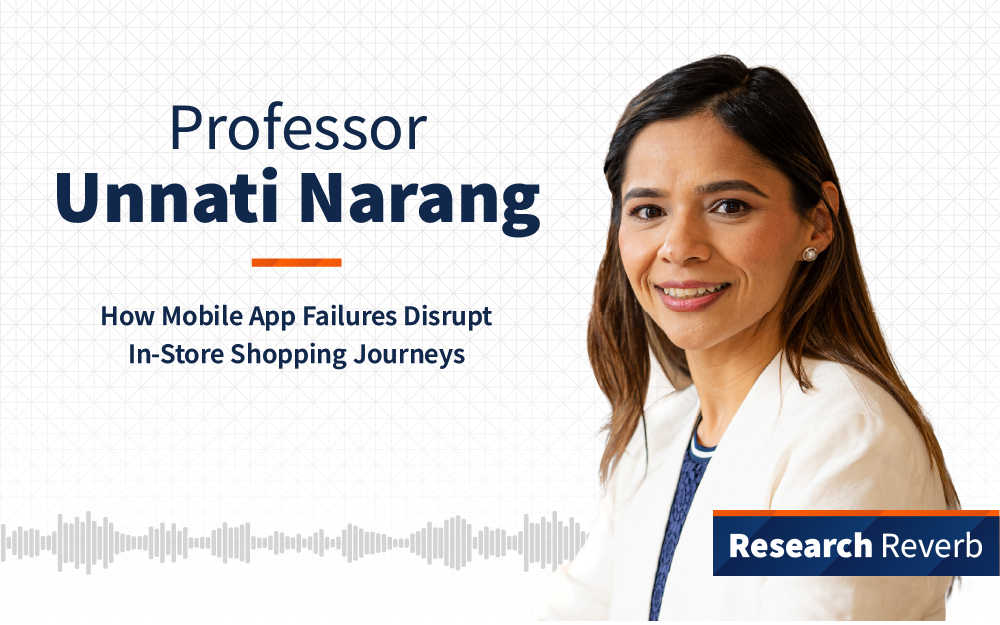
Unnati Narang is an Assistant Professor of Business Administration and John M. Jones Fellow of Marketing at the University of Illinois Urbana-Champaign's Gies College of Business. She also holds affiliations with the Deloitte Foundation Center for Business Analytics, the University of Illinois-Personalized Nutrition Initiative, and the Informatics Department. Her research focuses on mobile marketing, consumer mobility, and digital engagement, employing methods like causal modeling and machine learning. She has published in leading journals like Journal of Marketing Research and Marketing Science . Education: PhD in Marketing (Texas A&M University), Master of Commerce (Delhi School of Economics), Bachelor of Commerce (Shri Ram College of Commerce). Research Interests: Mobile Marketing, Service Marketing, Retailing, AI applications in education, and consumer mobility. Methodological strengths include econometrics and deep learning. Awards: 2023 Poets&Quants Professor of the Year, 2022 Excellence in Research Award, multiple Emerging Scholar recognitions, and the PITA Award for AI in education. Teaching: Courses include Marketing Analytics, Business Analytics, and MOOCs with over 60K enrollments. She founded the Marketing Analytics Group (MARG) at UIUC and mentors doctoral committees. Labs/Teams: Active in the Deloitte Analytics Center, UIUC’s Personalized Nutrition Initiative, and collaborates with global institutions like Rotman School of Management and INSEAD.
Sonika Singh is a Senior Lecturer at the University of Technology Sydney (UTS) Business School and serves as the Marketing Postgraduate Program Director. She holds a PhD in Management Science from the University of Texas at Dallas. Her research focuses on Digital Marketing, Marketing Analytics, and Retail Strategy, with emphasis on AI applications, consumer information search, and sustainability. She has been recognized with awards including the 2020 UTS Learning and Teaching Team Citation Award and Top Teaching List 2023. Education: PhD in Management Science (UT Dallas, 2012) Industry Experience: Market research roles at Sandvik Asia, Kirloskar Oil Engines, and Premier Automobiles Her research explores topics such as Google search advertising, social media marketing, and AI-driven recommendation systems. She has presented at international marketing conferences and published in journals like Journal of Retailing and Customer Needs and Solutions . Recent funded projects include examining geographic disparities in aged care access and evaluating domestic violence support programs. She actively engages in social impact initiatives, including volunteering for Survivor Vision Australia. Awards: UTS Teaching Citation (2020), Social Impact Grant (2023) In teaching, she combines industry insights with research expertise, delivering courses in Digital Marketing, Marketing Analytics, and Business Statistics. She supervises PhD students in areas like predictive analytics in fast fashion and social media brand analysis.
Professor David Macdonald CBE, FRSE is a leading academic in wildlife conservation, currently serving as the Professor of Wildlife Conservation at the University of Oxford and founding director of the Wildlife Conservation Research Unit (WildCRU). He holds a visiting professorship at Imperial College and chairs key committees including the Darwin Advisory Committee and Natural England’s Science Advisory Committee. His research integrates behavioral ecology with interdisciplinary approaches, addressing human-wildlife conflict through ecological, economic, and social science lenses. Notable areas include carnivore conservation (e.g., lions, tigers, and Ethiopian wolves) and the impacts of resource distribution on social structures. Awards include the CBE and FRSE. His work emphasizes policy-relevant science, leveraging long-term datasets and innovative tools like CARACAL acoustic monitoring. He advises on global conservation strategies, including responses to illegal wildlife trade and habitat loss. Education details are not explicitly stated, but his academic trajectory reflects advanced training in biological sciences. Research interests span from felid behavior to the socio-economic dimensions of conservation. Key collaborators include Earthwatch and the Wildfowl and Wetlands Trust. Students include Adjany Costa (Graduate Student). His contributions extend to policy via roles in advisory boards and advocacy for evidence-based conservation.
Professor Susan Jebb is a leading academic in diet and population health at the University of Oxford, holding dual roles as Professor of Diet and Population Health in the Nuffield Department of Primary Care Health Sciences and Senior Research Fellow at Jesus College. She chairs the Food Standards Agency and has held influential advisory roles including the UK Government’s Foresight Report on Obesity and Public Health England’s Obesity Review Group. Her research focuses on dietary interventions for obesity prevention, behavioral change strategies in primary care, and translating scientific evidence into public health policy. Education: BSc (University of Surrey, 1986) and PhD (University of Cambridge, 1990). Early career included roles at the MRC Dunn Nutrition Unit and MRC Human Nutrition Research before moving to Oxford in 2013. Research Interests: Behavioral interventions for weight management, policy impacts on dietary behavior, and obesity-related chronic diseases. Her group conducts randomized controlled trials to improve healthcare practices and public health strategies. Notable contributions include developing school food standards and shaping hospital food policies. Awards: Awarded OBE (2008) for services to public health. Teaching and Advising: Co-leads the nutrition module in the MSc in Global Health Sciences. Supervises DPhil students in primary care and population health. Leads large-scale trials such as the NHS Diabetes Remission Programme. Public Engagement: Active in media (e.g., BBC documentaries) and collaborates with public panels to co-design research studies.