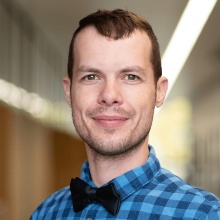
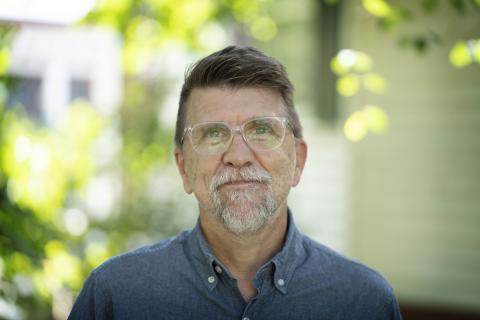
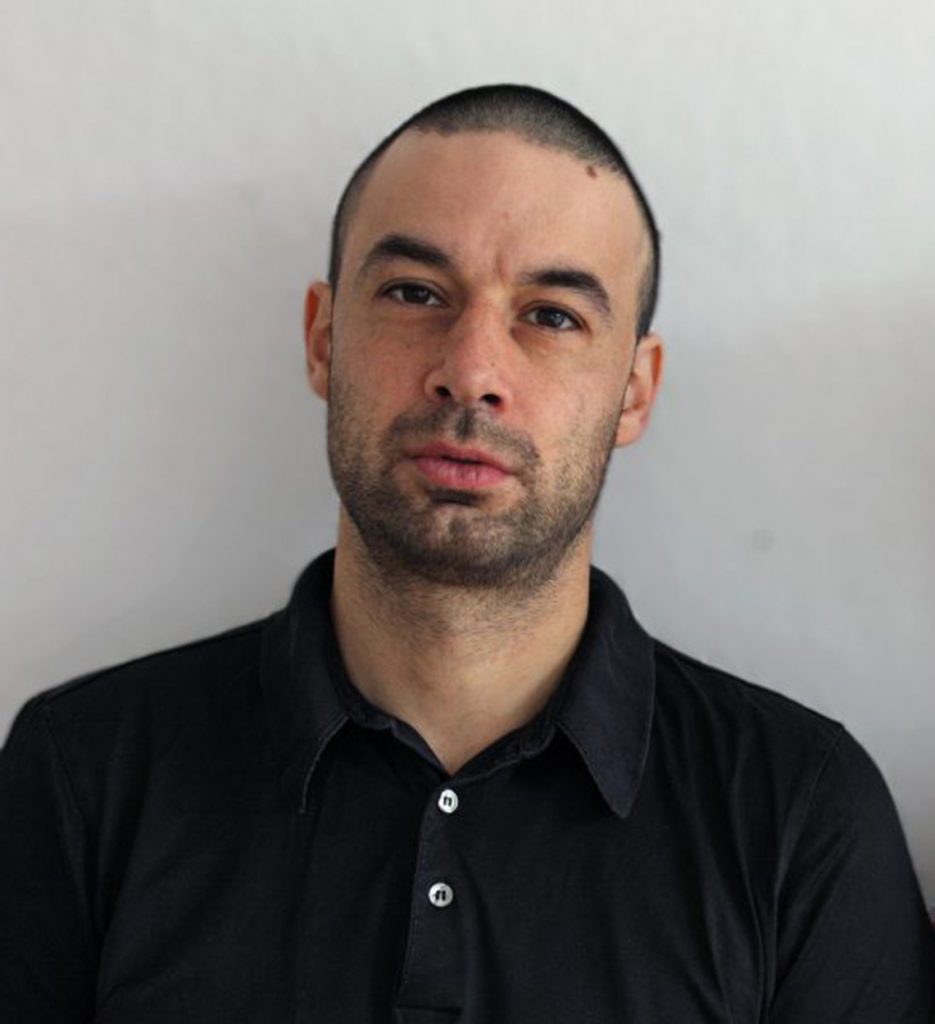
Prof Bert Vaux is a Professor of Phonology and Morphology at the University of Cambridge, affiliated with the Faculty of Modern and Medieval Languages and Linguistics and the Department of Theoretical and Applied Linguistics. He is based at King's College and focuses on phonology, morphology, and historical linguistics. Position: Professor of Phonology and Morphology College: King's College Education: BA, University of Chicago (1990) MA, Harvard University (1992) PhD, Harvard University (1994) Research Interests Prof Vaux investigates phonological and morphological structures, with a focus on psychophonology (language games, speech errors, writing systems), historical linguistics (sound change, Indo-European and Altaic languages), and sociolinguistics (dialectology, microvariation). He actively documents endangered languages like Armenian, Abkhaz, and English dialects. Teaching His teaching interests include phonology, morphology, historical linguistics, dialectology, and psycholinguistics, with a focus on theoretical and applied approaches. Supervision Kerri Butcher Chenming Gao
Greg Ogan is an Associate Professor in the Department of Music Production and Engineering at Berklee College of Music, a leading institution in contemporary music education. He is deeply involved in training the next generation of music producers and engineers, drawing from extensive industry experience. His educational background includes a Bachelor of Music in Music Production and Engineering from Berklee College of Music, which he earned in 2003. Greg Ogan's professional focus lies at the intersection of music creation and technology. His expertise spans music production, audio engineering, vocal production, mixing, and songwriting. He blends academic instruction with real-world application, emphasizing modern production techniques and collaborative music-making. While no peer-reviewed academic articles are listed, his creative output as a producer and songwriter reflects a continuous engagement with evolving trends in popular music, digital audio, and cross-media sound design. Specialist in production, writing, and mixing Co-founder of the music collective NEO NOIR Active contributor to film and television music projects Greg Ogan has mentored numerous emerging artists through his teaching and collaborative projects, though formal advisees are not listed. He has not received any scientific awards mentioned in the text. He is associated with the Music Production and Engineering faculty at Berklee, contributing to curriculum development and student mentorship. He co-founded the music collective NEO NOIR with producer Bradley Allan, an LA-based future music project that fosters artistic experimentation and collaboration with vocalists, independent of commercial artist constraints. The group has achieved significant streaming success and media exposure, including placements on MTV and in international advertising campaigns.
Filippo Occhino is an Associate Professor in the Department of Economics, Finance, and Quantitative Analysis at the Coles College of Business, Kennesaw State University. His research focuses on macroeconomics and financial stability, particularly examining monetary and fiscal policy, financial distortions, and debt overhang crises. His research interests include: Macroeconomic effects of monetary and fiscal policy Financial stability and systemic risk Debt overhang and banking crises Segmented financial markets Corporate taxation and investment Policy evaluation using dynamic models Occhino's recent publications span top journals in economics, with a strong emphasis on policy-relevant macroeconomic modeling. His work analyzes the impact of major events such as the 2017 U.S. tax reform, the Eurozone crisis, and the COVID-19 pandemic. He frequently employs quantitative models and empirical methods to assess the effectiveness of central bank and fiscal interventions. A recurring theme is the interaction between financial frictions and macroeconomic outcomes. His scientific contributions include commentaries for the Federal Reserve Bank of Cleveland and the Bagwell Center, where he analyzes current economic challenges such as the flattening Phillips curve, Basel III capital buffers, and household balance sheets. These policy-oriented writings reflect his commitment to bridging academic research with real-world economic decision-making. Occhino has collaborated with prominent economists such as Andrea Pescatori, Margaret Jacobson, and Eugene White. While no formal advisees are listed, his sustained research output and institutional affiliations indicate active academic engagement. He is affiliated with the Bagwell Center for the Study of Markets and Economic Opportunity, contributing to its mission of promoting market-based economic understanding.
Nikunj Kapadia is the Associate Dean of Graduate Programs and Professor of Finance at the Isenberg School of Management, University of Massachusetts Amherst. He holds a PhD in Finance from New York University (2005), and has held academic positions at UMass Amherst since 1996, progressing from Assistant Professor (1996-2003) to Associate Professor (2003-2013) before achieving his current rank. His professional experience includes a directorship at Aurionpro Solutions Ltd (2005-2014) and a visiting researcher role at the U.S. Treasury's Office of Financial Research (2012). Education includes a Post-graduate Diploma in Management (IIM Bangalore, 1986) and a BE in Chemical Engineering (Maharaja Sayajirao University, 1984). His research focuses on option pricing, volatility modeling, credit risk, and default risk correlations. Notable contributions include work on correlated default risk (Journal of Finance, 2007) and volatility risk pricing (2015). Research interests span theoretical and applied finance, with emphasis on derivatives markets, systemic risk, and financial engineering. Recent articles address issues like option liquidity disruptions (2019), credit rating biases (2013), and blockchain-based financial security mechanisms (2017). His work demonstrates interdisciplinary innovation at the intersection of traditional finance and emerging technologies. Recipient of the 2012 College Researcher of the Year Award and 2008 Outstanding Teaching Award, he teaches doctoral seminars on options and undergraduate courses in financial modeling, international finance, and financial engineering. Active in both academia and industry, his career reflects a commitment to advancing financial theory while addressing real-world market challenges.
Fabian Bross is a Researcher affiliated with the University of Stuttgart's Institute of Linguistics, specifically within the Department of Linguistics/German Studies (ILG). His primary research focuses on sign languages, syntax, and cognitive linguistics, with particular attention to topics like iconicity in sign languages, syntactic negation structures, and gender-neutral language practices. He has authored or co-authored numerous publications in leading journals such as Sign Language & Linguistics , Glossa , and Sprachreport , exploring areas including German Sign Language syntax, sociolinguistic perceptions of gendered language forms, and lexical change in sign languages. His work often bridges formal syntactic analysis with cognitive and sociolinguistic perspectives. Notable contributions include a book on the clausal syntax of German Sign Language (2020) and influential studies on the typological and cognitive foundations of linguistic structures. His research frequently employs empirical methods, combining experimental syntax with corpus-based analyses.
Dr. Aldeniz Enverov Rashidov is an Associate Professor at the Technical University of Gabrovo , affiliated with the Faculty of Electrical Engineering and Electronics and the Department of Automation, Information and Control Systems . With a Ph.D. in Industrial Information Systems (2006), he has led the Information Support Sector since 2005 and directed the Center for E-Learning and Distance Education since 2012. Education: M.Sc. in Systems and Management (1996), Ph.D. in Industrial Information Systems (2006) Research interests: AI applications in education, intelligent databases, e-voting systems, web-based information architectures, and industrial cybersecurity His recent 15 publications focus on AI-driven manuscript review algorithms, e-voting security frameworks, and ChatGPT-assisted research methodologies. Notable achievements include IEEE Senior Membership (2024) and developing the UMIS 1.0 university management system. Scientific Awards Senior Member, IEEE Computer Society (2024) Senior Member, IEEE Robotics & Automation Society (2024) He has led 9 internal TU-Gabrovo projects on AI applications and contributed to international collaborations like MechMate (2016-2017). His work emphasizes system intelligence evaluation methodologies and hybrid data structuring models.
Christopher Higgs is an Associate Professor in the Department of English at California State University, Northridge (CSUN), teaching courses including Narrative Writing, New Forms Horror, Theories of Fiction, and a Seminar in Narrative Writing. His educational background includes: Ph.D. in Post-1900 American Literature & Culture, Florida State University, 2014 M.F.A. in Fiction Writing, The Ohio State University, 2009 M.A. in English, University of Nebraska Lincoln, 2006 B.A. in Film Production & Screenwriting, University of Nevada Las Vegas, 2002 His research centers on avant-garde literary history, experimental cross-disciplinary practices, and narrative innovation, with explicit focus on modernism, postmodernism, and critical theory. His creative-scholarly output features the constraint-based memoir As I Stand Living , novels The Complete Works of Marvin K. Mooney and ONE (co-authored with Blake Butler and Vanessa Place), and prose chapbooks like Becoming Monster . Shorter works appear in AGNI , The Paris Review , and BOMB , consistently prioritizing genre-blurring experimentation.
Katharina Weiland is a Researcher at the Institute of Rehabilitation Sciences , Humboldt University of Berlin, within the Faculty of Humanities, Social Sciences and Education . Her work bridges rehabilitation psychology, language pedagogy, and educational technology. 2001-2007: First State Examination in Special Education/German Teaching 2010-2017: Doctoral studies in Rehabilitation Sciences Research focuses on language and communication impairments , digital participation , and diagnostic methods for reading/spelling disorders, with empirical work spanning: Eye movement analysis in literacy acquisition Geographical disparities in educational outcomes Augmentative communication strategies Vocational training optimization Her recent publications analyze digital literacy support , refugee student integration , and stress experience in adolescents . She provides statistical consultation and coordinates research in the Interdisciplinary Competence Center for Rehabilitation Sciences .
E. Shelley Reid is a Professor in the Department of English at George Mason University, where she serves as Executive Director of Engaged Teaching at the Stearns Center for Teaching and Learning. She has previously taught at Oklahoma State University, Austin College, and the University of Wyoming. Education: BA from Grinnell College, MA and PhD from State University of New York at Buffalo. Her research focuses on knowledge transfer in learning, institutional influences on teaching, and faculty development. She advocates for reflective pedagogy and inclusive education practices, particularly in composition and writing program administration. Her recent publications emphasize curriculum assessment, peer review pedagogy, and teacher preparation. She co-authored a forthcoming chapter on visual self-study in Teaching, Learning, and Enacting Self-study Research (Springer, 2024) and has explored connections between instructor education and teaching approaches in numerous peer-reviewed journals. Scientific Awards: Kenneth Bruffee Award for Best Article in WPA: Writing Program Administration , 2012-2013. She has supervised dissertations on topics like reflective graduate teaching practices, disciplinary literacy models, and learning disabilities in college writing. Her presentations address anti-racist pedagogy, scalable teaching systems, and assessment frameworks.
Stephen Parks is a Professor at Syracuse University specializing in Composition and Rhetoric. He serves as Faculty Fellow for the Middle East/South Asian Track in the Global Studies Program, with office located at Dawson's Row 1-203. His scholarly work bridges academic research with community engagement, exploring how university resources can align with community-defined needs. His research trajectory began with examining the history of the "Students Right To Their Own Language" movement, leading to investigations of community-university relationships. Parks founded New City Community Press in Philadelphia, inspired by UK-based worker writing initiatives, and has developed international collaborations examining working class identity. Parks' scholarship demonstrates consistent focus on writing as a tool for social justice, examining the relationship between academic discourse and community literacy practices. His work explores how service-learning and community partnerships provide models for understanding political and social movement rhetoric in global contexts. Among his significant human rights contributions are co-founding Syrians for Truth and Justice (documenting human rights abuses in Syria) and co-directing The Twiza Project fostering US-MENA dialogues about democracy. His editorial work as Editor of Studies in Writing and Rhetoric reflects commitment to expanding publishing frameworks that support structural intellectual changes. Co-Founder, Syrians for Truth and Justice Founder, New City Community Press Editor, Studies in Writing and Rhetoric Co-Director, The Twiza Project As an educator, Parks advocates for multi-partner community projects that teach coalition-building for social change. He designs classroom experiences where student work is distributed among partners, creating resilient projects that continue even when individual partners face challenges. His teaching philosophy centers on creating spaces where all participants' experiences are valued equally.
Dr. Lin Chen is an Assistant Professor in the Department of Educational Psychology at the University of Illinois, Urbana-Champaign, with additional appointments at the Beckman Institute for Advanced Science and Technology and the Department of Linguistics. She directs the interdisciplinary Language, Brain, and Technology Lab, focusing on understanding the cognitive and neural mechanisms underlying first and second language processes and their roles in knowledge learning. Her research program centers on cognitive neuroscience of language, psycholinguistics, and applications of AI language models in reading, with particular emphasis on Chinese language processing. Dr. Chen employs diverse methodologies including behavioral studies, eye-tracking, ERPs, co-registration of eye-tracking and EEG, and generative AI language models in conjunction with immersive technologies. Her groundbreaking Character-Word Dual Function model has significantly advanced understanding of how orthographic and semantic processes interact in reading Chinese compounds, with important implications for teaching Chinese as a second language. Analysis of her recent publications reveals a consistent focus on Chinese language processing, particularly examining the dual role of characters and words in reading. Her work demonstrates how understanding writing system structure enhances language learning approaches, with significant contributions to both theoretical models of reading and practical applications for language instruction. Her research bridges educational psychology, cognitive science, and neuroscience to develop evidence-based approaches to language education. Dr. Chen actively mentors graduate students and is recruiting PhD students for the 2025-2026 academic year. She teaches courses including Eye Tracking in Reading Research (EPSY590), Language, Brain, and Technology (EPSY590), Cognitive Psychology Research Method (EPSY590), Child Language and Education (EPSY 401), and Learning from Text (EPSY 427). The Language, Brain, and Technology Lab, supported by the U.S. National Science Foundation, represents a cutting-edge research environment where cognitive science, neuroscience, and educational technology converge to address fundamental questions about language processing and learning.
George D Konidaris serves as Associate Professor of Computer Science at Brown University, where his research bridges artificial intelligence, machine learning, and robotics with emphasis on autonomous decision-making systems. His work focuses on developing algorithms that enable robots and AI agents to learn hierarchical structures, discover reusable skills, and operate effectively in complex environments. Education: 2010: PhD, University of Massachusetts, Amherst 2003: MS, University of Edinburgh 2001: BS, University of the Witwatersrand 2000: BS, University of the Witwatersrand His research spans reinforcement learning , robotic motion planning , and hierarchical abstraction , with significant contributions to skill discovery, temporal abstraction, and model-based methods. Current work integrates visuo-haptic perception for manipulation tasks and explores language-guided robotics using large language models. His approach emphasizes creating systems that learn compact world representations for efficient long-horizon planning in partially observable environments. Analysis of his 2025 publications reveals strong trends in model-based reinforcement learning with focus on memory mechanisms, uncertainty quantification, and hierarchical skill composition. Key themes include temporal abstraction for planning efficiency, visuo-haptic fusion for robotic manipulation, and language grounding for task specification. His work increasingly connects cognitive science concepts like theory of mind with AI capabilities. Teaching responsibilities include CSCI 1410 (Artificial Intelligence) and CSCI 2951X (Reintegrating AI), where he bridges theoretical foundations with practical robotics applications.
Mark Garrett Longaker is Chair of Rhetoric and Writing and Professor of Rhetoric and Writing, English, Communication Studies, and European Studies at the University of Texas at Austin's College of Liberal Arts. He holds a Ph.D. from Pennsylvania State University and emphasizes teaching as his primary identity, with undergraduate courses in first-year writing, rhetorical analysis, and history of rhetoric, alongside graduate seminars in public address and historical rhetoric. His research spans: Historical rhetoric (17th–19th century Western Europe, Britain, and America) Archival research and institutional history of rhetoric education Critical university studies , examining higher education structures Digital humanities projects like Goldwater '64 (Barry Goldwater speech archive), RhetCompUTX (UT Austin writing instruction history), and The Parlor podcast Longaker's publications focus on rhetoric's intersection with economics, politics, and institutional critique, often analyzing historical figures (Locke, Malthus) and modern academic challenges. His work consistently employs rhetorical theory to dissect economic debates, educational policies, and archival practices. He directs digital initiatives preserving rhetorical history and mentors through project-based learning but has no listed advisees or awards.
Margaret Shippen is a Professor in the Department of Special Education, Rehabilitation, and Counseling at Auburn University's College of Education, with over 30 years of combined experience in public school classrooms and higher education. Her work critically addresses systemic inequities at the intersection of special education and criminal justice, focusing on vulnerable populations affected by the school-to-prison pipeline and incarcerated individuals with disabilities. Dr. Shippen's research centers on career assessment for incarcerated adults with disabilities and mental health challenges, alongside evidence-based literacy interventions tailored for correctional settings. She investigates Prison Rape Elimination Act implementation, transition planning for reentry, and teacher professional development in juvenile justice education. Her scholarship combines quantitative analysis of educational outcomes with qualitative insights from incarcerated populations to develop practical rehabilitation frameworks. Analysis of her 75+ publications reveals consistent focus on correctional education across literacy development, career counseling, and mental health service delivery. Her work employs mixed-methods approaches to evaluate interventions for incarcerated youth and adults, emphasizing adaptations of cognitive theory and evidence-based practices within correctional constraints. Key trends include validating assessment tools like the Career Thoughts Inventory and examining generational differences in vocational rehabilitation. Dr. Shippen has received Auburn University's Excellence in Undergraduate Teaching and Excellence in Outreach awards for her impactful contributions. Excellence in Undergraduate Teaching Excellence in Outreach She has mentored countless undergraduate and graduate students while securing over $2 million in external grant funding with colleagues. Her funded projects develop professional development models for juvenile justice teachers and evidence-based interventions targeting recidivism reduction through improved educational access. Current initiatives focus on translating research into classroom-ready strategies for educators working in correctional facilities.
Georg Rafailidis is Associate Professor of Architectural Design at University at Buffalo (State University of New York), with a scheduled Spring 2023 Visiting Professorship at Ioannina's CRISIS Research Lab. Previously, he worked at Herzog & de Meuron and co-founded architectural practice DAVIDSON RAFAILIDIS. His academic foundation includes: Physics studies prior to architecture Diploma from Munich University of Applied Sciences Postgraduate work at London's Architectural Association School of Architecture Rafailidis' research investigates the dynamic divergence between architectural design intentions and evolving built realities. His methodology documents how buildings transform through unpredictable life cycles, producing both realized shoestring-budget projects and documentary studies (drawings, photographs, writings). This work champions 'space for all' through austerity-driven design, treating each project as a case study in affordable architecture. His approach bridges theoretical frameworks with empirical observation of built environments. His seminal 2017 monograph 'Processes of Creating Space: An Architectural Design Workbook' exemplifies his focus on design evolution and spatial documentation. This publication establishes his contribution to architectural pedagogy by translating complex building transformations into accessible educational tools, revealing patterns in how design intentions adapt to real-world constraints and occupant behaviors. No scientific awards are documented in source materials. As Associate Professor, he mentors students through design studios while conducting practice-based research. His firm DAVIDSON RAFAILIDIS serves as an active research platform, offering students opportunities to engage with real-world projects exploring affordable housing solutions and building documentation methodologies under resource constraints. DAVIDSON RAFAILIDIS operates as his primary research vehicle, functioning as a hybrid academic-practice entity. The firm's motto 'space for all' drives investigations into democratic spatial solutions, with projects intentionally realized on minimal budgets to develop scalable models for accessible architecture. Their documentary outputs constitute a significant research archive analyzing building life cycles beyond initial design phases.