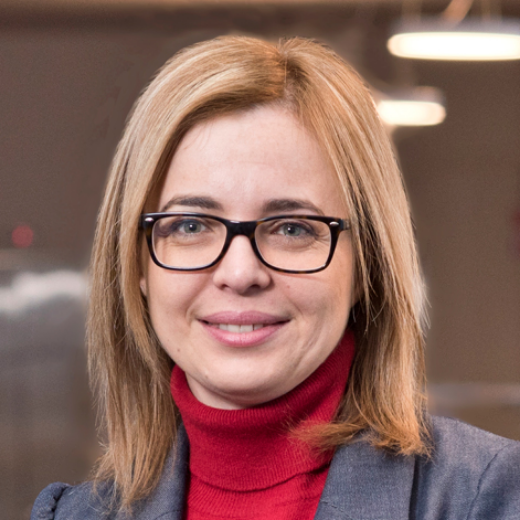
Prof. Rianne Jacobs holds the Endowed Professorships in Constitutional and Administrative Law and Public Contract Law at the Vrije Universiteit Amsterdam's Faculty of Law. She is also a Kooijmans Institute Endowed Professor. Her roles include authoring legal texts for Wolters Kluwer, serving as a guest lecturer at the Academy for Legislation, and acting as a judge at the College van Beroep voor het bedrijfsleven. Her research focuses on administrative law, legislation quality, regulatory frameworks, and experimental law. Research interests span administrative law, public contract law, and regulatory theory, with emphasis on subsidy law and legislative drafting. Her recent work includes studies on competitive tendering and experimental legal frameworks. She actively contributes to legal education and policy through ancillary roles in publishing and academic committees. Prof. Jacobs has examined PhD theses on topics ranging from citizen initiatives to art funding, reflecting her engagement with public governance challenges. She organized conferences on subsidy law and has authored books and chapters on legislative quality and administrative procedures.
Peter J. Spiro is the Charles Weiner Chair in International Law at Temple University Beasley School of Law, where he has been a faculty member since 2006. Previously, he served as Rusk Professor of Law at the University of Georgia Law School. Professor Spiro holds a B.A. from Harvard College and a J.D. from the University of Virginia School of Law. His distinguished career includes a clerkship with Justice David H. Souter of the U.S. Supreme Court (1990-91), work as an attorney-adviser in the U.S. Department of State's Office of the Legal Adviser, and service on the staff of the National Security Council. Professor Spiro's research focuses on international law, immigration law, constitutional law, and citizenship studies, with particular expertise in dual citizenship, globalization's impact on legal frameworks, and migration policy. His work examines how traditional notions of state sovereignty and citizenship are evolving in the globalized world. He has authored influential books including Citizenship: What Everyone Needs to Know (Oxford University Press 2019), At Home in Two Countries: The Past and Future of Dual Citizenship (NYU Press 2016), and Beyond Citizenship: American Identity After Globalization (Oxford University Press 2008). Analysis of his recent scholarly output reveals a consistent focus on the evolving nature of citizenship in the 21st century, with increasing attention to investment migration, Olympic nationality issues, and the impact of global pandemics on citizenship frameworks. His work demonstrates a progression from theoretical examinations of citizenship to more applied analyses of contemporary migration challenges and policy implications. Professor Spiro has received significant recognition for his scholarship, including being ranked in the top 25 nationally among international law scholars based on academic citation frequency in both 2007 and 2016 surveys. He was a Robert Schuman Fellow at the European University Institute in Florence during spring 2016. Professor Spiro has held numerous leadership positions including Co-founder and Co-Chair of the Migration Law Interest Group of the American Society of International Law (2015-present), Member of the Investment Migration Council (2014-present), and Editorial Advisory Board member for the Citizenship and Migration in the Americas series at NYU Press (2010-present). He previously chaired the AALS Section on Immigration Law (2006-07) and served on the U.S. Department of State's Historical Advisory Committee (2008-12). Professor Spiro has held visiting appointments at Boston University Law School (fall 2018), the University of Texas, the Australian National University, the WZB Berlin Social Science Center, and Sungkyunkwan University. He has also been affiliated with prestigious institutions including the European University Institute, the Council on Foreign Relations, and the Open Society Institute.
Ramona-Delia Popescu is an Associate Professor at the University of Bucharest's Faculty of Law, affiliated with the Public Law Department. She holds a PhD and specializes in constitutional law, judicial reform, and human rights. Her email is ramona-delia.popescu@drept.unibuc.ro . Her research focuses on constitutional developments, including gender identity jurisprudence, emergency institutional frameworks, and legislative processes. She analyzes Romania's judicial independence challenges, surveillance legality, and public office tenure issues through a constitutional lens. Recent work includes studies on pandemic-related legal responses and comparative constitutional practices. Her publications highlight themes such as the Romanian Constitutional Court's role during emergencies, gender identity legal recognition, and pension reforms affecting judicial independence. She contributes to debates on legislative formalism, electoral governance, and bilingual legal education opportunities in Romania. Popescu is involved in academic activities like the Bucharest Pre-Moot competitions and the British Law Center's recruitment initiatives. Her work intersects with the Faculty’s research centers, including the Centre for Constitutional Law and Political Institutions, and the Centre for Studies in International Commercial Arbitration.
Vassilios Skouris has been Professor at the Faculty of Law of Aristoteleio University of Thessaloniki since 1982, specializing in European Union Law, Constitutional Law, and Administrative Law. He previously held professorships at Dimokriteio University of Thrace (1977-1980) and Bielefeld University (1980-1982), and was Assistant Professor at the University of Hamburg (1978). Education includes: Law degree from Free University Berlin (1965-1970) Post-graduate studies at University of Hamburg (1970-1972) Doctor of Law (1973) His research focuses on European legal integration, comparative constitutional frameworks, and administrative justice systems, with particular expertise in German-Greek legal harmonization and EU institutional law. Publications primarily analyze constitutional dimensions of European law, including fundamental rights protection after the Lisbon Treaty, competition law principles, and administrative justice mechanisms across European jurisdictions. Honors include: 11 honorary doctorates from European universities State distinctions from 6 governments Commander of French Légion d'honneur Corresponding member of Academy of Athens Significant non-academic roles: President, Court of Justice of the European Union (2003-2015) Judge, Court of Justice of European Communities (1999-2015) Greek Minister for Internal Affairs (1989, 1996 elections) Director, Centre for International and European Economic Law
Miriam Seifter is the Richard E. Johnson Bascom Professor of Law and Co-Director of the State Democracy Research Initiative (SDRI) at the University of Wisconsin Law School. She specializes in administrative law, federalism, and state constitutional law. Her research focuses on challenges to state-level democracy, including agency independence and election integrity. She holds a B.A. from Yale, an M.Sc. from Oxford, and a J.D. from Harvard, where she was an Environmental Fellow and Articles Editor for the Harvard Law Review . Before joining UW, she clerked for Justice Ruth Bader Ginsburg and Chief Judge Merrick Garland, and served as a Visiting Researcher at Georgetown Law. Professor Seifter’s awards include the 2024 Ruth Bader Ginsburg Scholar Award and the ABA’s 2020 Administrative Law Scholarship Prize. She co-authored State Constitutional Law: Cases and Principles (2025) and frequently publishes in top journals like the Harvard Law Review and Michigan Law Review . The SDRI, launched with Robert Yablon, focuses on state-level democracy, producing research, amicus briefs, and public education initiatives. Her teaching spans Administrative Law, Property Law, and State & Local Government Law. Students honored her twice with the Classroom Teacher of the Year Award (2017, 2022). She actively engages in public discourse, commenting on state constitutional issues in media outlets like The New Yorker and Wisconsin Public Radio.
Monica Rosini is a tenured Associate Professor in Public Law and Law of Regions and Autonomies at the Free University of Bozen-Bolzano , affiliated with the Faculty of Economics and Management . Her work focuses on constitutional frameworks for regional autonomy, minority rights, and EU law implementation. Teaches courses on Law of Regions and Autonomies Specializes in Italian regional governance and EU integration Her research explores: Autonomy statutes and constitutional harmony EU law adaptation in special regions Linguistic minority protections Electoral systems and political representation Financial autonomy mechanisms Recent publications analyze: Post-Cartabia judicial reforms Linguistic education policies EU economic constitution evolution Regional implementation challenges South Tyrol autonomy dynamics Legal frameworks for migrant integration
Gabriela-Nicoleta CHIHAIA is a Lecturer at the Department of Law, Faculty of Law of the Transilvania University of Brașov. Her research focuses on criminal procedural law, criminal law execution, and legal protections of human rights within the EU framework. She has actively published in peer-reviewed journals such as the Bulletin of the Transilvania University of Brașov. Series VII: Social Sciences. Law and presented at conferences like the annual 'Current Issues within EU and EU Member States Legal Framework.' Her work addresses critical issues like the European Arrest Warrant mechanism, juvenile justice reforms, and prison conditions compliance with ECtHR standards. She explores legal transposition challenges in Romania, emphasizing alignment with EU directives on criminal justice systems. Recent publications analyze the scope of the witness's right to silence, fair trial principles in administrative-judicial procedures, and victim protection frameworks. Her interdisciplinary approach bridges national legal practices with European human rights standards, contributing to ongoing debates in penal law enforcement and judicial system modernization. No scientific awards or advising roles are explicitly listed in her profile, though her extensive publication record reflects scholarly engagement with contemporary legal challenges. She maintains an active presence in academic conferences and contributes to legal scholarship through rigorous analysis of case law and legislative reforms.
Peter O'Meara is a Professor at Marquette University Law School, where he contributes to the Faculty Blog. His work focuses on immigration law, legal ethics, and practical legal issues in Wisconsin's legal system. Affiliation: Marquette University Law School Academic Role: Professor His research interests include prosecutorial discretion in immigration enforcement, unauthorized practice of law, and the role of mentorship in legal education. Blog posts highlight his analysis of policy guidelines (e.g., the Morton Memo) and ethical frameworks for legal professionals. While Peter has not published recent articles in the provided data, his 2011 contributions reflect a focus on civil immigration enforcement, regulatory compliance, and professional development. He occasionally draws connections between broader legal principles and state-specific issues, such as Wisconsin’s licensing penalties.
Lorena Gabriela NIȚOIU is a Lecturer in the Department of Law at the Faculty of Law , Transilvania University of Brașov, Romania. Her academic work bridges constitutional litigation, human rights protection, and European Union legal frameworks. Research Focus: Constitutional Law, European Business Law, Human Rights Enforcement, and Single Market Regulations. Her publications analyze intersections between the European Court of Human Rights (ECHR) jurisprudence and Romanian constitutional law. Recent works explore cyber violence legal responses, criminal law constitutionalization, and administrative sanctions reform. She has presented at international conferences including ISCAH 2024 and Justice and Community Integration (2009).
Lenaye Harris is an Adjunct Lecturer in the Economics and Finance Department at the Jon M. Huntsman School of Business, Utah State University (USU). She has been affiliated with the institution since 2013, following the completion of her M.S. in Financial Economics from USU. Her teaching focuses on introductory and senior-level courses, emphasizing student mastery of complex concepts and quantitative skills. Education M.S., Financial Economics, Utah State University, 2013 B.A., History, Utah State University, 2008 B.A., Law and Constitutional Studies, Utah State University, 2008 Minor in Mathematics Research Interests : While no explicit research areas are detailed, her academic background suggests focus areas in financial economics, quantitative methods, and interdisciplinary applications of mathematics and legal principles in economic analysis. Teaching & Advising : No formal student advisees are listed, but she has extensive experience teaching across levels. No grants or lab affiliations are mentioned.
Ivone Moreira is an Assistant Professor at the Institute for Political Studies (IEP) of Universidade Católica Portuguesa, where she coordinates the Master’s program in Political Science and International Relations. She holds a PhD in Modern Philosophy from the same institution and specializes in Political Philosophy, Modern Philosophy, and Portuguese Philosophy, with a focus on the Tradition of the Great Books. Her research emphasizes Edmund Burke’s political thought, comparative analysis of Enlightenment thinkers like Rousseau and Paine, and the interplay between natural law and conservative principles. Dr. Moreira’s academic affiliations include membership in the Research Centre of the Institute for Political Studies and the Centre for Philosophy Studies. She teaches modules such as History of Political Thought II and Tradition of the Great Books VI. Her publications span over two decades, with key works including A Filosofia Política de Edmund Burke (2019) and articles analyzing Burke’s critiques of utopia, elitist political representation, and the legacy of the French Revolution. Her scholarly contributions bridge European intellectual history, political theory, and textual analysis of foundational texts. Recent work explores Burke’s engagement with David Hume, the rights discourse in Magna Carta contexts, and Luso-Brazilian philosophical traditions. She actively participates in international scholarly networks and contributes to Portuguese academic debates on classical political thought.
Susanne Baer is a Professor of Public Law and Gender Studies at Humboldt University Berlin and serves as Justice of the Federal Constitutional Court in Germany since 2011. She holds additional appointments as James W. Cook Global Law Professor at the University of Michigan Law School. Her career includes advisory roles for the German federal government on gender mainstreaming and establishing equality standards in research. Her research focuses on constitutional law, gender studies, and human rights, examining intersections of law with social justice and equality. Her scholarly work explores foundational legal principles and their applications in contemporary governance. Key recognitions include an honorary doctorate from the University of Michigan and fellowship in the British Academy. At Humboldt University, she founded the Law and Society Institute Berlin and the Humboldt Law Clinic in Fundamental and Human Rights.
Joan David Janer Torrens is a Full Professor of Public International Law at the University of the Balearic Islands (UIB) and holds the Jean Monnet Chair in EU Law (2006-2010). He earned a Bachelor's in Law with extraordinary honors (1995), a PhD in Law (2000), and an LLM in EU Law from the College of Europe (1996). His affiliations include the Department of Public Law at UIB, where he served as Director (2016-2023) and currently coordinates Law Studies and Internationalization Centers since 2025. Licenciado en Derecho (1995) PhD in Law (2000) LLM in EU Law (1996) His research focuses on Public International Law, European Union Law, Territorial Conflicts, Human Rights Protection, and EU Cohesion Policy. He has conducted extensive work on the intersection of international and internal law, particularly in areas such as EU real estate restrictions, Mediterranean island policies, and human rights in conflict zones. Recent publications analyze EU housing policies in island regions, the compatibility of real estate restrictions with EU law, and mechanisms for promoting international law compliance. His work spans legal frameworks for humanitarian aid, trade policy instruments, and the impact of EU policies on insular territories. Scientific Awards Jean Monnet Chair in EU Law (2006-2010) Essay Prize from the Japanese Government (1999) As a thesis director (Doctorado en Derecho, 2025-26), he contributes to academic mentorship. He evaluates research projects for AGAUR, the Spanish Research Agency, and the La Caixa Foundation. His outreach includes roles as Deputy Editor of the Electronic Journal of International Studies (2023) and Erasmus Mobility Tutor with 15 European partners.
Victor Romero is an Associate Dean and Professor of Law at Penn State Law (University Park), specializing in immigration law, constitutional law, and critical race theory. His research examines the legal and cultural boundaries impacting marginalized groups, particularly noncitizens, and analyzes Supreme Court decisions through post-Brown v. Board of Education equality frameworks. Romero’s interdisciplinary work integrates history, social psychology, criminal justice, and religious ethics to explore issues like immigrant rights, racial discrimination, and policy reform. His research interests emphasize the intersection of law and marginalized communities, including topics such as binational same-sex marriages, Fourth Amendment rights for undocumented migrants, and the plenary power doctrine. He critiques policies that exclude noncitizens from constitutional protections and advocates for equitable immigration reforms grounded in moral and ethical principles. Recent publications highlight themes like Asian American allyship, bipartisan immigration reform challenges, and the racial dimensions of criminal justice. Romero’s work often bridges legal scholarship with practical advocacy, aiming to inform both academic discourse and public policy. Despite no listed scientific awards, his extensive contributions to legal education and policy analysis have solidified his role as a thought leader in immigration law. His academic leadership extends to executive roles in academic governance, reflecting his commitment to institutional equity and scholarly rigor.
Prof. Dr. Andreas Eicker is a Professor of Criminal Law, Criminal Procedure Law, International Criminal Law, and Criminology at the University of Lucerne's Faculty of Law. He served as Dean of the Faculty from August 2019 to July 2022. His academic career began at the University of Bremen, followed by a doctorate on transborder criminal prosecution at the University of St. Gallen and a post-doctoral thesis on the proceduralisation of criminal law at the University of Berne. His research focuses on European legal frameworks, international criminal law, and criminology. Before joining Lucerne, Eicker held roles as an assistant professor at the Institute of Criminal Law and Criminology (ISK) in Berne and a lecturer at the School of Criminology, International Criminal Law, and Psychology of Law (SCIP). He also practiced law as a junior lawyer in Oldenburg’s Public Prosecutor’s Office and District Court, and contributed to the German Federal Constitutional Court and the German Embassy in Turkey. His work on prison life realities earned recognition from the Körber Foundation. His expertise spans theoretical and applied dimensions of criminal law, reflecting a commitment to interdisciplinary legal studies.