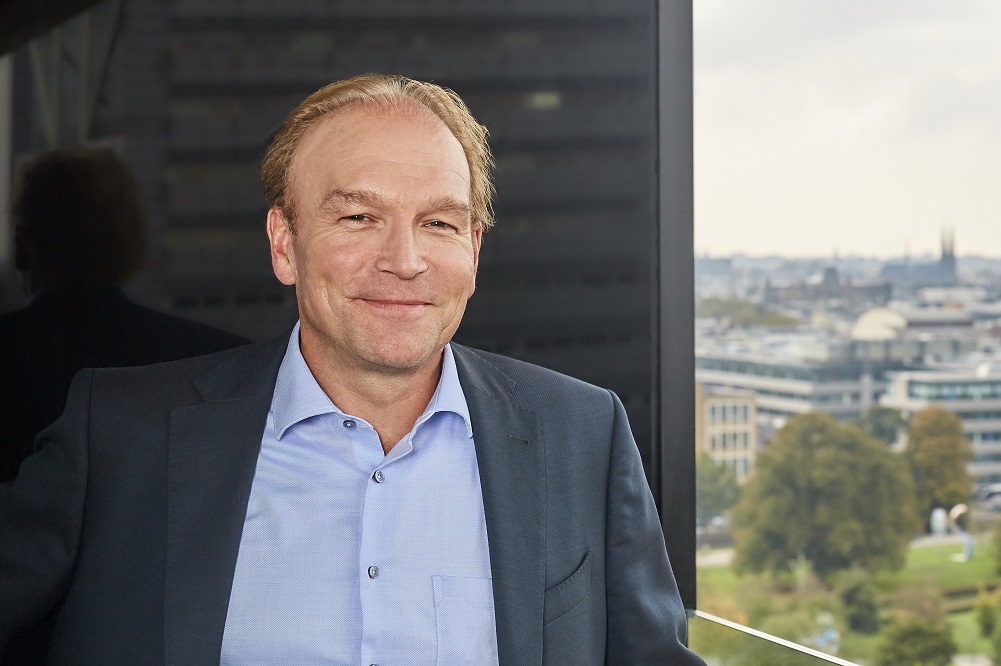
Patrick Overeem is an Associate Professor at the Faculty of Social Sciences and Humanities (Vrije Universiteit Amsterdam), specializing in Political Science and Public Administration. He holds a PhD from Leiden University (2010) and advanced degrees in Public Administration and Political Science from the same institution. His research focuses on democratic theory, value pluralism, statesmanship, and EU governance. He is affiliated with the Multi-layered Governance (MLG) research group and serves on editorial boards, including the American Review of Public Administration . Overeem's work emphasizes ethical leadership, compromise in politics, and the interplay between democracy and pluralism. Key contributions include his 2012 book on the politics-administration dichotomy and his neo-Aristotelian analyses of political virtue. He has led projects like the EU-funded RECONNECT initiative (2018–2022), exploring democratic reconciliation in Europe. He advises Dutch parliamentary integrity committees and contributes to public debates on ethics and governance through media engagements. His research bridges classical political theory with contemporary challenges, addressing topics like postliberalism, moral dilemmas in governance, and constitutional frameworks. Overeem teaches courses on political theory, democratic systems, and the history of political thought, fostering critical engagement with ethical and institutional dimensions of power.
Sergio Carrera serves as Senior Research Fellow and Head of the Justice and Home Affairs Unit at the Centre for European Policy Studies (CEPS), a prominent Brussels-based think tank. Additionally, he holds the position of Adjunct Professor at the Paris School of International Affairs (PSIA) in SciencesPo, France, where he contributes to academic teaching and research in international affairs. Dr. Carrera's academic background includes a Ph.D. on immigration and citizenship from Maastricht University (The Netherlands), an LL.M. in European, Comparative and International Law from the University of Maastricht, and a Law Degree from Universidad de Salamanca in Spain. His extensive educational foundation in European and international law underpins his expertise in EU justice and home affairs policy. His primary research interests focus on EU justice and home affairs (JHA) law and the Area of Freedom, Security and Justice policy, with particular emphasis on migration, asylum, citizenship, and Schengen policies. Dr. Carrera's expertise also extends to EU criminal justice law and police cooperation, examining their impacts on data protection, privacy, and the rights of the defense. His work consistently addresses the intersection between security measures and fundamental rights within the European context. Dr. Carrera has produced an extensive body of scholarly work, with over 190 published publications according to the available information. His recent research has particularly focused on EU-US data transfers, rule of law challenges in the context of migration management, global asylum governance, and the evolving landscape of EU security policy. His publications demonstrate a consistent concern with ensuring that security and migration policies uphold fundamental rights and the rule of law. Among his notable contributions are policy analyses on the European Green Deal's implications for climate policy, assessments of the EU's response to the Ukraine crisis, and examinations of the impact of the Trump administration on EU security policy. His research often bridges academic analysis with practical policy recommendations for EU institutions. Dr. Carrera leads and participates in numerous research projects addressing critical issues in EU policy. Current initiatives include "Reclaiming our past, rebuilding our future: new approaches to fighting antigypsyism" (2024-2026) and the "Study on Mapping Civil Dialogue Practices in the EU Institutions" (2024-2025). Previous significant projects include "Global Asylum Governance and European Union's Role" (ASILE, 2019-2023), "Pan-European Response to the ImpactS of COVID-19" (PERISCOPE, 2020-2023), and "IT tools and methods for managing migration FLOWS" (ITFLOWS, 2020-2023). His work has been commissioned by various EU institutions, including the European Parliament's Policy Department for Citizens' Rights and Constitutional Affairs, demonstrating the policy relevance and impact of his research. Dr. Carrera's expertise is frequently sought for task forces addressing timely issues such as EU-US data transfers, digital justice, and cross-border cooperation in criminal matters.
Dennis Wegink is a Researcher and Teacher at Utrecht University's Faculty of Law, Economics, Governance and Organisation, and works as a Heritage Project Officer at TU Delft via a temporary employment agency. His expertise spans historical research, data analysis, and academic editing. Education : Master of Science in History (Erasmus University, 2011-2012); Bachelor of Science in History (Erasmus University, 2006-2011) Research focuses on modern and early modern cultural history, nationalism, transnationalism, and the history and philosophy of science. His methodological skills include oral history, quantitative/qualitative research, and statistical analysis using SPSS. Projects include editing footnotes and bibliographies for academic reports, such as the Aarhus Convention Report and the European Yearbook of Constitutional Law (2023). He also served as an editor for the Climate Helpdesk at Utrecht University. Languages : Dutch (excellent), English (excellent), German (good reading, fair speaking), French (moderate) Hobbies : World War I/II, football, aviation, space travel, dinosaurs
Masuma Shahid is an Assistant Professor and Lecturer at the Erasmus School of Law, specializing in International and European Union Law, with a dedicated research focus on LGBTQ+ rights, AI and human rights, and privacy law. She is affiliated with the International and European Union Law (IEUR) department and actively contributes to academic and public discourse on equality and digital governance. Assistant Professor, Erasmus School of Law Lecturer, International and European Union Law (IEUR) Co-Coordinator, LGBTQI+ Working Group, Berkeley Center on Comparative Equality and Anti-Discrimination Law Member, Diversity Platform, Erasmus School of Law Her research centers on the intersection of LGBTQ+ rights and artificial intelligence, queer data, equal marriage rights, European internal market law, competition law, and international human rights law. She employs critical legal theory to examine how legal systems address marginalization and digital discrimination. Her recent scholarly work includes a doctoral thesis on equal marriage rights litigation in major courts, publications on AI’s impact on LGBTQ+ communities, and authoritative textbooks on EU law. The articles reflect a strong trend in using comparative legal analysis to advocate for inclusive legal frameworks, particularly in digital and human rights contexts. She has been recognized through invitations to speak at academic forums and contribute to public debates on LGBTQ+ rights and AI ethics. Her media contributions highlight her role as a public intellectual in advancing legal inclusivity. Invited speaker on Queer Legal Theory and AI governance Expert commentator on LGBTQ+ rights in Dutch media Contributor to discussions on constitutional reforms for LGBTQIA+ and disabled persons Masuma Shahid advises on legal research and contributes to collaborative academic initiatives, particularly through her role at the Berkeley Center. While no formal grants are listed, her extensive publication and speaking record indicate active research funding and institutional support. She is involved in shaping policy discourse through academic and public engagement. She is a key figure in the LGBTQI+ Working Group at the Berkeley Center on Comparative Equality and Anti-Discrimination Law, contributing to an international network focused on anti-discrimination law and equality. Her work bridges academia, policy, and social justice advocacy.
Prof. Jeroen Temperman is a full professor of International Law at Erasmus School of Law, Erasmus University Rotterdam. He specializes in Freedom of Religion or Belief (FoRB), Human Rights, and the intersection of AI with religious rights. His academic roles include editor-in-chief of Religion & Human Rights (since 2005) and OSCE Panel of Experts member (2016–2022). He holds advanced degrees from institutions including Erasmus University (LL.M), European Inter-University Centre (E.MA), and University for Humanist Studies (MA). His research focuses on religious freedom in digital contexts, religious hatred jurisprudence, and education law. Notable works include Artificial Intelligence and Human Rights (Oxford UP) and Religious Speech, Hatred and LGBT Rights (Brill). He has received grants such as the H2020-funded NETHATE consortium and an ERC Starting Grant (RELIGAY). Education: LL.M (Distinction), Erasmus University Rotterdam E.MA (Honors), European Inter-University Centre MA (Cum Laude), Humanist Studies PhD, Irish Centre for Human Rights (NUI Galway) Awards: Fulbright Scholar (2014) EUR Fellowships Research Excellence Initiative grant Temperman has advised on over 150+ international engagements across 30 countries. His recent work explores AI ethics, religious autonomy in prisons, and conflicts between FoRB and LGBT rights. He leads interdisciplinary research teams addressing religious hatred through the NETHATE project. Lab/Team Affiliations: Principal Investigator in Horizon 2020 NETHATE consortium; Visiting Scholar roles at Washington College of Law (American University), Trinity College Dublin, and University of Siena.
Bert-Jaap Koops is a Full Professor of Regulation & Technology at Tilburg University's Tilburg Law School (TLS) and TILT (Tilburg Institute for Law, Technology, and Society). He specializes in the intersection of technology and law, focusing on cybercrime, privacy, data protection, and digital constitutional rights. Currently employed at 0.2 FTE since 2019, he has held roles including Distinguished Lorentz Fellow (2016/2017) and membership in De Jonge Akademie (2005–2010). His research spans cyber-investigation, DNA forensics, and regulatory implications of emerging technologies like robotics and neuroscience. Education includes a PhD from Tilburg University and Eindhoven University of Technology (1994–1998). He has led projects such as μMole (sewage monitoring for synthetic drugs) and contributed to the Artistic Process Futures and AI initiative. Awards include NWO’s postdoc, VIDI, and VICI grants, reflecting his impactful research trajectory. Research highlights include analyzing remote police surveillance’s impact on privacy, proposing constitutional privacy updates, and critiquing data-driven criminal procedures. He advises on governance frameworks for socio-technical change and collaborates internationally on privacy and technology issues. External roles include freelance art history work and advisory board memberships.
Dr. Salvatore Nicolosi is an Associate Professor in International and European Law at Utrecht University School of Law. He holds multiple leadership positions including founder and co-leader of the Migration Law (MiLa) Research Platform, leader of the Citizenship and Migration Building Block within RENFORCE, and coordinator of the LL.M. program in European Law. He is also a Fellow at the Netherlands Institute of Human Rights (SIM) and active in the Utrecht Center for Global Challenges. Dr. Nicolosi earned his PhD from La Sapienza University of Rome. His educational background combines European law, international human rights law, and international refugee law expertise. His research focuses on the development of the Common European Asylum System and the relationship between EU asylum legislation and international human rights instruments. His primary research interests include EU constitutional law, EU citizenship, free movement and fundamental rights, institutional matters in the EU and international organizations, and interactions between international law and the EU legal order. He examines EU institutional, law-making and enforcement dynamics in the context of Asylum and migration, with particular attention to vulnerable groups and human rights protection. His work demonstrates a strong commitment to bridging theoretical legal frameworks with practical implementation challenges. Dr. Nicolosi's extensive publication record reveals a consistent evolution in focus from foundational EU law concepts toward increasingly specialized areas of migration governance. Recent work shows growing emphasis on gender-based asylum, externalization of migration controls, and accountability mechanisms for EU border agencies like FRONTEX. His scholarship consistently addresses the tension between migration control objectives and human rights protection within the European legal framework. His notable honors include: EU Fulbright-Schuman Fellowship Michigan Grotius Research Scholar position at the Center for International and Comparative Law Dr. Nicolosi actively supervises PhD students, currently co-supervising three projects in EU law and human rights. He has participated in numerous research initiatives including the SHARED project on 'Shared Responsibility' for Integrated Border Management and the MIGROBAL project. His professional activities extend to organizing conferences such as 'The Admission and Integration of Refugees in Europe' and 'Same Old? Debating the New European Pact on Migration and Asylum.' He maintains significant institutional connections through his role as Senior Research Associate at Ghent University's Program for Studies on Human Rights in Context, Research Affiliate of the Refugee Law Initiative at the University of London, and inclusion in the List of legal experts of the EU Agency for Asylum. His work bridges academic research with practical policy implementation across multiple European and international contexts.
Britta van Beers is a Full Professor at Vrije Universiteit Amsterdam, holding positions in Legal Theory and Legal History within the Faculty of Law, as well as affiliations with the Kooijmans Institute, Law & Technology, and Boundaries of Law. Her research focuses on intersections between law, emerging technologies, bioethics, and human rights. She has authored over 70 publications since 2015, addressing topics like CRISPR governance, surrogacy regulation, and legal personhood in the age of biotechnology. Awarded multiple grants and prizes (specifics unspecified) Supervised 2 PhD theses Edited volumes on personalized medicine ethics and symbolic legislation Her work critically examines technological innovations' impact on legal frameworks, particularly in genetics, artificial intelligence, and reproductive technologies. Recent projects include analyzing human germline modification dialogues and ethical challenges in accessing biobanks for forensic purposes. Key contributions include redefining legal personhood in the context of posthuman technologies and advocating for explicit goals in public dialogues about gene editing. She frequently engages with policymakers, as seen in her contributions to Dutch parliamentary discussions on embryo law reforms.
Edward Brans is a Professor by Special Appointment in Sustainability and Environmental Liability at Utrecht University's School of Law. He combines this role with work as an attorney at Pels Rijcken, specializing in private and administrative environmental liability law. His research focuses on climate change liability, biodiversity restoration, and legal frameworks for sustainability. Education: PhD and Civil Law studies at Erasmus University Rotterdam Affiliation: Utrecht University (Institute of Constitutional, Administrative Law and Legal Theory) Brans' research explores intersections between climate change liability, negative emissions strategies, and biodiversity recovery. He contributes to EU-level debates on Scope 3 emissions accountability and Swiss ECHR precedents for state and corporate climate obligations. His work addresses legal challenges in habitat banking and biodiversity credits under EU directives. Recent publications highlight his work on Shell/Milieudefensie litigation, climate scenario integration into legal practice, and PFAS contamination accountability. Though no formal awards are listed, his media presence in outlets like NRC and Trouw underscores his influence in Dutch environmental law discourse. Brans teaches courses including Administrative and Civil Environmental Liability and Law and Sustainability in Europe , while participating in interdisciplinary climate governance workshops. He remains active in legal proceedings involving environmental liability and sustainability policy.
Manolis Kotzampasakis is a researcher affiliated with the Faculty of Law under the Law on Energy and Sustainability specialization. His work focuses on legal frameworks for climate policy, particularly the European Union's Emissions Trading System (EU ETS) and its applications to maritime transport, international shipping, and cross-jurisdictional collaborations like EU-California ETS linkage. Key Research Areas: Energy and Climate Law Emissions Trading Systems Legal Alignment with UN Sustainable Development Goals Maritime Emissions Regulation Carbon Market Compliance Recent Contributions: His research explores the EU ETS expansion to maritime sectors, policy evaluations using legal objectives, and systematic reviews of emissions trading literature. He analyzes intersections between international law (e.g., Law of the Sea) and climate policy implementation. Scientific Awards Fulbright Schuman grant for doctoral research First prize in 'Boosting Legal Innovation' competition NeVER Thesis Award 2021
Michel Vols is a Professor of Public Order Law at the University of Groningen's Faculty of Law. He earned his degrees in Law and Philosophy from the same university and completed his PhD in 2013 on housing-related anti-social behavior across jurisdictions. As an academic researcher at the Centre for Public Order and Public Security (linked to the University of Groningen), he focuses on public order law, housing law, and human rights. His work includes founding the International Research Network on Law and Anti-social Behavior and conducting research for the Dutch Ministry of Interior and Kingdom Relations. Key roles include: Chair in Public Order Law Academic Researcher at the Centre for Public Order and Security Visiting Scholar at universities in Ghent, Bristol, Puerto Rico, Cape Town His research interests span public order, anti-social behavior mitigation, housing rights, and legal methodologies involving AI. Notable achievements include launching the free legal advice website overlastadvies.nl in 2019 and securing an ERC Starting Grant (€1.5M) in 2020 to study eviction protections under human rights frameworks. He has been awarded the Nicolaas Muleriusstipendium (2016) and has authored over 150 publications, including books on housing law and comparative jurisprudence. His work bridges legal theory and practice, often using interdisciplinary approaches like data science in legal analysis. He advises on policy reforms, such as exclusion orders for nuisance neighbors and drug-related property closures, and collaborates with government bodies on urban safety strategies. His research also explores the impact of evictions on vulnerable populations, including minorities and children.
Prof. K.J. (Kars) de Graaf is a Professor of Public Law and Sustainability at the University of Groningen's Faculty of Law, leading the Department of Constitutional Law, Administrative Law & Public Administration since 2020. His expertise spans administrative law, environmental law, and sustainability governance. Education: PhD in Comparative Administrative Law (2004). He has held roles such as Government Commissioner for the Environment and Planning Act (since 2024), Honorary Judge at the North Netherlands District Court (2005–present), and editorial board member of Dutch environmental law journals. He teaches administrative law and sustainability courses at the Grotius Academy and judicial training institutes. Research focuses on environmental law, administrative law reforms, and sustainable governance. Recent publications address environmental permits, legal procedures, and proportionality in environmental planning. His work bridges academic research and practical legal challenges in sustainability policy. Awards: None explicitly listed. Ancillary roles include VMR Dutch Environmental Law Association chair and board member of SBB Foundation. Grants/Advising: No specific grants listed; however, his advisory roles in government and legal institutions reflect impactful professional engagement. Labs/Teams: Active in the Department's research groups and collaborates with legal practitioners and policymakers through editorial and advisory roles.
Nick Efthymiou serves as an Assistant Professor at the Erasmus School of Law, Erasmus University Rotterdam, specializing in Innovation of Public Law. His academic profile centers on constitutional and public law with deep historical and comparative dimensions. His research spans Constitutional Law, Public Law, Legal History, and European Human Rights Law, with notable expertise in Dutch constitutional evolution, colonial legal systems (particularly Dutch East Indies), and cross-jurisdictional analyses of Ireland and France. Recent work examines abortion jurisprudence in Ireland, adat law discovery in Indonesia, and European Convention on Human Rights interpretations. His scholarship consistently bridges historical legal frameworks with contemporary governance challenges. Publications reveal strong thematic continuity in constitutional law across jurisdictions and eras, emphasizing colonial legacies, human rights implementation, and legislative processes. Key trends include decolonization of legal systems, comparative constitutional interpretation, and the interplay between historical context and modern constitutional crises. He actively engages public discourse through media commentary on Dutch constitutional matters, including cabinet collapses, pension law constitutionality, and foundational concepts of sovereignty. His academic activities include specialized presentations on French constitutional law and legislative procedures. Associated with the Innovation of Public Law research group, his work integrates historical analysis with forward-looking public law development, focusing on institutional adaptability and rights protection in evolving democratic systems.
Prof. Martijn Groenleer is a Professor of Public Governance at Tilburg University’s Department of Public Law and Governance. He also serves as Academic Director of the Tilburg Center for Regional Law and Governance (TiREG) and Academic Lead of the Academic Collaborative Center for Climate and Energy. He is affiliated with Harvard University’s Bloomberg Center for Cities. His research focuses on public regulation, multi-level governance, urban/energy transition, and organized crime, published in journals like Public Administration Review and Regulation and Governance. Education: Doctorate (cum laude) in Public Administration, Leiden University Previous roles: Assistant/Associate Professor at Delft University of Technology (2007–2015) Research Interests: Design and evaluation of collaborative governance frameworks for complex challenges (e.g., climate change, organized crime) Energy transition policies, citizen participation, and equitable governance Urban constitutionalism and legal frameworks for sustainable cities Grants & Awards: NWO Veni Grant (2012) PAR’s 2018 Chester Newland Award Collaborations: Organized Crime Field Lab (OCFL) with National Police, prosecutors, and local governments NWO-funded projects: RELEASE (energy storage), MODES (energy market governance) Labs/Teams: Tilburg Center for Regional Law and Governance (TiREG), Academic Collaborative Center for Climate and Energy.
Dr. Maria Haag is a Lecturer in European Union Law at Tilburg University's Department of Public Law and Governance within the Tilburg Law School. Her research focuses on EU constitutional law, Union citizenship, and free movement/migration law. She holds degrees from Durham University and the European University Institute (EUI), where she earned her LL.B., LL.M., and Ph.D. Haag has held roles at the European Commission's Legal Service, the Robert Schuman Centre, and served as a research scholar at the University of Michigan and Edinburgh Law Schools. She currently chairs the Stichting European Law Blog. Education: LL.B. Durham University; LL.M. & Ph.D. EUI Professional Roles: European Commission trainee, research scholar at multiple institutions Her recent work critiques judicial approaches to EU citizenship rights, particularly in social security and migration contexts. Key themes include legal certainty, directive interpretation, and balancing EU law with national welfare systems. Her 2025 article highlights shifts in the Court of Justice's formalistic stance on Directive 2004/38. Haag has published extensively on EU citizenship rights, including case notes on pandemic-era travel restrictions and reviews of legal scholarship. She actively participates in academic networks and has presented at conferences across Europe.