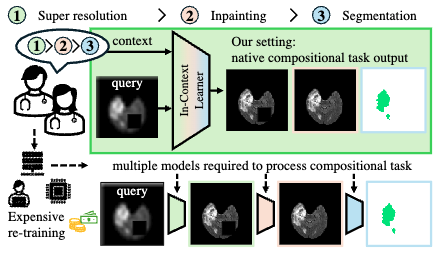
Prof. Dr. Erik Rodner is a faculty member at the University of Applied Sciences Berlin (HTW Berlin), where he serves as a Professor for Machine Learning and Data Science. He also contributes to the School of Engineering Sciences - Technology and Life. His research spans computer vision, machine learning, and biomedical applications, with a focus on learning with limited data, robust visual recognition models, and medical image analysis. He has developed innovative methods for medical diagnostics, industrial classification, and anomaly detection. Recent publications (2025-2016) highlight his expertise in visual in-context learning, semi-weakly segmentation, and active learning frameworks. He has collaborated with institutions such as ZEISS Group, Friedrich Schiller University Jena, and UC Berkeley. Scientific Awards: Award for Excellent Teaching (2023)
Miguel F. Anjos is Professor and Chair of Operational Research at the School of Mathematics, University of Edinburgh , and holds the NSERC-Hydro-Québec-Schneider Electric Industrial Research Chair on Optimization for Smart Grids at Polytechnique Montréal. He received his B.Sc. (1992), M.S. (1994), and Ph.D. (2001) from McGill, Stanford, and Waterloo respectively. Research Theme Head of Data and Decisions at Edinburgh Founding Director of Trottier Institute for Energy Editor-in-Chief of Optimization and Engineering Research Interests: His work bridges mathematical optimization with smart grid applications , focusing on conic optimization, optimal power flow, demand response, and facility layout. He applies these techniques to energy storage, electric transportation, and industrial systems. Scientific Awards: Méritas Teaching Award (2012) Humboldt Research Fellowship (2009) Queen Elizabeth II Diamond Jubilee Medal (2013) Elected Fellow of EUROPT and Canadian Academy of Engineering Academic Service: Served on Mathematical Optimization Society Council, SIAM Activity Group on Optimization, INFORMS Optimization Society Vice-Chair, and Mitacs Research Review Committee. Hosts benchmark datasets: QAPLIB, FLPLIB, Jones Benchmark.
Javier Peña is the Bajaj Family Chair Professor of Operations Research at the Tepper School of Business, Carnegie Mellon University, where he has been a faculty member since 1999. He currently holds the rank of Professor with tenure in the Department of Operations Research. His educational background includes: PhD in Applied Mathematics from Cornell University (1998) MS in Computer Science from Cornell University (1997) MS in Mathematics from Universidad de Los Andes, Bogotá, Colombia (1993) BS in Electrical Engineering from Universidad de Los Andes, Bogotá, Colombia (1991) BS in Mathematics from Universidad de Los Andes, Bogotá, Colombia (1991) Professor Peña's research focuses on the theoretical foundations and practical applications of optimization. His primary research interests include condition numbers for optimization, algorithms for convex optimization (particularly first-order methods), and equilibria computation. He has made significant contributions to understanding the convergence properties of the Frank-Wolfe algorithm and related first-order methods. His work uniquely bridges theoretical analysis with practical applications, particularly in finance and data science. His research demonstrates a consistent pattern of investigating the fundamental mathematical properties of optimization problems while developing practical algorithms with provable convergence guarantees. His extensive publication record shows a clear evolution from foundational work on condition numbers and Hoffman constants toward more applied research on first-order methods and their applications. A notable trend is his recent focus on affine-invariant analysis of optimization algorithms, which provides deeper insights into algorithm behavior independent of coordinate systems. His work frequently appears in top optimization journals like Mathematical Programming and SIAM Journal on Optimization. Professor Peña is also the co-author of the influential textbook 'Optimization Methods in Finance,' now in its second edition, which has become a standard reference in the field. In terms of teaching, Professor Peña regularly instructs courses in Probability and Statistics, Financial Optimization, and Convex Optimization. His teaching approach emphasizes practical applications, with students in Financial Optimization routinely using open-source financial datasets like Alpha Advantage Open Stock API in their projects. He has been actively involved in the academic community through numerous conference presentations, seminar invitations, and committee service at Carnegie Mellon University, including roles on the Faculty Senate, Promotion and Tenure Committee, and various curriculum committees.
Sean Wilson is a Researcher at the Georgia Institute of Technology , affiliated with the College of Engineering and the School of Electrical and Computer Engineering . He serves as the Collaborative Autonomy Branch Chief at the Georgia Tech Research Institute (GTRI) and Director of the Robotarium Lab (https://www.robotarium.gatech.edu/), which provides free remote access to robotic hardware for algorithm testing. Educational Background: B.A. in Physics and Mathematics from State University of New York at Geneseo (2012) M.S. and Ph.D. in Mechanical Engineering from Arizona State University (2017) Dr. Wilson's research focuses on remotely-accessible robotic hardware , collaborative autonomy , and control of multi-agent and swarm robotic systems . His recent publications emphasize distributed control, swarm robotics, and bio-inspired robotic behaviors. The Robotarium Lab he directs enables global access to robotics testbeds for control research. Research Themes (2014-2023): Remote-access robotics (5), swarm coordination (7), bio-inspired algorithms (3), barrier functions (2), multi-robot systems (9), and control theory (4). Sean operates from the Robotarium Lab (Office Location: CCRF B11-3133D) as part of Georgia Tech's Institute for Robotics and Intelligent Machines (IRI) core faculty. His work bridges robotics infrastructure development with theoretical control research.
Golnoosh Farnadi is an Assistant Professor at McGill University's School of Computer Science , an Adjunct Professor at Université de Montréal , and a Visiting Faculty Researcher at Google Research . She holds the Canada CIFAR AI Chair and is a core academic member of Mila – Quebec AI Institute . Her research focuses on algorithmic fairness , responsible AI , and optimization . She founded the EQUAL Lab (EQuity & EQuality Using AI and Learning algorithms) to address bias and discrimination in AI systems. Key publications explore fairness in kidney exchange programs, generative model geometry, multilingual LLM de-biasing, and prototype-based recommender systems. Her work bridges causal inference, adversarial robustness, and ethical AI. Google Award for Inclusion Research (2023) Women in AI Awards North America Finalist (2023) Facebook Privacy Enhancing Technologies Award (2021) IVADO Postdoctoral Fellowship (2018–2021) She has supervised over 15 PhD and Master's students, including Prakhar Ganesh (McGill) and William St-Arnaud (Université de Montréal). Her teaching includes Responsible AI and Machine Learning courses at McGill and HEC Montréal.
Dr. Constantin Christof is a Lecturer (Akademischer Rat auf Zeit) at the Department of Mathematics , Technische Universität München , with prior roles as a W2 Stand-in Professor at Universität Augsburg and Research Associate at TUM and TU Dortmund. His research focuses on Optimal Control of PDEs , Variational Inequalities , and Nonsmooth Optimization , with applications in Non-Newtonian Fluids and Neural Networks . May 2015 - July 2018: Dr. rer. nat. in Mathematics, TU Dortmund Oct. 2013 - July 2014: MAST (Part III of Mathematical Tripos), University of Cambridge Oct. 2009 - Sept. 2012: B.Sc. in Technomathematics and Mathematics, TU Dortmund Christof's work bridges Finite Element Error Analysis , Sensitivity Analysis , and Physics-Guided Machine Learning , particularly in problems involving Contact Mechanics and Parabolic PDE Constraints . His recent publications address challenges in Semilinear Elliptic PDEs , Obstacle Problems , and Nonsmooth Superposition Operators , with a focus on theoretical and numerical advancements. Scientific awards include the Dissertation Award and Best Graduate Award from TU Dortmund, and the Award for Academic Excellence by the Minister President of North Rhine-Westphalia. He has supervised 11 theses at the Master's and Bachelor's levels, covering topics from Neural Network Surrogate Models to Bingham Fluid Simulations .
Markus Haltmeier is a Professor in the Department of Mathematics at the University of Innsbruck. His research focuses on inverse problems, image reconstruction, and deep learning with applications in medical imaging, photoacoustics, and computational mathematics. He leads a group dedicated to advancing theoretical and practical solutions for challenges in non-destructive testing and medical diagnostics. His work integrates mathematical analysis with machine learning, addressing issues such as high-resolution imaging in scattering media and automated segmentation of cardiac structures. Key research areas include regularization techniques for inverse problems, self-supervised learning approaches for limited data scenarios, and computational methods for photoacoustic tomography. His contributions span both theoretical developments (e.g., inversion formulas for Radon transforms) and applied solutions (e.g., algorithms for cylinder liner wear assessment and myocardial infarct segmentation). Publications highlight advancements in neural network-based regularization, 3D medical image synthesis, and unsupervised learning frameworks for segmentation and registration. His research emphasizes bridging the gap between mathematical theory and real-world applications in healthcare and engineering.
Dr. Jianqiang Cheng is an Associate Professor in the Department of Systems and Industrial Engineering at the University of Arizona, College of Engineering. He is also a member of the Graduate Faculty and affiliated with the Applied Mathematics and Statistics Graduate Interdisciplinary Programs. His research is centered on optimization under uncertainty with applications in energy systems and logistics. Research Interests: His primary research areas include stochastic programming, robust optimization, distributionally robust optimization, semidefinite programming, and chance-constrained optimization. He applies these methodologies to challenges in power systems, renewable energy integration, microgrid design, and resilient supply chains. The recent publications (2020–2022) reflect a strong trend toward data-driven and computationally efficient methods in optimization. Key themes include distributionally robust optimization under moment and Wasserstein ambiguity, chance-constrained AC optimal power flow, and resilient supply chain modeling under disruptions such as the COVID-19 pandemic. His work frequently appears in top journals like INFORMS Journal on Computing , IEEE Transactions on Power Systems , and European Journal of Operational Research . Scientific Awards: Best Short Paper Award, INFORMS Workshop on Data Science (Fall 2022) NSF CAREER Award, National Science Foundation (Spring 2022) Science Foundation Arizona's 2017 Bisgrove Scholar (Spring 2017) Dr. Cheng has secured significant research funding, including the NSF CAREER Award, supporting his work in data-driven optimization. He collaborates extensively with researchers in energy systems and operations research, including K. Pan, M. Cheramin, A. M. Fathabad, and A. Lisser. While specific advisees are not listed, his role as a member of the Graduate Faculty indicates active supervision of graduate students in systems engineering, applied mathematics, and statistics. His research contributes to the development of advanced optimization models for real-world systems affected by uncertainty, particularly in energy and logistics. Though no specific lab is mentioned, his work implies involvement in computational optimization and energy systems modeling research groups within the College of Engineering.
Lieven Vandenberghe is a Professor in the Electrical and Computer Engineering Department and Department of Mathematics at the University of California, Los Angeles (UCLA). His research focuses on convex optimization, semidefinite programming, and applications in signal processing, system identification, and control theory. Books: Co-author of Convex Optimization (2004) and Introduction to Applied Linear Algebra (2018) Courses: Teaches graduate-level courses in linear programming, convex optimization, and numerical computing (ECE236A/B/C, ECE133A/B) Software: Developer of CVXOPT, CHOMPACK, and SMCP for optimization algorithms His research group has produced significant work in sparse matrix computations, operator splitting methods, and applications to machine learning and control systems. Publications span topics like Bregman splitting, proximal gradient methods, and semidefinite programming for signal processing. His advisees include PhD students in optimization and postdoctoral researchers in applied mathematics.
Audrius Dubietis serves as Professor and Lead research scientist at Vilnius University's Laser Research Center (LRC), Faculty of Physics. He currently directs the Excellence Center of Advanced Light Technologies, a major national initiative funded by the Ministry of Education, Science and Sports of Lithuania with a 5.5 million Euro budget (2023-2027), and leads the FEMTOLAMA project on high repetition rate femtosecond laser-matter interactions. Dubietis specializes in ultrafast nonlinear optics, with research spanning laser-matter interaction, femtosecond filamentation, and supercontinuum generation in solid-state media. His pioneering work on table-top optical parametric chirped pulse amplifiers has advanced the field over three decades. His theoretical framework for understanding light bullets in Kerr media (Physical Review Letters 112, 193901, 2014) represents a significant contribution to nonlinear optics. Current research focuses on high repetition rate supercontinuum generation using burst-mode femtosecond lasers, with particular emphasis on comparative studies across crystalline materials to optimize performance for specific applications. Analysis of his recent publication record reveals a strategic shift toward practical applications of supercontinuum sources, with increasing attention to thermal management in high repetition rate systems and development of robust, turnkey solutions for industrial and scientific use. His work bridges fundamental nonlinear optics with practical engineering considerations. National Science Prize (2004, 2019) Vilnius University Rectors prize for the best publication in physical sciences (2014) Vilnius University Rectors prize for scientific achievements (2009, 2018) Dubietis has supervised eight doctoral students through completion, with research spanning spatiotemporal light bullets, parametric interactions for ultrashort pulse generation, and supercontinuum generation in novel materials. His research program maintains strong international collaboration, particularly with Ecole Polytechnique (France), and includes significant funding from the Lithuanian Science Council. He serves on the editorial board of the Lithuanian Journal of Physics and was Lead guest editor for the Journal of the Optical Society of America B feature issue on Supercontinuum generation (2019). As a member of the Lithuanian Academy of Sciences since 2019, Dubietis plays a pivotal role in advancing laser science in Lithuania. He teaches core courses in Laser Physics (undergraduate), Nonlinear Optics (graduate), and Modern Optics and Spectroscopy (PhD program), while maintaining active engagement with the public through popular science lectures and his Lithuanian-language book 'Nuostabusis švytėjimas: padangių fizika be formulių' (2014).
Professor Abdel Lisser is affiliated with CentraleSupélec, where he conducts research in Gif-sur-Yvette, France. His work spans multiple disciplines including stochastic optimization, game theory, and machine learning. Research Interests: Stochastic Optimization, Chance Constrained Optimization, Distributionally Robust Optimization, Stochastic Game Theory, Physics-Informed Neural Networks. His recent publications focus on integrating stochastic programming with deep learning frameworks to address complex optimization problems under uncertainty. Key areas include Markov Decision Processes, joint chance constraints, and applications in autonomous vehicle control and network design. In 2025, he published on single-controller stochastic games, convex approximations for Markov processes, and physics-informed neural networks for nonlinear equations. 2024 contributions include distributionally robust Markov decision processes, neurodynamic optimization, and CNN-based equilibrium prediction in games. Email: abdel.lisser@l2s.centralesupelec.fr Institution: L2S, CentraleSupélec Location: 3 rue Joliot Curie, 91190 Gif-sur-Yvette, France
Dr. Cornelius Hempel is a Research Fellow at the Paul Scherrer Institute (PSI) in Switzerland, leading the Ion Trap Quantum Computation group at the PSI Quantum Computing Hub since April 2021. He previously served as a Principal Investigator at the University of Sydney's Quantum Control Laboratory and was promoted to Senior Research Fellow in 2020. His academic training includes physics studies at Martin Luther University and the University of Michigan, followed by a PhD at the University of Innsbruck under Prof. Rainer Blatt and Dr. Christian Roos. Key Affiliations: Paul Scherrer Institute (PSI) – Group Head, Ion Trap Quantum Computing University of Sydney – Senior Research Fellow, Quantum Control Laboratory Institut for Quantum Optics and Quantum Information (IQOQI) – Postdoctoral Researcher Research Focus: Hempel specializes in quantum computing using trapped ion systems , with emphasis on analog quantum simulation, error correction, and laser-based quantum control. His work bridges quantum information science and chemical dynamics , enabling quantum simulations of molecular processes. Publications Trends: Recent articles highlight advancements in trapped ion quantum computing, including 3D laser fabrication of ion traps, geometric phase interference studies, and software tools for error suppression. His work combines quantum simulation , quantum control , and quantum chemistry to enhance quantum hardware capabilities. Laboratory Leadership: Hempel leads the Ion Trap Quantum Computation group at the PSI Quantum Computing Hub , focusing on scalable quantum systems and practical implementations of quantum algorithms.
Hande Benson is a Professor in the Department of Decision Sciences and MIS at LeBow College of Business, Drexel University. She serves as the academic director of the Business and Engineering program and teaches in undergraduate and graduate programs in Business Analytics and Operations and Supply Chain Management. Research Interests: Dr. Benson specializes in optimization, particularly addressing modeling and computational challenges in large-scale nonlinear and mixed-integer optimization. Her work includes interior-point methods, regularization techniques, and the development of optimization software such as LOQO and MILANO. Recent Research Trends: Her recent publications span decision aggregation, multi-vehicle motion planning under communication constraints, and advanced interior-point algorithms. These works reflect a strong focus on algorithmic innovation, real-world applications in robotics and supply chains, and theoretical advancements in nonconvex optimization. Scientific Awards: Outstanding STAR Mentor, Drexel University (2017-2018) Distinguished Fellow, Center for Research Excellence, LeBow College of Business (2009-2012) Excellence in Research Award, LeBow College of Business (2005) Advising and Grants: While direct student advising is not explicitly listed, Dr. Benson has led significant research projects, including Multivehicle Path Coordination under Communication Constraints (Drexel Interdisciplinary Research Grant, $15,000) and Efficient Interior-Point Methods for Mixed-Integer Nonlinear and Conic Programming (NSF, $59,960). She has also contributed to executive education and consulting in financial, industrial, and governmental sectors. Editorial and Professional Service: Dr. Benson is actively involved in the academic community as Associate Editor for several leading journals, including Computational Optimization and Applications , Journal of Optimization Theory and Applications , Mathematical Programming Computation , and Optimization and Engineering .
Panagiotis Gianniotis is an Assistant Professor at the Department of Mathematics of the National and Kapodistrian University of Athens. His research focuses on Geometric Analysis, particularly the application of Partial Differential Equations to problems in Geometry, with an emphasis on geometric flows such as the Ricci flow and mean curvature flow. His work explores singularity formation, curvature control, and the evolution of geometric structures under these flows. He has organized the Workshop in Geometric Analysis in Athens (12-13 September 2025), reflecting his active role in advancing research collaborations in this field. While no academic awards are explicitly mentioned, his prolific publication record in top-tier geometric analysis topics underscores his scholarly contribution. His research interests span across geometric flows (Ricci flow, mean curvature flow), curvature estimates, singular set analysis, and boundary value problems in geometric evolution equations. Recent work includes studies on Hilbert functionals, splitting maps in Ricci flows, and gradient flows of isometric structures.
Lasse Heikkinen is a Senior Lecturer at the Department of Technical Physics, Faculty of Science, Forestry and Technology, University of Eastern Finland. His work spans applied physics, process tomography, and educational technology, with a focus on innovative teaching methods like flipped classrooms during the pandemic. Current Role: Deputy Head of Department, Senior University Lecturer Research Themes: Electrical impedance tomography for industrial processes, flipped teaching frameworks, and physics education adaptation to remote learning. Recent publications highlight his dual expertise in process tomography (gas-solid flows, pharmaceutical monitoring) and pedagogical innovation (learning analytics, flipped classrooms). He has contributed to educational manuals and toolkits for teacher training. Key Projects: Technology education infrastructure development (2015–2024), pandemic-era teaching adjustments (2022). Collaborations: Active in international process tomography conferences and multidisciplinary teams like the Ameba project.