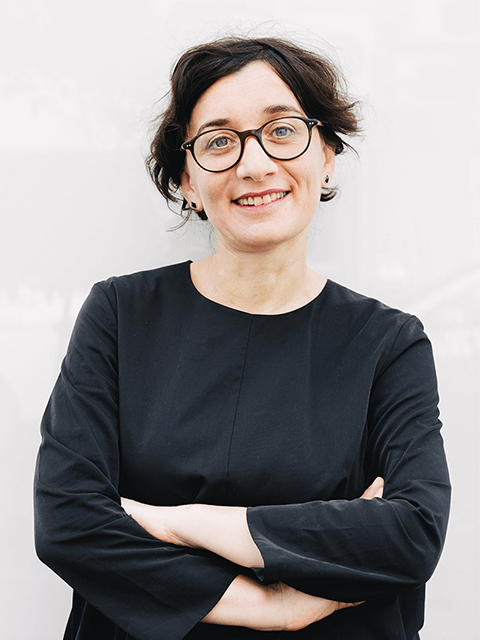
Tatyana Nikitina is an Associate Professor and Researcher at Riga Technical University (RTU), affiliated with the Riga Business School. With over 20 years of experience in international banking and finance, she specializes in business process management, project management, and organizational agility. Her research focuses on Business Process Management , Project Management methodologies including Agile and Waterfall, and Organizational Agility . She explores Competency Development for managerial roles and Entrepreneurial Orientation in business education, with recent work on open innovation in production sectors and STEM education ecosystems. Over the last six years, her publications emphasize interdisciplinary approaches to innovation and competence building, particularly in European contexts. Key themes include configurational analysis of open innovation channels, comparative studies of entrepreneurial orientation among students, and frameworks for strengthening entrepreneurial capabilities across diverse sectors. Tatjana actively participates in EU-funded initiatives including ERASMUS+ projects focused on STEM education and entrepreneurship training communities. Her grant work includes the 21st Century STEM Education Skills Development Ecosystem (2022-2025) and the European Entrepreneurship Training Community (2018-2021). She has led strategic academic development projects at RTU including the Strengthening Academic Staff in Strategic Specialization Areas initiative (2018-2023), contributing to institutional capacity building in business education and research infrastructure.
Andreas Eberl is a Senior Lecturer in the Department of Mathematics Education at the University of Regensburg, Faculty of Mathematics. Since 2012, he has focused on teacher training, curriculum development, and bridging university mathematics with secondary education. 1998–2004: Studied Mathematics at the University of Regensburg with studies abroad at Brandeis and Harvard Universities. 2004: Completed a diploma thesis on "The real Schubert calculus and applications to line configurations" . 2005–2007: Completed the Second State Examination in mathematics/physics. Eberl’s research centers on mathematics education , particularly addressing the transition from university to school-level teaching. His work explores curricular coherence , educational technologies (e.g., GeoGebra, CAS calculators), and interdisciplinary approaches (e.g., music and mathematics). Key themes include correcting student misconceptions, problem-based learning, and tactile methods like origami-based geometry. His publications and workshops highlight practical strategies for integrating university-level concepts into secondary classrooms, with notable contributions on stochastic teaching, sequence and series, and graph theory. Articles often analyze the "second discontinuity" in teacher education, emphasizing alignment between academic and pedagogical knowledge. While no scientific awards are documented, Eberl actively supports teacher training through workshops , bridging courses , and collaborative initiatives with schools. He has led seminars on lesson planning for Gymnasium, Realschule, and Mittelschule levels.
Professor Rhys Andrews is a Professor of Public Management at Cardiff Business School, Cardiff University. His academic career has been dedicated to advancing knowledge in public administration and management, with a particular focus on the intersection of public sector governance and organizational performance. Professor Andrews' research spans several key areas within public administration, with a primary focus on public management and corporate political activity. He has made significant contributions to understanding cross-sector partnerships, business-government relations, strategic management in the public sector, corporatization processes, and public service performance measurement. His work often takes a comparative perspective, examining governance models across different national contexts and analyzing how institutional arrangements affect service delivery outcomes. Andrews has published extensively in top-tier journals including the European Journal of Political Research, Human Relations, Journal of Public Administration Research and Theory, Journal of Policy Analysis and Management, Journal of Urban Economics, Public Administration Review, Social Science & Medicine, Strategic Management Journal, Regional Studies, and Urban Studies. His publication record demonstrates consistent high-quality research output over multiple decades, with recent work focusing on contemporary challenges in public governance including gender diversity in municipal corporations, reverse corporatization trends, and the impact of political control on public service delivery. He has authored or co-authored several influential books that have shaped discourse in public administration. These include Strategic Management and Public Service Performance (Palgrave, 2011), Public Service Efficiency: Reframing the Debate (Routledge, 2013), Public Administration Reforms in Europe: The View from the Top (Edward Elgar, 2016), and Corporatization of Local Government: Context, Experiences and Perspectives from 19 Countries (Palgrave, 2023). These works reflect his commitment to bridging theoretical frameworks with practical governance challenges.
Professor Malcolm Beynon is Professor of Uncertain Reasoning and Business Analytics at Cardiff Business School, Cardiff University. He is an internationally recognized expert in uncertain reasoning methodology, applying techniques like fuzzy set theory and Dempster-Shafer theory to acknowledge uncertainty in analysis across various management domains and other disciplines. Professor Beynon holds a BSc (first class) and PhD in pure mathematics from Cardiff University. His educational background in pure mathematics provides a strong foundation for his work in developing novel analytic techniques and advancing existing methodologies for handling uncertainty in data analysis. His mathematical expertise enables sophisticated approaches to complex problems involving incomplete data, ambiguity, and ignorance. Professor Beynon's research focuses on developing and applying uncertain reasoning methodologies to address complex problems across multiple domains. His work incorporates fuzzy set theory and Dempster-Shafer theory to acknowledge and manage uncertainty, incompleteness, ignorance, and ambiguity in data analysis. His research spans business analytics, entrepreneurship, regional development, public administration, healthcare management, and transportation systems. He has made significant contributions to fuzzy-set qualitative comparative analysis (fsQCA), NCaRBS (Novel Classification and Ranking Belief Simplex), and other advanced analytical techniques for handling incomplete or uncertain information. His methodological innovations have been applied to diverse research questions including entrepreneurial activity, innovation analysis, regional development, and public sector performance. Analysis of Professor Beynon's recent publications reveals a strong focus on applying uncertain reasoning methodologies to contemporary economic and social challenges. His work increasingly employs fsQCA to examine complex causal relationships in entrepreneurship, regional innovation, and public policy across different countries and contexts. There's a clear trend toward interdisciplinary research that bridges business analytics with public policy, regional development, and social issues, demonstrating the versatility and applicability of his methodological approaches. His publications appear in top journals across multiple disciplines, reflecting the broad impact of his work. Professor Beynon has published extensively across a wide range of journals, including Studies in Higher Education, Journal of Business Research, OMEGA (The International Journal of Management Science), European Journal of Marketing, Journal of Public Administration Research and Theory, European Journal of Operations Research, and many others spanning business, economics, public administration, healthcare, and engineering disciplines. Professor Beynon is available for postgraduate supervision and has likely mentored numerous PhD students throughout his career, though specific student names are not listed in the available information. His methodological expertise makes him particularly valuable for students working with complex, uncertain, or incomplete data in business and social science research.
Sarogini Pease is a Lecturer in Intelligent Networks at Loughborough University, with expertise spanning AI, cyber-physical systems, and regulatory compliance in creative industries. She holds a PhD funded by EPSRC and BAE Systems, an LLB (Hons) in Law from the University of Essex, and advanced qualifications in Computer Science and Communications. Her research focuses on empowering developers and users with AI-driven tools to navigate legal challenges in AI/metaverse technologies, particularly data ownership, intellectual property, and algorithmic transparency. Key areas include semantic services, decision support systems, and interoperability frameworks for real-time regulatory compliance. Publications emphasize energy-efficient manufacturing, cyber-physical system design, and adaptive middleware for mobile networks. Notable contributions include semantic interoperability tools and embedded intelligence for future manufacturing systems. Awards include the CASE award from EPSRC/BAE Systems for her doctoral research. Her work bridges technical and legal domains, with grants from EPSRC and BAE Systems. She is affiliated with research groups focused on intelligent networks and semantic technologies, contributing to both academic and industrial collaborations.
Dr. Brett Gilbert is an Associate Professor with tenure and the inaugural Kogod Regional Innovation Chair at the Kogod School of Business, American University. She holds a Ph.D. in Entrepreneurship from Indiana University and a B.A. in Management from Wittenberg University. Her research focuses on economic geography, clean energy technologies, and technology cluster emergence across countries like South Africa and Colombia. She explores factors enabling emerging technologies to enter global markets and investigates regional innovation ecosystems. Current projects examine six countries' emerging tech communities. Dr. Gilbert serves as associate editor for the Strategic Entrepreneurship Journal and contributes to editorial boards of top journals including the Academy of Management Journal and Journal of Business Venturing. She previously advised the Texas Emerging Technology Fund and the Entrepreneurship Division of the Academy of Management. Her teaching portfolio includes courses such as 'Complex Problems Seminar: Creating Social Entrepreneurs' and 'Global Corporate Citizenship,' reflecting her commitment to ethics and international business practices.
Yanina V. Sica is a Research Fellow at the Department of Animal Ecology & Systematics, Justus Liebig University Giessen, Germany, affiliated with the Systematics & Biodiversity Lab. Her research focuses on biodiversity conservation, landscape ecology, and science-policy interfaces. She coordinates the B-cubed project under Dr. Hanno Seebens and serves as Scientific Coordinator for the IPBES Data and Knowledge Unit at Senckenberg Institute. Education: PhD (2011-2016): Universidad de Buenos Aires/INTA, Argentina (Thesis: Land Cover Change & Wetland Birds) PostDoc (2016-2018): Universidad Nacional de San Martín, Argentina (Land Use Change in Wetlands) Research Associate (2019-2022): Yale University, USA (Map of Life Project) Her work integrates ecological modeling, open science practices, and FAIR data standards to address global biodiversity challenges. Key themes include species distribution modeling, land-use change impacts, and translating scientific insights into policy tools via biodiversity indicators. Publications emphasize innovative data frameworks (e.g., ecoregional range maps, taxonomic integration) and applied conservation solutions in wetlands, forests, and marine ecosystems. She contributes to international initiatives like the Global Register of Introduced Species and develops tools for biodiversity monitoring (e.g., the Humboldt Extension). Collaborations span institutions including Senckenberg, Yale's Map of Life, and the EU's SCOPSCO deep-drilling project. Current efforts focus on ecological informatics, trait-based biodiversity analysis, and leveraging camera trap data for global biodiversity assessment.
Dr. Asya Natapov is a Senior Lecturer in Urban Planning and Design at Loughborough University, serving as Deputy Programme Leader and member of the Transport and Urban Planning research group. Her work bridges urban design, spatial cognition, and computation to redefine urban planning through adaptive, integrative approaches prioritizing walkability and sustainability. She utilizes immersive VR experiments and behavioral studies to model visual perception's role in spatial memory and navigation. Education: Holds a BArch (Architecture), MSc, PhD, and is a Fellow of the Higher Education Academy (FHEA). Research focuses on spatial cognition, urban morphology, and the interplay between visual perception and urban activities. Current projects include The Impact Hub (Town Deal Grant), Branching Out (NERC/AHRC/ESRC), and collaborations with institutions like the Stockholm Environment Institute and Forest Research UK. Completed projects include post-war reconstruction modeling (Ukraine), AgeCogCity (EU Marie Skłodowska-Curie Fellowship), and studies on gender dynamics in markets (Israel Science Foundation). Her articles explore micromobility, pedestrian behavior, and VR applications. Notable outcomes include POI VizNet (QGIS tool for visibility networks) and frameworks for refining urban accessibility metrics using street imagery. Awards include the Marie Skłodowska-Curie Individual Fellowship (2020). She advises PhD candidates in spatial cognition, urban design, and computational methods, with ongoing grants totaling over £4M in collaborations.
Lisa Delise is an Associate Professor of Management and Department Chair at Meredith College , actively researching team dynamics, communication, and shared cognition. Her work appears in journals like Small Group Research and Management Teaching Review . Ph.D. in Industrial/Organizational Psychology, University of Tennessee B.S. in Psychology, Tulane University Her research emphasizes team information sharing , collaboration , and training strategies to enhance performance. Recent work explores project management efficiency and distributed cognition in teams. Key awards include the Meredith College School of Business Scholar of the Year (2021) and Best Paper in Management Teaching Review (2018) . She has presented at conferences including SIOP and APA.
Dr. Martin Harris is a Senior Lecturer in the Department of Management and Marketing at the Essex Business School , University of Essex. His academic career spans organizational theory, health and social care partnerships, and sociomaterial approaches to technology in social work. He holds a BA from the University of Cambridge, an MSc from the London School of Economics, and a PhD from the University of London. Qualifications: BA (Cambridge), MSc (LSE), PhD (London) His research focuses on organizational learning , project identity in healthcare partnerships , and leadership dynamics in social movements . He explores how social capital and post-bureaucratic models influence management practices, particularly in Jordan’s telecoms sector and UK health services. Recent publications highlight trends in interdisciplinary collaboration (healthcare, social movements, and digital governance) and critical theory applied to organizational hybridity. Key projects include an AHRC-funded study on mental health inequalities and a 2025 Impact Leave Award for research community development. Scientific Awards : British Academy Innovation Fellowship Advising and Funding : Supervises current PhD student Mark Russell. Past supervisees include Amir Elmi Keshtiban (2018, on leaderless groups) and Atif Sarwar (2015, on IT in social work). Funded by the Economic and Social Research Council (2023), Arts and Humanities Research Council (2018), and University of Essex (2016, 2018, 2022).
Dr. Derrick D'Souza is a Professor in the Department of Management at the University of North Texas. His research focuses on strategic management, entrepreneurial orientation, organizational performance, and cross-functional integration. He has been recognized with several research and teaching awards for his contributions to the field. His research interests span entrepreneurial orientation, organizational ambidexterity, absorptive capacity, and the integration of technology in business education. He has explored topics such as the impact of mobile business apps on productivity, crisis management during environmental catastrophes (e.g., the 2020 pandemic experience), and the alignment of business education with employer needs. His work often bridges theoretical frameworks with real-world applications in emerging markets and service industries. Key themes in his publications include the dynamics between strategic thinking and organizational capabilities, the role of cross-functional skills in business performance, and the challenges of measuring strategic agility in turbulent environments. His research has appeared in journals such as Journal of Oper. Management , Prod. and Oper. Management , and Information Strategy . Dr. D'Souza’s recent work highlights trends in leveraging technology for organizational resilience, addressing skill gaps in business education, and redefining entrepreneurial legitimacy in global contexts. Beyond academia, his insights contribute to managerial decision-making and strategic planning in diverse industries.
Oliver Ibert serves as Professor of Socio-Spatial Transformation at Brandenburg University of Technology Cottbus-Senftenberg and Director of the Leibniz Institute for Research on Society and Space. His research bridges economic geography, urban transformation, and crisis studies, examining how spatial configurations influence innovation processes and organizational resilience. Education includes a PhD in Social Sciences (2002) from University of Oldenburg and Habilitation (2009) from University of Bonn. He has held visiting professorships at University of Toronto and Manchester University. Research interests focus on the geography of innovation, spatial dimensions of crises, and transformative urban development. Key projects examine: Disruption and spatial development dynamics Platform ecologies in creative collaboration Expert advice in crisis management Publication trends show consistent focus on spatial aspects of innovation across 120+ articles, with recent emphasis on crisis geography and digital platforms. Primary methodologies include spatial network analysis and organizational ethnography. Leads the interdisciplinary 'Disruption and Spatial Development' research group integrating geography, organizational studies, and planning theory. Current grants investigate crisis-driven institutional innovation and regional digitalization strategies.
Dongming Xu is a Professor at Sun Yat-sen University's School of Data and Computer Science, Department of Information Systems, with an extensive publication record spanning over two decades in the field of Information Systems. His scholarly contributions demonstrate expertise in intelligent agent systems, e-learning environments, digital innovation, and knowledge management, with recent work expanding into healthcare informatics, 5G technology, and FPGA design. Xu's research interests focus on the intersection of technology and human behavior, particularly examining how digital systems can enhance learning, financial management, healthcare delivery, and disaster response. His work employs both theoretical frameworks and practical implementations, often utilizing intelligent agents, machine learning techniques, and socio-technical perspectives to address complex information system challenges. Analysis of Xu's 15 most recent publications reveals a strategic evolution in research focus, beginning with foundational work in intelligent agent-supported systems and virtual learning environments, expanding into knowledge management and digital disruption theory, and most recently incorporating advanced technical implementations in wireless communications and hardware design. This progression demonstrates both theoretical depth and practical application across multiple domains. Multiple publications in top-tier Information Systems journals including Information Systems Journal, Journal of Global Information Management, and Decision Support Systems Regular contributions to premier conferences such as PACIS, ICIS, HICSS, and AMCIS Interdisciplinary research connecting computer science, business, healthcare, and social sciences Xu has established productive research collaborations with scholars across multiple institutions, particularly working with Huaiqing Wang, Jun Shen, Tingru Cui, and Geng Sun. His research has received consistent funding support, enabling sustained investigation into evolving information technology challenges. Current work shows increasing emphasis on AI applications in healthcare, advanced communication technologies, and digital platform ecosystems.
Frank Wijen is a Professor in the Department of Management, Strategy and Innovation at KU Leuven , affiliated with the Faculty of Economics and Business. His research focuses on global sustainable strategies at the intersection of strategy and organization theories, examining drivers of sustainable business practices in international contexts. Key research areas include voluntary institutions (e.g., sustainability standards, global treaties) Government interventions (mandatory/voluntary policies) Resource configurations for sustainable business Societal impact assessment at firm, sector, and macro levels His recent work analyzes FDI societal impacts, sustainability standard effectiveness, and institutional dynamics in environmental governance. He teaches courses such as Interdisciplinary Lab: Strategy, Innovation and Entrepreneurship and International Management , and contributes to meta-analyses on corporate environmentalism and institutional entrepreneurship.
Ana Dias is a Professor in the Department of Mathematics at Central Michigan University. She is currently on sabbatical. Her research focuses on Mathematics Education with specialties in the Politics of Mathematics Education, Adult Numeracy, Ethnomathematics, and Mathematics in Vocational Education and Training. She holds a Ph.D. from Indiana University (1997) and a B.S. from Universidade de Brasília, Brazil (1988). Her work emphasizes curriculum analysis, particularly in vocational and technical education contexts. She has conducted comparative studies on mathematics education between Brazil and the United States, exploring how cultural and institutional frameworks influence teaching practices. Her recent publications address gender equity in mathematics education, the role of socially-constructed knowledge in learning, and pedagogical strategies in fractal geometry and algebraic representation. Dr. Dias has contributed to international journals and book chapters, often intersecting mathematics education with anthropology and comparative education studies. She is affiliated with the Council of Anthropology and Education and the International Study Group on Ethnomathematics, further underscoring her interdisciplinary approach.