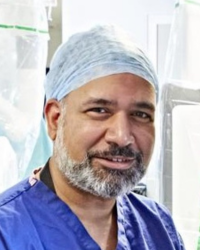
James Schnable serves as the Charles O. Gardner Professor of Agronomy in the Department of Agronomy and Horticulture at the University of Nebraska-Lincoln. His research integrates genomic, phenomic, and environmental data to advance crop breeding methodologies for maize and sorghum, with particular emphasis on climate-resilient varieties. Dr. Schnable's research program spans plant genomics , high-throughput phenomics , and quantitative genetics , focusing on genetic dissection of nitrogen use efficiency, photosynthetic traits, and stress tolerance mechanisms. His laboratory pioneers UAV- and satellite-based phenotyping systems, machine learning applications for image analysis, and genomic prediction models that bridge genotype-phenotype gaps under variable environmental conditions. Key innovations include nighttime fluorescence phenotyping to reduce environmental noise and spectral feature extraction for accelerated trait assessment. Analysis of his 2021-2025 publications reveals consistent leadership in genotype-environment interaction studies and computational phenotyping , with dominant themes including transcription factor binding site variation explaining heritability, nonphotochemical quenching kinetics in stress responses, and scalable satellite-based yield prediction methods. His work frequently employs the Genomes to Fields Initiative infrastructure for multi-state field validation. Charles O. Gardner Professorship Dr. Schnable directs an active research program involving advanced sensor networks, genomic selection pipelines, and multi-institutional field trials. His team develops computational frameworks like PlantSegNet for 3D plant reconstruction and SPARC-LoRa for agricultural IoT applications. While specific grant details aren't provided in source materials, his extensive publication record in high-impact journals indicates sustained funding from major agricultural research programs. The laboratory maintains cutting-edge phenotyping infrastructure including UAV fleets, hyperspectral imaging systems, and gas sensor networks for early stress detection. Current projects focus on nitrogen-responsive growth trajectories, chilling tolerance mechanisms in panicoid grasses, and gut microbiome interactions with grain composition, reflecting an integrative approach from molecular mechanisms to field performance.